
Other people’s words about … connection
I was never sure how honest I was supposed to be with friends. I didn’t think honesty was romantically or sexually loaded, but I felt sometimes that my understanding of friendship was distorted. I was always trying to determine, with everyone, whether I was on the right side of an invisible line. If asked, I’d always argue that the problem was with normative approaches to intimacy, though I’d never been asked. It had worked for Grace Hartigan and Frank O’Hara, I thought, and then I remembered that it hadn’t. I felt, talking to Cara, that perhaps I was veering into something too unstudied, but I wasn’t sure that could stop me today. I wanted comfort; I wanted to feel close to somebody.
‘I suppose I’m lonely,’ I said.from ‘The Modern‘
by Anna Kate Blair
When it comes to friendships and intimacy, I am someone, like Blair’s narrator, Sophia, in the passage above, who is always struggling to interpret whether I am on the right side of an invisible line. I am frequently aware of my tendency to dive deep into conversations at an emotional level. At the same time I’m aware that most people aren’t comfortable with that depth, or with the emotional intensity that comes with it. In conversation I often try to pull back because of this, to reign myself in, although mostly I fail. It’s a dance I do, back and forth across that invisible line, over and over.
I am not sure whether people, when they’re talking to me, notice this or not. Maybe this is just part of my intensity, my awareness of it. But I like Sophia’s use of the word honest in this context. It is a loaded term, to my way of thinking. Not everyone fronts up to conversations wanting intimacy or intensity. Not everyone wants to engage in emotional honesty.
There’s that dance again. I don’t think I’ll ever figure it out.
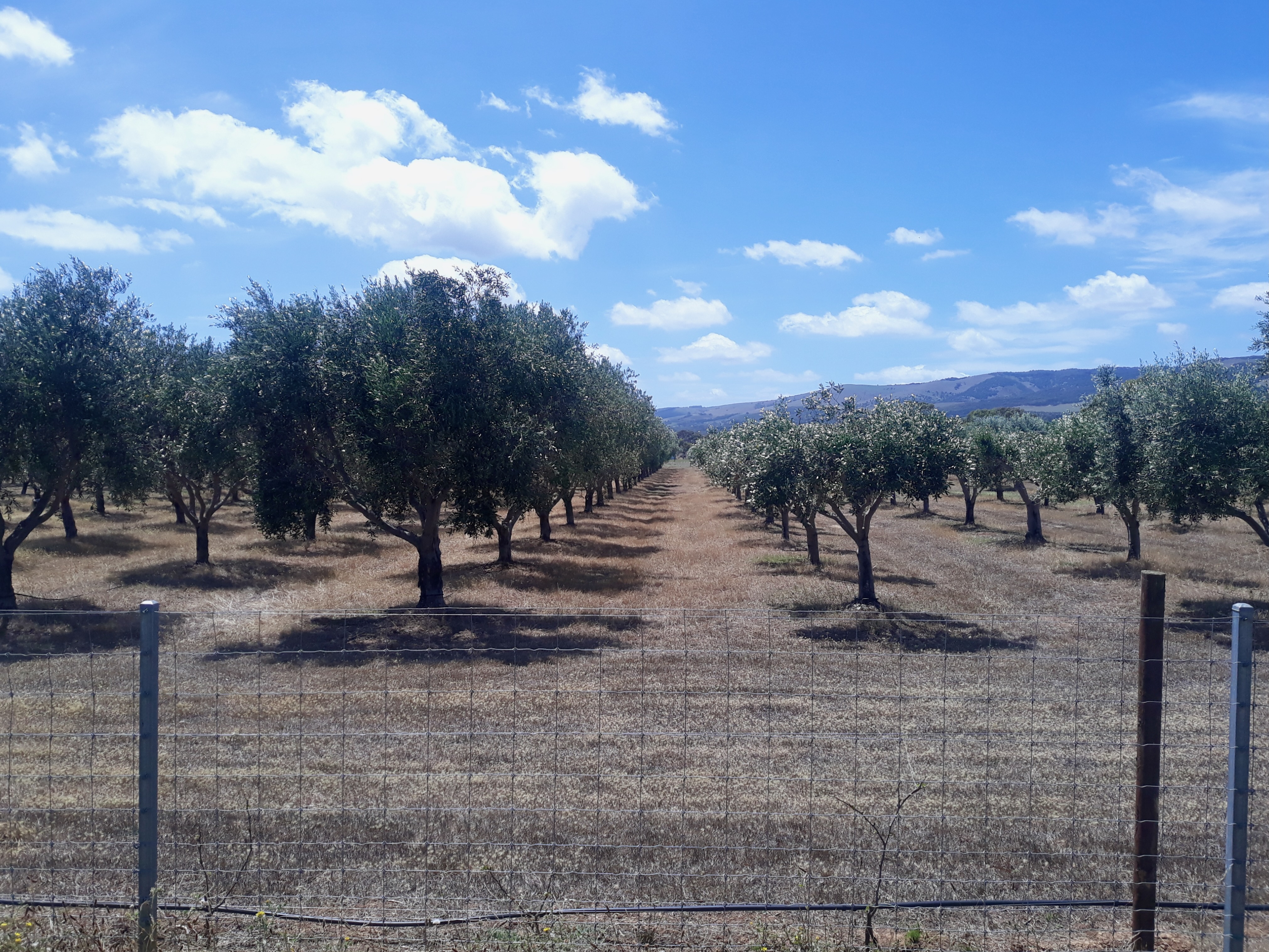 Olive groves, Aldinga, January 2024.
On another note altogether, I’ve been immersing myself in books set in Cairo recently, partly because I lived there briefly when I was twenty-two and partly because I’d like to write a story set there myself one day. Talk to anyone who’s spent any time in Cairo and soon enough they’ll tell you that it’s not like any other city, that when you leave Cairo, you carry with you a kind of sense-memory that never leaves you. Reading these books has reminded me of this. Here’s Noor Naga’s male narrator, an Egyptian boy from Shobrakheit, in her wonderful, extraordinary novel If An Egyptian Cannot Speak English:
From Damanhour, I took the train to Cairo and inside it the air was very brown, like closet air. I fell asleep and woke up with a man feeling my thigh through my torn pocket. People think anyone with a camera will have coins instead of skin inside his pocket. When I arrived in Ramses Station in Cairo, the air was people. Nowhere you looked wasn’t people. You could turn into an alley and find fifty Sudanese men, bluer than black, with cheeks like shoulder blades and ankles like knives, or else women as tall as I am, women so pale you could see rivered blood at their wrists and neck …
If you read one book on Cairo this year, make it Naga’s novel. It will leave you with as much of a sense-memory as Cairo itself, I swear.
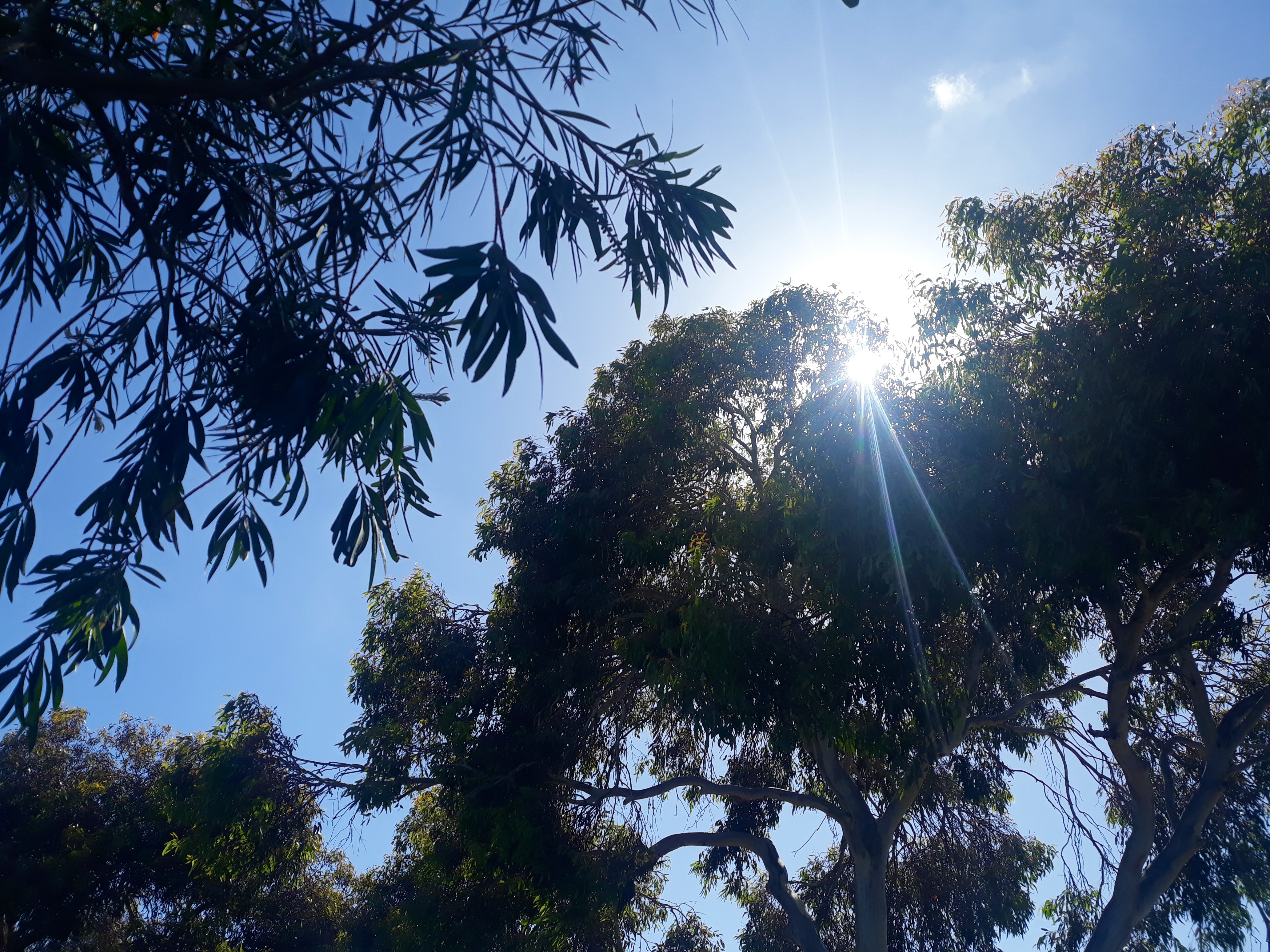 Sunlit tree, Taperoo, February 2024.
Lately I’ve been reading …
-
- I hate the algorithm. Everyone hates the algorithm: Kyle Chayka on globalisation, the flat world, and how the internet and Instagram have introduced a globally monotonous aesthetic that, despite its supposedly democratic intentions and roots, smacks of elitism and colonialism that ultimately own us.
- The painful truth is we are a gawdy, grotesque, gluttonous, self-destructive country that watches ‘Botched’, dips Flamin’ Hot Cheetos in Velveeta, rolls coal, and responds to the mass murder of children by buying the same gun they were killed with in record numbers. No amount of education, social spending, or rehab will make us behave. Not with steroids, not with anything else: Adrian Nathan West, in a fascinating piece on getting ‘swole’.
- Most people aren’t aware of their bodies unless they are experiencing pain or pleasure. Most people think lifting the weights is the hard part. It’s not: Another piece on lifting, this time by Jordan Castro. In it he explores why lifting is more than a physical pursuit. I am fascinated by the similarity between what he has to say about lifting and what devotees of yoga say about yoga — they seem to me to be virtually the same.
- And maybe that’s the problem with land acknowledgements: not enough people understand that they’re not the end of the discussion: Kelly Boutsalis, a Mohawk journalist from the Six Nations of the Grand River reserve, explores land acknowledgments, and who they are really for.
- I’ve never been sure if I can claim a queer identity based on attraction alone: Erich Schlich on the Own Stories movement, on authenticity, on writing about queer characters when you have never fully identrified as queer yourself, and on the definition of queerness itself. I’m not sure how I feel about Schlich’s piece, actually. I’m not sure which bothers me more — his eagerness to define his identity in a certain way or his anxiety to claim that identity (because these are not the same things). But it made me think, all the same.
 twenty-one words