Other people’s words about … grief
And one time [Audun] drove in to Advocate Delhis Plass and picked me up off the floor where I was lying flat out on my stomach. Turid and the girls were in Trondheim, and I had no intention of getting up for a good while, but rather preferred to lie there with my forehead ground into the hard cold dusty floorboards, and I thought, how does one measure grief, is there a yardstick for grieving, is there any difference, say, between grieving for one person as opposed to two or three persons, or even four, as in my case, did all this fit on a yardstick, or could the level of grief register as on an instrument, such as a Geiger counter, and the closer the instrument got to the full power, the full height, the full number, the faster and louder the instrument would emit its familiar beep. And how was I to know when there was grief enough, and if grief was liquid like melting silver, could one then pour the grief into a litre measure and conclude, under these circumstances eight decilitres ought to be sufficient, and let the silver congeal hard and shiny not far below the rim. How was I to know. And how was I to know it really was grief I was feeling, it didn’t seem to resemble anything I had seen on film, or what others told me they had felt when their people died, and I was bewildered, for I didn’t cry, and when did one cry really, when you were alone, or in the company of witnesses. And if one were alone, what was the point, when no-one would see it, how was I to know, I didn’t have that yardstick, that litre measure. I had to deal with it myself, was that not so, I let no-one else inside, no-one else’s yardstick was of any use, no-one’s litre measure, and in a way it felt strangely irrelevant, no, not irrelevant, but rather beyond my field of vision. I could barely glimpse a dark swishing tail disappearing, and when I grasped it and held it fast, I was left with nothing but the tail in my hand. The rest was gone, like a lizard sacrificing its tail for freedom. I did try, and hard too, with open eyes to face what had happened, but I didn’t know what to do with what I saw, I had already watched most versions of the issue acted out on TV, they were used up, and I couldn’t think of any others. So then I simply tried not thinking about it at all. That didn’t work either. And so instead I wanted to find an image that could cover all this, after all it was my job, to turn the whirling liquid into something concrete, turn the waves of distracting electric shocks to the stomach into solid surface. but I didn’t have any images that were large enough, firm enough, and after a while I found it pretty exhausting. So I lay there until Audun arrived. He walked straight in, the door wasn’t locked, I had forgotten as usual, and before even seeing me, he said into the hallway, hello Arvid, for Christ’s sake, why don’t you answer the phone when I call. And it was true, often I didn’t answer, it was a breach of every rule, but I was afraid there might be an undertaker at the other end, although I knew the funerals I was supposed to attend lay behind me for now. And there came Audun, in through the living-room door and he saw me on the floor and said, what the hell are you doing down there. I’m thinking, I said. All right, he said, so what are you thinking about. Litre measures, I said, yardsticks, that kind of thing. Okay, he said, that sounds practical in a way, but you can get up now. I’m not sure I can, I said down into the floor, my lips cold against the cold planks, covered in dust, the vacuum cleaner hadn’t been out for a good while. Yes, you can, he said, just do it, and I’ll go to the kitchen and put the kettle on for coffee.
Ten minutes later when he came back with two full cups of coffee and milk and sugar on a tray, I was sitting on my chair at the desk. It wasn’t exactly Mont Blanc, but it had been a long climb.from ‘Men in My Situation‘
by Per Petterson
I am thankful to say that I have never experienced a grief or sorrow of the kind that the narrator in the passage above, Arvid, has experienced, having lost his parents and siblings to a tragic accident at sea. But Petterson’s words, voiced through Arvid, move me all the same. Elsewhere, Arvid says, ‘[T]o be honest I was in a state of bottomless despair, it was the worst time, by far, I felt quite naked, quite cold’. And I think this is what the longer passage I’ve quoted in this post describes, really — Arvid’s feeling of utter nakedness in the face of his loss.
This is what I love about fiction, the way someone else’s words can move you to tears and wonder. That’s all from me today — I will leave you with Petterson’s words, however you measure them, and however they move you.
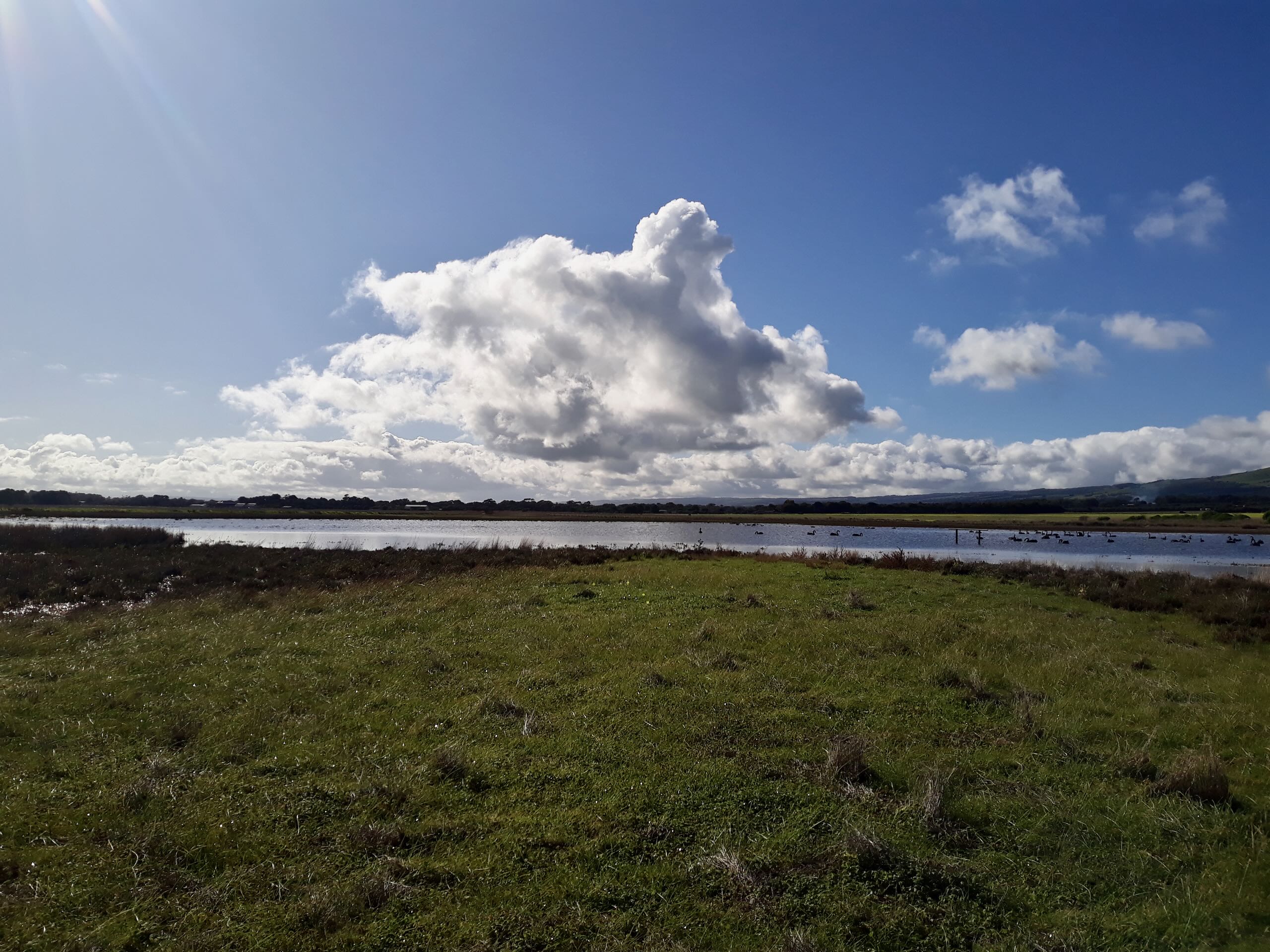
The Washpool, Sellicks Beach, July 2023.
Lately I’ve been reading …
-
- What I felt as I scrolled through the story the foundation member told was only the familiar ache of knowing something really bad is happening in the world and feeling powerless to stop it: Rachel Weaver, on the demise of the swift parrot, on thinking fast and also thinking slowly, and on five sweet notes of elusive birdsong.
- I could hear normal life taking place nearby, as friends whispered their worries to George in the kitchen. Did she have dizzy spells before? Have you ever seen anything like this? But engaging with their concerns would have required me to shift fully back into my body, where the vertigo remained debilitating: Katy Vine, in a fascinating piece about her experience of a five-week bout of vertigo, and about vertigo’s connection to migraine, seizures and ecstatic visions.
- I didn’t want an espresso. I didn’t want an Americano. I wanted filter coffee. Like something you brew in the morning before work. I didn’t even want a French press. I longed for a perfect, clean cup of coffee. Something clear and sharp. French press is kind of chewy to me these days. I can’t go back. I’ve tasted the sweet release of Chemex and anything else just feels like trying to suck down mud: The inimitable Brandon Taylor on trying to find a good coffee in London. I am not a coffee-drinker, but you can’t be an Australian and not be aware of how much we pride ourselves here in Australia on our coffee. I suspect that Brandon Taylor would hate it! This piece made me laugh in all the best ways.
- I like truth, especially in language. And using psychiatric terms to describe common human experiences is simply not truthful: Eleanor de Jong on why we should not pathologise normal feelings like sadness and stress, and on why the difference between serious mental illness and going through a bad patch is important.
- I stopped being a professional writer, but I haven’t stopped writing. I surrender to the trap of words because silence is overwhelming, and crushes my temples. So I have to break it with a sentence, shatter it, carry some words to safety, outside myself. Every time I do this, I think it’s the last time, and while I’m doing it, I also feel like doing it is a failure. But perhaps it’s worth it to reach this limit, to fail this way, to write only when not writing would be dying, to write only when I can’t do otherwise: Andrea Bajani on Kafka and the curse of not being able to write.
 twenty-one words