Soup for the soul

Soup from my father’s kitchen

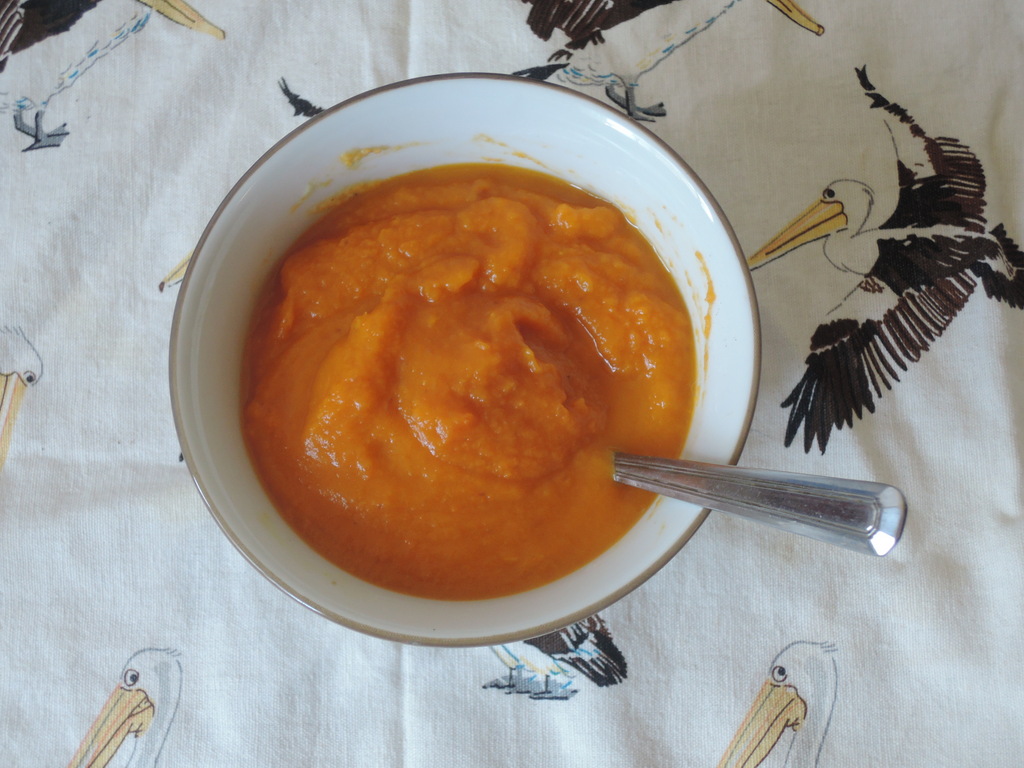
During winter, my father cooks up a weekly batch of vegetable soup,
which he and my mother eat for lunch each day.
The soup flavours vary —
pumpkin one week, tomato the next, broccoli and green bean the next.
And he always sets aside some for me.
DSCN2297
Winter’s well behind us now, of course.
(In the first week of October,
the temperatures soared over 30 degrees Celsius.)
DSCN2298
But I’m still enjoying my father’s soup,
which is tasty, warming and good …
DSCN2299
… and which he makes, always, with love.

The chef gets healthy

Other people’s words about … life

Cookbooks are all about food and cooking, right?
But here’s what I found in a cookbook I borrowed from the library recently:

I generally don’t get into the whole ‘life quote’ thing; I pop them in a basket with mason jars and hip-hop yoga. But there’s a snowboarder I follow on Instagram called Kevin Pearce … who listed the non-negotiables in his life and it really stuck with me. I adapted the list to suit my life, but the fundamentals are still the same. When I am disciplined about making time for these rules, I find everything else falls into place easily and I am a better person, inside and out. That’s a good thing, right?
Make space for this:

  • Start the day with exercise.
  • Do yoga or meditate (even just 5 minutes): morning, noon and night.
  • Eat a healthy breakfast, lunch and dinner.
  • Prepare food in advance so there’s no excuse to eat crap.
  • Drink lots of water, at least 2 litres a day.
  • Get outside, look around (not down at your screen) and listen.
  • Be present!
  • Take care of hygiene.
  • Read and learn something new every day.
  • Keep in touch with friends and family.
  • Lead with your heart and keep your mind close behind.
  • Remember that conscious breathing will always centre you.
  • Be appreciative and be patient.
  • Surround yourself with awesome, like-minded people.
  • Sleep and rest, as much as you feel you need.

from ‘The Chef Gets Healthy’
by Tobie and Georgia Puttock

I have to confess: the recipes in the cookbook didn’t do much for me. I like my carbs! (Tobie and Georgia have eschewed carbs in the name of health.)
But I loved Tobie’s list.
It’s a recipe for life, not just for food.
And, as with all the best recipes, you can adapt it and make your own.
It’s a starting-point, I think —
a good one, too.

Twenty-one breaths

Recently, I’ve been reading about the power of breathing.
As I understand it, when we’re busy or stressed or even excited,
we activate our sympathetic nervous system,
moving into ‘fight or flight’ mode.
19 November 2014 054
But when we stop —
to sleep, rest, meditate, relax,
or simply just to breathe —
we activate our parasympathetic nervous system.
And it’s then we can heal ourselves:
of anxiety and sickness and angst.

Winter sunset at Aldinga Beach
Winter sunset

So now — in keeping with my blog’s theme —
I stop several times daily to take twenty-one deep breaths.

In (through the nose).
Out (through the mouth).
In.
Out.
In.
Out.
Healing.
Healing.
Healing.

Quote

Other people’s words about … loneliness

Jack realised then that his father had stopped smoking. He was profoundly impressed. It made him realise as other things had not how important this job was to Jerry. He felt that perhaps older people needed satisfactory jobs even more than young ones; they had narrower worlds. They needed hard edges, secure boundaries to their lives. Somehow this made Jerry seem remote: Jack had never felt this before.

He listened, grinned, joked, and all the time there was this unassuageable pain of loneliness in his heart. It wasn’t a boy’s loneliness any longer, but a man’s. He felt he might go through life with this longing, this sensation that there was a pit inside him, never to be filled. He faced up to it, looked at it carefully: it was like a kind of haunting, as irrational and inherently terrifying. Now he knew he had seen its traces on many faces. It was what made old people withdraw into themselves, peering out suspiciously through tiny windows at the world, as the reclusive pensioners of Towser’s house peered at him. it was not that they were defensive in their loneliness: it had changed them to a different kind of person, that was all.

From Ruth Park’s ‘Swords and Crown and Rings’

Ruth Park is most famous for her novel The Harp in the South. She also wrote a much-loved series for young children called the Muddle-Headed Wombat books. In my adolescence, I devoured her novel for young adults, Playing Beattie Bow.

I hadn’t read any of her other novels until I came across Swords and Crowns and Rings at my library. Written in 1977, it’s a wonderful read, full of observations and thoughts still relevant today.

This I love: this unassuageable pain of loneliness in his heart.

Words like that — they quicken your heart.


Other people’s words

Emetophobia has governed my life, with a fluctuating intensity of tyranny, for some thirty-five years. Nothing — not the thousands of psychotherapy appointments I’ve sat through, not the dozens of medications I’ve taken, not the hypnosis I underwent when I was eighteen, not the stomach viruses I’ve contracted and withstood without vomiting — has succeeded in stamping it out … 

From ‘My age of anxiety’
by Scott Stossel

Sometimes, no cure exists for our ills.

We learn — slowly, painfully — to co-exist with them:

We learn to strive for grace.

Note: Click on the following link if you want to know more about emetophobia. And for a review of the book I’ve quoted from, and more insight into anxiety as well as emetophobia, see Sally Satel’s article  from The Millions.