Other people’s words about … self-perception
The evening was cold with a bolt of black cloud over the dome of the courts. Inside, a maitre d’ approached. He led me to a high marble table with several stools and a can of light on a chain.
Thankyou, I said. I’m waiting for two more.
They were already late. I wondered if the robust twists of bread stacked in a basket to my left were real or fake. I didn’t see anybody that I knew. The food was expensive but I would not be paying for it. At times like this I simply felt too large. I am not a large person but I felt too large, as if I’d bloated, as if I were rangier and wider and more ungainly than other people.from ‘This Happy‘
by Niahm Campbell
I’ve experienced the feeling that Niamh Campbell’s narrator describes suddenly coming over her in the passage above — the feeling of largeness, of having an outsized body in comparison to other people’s bodies — so many times in my life that I’ve lost count. Till now, though, I’ve always assumed that it was one of those quirks that is unique to people who have lived with an eating disorder.
It’s certainly true that one of the motivations behind my anorexia was a longing to shrink my body. And I’m not alone in this; over the years I’ve met other people with anorexia who have expressed the same motivation. In fact, back when I was a teenager, in the early days of my treatment, the nurses frequently used to say to me and my fellow anorexic patients, ‘You deserve to take up space.’ It was a kind of motto they came out with when we were feeling low, when we said hateful things about ourselves; they would chant it at us — in an effort to distract us, or perhaps to dissuade us, or even, impossibly, to cure us.
You deserve to take up space.
Those words, that chant, never quite resonated with me. My sense of largeness didn’t feel spatial; it felt physical and embodied, the way one person might have a louder voice than another, or coarser hair. Still, even as the feeling came over me — even as at certain moments it took up all my awareness — I understood that it wasn’t an accurate one. At heart, I knew even then that my body wasn’t any larger than anyone else’s, and that it was my perceptions that were distorted rather than my body. It was just that I didn’t know how to adjust those perceptions.
In many ways, I think, I still don’t. Instead, I’ve learned to ignore my perceptions, to see them as a false signal blinking at me that I choose to ignore. Maybe that’s a rudimentary way of dealing with them, but it’s the most effective response I’ve come up with.

Branch across the path, December 2023.
Because today is the last day of the year, the last day of 2023, I’m going to move on now to an entirely different topic. I want to finish this post with a beautiful poem by Lisa Holstein called ‘Happy New Year’. The poem comes from her collection Dream Apartment; its words are poignant and filled with sadness but also beauty, and so I can’t think of any better ones with which to bring in the new year.
Is it selfish to wish for more than to survive?
I see you, bare arms gleaming in the sun-
struck snow, I see the browned roast
you brought to your wine-stained lips
the stack of books you read, and those boots
that last fall you loved yourself in.
I see you in them again on this roll call
morning stroll through what intimate data
strangers tell me about their lives.
Once upon a time I asked them to
or they asked me, who can recall,
I’m into it, I guess. I like to watch,
at least, I can’t seem to stop, but I can’t
bear to share, so I’ll tell you here:
the cat finally came home last night—
spooked by so many fireworks barking,
he hid somewhere unsearchable for a while
no matter how I called and called.
He chose me, I like to say since the day
I found him starving on the porch.
I know the night is full of unsteady boats
on cold seas and horrible cages
and people far more alone than me
I’m sorry for your loss, your cancer,
the accident you had no way to see coming
and the one you did have an inkling of
I’ve learned how important it is to say
because of how difficult it is to say
and how loudly loneliness fills the silence
although, like anything, it depends—
for instance, I still can’t unhitch my breath
from even the softest whisper of your name.
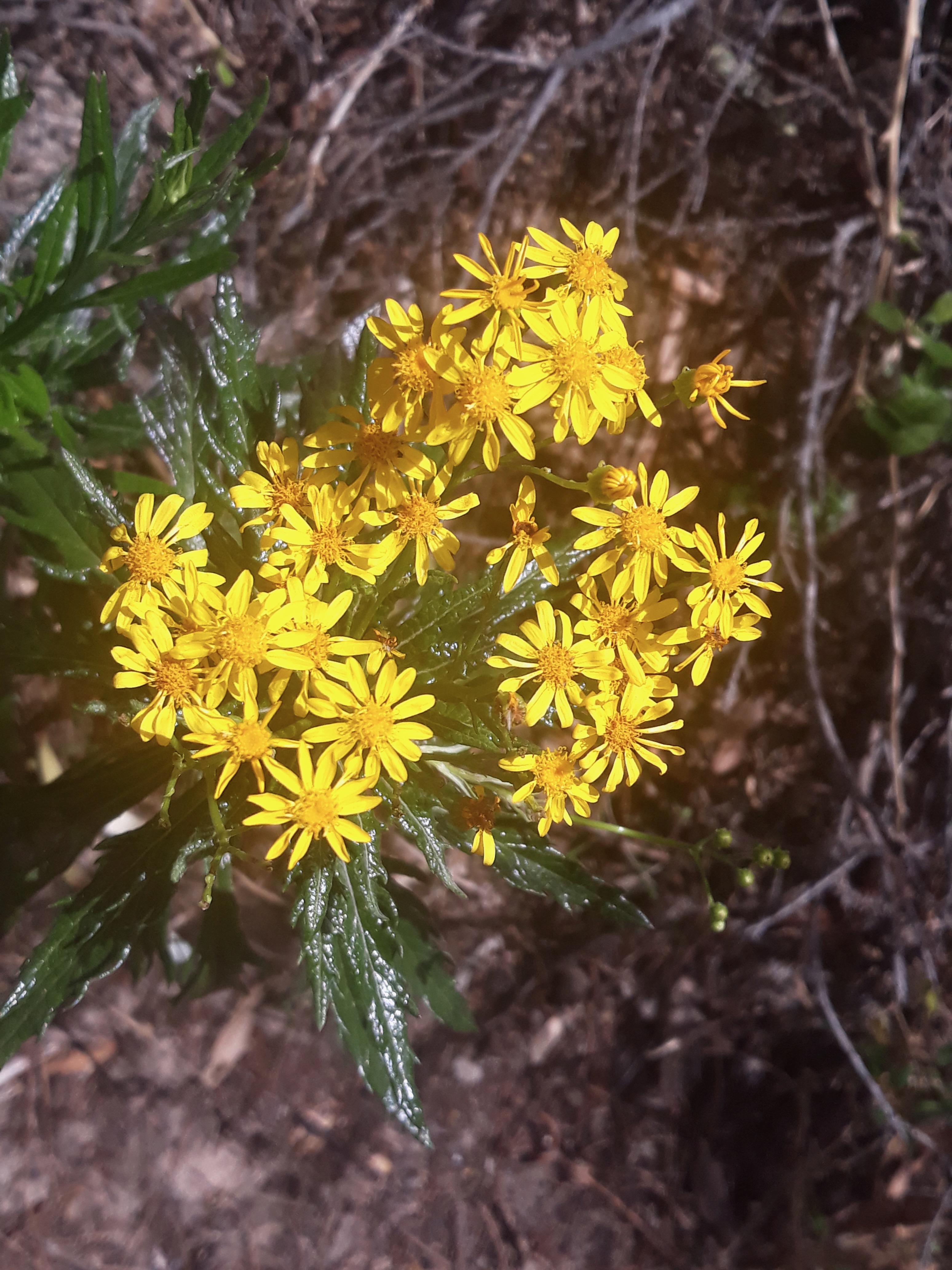
Late groundsel flower, December 2023.
Lately I’ve been reading …
-
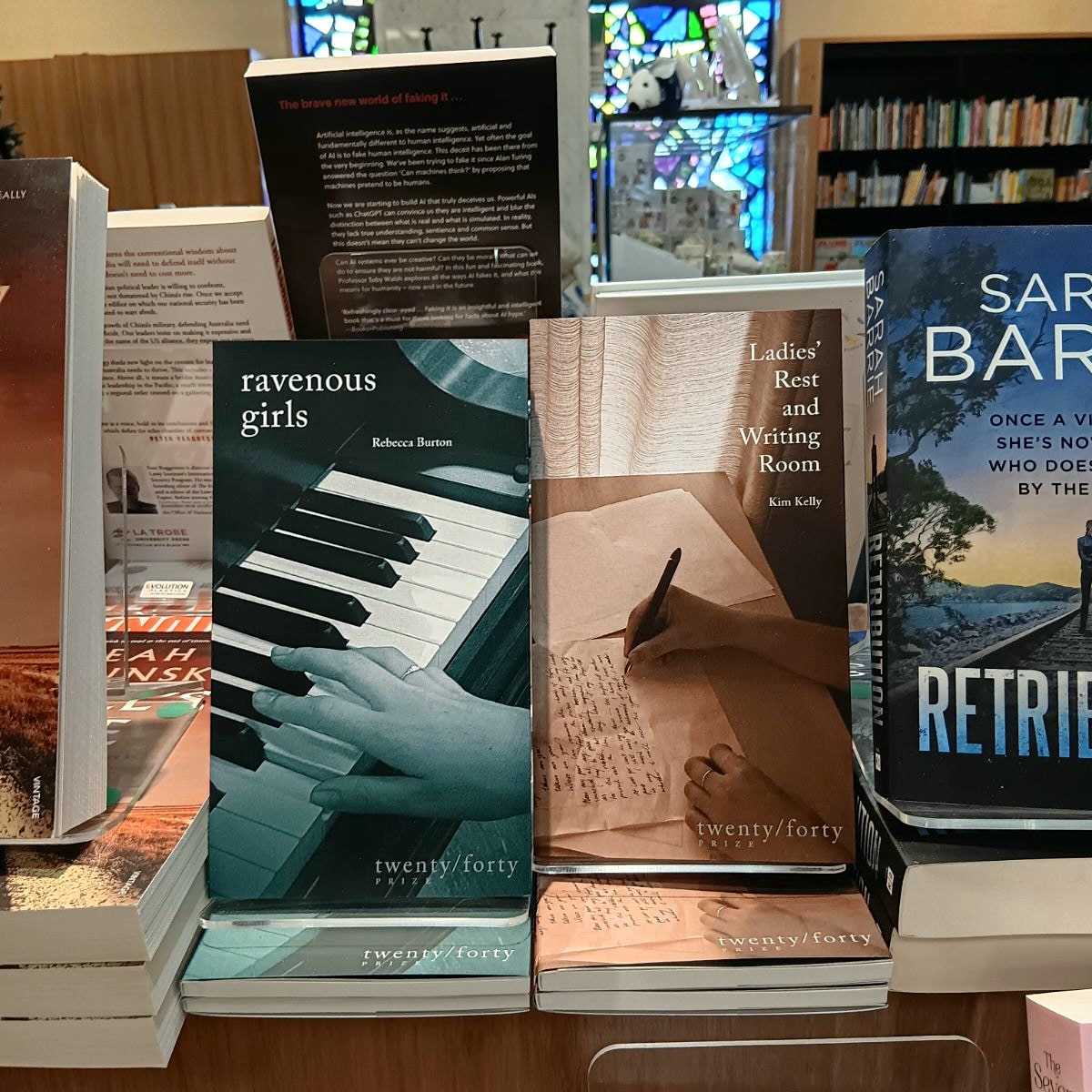
- First, some of my own good news: Paul Daley named my novella, Ravenous Girls, as one of the best 25 Australian books of 2023 in The Guardian. I’m honoured and somewhat astonished to find my name listed in amongst all the other names that appear on this list, many of whom are writers whose work I adore.
- The enigma of how to sell a book touches all corners of literary culture: Tajja Isen, in a fascinating piece on how hard it is to sell a book, and how few books actually do sell.
- I did not know how to fall asleep without a book, how to wait without a book, how to be, without a book: Sarah Wheeler, with more on books and reading, this time making the case for audiobooks, which saved her from losing the ability to read during a bout of severe illness.
- With apologies to the everything-happens-for-a-reason crowd: no, there are indeed some things in life that are profoundly meaningless: Matthew Hays on reading his writer friend’s posthumous book after suicide.