
Other people’s words about … counting calories
In 2008, I downloaded a new app to my iPod. The icon featured a silhouetted figure in the middle of a balletic jump, lithe and limber like I wanted to be, and when I clicked open the app I was welcomed and asked to input my height, current weight, age, gender, and goal weight. MyFitnessPal, which debuted on the app store in 2005, is to this day one of the most popular calorie counting apps worldwide. Its icon is also regular featured in eating disorder starter pack memes and discussed on pro-ED websites. ‘Does anyone else have MyFitnessPal app trauma???’ someone posted, while another joked darkly about ‘the myfitnesspal to eating disorder pipeline’, and another mocked ‘myfitnesspal’s yassification of orthorexia’. The app is focused on calories in and out, calculating your personalised daily allotment based on your biometrics and the date by which you’d like to hit your weight goal. During the era I spent addicted to the app, every time I considered putting something in my mouth, I searched it in the apps’s expansive database, and often decided against eating it after seeing its caloric content. What I did eat, I entered, and the app updated my remaining calories for the day accordingly. The app quickly became a ritual and a rulebook, and scrolling my daily record in bed at night a practice as yearnful and penitent as running my fingers through rosary beads.
from ‘Dead Weight‘
by Emmeline Clein
I have written two novels now that feature characters with eating disorders in them, a YA novel and my recent novella, Ravenous Girls. Both the characters in my books, like myself, experienced the onset of their anorexia in the late 1980s or early 1990s, before the existence of the internet, let alone of iPods and the app store. And yet when I read the passage I’ve quoted above by Emmeline Clein, I thought how familiar it sounded and how, despite the passage of time and the onslaught of digital technology, the experience of anorexia has remained in its essence the same across generations, at least in certain parts of the world and among people of a certain class.
Whether you count calories by consulting a book of charts that is updated and republished annually (as my characters and I did in the 1980s) or whether you download an app and then ‘chat’ about it online with your pro-ana friends, you are still counting calories. You are still measuring yourself by your food intake and the effect it has on your physical appearance. You are still, in other words, measuring your worth by what you eat and how you look.
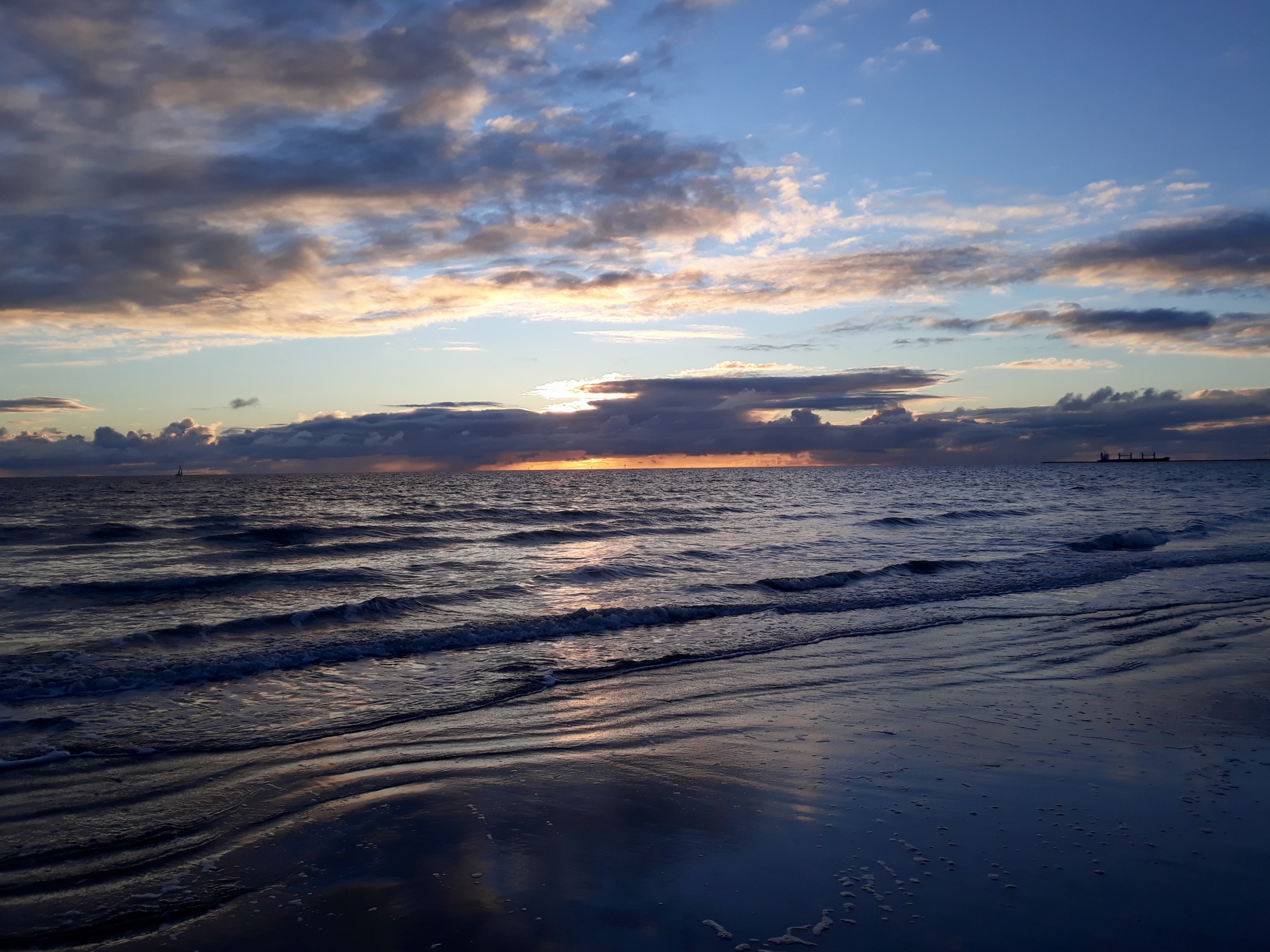 Taperoo Beach, July 2024.
There are people who say that when we write about the experience of anorexia we trigger others to seek the experience out. I am not one of those people. The subtitle of Clein’s book is On Hunger, Harm and Disordered Eating, and I think it’s the first two words of that subtitle that grab me most strongly. Hunger is the primary experience of anorexia, whatever your age or sex or class or gender, and harm is the result — in some cases, terrible harm.
Perhaps we can’t prevent that harm when we write about it, but perhaps, too, we can try to make sense of it. And that, I believe, is important.
Lately I’ve been reading …
Each week I bookmark pieces I’ve read online that I might list on my blog, and each week my list grows and grows, since I read far more than I blog. For this post, I’ve dived into my archive of bookmarks for some pieces I’ve loved over the last two or three years.
-
- Twenty years ago we did not have constructive ways to leave the age of fossil fuel behind. Now we do. And the solutions keep getting better: Rebecca Solnit, on why the stories we tell about climate change are as important as the things we do — and why they’re not, in fact, all about doom and gloom. Like many people, I tend to spiral into despair whenever I consider climate crisis. Solnit’s piece, from early 2023, is considered and wide-ranging and allows much room for hope.
- When I was confident we could meet socially, or off-the-record, we embarked on that all-too-rare thing in adult life – a new friendship: Alice Vincent, in another piece from 2023, on forming friendships later in life.
- But I knew, even at that young age, that I had to write in order to feel whole. Whether or not anyone else read my work, or paid me for it, was a separate matter: Ann Napolitano with some wise words on writer’s block, on not writing what you know, and on offering yourself grace.
- Again, I feel grateful that so much of my education happened in spaces of that kind of permissiveness, where the value of unexpected pleasure was seen as greater then the danger of non-catastrophic, unpleasant experience. That space of permissiveness allows for a kind of discovery: I’m a huge fan of Garth Greenwell’s two novels, What Belongs to You and Cleanness, so when I heard that his next novel is coming out later this year (in the US, at least), I got pretty excited. While we wait for that, here is Greenwell in a fascinating, thoughtful conversation about cruising, queer spaces, the #MeToo movement and capitalism.
- It didn’t occur to me to be scared: Maggie Slepian, in a more recent piece, tells a startlng, moving story about how she nearly drowned while she was out kayaking … and what happened afterwards. This one is worth reading all the way to the end, though I can’t promise you won’t cry.
- The sex was okay, I guessed, but what I really liked was seeing my body through their eyes; the hollows of my stomach, the knobby delicacy of my collarbone. I still felt a sick shame in the pit of my stomach in the morning when they left, but it was less like an overpowering stomach flu, more like a mild bug: I’m finishing with this more recent piece by Emma Specter, which returns to the theme of my post today, and what Specter calls the ‘calculus [of] … calories in, calories out’. Does this sound familiar?
 twenty-one words