
Other people’s words about … making art
There were always concessions. Little self-betrayals of one’s values and virtues and morals, the thousand ways everyone cut against their convictions in order to get things done. That was the real crux of modernity. The extractive cost required to make any kind of progress. No matter what you did or sought to do, the cost was always a little bit of yourself. You could keep your work whole and intact, but then no-one would ever see it. And even if you did pay the price, it was possible that your work would end up stuffed in a desk in a place upstairs, totally forgotten. Anyway, it wasn’t like he was staking anything of value to anyone else — just his integrity.
But that was all [Wyeth] had. That was the one thing left to him in the whole world. His convictions. His sense of not betraying himself to get ahead. Putting a painting in that show — not that he had a painting to begin with — felt like a kind of death. Like the only kind of death that really mattered to him. The death of his vision of himself as a painter. What would he do after that? What would he have left to him?
‘It’s possible to over think things,’ Bernard said. ‘Really, it’s down to what you want to do.’
‘Agency,’ Wyeth said.
‘I know. How awful.’
From ‘Minor Black Figures‘
By Brandon Taylor
I can think of no-one who writes better about living in the modern world as an artist than Brandon Taylor. No-one, more particularly, who writes better about being a young, queer, Black male artist in the twenty-first century who is trying to practise art while not succumbing to the white gaze. (Taylor describes white supremacy in another wonderful passage in Minor Black Figures, as giving Black artists a tiny white man in your mind to argue with constantly all the way up and down until you died never having had a single thought that was not either about whiteness or a reaction to whiteness).
This is not my story, clearly. Still, as a (middle-aged, white, female, straight) writer, I feel a great deal of kinship with Wyeth in the passage above as he struggles with the value and integrity of his art practice. Yes, yes, yes.
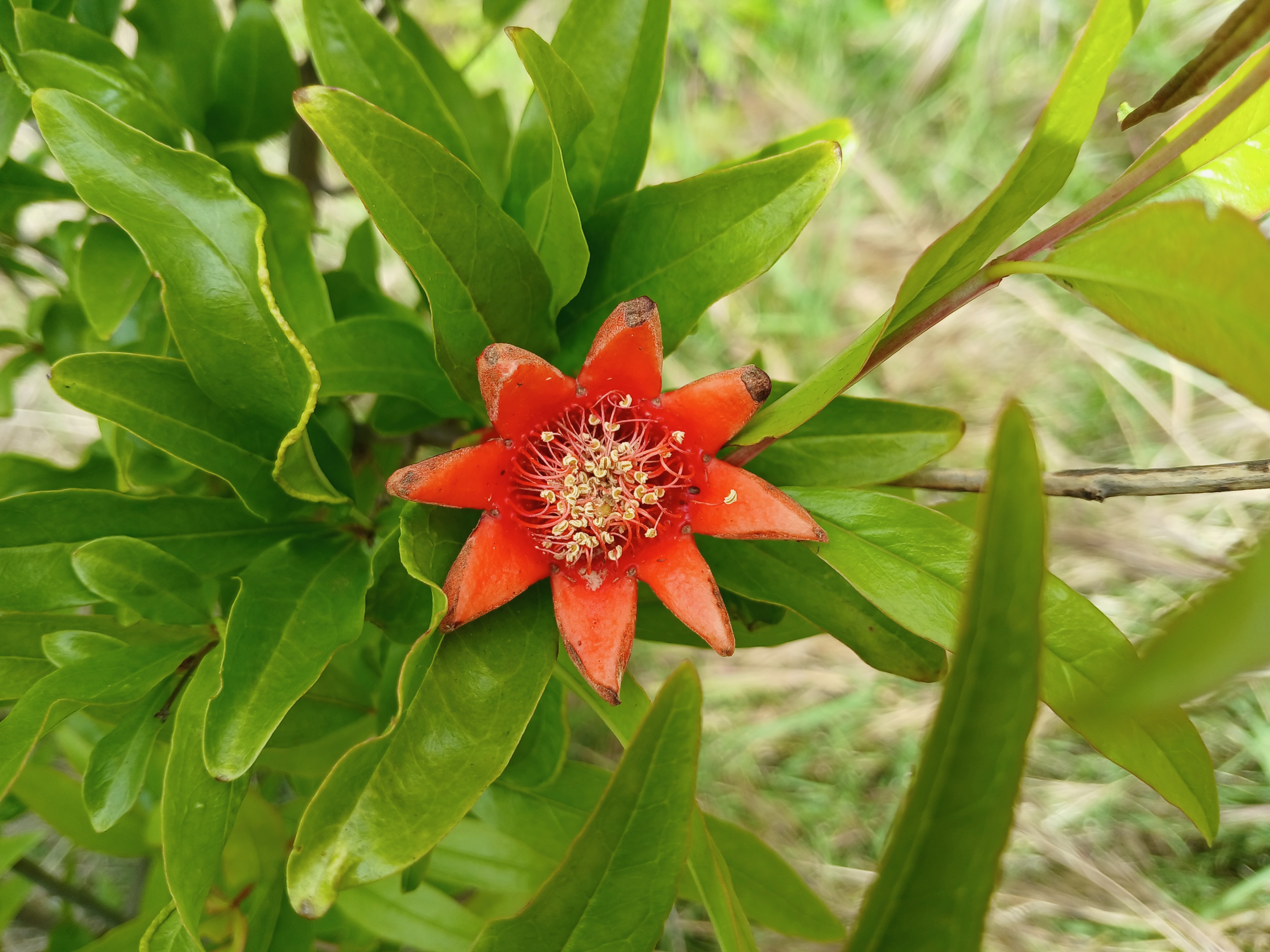
Pomegranate flower in my garden, November 2025.
For myself, post-publication of my novella Ravenous Girls, I’m still writing. Still writing, still learning. I am often puzzled by the values I encounter in the publishing world and more broadly in the world of books and reading — puzzled by how writers seem to be valued more for their productivity and conformism than for what they have to say or how they say it. As a consequence, I don’t know if I’ll ever have another book published. But I do know that I will continue to write, and that the act of writing — when I separate myself from its place in the commercial world — is meaningful to me, in and of itself.
Or, as Taylor puts it: Anyway, it wasn’t like he was staking anything of value to anyone else — just his integrity.
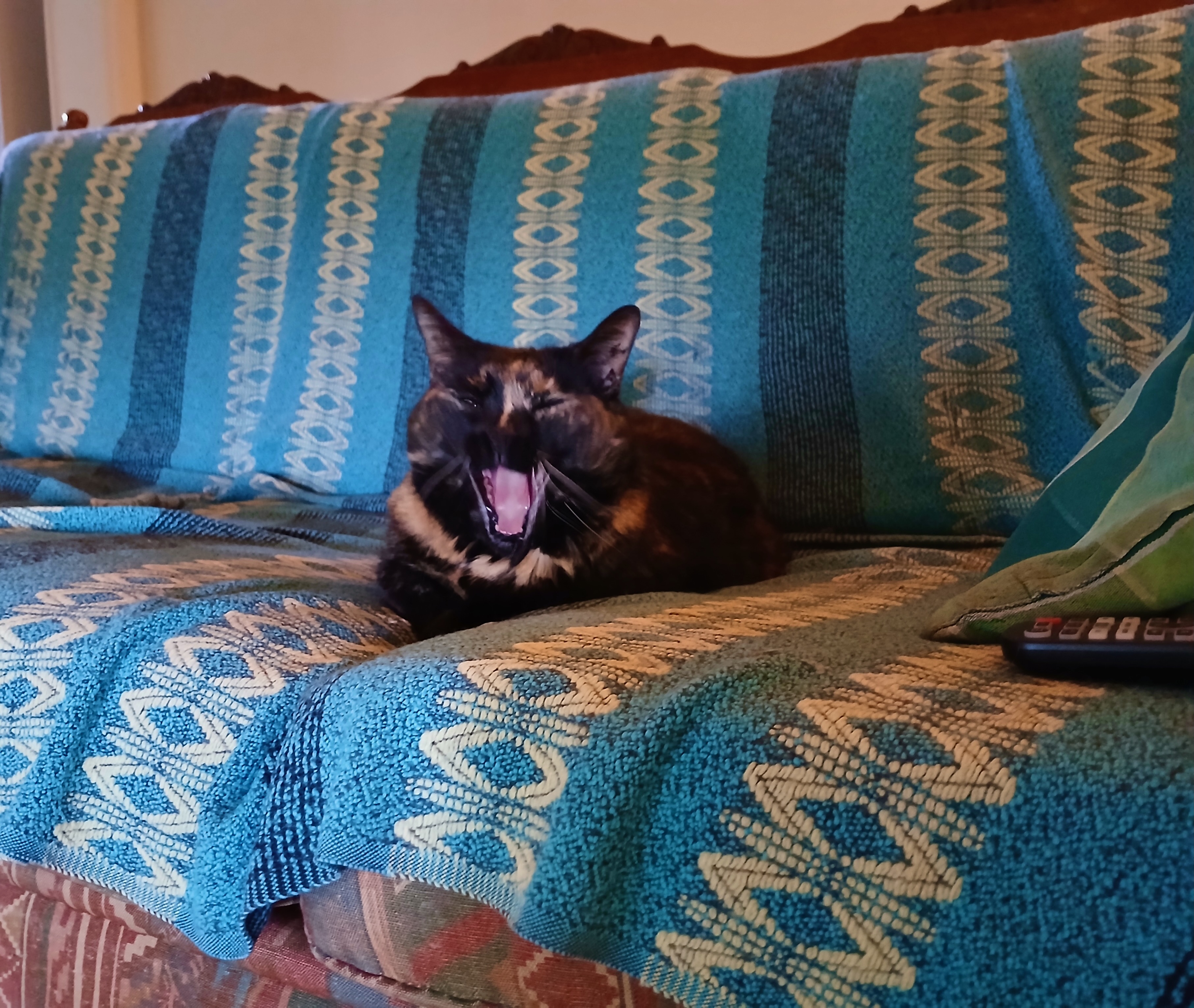
Lizzie mid-yawn, November 2025 (this cat has no issues with her own integrity!)
Lately I’ve been reading …
I’ve been exploring the world of short fiction in the last year, discovering some wonderful short stories, flash fiction and micro fiction in the process. Below I’ve listed some of the stories I’ve enjoyed — happy reading!
- You reach your forties and your life’s nothing but bus rides to work … Sordid Little World by Gerri Brightwell, via X-Ray Lit Mag.
- I warned you that my grandmother wouldn’t like you and that you wouldn’t like her … an unnamed piece of micro fiction by Sophie Hoss, via Ninth Letter.
- I do not want to die here … Godless, by Australian writer Mel Goode, in monkeybicycle.
- My father and I got into a fight over a kitchen mouse that lived in our bread … Fried Chicken and Pumpkin Pie by Adrienne Beer, in the Roanoke Review.
- The pendulum appears in the house in March … The Pendulum by Ea Anderson, in Peatsmoke Journal.
- They are prone to many things. They are prone to squabbling, which for some is another way of conversing … Bluebird by Michael Edman, via L’Esprit Literary Review.



 twenty-one words