
Other people’s words about … beauty
I have always been described as beautiful. Or sometimes pretty, which is worse. It started when I was a child, and my teachers would admire my pale blonde hair. But then it darkened and is now a muddy brown. Muddy like my feet. I don’t think boys are meant to be beautiful. They don’t know what to do with it. I certainly didn’t. When I look at beautiful women, especially young ones, there is a resignation to them. They understand that they have been gifted a very particular currency. They have lots of it to spend but it’s laced with mercury, or perhaps lead. Some kind of metal that will eventually make them sick. I do not desire young women. I rarely desire any women at all, but young women make me sad. Along with the resignation that young women possess, comes a certain amount of understanding. They know what to do with their beauty. I never did. I worried that my face was too feminine, that my full lips would somehow give me away, would let the straight boys at school know that I wanted to taste them. And I wasn’t wrong, most of the time.
Now that I’m older, I’m careful to dress in a masculine way. I never shave my face cleanly. But when people talk about my beauty it still makes me panic. I could not take off my shirt in front of the poet [at the picnic] because she might read some meaning into it that I hadn’t intended. Despite having seen me naked, multiple times, the idea of being shirtless and barefoot and lying on the grass in front of the poet made me feel as if I had no skin, and that my flesh was just open to the sun.
From ‘Kingfisher‘
By Rozie Kelly
I first ‘read’ Rozie Kelly’s novel Kingfisher on audiobook, which is to say that I listened to it. I am not in general someone who chooses often to listen to audiobooks; I find they encourage multi-tasking, whereas I like to read with a book in my hands, immersed only in the text itself. In a world that is all about reduced concentration spans and multi-multi-tasking, I treasure the simple, slow luxury of reading.
Having said that, I have recently begun listening to audiobooks when I’m out walking. Long-term readers of twenty-one words will know that I live by the beach and like to spend time walking there, but during the worst of the algal bloom that hit the South Australian coast last year, I found that I couldn’t bring myself to do this anymore. Walking on the beach during this period meant encountering dead marine animals in their masses, and even after the State Government took to cleaning up the beach each day to remove the carcasses, it remained for me a place that triggered grief. The ocean felt to me like a graveyard.
While the worst of the algal bloom is now deemed to be over, at least for now, I still don’t feel the same about the beach. What happened along our coast over the last twelve months is for me clear evidence that we are at the tipping point of irreversible climate change. These are sad, sad times.
So I have taken to walking around the streets where I live, along tree-lined footpaths, past houses with neat and not-so-neat front yards, along the railway. And because this kind of walking isn’t the kind of nature-immersion exercise that walking on the beach has always been for me, I’ve started listening to audiobooks while I walk. Kingfisher was one of the first novels I listened to in its entirety in this way, on loan from my library, and I loved it. (I loved it so much, in fact, that I bought the print version so that I could re-read it whenever I want to.)
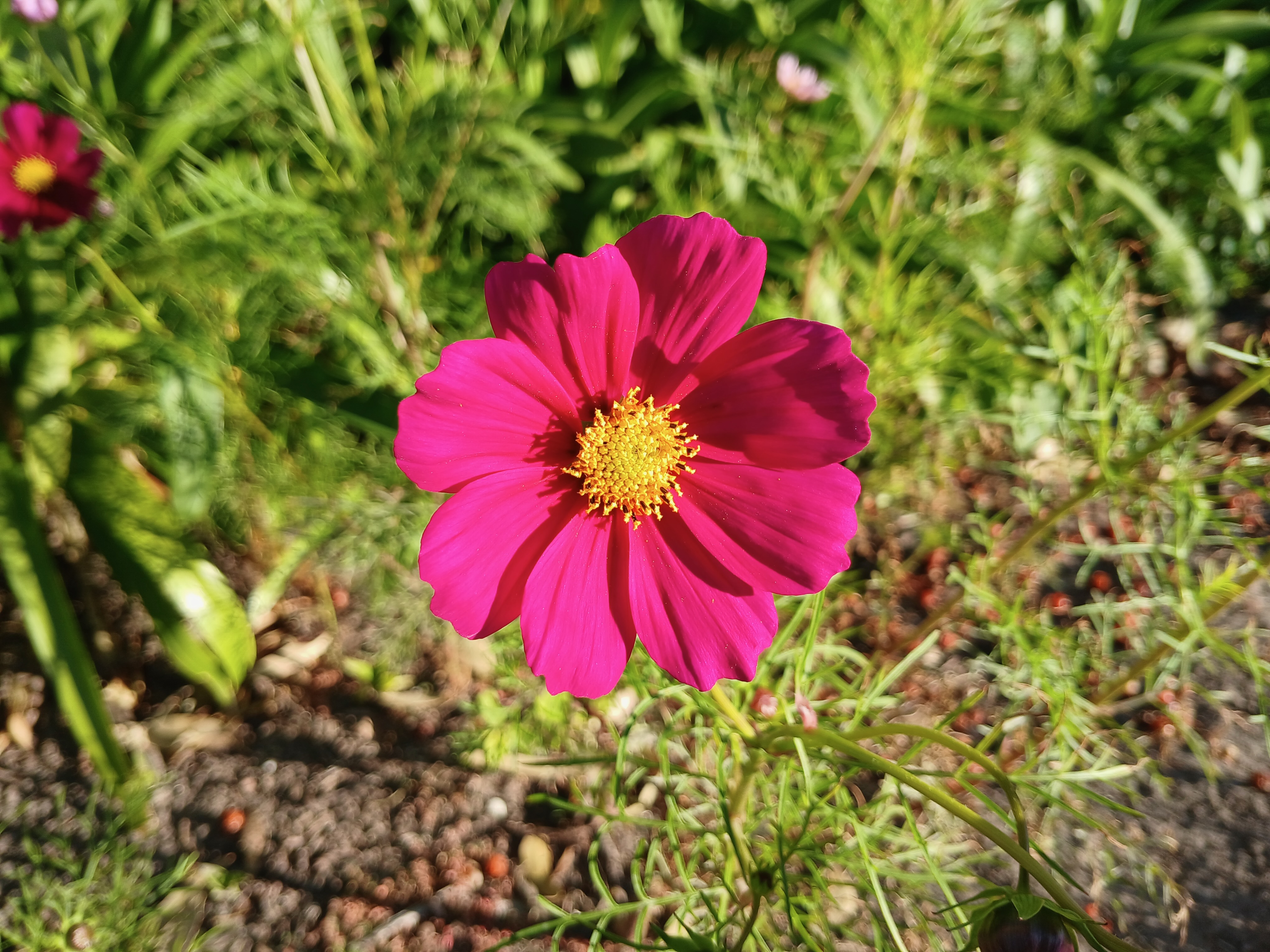
Garden flowers, April 2026.
There is so much to unpack in the passage I’ve quoted above. I love Kelly’s exploration, through the voice of her unnamed male narrator, of beauty, and her description of beauty in young women as being some kind of metal that will eventually make them sick. I love, too, the way she explores the idea that beauty is different in men, that it has different implications and obligations and connotations. I find the narrator’s need to mask his beauty, to make himself more masculine, and his fear as a beautiful man of being misinterpreted — this man who is, at this point in the story, in love with two people, his male lover Michael and an older woman, a poet — poignant and convincing.
On the topic of stories about beauty and the experience of embodiment more generally, I’ve had another short story published recently. If you’d like to read it, you can find it over at Peatsmoke Journal. It’s called Instructions For Living A Life.
Lately I’ve been reading …
- Two weeks before I lost my home, I found a coat hanging in the attic. It was a large coat of pilled gray wool, worn out from years of use: ‘The Ghost Coat’, a short story by Catherine Lacey in Granta.
- I am standing in line at the cash register to buy a ticket to the museum, and it is a weekday in spring, and it is crowded with people. It is not exactly a line, because the gift shop is not set up for there to be enough space for a line, it is more like a loose milieu, and even though I think it should be clear that I am in the milieu, that I am waiting for something, a man and a woman in their sixties, both white, step in front of me: ‘At the Gift Shop in Los Alomos’, a short story by Claire Stanford in The Offing
- Tell me a story, he said. A happy one. Your stories are always so sad: ‘True Love with Three Olives and a Twist’, a piece of flash fiction by Peter Kazon in Electric Literature
- Cook a large fish—choose one with many bones, a skeleton / you will need skill to expose, maybe the flying / silver carp: ‘How to Apologise’, a poem by Ellen Bass

