The reader

Other people’s words about … books

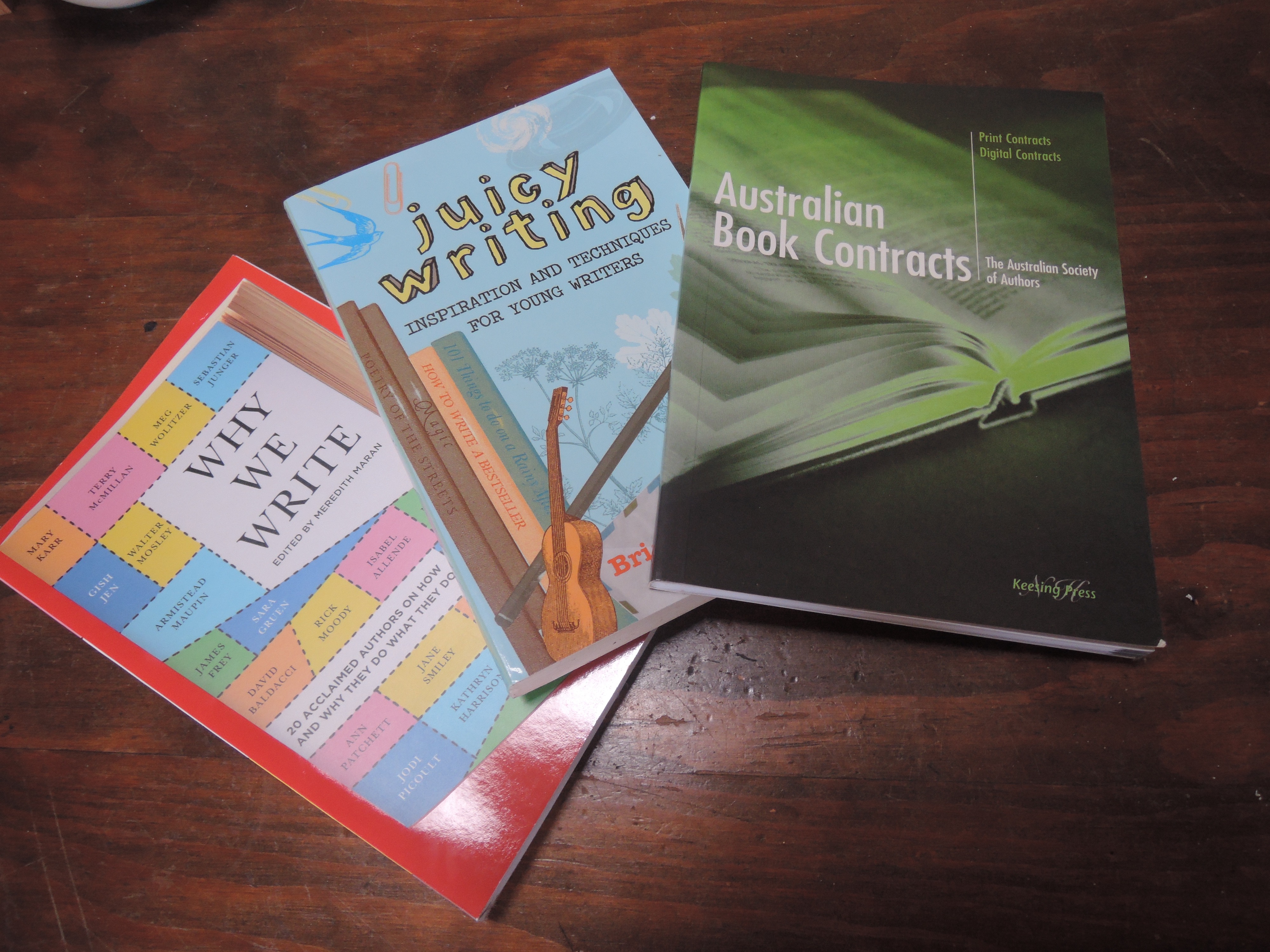
She has always been the reader — no-one else in the family is that interested. She had carted her books from house to house as a student, the boxes growing in number each time, keeping them because she could not imagine doing otherwise, and because she thought that there was something permanent in a book, that it lasted forever. But now, when she takes an older paperback out to reread or loan, she is surprised at how fragile it has become, the paper threatening to tear in her hands if she turns the page, tiny black specks embedded in its tissue pages; bugs, probably. She should have cleared them out, she thinks. Packed them up in boxes for recycling. No-one would want them when she was gone.

From ‘Between a Wolf and a Dog
by Georgia Blain

I grew up in a house in which every room contained a bookcase or a wall lined with bookshelves. I remember kneeling in front of those shelves as a child, scanning them, trying to make sense of the order in which they had been shelved, trying — with a child’s sense of incomprehension — to understand the titles. There were lots of orange paperback spines (oh, those old Penguin classics!). There were fat, hardback dictionaries — volume after volume of them. There were thick novels with white covers and raised lettering. There were books with titles like Fear of Flying, which didn’t seem to be about flying at all. There were books with titles containing words like ‘teach’ and ‘literature’ and ‘linguistics’ and ‘semantics’.

And none of these books had pictures in them.
DSCN2822

I made a vow when I was about seven or eight years old that I would never, ever read an adult book. The books on my parents’ shelves seemed to be about — or to come from — a disturbing adult world: a world of which I knew I wanted no part. And so the first time I read a book without any illustrations, I felt half-proud, and half-afraid. Was I crossing over to adulthood now, after all? Could I stop myself? It seemed not. Reading, in the end, was more than just enjoyable: it was essential.

As a young woman, I lived for many years in a series of rented houses and share households. My housemates and I each had our own bedroom, but we shared saucepans and bowls and TVs and washing machines. We talked about the films we wanted to see, the music we liked to listen to, the books we had just read. We cooked for each other and shared bottles of cheap red wine and chardonnay. We borrowed novels from the local library, and bought tattered secondhand paperbacks from the local op shop.

During those years, I stored any books I owned on a makeshift shelf that I’d constructed by putting bricks on my bedroom floor and laying a plank of wood over the top of the bricks. Later, I went through a phase where I decided that lettuce crates were a cool way to store my books. I couldn’t bring myself to buy a proper bookshelf. I was afraid, I think, of making the commitment. A bookshelf spelled permanency. It spelled adulthood. It spelled turning into your parents. I wasn’t going to do that. (Why, I wonder, are we so fervently against turning into our elders when we are young? Now I would be honoured to think I was, or am, like either of my parents.)

DSCN2825

I don’t remember exactly when I gave in to owning a bookshelf: to growing up, to admitting, happily, that I shared my parents’ passion for literature. I am glad that I did, though. The books on my shelves may one day fade, their pages tearing, their covers warping with damp. They may seem meaningless to anyone else. And yet there is something permanent in them: there is something that lasts forever, despite their physical frailty.

Reading transports to you another world: a world of someone else’s creation. It makes you feel things — sadness, joy, anger, bewilderment. Writers share their worlds with us; their books are their gifts. Those gifts leave an imprint on us. You can’t store that imprint on a plank of wood resting on a brick. You can’t stack it in a lettuce crate. And you certainly can’t pack it up and recycle it.


An open door

Other people’s words about … inspiring teachers

DSCN2815

I brought Vera to one of [my mother’s] lectures. It was held in the quadrangle at Sydney Uni and the hall was packed. Vera and I squeezed in at the back next to the open window and then my mother made her entrance, rushing in with a briefcase under her arm. She didn’t know we were there and didn’t see us. Applause broke out, brief but enthusiastic.

‘Oh,’ she said as she reached the front, ‘you are being entirely silly and adorable.’ And then she put on her reading glasses and began the lecture. I didn’t hear a word of what she was saying. I just kept thinking that I too would have clapped had I not known her. There had always been a kind of heat emanating from her. People responded to it, and that day was no exception; that day she made everyone feel that Political Science 101 was a gateway to a brilliantly inspired life.

from ‘What the Light Hides
by Mette Jakobsen

When I began my Arts degree at university, the one subject I refused to enrol in was the subject in which my father was a lecturer. I didn’t want to have the experience of being tutored by, or lectured to, or graded by, a parent. I wanted to make my own way through university, no strings attached.

DSCN2818

Still, word gets around. My father was an immensely popular lecturer: fallow students in other subjects began to come up to me and say incredulously, seeing the surname I shared with him, ‘I think your Dad’s my lecturer.’ The lecture theatre was always packed when it was his turn to speak. He told anecdotes that made students rock with laughter, and the passion he expressed for his subject lit up his eyes, filled his voice, guided his gestures. He was cool; he was a legend: friends told me this all the time. I know now, as I did then, that his students, walking under the shaded trees of that campus, strolling past the old stone buildings with the arched doorways and the spreading lawns, were lucky to have him.

DSCN2821

It’s a cliché, but teachers and lecturers really do change our lives. When I was in Year 12, I had a teacher who shared the same kind of popularity amongst students as my father did at university. She taught Australian history — a subject as dry and dusty as any you could think of, at least back then, in the days when the history of Australia’s first people was rarely considered or contemplated in high school classrooms. She took us through the history of the Australian Labor Party, the social history of (white) women in Australia, the beginning of national pride in Australia.

Like my father, she taught by telling stories. She had a flat, slightly croaky voice, and crinkled, grey hair through which she would push her hand as she walked between our desks. The whiff of cigarette smoke hung about her clothes — woollen jumpers, tweed skirts — leaving a trail behind her. She kept a sheaf of notes on her desk to consult if she needed to, which she rarely did. Mostly, she just talked. Sometimes her voice grew sad, sometimes urgent. If I close my eyes, I can still hear her talking.

Beyond history, she also taught us how to study. It was from her that I learned how to take notes, how to structure an essay, how to study for exams, how to practise good time management so that you could hand in an essay on time. I took those skills with me to university. I wasn’t happy socially the first time I attempted university — indeed, I left at the end of that first year and didn’t return for another six years or so — but I loved the academic challenge of the subjects I was studying, and I have my Year 12 Australian history teacher to thank for that. To this day, I still use the skills she taught us to structure anything I’m writing or drafting, and I rarely miss deadlines. That’s because of her.

DSCN2819

If you look closely, you’ll see a common theme in each of the photos I’ve chosen to accompany this post. They are all taken on or around my local campus, the University of Adelaide — and every one of them shows a door or a window. That’s because learning should be about opening doors, letting fresh air into our minds. It should be about allowing us to enter new worlds, to see things from a new perspective.

Gifted teachers guide us through this process — people like my history teacher, people like my father. They change our lives for the better.

In return, we carry their teaching with us for the rest of our lives. We never forget them.

The one true story

Other people’s words on … writing

He said, ‘What is your job as a writer of fiction?’ And she said that her job as a writer of fiction was to report on the human condition, to tell us who we are and what we think and what we do.

from ‘My name is Lucy Barton
by Elizabeth Strout

When I first began this blog, I was adamant that, though I am a published writer, my blog would not be about writing. A writer can blog about things other than writing, right? A writer isn’t just a writer: a writer is a person; a writer has a life. That’s what I wanted to blog about.

Besides, it seemed to me that blogging about writing would be, in my case, an inexcusably audacious act. My thinking went like this: I have published only two books. I haven’t published anything since 2010. My books have gone out of print. What can I tell anyone about writing? Who would want to read what I had the temerity to say?

Early drafts: an audacious act

I don’t much like the word ‘writer’. Perhaps it’s because I haven’t published much and don’t make a living from my writing, but I feel pretentious and arrogant when I call myself one. I think of myself instead as someone who has written two books, and would like to write another one, but is struggling to do so.

That’s another word I don’t like: ‘struggle’. When I first began writing stories and fiction, the writing was an act of joy. It was a process of humble discovery. Each word that I wrote, each sentence, each chapter, was a journey. I was learning to do something new. I was learning to do something I loved. I was learning.

Writing is a learning process
Lessons in writing: all part of the learning process

So when I first read the words I’ve quoted above from Elizabeth Strout, I thought: Yes! Writing fiction, for me, has always been about opening myself up to sorrow, and to joy, and to humility, and to discovery. It’s about expressing those things, however afraid I am to do so. It’s about making sense of my life. It’s about trying to make something beautiful. It’s about having the temerity — the audacity, the arrogance — to share my words with other people: people who, like me, love reading.

Most of all, writing fiction, like blogging, is about sharing.

And so that’s the reason I’m posting these words about writing today. Call it pretension; call it temerity. Call it audacity; call it arrogance. Call it learning; call it sorrow; call it joy.

Elizabeth Strout again (from the same book):

You will have only one story … You’ll write your one story many ways. Don’t ever worry about story. You have only one.

Maybe this is the only story I have to share, but that doesn’t mean it’s not worth sharing.

The butterfly bush

Other people’s words about … English gardens

The garden was in a jungle state of desuetude: weeds were everywhere. The top lawn descended to a second, where was a tangled rose garden and sun-dial: thence further descent, past more noble trees to a third lawn in the middle of which was a pond, or miniature lake. It had an off-centre well-scaped island, containing one weeping willow and some iris out of flower. Pigeons flew heavily out of bushes like people leaving a play of which they disapproved. Rabbits cavorted and then escaped their attention just in time. A huge old buddleia was spattered with either tortoise-shell or Painted Lady butterflies. Arabella seemed delighted by the whole thing.

from ‘Odd Girl Out
by Elizabeth Jane Howard

When I was fourteen years old, my family spent a year away from Australia, living in England. My whole family, on both sides, comes from the UK; my sister and I were born there, too. We migrated to Australia when I was three.

So the year back in England was a homecoming of sorts, for my parents, at least. We lived in an old stone coach house, in Oxfordshire. As I remember it, the coach house stood on stilts in the gardens of a much grander house, also built of stone. There were brambles, and two black cats — one bold and prowling, the other timid and long-haired and neurotic — and several peacocks strutted the spreading lawns, letting out frightening, ghoulish shrieks beneath our windows. That year, the winter in England was unusually severe, and drifts of snow built up in the garden and in the country lanes leading to our house. My bedroom in that cold house was tiny, with room only for a single bed, a chest of drawers, and the hot-water boiler. Because of the presence of the boiler, though, I remember my room as being always cosy and warm. It had cheerful Laura Ashley wallpaper with sprigs of tiny green flowers dotted all over it.

Butterfly poster
Butterfly poster

My grandparents on my mother’s side had retired to live in Dorset, and we spent many weekends there. My grandfather loved to garden; he had a small allotment on the fringe of the village, where he grew runner beans and potatoes and lettuce and — that most English of vegetables — spring greens. Their own backyard was small, with a stone wall at the end, beyond which cows grazed in a field.

Near the house grew a bush with beautiful purple flowers. Memory is a strange thing — I remember this bush as a buddleia bush; I remember my grandfather telling me that’s what it was; and I remember the butterflies that visited it in the spring, drinking nectar from the flowers, their wings warmed by the sun as they clustered on the blossoms. Now, years later, my mother tells me the bush wasn’t a buddleia at all: it couldn’t have been, because my grandmother considered buddleias weeds. It was, in fact, a lilac tree.

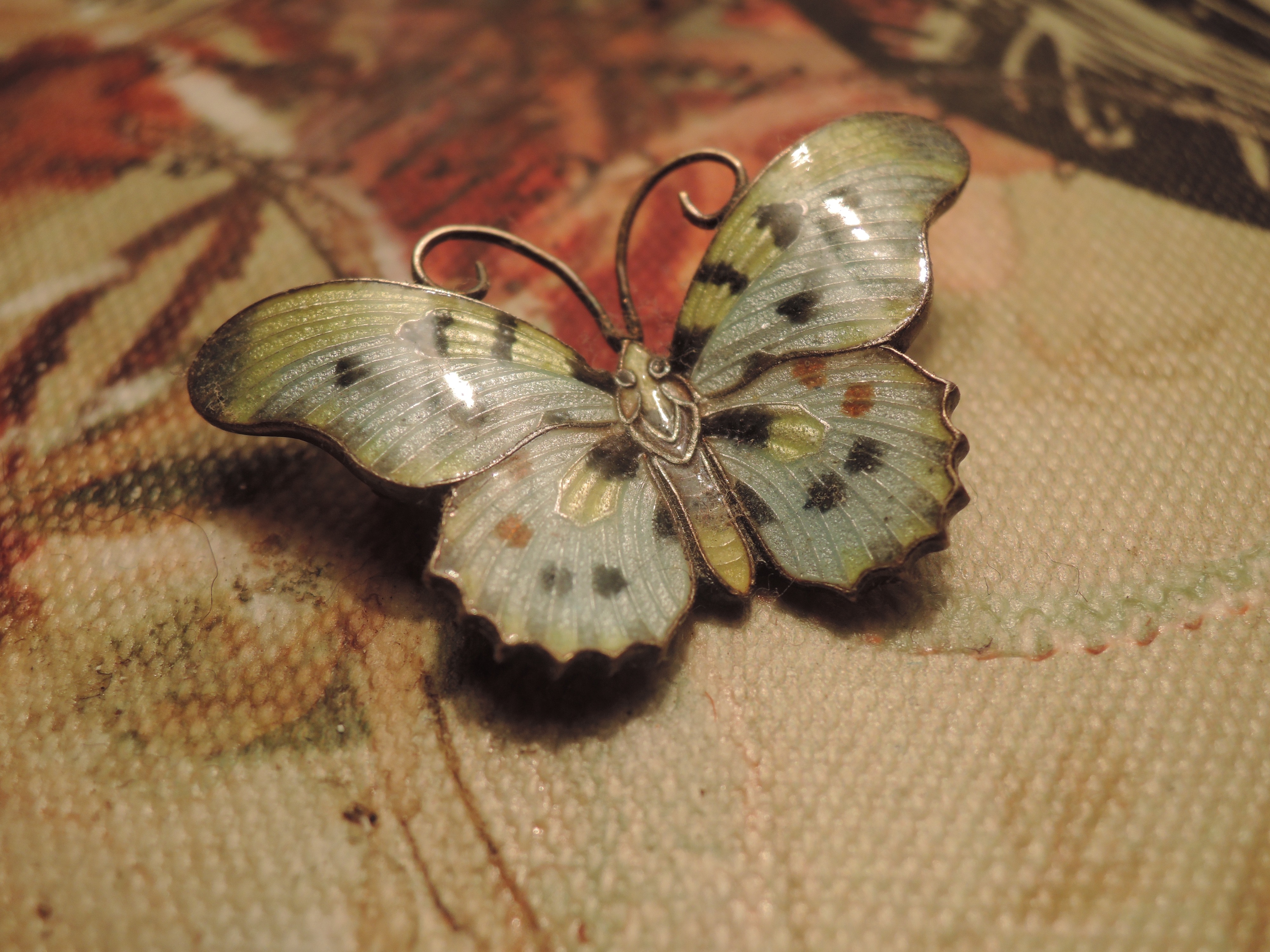
Butterfly brooch (1)
Butterfly brooch

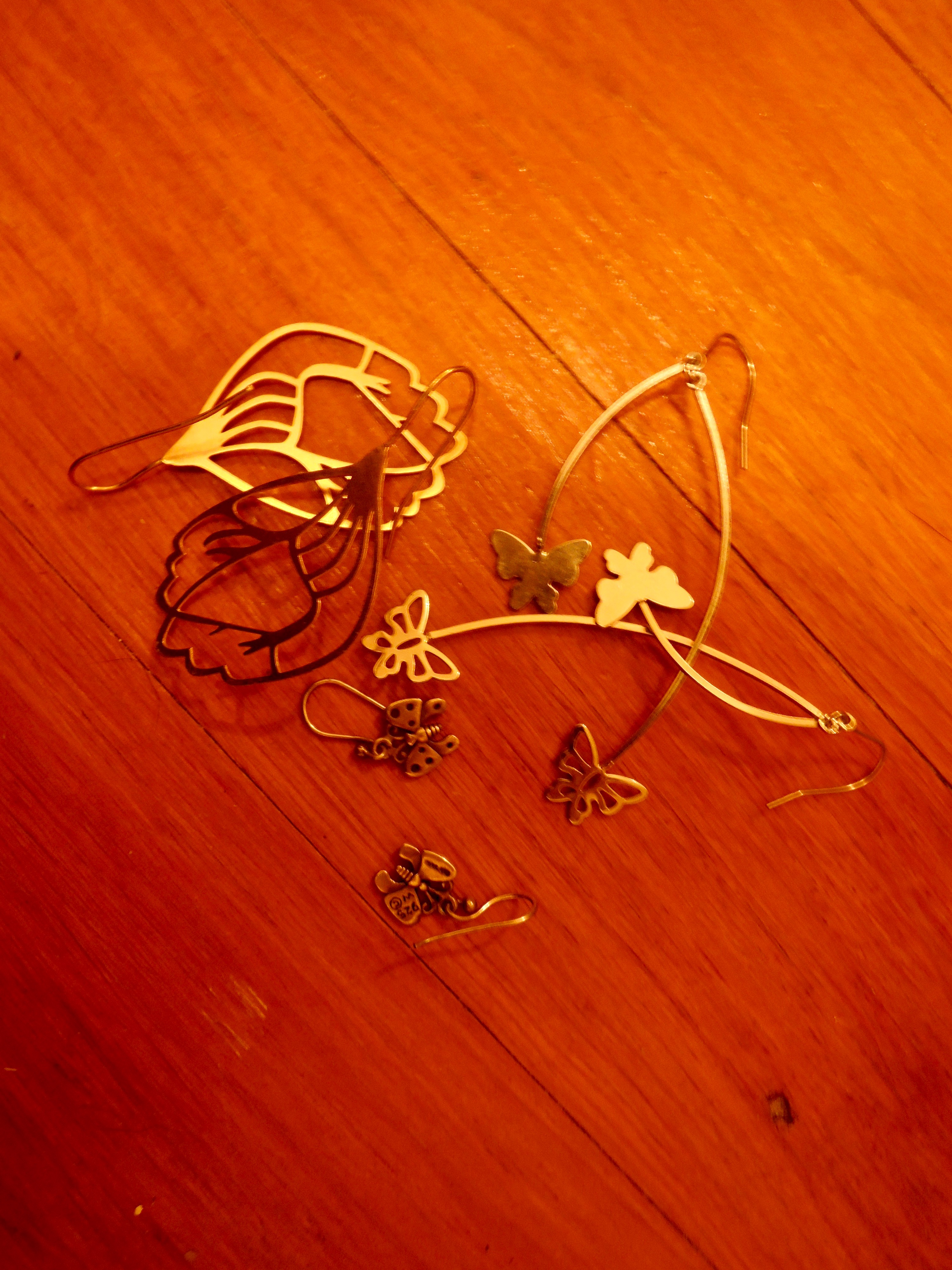
However faulty my memory is, I know that it was in my grandfather’s garden that I learned to distinguish between tortoiseshells and painted ladies and swallowtails and cabbage whites. Though we returned to Australia a year later, I retained my love for butterflies. The butterflies here are different, and I delight in them just as much, so much so that my house is cluttered with butterfly ornaments and trinkets and gifts from friends.

Assorted butterfly earrings

How do I remember England and our time there? That’s another memory for another time. Lest anyone wonder, this post isn’t intended to be a commentary, condemnatory or otherwise, about the recent Brexit. The timing of this post is purely coincidental. Still, what I love about the words from Elizabeth Jane Howard in the quote above is how, in just a few sentences, they capture an English summer in all its Englishness … at least as I remember it.


Some books say

Other people’s words about … self-help

Some books say sing to your plants

Sometimes I am guilty of believing that if I can just read the ‘right’ book, I will know how to change my life. If I can just follow the right advice (and adhere to it), I will know how to live.

That’s the appeal of self-help books, right? You don’t have to think for yourself anymore. You just have to do what the author says, and you’ll find happiness. Success. Wealth. Health. Glory. Inner peace.

Then again …

Some books say start a garden, sing to your plants. Some books say join a book club, take music lessons, start a stamp collection, get a pet. Some books say brew your own beer. Some books say try paintball, enter a local trivia competition, take dance lessons, learn to rumba. Some books say listen to James Brown. Some books say give yourself a hug. Some books say when someone hugs you, let them be the first to let go. Some books say let a dog lick your face. Some books say swim naked. Some books say kiss a stranger. Some books say climb a mountain. Some books say overcome a phobia. some books say change begins with pain. Some books say get busy living or get busy dying. Some books say never say the word try. Some books say there’s nothing you can’t do. Some books say accept your limitations. Some books say don’t take no for an answer. Some books say buy a karaoke machine and invite friends over. Some books say learn a new language. Some books say leave no regrets. Some books say beware a person who has nothing to lose. Some books say do no harm. Some books say never cut what can be untied. Some books say admit your mistakes. Some books say you are not your mistakes. Some books say forgive everyone everything. Some books say never criticise what can’t be changed. Some book say don’t be afraid to say I don’t know. Some books say don’t bore people with your problems. Some books say when someone asks you how you feel, say terrific, never better. Some books say ask questions. Some books say don’t ask too many questions. Some books say carry someone. Some books say let yourself be carried. Some books say there’s nothing to fear. Some books say it’s okay to be afraid. Some books say whistle in the dark. Some books say give more than you take. Some books say God never gives you more than you can take. Some books say God never blinks. Some books say God grant me the serenity to accept the things I cannot change, the courage to change the things I can, and the wisdom to know the difference. Some books say read the Psalms. Some books say if something seems too good to be true, it probably is. Some books say choose your life partner carefully. Some books say tape-record your spouse’s laughter. Some books say that if you live with a partner, one usually dies first. Some books say surrender. Some books say do not go gently. Some books say recognise that you are lost. Some books say put yourself back together piece by piece. Some books say it’s never too late. Some books say it’s not unusual to live to ninety. Some books say you will probably be old for a long time. Some books say you can’t kiss your own ear. Some books say it’s nice to meet someone after a long absence. Some books say reunion is a type of heaven. Some books sat there’s no good in goodbye. Some books say never say goodbye, better to say see you later, see you soon, see you someday, until we meet again.

from The Book of Why
by Nicholas Montemarano

Maybe it’s time for us (me?) to remember that there is no single, right way to live: that for every piece of truth someone offers you, there is another, opposite truth.

But maybe there is comfort in that plurality. Maybe that’s the point. Maybe it’s all about acceptance, and making peace with that acceptance.

And maybe — just maybe — that’s part of the adventure …

The third year

Beautiful words

I love reading.
I love words.
Maybe you’d noticed?
After all, reading and writing have been two of my core themes on this blog, right from the start.
So.
This year — my third year of blogging (yes, really! twenty-one words has been around for over two years now) — that will be my main focus.
Other people’s words.

A year of reading
A year of reading

Each week, I’ll be posting a quote from something I’ve read and loved,
either recently or long ago.
(Some writers’ words stay in your mind forever.)
Sometimes I’ll post a photo to accompany the quote,
sometimes I’ll post a comment instead.

A cup of tea to accompany reading makes it even better ...
A cup of tea to accompany reading makes it even better …

I hope you’ll find some words here, in the next year, that tickle your fancy;
that make you think;
that make you laugh,
or smile,
or cry;
that make you go to your library and read those other people’s words for yourself.
For me, that’s what reading’s all about.

Note
For readers wondering about my original theme — twenty-one words, after which this blog is named — fear not. ‘Twenty-one’ will still be a theme around here. Watch this space to find out how.

Self-transcendence

If you are ever in need of an answer or feel a little lost in this great big world, go out there and hit the trails. Leave the Garmin at home and just get out there and be. Connect with nature. Listen to the whispers of breeze in the trees or the ramblings of the nearby stream. Eventually, you will find what you are looking for and perhaps, in time, you will find yourself as well.


The words I’ve quoted above come from the blog So what? I run.
(Read the whole post here.)
For me, they apply whether I’m walking or running.

Because of my knee injury, it’s all about walking for me right now.
And I’m okay with that.

It’s all about the connection with the world around me:
it’s vital.
It’s healing.

And in the spirit of the quote above,
I’m posting today some photos from one of my favourite walks.

You don’t need phones or apps or pedometers or fitbits.
You just need time to look,
to listen,
to breathe.

My hourglass

Slowly, it started to feel as if I had clawed my way back to something resembling a life. It was such a relief to know that I hadn’t finished changing — I wasn’t an hourglass that had timed out, all the grains fallen through. I wasn’t stuck, too soon the best I could ever be.

from ‘Inbetween Days’
by Vikki Wakefield*

Have you ever wondered if you’ve already achieved the best you can?
Have you ever thought that it’s all downhill from here?
If so, perhaps — like me — you will find these words comforting.
I like to think of the grains in my hourglass still trickling through slowly …
… not quite timing out.

*Note:
Vikki is a good friend of mine and fellow writer. Check out her website for more information.

The chef gets healthy

Other people’s words about … life

Cookbooks are all about food and cooking, right?
But here’s what I found in a cookbook I borrowed from the library recently:

I generally don’t get into the whole ‘life quote’ thing; I pop them in a basket with mason jars and hip-hop yoga. But there’s a snowboarder I follow on Instagram called Kevin Pearce … who listed the non-negotiables in his life and it really stuck with me. I adapted the list to suit my life, but the fundamentals are still the same. When I am disciplined about making time for these rules, I find everything else falls into place easily and I am a better person, inside and out. That’s a good thing, right?
Make space for this:

  • Start the day with exercise.
  • Do yoga or meditate (even just 5 minutes): morning, noon and night.
  • Eat a healthy breakfast, lunch and dinner.
  • Prepare food in advance so there’s no excuse to eat crap.
  • Drink lots of water, at least 2 litres a day.
  • Get outside, look around (not down at your screen) and listen.
  • Be present!
  • Take care of hygiene.
  • Read and learn something new every day.
  • Keep in touch with friends and family.
  • Lead with your heart and keep your mind close behind.
  • Remember that conscious breathing will always centre you.
  • Be appreciative and be patient.
  • Surround yourself with awesome, like-minded people.
  • Sleep and rest, as much as you feel you need.

from ‘The Chef Gets Healthy’
by Tobie and Georgia Puttock

I have to confess: the recipes in the cookbook didn’t do much for me. I like my carbs! (Tobie and Georgia have eschewed carbs in the name of health.)
But I loved Tobie’s list.
It’s a recipe for life, not just for food.
And, as with all the best recipes, you can adapt it and make your own.
It’s a starting-point, I think —
a good one, too.

Quote

Other people’s words about … loneliness

Jack realised then that his father had stopped smoking. He was profoundly impressed. It made him realise as other things had not how important this job was to Jerry. He felt that perhaps older people needed satisfactory jobs even more than young ones; they had narrower worlds. They needed hard edges, secure boundaries to their lives. Somehow this made Jerry seem remote: Jack had never felt this before.

He listened, grinned, joked, and all the time there was this unassuageable pain of loneliness in his heart. It wasn’t a boy’s loneliness any longer, but a man’s. He felt he might go through life with this longing, this sensation that there was a pit inside him, never to be filled. He faced up to it, looked at it carefully: it was like a kind of haunting, as irrational and inherently terrifying. Now he knew he had seen its traces on many faces. It was what made old people withdraw into themselves, peering out suspiciously through tiny windows at the world, as the reclusive pensioners of Towser’s house peered at him. it was not that they were defensive in their loneliness: it had changed them to a different kind of person, that was all.

From Ruth Park’s ‘Swords and Crown and Rings’

Ruth Park is most famous for her novel The Harp in the South. She also wrote a much-loved series for young children called the Muddle-Headed Wombat books. In my adolescence, I devoured her novel for young adults, Playing Beattie Bow.

I hadn’t read any of her other novels until I came across Swords and Crowns and Rings at my library. Written in 1977, it’s a wonderful read, full of observations and thoughts still relevant today.

This I love: this unassuageable pain of loneliness in his heart.

Words like that — they quicken your heart.