
Other people’s words about … distance
They raised their glasses. The room smelt of wine and bread and gravy, and the light was rich and dim.
Geraint didn’t answer.
‘I thought a change of scene … ‘ said Basil. ‘A long voyage on an ocean liner [to India]. Full of hopeful beautiful women,’ he added, daring.
Geraint read Kipling. He thought of the mystery of India, the jungle, the light, the colours, the creatures. The complexities of the silver dealings. The distance. He was, he saw, in need of distance. And his imagination touched on the beautiful young women sailing across dark starlit oceans in search of husbands. A journey like that made you free, made you a different man.
From ‘The Children’s Book’
by AS Byatt
Just a few weeks ago, before the onset of the COVID-19 pandemic, the world we’re living in now would have seemed like something straight out of the pages of a science fiction novel. But then life changed — abruptly, shockingly — and here we are now, living out our strange, new lives. Trying to make sense of our days.
Having no words, myself, for any of this, I have spent my Easter seeking solace in other people’s words. There is no better novel I can think of that describes the kind of vast, sudden change we are experiencing right now than The Children’s Book. In it, AS Byatt chronicles the lives of the members of a family living in Edwardian England as they move, unknowingly, towards 1914 and the outbreak of the First World War … and the end of the world as they knew it.
‘I should like that, sir,’ [Geraint] said. ‘You have been very kind to me.’
Basil said, ‘It was a fortunate day for me when you came into the Bank. You are too young to be fixed by one setback. You have all your life in front of you. The world in front of you.’
Geraint set his [broken heart] against the pull of the oceans and the strange continent. He could feel his own energy stirring.
‘I know,’ he said. ‘You are right. Thank you.’
To say anything more about how Geraint’s life changes shortly after this conversation, or about how wrong Basil’s pronouncements turn out to be, would be to give away the whole, shocking point of this novel. All I will say is this: sometimes we are wrong about the world we live in, and about the lives that we believe lie ahead of us.
Sometimes, as Byatt describes, we are terribly, terribly wrong.
*
At the end of this post, I’ve listed a few of the pieces I’ve read online recently, during this strange, uneasy Easter weekend. I’ve listed them here in case you, like me, find yourself speechless right now: in case you, like me, find yourself seeking solace in other people’s words.
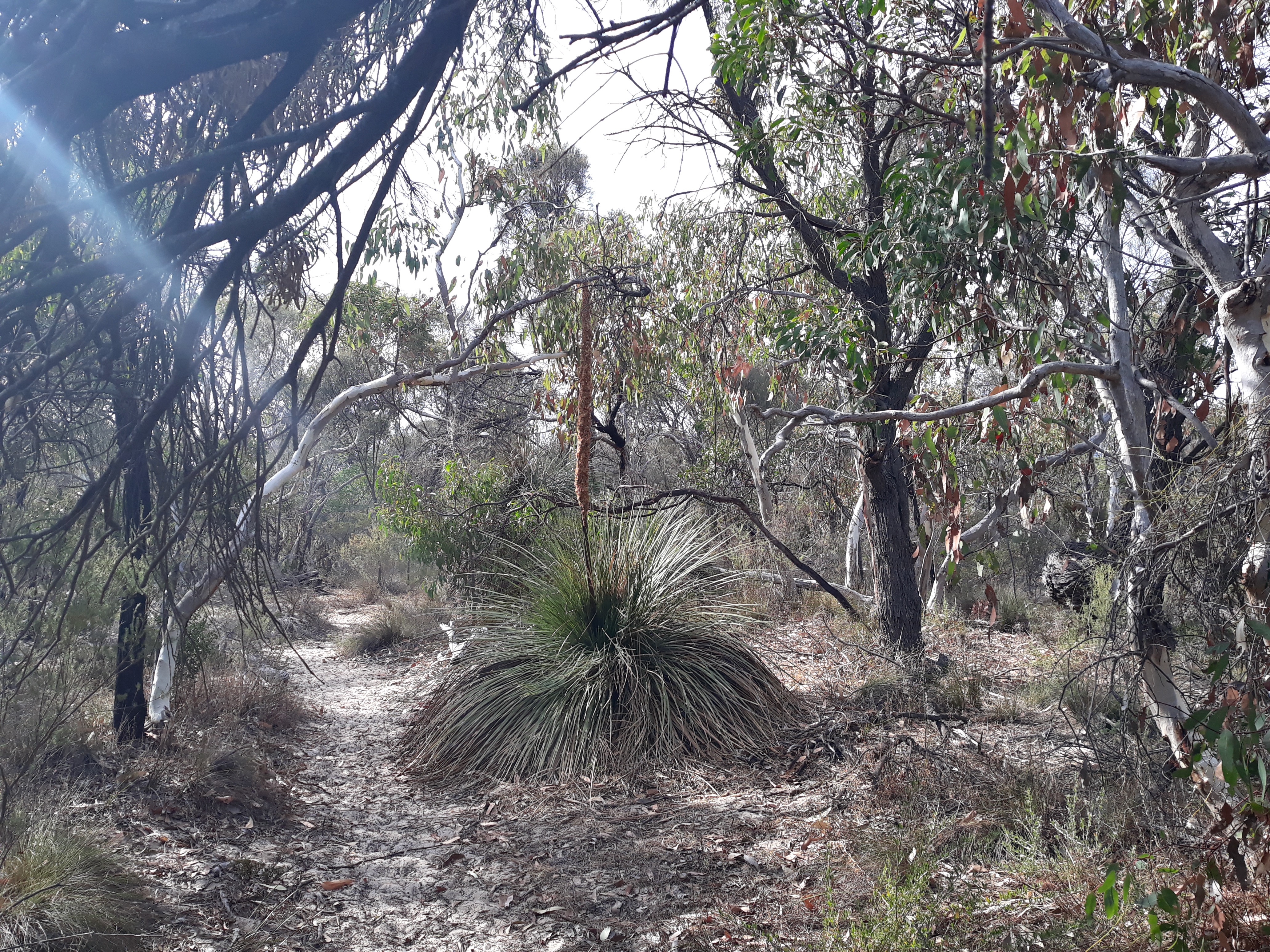
But there’s one other thing I want to leave you with today. This morning, I wandered into my garden — my small, messy, rambling suburban garden, which is more of a yard with some trees I planted in it, really, than a garden — and glanced up through the leaves at the sky. And there, above me, was the sun shining through, distant but warm.
I captured that moment in the photo that accompanies this post. It shows another kind of distance from the one Geraint believes he is entitled to reach out towards. It shows, I want to say, another kind of solace.

The light shining through
Lately I’ve been reading …
- … But if [this pandemic] really were a war, then who would be better prepared than the US? If it were not masks and gloves that its frontline soldiers needed, but guns, smart bombs, bunker busters, submarines, fighter jets and nuclear bombs, would there be a shortage?: Arundhati Roy on the spread of COVID-19 across India.
- … Maybe life could keep going on, I thought. It would be okay. The headlines were worse than reality. Of course, I was naïve. It only took a few days for everything to change: Gabrielle Bellot on her experience of COVID-19, and how we turn to stories about plague for both horror and comfort.
- … We introduced ourselves and shook hands. Remember handshakes?: Lauren Markham on writing, grief, isolation, sickness and fear … and travelling on trains.
- … I’m doing my best. That’s all I can do, and all I can keep doing, for myself, my family, my community, our world. I’m trying, every day, to do my best. I promise to keep doing just that: Ali Feller, long-time blogger, runner, writer, New York resident, mother, wife and sufferer of Crohn’s disease, writing with her loveable, inimitable honesty about living through the pandemic one day at a time.





 twenty-one words