Inner world

Other people’s words about … resilience

I think maybe [my father] liked the worlds in his head better than the real one. As far as I ever knew, he didn’t have any close friends … Once, when I was about nine or ten, I told him I wasn’t very popular at school. He told me that friends were overrated, because the only person you could ever really count on was yourself. Weirdly, that actually made me feel better.

from ‘Thanks for the Trouble
by Tommy Wallach

I am, I suppose, what most people would describe as introverted. There are other words that go along with this kind of description: shy, quiet, aloof, disengaged, uncertain, insecure, antisocial. Those are mostly negative words, I see. Perhaps they are coined by extroverts.

The year that we lived in England, I was at my most introverted: I had no friends at all. (Here’s a question: do you end up without friends because you are introverted, or do you become introverted because you have no friends?) I was fourteen, and I wandered those long school corridors with the white polished floors alone. I wore the wrong clothes, and I had the wrong accent, and I lived life at the wrong pace and the wrong volume. At lunch I sat in one of the stalls in the girls’ toilets, waiting the hour out. I listened to girls coming in and out, the cubicle doors swinging, the toilets flushing. My breath caught on the sweet spray of perfume they doused themselves with as they stood before the mirrors. I listened to their chatter, high and loud and lipsticked. And then I listened to the door to the girls’ room banging shut again, their footsteps receding down the white-floored corridors as they went back to wherever they had come from.

After the first few weeks, one of the school teachers took pity on me, and introduced me to a couple of girls in my class.

‘Go and sit with them at lunchtime,’ he said, with a look on his face that was half-pity and half-exasperation. He was small and balding and chipper. ‘They’re nice girls. They’ll look after you.’

Such well-meaning, misguided intentions! I looked at the two girls and they looked back at me. I could see they were as horrified at the prospect of me spending lunchtime with them as I was. And yet we all did what he said. They took me back to their lunchtime bench, and I sat with them and their friends — that day and the day after and the day after that. For months, in fact, I ate my sandwich with them silently; I sat with them silently; I watched them silently; I listened to them silently. They took to ignoring me, in the end. They went on with their lives — their parties and their gossip and their drinking and their shopping and their boyfriends — while I sat mute beside them, in what seems to me now almost a parody of introversion.

I have often thought back to that year in high school. I’ve thought about how, at night, I lay in the darkness of my bedroom, the one with the wallpaper with pretty sprigs of flowers dotted over it, and longed for popularity and friendship, for someone my own age to count on. I’ve thought about how I believed that I must be faulty in some way — weak, or cowardly, or defective — because I couldn’t do what other people my own age did instinctively: talk. Make connections. Relax. Laugh.

So it astonishes me now, to look back and see a different possibility, a different narrative, from the one I’ve just told. I don’t believe that friends are ‘overrated’, to use Wallach’s word. Still, I wonder: what if I had learned to trust myself during that year? What if I had learned that I was my own friend? What if I had allowed myself to like the world in my head at least as much as the real one? More broadly, what if we could teach all young people to count on themselves in this way? What, then?

I am not sure. But I think it’s important to listen to alternative narratives like the one in the words above: to retell our life-stories to ourselves, to seek out new plots, new endings. I think it’s important to trust your own inner world: to learn to turn to it in times of need, or in times of loneliness. Introversion, in this context, is irrelevant. What’s relevant is resilience. Resilience is all that matters.

Resilience, you will note, is not a negative word.

It’s not always about speed. Or winning.

Other people’s words about … running (slowly)

I didn’t fight my way across the finishing line — nor did I float. The significance of that marathon didn’t lie in speed or in pain, but in the exchange between my body and the city. I didn’t need a personal best trophy; I could prize the run on its own terms. After many years of early morning runs and all kinds of races, running is to me a way of being, not a way of testing myself against invisible antagonists and not a competition with my peers. I had nothing to vanquish but my doubts, and now — in ways I could never have predicted — running has brought me into a rich communion with the world. It still surprises me. I’m careful not to slip on dirt tracks, and I pay more attention to warnings about overstraining my knees than I used to. I want to avoid injury. I don’t want a show-stopping finish line moment. I want to keep running.

From ‘The Long Run
by Catriona Menzies-Pike

When I (briefly, as it turned out, at least for now) took up running again last year, it wasn’t the thought of speed, or competition, or races, or personal bests, that appealed to me. Nor, God forbid, was it the thought of getting super-fit and toned. Lone beast that I am, it wasn’t the thought of companionship, either: of joining a running team, or running with new friends. I know these are the things that runners often find joy in, but they weren’t drawcards for me.

No, what drew me back to running was what I remembered from the period in my twenties when I ran: how meditative running can make you feel. There is the beat of your heart, the rhythm of your feet, the taking-in and letting-out of your breath. There is the simplicity of moving your feet over the ground, taking you there (wherever ‘there’ is) and back again. There is the joy, afterwards, of feeling reawakened. And alive.

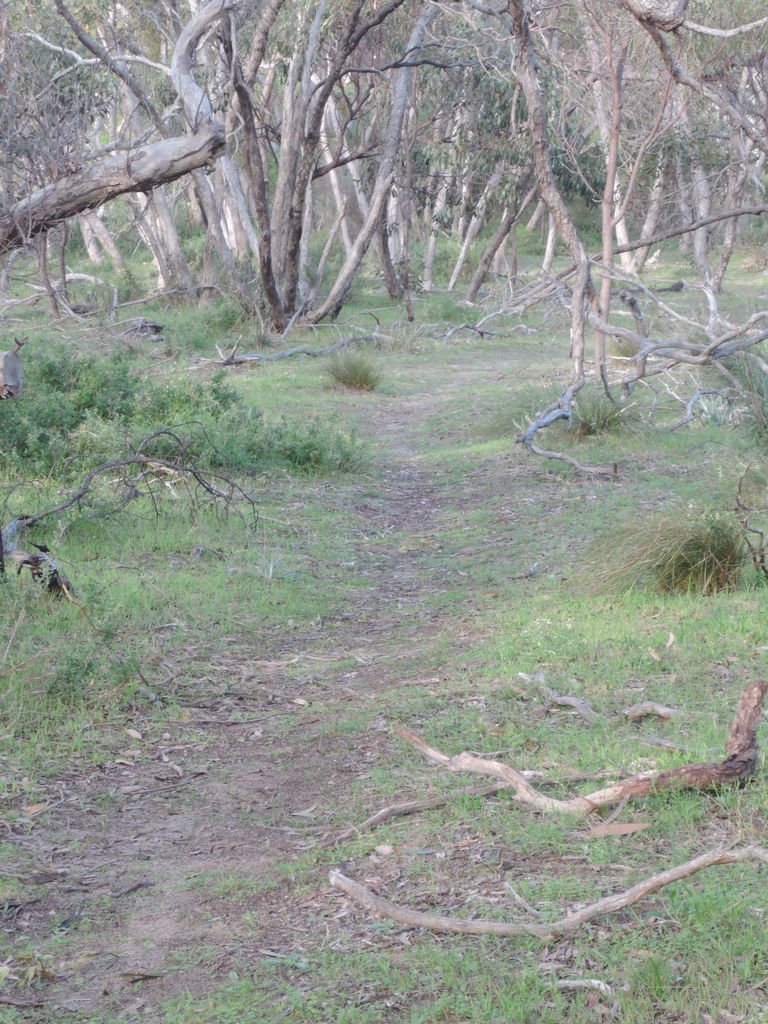
I'm careful not to slip on dirt tracks
I’m careful not to slip on dirt tracks

I suspect that Catriona Menzies-Pike is a kindred spirit. Her whole book, if you care to read it, is an eloquent essay on how running helped to heal the grief she felt for her parents’ untimely death when she was still a child. It is also an exploration of the joys of running slowly — and making the choice to do so. Imagine running, but not forcing yourself to race. Imagine running, but allowing yourself to enjoy the moment rather than the end-result. Imagine running, with no particular aim in mind other than to take the time it takes.

Imagine.

A rich communion with the world

We talk big about fitness these days. We talk about heart-rate and VO2 and pace and gait. We talk about sub-four-hour marathons and heel-striking and foam rollers. We have instruments and apps to help us talk this talk — Garmins and GPS trackers and Apple Watches and the like. (Wait, maybe those instruments created the talk. Have you ever thought that?) So choosing to run slowly, in a world full of talk like this, is tantamount to an act of anti-consumerist, anti-conformist rebellion.

I don’t want a show-stopping finish line moment. Those words apply equally well to life as they do to running, don’t they? There’s another metaphor in the quote above, too. Running, Menzies-Pike says, still surprises me. I get that. I do.

Because life still surprises me. I hope it always will.

The one true story

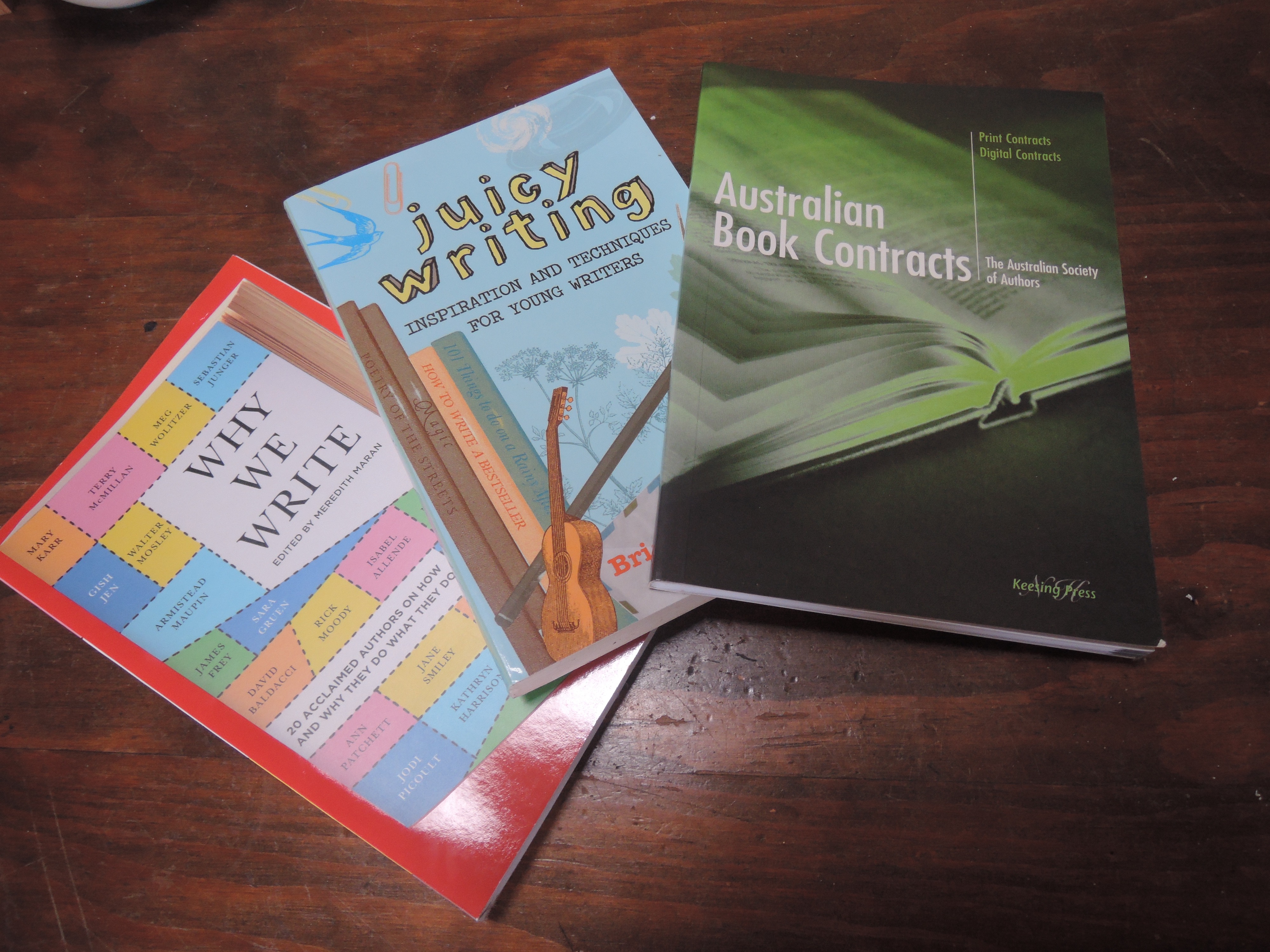
Other people’s words on … writing

He said, ‘What is your job as a writer of fiction?’ And she said that her job as a writer of fiction was to report on the human condition, to tell us who we are and what we think and what we do.

from ‘My name is Lucy Barton
by Elizabeth Strout

When I first began this blog, I was adamant that, though I am a published writer, my blog would not be about writing. A writer can blog about things other than writing, right? A writer isn’t just a writer: a writer is a person; a writer has a life. That’s what I wanted to blog about.

Besides, it seemed to me that blogging about writing would be, in my case, an inexcusably audacious act. My thinking went like this: I have published only two books. I haven’t published anything since 2010. My books have gone out of print. What can I tell anyone about writing? Who would want to read what I had the temerity to say?

Early drafts: an audacious act

I don’t much like the word ‘writer’. Perhaps it’s because I haven’t published much and don’t make a living from my writing, but I feel pretentious and arrogant when I call myself one. I think of myself instead as someone who has written two books, and would like to write another one, but is struggling to do so.

That’s another word I don’t like: ‘struggle’. When I first began writing stories and fiction, the writing was an act of joy. It was a process of humble discovery. Each word that I wrote, each sentence, each chapter, was a journey. I was learning to do something new. I was learning to do something I loved. I was learning.

Writing is a learning process
Lessons in writing: all part of the learning process

So when I first read the words I’ve quoted above from Elizabeth Strout, I thought: Yes! Writing fiction, for me, has always been about opening myself up to sorrow, and to joy, and to humility, and to discovery. It’s about expressing those things, however afraid I am to do so. It’s about making sense of my life. It’s about trying to make something beautiful. It’s about having the temerity — the audacity, the arrogance — to share my words with other people: people who, like me, love reading.

Most of all, writing fiction, like blogging, is about sharing.

And so that’s the reason I’m posting these words about writing today. Call it pretension; call it temerity. Call it audacity; call it arrogance. Call it learning; call it sorrow; call it joy.

Elizabeth Strout again (from the same book):

You will have only one story … You’ll write your one story many ways. Don’t ever worry about story. You have only one.

Maybe this is the only story I have to share, but that doesn’t mean it’s not worth sharing.

When all is said and done

Other people’s words about … staying still

Do you ever have the urge to just move?
Metaphorically, I mean — not physically. That feeling inside — that longing not to feel stuck anymore.
I do. (Midlife crisis, anybody?!)
I don’t think there are any answers to this longing. I think the more we try to move — to push on, to change — the more we forget the grace there is in surrender.
In simply staying still.
Maybe you’re not an ABBA-tragic like me (I know! I know!). But today I give you a song that helps me with this.
Have a listen.
See what you think.

Listen to the song: ‘When all is said and done’, by ABBA*

* Note:
Click on the orange ‘play’ button at the top of the page in this link to listen to the song. It’s one of my favourites. The song is about the end of a relationship … but I think it works equally well if you think of it as talking about the end of a phase in your life. (Bear with me here. I know ABBA aren’t known for the literary nature of their lyrics! I did warn you I was an ABBA-tragic … )

Soup for the soul

Soup from my father’s kitchen

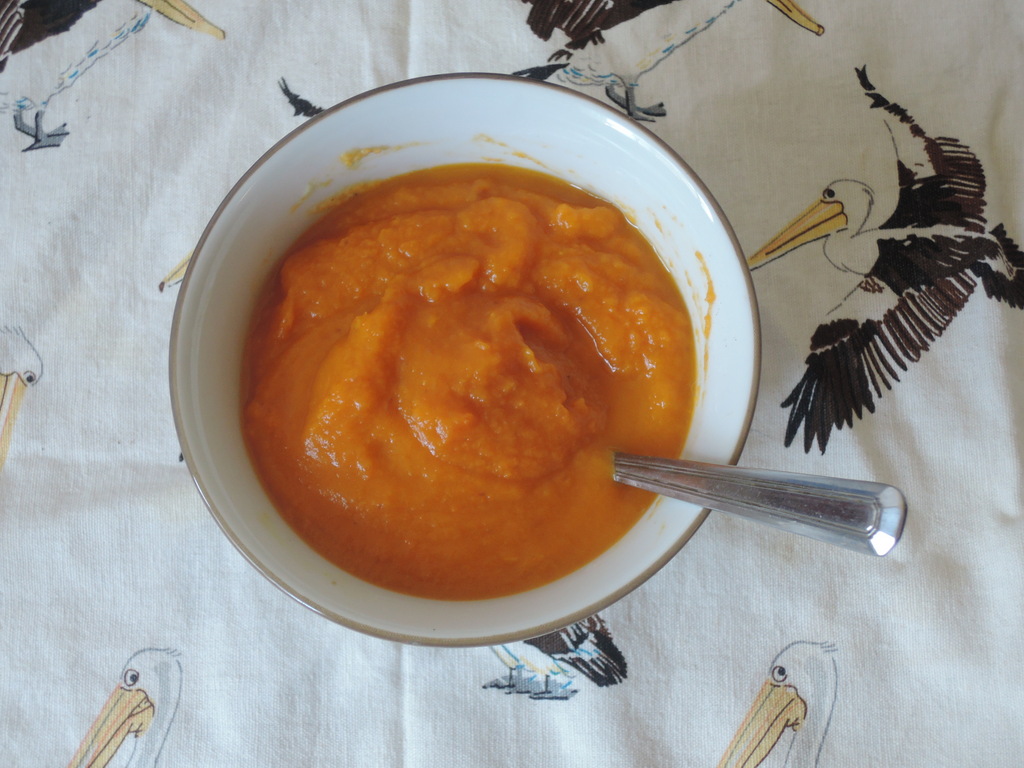
During winter, my father cooks up a weekly batch of vegetable soup,
which he and my mother eat for lunch each day.
The soup flavours vary —
pumpkin one week, tomato the next, broccoli and green bean the next.
And he always sets aside some for me.
DSCN2297
Winter’s well behind us now, of course.
(In the first week of October,
the temperatures soared over 30 degrees Celsius.)
DSCN2298
But I’m still enjoying my father’s soup,
which is tasty, warming and good …
DSCN2299
… and which he makes, always, with love.