Words unfurled

Other people’s words about … paths

This is what is behind the special relationship between tale and travel, and, perhaps, the reason why narrative writing is so closely bound up with walking. To write is to carve a new path through the terrain of the imagination, or to point out new features on a familiar route. To read is to travel through that terrain with the author as guide — a guide one may not always agree with or trust, but who can at least be counted upon to take one somewhere. I have often wished that my sentences could be written out as a single line running into the distance so that it would be clear that a sentence is likewise a road and reading is traveling … Perhaps those Chinese scrolls one unrolls as one reads preserve something of this sense. The songlines of Australia’s native aboriginal peoples are the most famous examples conflating landscape and narrative. The songlines are tools of navigation across the deep desert, while the landscape is a mnemonic device for remembering the stories: in other words, the story is a map, the landscape a narrative.

So stories are travels and travels are stories.

from ‘Wanderlust
by Rebecca Solnit

Last year, a theme I returned to often on this blog was paths. I had decided not to make a New Year’s Resolution for once: instead, I thought, I would learn to find, and then follow, my own path. Paths became a metaphor for me; once I began to look, I found them in the most startling and beautiful moments. There were paths in the sea, paths across the sky, paths to the horizon, paths trodden by other creatures than myself, making their way through the bush.

Path through the sky

Perhaps it was a theme painfully obvious in its metaphors. Less painfully obvious is the metaphor Rebecca Solnit employs in the passage above. To consider one’s job as a writer to be the task of carving a path for one’s readers to follow: what a wonderful thought. What an honour.

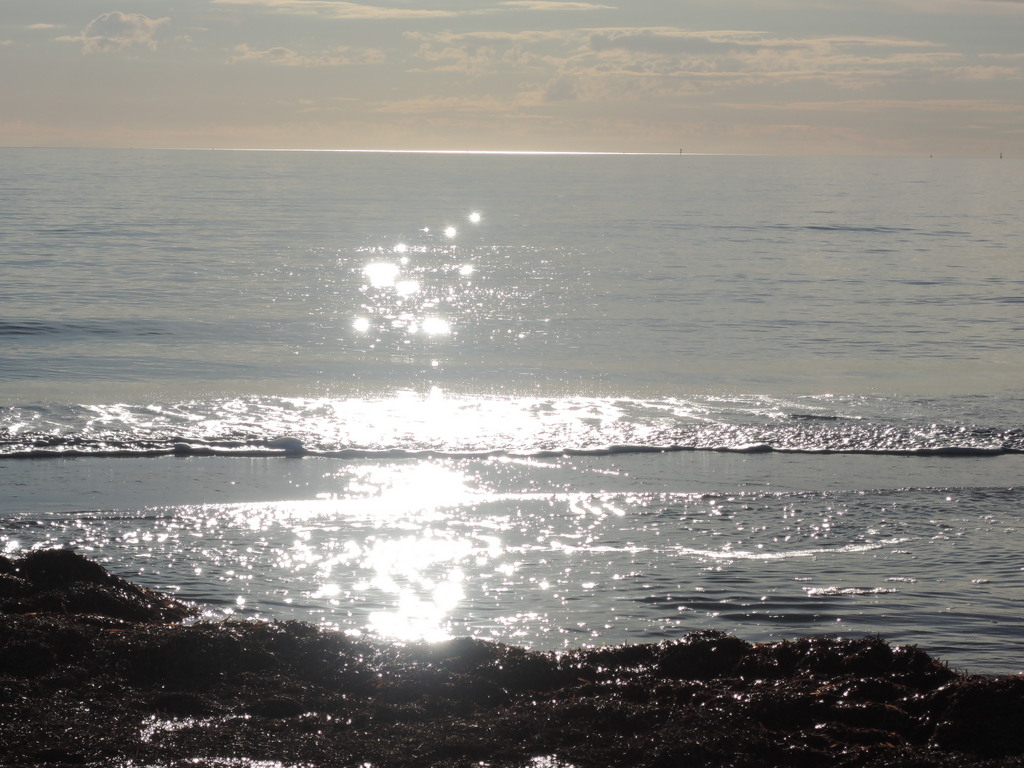
The sun's path over the sea
Path of the sun

I was interested in Solnit’s comparison with the songlines of the First Australians. In these days of serious debate about cultural appropriation, I considered long and hard whether it would be appropriate to include that part of the quote. In doing so, I found an explanation which seemed genuine and made sense to me. You can read it here.

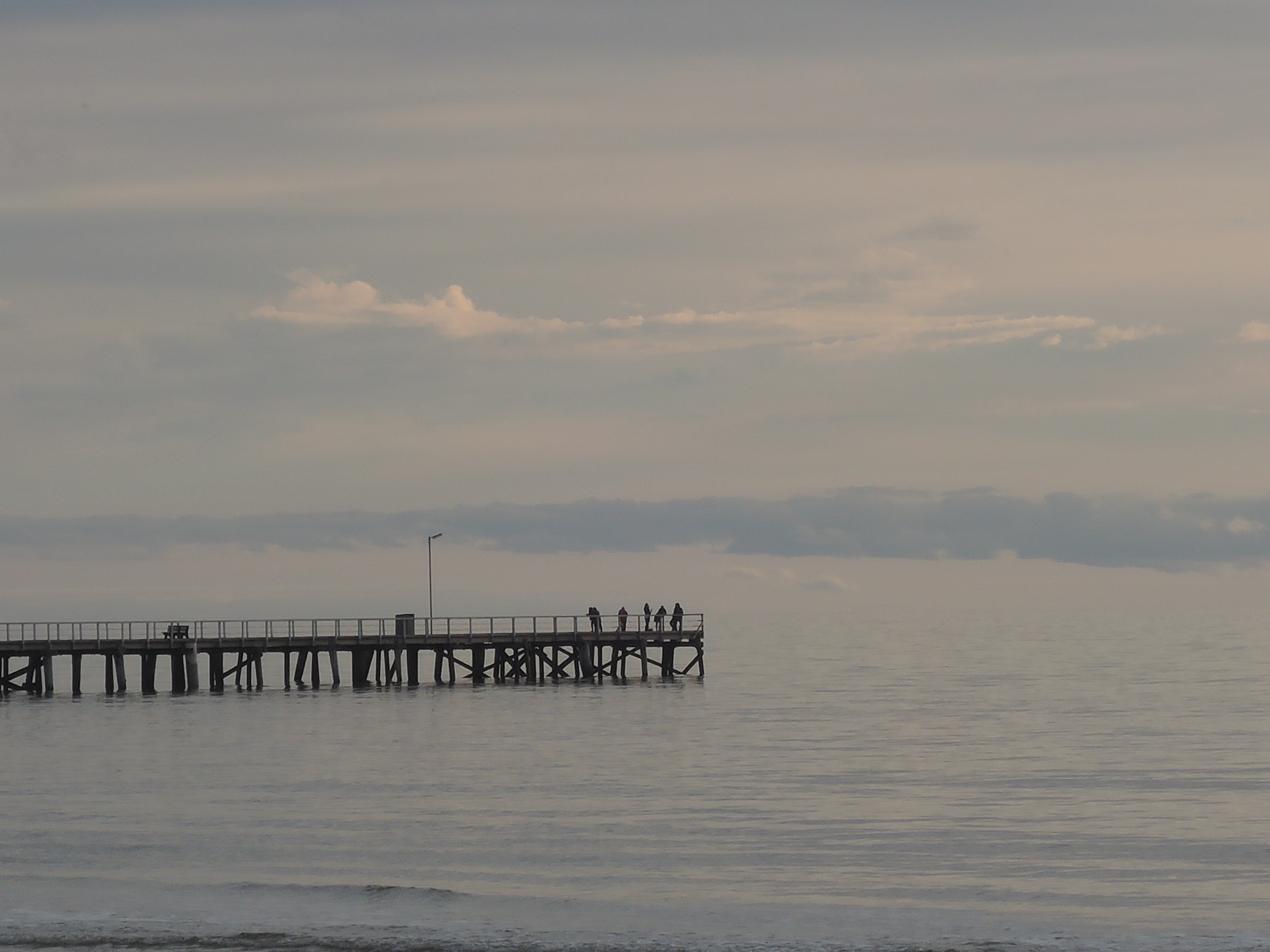
Path across the sea
Path across the sea

Landscape as narrative. This is something I have long believed in, right down to my core. When I go for a bushwalk in a place that is familiar to me, a track I’ve walked many times before, part of the joy I find in my wandering is in the act of observing how the seasons have wrought changes on the place since the last time I was there — how rain brings forth wildflowers, for example; and how those wildflowers differ in variety and in abundance, depending on that year’s rainfall. It feels then as though I am following a narrative which is both part of me, as a creature on this earth, and also greater than me. Songlines are not mine to appropriate, but the sense of a story, and the sense of the sacred, is everyone’s to share.

Other creatures' paths
Other creatures’ paths

But story as map: that’s something I hadn’t considered before. I am both a reader and a writer,and I am intensely aware, in both roles, of the contract between the two. The writer makes a promise; the reader holds the writer to it. I like the idea of viewing this contract as a map. It explains the sense of awe I feel as a reader, and the sense of humility I feel as a writer.

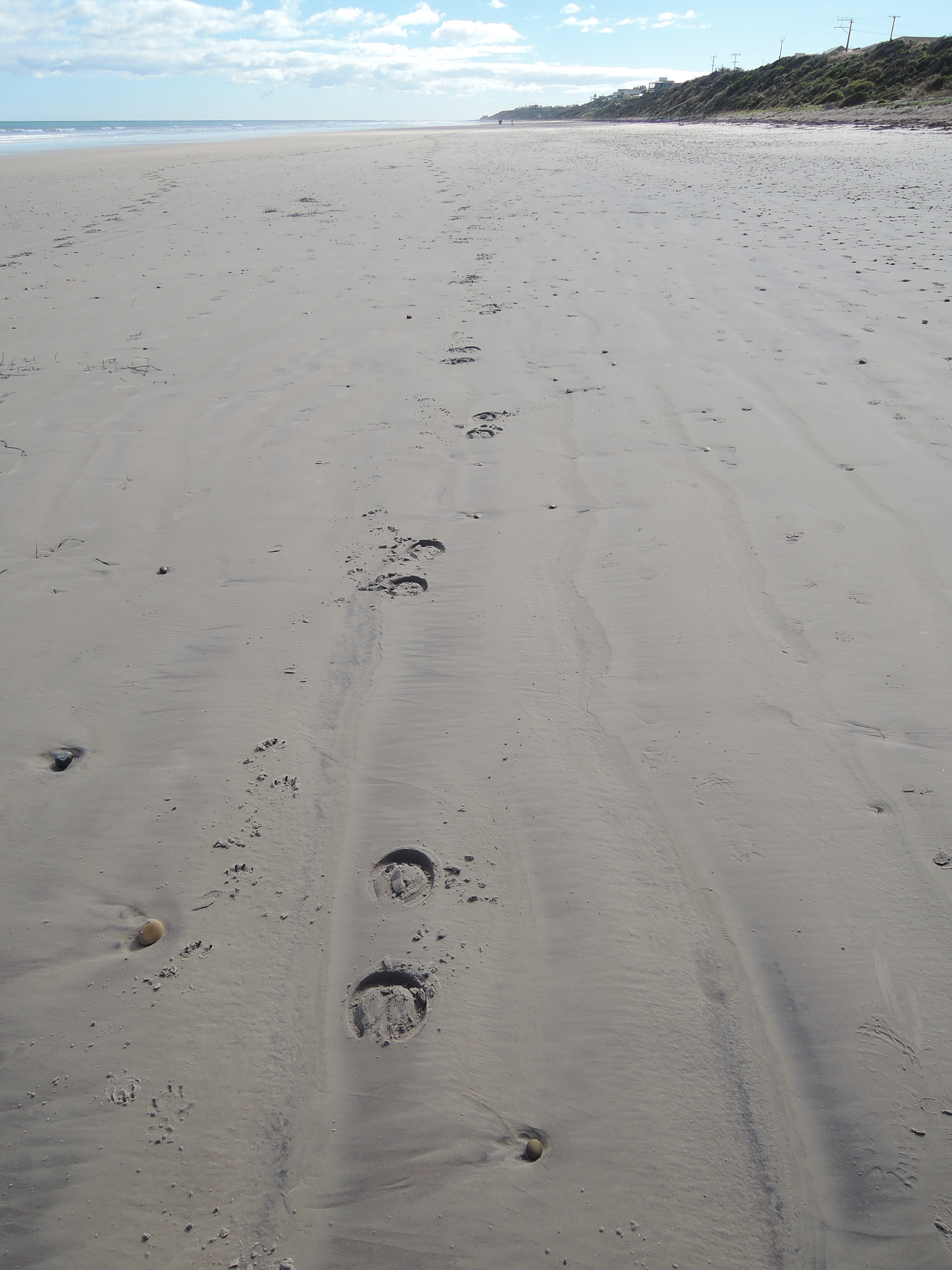
Path across the sand

In the end, we each tread our own path across our own landscape, using our own map.

But it is nice to know there are guides along the way.

Tread your own path ...
Tread your own path …

Happy new year, everyone!

At ease on this earth

Other people’s words about … beauty

I am haunted by waters. It may be that I’m too dry in myself, too English, or it may be simply that I’m susceptible to beauty, but I do not feel truly at ease on this earth unless there’s a river nearby.

from To the River
by Olivia Laing

Haunted by waters. Isn’t that a beautiful phrase?

Though the words I’ve quoted above are about a river rather than the sea, still, they ring true for me. For most of my adult life — except for the two or three years I spent in my early twenties, travelling and working abroad — I have chosen to live within walking distance of the sea. In my late twenties and thirties, as I’ve mentioned before, I lived in a series of share households: different houses every eighteen months or so, different housemates. But each of those houses was close to the sea.

These days, I live in a house just a few minutes’ walk to the beach. Open a window, and you can hear waves rolling onto shore. Step onto the front porch, and you’ll smell seaweed drying out beyond the water’s reach — a damp, bleached, faintly rotten smell. Look around indoors, and you’ll see drifts of sand piling up in the corners.

The sea surrounds me. It’s how I make sense of things. It’s how I feel at ease.

DSCN2831

There’s another phrase I love in the words above: susceptible to beauty.

Like anyone else, I have good days and bad days. There are days when I feel at home, here on this earth: when my skin feels comfortable beneath the layers of my clothes, and the warmth of the sun feels kind and good. And there are days when the world seems vast, alien, spinning, remote. What gets me through those latter kinds of day are tiny moments of beauty, out there by the water: pinpricks of sunlight sparkling on the tips of waves, like sequins on a piece of cloth; clouds chasing across the horizon, billowing and grey; a cluster of yellow flowers growing in the dip of a dune, petals cupped to reflect the light.

DSCN2833

I took the photographs you see here late one August afternoon, just a few weeks ago. Sitting at my desk, working at my computer, I felt hemmed in suddenly: by streets and footpaths, by fences and cement driveways, by the sound of my neighbour hawking up sputum in his bathroom. The longing to get away from all of that was so strong it felt akin to starving. I felt hollow through and through.

I shut down my computer, stepped outside, and walked down the road to the sea.

DSCN2832

Five minutes later there I was, standing on the sand, looking out at the water and the sky. It was close to sunset and I wandered a while along the shore, released at last: from work and worry and words. And I saw something, then, that I don’t know how to describe, though I’ll try: I saw spring coming. The air had a certain quality to it — a softness, perhaps, after the steely bleakness of winter. I thought that if I reached out with my hand I might touch that beautiful softness. It seemed possible, just for a moment.

Looking at the photographs now, I don’t see what I did then. Perhaps you don’t, either. But I know that I saw it, all the same. It was one of those moments — those tiny moments of beauty — to which I, like Olivia Laing, am susceptible.

I am grateful for those moments, is what I’m trying to say. They give me a kind of gladness. They bring me home.

An open door

Other people’s words about … inspiring teachers

DSCN2815

I brought Vera to one of [my mother’s] lectures. It was held in the quadrangle at Sydney Uni and the hall was packed. Vera and I squeezed in at the back next to the open window and then my mother made her entrance, rushing in with a briefcase under her arm. She didn’t know we were there and didn’t see us. Applause broke out, brief but enthusiastic.

‘Oh,’ she said as she reached the front, ‘you are being entirely silly and adorable.’ And then she put on her reading glasses and began the lecture. I didn’t hear a word of what she was saying. I just kept thinking that I too would have clapped had I not known her. There had always been a kind of heat emanating from her. People responded to it, and that day was no exception; that day she made everyone feel that Political Science 101 was a gateway to a brilliantly inspired life.

from ‘What the Light Hides
by Mette Jakobsen

When I began my Arts degree at university, the one subject I refused to enrol in was the subject in which my father was a lecturer. I didn’t want to have the experience of being tutored by, or lectured to, or graded by, a parent. I wanted to make my own way through university, no strings attached.

DSCN2818

Still, word gets around. My father was an immensely popular lecturer: fallow students in other subjects began to come up to me and say incredulously, seeing the surname I shared with him, ‘I think your Dad’s my lecturer.’ The lecture theatre was always packed when it was his turn to speak. He told anecdotes that made students rock with laughter, and the passion he expressed for his subject lit up his eyes, filled his voice, guided his gestures. He was cool; he was a legend: friends told me this all the time. I know now, as I did then, that his students, walking under the shaded trees of that campus, strolling past the old stone buildings with the arched doorways and the spreading lawns, were lucky to have him.

DSCN2821

It’s a cliché, but teachers and lecturers really do change our lives. When I was in Year 12, I had a teacher who shared the same kind of popularity amongst students as my father did at university. She taught Australian history — a subject as dry and dusty as any you could think of, at least back then, in the days when the history of Australia’s first people was rarely considered or contemplated in high school classrooms. She took us through the history of the Australian Labor Party, the social history of (white) women in Australia, the beginning of national pride in Australia.

Like my father, she taught by telling stories. She had a flat, slightly croaky voice, and crinkled, grey hair through which she would push her hand as she walked between our desks. The whiff of cigarette smoke hung about her clothes — woollen jumpers, tweed skirts — leaving a trail behind her. She kept a sheaf of notes on her desk to consult if she needed to, which she rarely did. Mostly, she just talked. Sometimes her voice grew sad, sometimes urgent. If I close my eyes, I can still hear her talking.

Beyond history, she also taught us how to study. It was from her that I learned how to take notes, how to structure an essay, how to study for exams, how to practise good time management so that you could hand in an essay on time. I took those skills with me to university. I wasn’t happy socially the first time I attempted university — indeed, I left at the end of that first year and didn’t return for another six years or so — but I loved the academic challenge of the subjects I was studying, and I have my Year 12 Australian history teacher to thank for that. To this day, I still use the skills she taught us to structure anything I’m writing or drafting, and I rarely miss deadlines. That’s because of her.

DSCN2819

If you look closely, you’ll see a common theme in each of the photos I’ve chosen to accompany this post. They are all taken on or around my local campus, the University of Adelaide — and every one of them shows a door or a window. That’s because learning should be about opening doors, letting fresh air into our minds. It should be about allowing us to enter new worlds, to see things from a new perspective.

Gifted teachers guide us through this process — people like my history teacher, people like my father. They change our lives for the better.

In return, we carry their teaching with us for the rest of our lives. We never forget them.

The one true story

Other people’s words on … writing

He said, ‘What is your job as a writer of fiction?’ And she said that her job as a writer of fiction was to report on the human condition, to tell us who we are and what we think and what we do.

from ‘My name is Lucy Barton
by Elizabeth Strout

When I first began this blog, I was adamant that, though I am a published writer, my blog would not be about writing. A writer can blog about things other than writing, right? A writer isn’t just a writer: a writer is a person; a writer has a life. That’s what I wanted to blog about.

Besides, it seemed to me that blogging about writing would be, in my case, an inexcusably audacious act. My thinking went like this: I have published only two books. I haven’t published anything since 2010. My books have gone out of print. What can I tell anyone about writing? Who would want to read what I had the temerity to say?

Early drafts: an audacious act

I don’t much like the word ‘writer’. Perhaps it’s because I haven’t published much and don’t make a living from my writing, but I feel pretentious and arrogant when I call myself one. I think of myself instead as someone who has written two books, and would like to write another one, but is struggling to do so.

That’s another word I don’t like: ‘struggle’. When I first began writing stories and fiction, the writing was an act of joy. It was a process of humble discovery. Each word that I wrote, each sentence, each chapter, was a journey. I was learning to do something new. I was learning to do something I loved. I was learning.

Writing is a learning process
Lessons in writing: all part of the learning process

So when I first read the words I’ve quoted above from Elizabeth Strout, I thought: Yes! Writing fiction, for me, has always been about opening myself up to sorrow, and to joy, and to humility, and to discovery. It’s about expressing those things, however afraid I am to do so. It’s about making sense of my life. It’s about trying to make something beautiful. It’s about having the temerity — the audacity, the arrogance — to share my words with other people: people who, like me, love reading.

Most of all, writing fiction, like blogging, is about sharing.

And so that’s the reason I’m posting these words about writing today. Call it pretension; call it temerity. Call it audacity; call it arrogance. Call it learning; call it sorrow; call it joy.

Elizabeth Strout again (from the same book):

You will have only one story … You’ll write your one story many ways. Don’t ever worry about story. You have only one.

Maybe this is the only story I have to share, but that doesn’t mean it’s not worth sharing.

The third year

Beautiful words

I love reading.
I love words.
Maybe you’d noticed?
After all, reading and writing have been two of my core themes on this blog, right from the start.
So.
This year — my third year of blogging (yes, really! twenty-one words has been around for over two years now) — that will be my main focus.
Other people’s words.

A year of reading
A year of reading

Each week, I’ll be posting a quote from something I’ve read and loved,
either recently or long ago.
(Some writers’ words stay in your mind forever.)
Sometimes I’ll post a photo to accompany the quote,
sometimes I’ll post a comment instead.

A cup of tea to accompany reading makes it even better ...
A cup of tea to accompany reading makes it even better …

I hope you’ll find some words here, in the next year, that tickle your fancy;
that make you think;
that make you laugh,
or smile,
or cry;
that make you go to your library and read those other people’s words for yourself.
For me, that’s what reading’s all about.

Note
For readers wondering about my original theme — twenty-one words, after which this blog is named — fear not. ‘Twenty-one’ will still be a theme around here. Watch this space to find out how.

Quote

Other people’s words about … loneliness

Jack realised then that his father had stopped smoking. He was profoundly impressed. It made him realise as other things had not how important this job was to Jerry. He felt that perhaps older people needed satisfactory jobs even more than young ones; they had narrower worlds. They needed hard edges, secure boundaries to their lives. Somehow this made Jerry seem remote: Jack had never felt this before.

He listened, grinned, joked, and all the time there was this unassuageable pain of loneliness in his heart. It wasn’t a boy’s loneliness any longer, but a man’s. He felt he might go through life with this longing, this sensation that there was a pit inside him, never to be filled. He faced up to it, looked at it carefully: it was like a kind of haunting, as irrational and inherently terrifying. Now he knew he had seen its traces on many faces. It was what made old people withdraw into themselves, peering out suspiciously through tiny windows at the world, as the reclusive pensioners of Towser’s house peered at him. it was not that they were defensive in their loneliness: it had changed them to a different kind of person, that was all.

From Ruth Park’s ‘Swords and Crown and Rings’

Ruth Park is most famous for her novel The Harp in the South. She also wrote a much-loved series for young children called the Muddle-Headed Wombat books. In my adolescence, I devoured her novel for young adults, Playing Beattie Bow.

I hadn’t read any of her other novels until I came across Swords and Crowns and Rings at my library. Written in 1977, it’s a wonderful read, full of observations and thoughts still relevant today.

This I love: this unassuageable pain of loneliness in his heart.

Words like that — they quicken your heart.


Other people’s words about … the sea

The moonlight held all in bond, bleached and austere.
Jackie could hear, far away, the flat sea plodding in and out, dragging its pebbles after it.

From ‘Swords and Crowns and Rings’
by Ruth Park

Ruth Park wrote largely between 1950-90, yet her writing — its themes, characters, emotions, even its ‘Australian-ness’ — still rings true for me.

Note:
This is the first in an occasional series of quotes from writers writing about the sea.I live by the sea; I love the sea; and I set both of my books by the sea. Sea-themed quotes seem kind of appropriate!

Reading Elizabeth Taylor (again)

Other people’s words

I’ve talked before about the writer Elizabeth Taylor: her pithy, devastating prose.

How’s this?

The town seemed to her to be England at its worst, full of people trying to enjoy themselves and not managing it for various reasons — perhaps chiefly those of the weather and the deeply-rooted dullness it had caused.

from ‘The Soul of Kindness
by Elizabeth Taylor

One sentence says so much, doesn’t it?

Reading Elizabeth Taylor

On the lonely horror of writing

At the thought of work, of the book he was writing, must finish, his stomach lurched, just as if he had come unexpectedly on something repellent. He was scared, too. Nowadays, he was so frightened of sitting down to work that he had to drive himself to grapple with it.

from ‘The Soul of Kindness
by Elizabeth Taylor

I love Elizabeth Taylor’s novels.

Her observations about people, (English) society and life are  acute, pithy and devastating.

Try her sometime!


Note:
Two people drew my attention to the writing of the English novelist, Elizabeth Taylor, who died in 1975. One was my mother, an inveterate and highly intelligent reader. The other was one of my favourite bloggers, Jane Brocket.