Inner world

Other people’s words about … resilience

I think maybe [my father] liked the worlds in his head better than the real one. As far as I ever knew, he didn’t have any close friends … Once, when I was about nine or ten, I told him I wasn’t very popular at school. He told me that friends were overrated, because the only person you could ever really count on was yourself. Weirdly, that actually made me feel better.

from ‘Thanks for the Trouble
by Tommy Wallach

I am, I suppose, what most people would describe as introverted. There are other words that go along with this kind of description: shy, quiet, aloof, disengaged, uncertain, insecure, antisocial. Those are mostly negative words, I see. Perhaps they are coined by extroverts.

The year that we lived in England, I was at my most introverted: I had no friends at all. (Here’s a question: do you end up without friends because you are introverted, or do you become introverted because you have no friends?) I was fourteen, and I wandered those long school corridors with the white polished floors alone. I wore the wrong clothes, and I had the wrong accent, and I lived life at the wrong pace and the wrong volume. At lunch I sat in one of the stalls in the girls’ toilets, waiting the hour out. I listened to girls coming in and out, the cubicle doors swinging, the toilets flushing. My breath caught on the sweet spray of perfume they doused themselves with as they stood before the mirrors. I listened to their chatter, high and loud and lipsticked. And then I listened to the door to the girls’ room banging shut again, their footsteps receding down the white-floored corridors as they went back to wherever they had come from.

After the first few weeks, one of the school teachers took pity on me, and introduced me to a couple of girls in my class.

‘Go and sit with them at lunchtime,’ he said, with a look on his face that was half-pity and half-exasperation. He was small and balding and chipper. ‘They’re nice girls. They’ll look after you.’

Such well-meaning, misguided intentions! I looked at the two girls and they looked back at me. I could see they were as horrified at the prospect of me spending lunchtime with them as I was. And yet we all did what he said. They took me back to their lunchtime bench, and I sat with them and their friends — that day and the day after and the day after that. For months, in fact, I ate my sandwich with them silently; I sat with them silently; I watched them silently; I listened to them silently. They took to ignoring me, in the end. They went on with their lives — their parties and their gossip and their drinking and their shopping and their boyfriends — while I sat mute beside them, in what seems to me now almost a parody of introversion.

I have often thought back to that year in high school. I’ve thought about how, at night, I lay in the darkness of my bedroom, the one with the wallpaper with pretty sprigs of flowers dotted over it, and longed for popularity and friendship, for someone my own age to count on. I’ve thought about how I believed that I must be faulty in some way — weak, or cowardly, or defective — because I couldn’t do what other people my own age did instinctively: talk. Make connections. Relax. Laugh.

So it astonishes me now, to look back and see a different possibility, a different narrative, from the one I’ve just told. I don’t believe that friends are ‘overrated’, to use Wallach’s word. Still, I wonder: what if I had learned to trust myself during that year? What if I had learned that I was my own friend? What if I had allowed myself to like the world in my head at least as much as the real one? More broadly, what if we could teach all young people to count on themselves in this way? What, then?

I am not sure. But I think it’s important to listen to alternative narratives like the one in the words above: to retell our life-stories to ourselves, to seek out new plots, new endings. I think it’s important to trust your own inner world: to learn to turn to it in times of need, or in times of loneliness. Introversion, in this context, is irrelevant. What’s relevant is resilience. Resilience is all that matters.

Resilience, you will note, is not a negative word.

The third year

Beautiful words

I love reading.
I love words.
Maybe you’d noticed?
After all, reading and writing have been two of my core themes on this blog, right from the start.
So.
This year — my third year of blogging (yes, really! twenty-one words has been around for over two years now) — that will be my main focus.
Other people’s words.

A year of reading
A year of reading

Each week, I’ll be posting a quote from something I’ve read and loved,
either recently or long ago.
(Some writers’ words stay in your mind forever.)
Sometimes I’ll post a photo to accompany the quote,
sometimes I’ll post a comment instead.

A cup of tea to accompany reading makes it even better ...
A cup of tea to accompany reading makes it even better …

I hope you’ll find some words here, in the next year, that tickle your fancy;
that make you think;
that make you laugh,
or smile,
or cry;
that make you go to your library and read those other people’s words for yourself.
For me, that’s what reading’s all about.

Note
For readers wondering about my original theme — twenty-one words, after which this blog is named — fear not. ‘Twenty-one’ will still be a theme around here. Watch this space to find out how.

The one-legged seagull

Questions, questions, questions

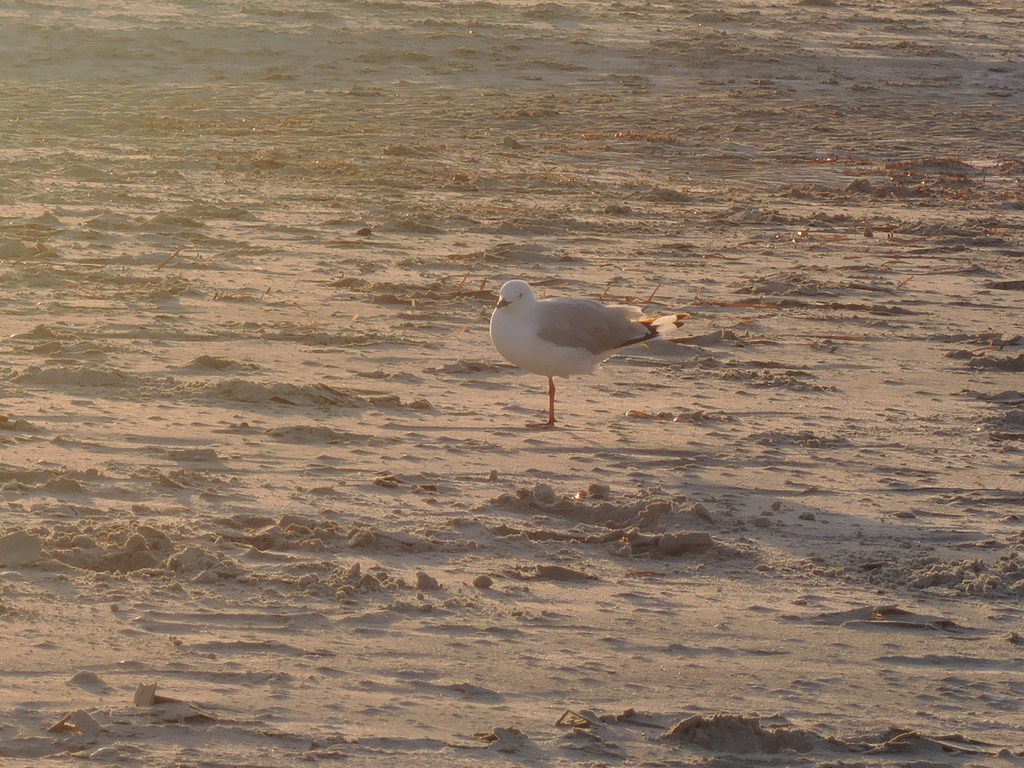
Sunset at Taperoo 17 January 2016 7.15 pm

If you’ve seen a one-legged seagull, you’ll know what I mean.
Why are there so many of them?
Do they lose their legs during epic battles for territory?
Why don’t their predators attack other parts of their bodies? (Do seagulls have predators?)
And then, too:
How do one-legged seagulls survive?
Do they grow replacement legs, like reptiles grow new tails?
Or does the remaining leg grow stronger over time?
So many questions.
I could google for answers, I suppose,
but I’m enjoying the mystery …

The quality of blue (2)

As I mentioned in my previous post,
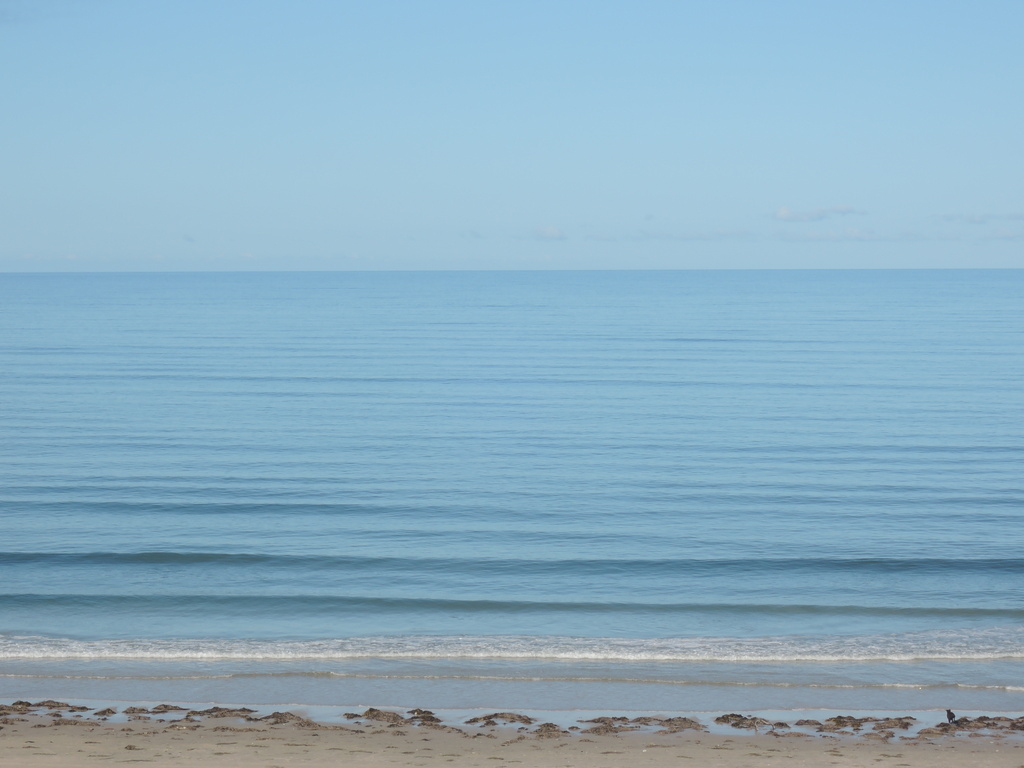
there is something about the colour of the sea in summer.
DSCN2536
The quality of blue is different from other times of the year.
DSCN2538
It’s silky blue.
Pearly blue.
The truest kind of blue.
DSCN2542
Blue sky.
Blue sea.
Bluer than blue.
DSCN2544
A celebration of blue.

My hourglass

Slowly, it started to feel as if I had clawed my way back to something resembling a life. It was such a relief to know that I hadn’t finished changing — I wasn’t an hourglass that had timed out, all the grains fallen through. I wasn’t stuck, too soon the best I could ever be.

from ‘Inbetween Days’
by Vikki Wakefield*

Have you ever wondered if you’ve already achieved the best you can?
Have you ever thought that it’s all downhill from here?
If so, perhaps — like me — you will find these words comforting.
I like to think of the grains in my hourglass still trickling through slowly …
… not quite timing out.

*Note:
Vikki is a good friend of mine and fellow writer. Check out her website for more information.

Happy/sad

So, this is my life. And I want you to know that I am both happy and sad and I’m still trying to figure out how that could be.

From The Perks of Being a Wallflower
By Stephen Chbosky

Have you read The Perks of Being a Wallflower?
I came to it a few years ago — later than most people, long after the film was released. I think I thought (cynically) that it was a kind of super-cool rewrite of The Catcher in the Rye. And I don’t like super-cool books.
But it isn’t.
I like Charlie’s voice. The narrative is simple and poignant, and gets at the heart of the loneliness of being an adolescent.
Happy/sad.
That’s not just adolescence, though, is it?

PS Happy birthday to my mother for today! ❤

On running

Finally, after a summer of heartache followed by almost crippling depression, came the walking phase. After a hectic routine of lying under my coffee table weeping, I had reached a point where I had to get outside and see daylight. I wanted to feel the breath of warm air on my skin; I yearned to feel the blood circulate around my body again … Half-deranged by weeks of erratic sleeping — nights spent enervated and panicky followed by sluggish, heavy-limbed days — I decided in desperation that physically exhausting myself might make the nights seem a little more welcoming. I longed to yearn to lie down at the end of the day, legs aching from use rather than the anxious jiggling they did under my desk for hours on end.

from ‘Running like a girl
by Alexandra Heminsley

When I was twenty-five, I took up running to cure my own case of heartbreak. I lived by the beach (a different one then), and so I picked out my four-kilometre course, from one jetty to the next and back; and then I ran.
And the heartbreak lifted. Running brought me the simplest joy I’ve ever known, in fact — until I developed runner’s knee.
Twenty years later, I’ve started running again.
The joy’s still there …
… but so is the runner’s knee.
I won’t give up hope, though: running is the best salve I know.
Cross your fingers for me?

When all is said and done

Other people’s words about … staying still

Do you ever have the urge to just move?
Metaphorically, I mean — not physically. That feeling inside — that longing not to feel stuck anymore.
I do. (Midlife crisis, anybody?!)
I don’t think there are any answers to this longing. I think the more we try to move — to push on, to change — the more we forget the grace there is in surrender.
In simply staying still.
Maybe you’re not an ABBA-tragic like me (I know! I know!). But today I give you a song that helps me with this.
Have a listen.
See what you think.

Listen to the song: ‘When all is said and done’, by ABBA*

* Note:
Click on the orange ‘play’ button at the top of the page in this link to listen to the song. It’s one of my favourites. The song is about the end of a relationship … but I think it works equally well if you think of it as talking about the end of a phase in your life. (Bear with me here. I know ABBA aren’t known for the literary nature of their lyrics! I did warn you I was an ABBA-tragic … )

Me and Mrs Jones: Telling it like it is

Other people’s words about … social media

As I’ve mentioned before, I don’t do Facebook or Instagram .
(Or Pinterest … Or Snapchat.) And I never, ever take selfies.
Blogging is as far as I go.
One of the reasons is this:
It’s a bright, shiny world out there on social media.
Everything is beautiful in Insta-World.
But that’s not real life.
Life is a series of moments — some of them beautiful, some of them not —
and social media doesn’t capture that.
Here’s what lovely blogger Sheena has to say on the subject:

Social media is great, right? It’s the perfect way for me to stay connected to friends, see the world from different points of view, I can use it to work from home, and let’s all agree….it’s fun! It’s also the WORST….we all paint this picture of the perfect little world we live in–only showing our best of the best moments….it’s not at ALL a real representation of life. And I think sometimes it’s too easy to get caught up in that, don’t you think?

You’ve heard the term “Keeping up with the Joneses”, right? Did you know the phrase dates back to the early 1900s? I mean really, what was it that Jones Family was doing that was worth keeping up with–growing better potatoes? Riding a faster horse? Now, with social media, we know every little detail of the Joneses life. Where they are going and who they are with and how they got there! What they are eating and when they are eating it! What their perfect house looks like, what their perfect kids look like, and what their perfect face looks like, because now the Joneses share lots of pictures of their outstretched arms and close-up faces. They definitely didn’t have to worry about selfies back in 1913.

Those Joneses are BUSY, and they are everywhere. Doing everything. And rubbing it in your face.

Behind the square (1 October 2015)
from the little red house

My take?
Life isn’t picture-perfect.
And that’s —
just —
fine.