
Other people’s words about … becoming yourself
During the forty minutes she was in the audition room, the rain in Waterloo had stopped. If I lived here [in London], Frida thought, walking along the South Bank, what version of myself might I be? She was thinking of the clutter in Catherine’s kitchen, the fridge magnet shaped like a sheep from a holiday to Scotland, the orange Le Creuset casserole in which Catherine had cooked dinner the night before. What did Frida even own? Some old clothes that she didn’t particularly like, and a bunch of second-hand books. From a distance things in Dublin [her home] felt flimsy. Shored up by lollipop sticks and an over-dependence on her sister and tiny nieces for a sense of self. Frida thought she wouldn’t get this [acting] job, but increasingly she felt she’d get some other job and end up in London anyway. There were Irish accents here, people passing her on the riverside with warm, familiar voices. What Frida wanted was the same thing she had always wanted. Didn’t success inevitably involve leaving home? Put like that it had the ring of Greek myth, and Frida liked that: herself as Odysseus, not Penelope. It had been so long since she really thought about what she wanted from life. Now she pictured the entrance to Catherine’s flat, the colourful rag rug, the coats hanging on the wall. A little dish for keys and a heavy stone paperweight on top of the day’s post. She imagined having these things for herself. It was inevitable, wasn’t it, that she would have to turn away from Dublin sooner or later. Who had it in them to stay put forever?
From Frida Slattery as Herself, by Ana Kinsella
Herself as Odysseus, not Penelope: these are the words that stopped me when I first read the passage I’ve quoted here from Ana Kinsella’s wonderful novel, Frida Slattery as Herself. Frida, who is in her twenties, is an actor, and in this passage she is on her way to the audition that will ultimately change her career and lead her to success in Hollywood, though she doesn’t yet know it. All around her, her friends are pairing off and marrying, buying houses, having children, but Frida has until now held out, refusing to give up on a life of art. As a result (as yet, that is) she’s still living a self-described flimsy life. I smiled when I read her description of the things she owns: Some old clothes that she didn’t particularly like, and a bunch of second-hand books. I lived like that once, too — not in fact just at Frida’s age but well into my thirties, during which decade I wrote and had my first two novels for young adults published.
In some ways, unlike Frida, I still live like this. I own more than just clothes and second-hand books, admittedly, but I work part-time and live on a moderate income, and so my possessions are relatively few in comparison with my peers, and my lifestyle similarly pared back. In place of material luxury, I have this: I write a lot, I read a lot, I walk, I run, I cook. What Frida wanted was the same thing she had always wanted — in fact, that’s still me even now, as a woman in my mid-fifties.
Returning to Odysseus and Penelope, though, I was reminded of a conversation I had recently with an old friend of mine, a man I first got to know in my twenties. Our conversation on this day was about poetry; he is a poetry lover and, having recently begun to discover the joys of reading poetry myself, I’d shared a poem with him that I’d stumbled on and loved and that I thought he might love, too. The poem was Charlie Smith’s ‘The Rose’ (available in his collection The Palms), which begins as follows:
I’m looking everywhere for new ways
poking, selecting, looking everywhere,
turning the trees over, rummaging among skirts
and stars.
Those wonderful phrases turning the trees over and rummaging among skirts / and stars! I love them. And then, too, in some lines towards the end of the poem, there is this:
I’m stumbling against
beauty and not apologising, I’m almost naked here,
skinnier than I used to be, almost helpless
or maybe I’m completely helpless as the religious
say is the way to heaven — all right I’m helpless —
That almost helpless and the answering all right I’m helpless — every time I read this poem, these words undo me.
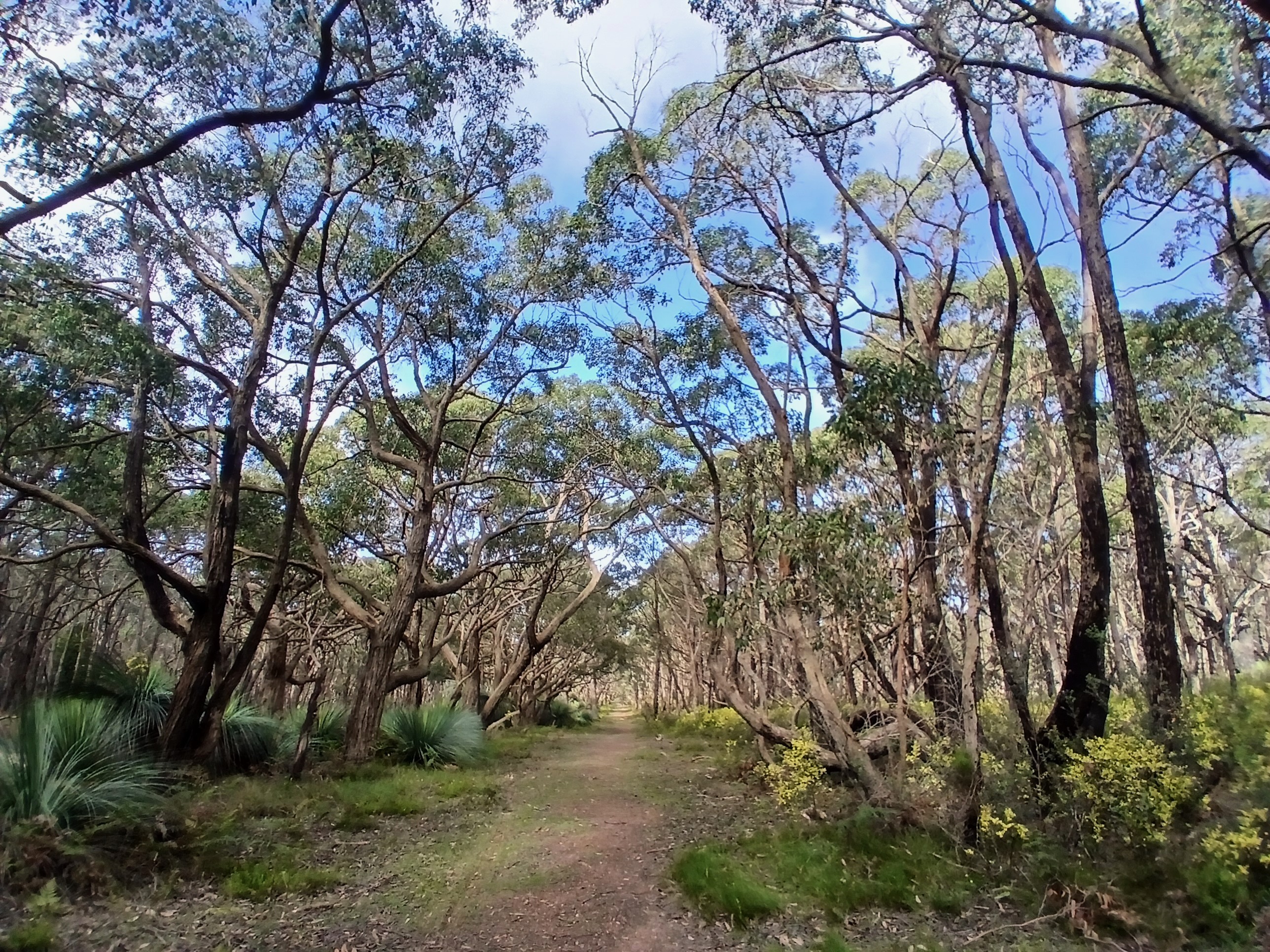
Deep Creek, September 2026.
In exchange, my friend sent me back a poem that he loves, Stephen Dunn’s ‘Odysseus’s Secret’, which begins with the following lines:
At first he thought only of home, and Penelope.
But after a few years, like anyone on his own,
he couldn’t separate what he’d chosen
from what had chosen him.
Dunn’s poem, too, is beautiful. It’s a poem that makes you think, one that I’m glad my friend shared with me and that I’m glad to have read. (You can read it in full here; it was published originally in his collection Different Hours.)
I say that, and yet there’s this:
But by the middle years this other life
had become his life. That was Odysseus’s secret,
kept even from himself. When he talked about return
he thought he meant what he said. Twenty years to get home?
A man finds his shipwrecks,
tells himself the necessary stories.
What bothers me about these lines? A man finds his shipwrecks.
A man.
A man.
That’s what bothers me. Everything in me, every tiny feminist part of me, rises up in protest at this, and perhaps in protest at the original Greek myth itself — Odysseus, who is gone from his wife at home for so many years, and whose return to her is so celebrated. I don’t know. I still love Dunn’s poem, but women find their own shipwrecks and I want to read about them, too.
And so when Frida Slattery wants to think of herself as Odysseus, not Penelope, I am with her all the way.
Lately I’ve been reading …
(poetry, stories and the occasional essay from around the internet)
- Relax. This won’t last long: ‘Poem for People Who Are Understandably Too Busy to Read Poetry’, another poem by Stephen Dunn.
- I love to hear that another memoir has been exposed as a big phony. I think, Fiction wins again! ‘Little Ears, Little Eyes’, a short story by Samantha Hunt.
- Every cell learned rank. / Fear became my spine: ‘good soldier’, a poem by Augustus Owlyce.
- When the hurricane came, I watched my childhood street rearrange itself into a map of everywhere I’d ever wanted to escape: ‘The Ocean Never Really Leaves You’, a piece of micro fiction by Bethany Bruno.
- Even before my husband died, I was treated like a widow: ‘Compromise’, a short story by Ada Zhang.
- Today’s dominant therapies offer medication or homework by way of cognitive restructuring worksheets and mood-tracking apps: ‘Therapy Used to Be Hot’, an essay by Robin Kirman.
- My mother says my father’s 30-pound weight loss is the result of a renewed commitment to his health: ‘The Wintering’, a piece of micro fiction by Maureen Aitken.
- I feel guilty for the way meanness pokes through my skin like some artichoke spine when I am unhappy: ‘Simple Instructions’, a short story by Sam Simas.

