When the water runs dry

Other people’s words about … drought

Many years ago, when I was in my twenties and travelling overseas, my American boyfriend took me back home to meet his family and friends in Michigan. We had been living for the previous few months in Cairo, that famous desert city, and to begin with we had, like all Westerners, drunk bottled water, fearing that the local water might make us sick. But we didn’t have much money and we had read that the municipal water in Cairo was safe to drink, even for Westerners, and so after a few weeks we had transitioned to drinking tap water. Neither of us had become sick as a result, but the Cairo water was so heavily chlorinated (presumably to make it safe to drink) that even I, hailing from Adelaide, found it hard to stomach.

In my home town, the tap water was similarly heavily chlorinated — so heavily, in fact, that it was said that aeroplanes, landing in Adelaide to refuel, didn’t refill with local water. How apocryphal this story is, I am not sure, but in any case, back in Cairo my boyfriend and I had taken to adding Tang to our water to take the taste of chlorine away. When I think of Cairo now, I still think of the taste of the water we drank in our last few weeks there, tangy with artificial orange flavour. How it sat in your belly afterwards like a stone. It was in Cairo, not Adelaide, that I came to understand the meaning of the term hard water.

Clouds but no rain, Aldinga Beach, May 2025.

The narrator in Madeleine Watt’s quietly devastating novel Elegy, Southwest, Eloise, is a young Australian woman, twenty-nine years old in the present day, which makes her, I guess, a Millennial. And yet when I read the passage I’ve quoted above I thought of myself, most decidedly a Gen X-er, and my own reactions to water scarcity when I was travelling in the nineties. In Michigan, when my boyfriend left the tap running as he brushed his teeth, when his mother washed the dishes under a running tap, I struggled to swallow back my protests.

‘We’re surrounded by the Great Lakes,’ my boyfriend said, teasing me. ‘We’re hardly experiencing water scarcity.’

But my response to the sight of running water was instinctive, fundamental. Water was a precious resource. You didn’t waste it. You just didn’t.
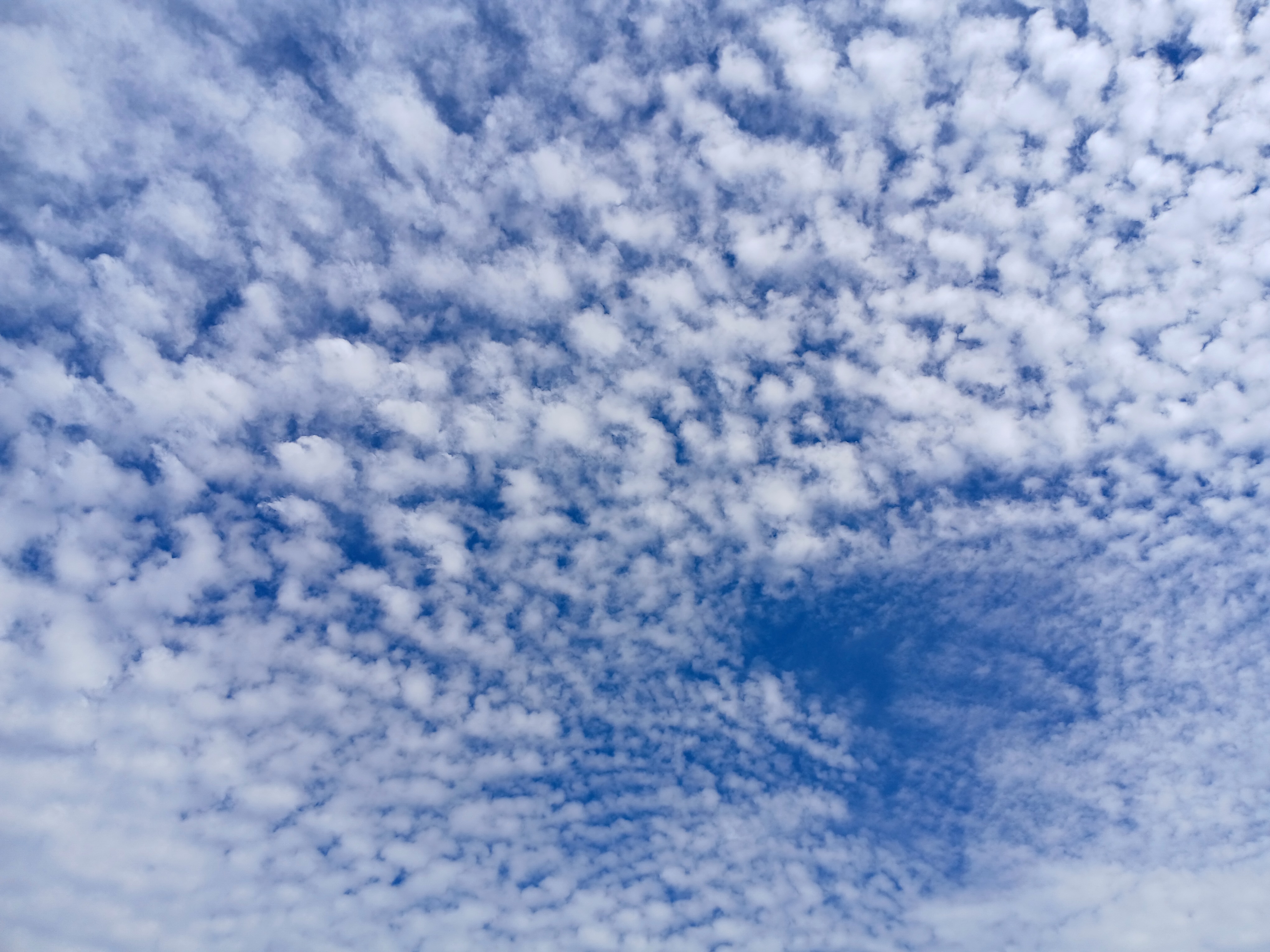
This year in South Australia we’re experiencing record low rainfall. After the driest summer in thirty-three years, we’ve moved into an equally dry autumn, and we’ve been saved from water restrictions only through the existence of the desalination plant that opened in 2012 in response to the Millennium Drought. Meanwhile, the native local flora and fauna are visibly, heart-breakingly struggling to stay alive. Those beautiful wide blue skies of South Australia? I’ve come almost to dread them.

Like Eloise, I grew up watching Hollywood movies where teenagers hung out in malls with fountains in them. Like Eloise, I don’t remember seeing a fountain in our local malls (though in the much-loved TV comedy from the noughties Kath and Kim, the local shopping mall is aptly — prophetically? — named Fountain Lakes). And like Eloise, all these years later, in these years of drought after drought, I, too, want to ask: Who is in charge? Why isn’t somebody doing something?

Lately I’ve been reading …

A sad place

Other people’s words about … accessing feelings

Some years ago an older woman said to me that she had noticed she didn’t cry very much anymore. She said that when she was younger she had been someone who cried easily, when she was sad, when she was angry, sometimes when she was happy. But now, in her seventies, the tears didn’t well up anymore.

I remember thinking that that wouldn’t be the case for me. I remember thinking that I would always be someone who cried a lot — too much, probably, rather than not enough. I have always cried copiously and easily and very often self-piteously. I have cried at the most inappropriate times, during moments that weren’t about me at all, moments when I should have been comforting someone, not dealing with my own emotions.

Largs Bay Jetty, April 2025.

And yet here I am, mid-fifties, and it’s happening to me, too. In the passage I’ve quoted above from Tove Ditlevesen’s memoir, Ditlevsen is describing the way she felt as a teenager, but the feelings she expresses in this passage describe the way I often feel now, the way the older woman I mentioned above also expressed feeling. It’s a feeling of seeing sad things, being moved by them, being aware that I’m sad about them even, but not being able to access the sadness itself directly. When I do cry, it’s usually, like the adolescent Ditlevesen, when the feeling is being conveyed to me through another medium — a book, a film, a poem, a song.

I miss crying. Perhaps that sounds odd or self-indulgent, but I miss the feeling that came when my eyes grew hot and tears fell down my cheeks and my throat tightened and my breath snagged. I miss the feeling of being there with my sadness, right there. I miss the feeling that follows a crying bout, too, that feeling of being healed, even if only temporarily.

The world is a sad place right now. People will say in response to this that the world has always been sad for someone somewhere, and that’s true. Partly, then, I say that it’s a sad place from a place of privilege, because I’ve experienced times when it seemed that there was a lot of hope in the world, if you could only learn to access it. Still, when I think about the climate crisis, when I think about Presidents Trump and Putin and Xi Jinping and Yoon Suk Yeol, when I think about the rise of Artificial Intelligence, the world seems to me a very sad place indeed. Would it help if I were able to cry about this? I don’t know. Like the adolescent Divletsen, I don’t think very much of reality.

Lately I’ve been reading …

Decoded

Other people’s words about … language and interpreting

When I was a young woman I studied French, German and Mandarin at university. I had a facility for language, for words, and in those days I thought that I might one day become an interpreter in one of these languages, like the narrator in Katie Kitamura’s novel Intimacies. I studied all three languages for a year, having also studied French and German at high school, and then at the end of the year, which was the end of my first year at university, having achieved distinctions in all three subjects, I left university, left Australia, and didn’t return home to resume my studies for another three years.

By then I’d decided not to pursue a career in languages at all. I had understood from my travels that my natural shyness and introversion would make the kinds of context in which an interpreter works difficult for me, and I had decided not to challenge myself in that way. Funnily enough, this realisation came to me while I was living in Germany, where I had gone to live for a year to become fluent in German. Funnily enough, I should add, by the time I came to the realisation that interpreting wasn’t for me, I was almost entirely fluent in German. Anyway, I came back to Australia and left all of this behind, my fluency in German, my plans to be an interpreter, all of that.

Footprints in the sand, March 2025.

It’s funny, though, because Katie Kitamura’s description in the passage I’ve quoted above of the experience of being so immersed in the pursuit of choosing the correct word that you lose all sense of meaning is something I am deeply familiar with in another context — editing. As an editor, I have edited books in the fields of geology, medicine, history, literature and religion. On hearing this, people frequently say to me, ‘Wow, you must have learned a lot about geology/medicine/history/literature/religion!’ But the truth is, I don’t absorb that kind of information when I’m editing. Like Kitamura’s interpreter, I decode the language I’m working with in the material I’m editing — meaning that I make sure that the sentences are grammatically correct, that there are no spelling errors, that the writer has presented their argument cogently — but that doesn’t necessarily mean that I understand it.

You literally do not know what you are saying, says Kitamura’s narrator of interpreting. Likewise, I would say of editing, I literally do not know what I am reading.

There are times when I regret losing the languages I learned when I was younger. There are times when I wish I had tried a little harder, thought a little more laterally, about how a person like me might use her language skills in her career without needing to be a gifted conversationalist or gregarious extrovert. But perhaps in the end my love for words and decoding language are what led me to become an editor, even if only by default. And I am, despite everything, grateful to have found my way to an editing life. It has served me well.

Lately I’ve been reading …

My body, my self

Other people’s words about … other people’s writing

I think this is one of the best critiques I’ve read about the written world today. How do we escape the aesthetic smallness of scope and affective numbness? I don’t know, but I think Eisenberg is onto something here.

Taperoo Beach, March 2025.

Leah, one of the two main protagonists of Housemates, is fat and queer and in love with her housemate Bernie, who is attracted to Leah but not driven to pursue the attraction, or at least not initially. And here again Eisenberg questions our social mores, the platitudes we repeat to ourselves and to others, this time about the discourse of sexuality. Was she more or less comfortable among queers than she was among everyone else? Bernie asks herself. About the same, came the answer. But if she really listened, really paused, there was another answer, which was: less. The style. The discordance, the mismatching, the pride, the attracting of attention and the comfort in that attention, the physicality to dance, to fuck, to march. The physical in Bernie felt meant for other uses.

Leah and Bernie move in a world where people pride themselves for being other, for not living according to the usual socially accepted order. And yet their world, too, demands acceptance and conformity to certain philosophical and sexual tenets. I love how Bernie has the courage to question the over-sexualised expectations that she perceives the people around her to have of themselves and others. The physical in Bernie felt meant for other uses. Now that’s a celebratory sentence if there ever was one.

Taperoo Beach, March 2025.

Lately I’ve been reading …

Unrequited

Other people’s words about … a woman’s desire

The meat was ready, steaming, when I lifted the lid of the pot. As I sliced it up I pictured meeting the ambassador in the hotel room. First, he will open the door and clasp me in his arms, I decided, putting a plate in front of my husband. He will kiss the hollow of my throat very softly, and then he will gaze upon me, I decided, like he did today, but with much more tenderness. I cut my potatoes up into tiny pieces. My husband chewed and chewed, with the mouth that never kissed me. He will lay me down on the soft white bed and undo the buttons slowly, I decided. He will kiss my eyelids. I will place my hands on his smooth back, I decided as I chewed. I will clutch him to me but not too hard, not like a drowning person. The light will be dim. The bedding will be spotless. He will tell me that he has seen what nobody else has ever noticed. He will say, ‘It’s you I’ve wanted all along, Elodie. I see you, Elodie. You. You.’

from ‘Cursed Bread
by Sophie Mackintosh

I came back to Elodie’s story again today, having quoted from it once before. Elodie’s story continues to compel me — her longing for her husband to desire her, to see her, oh, to want her. Though Elodie is young and has her life ahead of her, I wonder whether the feelings and desires she expresses in her narrative, those feelings and desires that in her tiny village community are so forbidden, are a little like those an older woman might feel, a woman my age, on realising that the desires she once thought might be realised are now out of reach.

I wonder.

Largs Bay Jetty, May 2024.

I’ve spent the last few weeks quietly. Post-Covid, I still feel tired. It’s a funny kind of tiredness, not so much a feeling of lethargy as a feeling of being tissue-thin, emotionally and physically. I don’t know how else to describe it. Still, I’ve been walking and reading and even writing (a little), and I had a quiet moment of celebration a couple of weeks ago when I saw ten hooded plovers at Aldinga Beach.

Yes, ten. I have never seen so many before, and I walked home feeling quietly jubilant.

Bracken fern, May 2024.

Lately I’ve been reading …

Disjunction

Other people’s words about … getting divorced

I went to a gymnasium most afternoons between half past five and dinner time, because exercise kept me clearheaded writing copy in the daytime, and fresher-looking through the evening. The gymnasium had a running track on the roof. Going round and round it, regarding the view of upper Broadway electric light signs, or thinking that the person who invented the sweat shirt had no sense of design, or just counting off twenty laps to the mile, and debating detachedly whether to be energetic and run three miles, or lazy and stop at two, I felt very contented. Thump, thump, thump, around a board track. It was a simple occupation, but an absorbing one.
That feeling of running, of having been running endlessly, so that I was breathless, yet must go on running forever, seemed to sum up my life. Running through days of posing as an efficient young business woman, through nights of posing as a sophisticated young woman about town. Running from the memory of Peter, toward something or nothing, it did not matter which.

from ‘Ex-Wife
by Ursula Parrott

You could think, reading the passage above, that you were reading something from a book by a contemporary female author, a Millennial or a Gen Z writer, that you were reading a modern sad-girl novel. But you would be mistaken. Ursula Parrott published her wonderful novel, The Ex-Wife, in 1929. I am astonished at how true Patricia’s story, and Patricia’s voice, still rings now.

I read The Ex-Wife just before I came down with my first bout of Covid, and now, picking the novel up again and reading the words from it that I’ve quoted above, which so struck a chord with me at the time I read it, I wonder if I’ll ever run again the way Patricia describes, which is the way I remember running. Thump, thump, thump. I know that everyone feels like this after Covid, and I assume that it will pass. Still, the feeling of disjunction between the me who read Parrott’s novel a few weeks ago and the me writing this post is jarring.

Norfolk pine trees and autumn sunshine post-Covid, April 2024.

In The Ex-Wife Patricia’s husband has just broken up with her and she is trying to make sense of being, yes, an ex-wife. Though divorce is now far commoner than it was when Parrott wrote her novel; and though we accept the idea of wives committing adultery as much as we do the idea of husbands doing so; and though many women no longer feel the need to marry at all — still, it seems to me that Patricia’s feelings reflect what a young, heartbroken woman might feel now in a similar situation. Patricia feels betrayed by her ex-husband Peter, who leaves her after she confesses to him that she has slept with another man (even though he has, all along, been sleeping with another woman); she loves him, still, as much as she hates him; she wants to move on but can’t; and meanwhile she tries to make her way as a young, single, independent woman through the world. How familiar does all of that sound?

I am grateful to live in a world post-third wave feminism. I am grateful to live in a world that has allowed the #MeToo movement to happen finally. And yet. And yet. There is still so much that needs to change in this space. So very much.

Cuddly Covid companion, April 2024.

Lately I’ve been reading …


We’ll see

Other people’s words about … getting sick

In the laboratory on the other hand it is rare that something totally out of the blue occurs. You set your own conditions and to a large extent the future is predetermined. Only some of the details are fluctuant. And even if something unexpected does occur you can usually work out the mechanism, uncover a logic that is always present in nature even if we don’t see it a lot of the time. Whereas in the clinic it sometimes felt as if there was not logic at all and that, when you were talking to the patients about what might happen to them, trying to answer their questions and so on, you might as well read their horoscope. “We’ll see,” you would say whenever a patient asked something as basic as “Will it work, doctor, the treatment?” or “What will happen?”, entirely reasonable questions, you might think, but completely unanswerable. “We’ll see,” you could only say, “we’ll see.”

from ‘This Living and Immortal Thing
by Austin Duffy

I used to be one of those people who loved watching medical dramas on TV — the ones set in emergency departments or in GP clinics or centred around a class of student surgeons. (You know the ones I mean.) It wasn’t the medical crises they depicted that I loved; it was the human dramas that the writers of the show wrote around those medical crises, the love stories, the broken hearts, the moral dilemmas — all those.

I’ve grown weary of those medical dramas, though. I don’t know if that’s just because I’ve become a more seasoned and cynical TV watcher overall or because I am more conscious now, as an older woman, of my own real-life encounters with the medical system. Whatever the reason, though, I recently very much enjoyed watching the TV dramatisation of Adam Kay’s memoir, This Is Going To Hurt (which I read some years ago). It’s a series I can highly recommend, even for the most seasoned watcher of medical dramas. (For starters, it’s so much more than a medical drama.)

Another jetty photo! March 2024.

[It felt as though] you might as well read their horoscope, writes Austin Duffy’s narrator, an oncologist turned clinical researcher, in the passage I’ve quoted above. He captures here something I once thought I’d found in the medical dramas I watched (until I saw through their paper-thin, highly sexualised plots). We seek treatment from doctors for our illnesses and frailties, Duffy’s narrator reminds us, but they, our doctors, are only frail, too. Most of the time — I truly believe this — they are working in the dark, making the best guesses they can about how to make us better. Sometimes they get it right; sometimes they get it wrong.

Austin Duffy is himself an oncologist, and he writes beautifully about the medical world and how it intersects with the other parts of our lives, our hopes and longings and dreams. I find it humbling to read the reminder he gives us, through his narrator, that our bodies write their own narratives — and that sometimes (mostly?) all that we, like his narrator, can say about the course of our illness is … ‘We’ll see.’

Lately I’ve been reading …

My novella, Ravenous Girls, is a story about two sisters in the 1980s, one of whom is receiving treatment for anorexia. Outside of fiction, there is some fascinating, erudite and nuanced writing about anorexia and eating disorders, as the articles I’ve linked to below all demonstrate. Each of these pieces, in their own way, moved me and made me think.


How do you know?

Other people’s words about … writing

Seamus went into the hall after Oliver, and they kicked the snow off their boots. Their professor had just come back from the bathroom. He put a hand on Seamus’s arm and said, ‘Great work, Seamus. It’s a good poem.’
‘Was it?’ Seamus asked. The professor’s expression opened just slightly. Oliver patted Seamus on his lower back and returned to the seminar room. It was Seamus and the professor alone in the hall. Seamus could feel himself dripping cold water on the rug.
‘Is that what you need? For someone to tell you that your work is good?’
Seamus flushed.
‘I don’t know what I need. I don’t know what I’m doing. I feel like I’m wasting my time.’
‘Oh, Seamus,’ the professor said, and Seamus looked at him.
‘How do you know?’ Seamus asked.
‘How do you know what?’ the professor retorted, his head jostling a little, like it was a game or a riddle.
‘How do you know you’re not just wasting your time?’
‘If you don’t know the answer to that, then I can’t do anything for you,’ the professor said with a chastening laugh.
Seamus felt that he had been slapped on the nose and called childish. The world grew deep and saturated. It felt as if something vast and Godlike had peeled back the veil of his life and peered in at him. He had gone around giving away all his power, seeking certainty, approval. But that’s what children did. Seamus had been a child, selfish and stubborn in his ways.

from ‘The Late Americans
by Brandon Taylor

I’ve been thinking again about the process of writing fiction — how a writer takes the story they hear inside their head and puts it into written words. That’s what the process involves for me, at least, most of the time. I hear a story in my mind, a story with a very distinct voice, and I try to translate that story into one that other people can read — a story on paper, a story on a screen. A story, I was going to say, that is tangible. Tangible is the wrong word, though. Perhaps what I mean is, a story that exists in a form that other people can access.

The strange, sad part of this process is that mostly, while the story is still inside my mind, it feels like a very beautiful thing, whereas once it becomes something I can share with other people, it often turns out not to be a beautiful thing at all.

Lizzie in a pool of sunshine (and a room with a view), Easter 2024.

Unlike Brandon Taylor’s character Seamus in the passage above, I have never studied writing. One of the reasons I haven’t is that I don’t think that studying writing will answer the question that I always have about my own writing, which is the same question that Seamus has, How do you know you’re not just wasting your time? The truth is that you can’t know, which is what (I think) the professor is trying to say to Seamus without actually spelling it out for him. You will never know. If you try to find out, you’re going down the wrong track, asking yourself the wrong question.

A better question, I think, would be, How do you sit with the fact that you don’t know whether you are wasting your time or not? But I don’t know the answer to that, either.

The other side of the jetty from the photo in my last post, Easter 2024.

Since my novella Ravenous Girls came out late last year, I’ve been working on a story centred around the same characters, a sequel of sorts — the next instalment. I don’t know whether it will ever get published; I don’t know whether what I’m writing is any good; I don’t know whether anyone will want to read it. Like Seamus, I keep wanting to ask someone whether I’m wasting my time, but there is no-one who can tell me.

And so, like Seamus, all I can do is sit with the unknowing. There’s nothing else you can do. There’s no other way through.

Lately I’ve been reading …

All grown up

Other people’s words about … becoming an adult

When he got his first office job, he got dressed each morning with a certain ironic remove. It was a game that everyone had to play to make a living. To be an adult is to sell out, but as long as there’s someone to recognise the irony you bring to this game it’s easier to maintain a sense of self-respect. These days there’s nobody in his life who would understand that irony, and he suspects that he’s transmitting his signal on a wavelength only he can hear. He knows that the outside observer will think of him as at one with his blazer and button-down shirt; there’s no crack for the irony to push through and unhitch the image of an indifferent, middle-aged man. When [his] students look at him, what do they see? A hypocrite? [His old friends] Thora and August would have laughed about it.

from ‘The Trio
by Johanna Herman (translated by Kira Josefsson)

I ran into an acquaintance the other day whose daughter had told me many years ago, when she was around twenty years, that she wanted to be a writer, like me. To that end, she’d enrolled in a Creative Writing degree. She wasn’t going to compromise, she said. Why do a vocational degree when what she wanted to be was a writer?

I hemmed and hawed and said quietly, ‘It’s useful to have a vocational skill as a back-up, though.’

I haven’t seen this man or his daughter for many years, and so when I ran into him the other day, I asked after him and his wife and then after his daughter.

‘What’s she doing now?’ I asked.

‘Oh,’ he said, ‘she got her creative writing degree and now she’s working in the tax office.’

And then we shrugged at each other.

So it is.

Largs Bay Jetty, March 2024.

I still feel, when I’m getting ready for work, getting changed into my office clothes, that I’m taking on an identity that doesn’t match the ‘real’ me, though I’m not sure that I see the irony in this, as Johanna Hedman’s protagonist Hugo does. It feels more like a charade to me, a performance that isn’t very convincing. I doubt that I’m alone in this, though. As Hugo himself says: To be an adult is to sell out.

Indeed. Perhaps it’s unavoidable. In any case, here we all are.

Under the jetty, March 2024.

Lately I’ve been reading …

In the ether

Other people’s words about … emails

Dorothy used to love email, used to have long, meaningful, occasionally thrilling email correspondences that involved the testing of ideas and the exchange of videos and music links. Email had been the way that she and the people she know or was getting to know had crafted personas, narrated events, made sense of their lives. Their way of life, alas, had ended. Long emails had ceased being the preferred mode of storytelling among her peers, or perhaps they no longer had so much to say to one another, and emails, though sealed with perfunctory hugs and kisses, had become businesslike. Sending a thoughtful email that she had drafted over several days and edited would, she knew, be a form of aggression; it would be foisting unpaid labour, a homework assignment, on a friend. She herself liked homework, but it was unreasonable to hope for such an email: There was too much television to keep up on, and if you wanted to know what someone was doing, you could usually find out on social media. Still, Dorothy had not stopped checking, expecting, or wishing that a good message might be out there, waiting in the ether just for her.

from ‘The Life of the Mind
by Christine Smallwood

Oh, how wryly I smiled when I read the passage above. My smile was wry on two counts — first, I come from a generation before Dorothy’s, and so I miss letters as well as emails. And second, there is so much to unpack here, from the description of a long, thoughtful email as a form of aggression (ouch!) through to that funny but terribly sad comment: There was too much television to keep up on.

Shining sand, Aldinga Beach, May 2023.

Meanwhile, I’ve had some good news recently. As a result, my life has been exceptionally busy for reasons that I can’t (yet) go into, though I promise that I will when I can. But I couldn’t resist popping in to leave you all to enjoy the passage above for now.

As always, there are links to some reading below, too. I’ve listed a few more than usual, just to keep you going till I next write …

Rock pools, Aldinga Beach, May 2023.

Lately I’ve been reading …