This world

Other people’s words about … kindness

Depictions of sex are notoriously hard to get right, and what sets those that work apart from those that don’t isn’t always obvious (although personally I feel that it helps if the writer avoids analogies with mountains and valleys, and doesn’t refer to a man’s ‘member’!). But I think the passage I’ve quoted above, from Clare Chambers’s lovely novel Small Pleasures — a novel set in 1957 — is one of the most moving sex scenes I’ve ever read.

It’s also somehow shocking. How many sex scenes have you read recently where the lovers were explicitly kind to each other? I can’t remember a single one. So when I say the scene is shocking, I mean, not that Chambers sets out to describe something graphic or taboo-breaking, but the opposite — that this is the word she uses, kind. And so even though they were unpractised, they were kind and that made it all right. How beautiful is that?

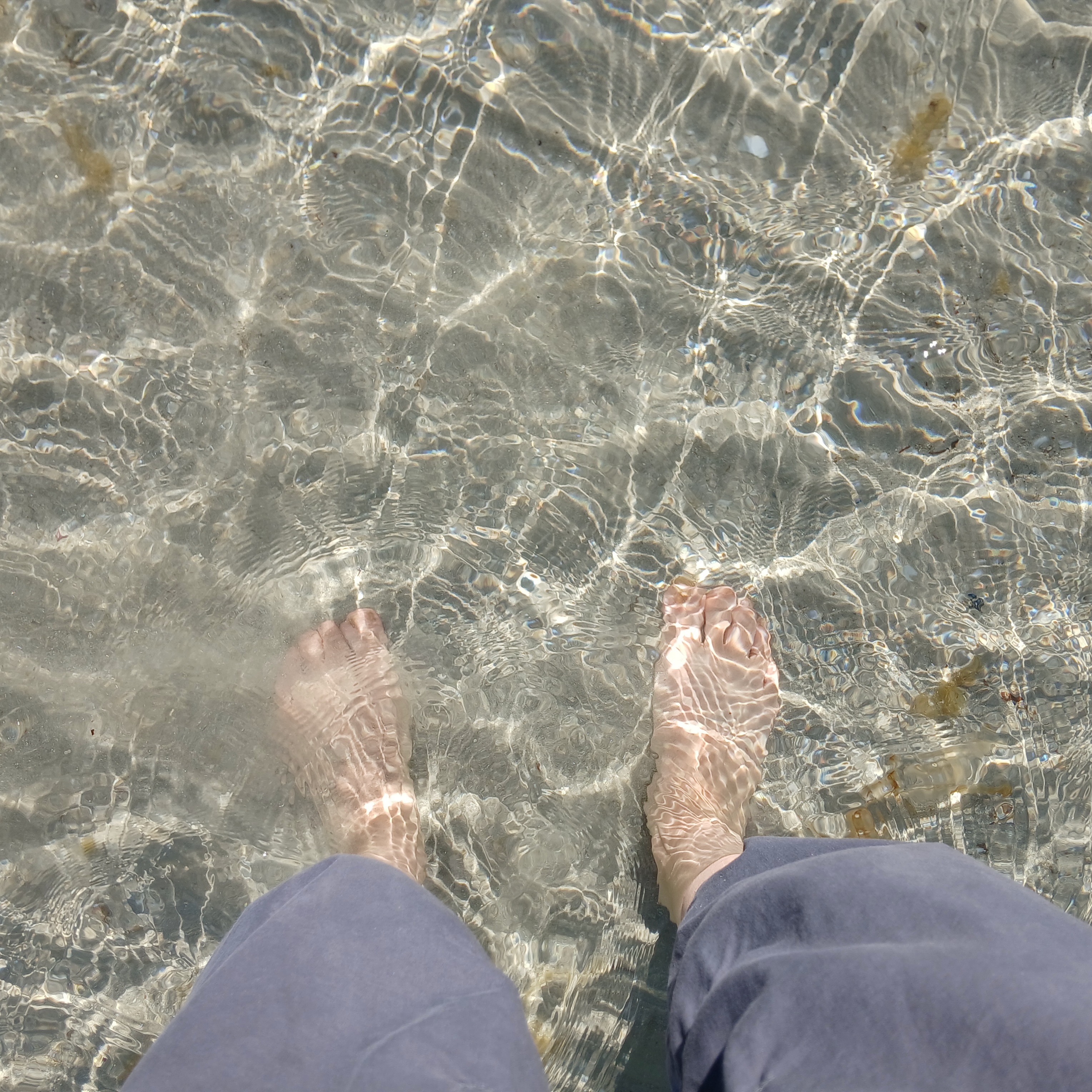
Deep Creek, September 2025.

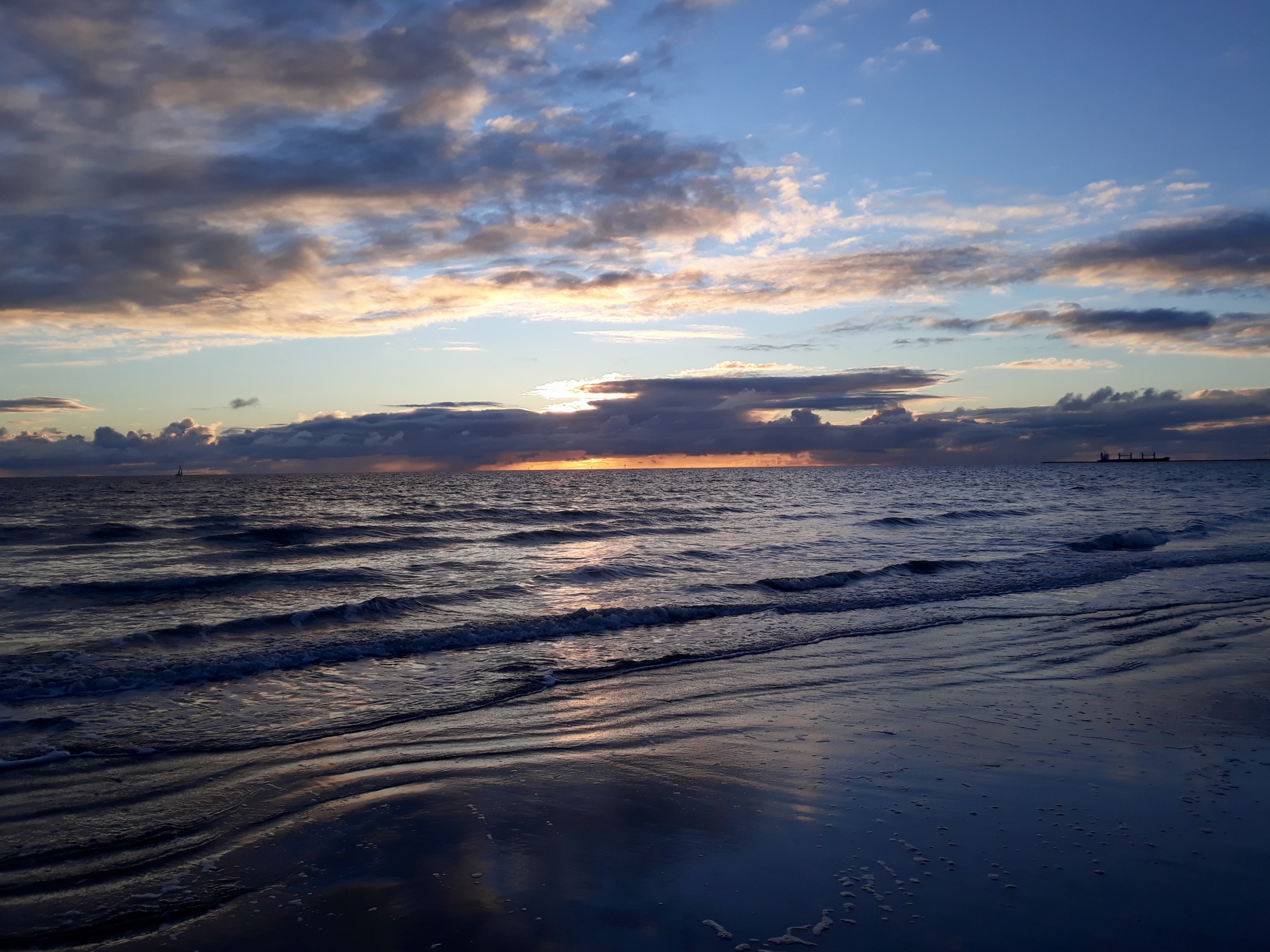
I’ve been quiet over here for a while, not because I haven’t wanted to write a post, but because I didn’t know how to find the words to do so. Earlier this year, a toxic algal bloom hit the coast of South Australia. It began in regional locations but then spread to the metropolitan coast, killing marine animals in its wake and turning the ocean into a graveyard. Although scientists originally predicted that it would disperse during the cooler weather of the winter months, it hasn’t done so, and as summer approaches it’s clear that the bloom will remain for some time to come. There are thought to be several causes for it, among the most obvious of which is global warming: we are experiencing a marine heatwave in South Australia.

When I think about the algal bloom, I feel powerless and devastated. I have lived the whole of my adult life around the sea. My house is within walking distance of the sea. My holidays and camping trips are centred around the sea. I walk and run by the sea. I go to the sea to remind myself that there is another world beyond the human world — to tune the rhythm of my breathing into the rhythm of the waves, in and out. In and out.

But now what I feel when I go to the sea is grief.

Deep Creek, September 2025

It’s impossible for me to write a post here, on this blog in which I have for so many years celebrated my life by the sea, without acknowledging the algal bloom, and yet I find it almost equally impossible to write about it. And so this is the reason for my quietness. These words, even as I write them, do not come easily to me.

The effects of climate change are not kind. This is not a kind world.

Deep Creek, September 2025

I will finish by saying that the photographs that accompany this post come from a recent trip I made with a friend to Deep Creek, to the place where I spent a week on a writing residency around the same time last year.

Wait — let me rephrase that: I will finish by saying that Deep Creek is a place of stunning natural beauty and I am grateful for my time there, but that it, too, like the ocean, is vulnerable to climate change, because this is not a kind world.

It is not a kind world.

Lately I’ve been reading …

The soft clatter of keyboards

Other people’s words about … crying at work

The lines I’ve quoted in the passage above, which make up the opening sentences of Anna Kate Blair’s novel, The Modern, have stayed with me ever since I read it, some years ago now. The novel is about art, love, self-doubt and work — most of all, perhaps, about how in our society one of the things that determines our conception of ourselves, the way we see and value ourselves (and others), is work.

The ethos of work.

What I love, though, about this particular passage (which in fact turns out not to be particularly essential to the course of events throughout the rest of the novel, at least insofar as what happens to Sophia, the narrator), is its tragicomic depiction of women crying in the workplace. Blair dispenses here with the need to explain why Anthea and Joanna and Sophia are crying, and why they assume they have to keep their crying secret. Crying in the workplace, she implies, and secret crying in particular, is a commonplace for these women; they all simply assume, in some kind of tacit shared understanding of themselves and their lives, that they’ll end up crying at some point during the working week.

Aldinga Beach, May 2025.

I’ve worked in several workplaces over the years, and, just like Anthea and Joanna and Sophia, at some point in each job I’ve gone in search of a private place to cry. When I worked the afternoon shift in the call centre of a community health provider, I used to take the lift from the fourth floor down to the car park, walk around the corner of the building to a little alleyway on one side and lean against the wall to cry. When I was a cook, I’d step into the cool room and close the door behind me to cry in refrigerated privacy, crouched in among the cartons of milk and bowls of pastry cream and half-wheels of cheese. I’ve also done my fair share of crying in the office toilets like Anthea, and, yes, like Sophia, I’ve sat at my computer furtively blinking and dabbing at my eyes, all the while hoping that no-one would notice. And/or that no-one would notice me.

What is it about workplaces that reduces women, some women, to tears? Is crying part of our make-up, or is there something about the conditions of our workplaces — the buildings we work in, the people we talk to and report to, the conditions we’re bound by our salaries to — that makes us cry? Or is it rather the space the workplace occupies in our lives, the way it’s crammed in uneasily among everything else that belongs to our non-working selves, those selves we perhaps think of as our true selves?

I don’t know. But I think of Sophia, fellow workplace-weeper, from time to time and smile wryly.

May 2025

Lately I’ve been reading …

A sad place

Other people’s words about … accessing feelings

Some years ago an older woman said to me that she had noticed she didn’t cry very much anymore. She said that when she was younger she had been someone who cried easily, when she was sad, when she was angry, sometimes when she was happy. But now, in her seventies, the tears didn’t well up anymore.

I remember thinking that that wouldn’t be the case for me. I remember thinking that I would always be someone who cried a lot — too much, probably, rather than not enough. I have always cried copiously and easily and very often self-piteously. I have cried at the most inappropriate times, during moments that weren’t about me at all, moments when I should have been comforting someone, not dealing with my own emotions.

Largs Bay Jetty, April 2025.

And yet here I am, mid-fifties, and it’s happening to me, too. In the passage I’ve quoted above from Tove Ditlevesen’s memoir, Ditlevsen is describing the way she felt as a teenager, but the feelings she expresses in this passage describe the way I often feel now, the way the older woman I mentioned above also expressed feeling. It’s a feeling of seeing sad things, being moved by them, being aware that I’m sad about them even, but not being able to access the sadness itself directly. When I do cry, it’s usually, like the adolescent Ditlevesen, when the feeling is being conveyed to me through another medium — a book, a film, a poem, a song.

I miss crying. Perhaps that sounds odd or self-indulgent, but I miss the feeling that came when my eyes grew hot and tears fell down my cheeks and my throat tightened and my breath snagged. I miss the feeling of being there with my sadness, right there. I miss the feeling that follows a crying bout, too, that feeling of being healed, even if only temporarily.

The world is a sad place right now. People will say in response to this that the world has always been sad for someone somewhere, and that’s true. Partly, then, I say that it’s a sad place from a place of privilege, because I’ve experienced times when it seemed that there was a lot of hope in the world, if you could only learn to access it. Still, when I think about the climate crisis, when I think about Presidents Trump and Putin and Xi Jinping and Yoon Suk Yeol, when I think about the rise of Artificial Intelligence, the world seems to me a very sad place indeed. Would it help if I were able to cry about this? I don’t know. Like the adolescent Divletsen, I don’t think very much of reality.

Lately I’ve been reading …

Decoded

Other people’s words about … language and interpreting

When I was a young woman I studied French, German and Mandarin at university. I had a facility for language, for words, and in those days I thought that I might one day become an interpreter in one of these languages, like the narrator in Katie Kitamura’s novel Intimacies. I studied all three languages for a year, having also studied French and German at high school, and then at the end of the year, which was the end of my first year at university, having achieved distinctions in all three subjects, I left university, left Australia, and didn’t return home to resume my studies for another three years.

By then I’d decided not to pursue a career in languages at all. I had understood from my travels that my natural shyness and introversion would make the kinds of context in which an interpreter works difficult for me, and I had decided not to challenge myself in that way. Funnily enough, this realisation came to me while I was living in Germany, where I had gone to live for a year to become fluent in German. Funnily enough, I should add, by the time I came to the realisation that interpreting wasn’t for me, I was almost entirely fluent in German. Anyway, I came back to Australia and left all of this behind, my fluency in German, my plans to be an interpreter, all of that.

Footprints in the sand, March 2025.

It’s funny, though, because Katie Kitamura’s description in the passage I’ve quoted above of the experience of being so immersed in the pursuit of choosing the correct word that you lose all sense of meaning is something I am deeply familiar with in another context — editing. As an editor, I have edited books in the fields of geology, medicine, history, literature and religion. On hearing this, people frequently say to me, ‘Wow, you must have learned a lot about geology/medicine/history/literature/religion!’ But the truth is, I don’t absorb that kind of information when I’m editing. Like Kitamura’s interpreter, I decode the language I’m working with in the material I’m editing — meaning that I make sure that the sentences are grammatically correct, that there are no spelling errors, that the writer has presented their argument cogently — but that doesn’t necessarily mean that I understand it.

You literally do not know what you are saying, says Kitamura’s narrator of interpreting. Likewise, I would say of editing, I literally do not know what I am reading.

There are times when I regret losing the languages I learned when I was younger. There are times when I wish I had tried a little harder, thought a little more laterally, about how a person like me might use her language skills in her career without needing to be a gifted conversationalist or gregarious extrovert. But perhaps in the end my love for words and decoding language are what led me to become an editor, even if only by default. And I am, despite everything, grateful to have found my way to an editing life. It has served me well.

Lately I’ve been reading …

My body, my self

Other people’s words about … other people’s writing

I think this is one of the best critiques I’ve read about the written world today. How do we escape the aesthetic smallness of scope and affective numbness? I don’t know, but I think Eisenberg is onto something here.

Taperoo Beach, March 2025.

Leah, one of the two main protagonists of Housemates, is fat and queer and in love with her housemate Bernie, who is attracted to Leah but not driven to pursue the attraction, or at least not initially. And here again Eisenberg questions our social mores, the platitudes we repeat to ourselves and to others, this time about the discourse of sexuality. Was she more or less comfortable among queers than she was among everyone else? Bernie asks herself. About the same, came the answer. But if she really listened, really paused, there was another answer, which was: less. The style. The discordance, the mismatching, the pride, the attracting of attention and the comfort in that attention, the physicality to dance, to fuck, to march. The physical in Bernie felt meant for other uses.

Leah and Bernie move in a world where people pride themselves for being other, for not living according to the usual socially accepted order. And yet their world, too, demands acceptance and conformity to certain philosophical and sexual tenets. I love how Bernie has the courage to question the over-sexualised expectations that she perceives the people around her to have of themselves and others. The physical in Bernie felt meant for other uses. Now that’s a celebratory sentence if there ever was one.

Taperoo Beach, March 2025.

Lately I’ve been reading …

We cannot know

Other people’s words about … writing about life

‘We cannot know.’ If used sparingly, this is one of the strongest phrases in the biographer’s language. It reminds us that the suave study-of-a-life we are reading, for all its detail, length and footnotes, for all its factual certainties and confident hypotheses, can only be a public version of a public life, and a partial version of a private life. Biography is a collection of holes tied together with string, and nowhere more so than with the sexual and amatory life. For some there is nothing easier than understanding the sex life of someone you’ve never met, and easier still when they’re conveniently dead; or in posthumously adding another conquest to the dance card of a known Don Juan. Others simplify things by maintaining that human sexual habits have always been more or less the same, the only variables being the degree of hypocrisy and cover-up.
But sex is a world in which self-deception can so easily present itself as objective fact, and ‘brutal honesty’ is no more likely to be true than shy evasiveness or sentimental melodrama as an explanation of what really took place. Oscar Wilde may have been a ‘posing sodomite’, but such evidence as we have suggests he preferred intercrural sex, and if so was not technically a ‘sodomite’ at all. We cannot know. Sara Bernhardt was a nymphomaniac. Oh, but she was also incapable of orgasm. Until she had the problem fixed by means of an ingenious surgical implant — which is reliably attested by that ‘hysterical duplicitous gossip’ Jean Lorrain, and then recorded in the [j]ournal of Edmond de Goncourt, whose views on women were old-fashioned to say the least. We cannot know. Robert de Montesquiou was a flamboyant homosexual, except that his biographer thinks he was too coldly fastidious to indulge his Hellenic urges, while [Samuel] Pozzi’s biographer thinks he may have been impotent from around 1884, and remained so. We cannot know. Pozzi had a reputation as ‘an incorrigible seducer’, a doctor who slept with his patients, who may even have used his consultations as foreplay. He also kept all the letters he had received from women over a sexual career of half a century or more. Yet after his death, Mme Pozzi instructed her son Jean to burn them all. So we cannot know a large amount … We may speculate as long as we also admit that our speculations are novelistic, and that the novel has almost as many forms as there are forms of love and sex.

from ‘The Man in the Red Coat
by Julian Barnes

Many years ago, my mother and I embarked together on a reading project for a year, our own little book club before book clubs were a thing. Our reading theme was American novels, and we took it in turns to pick a novel, one by one over the course of the year, which we each then assiduously read; afterwards, we caught up over coffee to talk about it. I remember this year with great fondness as a time of shared reading and conversations, conversations that began with reading and literature but moved on, as all good conversations do, to other things. Art. Love. Life.

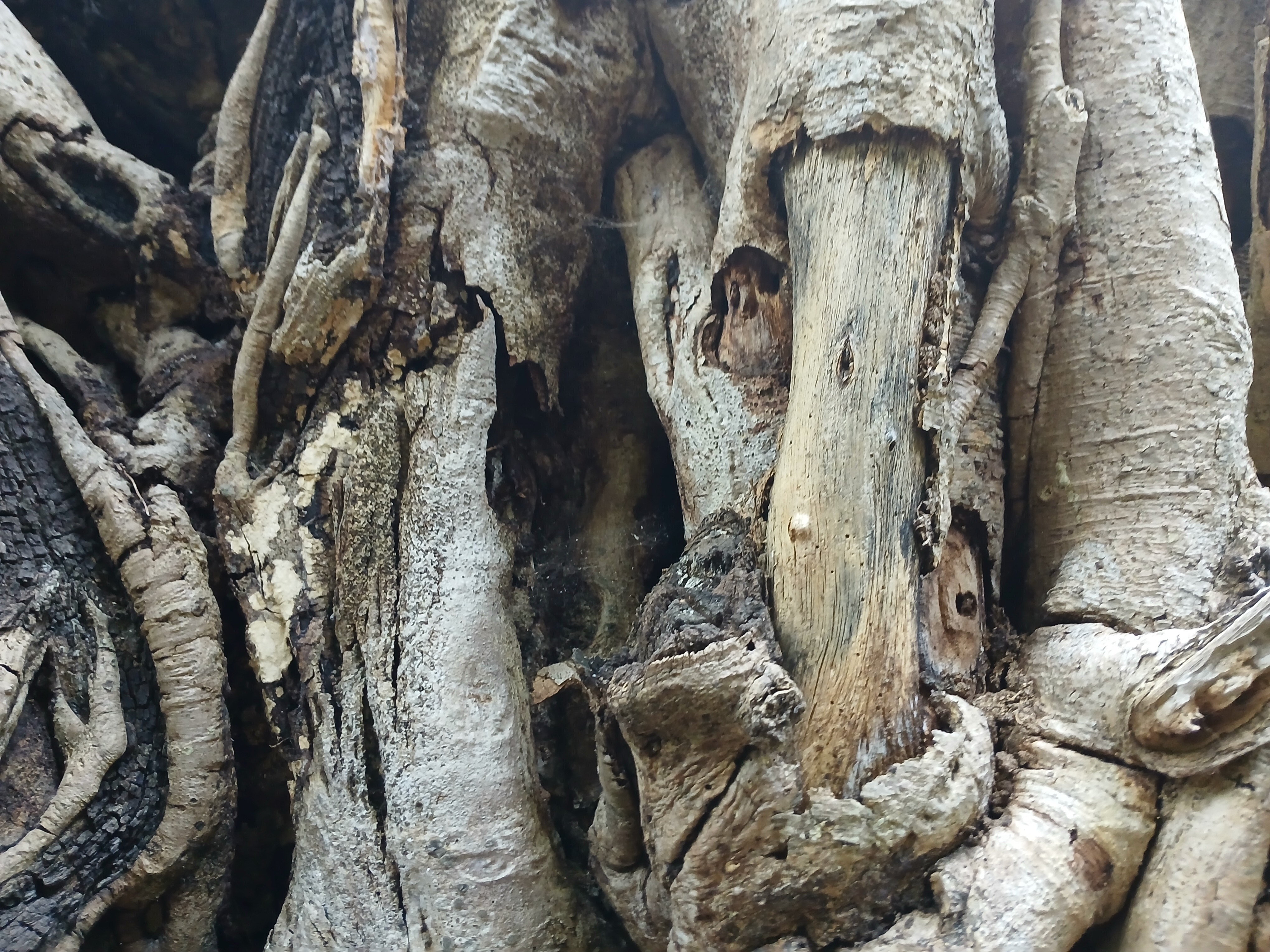
Knotted trunk, Lameroo Beach, Darwin, August 2024.

Recently we’ve begun another reading project together, one that we hope will involve some writing further down the track. As a result, my reading choices, which usually tend to fiction only, and generally to contemporary literary fiction at that, have widened. I’m reading fiction and non-fiction, works by contemporary writers and works by long-dead ones, works by women and works by men. Hence The Man in the Red Coat, which I might not otherwise have come across.

We cannot know. I’ve quoted Barnes at length here (which I hope he will forgive me for) because I love the virtuosity of this passage, the way he begins with a simple assertion, a certain truth, and then moves on in the space of a couple of paragraphs to cover themes at once intimate and specific to the period he is writing about (the Belle Epoque) but also meta-textual, concerning the art of biography itself, that collection of holes tied together with string. (What a lovely image that is.) And then, somehow, we arrive at the end of this flight of thought with another assertion, equally simple but bold, about the essence of novels and fiction.

We cannot know. Indeed.

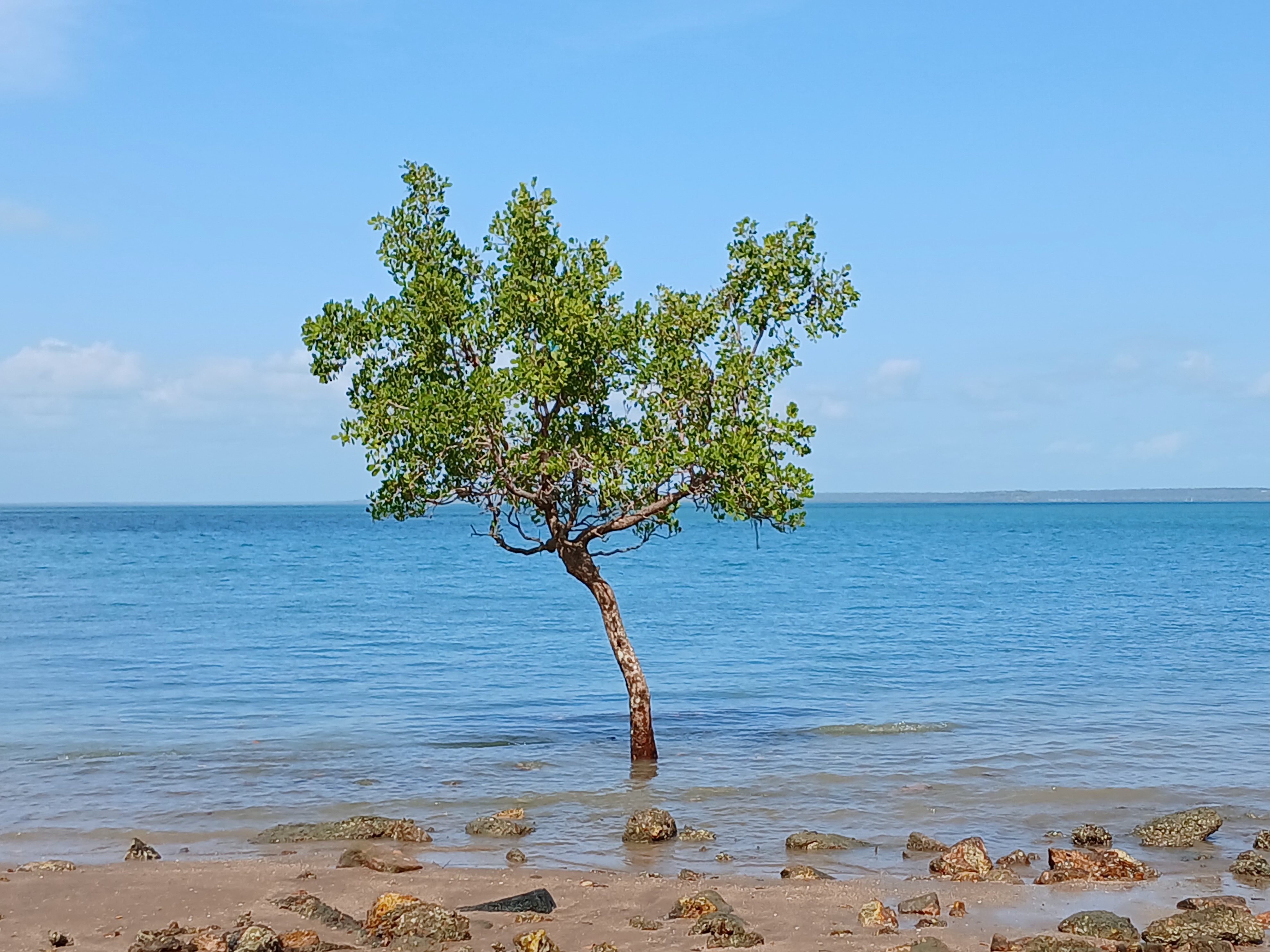
Mangrove tree at Lameroo Beach, Darwin, August 2024.

The photographs in this post, like the ones in my previous post, come from a recent trip I took to Darwin. I’d never been to Darwin before and was only there fleetingly on this occasion, but I fell in love with it, all of it. Darwin in the dry season: place of sunny days, rainforest-lined beaches, mangroves and vines and bush-stone curlews. When you visit somewhere new, you see things through a stranger’s eyes, which is to say that you don’t see its inner workings, its inner truth. Does that mean that you see its truth or something else, your own hypothesis of the place? We cannot know. But oh, the privilege of having the opportunity to see it anyway.

Lately I’ve been reading …

Calculus

Other people’s words about … counting calories

In 2008, I downloaded a new app to my iPod. The icon featured a silhouetted figure in the middle of a balletic jump, lithe and limber like I wanted to be, and when I clicked open the app I was welcomed and asked to input my height, current weight, age, gender, and goal weight. MyFitnessPal, which debuted on the app store in 2005, is to this day one of the most popular calorie counting apps worldwide. Its icon is also regular featured in eating disorder starter pack memes and discussed on pro-ED websites. ‘Does anyone else have MyFitnessPal app trauma???’ someone posted, while another joked darkly about ‘the myfitnesspal to eating disorder pipeline’, and another mocked ‘myfitnesspal’s yassification of orthorexia’. The app is focused on calories in and out, calculating your personalised daily allotment based on your biometrics and the date by which you’d like to hit your weight goal. During the era I spent addicted to the app, every time I considered putting something in my mouth, I searched it in the apps’s expansive database, and often decided against eating it after seeing its caloric content. What I did eat, I entered, and the app updated my remaining calories for the day accordingly. The app quickly became a ritual and a rulebook, and scrolling my daily record in bed at night a practice as yearnful and penitent as running my fingers through rosary beads.

from ‘Dead Weight
by Emmeline Clein

I have written two novels now that feature characters with eating disorders in them, a YA novel and my recent novella, Ravenous Girls. Both the characters in my books, like myself, experienced the onset of their anorexia in the late 1980s or early 1990s, before the existence of the internet, let alone of iPods and the app store. And yet when I read the passage I’ve quoted above by Emmeline Clein, I thought how familiar it sounded and how, despite the passage of time and the onslaught of digital technology, the experience of anorexia has remained in its essence the same across generations, at least in certain parts of the world and among people of a certain class.

Whether you count calories by consulting a book of charts that is updated and republished annually (as my characters and I did in the 1980s) or whether you download an app and then ‘chat’ about it online with your pro-ana friends, you are still counting calories. You are still measuring yourself by your food intake and the effect it has on your physical appearance. You are still, in other words, measuring your worth by what you eat and how you look.

Taperoo Beach, July 2024.

There are people who say that when we write about the experience of anorexia we trigger others to seek the experience out. I am not one of those people. The subtitle of Clein’s book is On Hunger, Harm and Disordered Eating, and I think it’s the first two words of that subtitle that grab me most strongly. Hunger is the primary experience of anorexia, whatever your age or sex or class or gender, and harm is the result — in some cases, terrible harm.

Perhaps we can’t prevent that harm when we write about it, but perhaps, too, we can try to make sense of it. And that, I believe, is important.

Lately I’ve been reading …

Each week I bookmark pieces I’ve read online that I might list on my blog, and each week my list grows and grows, since I read far more than I blog. For this post, I’ve dived into my archive of bookmarks for some pieces I’ve loved over the last two or three years.

Echo

Other people’s words about … intimacy

He exhales. In the spring he would sometimes wake up at night beside Marianne, and if she was awake they would move into each other’s arms until he could feel himself inside her. He didn’t have to say anything, except to ask her if it was alright, and she always said it was. Nothing else in his life compared to what he felt then. Often he wished he could fall asleep inside her body. It was something he could never have with anyone else, and he would never want to. Afterwards they’d just go back to sleep in each other’s arms, without speaking.

from ‘Normal People
by Sally Rooney

I don’t know anyone who writes about intimacy better than Sally Rooney, especially in her first two novels, Conversations with Friends and Normal People. What I love about Rooney’s writing is that she understands how our emotions convey themselves to us by manifesting themselves physically. Connor’s longing for Marianne in the passage above, his longing to be inside her, is both physical and emotional. It’s all-encompassing, unspeakable, the kind of intimacy that he doesn’t have words for — that most of us don’t have words for. Only Sally Rooney, as I said, can write this way.

Port Elliot, June 2024.

I’ve been thinking over the last few months about why I write and what I want to write about next, now that my novella Ravenous Girls is out in the world. And I’ve been writing, too, or trying to. Earlier this year, in fact, I submitted part of a new manuscript, the manuscript I’ve been thinking about over the last few months, to the Deep Creek Residency — and this week I found out to my excitement that, based on the strength of the material I’d submitted, I have been named the winner for 2024 of the residency. Which is deeply exciting.

It’s funny how writing works, though — by the time I got the news about winning the residency, I’d pretty much convinced myself that this manuscript, or the version of it that I’d worked on and submitted to the residency, was unfeasible. Clunky. Strained. Embarrassing, even.

So maybe I was wrong about that; maybe I somehow got myself lost inside my own echo chamber. This happens to me over and over again whenever I’m writing, and yet each time it happens to me, it astonishes me anew. It’s not a place I recommend staying in very long, this echo chamber. It’s a desolate, lonely place.

Aldinga Beach, June 2024.

Partly what I’m writing about in my new manuscript is Cairo. Partly what I’m writing about is the two sisters that I wrote about in Ravenous Girls, Frankie and Justine, at a later stage in their lives. And partly what I’m writing about is intimacy, not in the way that Sally Rooney writes about intimacy, but intimacy nonetheless.

Intimacy, which is its own terrifying echo chamber.

Lately I’ve been reading …

Unrequited

Other people’s words about … a woman’s desire

The meat was ready, steaming, when I lifted the lid of the pot. As I sliced it up I pictured meeting the ambassador in the hotel room. First, he will open the door and clasp me in his arms, I decided, putting a plate in front of my husband. He will kiss the hollow of my throat very softly, and then he will gaze upon me, I decided, like he did today, but with much more tenderness. I cut my potatoes up into tiny pieces. My husband chewed and chewed, with the mouth that never kissed me. He will lay me down on the soft white bed and undo the buttons slowly, I decided. He will kiss my eyelids. I will place my hands on his smooth back, I decided as I chewed. I will clutch him to me but not too hard, not like a drowning person. The light will be dim. The bedding will be spotless. He will tell me that he has seen what nobody else has ever noticed. He will say, ‘It’s you I’ve wanted all along, Elodie. I see you, Elodie. You. You.’

from ‘Cursed Bread
by Sophie Mackintosh

I came back to Elodie’s story again today, having quoted from it once before. Elodie’s story continues to compel me — her longing for her husband to desire her, to see her, oh, to want her. Though Elodie is young and has her life ahead of her, I wonder whether the feelings and desires she expresses in her narrative, those feelings and desires that in her tiny village community are so forbidden, are a little like those an older woman might feel, a woman my age, on realising that the desires she once thought might be realised are now out of reach.

I wonder.

Largs Bay Jetty, May 2024.

I’ve spent the last few weeks quietly. Post-Covid, I still feel tired. It’s a funny kind of tiredness, not so much a feeling of lethargy as a feeling of being tissue-thin, emotionally and physically. I don’t know how else to describe it. Still, I’ve been walking and reading and even writing (a little), and I had a quiet moment of celebration a couple of weeks ago when I saw ten hooded plovers at Aldinga Beach.

Yes, ten. I have never seen so many before, and I walked home feeling quietly jubilant.

Bracken fern, May 2024.

Lately I’ve been reading …

Disjunction

Other people’s words about … getting divorced

I went to a gymnasium most afternoons between half past five and dinner time, because exercise kept me clearheaded writing copy in the daytime, and fresher-looking through the evening. The gymnasium had a running track on the roof. Going round and round it, regarding the view of upper Broadway electric light signs, or thinking that the person who invented the sweat shirt had no sense of design, or just counting off twenty laps to the mile, and debating detachedly whether to be energetic and run three miles, or lazy and stop at two, I felt very contented. Thump, thump, thump, around a board track. It was a simple occupation, but an absorbing one.
That feeling of running, of having been running endlessly, so that I was breathless, yet must go on running forever, seemed to sum up my life. Running through days of posing as an efficient young business woman, through nights of posing as a sophisticated young woman about town. Running from the memory of Peter, toward something or nothing, it did not matter which.

from ‘Ex-Wife
by Ursula Parrott

You could think, reading the passage above, that you were reading something from a book by a contemporary female author, a Millennial or a Gen Z writer, that you were reading a modern sad-girl novel. But you would be mistaken. Ursula Parrott published her wonderful novel, The Ex-Wife, in 1929. I am astonished at how true Patricia’s story, and Patricia’s voice, still rings now.

I read The Ex-Wife just before I came down with my first bout of Covid, and now, picking the novel up again and reading the words from it that I’ve quoted above, which so struck a chord with me at the time I read it, I wonder if I’ll ever run again the way Patricia describes, which is the way I remember running. Thump, thump, thump. I know that everyone feels like this after Covid, and I assume that it will pass. Still, the feeling of disjunction between the me who read Parrott’s novel a few weeks ago and the me writing this post is jarring.

Norfolk pine trees and autumn sunshine post-Covid, April 2024.

In The Ex-Wife Patricia’s husband has just broken up with her and she is trying to make sense of being, yes, an ex-wife. Though divorce is now far commoner than it was when Parrott wrote her novel; and though we accept the idea of wives committing adultery as much as we do the idea of husbands doing so; and though many women no longer feel the need to marry at all — still, it seems to me that Patricia’s feelings reflect what a young, heartbroken woman might feel now in a similar situation. Patricia feels betrayed by her ex-husband Peter, who leaves her after she confesses to him that she has slept with another man (even though he has, all along, been sleeping with another woman); she loves him, still, as much as she hates him; she wants to move on but can’t; and meanwhile she tries to make her way as a young, single, independent woman through the world. How familiar does all of that sound?

I am grateful to live in a world post-third wave feminism. I am grateful to live in a world that has allowed the #MeToo movement to happen finally. And yet. And yet. There is still so much that needs to change in this space. So very much.

Cuddly Covid companion, April 2024.

Lately I’ve been reading …