An open and shut case

Other people’s words about … signs

[The waitress] leans over our table and turns the sign in the window so that it says CLOSED on the outside. But on our side, perfectly positioned between Mabel’s place and mine, it says OPEN. If this were a short story, it would mean something.

From ‘We Are Not Alone’
by Nina La Cour

I am the kind of person who, like Marin, the narrator in the passage above, can’t help seeing life through symbols and signs: I see metaphorical OPEN and CLOSED signs in my own life every day.

Lately, as some of you know, I’ve been released (at least for now) from the routine of salaried office work. I’m not answerable to an employer any more; I don’t have to be at the office at a particular time, or sign on and off at the beginning and end of my shift, or conform to a certain dress code, or take my lunch hour at a stipulated time for a stipulated duration. All of which implies a certain freedom, the kind of freedom I’ve often craved.

But I do have to hustle. If I want to get work as a freelancer, I have to go out and seek it, something I never had to do as a salaried employee. And in the daily transactions of that hustling — contacting people, letting them know of my existence and of the work I do, following up their responses, thinking of new people to contact and new ways to work — it’s all too easy to see signs everywhere I look. Someone doesn’t answer my email? That’s a CLOSED sign. Someone writes back, saying it’s lovely to hear from me? That’s an OPEN sign.

And so on.

It’s exhausting and exciting, both those things at once, and I don’t know yet where it will take me or what it will lead me to — or whether, ultimately, it will be sustainable. But for now, it’s early days, and I’m giving it a chance, and I still believe there might be some OPEN signs on the path ahead of me …

Signs and symbols: The way forward?

Lately I’ve been reading about …

Meanwhile, as always, I’ve been reading! Here’s the recent digest:

What it means to be free

Lately I’ve been reading about … how to write

Last year, I stopped writing. At the time, I wasn’t sure if I had stopped writing forever, or if it was just for a while. In my heart, I was convinced it was forever. I felt sad, but also strangely certain. I felt, very strongly, that I had come to the end of the writing I could do, and that I had to learn to let go. To move on.

A few months later, I lost my job as the Senior Editor at a university press. I felt far less sanguine about losing my job than I did about stopping writing, because it wasn’t my decision. And because I loved my job. And because I didn’t know what I would do next, or how I would earn an income. If I’m honest, I still feel all of those things now. I still don’t know what will come next.

But for now, I’m taking a break; I’m not actively job-seeking. I’ve been spending my time building a website to set myself up as a freelance editor, and … I’ve been writing again, working on an old manuscript that I thought I had abandoned forever, and feeling — at least sometimes — as though I might actually, one day, be able to finish it.

Look up. Let go. Move on.

I feel freer now to write than I did last year, or indeed than I did during the years preceding that. I don’t know why this is, except that, without the regular schedule of getting up and going to work four or five days a week, without the commitment to a tiring and demanding (though rewarding) job, my mind feels clear. And the clarity gives me courage. I feel brave enough, suddenly, to take a risk again in the creative sphere, to take the risk of failing.

Because I see now, though I didn’t see it last year when I was still deeply enmeshed in my work, that my fear of failing as a writer had, in the last few years, grown very strong. It had become, at least as far as writing was concerned, incapacitating.

It’s true that not all hardworking writers publish. Often the circumstances that drive the industry are out of our control. But the willingness to write through what might seem to be an unending succession of drafts — however you define “draft” — is one factor that you can control.

From ‘What if All Writing is Just Drafts, Forever?’
by Joseph Scapellato
At The Literary Hub

One of the things that’s so tricky about writing is that there are no rules, no surefire ways to creative success. Some writers write every day, without fail, setting themselves a target (whether that’s a word count, or a certain number of hours they spend at their desk, or a publishing deadline). They write draft after draft, like Joseph Scapellato in the passage I’ve quoted above (which you can read in its entirety here), and in doing so they find a way through to the other end: to the finished book.

But, like Heather Havrilesky in the passage I’ve quoted below (which you can read here), other writers approach writing in a less disciplined way, determined to seek only the joy, only the moments of flow.

Why is my routine so messy, random, and kind of lazy? It’s because I don’t force it anymore. I feel like my brain now knows that I don’t actually have to work that much, I just have be in front of my computer for those times when everything is flowing and it’s possible to hit that high note. I’m not going to torture myself the rest of the time.

From an interview with Heather Havrilesky
At Extraordinary Routines

Clearly, there is no one, right path that every writer must go down in order to write a book. What wasn’t clear to me until very recently, though, is that there isn’t even one, right path that an individual writer must go down in order to write a book. The process, at least for me, this particular individual writer, is a learning one. It changes with the book you’re writing, and with the years, and with the state of your (physical, mental, emotional, spiritual) health.

I still don’t know whether I’ll finish writing the book I’m currently writing, which I began so many years ago. Even if I do finish it, I still don’t know if it will be publishable. But for now, I’m grateful to be experiencing a feeling of freedom again, the freedom to be myself, whatever that means, to write because I want to write, without becoming enmeshed in either hope or despair.

This new place

Lately I’ve been reading … essays

What makes an essay an essay? Does it have to be scholarly? Does it need a central argument? Must it be informative? Can it be purely autobiographical? How literary, how poetic, how lyrical can an essay — any kind of essay — be?

As William Deresiewicz observed in an essay about essays for the Atlantic, ‘what makes a personal essay an essay and not just an autobiographical narrative is precisely that it uses personal material to develop, however speculatively or intuitively, a larger conclusion.’
Is that, then, the definition of an essay? Everyone has their own theory. According to my own (evolving) criteria, an essay is not a poem (nonfiction though a poem often is); nor is it a speech which operates according to rhythmic and textual laws of its own. Not all works of journalism, memoir or criticism are essays, though they can be if they reach beyond their subject and offer more, including the capacity to move … That’s about as far as my definition goes.

From Anna Goldsworthy’s introduction
in ‘‘The Best Australian Essays’ 2017
Edited by Anna Goldsworthy

As a young woman, I focused my reading solely on works of fiction, but the longer I live, the more curious I grow about the world: the way it works, and how I fit into it. Perhaps in response, I often find myself, these days, turning to nonfiction and, in particular, to essays — those nonfiction equivalents of fiction’s short stories. Like Anna Goldsworthy, quoted in the passage above, I particularly like the reach that some essays, the best essays, have — the places they can take you, if you let them.

Note:
For many years, Black Inc. publishers published an annual ‘Best Australian Essays’ volume. The series has recently ceased, but you can see the back catalogue here.

Why do you write?

Other people’s words about … writing and joy

Still, Connell went home that night and read over some notes he had been making for a new story [that he was writing], and he felt the old beat of pleasure inside his body, like watching a perfect goal, like the rustling movement of light through leaves, a phrase of music from the window of a passing car. Life offers up these moments of joy despite everything.

From ‘Normal People
by Sally Rooney

I have a friend, whom I very much respect, who has been writing fiction for as long as I’ve known her, without any desire to seek either publication or readership. It seems to me that she writes purely for the pleasure of the process itself, and for what that process brings her; it seems to me that writing, for her, is an entirely internal process of discovery and exploration, requiring no further justification, either to herself or to others.

Light through leaves (1)

Since my own decision to stop writing a while back, I’ve gone on thinking about writing and the role that it plays, or has played, in my life. And I’ve come to find my friend’s concept — whereby writing is a private act, an act for no-one other than herself, with no thought to the future or to the past — consoling and inspiring in equal measures. I like the honesty of her act. I like the wonder in it. I like the courage. Sometimes, it takes courage to do things just because.

Light through leaves (2)

So I hope that my friend experiences, when she writes, those brief, flickering, sun-dappled moments of joy Rooney describes so beautifully in the passage above. I hope she feels the old beat of pleasure inside [her] body.

And I’m sure that she does.

A question

A quick, extra post today, because …

I have a question for you …

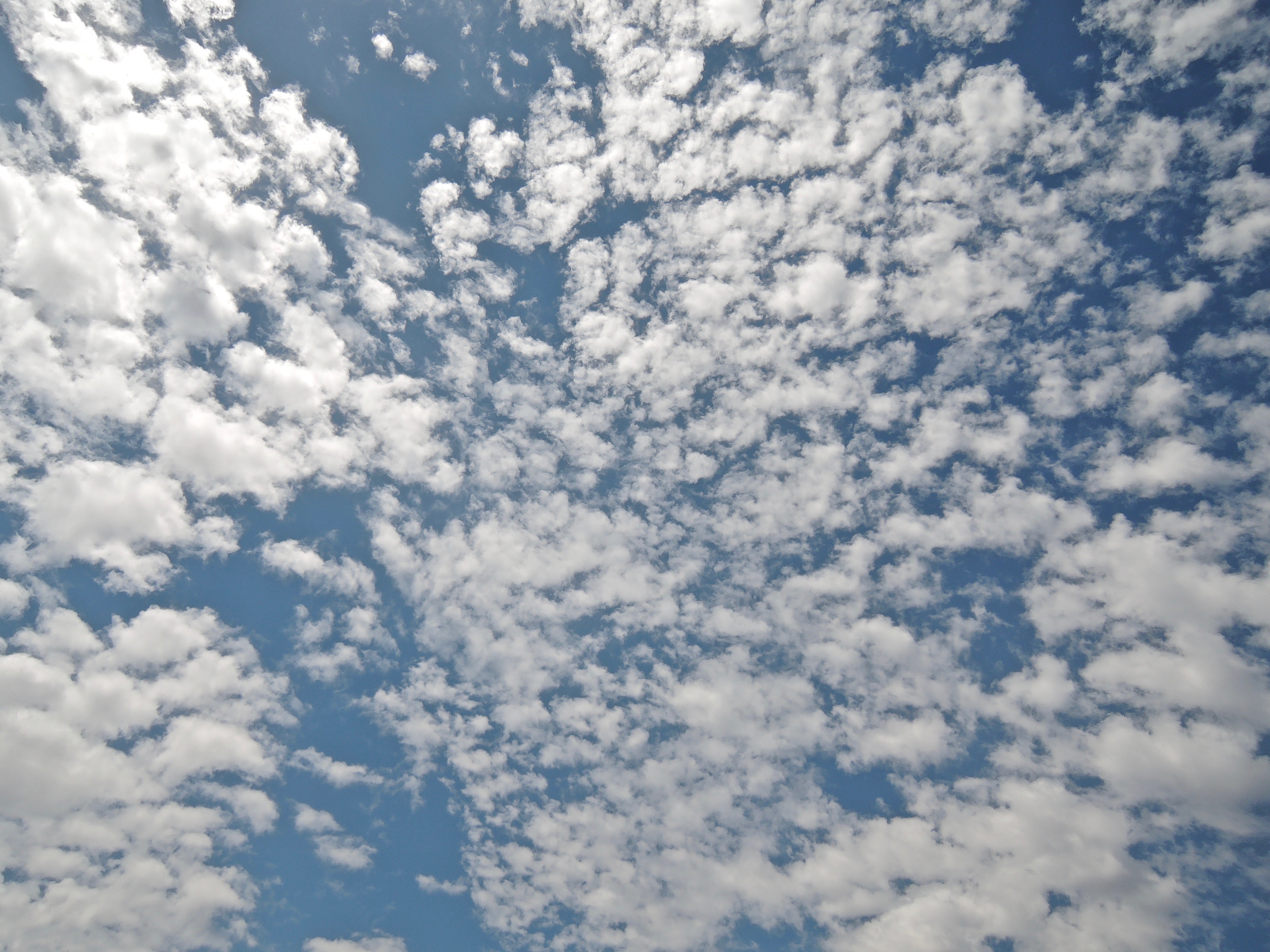
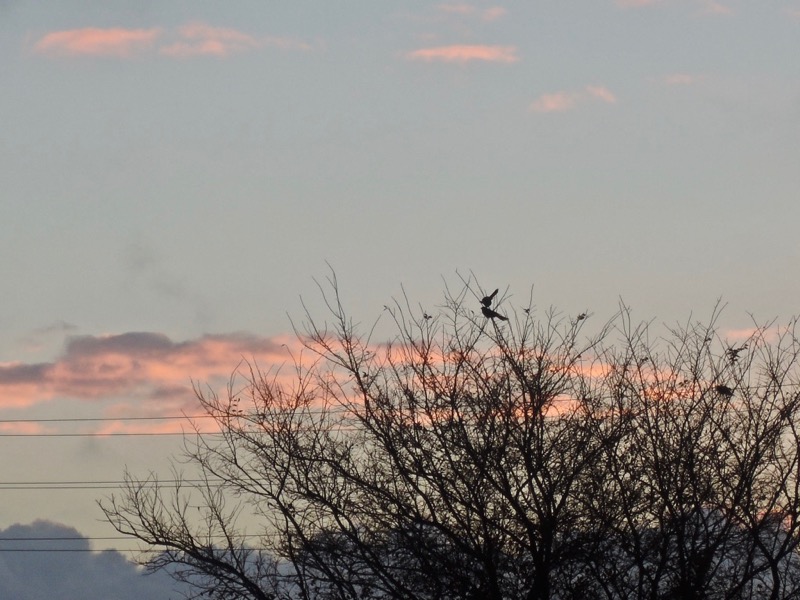
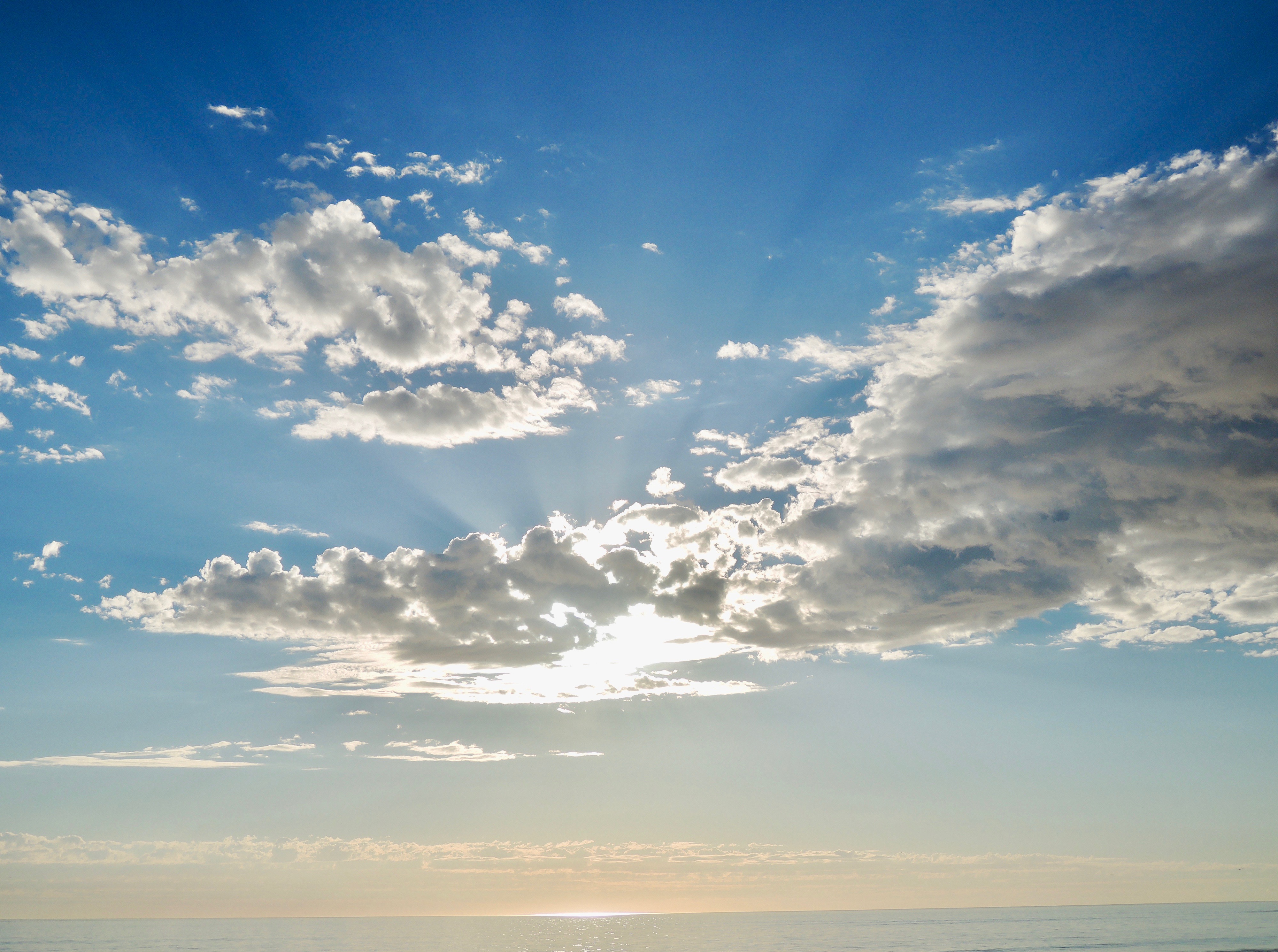
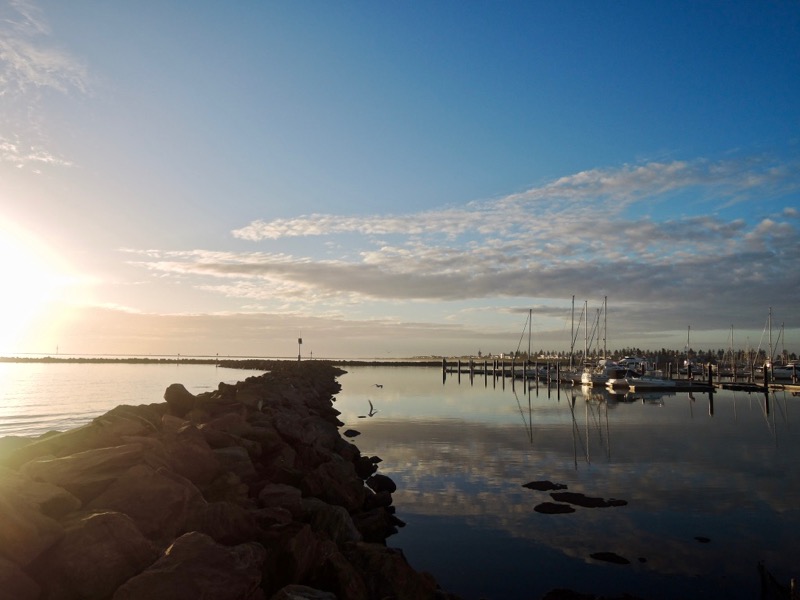
(And meanwhile, feel free to enjoy the pictures that accompany this post, which have nothing to do with my question, but everything to do with all the usual reasons I keep writing this blog … )

Autumn sunset

The list of books I’ve quoted and discussed on this blog is growing and growing, and the current page of links I have to them is growing and growing, too. I’m thinking of reorganising that page, sorting the books into more categories than the current ones (which are fiction and literature; non-fiction; poetry; magazine/newspaper/blog posts).

Winter sunrise

How would you like to see these lists organised? Would you like further subdivisions of the current categories (e.g. fiction: Australian; fiction: American, etc.)? Or would you prefer categories that don’t distinguish between, say, fiction and non-fiction or between book and non-book but are theme-based instead (e.g. running; walking; love; nature; life; health)?

Summer clouds

I’d love your feedback. Pop a comment here …

Chasing clouds

Running affords the freedom of distance, coupled with the literary appeal of solitude. There’s a meditative cadence to the union of measured breaths and metered strides. Writers and runners both operate on linear planes,
and the running writer soon realises [that] the relationship between art and sport is a mutually beneficial one.’

From ‘Why Writers Run’
by Nick Ripatrazone
in The Atlantic

I’d heard about the connection between writing and running before — or at least about certain writers, like Joyce Carol Oates and Haruki Murakami, who run as well as write, and who believe that their running helps their writing. And I’d always understood the connection instinctively, though I don’t think I could have put it into words as Ripatrazone does (fairly baldly and glibly in some spots, it must be said) in his piece for The Atlantic, which I’ve quoted throughout this post.

Running, the argument goes, clears the mind. Writers stuck on a sentence should lace their sneakers and go for a jog, knowing that when they return, they will be a bit sweatier, more tired, but often more charged to run with their words. This is Ripatrazone’s advice, at any rate.

While I would quibble with any shoulds when it comes to either running or writing — what works for some people won’t work for others; and one person’s meditative jog is another person’s sweaty, heart-pounding, back-spasming nightmare — Ripatrazone also has this to say, which I love:

Writing exists in that odd mental space between imagination and intellect, between the organic and the planned. Runners must learn to accept the same paradoxes, to realise that each individual run has its own narrative,
with twists and turns and strains.’

I’ve been struggling for some time to articulate why writing became such a tortured process for me over the last couple of years, and, equally, why I turned to running around this time with such joy. I knew that when I ran I felt a sense of clarity that I don’t otherwise feel; but still, I didn’t think the two things were connected — especially since, not long after I began to run again regularly, I made the decision to stop writing altogether, at least for now.

Now, though, reading Ripatrazone’s words, I wonder if it was that odd mental space … between the organic and the planned that running creates in me that allowed me to stop writing.

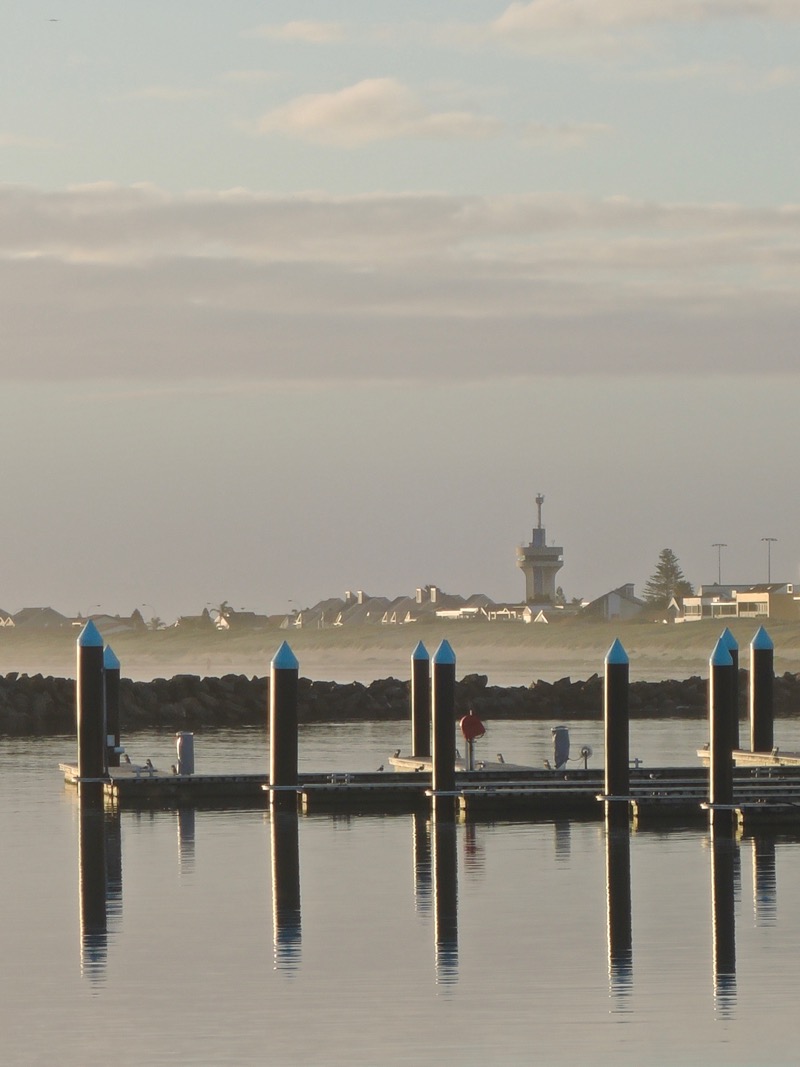
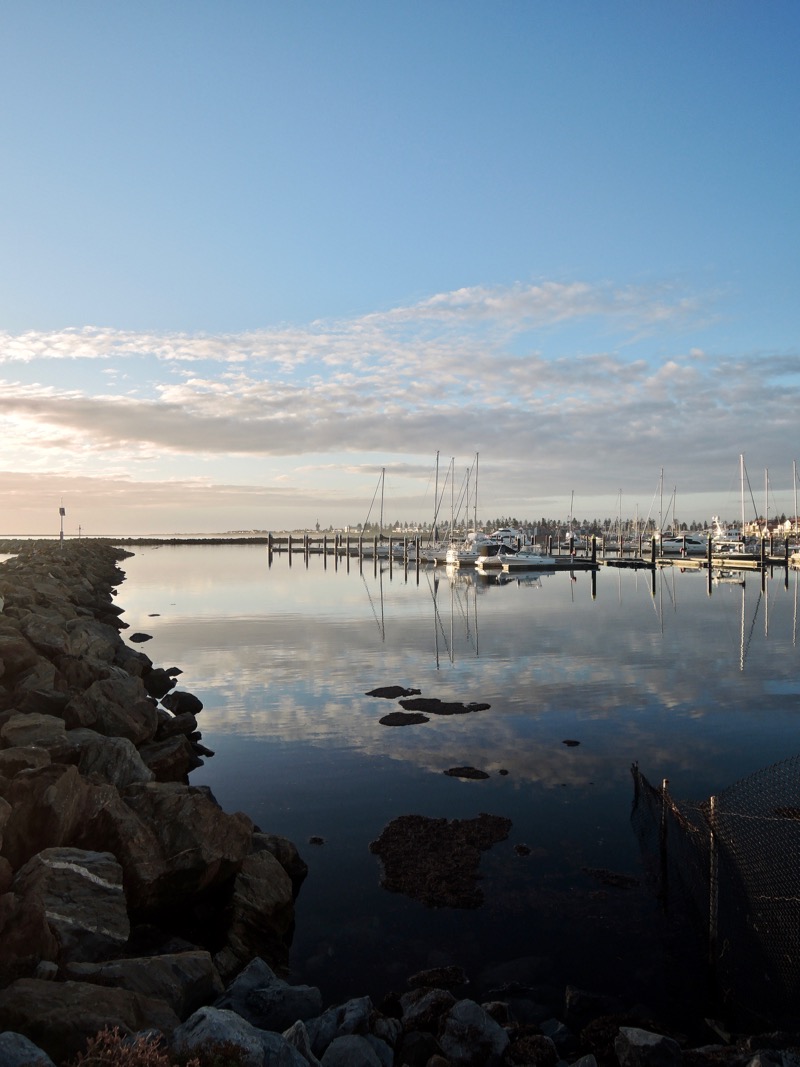
The only way I can explain this is to tell the story behind the pictures in today’s post, which I took on a short, gentle run in late July, after a particularly torrid day at work. I made it onto the beach before the sun set. Once there, I ran with the sun ahead of me rather than at my back. And at the halfway point, at the breakwater, I stopped.

I stopped.

I stopped.

I took these photos, and I breathed in, and I felt the lowering sun on my skin, and I felt everything inside of me, finally, stop.

This, I think, is what running does for me: it allows me to stop. It brings me into a kind of stillness I don’t feel at any other time. Running, stopping, finding stillness: to say that these things are intimately connected with each other seems a contradiction in terms. But perhaps it’s not, because something shifted inside of me when I took up running again last year: I felt it almost immediately. That shift was what allowed me to stop writing, which was something — I see now — I had to do, in order to move forward in my life: and to move forward, also, in my writing (again, that contradiction in terms).

Perhaps, in the end, Ripatrazone puts it better than me — not in his clichéd injunction to writers to run in order to improve their writing, but in his description of the paradoxes that both writers and runners must face.

In any case, on the day that I’m speaking of, the day that I took these photos, once I had stopped for a while to breathe in, and to look about, and to rest, I knew that I was ready to move again. And so I turned and ran homewards, with the sun sinking into the sea behind me and the air gradually chilling, and a sense of stillness all about me, and also inside of me.

Deep, deep inside.

Tipping point

Otherwise

I got out of bed
on two strong legs.
It might have been
otherwise. I ate
cereal, sweet
milk, ripe, flawless
peach. It might
have been otherwise.
I took the dog uphill
to the birch wood.
All morning I did
the work I love.

At noon I lay down
with my mate. It might
have been otherwise.
We ate dinner together
at a table with silver
candlesticks. It might
have been otherwise.
I slept in a bed
in a room with paintings
on the walls, and
planned another day
just like this day.
But one day, I know,
it will be otherwise.

by Jane Kenyon

I have never known whether this poem, which I love, is about gratitude or fear, joy or sorrow. Is Kenyon, who experienced terrible bouts of depression throughout her life, describing her gratitude for, and joy in, the small moments of beauty and happiness she has experienced on the day she describes in her poem — the peach, the walk with her dog, the work she loves, the time with her mate?

Or is she describing her fear of losing these moments — of tipping away from happiness, back down into sorrow and depression?

A small thing, this, of beauty.
It might have been otherwise.

It’s a see-saw, this poem, I think. The poet hangs in a kind of precarious balance between one life and the other, without knowing when the hinge will tip her down again, away from the things she loves. It might have been otherwise, she writes at the start, and then, later, sadder and more afraid: it will be otherwise (my emphasis).

Gratitude. Joy. Fear. Sorrow. Grief. Yearning. They’re all there in this one, short poem.

What I see now

Other people’s words about … tears

I can’t help it, the valve between my thoughts and tears is so worn down that I don’t think I have any control over them anymore. Fat tears drop onto my cheeks. I feel them before I even know what’s happening and I just let them fall. I pull my hand [away from Gideon’s, and he] rolls over to face me.

from ‘Beautiful Mess
by Claire Christian

When I first started reading young adult novels I was already in my mid-twenties, several years older than their teenage target audience. That was partly because when I myself was a teenager, young adult novels had only just begun to become a ‘thing’, especially Australian young adult novels. And it was partly because something drew me to those novels in my mid-twenties, despite my age: something about their coming-of-age themes — and then, too, something about the way they handled those coming-of-age themes. Most of all, I liked the raw, direct voice in which many of their narratives were written, a voice that was both bleak and hopeful.

After I’d written my own two young adult novels, my love for the genre started to fade. This was partly, in turn, because I had in the meantime grown older again: my life now had nothing in common with either the novels’ protagonists or the novels’ intended readers. But it was also partly because it seemed to me that there were, suddenly, too many young adult novels being published every year. That raw, direct, bleak/hopeful voice seemed to me suddenly overused. Over-familiar. Hackneyed, even.

I don’t know what made me pick up Claire Christian’s young adult novel Beautiful Mess the other day. At any rate, it is the first young adult novel I have read in a long, long time, and the reading of it felt like one, long, jagged, indrawn breath that I couldn’t release until I had got to the end. There it was again, that raw, direct, bleak/hopeful voice — familiar, yes, but not overused this time. Not hackneyed. It was a poignant voice. Intimate.

The view ahead: not a bleak prospect

That’s what I love most about good novels, whatever genre they happen to fall into. Their protagonists, and the writer behind them, reach out and speak to you: they say things you know you’ll never forget, things you yourself have been wanting to say, but haven’t figured out how to. I see now that this is something I haven’t managed to do in my own writing for quite some time, though I didn’t realise it until I stopped. Perhaps that’s why I stopped: though the decision felt instinctual and unplanned, perhaps my instinctual knowledge simply kicked in before my conscious knowledge did.

In the meantime, even though I’m not writing fiction, I know I’ll find more good books to read (whatever their genre), and more narrative voices to hear, and more tears to shed. There’s nothing bleak about that prospect: in fact, the view ahead of me seems filled with hope.

The end of the story

Other people’s words about … writing

April has never really known loneliness until now; she has had all tastes of its dregs, like cold milky coffee curdled at the bottom of the cup, but she has always had faith in the fact that it would pass. Now, she is not so sure. And this loneliness is entangled with her failure as a musician, another certainty in her life that seems to have gone.

Most days, she tries to write.

She sits by the window with her guitar and picks idly at notes, strumming chords underneath, humming to herself as she does so. But nothing ever sticks, and she feels as if she is just pretending, playing alone outside a room she can no longer enter.

from ‘Between a Wolf and a Dog
by Georgia Blain

I did something I had never expected to do this week: I stopped working on the book I’ve been writing, on and off, ever since my last novel was published in 2010. Actually, I stopped writing fiction altogether, at least for now.

The novel I’ve been writing all these years has gone through many, many permutations: I’ve written it as a ghost story for young adults; as a reworked ghost story for middle-grade readers; as a love story for ‘new’ adults’; as a coming-of-age story for women my own age. I’ve written it in the first person and in the third person, and in past tense and in present tense. I’ve written it using pen and paper, and Microsoft Word, and Scrivener.

I’ve written it. And written it. And written it.

All the time I’ve been writing this novel, I’ve been telling myself that the doubt I feel in myself, and in my ability to write a third novel — this third novel, anyway — would pass. But it hasn’t. Sometimes it’s quietened down for a period, but then it’s flared up again. And over the years, like April, the sense of inner loneliness I carry with me — which is in part an aspect of being me, Rebecca Burton, and in part an aspect of being me, a human being — has slowly become ensnared with the doubt I feel about my writing. [N]othing ever sticks, and she feels as if she is just pretending, playing alone outside a room she can no longer enter. Yup. Yup. Yup.

Ever since I wrote my first novel and it was accepted for publication, I’ve believed, with all of my heart, that writing books was something I would do for the rest of my life, because that’s what writers do, right? It’s what they want to do. It’s their privilege, and their gift. Or so the story goes.

But I just don’t think I believe that particular story anymore. That’s what I finally realised this week, after all this time. I don’t think — as April thinks, in this passage which I have loved so much for so long — that I am a failure as a writer, or as a person, if I stop writing, for a while, or forever. I think the world is bigger than that.

I don’t know what the future holds for me if I’m not a writer anymore — for now, or for a while, or forever. But you know what? Unlike April, I want to find out.

It’s a big, big world.

On labour

Other people’s words about … loneliness

Dad’s dying had been like a long labor, the work mostly his, but the experience for me was as profound, as isolating, as the labor of birth. For weeks after my son was delivered, I remember, I was stunned by it — by what I’d gone through, by how alone with it I’d felt, by how astonished I was by it, and by how isolating that astonishment was. Others held my son, admired him. They saw him simply as a big healthy baby. But when I looked at him, part of what I saw and felt was how he’d come to me, that long solitary labor, the amazing combination of agony and release that I felt I could explain to no one else. And in some nearly parallel way, this is what I felt about my father’s death. It was what I returned to frequently, it was privately where I lived, for a long time after it was over.

From ‘The Story of My Father
by Sue Miller

Let me start by explaining (hastily!) that the affinity I feel with the words in the quote above is not because I’ve ever given birth (I have not). Nor, more importantly, is it because I’ve recently experienced the death of anyone close to me, let alone my father, who is a strong, healthy, happy man whose company I hope to enjoy for many years to come. No, not at all.

I am a big fan of Sue Miller’s writing. What I most like is her attention to detail, her scrupulous examination of people’s inner workings — their thoughts, their feelings, their individual senses and perceptions — and the way she then builds on these ‘small’ things to make ‘big’ stories from them. A writer friend of mine who isn’t a fan of Miller’s books once said to me that she feels ‘dead inside’ when she reads a Miller novel. And I get that, actually. I think, in fact, that what my friend dislikes about Miller’s writing is exactly what I like: the precision, the detail, the refusal to hurry over anything, or to be swayed by sentiment or affection or a need for resolution for her characters.

I’ve explored loneliness and isolation a lot in my posts on this blog, but I thought the theme was worth returning to because of Miller’s words here. I was stunned by it, she says of giving birth, by how astonished I was by it, and by how isolating that astonishment was. This, for me, distils the experience of living itself, the realisation that each experience we have, however great or small, however joyful or devastating, is an experience we feel we [can] explain to no one else.

In the last couple of years, whenever I’ve experienced bouts of unwellness or anxiety (or both, combined) that have left me feeling isolated at home, struggling to go out, struggling to get to work or to catch up with people I love, I have found myself, afterwards, return[ing] to those experiences repeatedly in my mind; I have found that those times of illness were, for a while, privately where I lived.

Miller’s use of the word labor here refers only to giving birth, but the passage applies to other things, too, if you reframe it: to the labour of living, of loneliness — yes, to that astonishing labour.

And yet, still, it is worth labouring on.