When the water runs dry

Other people’s words about … drought

Many years ago, when I was in my twenties and travelling overseas, my American boyfriend took me back home to meet his family and friends in Michigan. We had been living for the previous few months in Cairo, that famous desert city, and to begin with we had, like all Westerners, drunk bottled water, fearing that the local water might make us sick. But we didn’t have much money and we had read that the municipal water in Cairo was safe to drink, even for Westerners, and so after a few weeks we had transitioned to drinking tap water. Neither of us had become sick as a result, but the Cairo water was so heavily chlorinated (presumably to make it safe to drink) that even I, hailing from Adelaide, found it hard to stomach.

In my home town, the tap water was similarly heavily chlorinated — so heavily, in fact, that it was said that aeroplanes, landing in Adelaide to refuel, didn’t refill with local water. How apocryphal this story is, I am not sure, but in any case, back in Cairo my boyfriend and I had taken to adding Tang to our water to take the taste of chlorine away. When I think of Cairo now, I still think of the taste of the water we drank in our last few weeks there, tangy with artificial orange flavour. How it sat in your belly afterwards like a stone. It was in Cairo, not Adelaide, that I came to understand the meaning of the term hard water.

Clouds but no rain, Aldinga Beach, May 2025.

The narrator in Madeleine Watt’s quietly devastating novel Elegy, Southwest, Eloise, is a young Australian woman, twenty-nine years old in the present day, which makes her, I guess, a Millennial. And yet when I read the passage I’ve quoted above I thought of myself, most decidedly a Gen X-er, and my own reactions to water scarcity when I was travelling in the nineties. In Michigan, when my boyfriend left the tap running as he brushed his teeth, when his mother washed the dishes under a running tap, I struggled to swallow back my protests.

‘We’re surrounded by the Great Lakes,’ my boyfriend said, teasing me. ‘We’re hardly experiencing water scarcity.’

But my response to the sight of running water was instinctive, fundamental. Water was a precious resource. You didn’t waste it. You just didn’t.

This year in South Australia we’re experiencing record low rainfall. After the driest summer in thirty-three years, we’ve moved into an equally dry autumn, and we’ve been saved from water restrictions only through the existence of the desalination plant that opened in 2012 in response to the Millennium Drought. Meanwhile, the native local flora and fauna are visibly, heart-breakingly struggling to stay alive. Those beautiful wide blue skies of South Australia? I’ve come almost to dread them.

Like Eloise, I grew up watching Hollywood movies where teenagers hung out in malls with fountains in them. Like Eloise, I don’t remember seeing a fountain in our local malls (though in the much-loved TV comedy from the noughties Kath and Kim, the local shopping mall is aptly — prophetically? — named Fountain Lakes). And like Eloise, all these years later, in these years of drought after drought, I, too, want to ask: Who is in charge? Why isn’t somebody doing something?

Lately I’ve been reading …

Echo

Other people’s words about … intimacy

He exhales. In the spring he would sometimes wake up at night beside Marianne, and if she was awake they would move into each other’s arms until he could feel himself inside her. He didn’t have to say anything, except to ask her if it was alright, and she always said it was. Nothing else in his life compared to what he felt then. Often he wished he could fall asleep inside her body. It was something he could never have with anyone else, and he would never want to. Afterwards they’d just go back to sleep in each other’s arms, without speaking.

from ‘Normal People
by Sally Rooney

I don’t know anyone who writes about intimacy better than Sally Rooney, especially in her first two novels, Conversations with Friends and Normal People. What I love about Rooney’s writing is that she understands how our emotions convey themselves to us by manifesting themselves physically. Connor’s longing for Marianne in the passage above, his longing to be inside her, is both physical and emotional. It’s all-encompassing, unspeakable, the kind of intimacy that he doesn’t have words for — that most of us don’t have words for. Only Sally Rooney, as I said, can write this way.

Port Elliot, June 2024.

I’ve been thinking over the last few months about why I write and what I want to write about next, now that my novella Ravenous Girls is out in the world. And I’ve been writing, too, or trying to. Earlier this year, in fact, I submitted part of a new manuscript, the manuscript I’ve been thinking about over the last few months, to the Deep Creek Residency — and this week I found out to my excitement that, based on the strength of the material I’d submitted, I have been named the winner for 2024 of the residency. Which is deeply exciting.

It’s funny how writing works, though — by the time I got the news about winning the residency, I’d pretty much convinced myself that this manuscript, or the version of it that I’d worked on and submitted to the residency, was unfeasible. Clunky. Strained. Embarrassing, even.

So maybe I was wrong about that; maybe I somehow got myself lost inside my own echo chamber. This happens to me over and over again whenever I’m writing, and yet each time it happens to me, it astonishes me anew. It’s not a place I recommend staying in very long, this echo chamber. It’s a desolate, lonely place.

Aldinga Beach, June 2024.

Partly what I’m writing about in my new manuscript is Cairo. Partly what I’m writing about is the two sisters that I wrote about in Ravenous Girls, Frankie and Justine, at a later stage in their lives. And partly what I’m writing about is intimacy, not in the way that Sally Rooney writes about intimacy, but intimacy nonetheless.

Intimacy, which is its own terrifying echo chamber.

Lately I’ve been reading …

Sad place

Other people’s words about … funfairs

Deep down, the funfair was a sad place. You couldn’t hear yourself think. Everything was too bright and too big. The floor was covered in sawdust and underneath it, dirt. On the other side of the Round Up there was a wire fence around a patch of muddy grass with a few bits of hay, and inside the fence was the saddest horse you ever saw. Chestnut brown with white socks, covered in flies, its nose more or less touching the ground because its own head was too much for its neck to bear. It wasn’t just sad: there was something mean in it that wasn’t its fault. When I whispered to it, ‘hello, horse’, it slowly turned its whole body away.

from ‘Western Lane
by Chetna Mario

In my memory, the Cairo Zoo is a little like the funfair that Chetna Maroo’s narrator describes in the passage I’ve quoted above.

I visited the Cairo Zoo thirty-two years ago, just once. I didn’t take any photographs or record it in my diary at the time, and the man I visited it with, the man I was living with in Cairo, an American man, is no longer in regular touch with me, so I don’t know how accurately I’m recalling it. But in my memory the zoo was a place where the animal enclosures were small and narrow with bare ground and no grass, a place where the animals were thin with their ribs showing through their mangy fur. It was also a place where families wandered down the paths with an air of celebration and festivity, where children carried balloons and mothers pushed prams and vendors walked past, selling roses and snacks. It was a sad place. That’s how I remember it.

Largs Bay, June 2024.

In the camel enclosure, a camel stood before us, a camel whose toenails had grown so long that they curved down towards the ground. The American man and I stared silently back at the camel.

‘That’s cruel,’ I said at last, my voice wobbling. ‘They should cut its toes.’

‘I know,’ the American man said back.

He laughed helplessly and then he looked as though he might start to cry instead.

‘Let’s go,’ he said. ‘Oh God, Rebecca, let’s get out of here.’

And we fled.

How did we get to the zoo that day — by bus or train? I don’t know. Where did we go afterwards — back to our apartment in downtown Cairo or to the fiteer place that we loved for lunch? I don’t know. Is any of this memory true? I don’t know.

And if it’s not true, this memory, this story that I’ve just told you — even though I remember it that way — do I have the right to tell it to you?

I don’t know.

Lately I’ve been reading …

Only connect: Talking honestly

Other people’s words about … connection

I was never sure how honest I was supposed to be with friends. I didn’t think honesty was romantically or sexually loaded, but I felt sometimes that my understanding of friendship was distorted. I was always trying to determine, with everyone, whether I was on the right side of an invisible line. If asked, I’d always argue that the problem was with normative approaches to intimacy, though I’d never been asked. It had worked for Grace Hartigan and Frank O’Hara, I thought, and then I remembered that it hadn’t. I felt, talking to Cara, that perhaps I was veering into something too unstudied, but I wasn’t sure that could stop me today. I wanted comfort; I wanted to feel close to somebody.
‘I suppose I’m lonely,’ I said.

from ‘The Modern
by Anna Kate Blair

When it comes to friendships and intimacy, I am someone, like Blair’s narrator, Sophia, in the passage above, who is always struggling to interpret whether I am on the right side of an invisible line. I am frequently aware of my tendency to dive deep into conversations at an emotional level. At the same time I’m aware that most people aren’t comfortable with that depth, or with the emotional intensity that comes with it. In conversation I often try to pull back because of this, to reign myself in, although mostly I fail. It’s a dance I do, back and forth across that invisible line, over and over.

I am not sure whether people, when they’re talking to me, notice this or not. Maybe this is just part of my intensity, my awareness of it. But I like Sophia’s use of the word honest in this context. It is a loaded term, to my way of thinking. Not everyone fronts up to conversations wanting intimacy or intensity. Not everyone wants to engage in emotional honesty.

There’s that dance again. I don’t think I’ll ever figure it out.

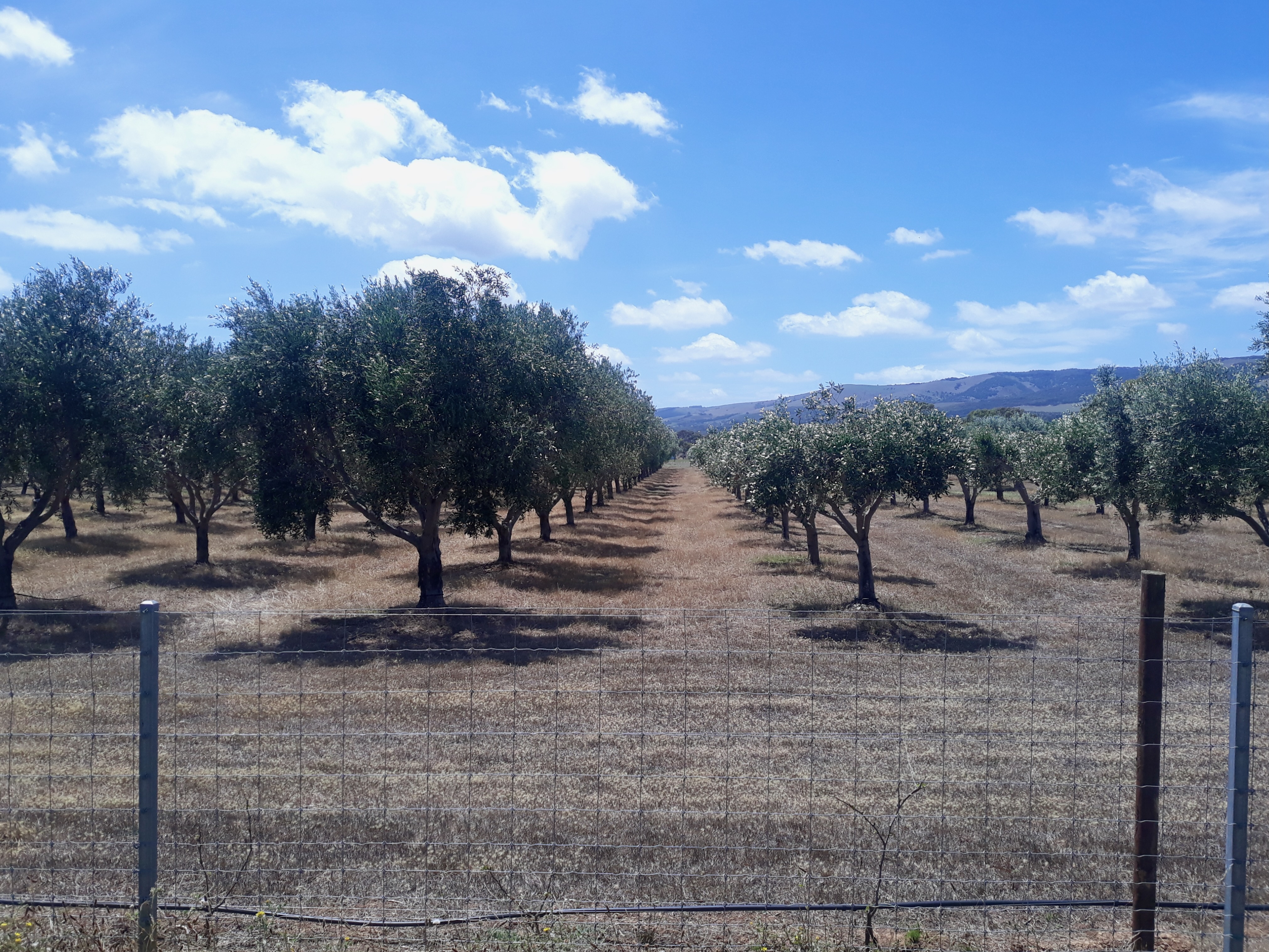
Olive groves, Aldinga, January 2024.

On another note altogether, I’ve been immersing myself in books set in Cairo recently, partly because I lived there briefly when I was twenty-two and partly because I’d like to write a story set there myself one day. Talk to anyone who’s spent any time in Cairo and soon enough they’ll tell you that it’s not like any other city, that when you leave Cairo, you carry with you a kind of sense-memory that never leaves you. Reading these books has reminded me of this. Here’s Noor Naga’s male narrator, an Egyptian boy from Shobrakheit, in her wonderful, extraordinary novel If An Egyptian Cannot Speak English:

From Damanhour, I took the train to Cairo and inside it the air was very brown, like closet air. I fell asleep and woke up with a man feeling my thigh through my torn pocket. People think anyone with a camera will have coins instead of skin inside his pocket. When I arrived in Ramses Station in Cairo, the air was people. Nowhere you looked wasn’t people. You could turn into an alley and find fifty Sudanese men, bluer than black, with cheeks like shoulder blades and ankles like knives, or else women as tall as I am, women so pale you could see rivered blood at their wrists and neck …

If you read one book on Cairo this year, make it Naga’s novel. It will leave you with as much of a sense-memory as Cairo itself, I swear.

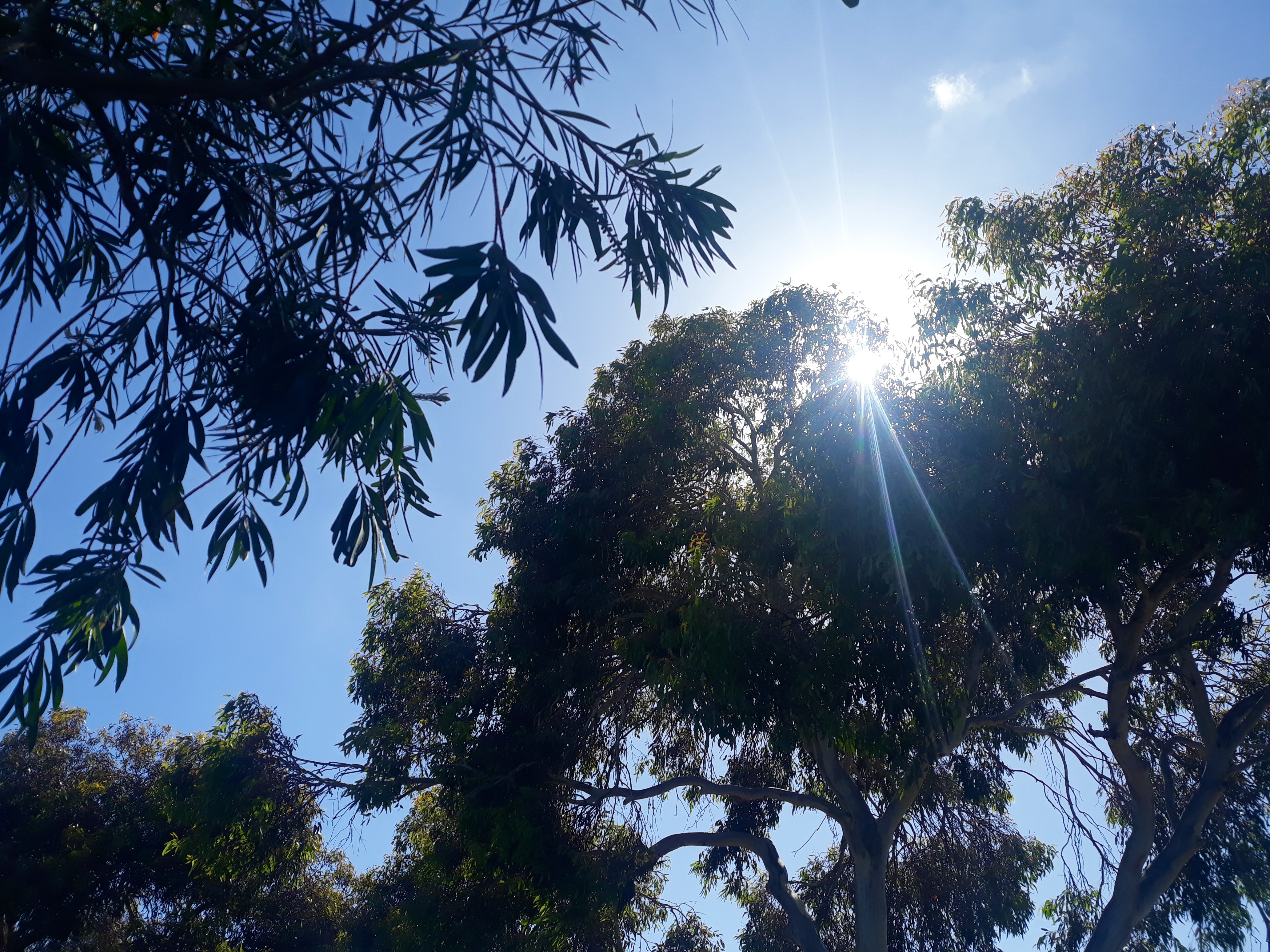
Sunlit tree, Taperoo, February 2024.

Lately I’ve been reading …