‘When you’re walking the view shifts and changes.
Walking’s a form of hope.’
from ‘The World Without Us‘ by Mireille Juchau
I spent the week of the winter solstice on holiday. I had planned to go camping to Yorke Peninsula, but various things conspired against these plans. In the end, it didn’t matter. I live by the beach. That’s holiday enough in itself.
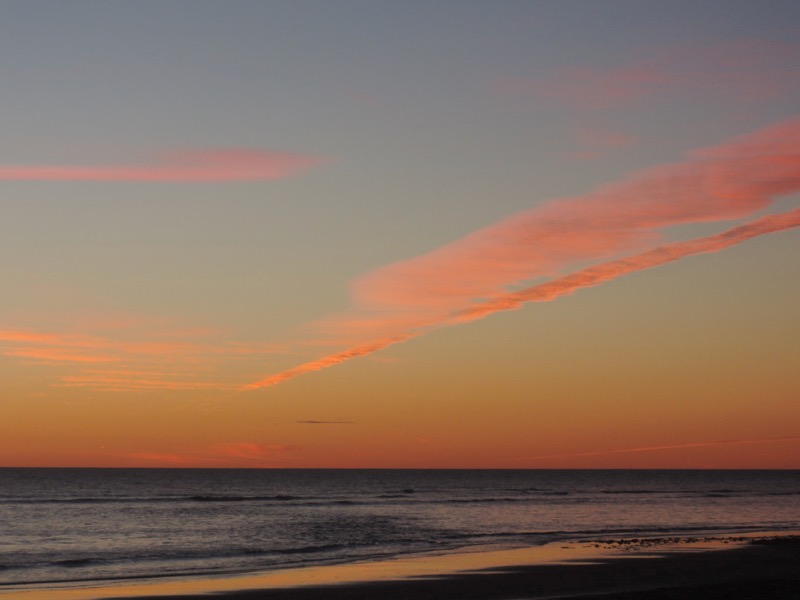
Winter solstice sunset (1)
The weather that week was unusually dry, cold and sunny for June in Adelaide, with overnight temperatures getting down to as low as 2 degrees Celsius. That made for beautiful weather in which to go walking.
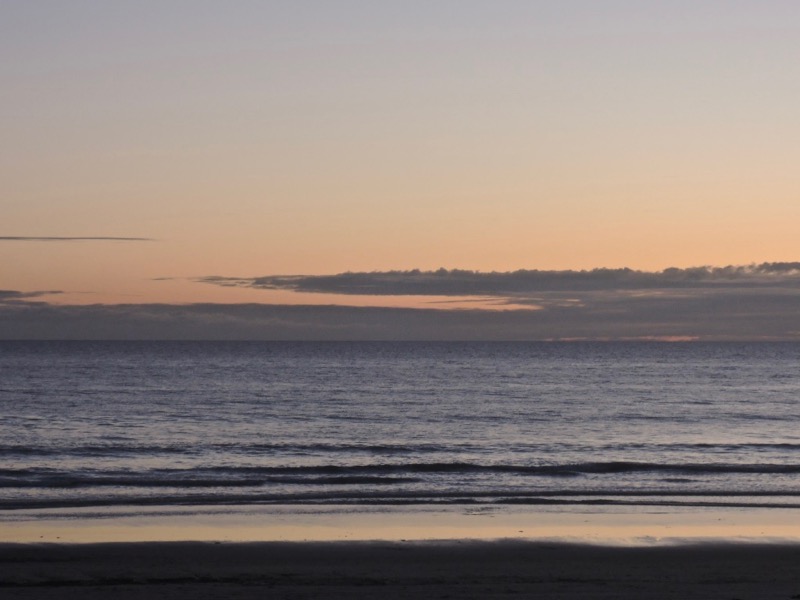
Winter solstice sunset (2): dying light
The sunset on the evening of the winter solstice was cold, clear and beautiful. Though the time of the year when the days are at their shortest often leaves me feeling light-starved and sunshine-deprived, that evening was still worth celebrating.
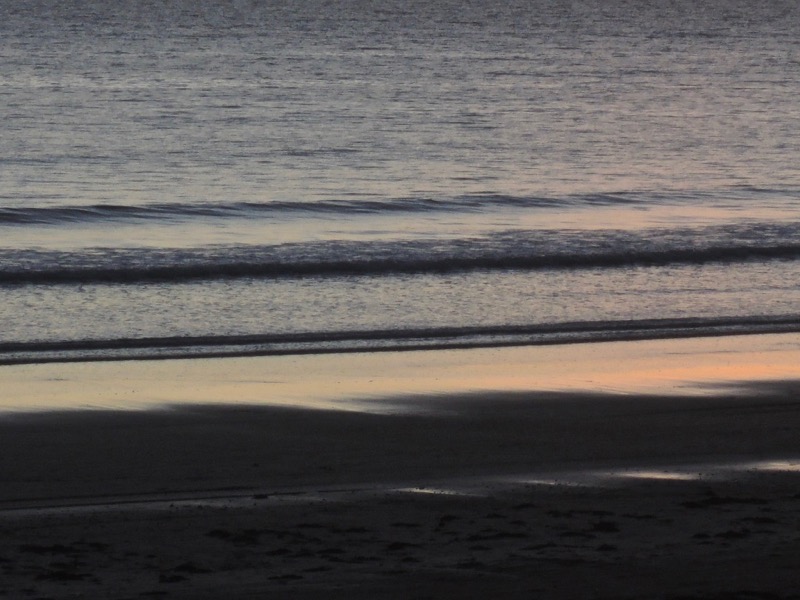
Winter solstice sunset (3): last glow of light
An additional note: I took these photos between about 5.15 pm and 5.30 pm. The sunsets from hereonin will be later every day … and that’s another thing worth celebrating!
I got out of bed
on two strong legs.
It might have been
otherwise. I ate
cereal, sweet
milk, ripe, flawless
peach. It might
have been otherwise.
I took the dog uphill
to the birch wood.
All morning I did
the work I love.
At noon I lay down
with my mate. It might
have been otherwise.
We ate dinner together
at a table with silver
candlesticks. It might
have been otherwise.
I slept in a bed
in a room with paintings
on the walls, and
planned another day
just like this day.
But one day, I know,
it will be otherwise.
by Jane Kenyon
I have never known whether this poem, which I love, is about gratitude or fear, joy or sorrow. Is Kenyon, who experienced terrible bouts of depression throughout her life, describing her gratitude for, and joy in, the small moments of beauty and happiness she has experienced on the day she describes in her poem — the peach, the walk with her dog, the work she loves, the time with her mate?
Or is she describing her fear of losing these moments — of tipping away from happiness, back down into sorrow and depression?
A small thing, this, of beauty. It might have been otherwise.
It’s a see-saw, this poem, I think. The poet hangs in a kind of precarious balance between one life and the other, without knowing when the hinge will tip her down again, away from the things she loves. It might have been otherwise, she writes at the start, and then, later, sadder and more afraid: it will be otherwise (my emphasis).
Gratitude. Joy. Fear. Sorrow. Grief. Yearning. They’re all there in this one, short poem.
I can’t help it, the valve between my thoughts and tears is so worn down that I don’t think I have any control over them anymore. Fat tears drop onto my cheeks. I feel them before I even know what’s happening and I just let them fall. I pull my hand [away from Gideon’s, and he] rolls over to face me.
from ‘Beautiful Mess‘ by Claire Christian
When I first started reading young adult novels I was already in my mid-twenties, several years older than their teenage target audience. That was partly because when I myself was a teenager, young adult novels had only just begun to become a ‘thing’, especially Australian young adult novels. And it was partly because something drew me to those novels in my mid-twenties, despite my age: something about their coming-of-age themes — and then, too, something about the way they handled those coming-of-age themes. Most of all, I liked the raw, direct voice in which many of their narratives were written, a voice that was both bleak and hopeful.
After I’d written my own two young adult novels, my love for the genre started to fade. This was partly, in turn, because I had in the meantime grown older again: my life now had nothing in common with either the novels’ protagonists or the novels’ intended readers. But it was also partly because it seemed to me that there were, suddenly, too many young adult novels being published every year. That raw, direct, bleak/hopeful voice seemed to me suddenly overused. Over-familiar. Hackneyed, even.
I don’t know what made me pick up Claire Christian’s young adult novel Beautiful Mess the other day. At any rate, it is the first young adult novel I have read in a long, long time, and the reading of it felt like one, long, jagged, indrawn breath that I couldn’t release until I had got to the end. There it was again, that raw, direct, bleak/hopeful voice — familiar, yes, but not overused this time. Not hackneyed. It was a poignant voice. Intimate.
The view ahead: not a bleak prospect
That’s what I love most about good novels, whatever genre they happen to fall into. Their protagonists, and the writer behind them, reach out and speak to you: they say things you know you’ll never forget, things you yourself have been wanting to say, but haven’t figured out how to. I see now that this is something I haven’t managed to do in my own writing for quite some time, though I didn’t realise it until I stopped. Perhaps that’s why I stopped: though the decision felt instinctual and unplanned, perhaps my instinctual knowledge simply kicked in before my conscious knowledge did.
In the meantime, even though I’m not writing fiction, I know I’ll find more good books to read (whatever their genre), and more narrative voices to hear, and more tears to shed. There’s nothing bleak about that prospect: in fact, the view ahead of me seems filled with hope.
April has never really known loneliness until now; she has had all tastes of its dregs, like cold milky coffee curdled at the bottom of the cup, but she has always had faith in the fact that it would pass. Now, she is not so sure. And this loneliness is entangled with her failure as a musician, another certainty in her life that seems to have gone.
Most days, she tries to write.
She sits by the window with her guitar and picks idly at notes, strumming chords underneath, humming to herself as she does so. But nothing ever sticks, and she feels as if she is just pretending, playing alone outside a room she can no longer enter.
from ‘Between a Wolf and a Dog‘ by Georgia Blain
I did something I had never expected to do this week: I stopped working on the book I’ve been writing, on and off, ever since my last novel was published in 2010. Actually, I stopped writing fiction altogether, at least for now.
The novel I’ve been writing all these years has gone through many, many permutations: I’ve written it as a ghost story for young adults; as a reworked ghost story for middle-grade readers; as a love story for ‘new’ adults’; as a coming-of-age story for women my own age. I’ve written it in the first person and in the third person, and in past tense and in present tense. I’ve written it using pen and paper, and Microsoft Word, and Scrivener.
I’ve written it. And written it. And written it.
All the time I’ve been writing this novel, I’ve been telling myself that the doubt I feel in myself, and in my ability to write a third novel — this third novel, anyway — would pass. But it hasn’t. Sometimes it’s quietened down for a period, but then it’s flared up again. And over the years, like April, the sense of inner loneliness I carry with me — which is in part an aspect of being me, Rebecca Burton, and in part an aspect of being me, a human being — has slowly become ensnared with the doubt I feel about my writing. [N]othing ever sticks, and she feels as if she is just pretending, playing alone outside a room she can no longer enter. Yup. Yup. Yup.
Ever since I wrote my first novel and it was accepted for publication, I’ve believed, with all of my heart, that writing books was something I would do for the rest of my life, because that’s what writers do, right? It’s what they want to do. It’s their privilege, and their gift. Or so the story goes.
But I just don’t think I believe that particular story anymore. That’s what I finally realised this week, after all this time. I don’t think — as April thinks, in this passage which I have loved so much for so long — that I am a failure as a writer, or as a person, if I stop writing, for a while, or forever. I think the world is bigger than that.
I don’t know what the future holds for me if I’m not a writer anymore — for now, or for a while, or forever. But you know what? Unlike April, I want to find out.
‘It took me years to see that path and to find my pace.
When I finally got moving, I hoped I might be able to run forever.’
From ‘The Long Run’ by Catriona Menzies-Pike
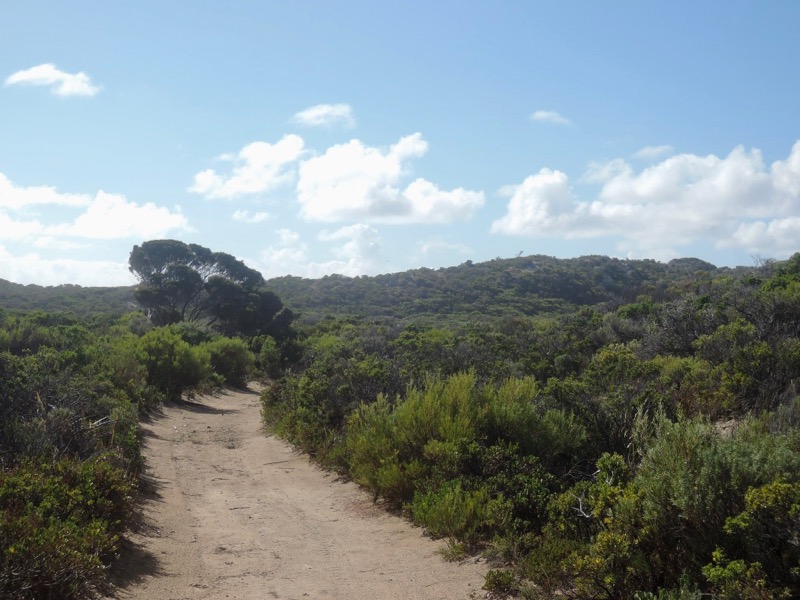
I recently spent a week holidaying in one of my favourite spots, near a clifftop in the Yorke Peninsula region. It was mid-Autumn, and the weather, like the view, changed every day, sometimes every minute.
During one of the sunnier hours, I went for a run in the bushland that lies behind the dunes and cliffs. I took off my running shoes and ran barefoot along the winding sandy track that rises and dips through the scrubland. Despite the lack of rain in the previous months, the bushland here seemed to me quite lush (at least by South Australian standards).
I finished my run at the base of the highest dune, and then I trundled up to the top of the dune to look down on the beach and shoreline below.
It was a moment of silver seas and blue skies — a moment worth celebrating.
After Bunty died, days slid into one another like the colours in a sunset. Whole afternoons passed as Christabel drank tea in the kitchen … If there was a book in front of her, she would look away frequently and forget to turn its pages — she no longer read in the old, urgent way. The taste for reading had started to withdraw from her; she felt it pulling gently away, like a tide. Books contained hard truths, waiting like splinters in their pages. Over the years, many had lodged in her unnoticed. Little anticipations of life’s awfulness, they might have served as a defence against it but pierced instead with knowledge of damage, error, waste.
From ‘The Life to Come’
by Michelle de Kretser
CS Lewis once wrote that we read fiction and literature to seek an enlargement of our being; we read because [w]e want to see with other eyes, to imagine with other imaginations, to feel with other hearts, as well as with our own. I don’t subscribe to Lewis’s Christian practices and beliefs, but I do — oh, I do — subscribe to his views on reading.
And so Michelle de Kretser’s words in the passage above affected me deeply. I cannot imagine a life in which [t]he taste for reading had started to withdraw from me; the thought that the truths I treasure finding within a book’s pages might begin to feel like splinters horrifies me.
Reading for me is an activity that provides solace. The solace comes most strongly from finding kinship within the pages of the books I read: kinship with the book’s characters, and, vicariously, with the book’s writer, who created the characters. That’s not quite what Lewis is saying, but it’s part of it, I think: it’s hidden in his words. When de Kretser’s character Christabel finds herself losing the taste for reading, losing the urgency that was inherent for her in the act, what she is really experiencing is loss. Loneliness. Desolation.
If I was a praying person, as Lewis certainly was, I would offer up a prayer here, in response to de Kretser’s words. I would pray: Please don’t let me ever experience this particular form of loss.
I would pray: Please don’t let me lose the companionship of books.
‘Some athletes love to talk about what a simple sport running is.
They say that all you need is a pair of sneakers.
That’s not true.
What you need is some freedom of movement
and the ability to see a clear path ahead of you.
It took me years to see that path and to find my pace.
When I finally got moving, I hoped I might be able to run forever.’
From ‘The Long Run’ by Catriona Menzies-Pike
Around about a year ago, I wrote a post on this blog in response to lawyer-turned-long-distance-runner Robyn Arzón’s book Shut Up and Run. In that post, I wrote, in angry contradiction to Arzón, about the virtues of taking things slowly, of living humbly, of letting things unfold gently, whether or not your life is unfolding as you wish it would, or as you think it should. (You can read the post — which, by the way, I still stand by — in its entirety here.)
Here’s the thing about running, though, as an activity, as a practice: it lends itself to metaphors. That’s why so many runners, like Arzón and Menzies-Pike, write about it. Speed, distance, endurance, cadence, rhythm, pace — all of those things can be metaphors for something else: for life. It took me years to see that path and to find my pace, Menzies-Pike writes, of her running. And: When I finally got moving, I hoped I might be able to run forever.
Don’t tell me she’s not talking in metaphors.
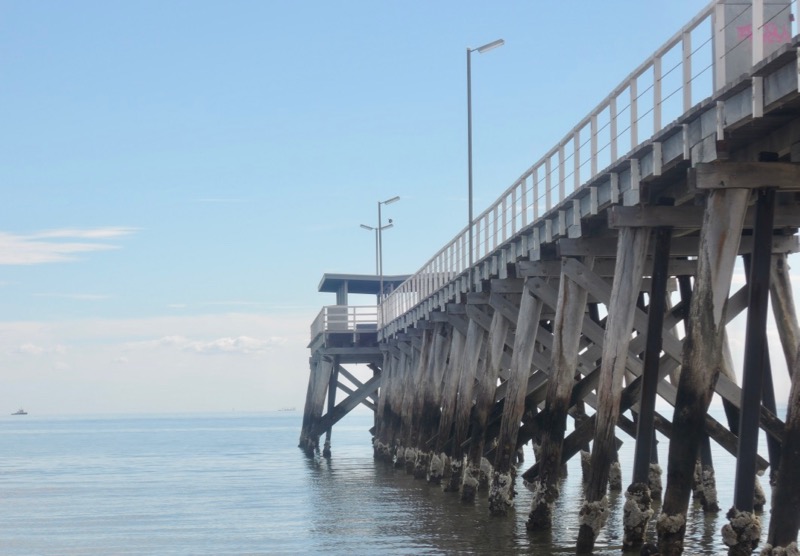
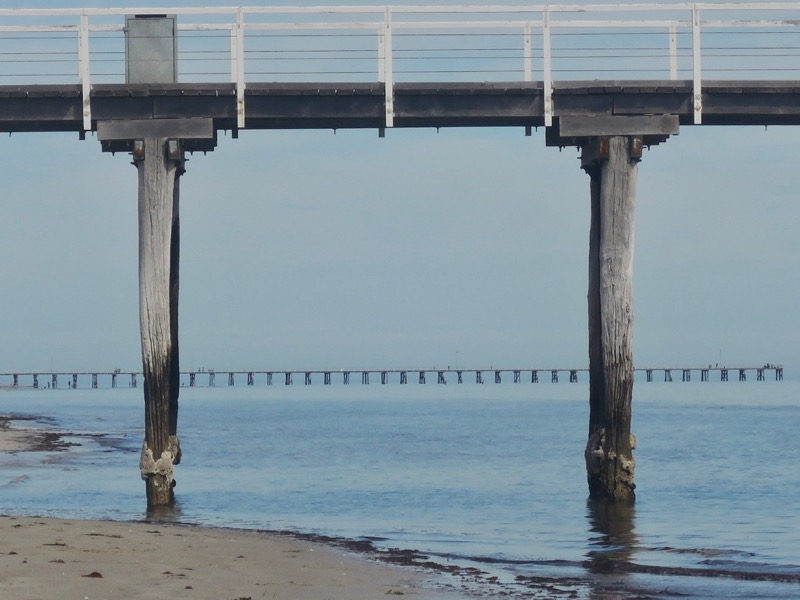
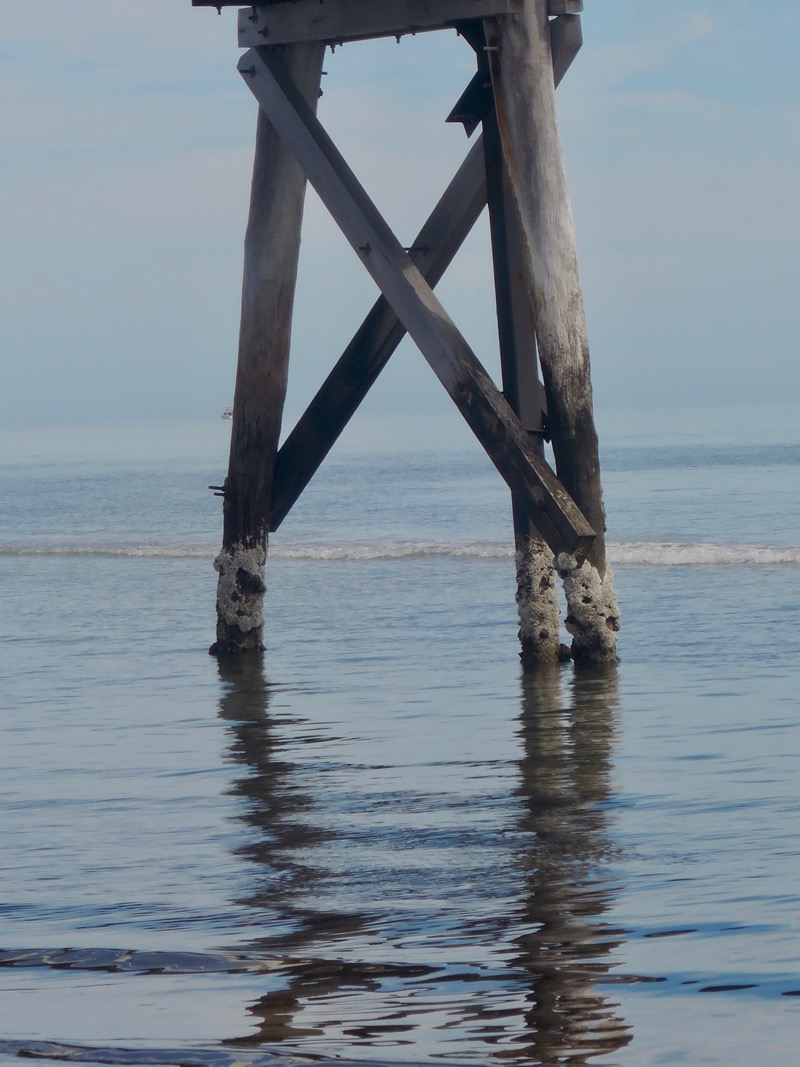
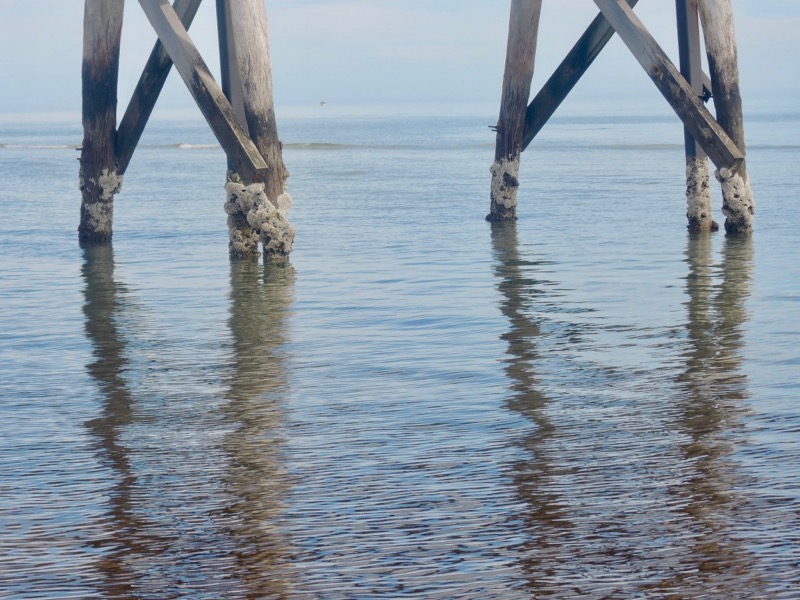
As for me, I stopped mid-run — on a gorgeous, warm, still day last week; a day when all of coastal Adelaide seemed to be bathed in soft sunshine — to take the photos you see in today’s post. Afterwards, I put my camera away and lingered at the shore a while, before wandering back from the beach to the foreshore path and setting off again, back home.
Days like that — days of running beneath a soft blue sky, beside a silken blue sea — are days, simply, to be grateful for, days that feel as though they are unfolding as they should, or at least as you wish they would.
And so this post is the first in a new series on my blog entitled Chasing clouds. It is a companion series to my Out and about series, in essence. The theme in that series is walking; the theme in this one is running. Running, for me — like walking — is about wandering, about wondering. It is about chasing clouds.
Of course I’m using metaphors. Running, for me, is about hope.






 twenty-one words