This world

Other people’s words about … kindness

Depictions of sex are notoriously hard to get right, and what sets those that work apart from those that don’t isn’t always obvious (although personally I feel that it helps if the writer avoids analogies with mountains and valleys, and doesn’t refer to a man’s ‘member’!). But I think the passage I’ve quoted above, from Clare Chambers’s lovely novel Small Pleasures — a novel set in 1957 — is one of the most moving sex scenes I’ve ever read.

It’s also somehow shocking. How many sex scenes have you read recently where the lovers were explicitly kind to each other? I can’t remember a single one. So when I say the scene is shocking, I mean, not that Chambers sets out to describe something graphic or taboo-breaking, but the opposite — that this is the word she uses, kind. And so even though they were unpractised, they were kind and that made it all right. How beautiful is that?

Deep Creek, September 2025.

I’ve been quiet over here for a while, not because I haven’t wanted to write a post, but because I didn’t know how to find the words to do so. Earlier this year, a toxic algal bloom hit the coast of South Australia. It began in regional locations but then spread to the metropolitan coast, killing marine animals in its wake and turning the ocean into a graveyard. Although scientists originally predicted that it would disperse during the cooler weather of the winter months, it hasn’t done so, and as summer approaches it’s clear that the bloom will remain for some time to come. There are thought to be several causes for it, among the most obvious of which is global warming: we are experiencing a marine heatwave in South Australia.

When I think about the algal bloom, I feel powerless and devastated. I have lived the whole of my adult life around the sea. My house is within walking distance of the sea. My holidays and camping trips are centred around the sea. I walk and run by the sea. I go to the sea to remind myself that there is another world beyond the human world — to tune the rhythm of my breathing into the rhythm of the waves, in and out. In and out.

But now what I feel when I go to the sea is grief.

Deep Creek, September 2025

It’s impossible for me to write a post here, on this blog in which I have for so many years celebrated my life by the sea, without acknowledging the algal bloom, and yet I find it almost equally impossible to write about it. And so this is the reason for my quietness. These words, even as I write them, do not come easily to me.

The effects of climate change are not kind. This is not a kind world.

Deep Creek, September 2025

I will finish by saying that the photographs that accompany this post come from a recent trip I made with a friend to Deep Creek, to the place where I spent a week on a writing residency around the same time last year.

Wait — let me rephrase that: I will finish by saying that Deep Creek is a place of stunning natural beauty and I am grateful for my time there, but that it, too, like the ocean, is vulnerable to climate change, because this is not a kind world.

It is not a kind world.

Lately I’ve been reading …

The soft clatter of keyboards

Other people’s words about … crying at work

The lines I’ve quoted in the passage above, which make up the opening sentences of Anna Kate Blair’s novel, The Modern, have stayed with me ever since I read it, some years ago now. The novel is about art, love, self-doubt and work — most of all, perhaps, about how in our society one of the things that determines our conception of ourselves, the way we see and value ourselves (and others), is work.

The ethos of work.

What I love, though, about this particular passage (which in fact turns out not to be particularly essential to the course of events throughout the rest of the novel, at least insofar as what happens to Sophia, the narrator), is its tragicomic depiction of women crying in the workplace. Blair dispenses here with the need to explain why Anthea and Joanna and Sophia are crying, and why they assume they have to keep their crying secret. Crying in the workplace, she implies, and secret crying in particular, is a commonplace for these women; they all simply assume, in some kind of tacit shared understanding of themselves and their lives, that they’ll end up crying at some point during the working week.

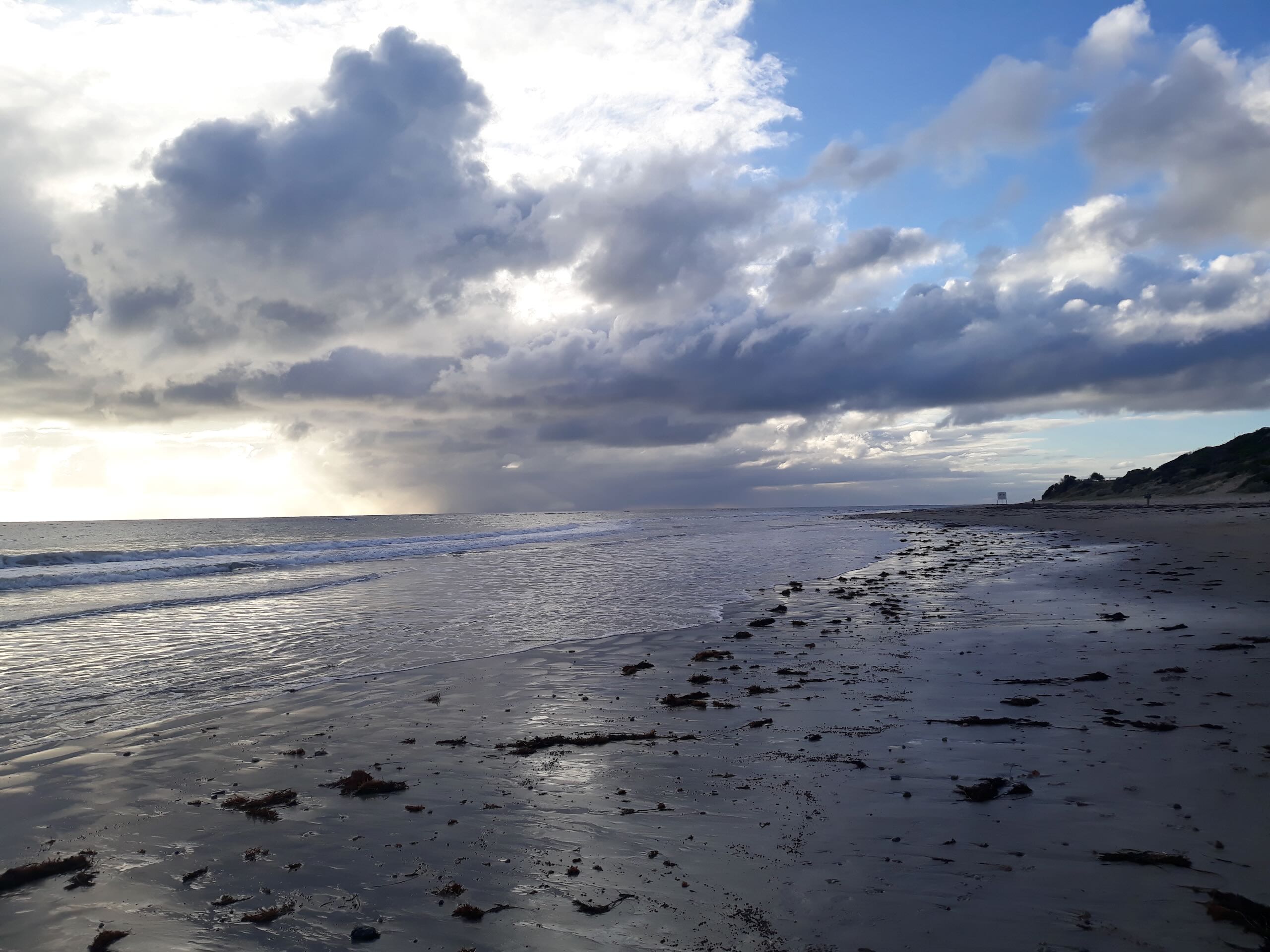
Aldinga Beach, May 2025.

I’ve worked in several workplaces over the years, and, just like Anthea and Joanna and Sophia, at some point in each job I’ve gone in search of a private place to cry. When I worked the afternoon shift in the call centre of a community health provider, I used to take the lift from the fourth floor down to the car park, walk around the corner of the building to a little alleyway on one side and lean against the wall to cry. When I was a cook, I’d step into the cool room and close the door behind me to cry in refrigerated privacy, crouched in among the cartons of milk and bowls of pastry cream and half-wheels of cheese. I’ve also done my fair share of crying in the office toilets like Anthea, and, yes, like Sophia, I’ve sat at my computer furtively blinking and dabbing at my eyes, all the while hoping that no-one would notice. And/or that no-one would notice me.

What is it about workplaces that reduces women, some women, to tears? Is crying part of our make-up, or is there something about the conditions of our workplaces — the buildings we work in, the people we talk to and report to, the conditions we’re bound by our salaries to — that makes us cry? Or is it rather the space the workplace occupies in our lives, the way it’s crammed in uneasily among everything else that belongs to our non-working selves, those selves we perhaps think of as our true selves?

I don’t know. But I think of Sophia, fellow workplace-weeper, from time to time and smile wryly.

May 2025

Lately I’ve been reading …

Decoded

Other people’s words about … language and interpreting

When I was a young woman I studied French, German and Mandarin at university. I had a facility for language, for words, and in those days I thought that I might one day become an interpreter in one of these languages, like the narrator in Katie Kitamura’s novel Intimacies. I studied all three languages for a year, having also studied French and German at high school, and then at the end of the year, which was the end of my first year at university, having achieved distinctions in all three subjects, I left university, left Australia, and didn’t return home to resume my studies for another three years.

By then I’d decided not to pursue a career in languages at all. I had understood from my travels that my natural shyness and introversion would make the kinds of context in which an interpreter works difficult for me, and I had decided not to challenge myself in that way. Funnily enough, this realisation came to me while I was living in Germany, where I had gone to live for a year to become fluent in German. Funnily enough, I should add, by the time I came to the realisation that interpreting wasn’t for me, I was almost entirely fluent in German. Anyway, I came back to Australia and left all of this behind, my fluency in German, my plans to be an interpreter, all of that.

Footprints in the sand, March 2025.

It’s funny, though, because Katie Kitamura’s description in the passage I’ve quoted above of the experience of being so immersed in the pursuit of choosing the correct word that you lose all sense of meaning is something I am deeply familiar with in another context — editing. As an editor, I have edited books in the fields of geology, medicine, history, literature and religion. On hearing this, people frequently say to me, ‘Wow, you must have learned a lot about geology/medicine/history/literature/religion!’ But the truth is, I don’t absorb that kind of information when I’m editing. Like Kitamura’s interpreter, I decode the language I’m working with in the material I’m editing — meaning that I make sure that the sentences are grammatically correct, that there are no spelling errors, that the writer has presented their argument cogently — but that doesn’t necessarily mean that I understand it.

You literally do not know what you are saying, says Kitamura’s narrator of interpreting. Likewise, I would say of editing, I literally do not know what I am reading.

There are times when I regret losing the languages I learned when I was younger. There are times when I wish I had tried a little harder, thought a little more laterally, about how a person like me might use her language skills in her career without needing to be a gifted conversationalist or gregarious extrovert. But perhaps in the end my love for words and decoding language are what led me to become an editor, even if only by default. And I am, despite everything, grateful to have found my way to an editing life. It has served me well.

Lately I’ve been reading …

Only connect: Talking honestly

Other people’s words about … connection

I was never sure how honest I was supposed to be with friends. I didn’t think honesty was romantically or sexually loaded, but I felt sometimes that my understanding of friendship was distorted. I was always trying to determine, with everyone, whether I was on the right side of an invisible line. If asked, I’d always argue that the problem was with normative approaches to intimacy, though I’d never been asked. It had worked for Grace Hartigan and Frank O’Hara, I thought, and then I remembered that it hadn’t. I felt, talking to Cara, that perhaps I was veering into something too unstudied, but I wasn’t sure that could stop me today. I wanted comfort; I wanted to feel close to somebody.
‘I suppose I’m lonely,’ I said.

from ‘The Modern
by Anna Kate Blair

When it comes to friendships and intimacy, I am someone, like Blair’s narrator, Sophia, in the passage above, who is always struggling to interpret whether I am on the right side of an invisible line. I am frequently aware of my tendency to dive deep into conversations at an emotional level. At the same time I’m aware that most people aren’t comfortable with that depth, or with the emotional intensity that comes with it. In conversation I often try to pull back because of this, to reign myself in, although mostly I fail. It’s a dance I do, back and forth across that invisible line, over and over.

I am not sure whether people, when they’re talking to me, notice this or not. Maybe this is just part of my intensity, my awareness of it. But I like Sophia’s use of the word honest in this context. It is a loaded term, to my way of thinking. Not everyone fronts up to conversations wanting intimacy or intensity. Not everyone wants to engage in emotional honesty.

There’s that dance again. I don’t think I’ll ever figure it out.

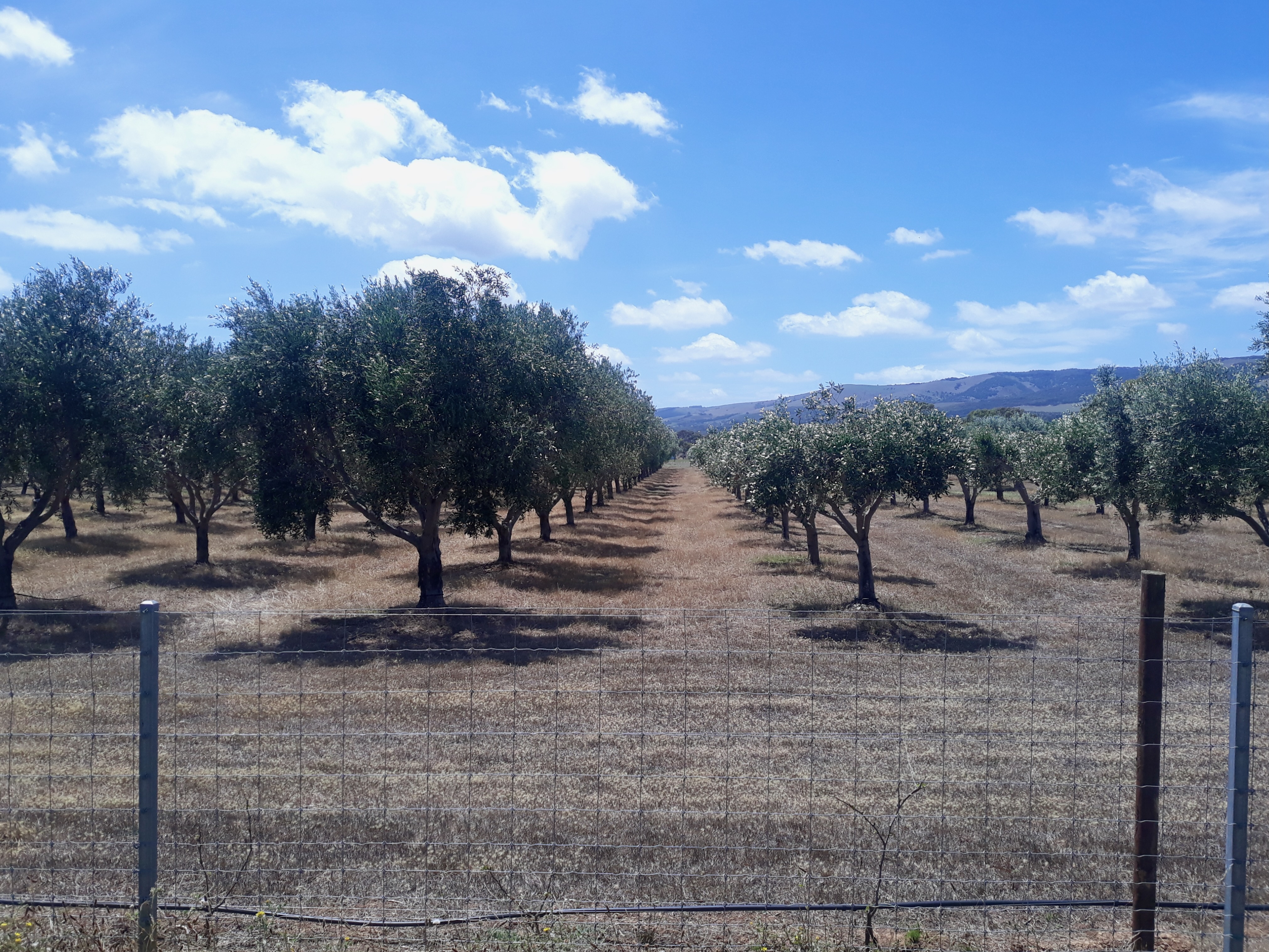
Olive groves, Aldinga, January 2024.

On another note altogether, I’ve been immersing myself in books set in Cairo recently, partly because I lived there briefly when I was twenty-two and partly because I’d like to write a story set there myself one day. Talk to anyone who’s spent any time in Cairo and soon enough they’ll tell you that it’s not like any other city, that when you leave Cairo, you carry with you a kind of sense-memory that never leaves you. Reading these books has reminded me of this. Here’s Noor Naga’s male narrator, an Egyptian boy from Shobrakheit, in her wonderful, extraordinary novel If An Egyptian Cannot Speak English:

From Damanhour, I took the train to Cairo and inside it the air was very brown, like closet air. I fell asleep and woke up with a man feeling my thigh through my torn pocket. People think anyone with a camera will have coins instead of skin inside his pocket. When I arrived in Ramses Station in Cairo, the air was people. Nowhere you looked wasn’t people. You could turn into an alley and find fifty Sudanese men, bluer than black, with cheeks like shoulder blades and ankles like knives, or else women as tall as I am, women so pale you could see rivered blood at their wrists and neck …

If you read one book on Cairo this year, make it Naga’s novel. It will leave you with as much of a sense-memory as Cairo itself, I swear.

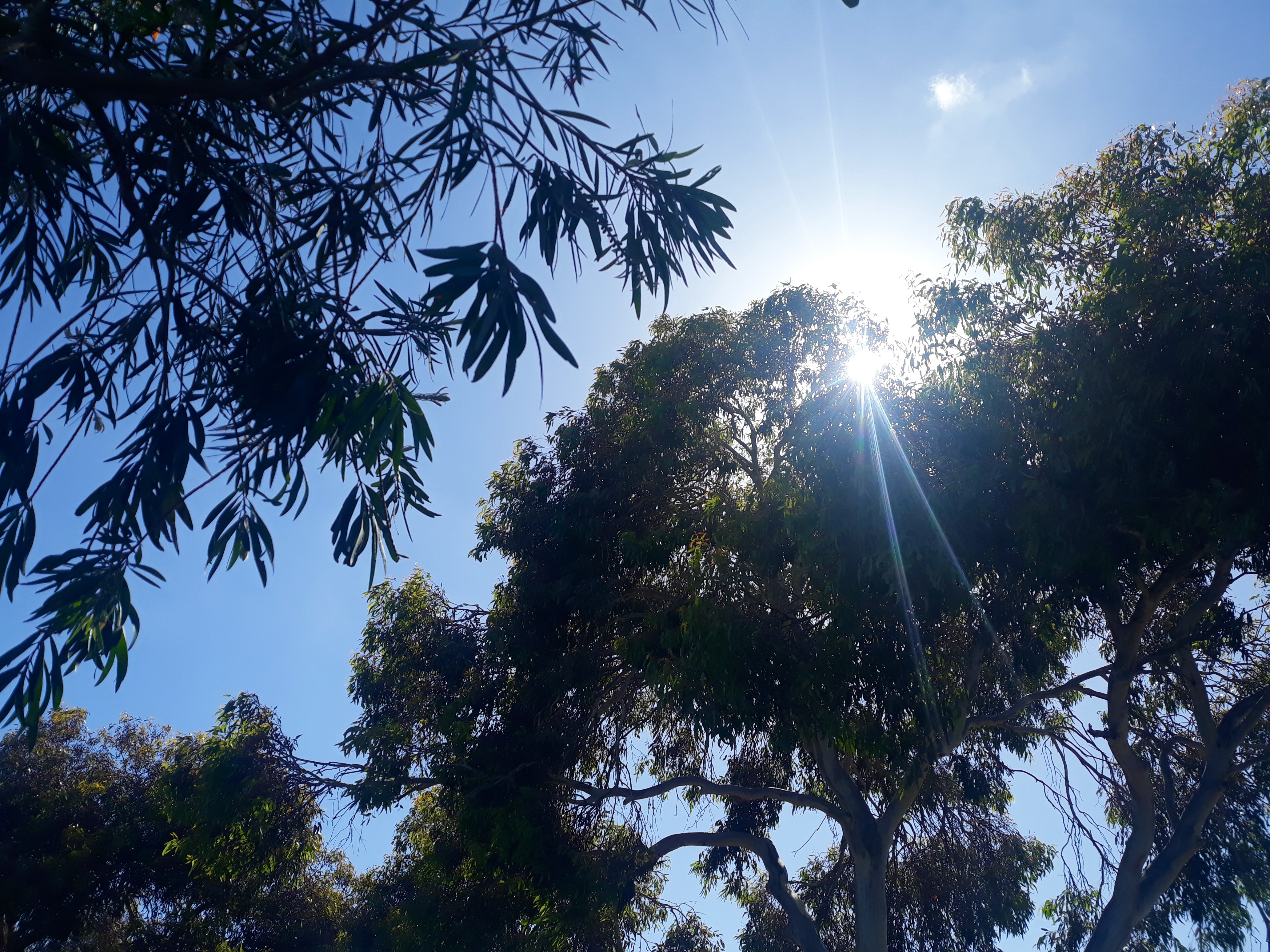
Sunlit tree, Taperoo, February 2024.

Lately I’ve been reading …

Only connect: seeing someone

Other people’s words about … connection

‘So how is it [in prison]?’ I said [to Bunny]. ‘You look good.’
She did not look good. Her skin looked dull and she had a handful of tiny pimples on the left side of her face. Her hair was greasy at the roots. ‘It’s fine,’ she said. ‘I mean, I get by.’ She laughed.
‘Do you have any friends?’ I asked.
‘A couple,’ she said, licking up a palmful of M&Ms.
‘It’s just so good to see your face,’ I said, which was a lie. It was weird and sad to see her face. She didn’t look the same. But then she met my eyes fully for the first time, and the eye contact was so intense I felt I was falling, that if I didn’t concentrate I would lose consciousness. There was just her whole soul, right there. Looking at me. It was Bunny.

from ‘The Knockout Queen
by Rufi Thorpe

You know those moments when someone says something to you, or when you look at someone, and you feel a deep, true connection with them? That’s the kind of moment, I think, that Rufi Thorpe captures so movingly in the passage I’ve quoted today.

It’s hard to be frank in this way with another person, and it’s rarely sustainable, and so the intensity of the moment fades in the same way a bruise fades. That doesn’t mean you didn’t see each other.

It doesn’t mean you haven’t been seen.

Sunset, Deep Creek, August 2023.

Lately I’ve been reading …

How are we to know

Other people’s words about … grief

And one time [Audun] drove in to Advocate Delhis Plass and picked me up off the floor where I was lying flat out on my stomach. Turid and the girls were in Trondheim, and I had no intention of getting up for a good while, but rather preferred to lie there with my forehead ground into the hard cold dusty floorboards, and I thought, how does one measure grief, is there a yardstick for grieving, is there any difference, say, between grieving for one person as opposed to two or three persons, or even four, as in my case, did all this fit on a yardstick, or could the level of grief register as on an instrument, such as a Geiger counter, and the closer the instrument got to the full power, the full height, the full number, the faster and louder the instrument would emit its familiar beep. And how was I to know when there was grief enough, and if grief was liquid like melting silver, could one then pour the grief into a litre measure and conclude, under these circumstances eight decilitres ought to be sufficient, and let the silver congeal hard and shiny not far below the rim. How was I to know. And how was I to know it really was grief I was feeling, it didn’t seem to resemble anything I had seen on film, or what others told me they had felt when their people died, and I was bewildered, for I didn’t cry, and when did one cry really, when you were alone, or in the company of witnesses. And if one were alone, what was the point, when no-one would see it, how was I to know, I didn’t have that yardstick, that litre measure. I had to deal with it myself, was that not so, I let no-one else inside, no-one else’s yardstick was of any use, no-one’s litre measure, and in a way it felt strangely irrelevant, no, not irrelevant, but rather beyond my field of vision. I could barely glimpse a dark swishing tail disappearing, and when I grasped it and held it fast, I was left with nothing but the tail in my hand. The rest was gone, like a lizard sacrificing its tail for freedom. I did try, and hard too, with open eyes to face what had happened, but I didn’t know what to do with what I saw, I had already watched most versions of the issue acted out on TV, they were used up, and I couldn’t think of any others. So then I simply tried not thinking about it at all. That didn’t work either. And so instead I wanted to find an image that could cover all this, after all it was my job, to turn the whirling liquid into something concrete, turn the waves of distracting electric shocks to the stomach into solid surface. but I didn’t have any images that were large enough, firm enough, and after a while I found it pretty exhausting. So I lay there until Audun arrived. He walked straight in, the door wasn’t locked, I had forgotten as usual, and before even seeing me, he said into the hallway, hello Arvid, for Christ’s sake, why don’t you answer the phone when I call. And it was true, often I didn’t answer, it was a breach of every rule, but I was afraid there might be an undertaker at the other end, although I knew the funerals I was supposed to attend lay behind me for now. And there came Audun, in through the living-room door and he saw me on the floor and said, what the hell are you doing down there. I’m thinking, I said. All right, he said, so what are you thinking about. Litre measures, I said, yardsticks, that kind of thing. Okay, he said, that sounds practical in a way, but you can get up now. I’m not sure I can, I said down into the floor, my lips cold against the cold planks, covered in dust, the vacuum cleaner hadn’t been out for a good while. Yes, you can, he said, just do it, and I’ll go to the kitchen and put the kettle on for coffee.
Ten minutes later when he came back with two full cups of coffee and milk and sugar on a tray, I was sitting on my chair at the desk. It wasn’t exactly Mont Blanc, but it had been a long climb.

from ‘Men in My Situation
by Per Petterson

I am thankful to say that I have never experienced a grief or sorrow of the kind that the narrator in the passage above, Arvid, has experienced, having lost his parents and siblings to a tragic accident at sea. But Petterson’s words, voiced through Arvid, move me all the same. Elsewhere, Arvid says, ‘[T]o be honest I was in a state of bottomless despair, it was the worst time, by far, I felt quite naked, quite cold’. And I think this is what the longer passage I’ve quoted in this post describes, really — Arvid’s feeling of utter nakedness in the face of his loss.

This is what I love about fiction, the way someone else’s words can move you to tears and wonder. That’s all from me today — I will leave you with Petterson’s words, however you measure them, and however they move you.

The Washpool, Sellicks Beach, July 2023.

Lately I’ve been reading …

In the ether

Other people’s words about … emails

Dorothy used to love email, used to have long, meaningful, occasionally thrilling email correspondences that involved the testing of ideas and the exchange of videos and music links. Email had been the way that she and the people she know or was getting to know had crafted personas, narrated events, made sense of their lives. Their way of life, alas, had ended. Long emails had ceased being the preferred mode of storytelling among her peers, or perhaps they no longer had so much to say to one another, and emails, though sealed with perfunctory hugs and kisses, had become businesslike. Sending a thoughtful email that she had drafted over several days and edited would, she knew, be a form of aggression; it would be foisting unpaid labour, a homework assignment, on a friend. She herself liked homework, but it was unreasonable to hope for such an email: There was too much television to keep up on, and if you wanted to know what someone was doing, you could usually find out on social media. Still, Dorothy had not stopped checking, expecting, or wishing that a good message might be out there, waiting in the ether just for her.

from ‘The Life of the Mind
by Christine Smallwood

Oh, how wryly I smiled when I read the passage above. My smile was wry on two counts — first, I come from a generation before Dorothy’s, and so I miss letters as well as emails. And second, there is so much to unpack here, from the description of a long, thoughtful email as a form of aggression (ouch!) through to that funny but terribly sad comment: There was too much television to keep up on.

Shining sand, Aldinga Beach, May 2023.

Meanwhile, I’ve had some good news recently. As a result, my life has been exceptionally busy for reasons that I can’t (yet) go into, though I promise that I will when I can. But I couldn’t resist popping in to leave you all to enjoy the passage above for now.

As always, there are links to some reading below, too. I’ve listed a few more than usual, just to keep you going till I next write …

Rock pools, Aldinga Beach, May 2023.

Lately I’ve been reading …

Only [dis]connect

Other people’s words about … beauty

I wondered if a more complex language like [my mother’s native language] Korean had a singular word to describe the feeling of getting off a long shift of a physically demanding job and finding that, for at least half an hour after, everything, every last thing, was too beautiful to bear.

Jenny asked the question so simply — ‘Okay, what do you want to talk about?’ — and I nearly reached across the table and grabbed her hands back, whispered thanks against each of her knuckles. I was about to ask her opinion on lakes and oceans — which did she prefer, contained and musty, or vast and salty? — when she suddenly sat up straight, eyes wide. ‘So — what did you think of that meeting today? Hold nothing back.’

‘Oh,’ I said. ‘I don’t know, it was fine.’

from Pizza Girl
by Jean Kyoung Frazier

I thought of Sally Rooney’s novel Beautiful World, Where Are You? when I read the passage above. In Beautiful World, Rooney’s characters variously mourn the loss of the sense they used to have that they were moving through a beautiful world, or they lament the ugliness of the everyday world, or they remark upon what Rooney calls a hidden reality: the presence at all times, in all places, of a beautiful world.

Sunset, early July 2022.

I think this is what Kyuoung Frazier’s narrator is getting at. She wants to tell Jenny about the beautiful world she sees all around her — but Jenny, like everyone else in the narrator’s life, either doesn’t want to hear what she has to say or doesn’t know how to hear it.

Some years ago when I was going through a difficult patch, a friend of mine offered to exchange a daily photograph with me via text message. ‘We’ll just send each other a picture of something we see,’ she said. ‘Something we like. Something that makes us smile. We’ll share our pictures, and it’ll be a way to reach out. To say hello.’

Dune flowers, early July 2022.

We ended up exchanging daily photographs for over a year, and it was a way to say hello, but it was also so much more. What I loved most about our exchange, beyond the sense of connection it gave me with another human being, was the knowledge that we were each finding something beautiful in our day and then sharing it with someone else. Passing the beauty on.

Maybe we should all share more beauty. Maybe it doesn’t matter if beauty is fleeting and makes us feel fragile. Maybe that’s exactly why we should keep on sharing it.

Before sunset, early July 2022.

Lately I’ve been reading …

Only connect: Reunion

Other people’s words about connection

Maude cranes around to look and Cormac looks too, close enough to see them, all quite young and glacially made up with one man of height and handsomeness towering over the rest and another, a man to the tall one’s left, cocking his head and nodding in Cormac’s direction meaningfully.
It is Senan. Cormac waves …
He hasn’t seen Senan in person for months and yet his vision still telescopes in, urgent and unreconstructed, so that Cormac sees and knows again he loves him with a scratchy passion that returns as reliably as a rash. It is not a nostalgic feeling and casts no shadow, existing always in a self-sustaining now.
How acute it is: immediate deja vu.

From ‘We Were Young

by Niamh Campbell

I love this passage from Niahm Campbell about a man reuniting with someone he loves after the two of them have spent some time apart. Cormack, the character in Campbell’s novel, seems unable to commit to one person, whether man or woman; he moves from one relationship or liaison to another. But as a backdrop to all his attempts to remain unfettered there is his love for Senan, a man who is smart enough, perhaps, to keep himself unavailable and therefore always desirable and lovable.


Sunlight and trees, April 2022.


Who hasn’t at some time in their life loved someone who was unavailable? Or, moving beyond relationships and intimacy, who hasn’t wanted something that was eternally just out of reach?


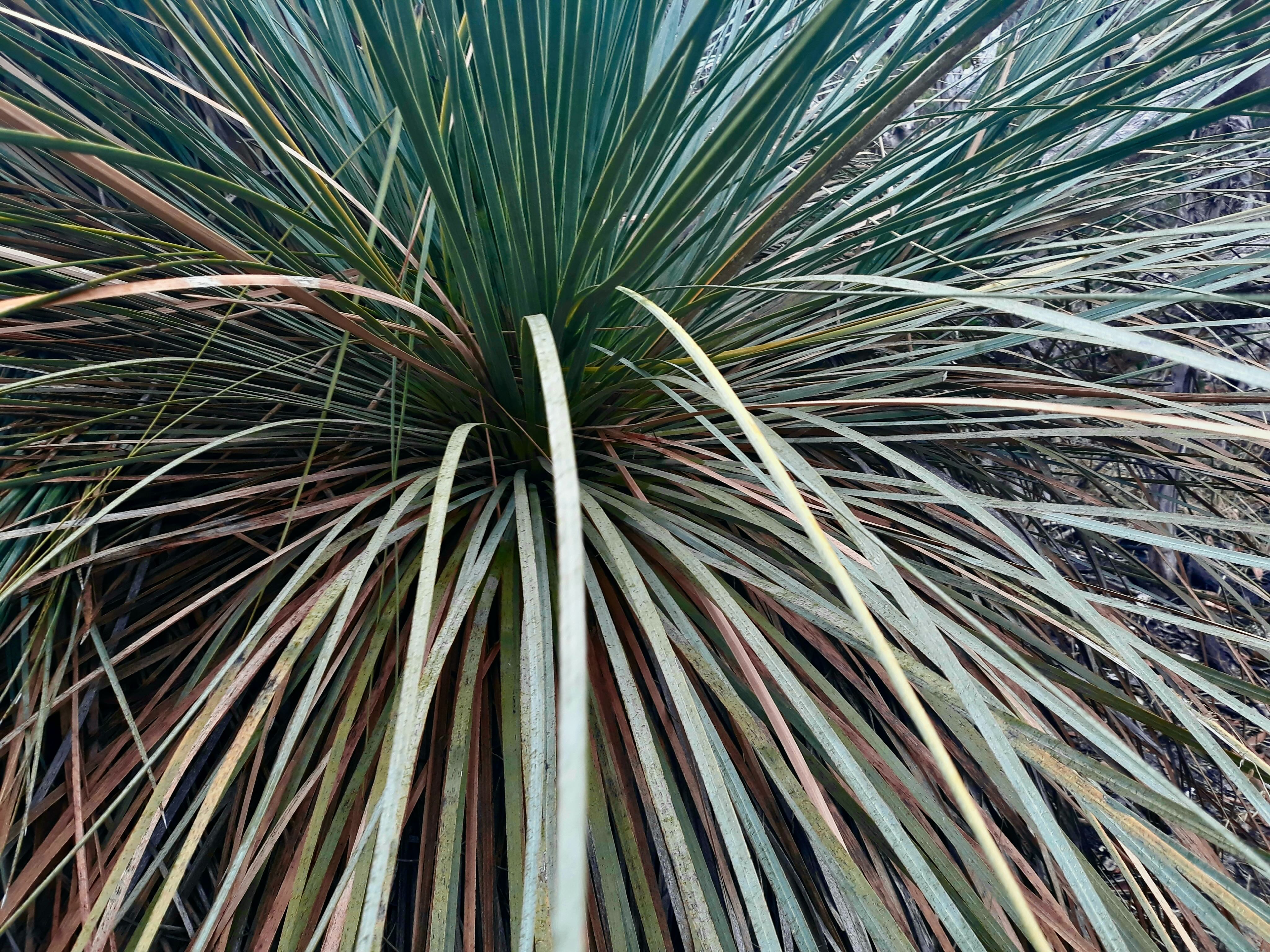
Grasstree, May 2022.

Lately I’ve been reading …

Absolution

Other people’s words about … being loved

We were sitting on a cushioned bench [in the pub]. Eddie had one thick thigh crossed over the other, and he was wagging his right foot gently. He was wearing beautiful Italian brogues and talking to the man next to him, laughing at something a little too loudly, and then suddenly he turned to me, rested his hand on my leg and asked softly was I okay.
‘You okay there, pet? Can I get you something?’
It was there in the tone. I knew that I was loved as I had never been before. I don’t mean that Eddie loved me with remarkable passion or insight. I don’t mean that I felt most fully myself with him. I mean that, in the strangest way, I felt forgiven. For as long as I could remember there’d been a vague disquiet in me, as if I lived in the shadow of some humiliation whose particulars I could not recall. Until Eddie, until he absolved me, I hadn’t known there was any other way to feel.

From ‘When Light is Like Water

by Molly McCloskey

In the last few years I’ve noticed that when I’m reading a book or watching a movie the two kinds of scenes that most move me are those where two people connect for the first time (mostly, though not always, through falling in love) and those where someone forgives someone else.

Both kinds of scenes make me cry. I’m still not sure whether my tears come from a place of catharsis or from a place of yearning.


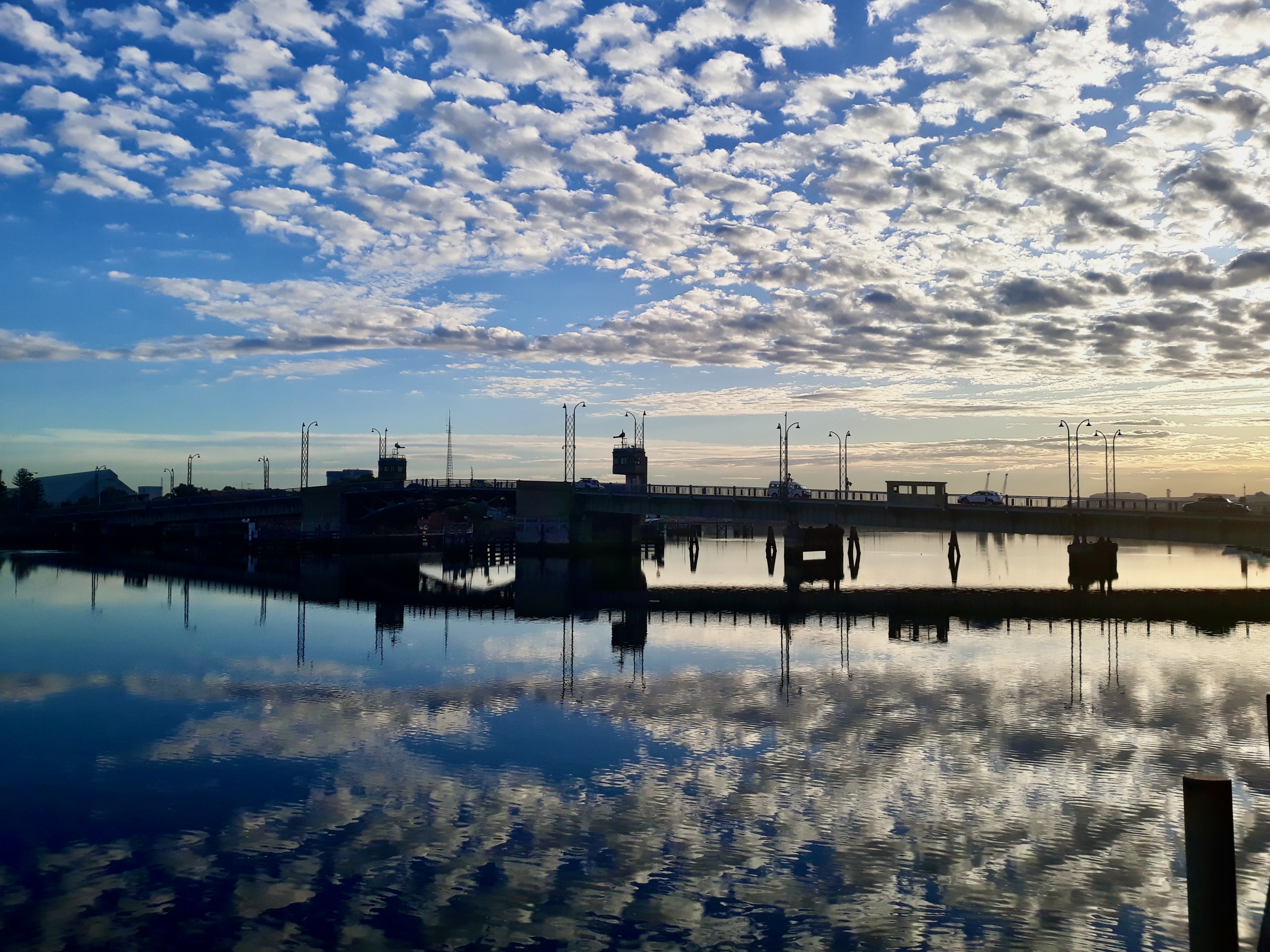
Port Adelaide, early April 2022.

I particularly love how Molly McCloskey’s narrator, Rachel, elucidates her experience of falling in love with her first husband in the passage above: how she moves away from romance to something gentler, and kinder, and deeper.

Like Rachel, I can’t remember a time when I didn’t live with a sense that I was inherently wrong, flawed, in need of forgiveness. I sense that my experience is a relatively common one, but I also sense that in me the feeling is perhaps particularly strong.


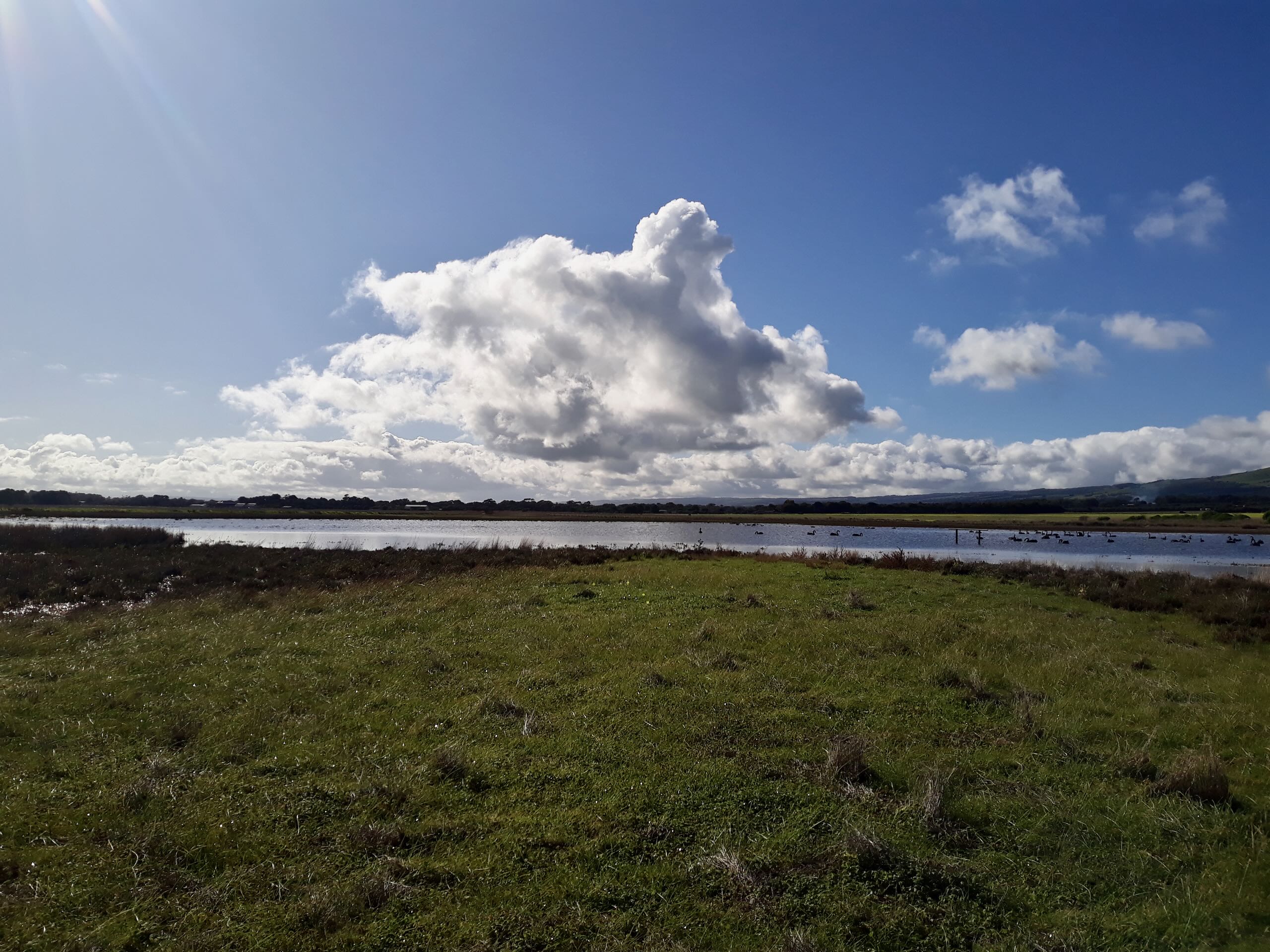
Aldinga wetlands, April 2022.

How to manage anxiety: Be kind. Be curious. I read these words somewhere once. I remind myself of them from time to time. In their simplicity and compassion, they are helpful. What McCloskey’s narrator Rachel understands in the passage above is that kindness is inherent in true love. I think that’s why her words move me so much.

Lately I’ve been reading …