Only connect: seeing someone

Other people’s words about … connection

‘So how is it [in prison]?’ I said [to Bunny]. ‘You look good.’
She did not look good. Her skin looked dull and she had a handful of tiny pimples on the left side of her face. Her hair was greasy at the roots. ‘It’s fine,’ she said. ‘I mean, I get by.’ She laughed.
‘Do you have any friends?’ I asked.
‘A couple,’ she said, licking up a palmful of M&Ms.
‘It’s just so good to see your face,’ I said, which was a lie. It was weird and sad to see her face. She didn’t look the same. But then she met my eyes fully for the first time, and the eye contact was so intense I felt I was falling, that if I didn’t concentrate I would lose consciousness. There was just her whole soul, right there. Looking at me. It was Bunny.

from ‘The Knockout Queen
by Rufi Thorpe

You know those moments when someone says something to you, or when you look at someone, and you feel a deep, true connection with them? That’s the kind of moment, I think, that Rufi Thorpe captures so movingly in the passage I’ve quoted today.

It’s hard to be frank in this way with another person, and it’s rarely sustainable, and so the intensity of the moment fades in the same way a bruise fades. That doesn’t mean you didn’t see each other.

It doesn’t mean you haven’t been seen.

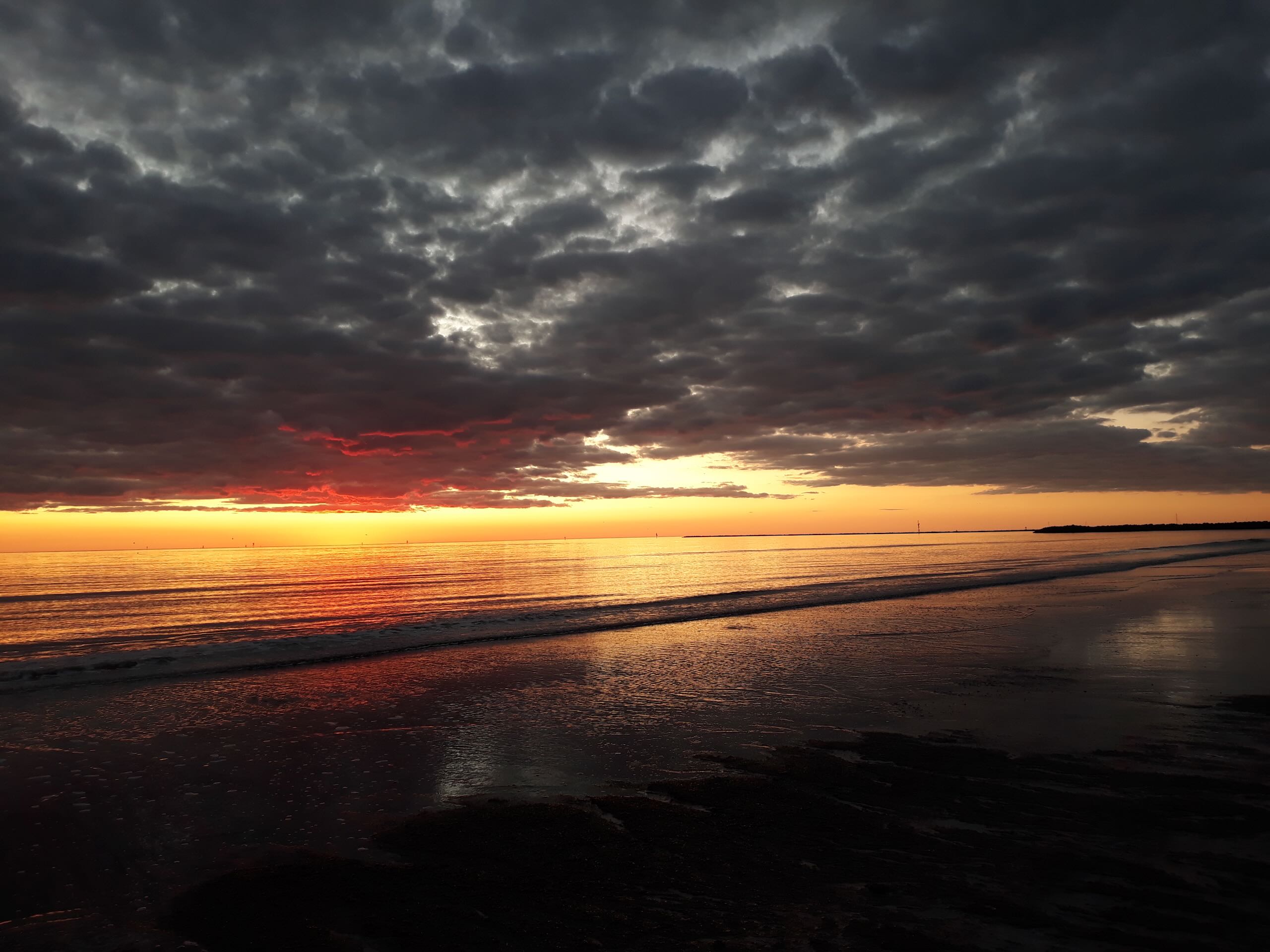
Sunset, Deep Creek, August 2023.

Lately I’ve been reading …

Immeasurable

Other people’s words about … practising art alone

But you have a little secret: while you are not making Art anymore you are at least drawing every day. To tell anyone about this would be admitting there is a hole in your life, and you’d rather not say that out loud, except in therapy. But there you are, once a day, drawing the same thing over and over: that goddamned Empire State Building [which you can see from the floor-to-ceiling window in your new apartment]. You get up every morning (or afternoon, on the weekends, depending on the hangover), have a cup of coffee, sit at the card table near the window, and draw it, usually in pencil. If you have time, you’ll ink it. Sometimes, if you are running late from work, you do it at night instead, and then you add colour to the sketches, to reflect the building’s ever-changing lights. Sometimes you draw just the building and sometimes you draw the buildings around it and sometimes you draw the sky and sometimes you draw the bridge in the foreground and sometimes you draw the East River and sometimes you draw the window frame around the whole scene. You have sketchbooks full of these drawings. You could draw the same thing forever, you realise. ‘No man ever steps in the same river twice, for it’s not the same river, and it’s not the same man’ is a thing you read once. The Empire State Building is your river. And you don’t have to leave your apartment to step in it. Art feels safe for you again, even though you know you are not getting any better at it, that the work you are making could be sold to tourists on a sidewalk outside of Central Park on a sunny Saturday and that’s about it. There’s no challenge to it, no message, just your view, on repeat. But this is all you can do, this all you have to offer, and it is just enough to make you feel special.

from ‘All Grown Up
by Jami Attenberg

I have conflicting responses to the passage above. In many ways, Attenberg’s narrator, Andrea, reminds me of myself, although her creative practice is art and mine is writing. I certainly know what it’s like to stop showing people the material you are creating, to keep your practice to yourself, to see it as your own little secret. And I know the feeling that comes with doing this, too, which Andrea articulates elsewhere in her narrative — that feeling that what you are doing, the material you are creating, the act of creating it, is barely scratching a feverish itch.

Something changed for me about a year ago, though, after which I began tentatively showing people something I’d written — a few people, a very few people. This gave me the courage to do more with that particular piece of writing, and as a result I’m not in the same place anymore as Andrea, although all I can say about that for now is that I do have a piece of writing coming out later this year — a small piece, but a piece nonetheless — and I will tell you more when I can.

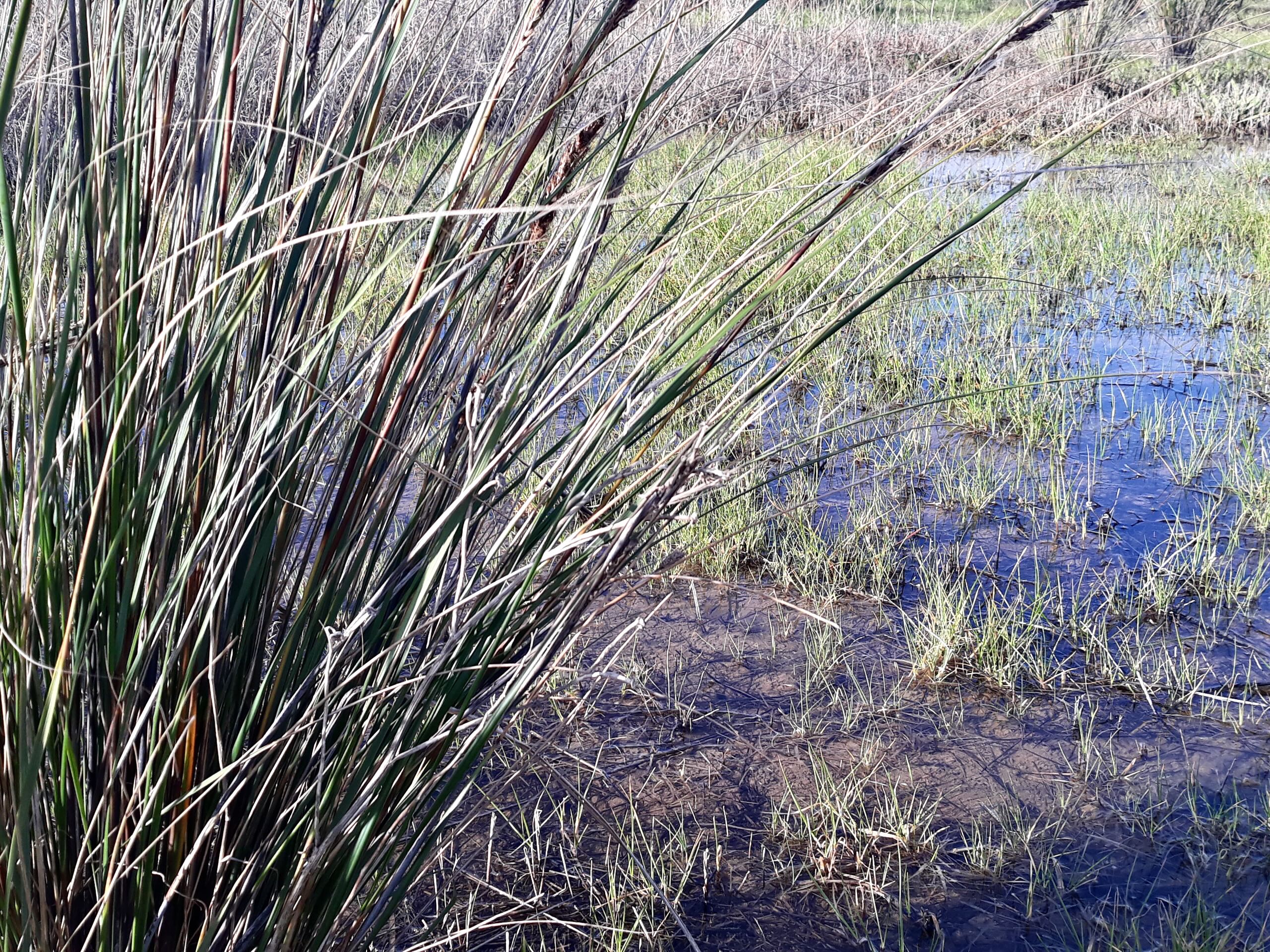
Reeds in the marsh, The Washpool, July 2023.

But even if things hadn’t changed for me, I suspect that I’d still finding myself wanting to argue with Andrea as much as I’d find myself wanting to agree with her. Because the thing that I learned during those years of writing alone, writing unseen, was that there is a value to creating something — art, literature, whatever — that has nothing to do with other people’s opinions, nothing to do with productivity or acclaim or results. What I learned (very slowly, very painfully) is that creating just your view, on repeat can in fact teach you something; it can take you somewhere new in your work. You may not be able to measure the work you create in private; you may not be able to quantify it. But when did art become something we need to measure and quantify, anyway? When did it become an outcome, a product?

I believe, although it’s taken me years to come to this understanding, that the practice of creating has its own value. The work you do as you create something, that feeling you get as you practise it of reaching out, of bringing something into the world, is an act of connection and hope. This is valuable. This is meaningful. And it can — it can — be enough.

Lately I’ve been reading …

It’s a long list today, as I try to catch up on some of my reading over the last few months. I hope you’ll enjoy one or two of the pieces I’ve listed here.

Grasp

Other people’s words about … reading

After most of my long days at work, I would arrive back at the flat, pour myself a glass of wine or vodka and read, mainly short stories and poetry. I wasn’t reading novels because I didn’t want that kind of continuity; I didn’t want to carry over any part of narrative from one day to the next. Sometimes I read poetry in languages I didn’t fully understand — with a sense of the meaning, but reaching for it, grasping after it. One of my other pleasures was smoking, but I didn’t dwell or savour; I narrowed it down to lighting up and the first few drags — after that I lost interest. I read like I smoked: fixating on my new favourite in its entirety to begin with and then honing in on the exact phrase or phrases that gave me the fix, then reading only for those, discarding the rest and when that poem had been emptied out, moving on to the next.

from ‘Signs of Life
by Anna Raverat

I’m not a smoker and I love reading novels far more than I do short stories or poetry, but still, I found myself smiling in recognition when I read the narrator’s description in the passage by Raverat above about her approach to reading. I experience myself, these days, as a greedy reader — greedy for beautiful words, phrases, images, moments, greedy for the fix they give me, while often the plot or theme of a novel remains distant or abstract to me.

Pathway, Sellicks Beach, July 2023.

Reading has been an important part of my life for as long as I can remember, though the reasons for its importance to me has varied over the years. These days, it feels like an escape for me from the world, or perhaps more accurately an escape into someone else’s world — that world they create with their words. And, like anyone addicted to their fix, I’m not about to give it up.

Little green bench (a place to read in when the warmer weather returns?)
Sellicks Beach, July 2023.

Lately I’ve been reading …

Today’s reading list is exclusively about animals and pets — for all the animal-lovers out there! xo


How are we to know

Other people’s words about … grief

And one time [Audun] drove in to Advocate Delhis Plass and picked me up off the floor where I was lying flat out on my stomach. Turid and the girls were in Trondheim, and I had no intention of getting up for a good while, but rather preferred to lie there with my forehead ground into the hard cold dusty floorboards, and I thought, how does one measure grief, is there a yardstick for grieving, is there any difference, say, between grieving for one person as opposed to two or three persons, or even four, as in my case, did all this fit on a yardstick, or could the level of grief register as on an instrument, such as a Geiger counter, and the closer the instrument got to the full power, the full height, the full number, the faster and louder the instrument would emit its familiar beep. And how was I to know when there was grief enough, and if grief was liquid like melting silver, could one then pour the grief into a litre measure and conclude, under these circumstances eight decilitres ought to be sufficient, and let the silver congeal hard and shiny not far below the rim. How was I to know. And how was I to know it really was grief I was feeling, it didn’t seem to resemble anything I had seen on film, or what others told me they had felt when their people died, and I was bewildered, for I didn’t cry, and when did one cry really, when you were alone, or in the company of witnesses. And if one were alone, what was the point, when no-one would see it, how was I to know, I didn’t have that yardstick, that litre measure. I had to deal with it myself, was that not so, I let no-one else inside, no-one else’s yardstick was of any use, no-one’s litre measure, and in a way it felt strangely irrelevant, no, not irrelevant, but rather beyond my field of vision. I could barely glimpse a dark swishing tail disappearing, and when I grasped it and held it fast, I was left with nothing but the tail in my hand. The rest was gone, like a lizard sacrificing its tail for freedom. I did try, and hard too, with open eyes to face what had happened, but I didn’t know what to do with what I saw, I had already watched most versions of the issue acted out on TV, they were used up, and I couldn’t think of any others. So then I simply tried not thinking about it at all. That didn’t work either. And so instead I wanted to find an image that could cover all this, after all it was my job, to turn the whirling liquid into something concrete, turn the waves of distracting electric shocks to the stomach into solid surface. but I didn’t have any images that were large enough, firm enough, and after a while I found it pretty exhausting. So I lay there until Audun arrived. He walked straight in, the door wasn’t locked, I had forgotten as usual, and before even seeing me, he said into the hallway, hello Arvid, for Christ’s sake, why don’t you answer the phone when I call. And it was true, often I didn’t answer, it was a breach of every rule, but I was afraid there might be an undertaker at the other end, although I knew the funerals I was supposed to attend lay behind me for now. And there came Audun, in through the living-room door and he saw me on the floor and said, what the hell are you doing down there. I’m thinking, I said. All right, he said, so what are you thinking about. Litre measures, I said, yardsticks, that kind of thing. Okay, he said, that sounds practical in a way, but you can get up now. I’m not sure I can, I said down into the floor, my lips cold against the cold planks, covered in dust, the vacuum cleaner hadn’t been out for a good while. Yes, you can, he said, just do it, and I’ll go to the kitchen and put the kettle on for coffee.
Ten minutes later when he came back with two full cups of coffee and milk and sugar on a tray, I was sitting on my chair at the desk. It wasn’t exactly Mont Blanc, but it had been a long climb.

from ‘Men in My Situation
by Per Petterson

I am thankful to say that I have never experienced a grief or sorrow of the kind that the narrator in the passage above, Arvid, has experienced, having lost his parents and siblings to a tragic accident at sea. But Petterson’s words, voiced through Arvid, move me all the same. Elsewhere, Arvid says, ‘[T]o be honest I was in a state of bottomless despair, it was the worst time, by far, I felt quite naked, quite cold’. And I think this is what the longer passage I’ve quoted in this post describes, really — Arvid’s feeling of utter nakedness in the face of his loss.

This is what I love about fiction, the way someone else’s words can move you to tears and wonder. That’s all from me today — I will leave you with Petterson’s words, however you measure them, and however they move you.

The Washpool, Sellicks Beach, July 2023.

Lately I’ve been reading …

Solace

Other people’s words about … stepping outside

I went outside. Often I walked till the late hours. The sky’s was a darkness I could deal with. I wanted to stop living by the measures of everyone else: before and after, death and life, sea and self. Being out there — in towns where I spoke to no-one, in green deserted parks, along the edge of the gulf’s water — allowed me to turn inwards. It reflected the silence I felt in me. I wanted to be outdoors for good. Yes, I went outside.

from ‘The Memory Artist
by Katherine Brabon

Pasha, the narrator of Katherine Brabon’s novel The Memory Artist, is a Russian man in his mid-thirties, a writer trying to make sense of his life post-glasnost, post-perestroika. While the story in Brabon’s novel is about the effect of political repression on people, and particularly on artists, I found uncanny echoes in Pasha’s voice of my own thoughts and feelings (although not, clearly, in response to any political repression or trauma, neither of which I have experienced).

Sky and Sea, Snapper Point, April 2023.

I wanted to stop living by the measures of everyone else, Pasha writes, by which he means not that he wants to stop living, but that he wants to accord his own values to this life he is living. Where he finds it most possible to do this is outside, under the great arch of the sky.

It’s a similar impulse, I think, that makes running so appealing to me — running through the scrub, running on the beach, running beside the sea. It’s outside where I find some of the things I most long for in life: silence, neutrality, the sense that I could (if I went on running long enough, if I stayed outdoors long enough) dissolve.

Sometimes, when I’m inside going about my day — working, sleeping, eating, showering — I remind myself that the sky is just a few steps away, literally at my feet. It feels to me like the very definition of solace.

Sun and shadow, Aldinga Beach, April 2023.

Lately I’ve been reading …

An apology of sorts: today’s list is lengthy, I know, but it’s been a while since I last posted here, and meanwhile I’ve been enjoying my online reading! I hope you will dip in and out of the list below and find something that you enjoy.

A question

Other people’s words about … therapy

My scores and answers [on the psychology questionnaires] indicated, among other things, [the therapist] had said, a lack of excitement about the future. Sleeping a great deal or sleeping very little. An ongoing melancholy.
My laughter burbled up again, helpless, irrepressible. It was the first time I had been this disrespectful to a grown-up.
If you ‘cured me’ of all of these, I told her, I don’t even know who I would be. It would be like getting lobotomised. I would not recognise myself.
Setting the clipboard down, I thanked her, still chuckling lightly. Walked out.
What the questionnaires had not asked that might have been useful to me:
Do you wake up each day for yourself or for someone else?
Do you believe your life to be your own?

from ‘All This Could Be Different
by Sarah Thankam Mathews

I’ve written before about how, many years ago now, I quit therapy. I’d been seeing a therapist for many years, but I’d come to the conclusion I couldn’t see him anymore. That therapist — I still remember him with great respect and affection, and I still remember my last session with him with great rage. I think my rage had been growing for some time, and I think, if I am honest with myself, that it was as much about what I felt my life might look like post-therapy than it was about the therapist himself, or about any failure I accused him of that day. Nonetheless, I did accuse him.

I told my therapist that day that I left each session with him feeling sadder than I did when I arrived. I told him that I was tired of the words ‘recovery’ and ‘cure’ when they were used in reference to my sadness. I told him, repeatedly, that this language we used in our sessions, which was the language of illness, made no sense in the context of my sadness. I told him that I didn’t want to speak this language anymore. And I left.

In my time I have filled out many questionnaires like the ones that the therapist in All This Could Be Different asks the narrator, Sneha, to fill out. And like Sneha, I’ve been given labels to use about myself as a result of the findings from those questionnaires. Ultimately, though, it’s the stuff I feel that isn’t diagnosable that is the hardest to sort through. To live with.

What would therapy be like if the first questions our therapists asked us — the questions our therapists repeated to us at every session — were Sneha’s two questions? What would life be like if those were the two questions we asked the people we love when we were worried about them? I don’t know. Sometimes I feel as though I’ve been trying to have that kind of therapy, that kind of conversation, all my life.

Tell me, do you wake up each day for yourself or for someone else? Do you believe your life to be your own? And what does it mean if your answer to both of those questions was ‘no’?

Lately I’ve been reading …

Replenish

Other people’s words about … being alone

As the train left the station, I felt a sense of relief. I wanted to walk in the woods and among the trees. I wanted not to speak to anyone, only to see and hear, to feel lonely.

from ‘Cold Enough for Snow
by Jessica Au

I’ve been thinking a lot this year about solitude and loneliness, about participating socially and withdrawing. Though popular scientists and the mainstream media continue to exhort us to maintain our social connections as we age, both for the health of our brain and for our psychological wellbeing, I have come to believe that it’s just as important to be comfortable in your own skin as it is to be comfortable in a social context.

Garden pickings (1), October 2022.

Some years ago a friend said to me that what she admired most in me was that I am a person who has a rich inner life. I have often thought about her words and what they might mean. I tend to think of myself as introverted and shy, a social choker, and I often find myself wanting because of this. But the truth is that when I let go of my expectations of myself as a social creature, I am happy wandering the avenues of my mind.

I think that’s why I find such accord with Jessica Au’s words in the passage I’ve quoted above. What if loneliness wasn’t just a negative version of solitude? Why not embrace it for itself? In fact, why not seek replenishment from it?

Truly: why not?

Garden pickings (2), October 2022.

Lately I’ve been reading …

Roar

Other people’s words about … country and city life

Ramesh was used to the sounds of the suburbs. He never noticed barking dogs or level crossings. On the train to work every morning he turned up the volume of his audiobook so it was louder than other passengers’ mobile phone conversations. But [tonight he was in] the country [and it] roared. He could hear the air move in the trees. He had grown up in Croydon, moved to Glasgow at seventeen, back to London at twenty-three, then Sydney at thirty-six. As a child he’d stood outside his parents’ bedroom listening to his father’s whistling snore. He liked living in places where he could hear others alive. He reached for his phone where it sat charging. For an instant he saw his hands illuminated in the bluish light of its screen. He set his rain sound app to the setting called ‘Harbour Storm’.

‘What are you doing?’ Henry croaked. His face was pressed to the pillow. ‘You don’t need that tonight.’ 

Ramesh opened his mouth to argue, then he heard the rain outside, like gunfire on the corrugated iron roof.

from ‘Pulse Points
by Jennifer Down

I love this passage, not because I’m in accordance with Ramesh, but for the opposite reason. I love the ‘roar’ of the country. I spend most of my time living in a house in the suburbs. It’s close to the beach, which I love, but it’s even closer to the railway line, a line that trains zip up and down every half an hour from five in the morning until midnight.

Sunset, early August 2022.

I don’t mind the sound of trains, actually — as suburban sounds go, I find it vaguely comforting — but when I leave my house to stay outside the city, to visit Aldinga Scrub or to camp in Yorke Peninsula, I feel a knot inside my chest of which I wasn’t even aware releasing itself.

Sounds I love when I am away from the city: the dull roar of the ocean at the end of the road (yes, another roar). The whistle of a hot wind through the trees. A frogmouth letting out its low, persistent, booming call at dusk. A shrike thrush singing. A magpie warbling. Frogs croaking. Insects clicking in the grass. And, yes, like Ramesh, the rain drumming on the roof.

Still, the photo accompanying my post today, like so many of my photos on this blog these days, comes from the suburban beach at the end of the street I live on. The sand is being eroded away and there are car parks dotted along the coast line and on most weekends a food truck selling hot donuts sets up shop during daylight hours.

But it’s still the beach. It’s still wide and beautiful and open and … The sea still roars.

Lately I’ve been reading …

It’s a lengthy list today, because I’ve been reading far more than I’ve been posting. But I hope you find something interesting below.

Only [dis]connect

Other people’s words about … beauty

I wondered if a more complex language like [my mother’s native language] Korean had a singular word to describe the feeling of getting off a long shift of a physically demanding job and finding that, for at least half an hour after, everything, every last thing, was too beautiful to bear.

Jenny asked the question so simply — ‘Okay, what do you want to talk about?’ — and I nearly reached across the table and grabbed her hands back, whispered thanks against each of her knuckles. I was about to ask her opinion on lakes and oceans — which did she prefer, contained and musty, or vast and salty? — when she suddenly sat up straight, eyes wide. ‘So — what did you think of that meeting today? Hold nothing back.’

‘Oh,’ I said. ‘I don’t know, it was fine.’

from Pizza Girl
by Jean Kyoung Frazier

I thought of Sally Rooney’s novel Beautiful World, Where Are You? when I read the passage above. In Beautiful World, Rooney’s characters variously mourn the loss of the sense they used to have that they were moving through a beautiful world, or they lament the ugliness of the everyday world, or they remark upon what Rooney calls a hidden reality: the presence at all times, in all places, of a beautiful world.

Sunset, early July 2022.

I think this is what Kyuoung Frazier’s narrator is getting at. She wants to tell Jenny about the beautiful world she sees all around her — but Jenny, like everyone else in the narrator’s life, either doesn’t want to hear what she has to say or doesn’t know how to hear it.

Some years ago when I was going through a difficult patch, a friend of mine offered to exchange a daily photograph with me via text message. ‘We’ll just send each other a picture of something we see,’ she said. ‘Something we like. Something that makes us smile. We’ll share our pictures, and it’ll be a way to reach out. To say hello.’

Dune flowers, early July 2022.

We ended up exchanging daily photographs for over a year, and it was a way to say hello, but it was also so much more. What I loved most about our exchange, beyond the sense of connection it gave me with another human being, was the knowledge that we were each finding something beautiful in our day and then sharing it with someone else. Passing the beauty on.

Maybe we should all share more beauty. Maybe it doesn’t matter if beauty is fleeting and makes us feel fragile. Maybe that’s exactly why we should keep on sharing it.

Before sunset, early July 2022.

Lately I’ve been reading …

Revelation

Other people’s words about … secrets

‘Philip,’ [his mother Rose] said. ‘There are things I could tell you.’
‘Tell them,’ Philip said.
‘No.’
‘Why not? I’m prepared.’
She turned, looked at [Philip’s father Owen] slumped on the sofa. ‘Because I don’t believe that just because something’s a secret it therefore by definition has to be revealed,’ Rose said. ‘Keeping certain secrets secret is important to — the general balance of life, the common utility.’

From ‘The Lost Language of Cranes

by David Leavitt

I have always been fascinated by people like Philip’s mother Rose in the passage above: people who keep their own counsel. I have a tendency to do the opposite — to over-share, to talk to people for advice, to feel guilty if the life I lead isn’t entirely transparent. I’m not sure why. I may just be wired that way, but I suspect that years of therapy during adolescence and early adulthood ingrained this way of being in me. When you are used to talking things through with someone on a weekly basis, it can feel odd — unsafe, even — once you stop.

Gnarled trunk, early July 2022.

I like Rose’s matter-of-fact statement that secrets don’t have to be revealed. Sometimes, when I am uncertain about a course of action or a decision I have to make, I think of the oath that I’m told doctors must take: ‘First, do no harm.’ I find this oath, applied to life in general, one of the most useful creeds I know.

And so I find myself thinking that Rose may be right. If keeping a secret doesn’t harm anyone, then why feel compelled to reveal it? Why not learn to live in silence with one’s own truths?

Waterways, early July 2022.

Lately I’ve been reading …