Soar

Other people’s words about … tea

Once upon a time, I used to describe myself as someone who drank ‘endless cups of tea’ — which was indeed true, once upon a time — but these days I’m sensitive to caffeine, and so my morning pot of tea, the treasured pot of tea, is the only tea I drink for the day.

And while I drink that pot of tea, I write. Some years ago, when I decided to make a commitment to writing something every day, no matter how little, I linked the commitment I’d made, very strategically, to my morning pot of tea. That way, I told myself, even when I’m filled with doubt about whatever it is I’m writing at the time, even if every part of me wants to give up on it, even if procrastination and writer’s block are overwhelming me, I still put myself through the process each morning — because of the cup of tea that accompanies it.

That’s how I wrote Ravenous Girls, in fact — one pot of tea at a time.
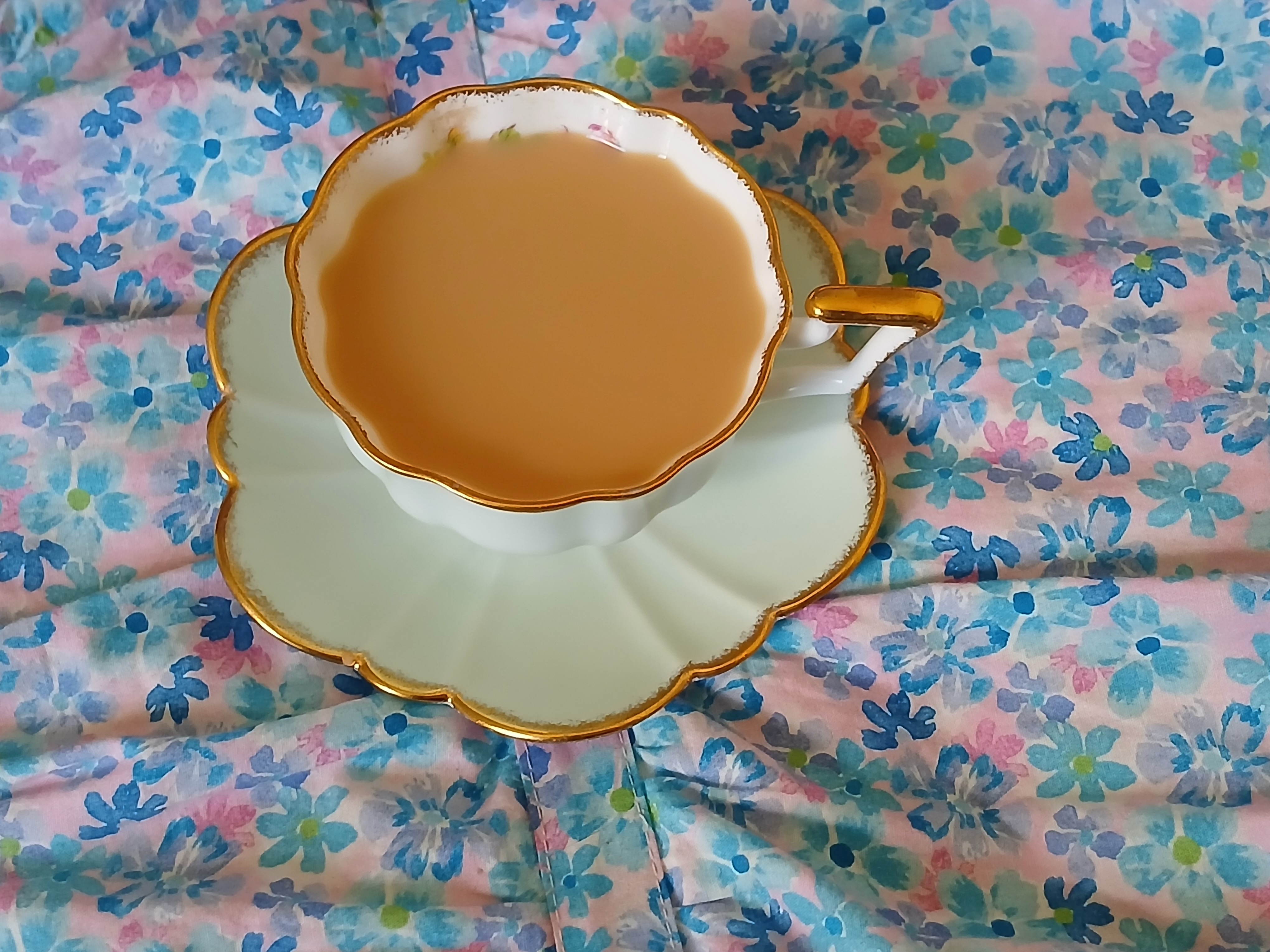
Morning pot of tea, June 2025.

Tiffany Atkinson’s beautiful poem Tea — which I found in a book that a dear friend gave me, Sophie Dahl’s Ten Poems about Tea — isn’t about tea, not really. It starts with a simple, everyday gesture, a man making a woman a cup of tea, and then, like all the best poems, it takes flight. It soars.

It’s a poem to be read slowly, to be savoured, just like a pot of tea.

Lately I’ve been reading …

The soft clatter of keyboards

Other people’s words about … crying at work

The lines I’ve quoted in the passage above, which make up the opening sentences of Anna Kate Blair’s novel, The Modern, have stayed with me ever since I read it, some years ago now. The novel is about art, love, self-doubt and work — most of all, perhaps, about how in our society one of the things that determines our conception of ourselves, the way we see and value ourselves (and others), is work.

The ethos of work.

What I love, though, about this particular passage (which in fact turns out not to be particularly essential to the course of events throughout the rest of the novel, at least insofar as what happens to Sophia, the narrator), is its tragicomic depiction of women crying in the workplace. Blair dispenses here with the need to explain why Anthea and Joanna and Sophia are crying, and why they assume they have to keep their crying secret. Crying in the workplace, she implies, and secret crying in particular, is a commonplace for these women; they all simply assume, in some kind of tacit shared understanding of themselves and their lives, that they’ll end up crying at some point during the working week.

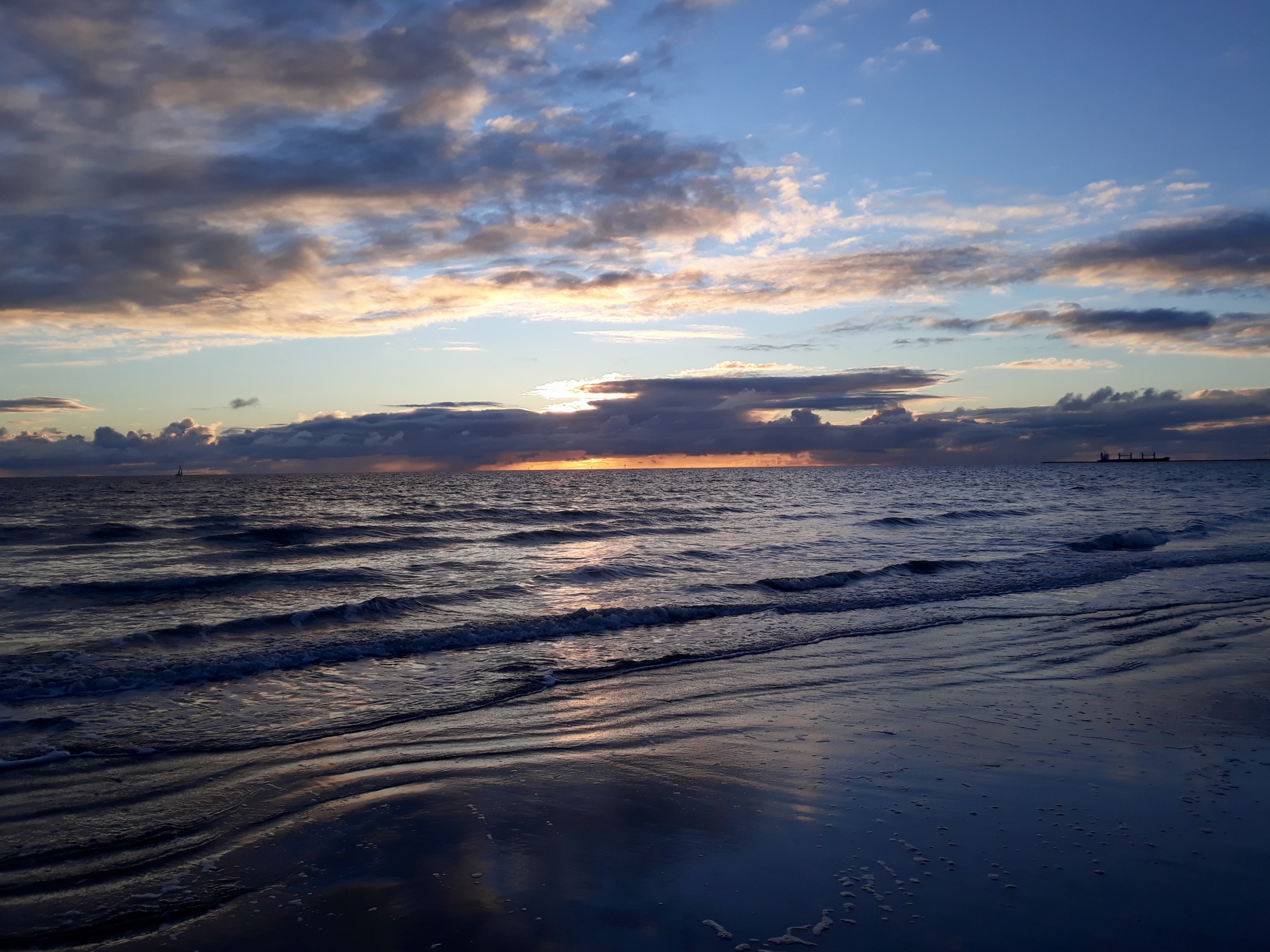
Aldinga Beach, May 2025.

I’ve worked in several workplaces over the years, and, just like Anthea and Joanna and Sophia, at some point in each job I’ve gone in search of a private place to cry. When I worked the afternoon shift in the call centre of a community health provider, I used to take the lift from the fourth floor down to the car park, walk around the corner of the building to a little alleyway on one side and lean against the wall to cry. When I was a cook, I’d step into the cool room and close the door behind me to cry in refrigerated privacy, crouched in among the cartons of milk and bowls of pastry cream and half-wheels of cheese. I’ve also done my fair share of crying in the office toilets like Anthea, and, yes, like Sophia, I’ve sat at my computer furtively blinking and dabbing at my eyes, all the while hoping that no-one would notice. And/or that no-one would notice me.

What is it about workplaces that reduces women, some women, to tears? Is crying part of our make-up, or is there something about the conditions of our workplaces — the buildings we work in, the people we talk to and report to, the conditions we’re bound by our salaries to — that makes us cry? Or is it rather the space the workplace occupies in our lives, the way it’s crammed in uneasily among everything else that belongs to our non-working selves, those selves we perhaps think of as our true selves?

I don’t know. But I think of Sophia, fellow workplace-weeper, from time to time and smile wryly.

May 2025

Lately I’ve been reading …

We cannot know

Other people’s words about … writing about life

‘We cannot know.’ If used sparingly, this is one of the strongest phrases in the biographer’s language. It reminds us that the suave study-of-a-life we are reading, for all its detail, length and footnotes, for all its factual certainties and confident hypotheses, can only be a public version of a public life, and a partial version of a private life. Biography is a collection of holes tied together with string, and nowhere more so than with the sexual and amatory life. For some there is nothing easier than understanding the sex life of someone you’ve never met, and easier still when they’re conveniently dead; or in posthumously adding another conquest to the dance card of a known Don Juan. Others simplify things by maintaining that human sexual habits have always been more or less the same, the only variables being the degree of hypocrisy and cover-up.
But sex is a world in which self-deception can so easily present itself as objective fact, and ‘brutal honesty’ is no more likely to be true than shy evasiveness or sentimental melodrama as an explanation of what really took place. Oscar Wilde may have been a ‘posing sodomite’, but such evidence as we have suggests he preferred intercrural sex, and if so was not technically a ‘sodomite’ at all. We cannot know. Sara Bernhardt was a nymphomaniac. Oh, but she was also incapable of orgasm. Until she had the problem fixed by means of an ingenious surgical implant — which is reliably attested by that ‘hysterical duplicitous gossip’ Jean Lorrain, and then recorded in the [j]ournal of Edmond de Goncourt, whose views on women were old-fashioned to say the least. We cannot know. Robert de Montesquiou was a flamboyant homosexual, except that his biographer thinks he was too coldly fastidious to indulge his Hellenic urges, while [Samuel] Pozzi’s biographer thinks he may have been impotent from around 1884, and remained so. We cannot know. Pozzi had a reputation as ‘an incorrigible seducer’, a doctor who slept with his patients, who may even have used his consultations as foreplay. He also kept all the letters he had received from women over a sexual career of half a century or more. Yet after his death, Mme Pozzi instructed her son Jean to burn them all. So we cannot know a large amount … We may speculate as long as we also admit that our speculations are novelistic, and that the novel has almost as many forms as there are forms of love and sex.

from ‘The Man in the Red Coat
by Julian Barnes

Many years ago, my mother and I embarked together on a reading project for a year, our own little book club before book clubs were a thing. Our reading theme was American novels, and we took it in turns to pick a novel, one by one over the course of the year, which we each then assiduously read; afterwards, we caught up over coffee to talk about it. I remember this year with great fondness as a time of shared reading and conversations, conversations that began with reading and literature but moved on, as all good conversations do, to other things. Art. Love. Life.

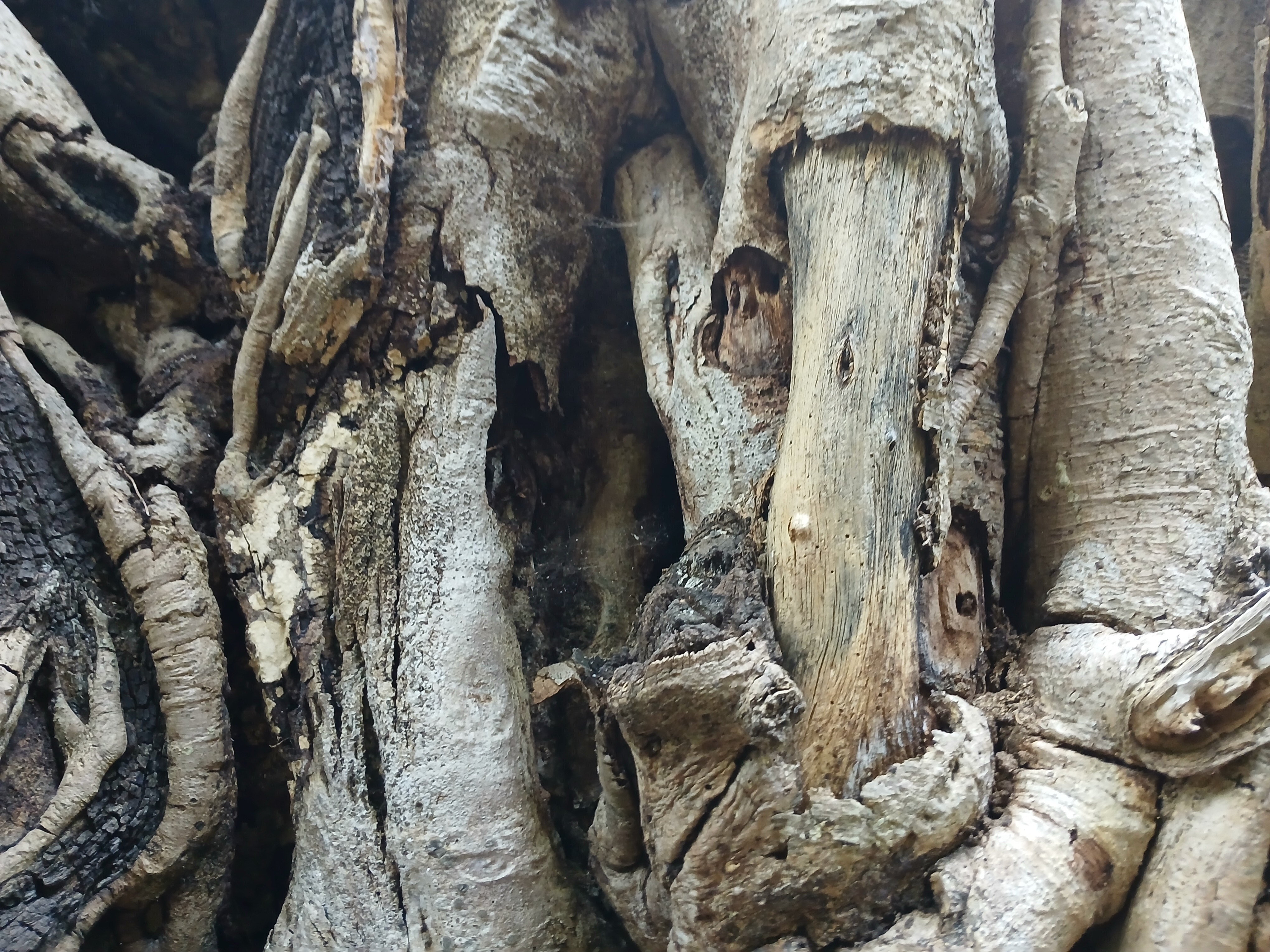
Knotted trunk, Lameroo Beach, Darwin, August 2024.

Recently we’ve begun another reading project together, one that we hope will involve some writing further down the track. As a result, my reading choices, which usually tend to fiction only, and generally to contemporary literary fiction at that, have widened. I’m reading fiction and non-fiction, works by contemporary writers and works by long-dead ones, works by women and works by men. Hence The Man in the Red Coat, which I might not otherwise have come across.

We cannot know. I’ve quoted Barnes at length here (which I hope he will forgive me for) because I love the virtuosity of this passage, the way he begins with a simple assertion, a certain truth, and then moves on in the space of a couple of paragraphs to cover themes at once intimate and specific to the period he is writing about (the Belle Epoque) but also meta-textual, concerning the art of biography itself, that collection of holes tied together with string. (What a lovely image that is.) And then, somehow, we arrive at the end of this flight of thought with another assertion, equally simple but bold, about the essence of novels and fiction.

We cannot know. Indeed.

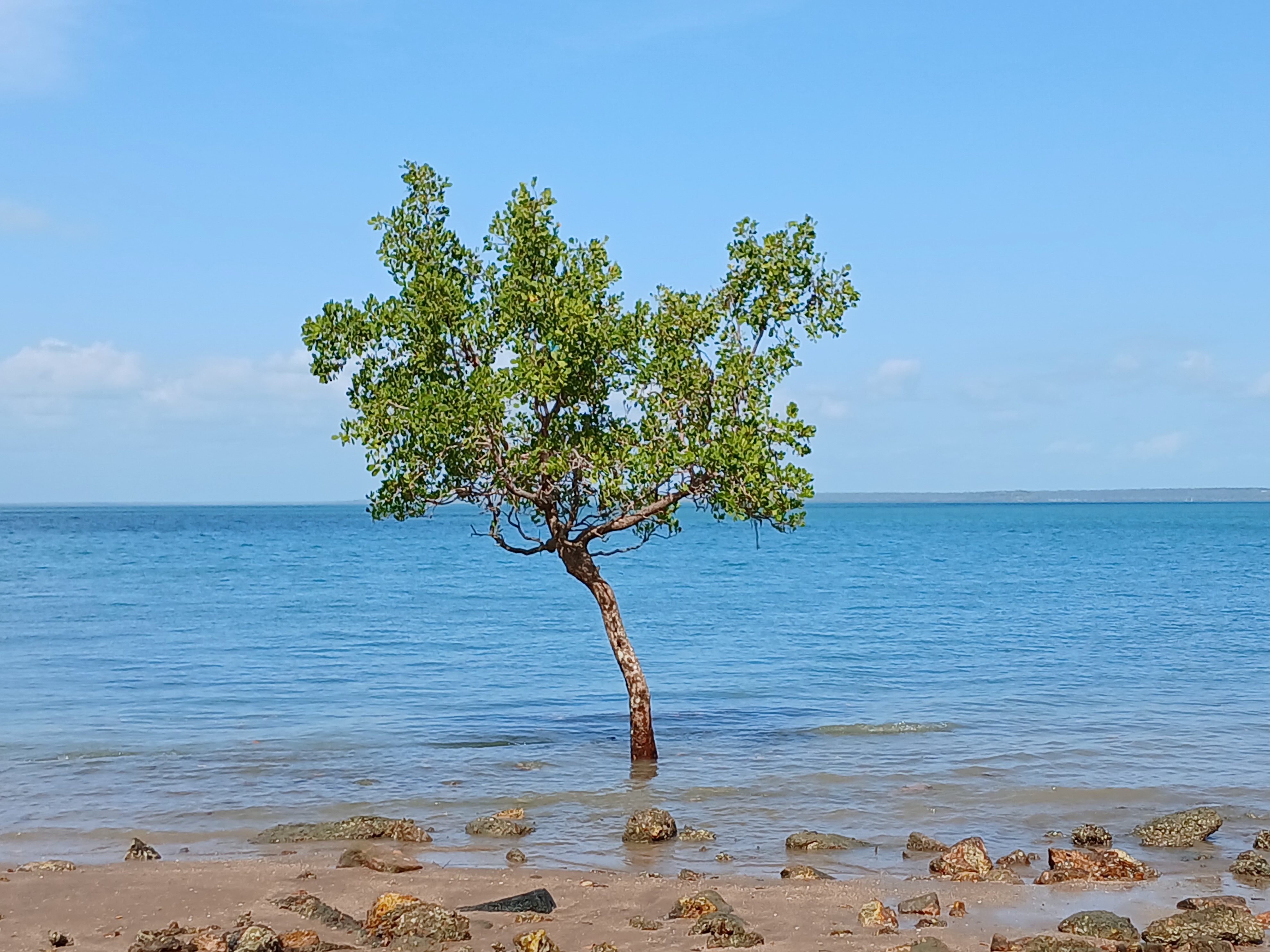
Mangrove tree at Lameroo Beach, Darwin, August 2024.

The photographs in this post, like the ones in my previous post, come from a recent trip I took to Darwin. I’d never been to Darwin before and was only there fleetingly on this occasion, but I fell in love with it, all of it. Darwin in the dry season: place of sunny days, rainforest-lined beaches, mangroves and vines and bush-stone curlews. When you visit somewhere new, you see things through a stranger’s eyes, which is to say that you don’t see its inner workings, its inner truth. Does that mean that you see its truth or something else, your own hypothesis of the place? We cannot know. But oh, the privilege of having the opportunity to see it anyway.

Lately I’ve been reading …

Calculus

Other people’s words about … counting calories

In 2008, I downloaded a new app to my iPod. The icon featured a silhouetted figure in the middle of a balletic jump, lithe and limber like I wanted to be, and when I clicked open the app I was welcomed and asked to input my height, current weight, age, gender, and goal weight. MyFitnessPal, which debuted on the app store in 2005, is to this day one of the most popular calorie counting apps worldwide. Its icon is also regular featured in eating disorder starter pack memes and discussed on pro-ED websites. ‘Does anyone else have MyFitnessPal app trauma???’ someone posted, while another joked darkly about ‘the myfitnesspal to eating disorder pipeline’, and another mocked ‘myfitnesspal’s yassification of orthorexia’. The app is focused on calories in and out, calculating your personalised daily allotment based on your biometrics and the date by which you’d like to hit your weight goal. During the era I spent addicted to the app, every time I considered putting something in my mouth, I searched it in the apps’s expansive database, and often decided against eating it after seeing its caloric content. What I did eat, I entered, and the app updated my remaining calories for the day accordingly. The app quickly became a ritual and a rulebook, and scrolling my daily record in bed at night a practice as yearnful and penitent as running my fingers through rosary beads.

from ‘Dead Weight
by Emmeline Clein

I have written two novels now that feature characters with eating disorders in them, a YA novel and my recent novella, Ravenous Girls. Both the characters in my books, like myself, experienced the onset of their anorexia in the late 1980s or early 1990s, before the existence of the internet, let alone of iPods and the app store. And yet when I read the passage I’ve quoted above by Emmeline Clein, I thought how familiar it sounded and how, despite the passage of time and the onslaught of digital technology, the experience of anorexia has remained in its essence the same across generations, at least in certain parts of the world and among people of a certain class.

Whether you count calories by consulting a book of charts that is updated and republished annually (as my characters and I did in the 1980s) or whether you download an app and then ‘chat’ about it online with your pro-ana friends, you are still counting calories. You are still measuring yourself by your food intake and the effect it has on your physical appearance. You are still, in other words, measuring your worth by what you eat and how you look.

Taperoo Beach, July 2024.

There are people who say that when we write about the experience of anorexia we trigger others to seek the experience out. I am not one of those people. The subtitle of Clein’s book is On Hunger, Harm and Disordered Eating, and I think it’s the first two words of that subtitle that grab me most strongly. Hunger is the primary experience of anorexia, whatever your age or sex or class or gender, and harm is the result — in some cases, terrible harm.

Perhaps we can’t prevent that harm when we write about it, but perhaps, too, we can try to make sense of it. And that, I believe, is important.

Lately I’ve been reading …

Each week I bookmark pieces I’ve read online that I might list on my blog, and each week my list grows and grows, since I read far more than I blog. For this post, I’ve dived into my archive of bookmarks for some pieces I’ve loved over the last two or three years.

Echo

Other people’s words about … intimacy

He exhales. In the spring he would sometimes wake up at night beside Marianne, and if she was awake they would move into each other’s arms until he could feel himself inside her. He didn’t have to say anything, except to ask her if it was alright, and she always said it was. Nothing else in his life compared to what he felt then. Often he wished he could fall asleep inside her body. It was something he could never have with anyone else, and he would never want to. Afterwards they’d just go back to sleep in each other’s arms, without speaking.

from ‘Normal People
by Sally Rooney

I don’t know anyone who writes about intimacy better than Sally Rooney, especially in her first two novels, Conversations with Friends and Normal People. What I love about Rooney’s writing is that she understands how our emotions convey themselves to us by manifesting themselves physically. Connor’s longing for Marianne in the passage above, his longing to be inside her, is both physical and emotional. It’s all-encompassing, unspeakable, the kind of intimacy that he doesn’t have words for — that most of us don’t have words for. Only Sally Rooney, as I said, can write this way.

Port Elliot, June 2024.

I’ve been thinking over the last few months about why I write and what I want to write about next, now that my novella Ravenous Girls is out in the world. And I’ve been writing, too, or trying to. Earlier this year, in fact, I submitted part of a new manuscript, the manuscript I’ve been thinking about over the last few months, to the Deep Creek Residency — and this week I found out to my excitement that, based on the strength of the material I’d submitted, I have been named the winner for 2024 of the residency. Which is deeply exciting.

It’s funny how writing works, though — by the time I got the news about winning the residency, I’d pretty much convinced myself that this manuscript, or the version of it that I’d worked on and submitted to the residency, was unfeasible. Clunky. Strained. Embarrassing, even.

So maybe I was wrong about that; maybe I somehow got myself lost inside my own echo chamber. This happens to me over and over again whenever I’m writing, and yet each time it happens to me, it astonishes me anew. It’s not a place I recommend staying in very long, this echo chamber. It’s a desolate, lonely place.

Aldinga Beach, June 2024.

Partly what I’m writing about in my new manuscript is Cairo. Partly what I’m writing about is the two sisters that I wrote about in Ravenous Girls, Frankie and Justine, at a later stage in their lives. And partly what I’m writing about is intimacy, not in the way that Sally Rooney writes about intimacy, but intimacy nonetheless.

Intimacy, which is its own terrifying echo chamber.

Lately I’ve been reading …

Sad place

Other people’s words about … funfairs

Deep down, the funfair was a sad place. You couldn’t hear yourself think. Everything was too bright and too big. The floor was covered in sawdust and underneath it, dirt. On the other side of the Round Up there was a wire fence around a patch of muddy grass with a few bits of hay, and inside the fence was the saddest horse you ever saw. Chestnut brown with white socks, covered in flies, its nose more or less touching the ground because its own head was too much for its neck to bear. It wasn’t just sad: there was something mean in it that wasn’t its fault. When I whispered to it, ‘hello, horse’, it slowly turned its whole body away.

from ‘Western Lane
by Chetna Mario

In my memory, the Cairo Zoo is a little like the funfair that Chetna Maroo’s narrator describes in the passage I’ve quoted above.

I visited the Cairo Zoo thirty-two years ago, just once. I didn’t take any photographs or record it in my diary at the time, and the man I visited it with, the man I was living with in Cairo, an American man, is no longer in regular touch with me, so I don’t know how accurately I’m recalling it. But in my memory the zoo was a place where the animal enclosures were small and narrow with bare ground and no grass, a place where the animals were thin with their ribs showing through their mangy fur. It was also a place where families wandered down the paths with an air of celebration and festivity, where children carried balloons and mothers pushed prams and vendors walked past, selling roses and snacks. It was a sad place. That’s how I remember it.

Largs Bay, June 2024.

In the camel enclosure, a camel stood before us, a camel whose toenails had grown so long that they curved down towards the ground. The American man and I stared silently back at the camel.

‘That’s cruel,’ I said at last, my voice wobbling. ‘They should cut its toes.’

‘I know,’ the American man said back.

He laughed helplessly and then he looked as though he might start to cry instead.

‘Let’s go,’ he said. ‘Oh God, Rebecca, let’s get out of here.’

And we fled.

How did we get to the zoo that day — by bus or train? I don’t know. Where did we go afterwards — back to our apartment in downtown Cairo or to the fiteer place that we loved for lunch? I don’t know. Is any of this memory true? I don’t know.

And if it’s not true, this memory, this story that I’ve just told you — even though I remember it that way — do I have the right to tell it to you?

I don’t know.

Lately I’ve been reading …

Only connect: seeing someone

Other people’s words about … connection

‘So how is it [in prison]?’ I said [to Bunny]. ‘You look good.’
She did not look good. Her skin looked dull and she had a handful of tiny pimples on the left side of her face. Her hair was greasy at the roots. ‘It’s fine,’ she said. ‘I mean, I get by.’ She laughed.
‘Do you have any friends?’ I asked.
‘A couple,’ she said, licking up a palmful of M&Ms.
‘It’s just so good to see your face,’ I said, which was a lie. It was weird and sad to see her face. She didn’t look the same. But then she met my eyes fully for the first time, and the eye contact was so intense I felt I was falling, that if I didn’t concentrate I would lose consciousness. There was just her whole soul, right there. Looking at me. It was Bunny.

from ‘The Knockout Queen
by Rufi Thorpe

You know those moments when someone says something to you, or when you look at someone, and you feel a deep, true connection with them? That’s the kind of moment, I think, that Rufi Thorpe captures so movingly in the passage I’ve quoted today.

It’s hard to be frank in this way with another person, and it’s rarely sustainable, and so the intensity of the moment fades in the same way a bruise fades. That doesn’t mean you didn’t see each other.

It doesn’t mean you haven’t been seen.

Sunset, Deep Creek, August 2023.

Lately I’ve been reading …

Unlearn

Other people’s words about … the way we feel

She did not adopt the persona of a lawyer, which was the only thing I’d learned to do. Instead, her own innate mannerisms, her seemingly authentic and unrehearsed responses, were more effective than any behaviour she might have acquired through practice and effort. She knew this, she used it and we won. I left the courtroom feeling slightly different about myself. I vowed to be less afraid to talk in my own voice, or to follow my own line of thought, though I had no clear sense of either of these things. I wanted to learn how to be myself again, having been carefully unlearning it ever since I was born.

from ‘Chrysalis
by Anna Metcalfe

It’s funny how you can be struck by a single passage in a book even when the book itself — its story, its characters, its voice, its narrative arc — leaves you cold. That’s how it is for me today, in quoting the passage above. My feelings about Anna Metcalfe’s novel Chrysalis as a whole are ambivalent, but this passage, particularly the last sentence, will never leave me. I wanted to learn how to be myself again, having been carefully unlearning it ever since I was born.

Groundsel flowers, Taperoo dunes, July 2023.

Another way to say what Metcalfe says is: All my life, I have felt as though there is something wrong with me. This is something I’ve written about in blog posts before, this feeling of wrongness, of inner wrongness, essential wrongness. I understand that it’s not unique to me — we probably all feel this way, to some degree. We live in a social world, after all. My life is jumbled up in yours, and yours in mine. Still, this feeling is one I’ve always experienced very strongly.

Something about Metcalfe’s way of putting it, though, particularly resonates with me. It’s the concept of learning and unlearning, I think. Can we unlearn this feeling? Maybe.

Lately I’ve been reading …

Immeasurable

Other people’s words about … practising art alone

But you have a little secret: while you are not making Art anymore you are at least drawing every day. To tell anyone about this would be admitting there is a hole in your life, and you’d rather not say that out loud, except in therapy. But there you are, once a day, drawing the same thing over and over: that goddamned Empire State Building [which you can see from the floor-to-ceiling window in your new apartment]. You get up every morning (or afternoon, on the weekends, depending on the hangover), have a cup of coffee, sit at the card table near the window, and draw it, usually in pencil. If you have time, you’ll ink it. Sometimes, if you are running late from work, you do it at night instead, and then you add colour to the sketches, to reflect the building’s ever-changing lights. Sometimes you draw just the building and sometimes you draw the buildings around it and sometimes you draw the sky and sometimes you draw the bridge in the foreground and sometimes you draw the East River and sometimes you draw the window frame around the whole scene. You have sketchbooks full of these drawings. You could draw the same thing forever, you realise. ‘No man ever steps in the same river twice, for it’s not the same river, and it’s not the same man’ is a thing you read once. The Empire State Building is your river. And you don’t have to leave your apartment to step in it. Art feels safe for you again, even though you know you are not getting any better at it, that the work you are making could be sold to tourists on a sidewalk outside of Central Park on a sunny Saturday and that’s about it. There’s no challenge to it, no message, just your view, on repeat. But this is all you can do, this all you have to offer, and it is just enough to make you feel special.

from ‘All Grown Up
by Jami Attenberg

I have conflicting responses to the passage above. In many ways, Attenberg’s narrator, Andrea, reminds me of myself, although her creative practice is art and mine is writing. I certainly know what it’s like to stop showing people the material you are creating, to keep your practice to yourself, to see it as your own little secret. And I know the feeling that comes with doing this, too, which Andrea articulates elsewhere in her narrative — that feeling that what you are doing, the material you are creating, the act of creating it, is barely scratching a feverish itch.

Something changed for me about a year ago, though, after which I began tentatively showing people something I’d written — a few people, a very few people. This gave me the courage to do more with that particular piece of writing, and as a result I’m not in the same place anymore as Andrea, although all I can say about that for now is that I do have a piece of writing coming out later this year — a small piece, but a piece nonetheless — and I will tell you more when I can.

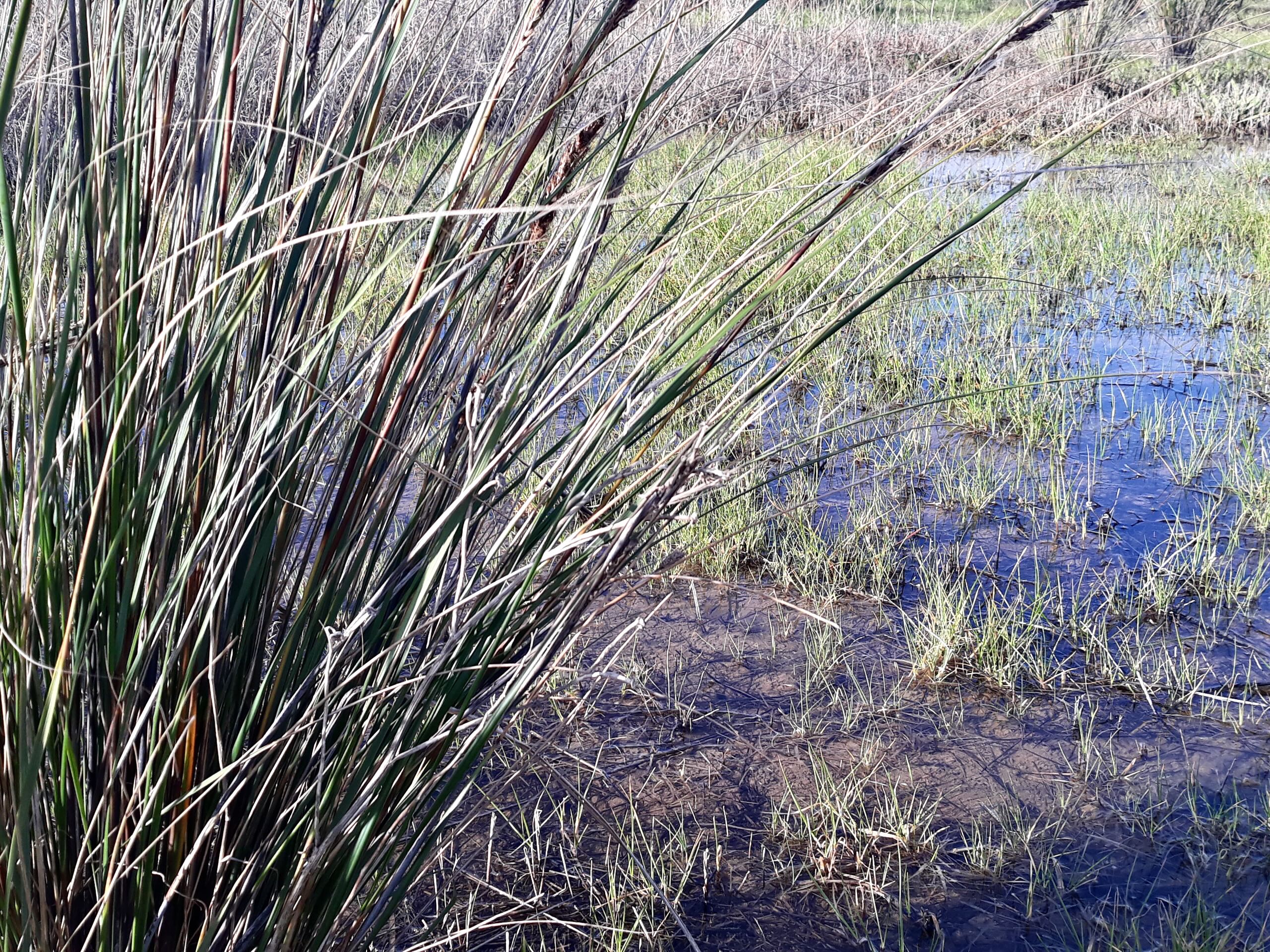
Reeds in the marsh, The Washpool, July 2023.

But even if things hadn’t changed for me, I suspect that I’d still finding myself wanting to argue with Andrea as much as I’d find myself wanting to agree with her. Because the thing that I learned during those years of writing alone, writing unseen, was that there is a value to creating something — art, literature, whatever — that has nothing to do with other people’s opinions, nothing to do with productivity or acclaim or results. What I learned (very slowly, very painfully) is that creating just your view, on repeat can in fact teach you something; it can take you somewhere new in your work. You may not be able to measure the work you create in private; you may not be able to quantify it. But when did art become something we need to measure and quantify, anyway? When did it become an outcome, a product?

I believe, although it’s taken me years to come to this understanding, that the practice of creating has its own value. The work you do as you create something, that feeling you get as you practise it of reaching out, of bringing something into the world, is an act of connection and hope. This is valuable. This is meaningful. And it can — it can — be enough.

Lately I’ve been reading …

It’s a long list today, as I try to catch up on some of my reading over the last few months. I hope you’ll enjoy one or two of the pieces I’ve listed here.

Grasp

Other people’s words about … reading

After most of my long days at work, I would arrive back at the flat, pour myself a glass of wine or vodka and read, mainly short stories and poetry. I wasn’t reading novels because I didn’t want that kind of continuity; I didn’t want to carry over any part of narrative from one day to the next. Sometimes I read poetry in languages I didn’t fully understand — with a sense of the meaning, but reaching for it, grasping after it. One of my other pleasures was smoking, but I didn’t dwell or savour; I narrowed it down to lighting up and the first few drags — after that I lost interest. I read like I smoked: fixating on my new favourite in its entirety to begin with and then honing in on the exact phrase or phrases that gave me the fix, then reading only for those, discarding the rest and when that poem had been emptied out, moving on to the next.

from ‘Signs of Life
by Anna Raverat

I’m not a smoker and I love reading novels far more than I do short stories or poetry, but still, I found myself smiling in recognition when I read the narrator’s description in the passage by Raverat above about her approach to reading. I experience myself, these days, as a greedy reader — greedy for beautiful words, phrases, images, moments, greedy for the fix they give me, while often the plot or theme of a novel remains distant or abstract to me.

Pathway, Sellicks Beach, July 2023.

Reading has been an important part of my life for as long as I can remember, though the reasons for its importance to me has varied over the years. These days, it feels like an escape for me from the world, or perhaps more accurately an escape into someone else’s world — that world they create with their words. And, like anyone addicted to their fix, I’m not about to give it up.

Little green bench (a place to read in when the warmer weather returns?)
Sellicks Beach, July 2023.

Lately I’ve been reading …

Today’s reading list is exclusively about animals and pets — for all the animal-lovers out there! xo