Inkling

Other people’s words about … self-perception

The evening was cold with a bolt of black cloud over the dome of the courts. Inside, a maitre d’ approached. He led me to a high marble table with several stools and a can of light on a chain.
Thankyou, I said. I’m waiting for two more.
They were already late. I wondered if the robust twists of bread stacked in a basket to my left were real or fake. I didn’t see anybody that I knew. The food was expensive but I would not be paying for it. At times like this I simply felt too large. I am not a large person but I felt too large, as if I’d bloated, as if I were rangier and wider and more ungainly than other people.

from ‘This Happy
by Niahm Campbell

I’ve experienced the feeling that Niamh Campbell’s narrator describes suddenly coming over her in the passage above — the feeling of largeness, of having an outsized body in comparison to other people’s bodies — so many times in my life that I’ve lost count. Till now, though, I’ve always assumed that it was one of those quirks that is unique to people who have lived with an eating disorder.

It’s certainly true that one of the motivations behind my anorexia was a longing to shrink my body. And I’m not alone in this; over the years I’ve met other people with anorexia who have expressed the same motivation. In fact, back when I was a teenager, in the early days of my treatment, the nurses frequently used to say to me and my fellow anorexic patients, ‘You deserve to take up space.’ It was a kind of motto they came out with when we were feeling low, when we said hateful things about ourselves; they would chant it at us — in an effort to distract us, or perhaps to dissuade us, or even, impossibly, to cure us.

You deserve to take up space.

Those words, that chant, never quite resonated with me. My sense of largeness didn’t feel spatial; it felt physical and embodied, the way one person might have a louder voice than another, or coarser hair. Still, even as the feeling came over me — even as at certain moments it took up all my awareness — I understood that it wasn’t an accurate one. At heart, I knew even then that my body wasn’t any larger than anyone else’s, and that it was my perceptions that were distorted rather than my body. It was just that I didn’t know how to adjust those perceptions.

In many ways, I think, I still don’t. Instead, I’ve learned to ignore my perceptions, to see them as a false signal blinking at me that I choose to ignore. Maybe that’s a rudimentary way of dealing with them, but it’s the most effective response I’ve come up with.

Branch across the path, December 2023.

Because today is the last day of the year, the last day of 2023, I’m going to move on now to an entirely different topic. I want to finish this post with a beautiful poem by Lisa Holstein called ‘Happy New Year’. The poem comes from her collection Dream Apartment; its words are poignant and filled with sadness but also beauty, and so I can’t think of any better ones with which to bring in the new year.

Is it selfish to wish for more than to survive?
I see you, bare arms gleaming in the sun-

struck snow, I see the browned roast
you brought to your wine-stained lips

the stack of books you read, and those boots
that last fall you loved yourself in.

I see you in them again on this roll call
morning stroll through what intimate data

strangers tell me about their lives.
Once upon a time I asked them to

or they asked me, who can recall,
I’m into it, I guess. I like to watch,

at least, I can’t seem to stop, but I can’t
bear to share, so I’ll tell you here:

the cat finally came home last night—
spooked by so many fireworks barking,

he hid somewhere unsearchable for a while
no matter how I called and called.

He chose me, I like to say since the day
I found him starving on the porch.

I know the night is full of unsteady boats
on cold seas and horrible cages

and people far more alone than me
I’m sorry for your loss, your cancer,

the accident you had no way to see coming
and the one you did have an inkling of

I’ve learned how important it is to say
because of how difficult it is to say

and how loudly loneliness fills the silence
although, like anything, it depends—

for instance, I still can’t unhitch my breath
from even the softest whisper of your name.

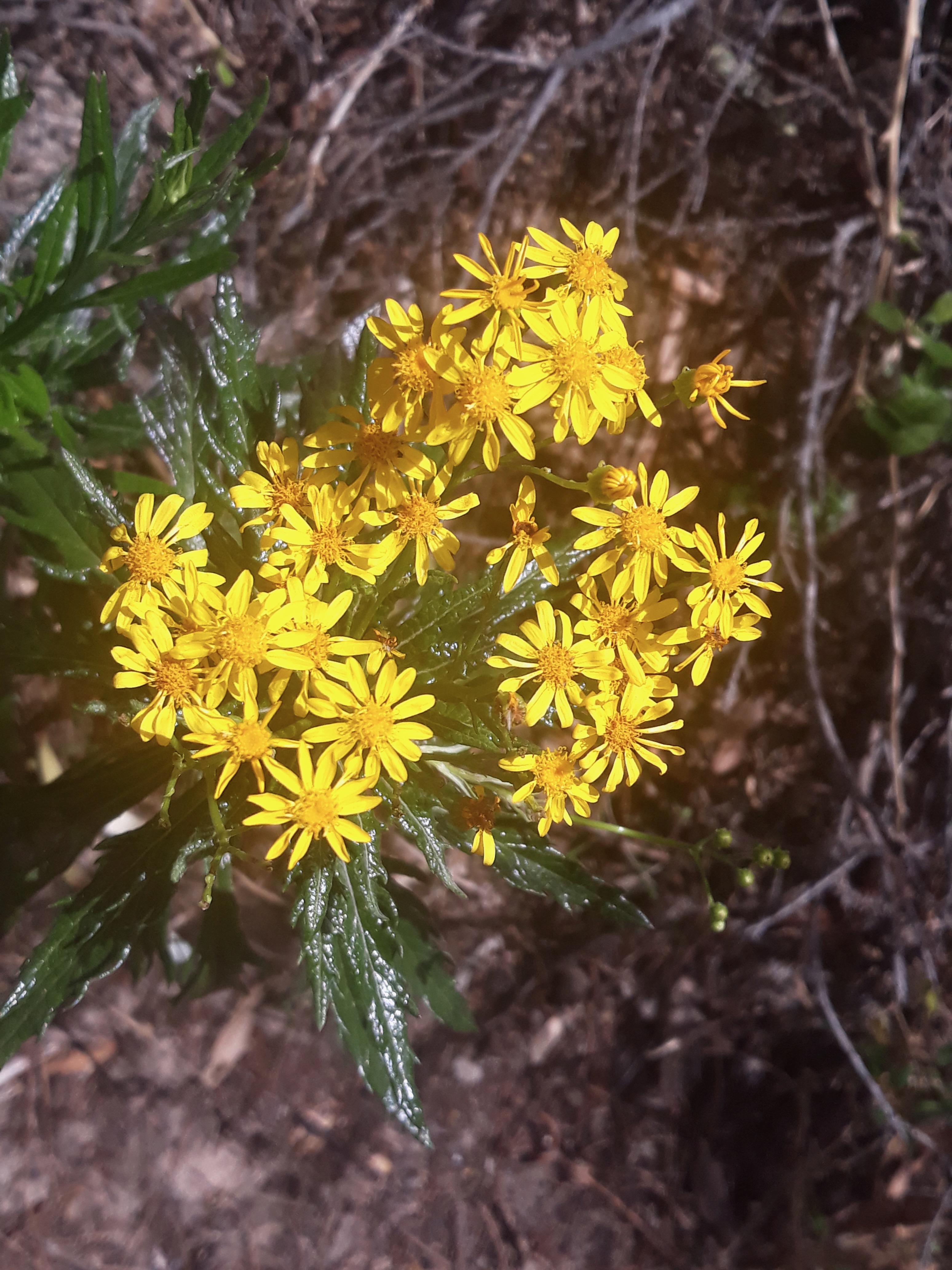
Late groundsel flower, December 2023.

Lately I’ve been reading …

All that food

Other people’s words about … not eating

Mae doesn’t look convinced, but she hands me another bowl, which I pass to TJ. He holds it in the space between us, locking eyes.
You didn’t take any, he says.
I took plenty, I say. I’m stuffed.
No. I watched you.
You must’ve blinked.
Then try some more.
I just told you–
Don’t be a dick, says TJ.
Boys, says Mae.
Her voice is terse enough to shut us up.
Mae holds our gaze until we’ve settled. Then she pours more wine into her coffee mug, twirling her food with a fork.
It’s been too long since we’ve been together, says Mae. Let’s make it a nice evening.
So TJ shoves the bowl of tomatoes my way. I scoop more onto my plate. Then I take bites from the spaghetti and the chicken, and it’s all delicious, and the three of us eat silently, until there’s something like a hum between us.
Is the bathroom still in the same place, I ask.
Mae points down the hallway. I don’t look at TJ when I stand. But once I’ve locked the door behind me, I turn on the faucet, and it’s maybe another five seconds before all that food leaves me.

from ‘Family Meal
by Bryan Washington

When I was a teenager receiving treatment for an eating disorder, people had certain fixed ideas about what kind of person was likely to experience anorexia. By ‘people’, I mean not just family and friends but doctors, psychiatrists, medical researchers. Anorexics, people thought then (because that was what we called people with anorexia in those years, anorexics, a label that many people would now object to), were generally white, middle-class, well-educated, high-achieving, likeable young women with a tendency towards perfectionism.

Perhaps, back then, this was true. Or perhaps, more likely, if you were anorexic but you happened to be male, poor, uneducated, older than twenty-five, queer, or a person of colour — or any combination of these things — then your anorexia went unrecognised. Undiagnosed. Untreated.

We know better than this now, I am thankful to say.

Fringe Lily, December 2023.

In the passage I’ve quoted above, Cam, one of the narrators of Bryan Washington’s second novel, Family Meal, is grieving the loss of his boyfriend, Kai, who died in unexpected, violent circumstances. Cam is Black and queer; he is also addicted to many things, including drugs, sex and, yes, starving himself. He is surrounded by friends who see what he is doing to himself and try to talk to him about it, try to show him that they see, and that they care, and that he doesn’t need to be alone. It takes him a long time to see this for himself, though.

Cam’s experience of struggling with food is different from mine, and that’s partly because of who each of us is — precisely because I did, after all, fit most of the anorexic stereotypes I’ve listed above — although it’s also partly because everyone’s struggle with food is, simply, different. But I am so glad, so glad, that contemporary literature that includes stories about anorexia and disordered eating has broadened to include other stories than ones like mine.

And it’s funny how, no matter what your background, no matter what your life experience, the feelings don’t change. I’m fucking suffocating from the weight of myself, Cam writes.

I remember feeling exactly the same.

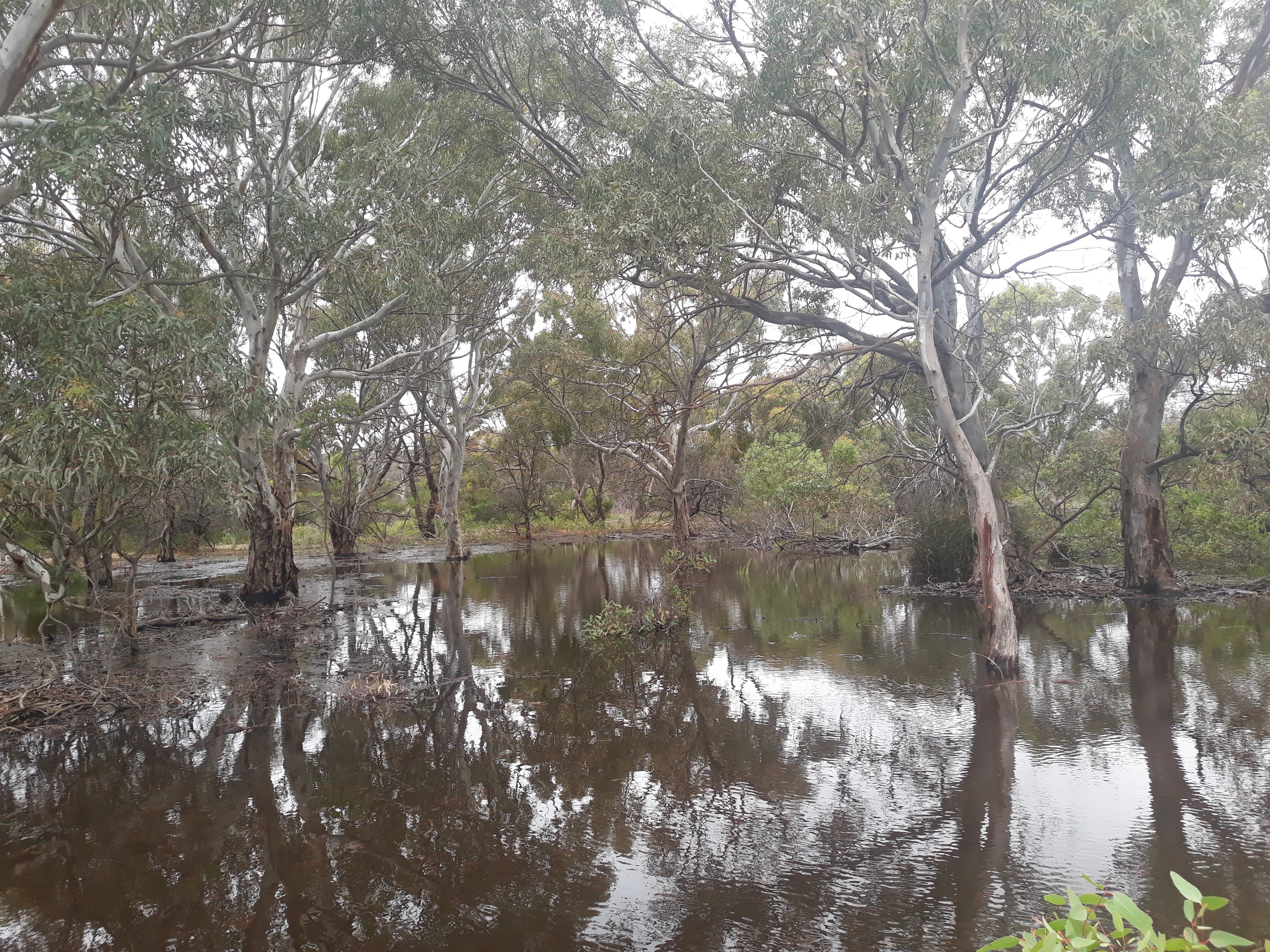
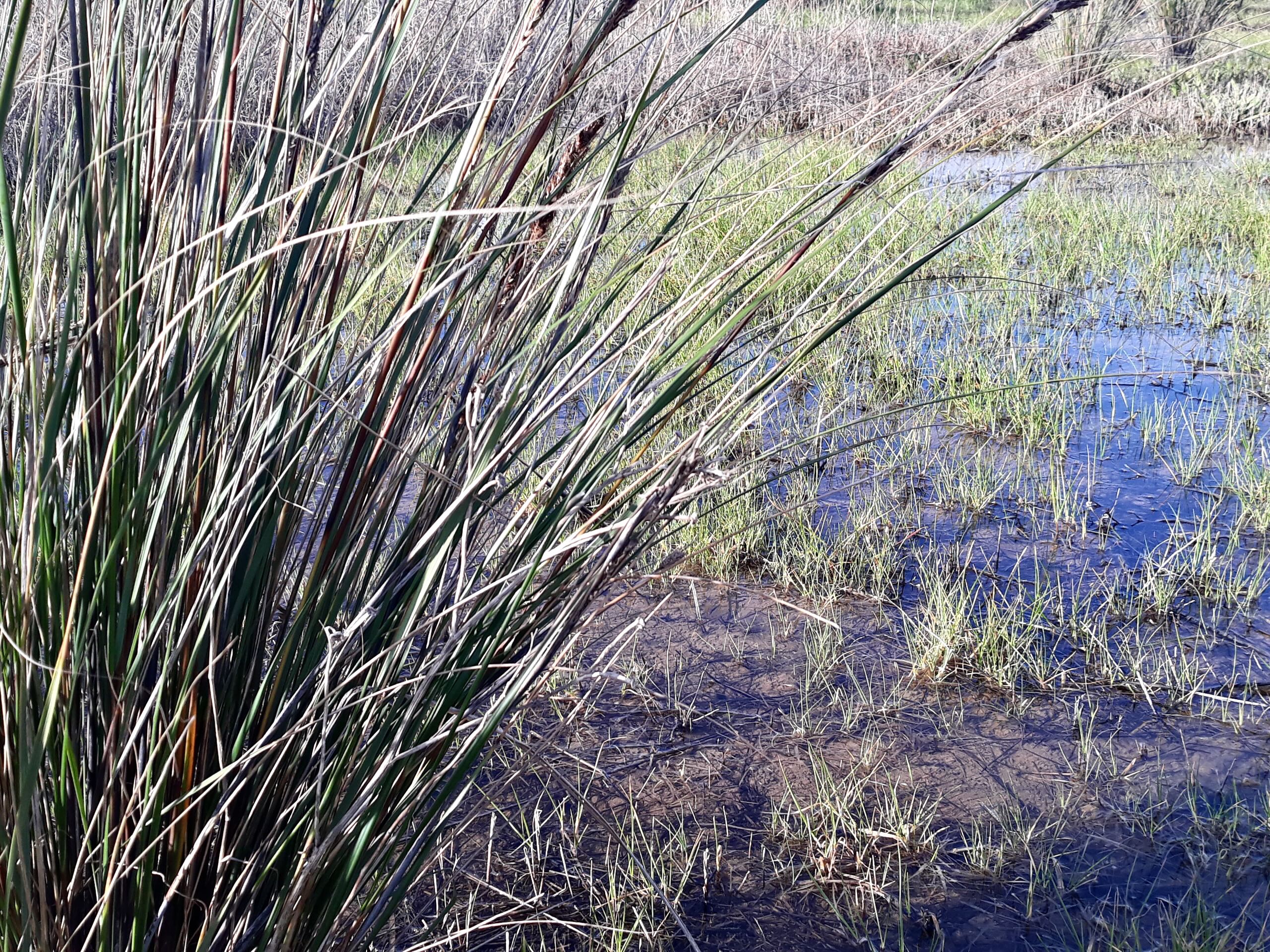
After the rain, Flooded scrub, November 2023.

Lately I’ve been reading …

Fumbling

Other people’s words about … growing up

I also felt like I was being pushed into a world where I didn’t understand the rules. The summer before we moved, a bunch of my friends at camp were caught kissing boys behind our cabin with their T-shirts off. I didn’t even know why a girl would take her T-shirt off with a boy, but I knew it was very wrong to do so, because they all got into big trouble. I’d started going to after-school ballroom dancing lessons in New York, which was something kids from my part of Manhattan did, maintaining an Upper East Side fantasy that we all still lived in an Edith Wharton novel. At the last dance, a boy put his hand on my bottom. Again, I couldn’t understand why a boy would want to touch my bottom, but I knew I didn’t like it. But I also knew that admitting I didn’t like it — like admitting I didn’t know why a boy would want to see my chest — would make people laugh at me. So I said nothing to him, to anyone.

from ‘Good Girls: A Story and Study of Anorexia
by Hadley Freeman

One of the things I loved about Hadley Freeman’s memoir Good Girls is that, as well as recounting the years during which she lived with anorexia, she also recounts her life post-anorexia, post-‘recovery’. While the story she tells of her rapid and precipitous descent into anorexia in early adolescence is vivid and poignant, it’s the rest of her story that most spoke to me — the years during which she maintained a pattern of restricted eating that wasn’t quite anorexia but also wasn’t quite wellness or sanity, the years when she lost herself to drug addiction, the years, finally, when she began to come to some kind of peace with herself.

It’s time that eating disorder narratives did this more often, I think. I said nothing … to anyone, Freeman writes in the passage above, and, elsewhere, So much of anorexia is about suppressed conversations. But I think this is as true, if not truer, of those years when a person who has survived anorexia begins to make their way back into life, those years when a person begins to try to make something of their life other than an anorexic one. (And they are years. For most people, the transition away from anorexia is long and slow and painful.) We need, in our narratives about anorexia, to engage with the whole experience, not just one part of it, the most clearly visible part. We need to tell the whole story. I hope that in the future there will be more writers like Freeman who do so.

Looking out onto Lake Burley Griffin, Canberra, November 2023.

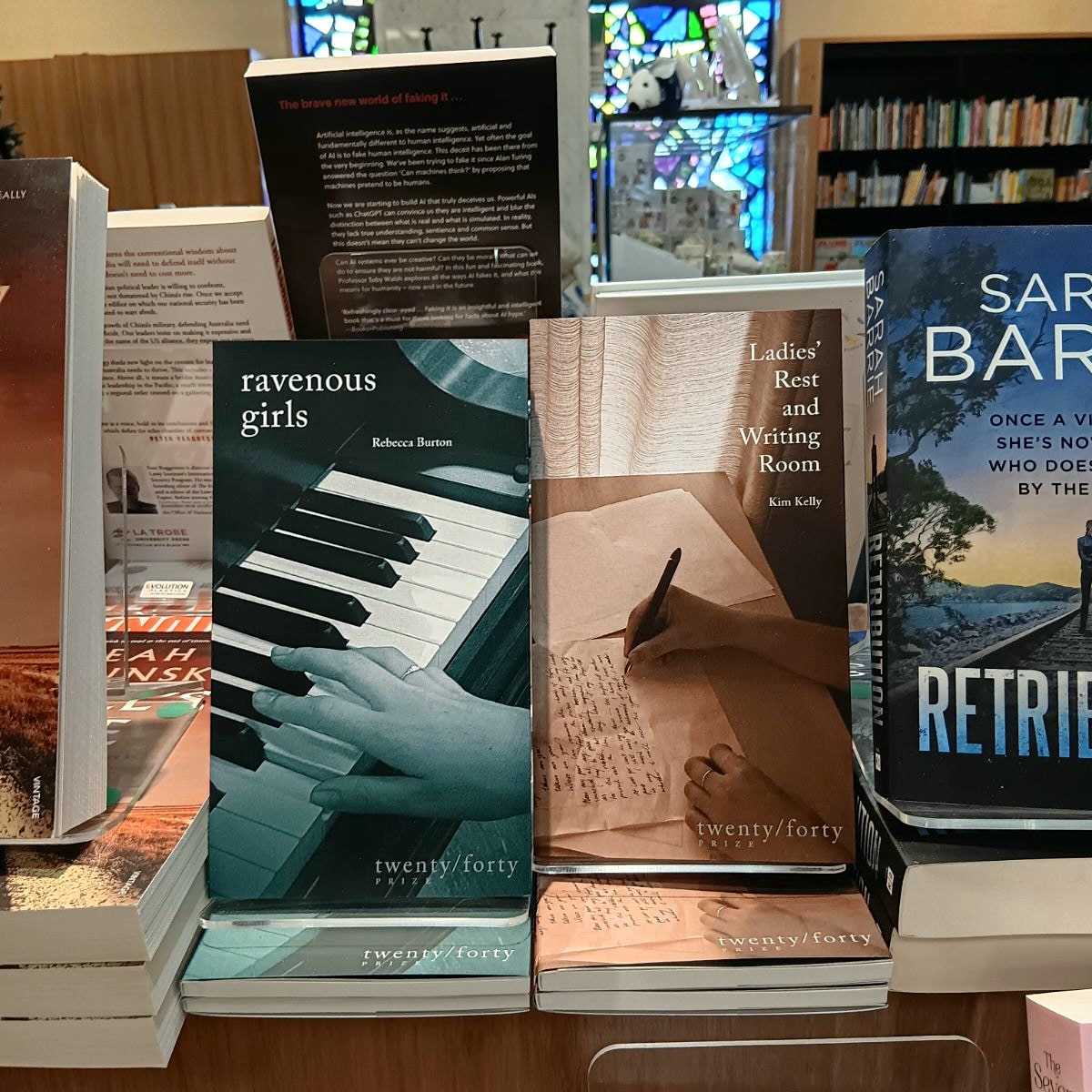
I’ll return to this theme in future posts, because there’s so much to unpack here, and because it’s one of the things I was most conscious of when I wrote my novella, Ravenous Girls. In fact, though, what most drew me to the passage I’ve quoted in today’s post is something else. Here Freeman, describing her pre-anorexic period, her pre-adolescent years, writes, I also felt like I was being pushed into a world where I didn’t understand the rules. This is how I felt, too — at twelve years old, at thirteen, even at fourteen. I was what people kindly describe as a late bloomer, which is to say that I entered adolescence reluctantly, lingering in childhood for as long as I could, wishing that I could somehow stay a child forever. Teenage rituals, those fumbling intimacies between boys and girls that Freeman describes here, puzzled me. I knew this marked me out as different, or at least I believed that it did, and so, like Freeman, I remained quiet. I regret this quietness now. I see, looking back, that I was muting myself, retreating into a silence that wasn’t healthy or sustainable. As Freeman notes, it’s in suppressing conversations that anorexia steps in, and that was certainly true for me.

Ravenous Girls isn’t only a story about anorexia, though that’s a part of it. It’s a story about silence and muteness. Perhaps these are themes I’ll continue to explore for the rest of my life. It’s a theme that endlessly fascinates me.

For sale, November 2023.

Lately I’ve been reading …

Unspoken

Other people’s words about … desire

We stayed mostly silent, that morning, and my giddy feeling gave way to rational thought; my urban preoccupations returned. I was wondering why desire, if it were ordinary and human, always felt as if it had to stay hidden. I didn’t think that I could tell Robert of my feelings for Cara, but it seemed odd to leave it unspoken. It was as if the secrecy rendered the feelings taboo and made me wonder if they were dangerous when I knew they couldn’t be, that it was only that Robert would worry unnecessarily if he knew. It felt as if desire were only permissible in art, where it could be dramatised, made beautiful.

from ‘The Modern
by Anna Kate Blair

Sophia, the narrator of Anna Kate Blair’s wonderful novel The Modern is a thirty-year-old Australian woman living in New York on a fellowship with the Museum of Modern Art. She’s bisexual, though the term troubles her — not because she questions her attraction to men and women, but because the label itself bothers her. I didn’t want a term like besexual, she writes, that trailed a disclaimer, a need for clarification, behind it. But who was asking me to clarify? I rarely said it aloud. I didn’t want a term at all. I just wanted to exist in all my dimensions.

We talk so much these days about sexuality and gender, and that’s a good thing; where there was silence before, now there’s conversation. We talk about heterosexuality and heteronormativity and we write about their implications, and that’s a good thing, too. But I’m particularly fascinated by Blair’s thoughts, in the passage I’ve quoted at the start of this post, about desire. It’s true, I think, that desire retains its power most of all when it remains unspoken.

Daly Head, Yorke Peninsula, October 2023.

I’ve explored desire a little in two of my own books, my young adult novel Beyond Evie and most recently, though only in passing, in my novella Ravenous Girls. Like Sophia, labels trouble me. But I can’t help thinking that in part I wrote about desire in these books because, just as Sophia writes, that was the space where it felt most permissible for me to do so — because I could dramatise it, because I could (try to) make it beautiful.

Words, like stories, can be beautiful, can’t they? I hope so. That’s one of the reasons I write.

.

Daly Head, Yorke Peninsula, October 2023.

Moving on to on other reading-related matters, I’m taking a break today from my usual link to online essays that I’ve read recently because this month I’ve been focusing on reading novellas. Have you heard of Novellas in November? I’ve joined up, and I’m enjoying the chance to explore novellas, old and new, famous and not-so-famous. Feel free to join me over on Instagram for quotes from the novellas I’ve been enjoying, and for my thoughts about them.

Meanwhile, I’ll be back again with more of my usual posts soon.

Loss

Other people’s words about … doing what we love

It was a lie that Timo had not loved [playing] piano enough. He had loved it very much, but in a way that was difficult to describe. It was apophatic — he could only describe it through its negation. He only understood how much he loved the piano after he had given it up. Even that decision in hindsight seemed arbitrary, a whim. An act of petulance. But he had loved it, and he still did. Every day, he felt like a struck tuning fork, vibrating all the time. Except that it wasn’t pitch he was tuned to but something else, some horrible frequency cutting through the universe. Loss, he thought. It was loss.

from ‘The Late Americans
by Brandon Taylor

In the passage above, Taylor’s character Timo is a graduate student in Iowa who used to study music but then gave up. Sometimes, when he is on his own in the apartment he shares with his boyfriend, Fyodor, who works at a meat-packing plant, he sits listening to classical music recordings, losing himself in the music he so loves. But when Fyodor comes home, Timo switches the music off immediately, mid-piece, refusing to talk to Fyodor about this thing he so loves — refusing, also, to allow Fyodor to share in a part of him that in many ways still feels like the truest part of himself.

The Washpool, September 2023.

When I read the words I’ve quoted above, I thought about the times that I’ve given up writing over the years. Though I’m not beginning to claim that I am as talented a writer as Timo is a musician, nonetheless, writing for me has always been a channel of creativity, a tool that helps me make sense of and navigate the world. I don’t know why, honestly. I do know that I have a longing to make something beautiful (though this is another impulse I don’t really understand), and that writing is the only way I know how to (try to) do this. Maybe that’s why, every time I’ve ‘given up’ writing ‘for good’, I’ve returned to the practice later.

I’ve written before about how I’ve learned over the years to value my writing practice for the practice itself rather than for any measurable outcome. That’s partly what I’m saying again here, in response to the words I’ve quoted today. But it’s more than that, too. What Taylor expresses so beautifully is the same sense of loss I always feel when I stop writing. His image of a tuning fork vibrating to the wrong frequency describes this feeling beautifully. At the same time, I’d also describe the feeling another way, as a feeling of being muted. Silenced. When I don’t write, I feel as though I have lost my voice: I feel as though no-one hears me.

I understand, as a writer who is published very infrequently, that few people hear me, anyway. But writing is my way of speaking to the world, and not writing is the opposite of that. Not writing feels like grief.

The Washpool, September 2023.

Meanwhile, I’ll be back soon with another post about writing, and with a little piece of news, the news I’ve been hinting at for months now. Watch this space! ❤

Lately I’ve been reading …

This is me happy

Other people’s words about … happiness

Ivan closed his eyes. He tried to remember what it was like when [he and Goran] were good and together and all right. He tried to imagine what it was like the first time they met on the app and made plans to see each other outside the auditorium at night. They’d stood on the bridge and looked at the lights of the auditorium, gold and tiered like a delicate rock formation. Then they’d walked around the river path and talked all night about music, about ballet, about where they spent their afternoons, best place for coffee, how to dodge the undergrads.
That night had been so good, like something out of a dream. And they were so far from it now.
‘I can’t make you happy,’ Ivan said.
‘You do make me happy. This is me happy. I am happy.’
‘This can’t be happiness. If this is you happy, then I don’t think I understand what happiness is for.’
‘Sometimes happiness is just letting people feel how they fucking feel,’ Goran said.
He looked the furthest thing from happy. He looked pissed off. He looked annoyed. He looked like he was going to cry. His eyes welled. He bit at the inside of his jaw, then sat down sharply at the kitchen table, trying to catch his breath. Ivan sat down next to him, reached for his hand, and for the first time in a very long time, Goran let him.

from ‘The Late Americans
by Brandon Taylor

I’ve been fighting a battle with fleas for the last couple of weeks. This might seem like a random thing to write about after quoting Brandon Taylor’s words about happiness (and love … and life), but somehow it feels directly related.

Lizzie, my rescue cat, the cat who went from living in the garden and not letting me touch her to jumping up on my lap every night and curling up on top of me to go to sleep, started scratching ferociously a few weeks ago. Because I’ve never had a cat before; because I didn’t have any bites or itches myself (and still don’t); because, in all the years I had dogs,they never once got fleas; because, before I moved house a couple of years ago, Lizzie herself had never had fleas; because I thought (wrongly, as it turns out) that, since my house has bare wooden floorboards throughout instead of carpet, it was flea-proof — because of all these things, it took me a while to figure out that the cause of her scratching was fleas.

Semaphore Jetty, August 2023.

She’s far more domesticated than she was when she arrived in the garden of my old house three years ago, but still, a rescue cat is a rescue cat, and there are times when she likes to be touched and times when she doesn’t, times when you can pick her up and times when you can’t. So it took me several days to get her to take the medication, and several days more to get her to allow me to start combing her with a fine-toothed flea-comb. I flea-bombed the main room about two weeks ago, and since then, I’ve been vacuuming every day — every day, God, every day — and slowly, slowly I am getting on top of them.

What has this got to do with the passage I’ve quoted today from Taylor’s wonderful third book, The Late Americans? In part, it has to do with something I mentioned here a while back, some good news I had earlier this year. Astute readers might have guessed when I mentioned it that my news is writing-related, which it is, although I still can’t tell you the details yet because they’re still embargoed. It’s a small thing, a very small thing — a very, very small thing — and yet it’s made me feel part of the publishing world again in a way that I haven’t for over a decade. In this sense, though in a very small way, it’s something that I’ve dreamed of and longed for for a long time.

Spring flowers in the Scrub, September 2023.

And yet. Has my year been any happier because of this news? In a big-picture way, yes. But in a small-picture way, in my everyday life — no. (No, no, no.) Happiness still eludes me. I am not unique in this, I realise. Still, in these past few weeks, as I vacuumed the house and combed my cat and put on load after load of laundry, I found myself returning to Taylor’s words over and over. This is me happy. And: If this is [me] happy, then I don’t understand what happiness is for.

Why do we search for happiness in this way? Why do we expect it, even? I don’t know. I can’t tell you. And still Taylor’s words ring in my ears.

Lately I’ve been reading …

Immeasurable

Other people’s words about … practising art alone

But you have a little secret: while you are not making Art anymore you are at least drawing every day. To tell anyone about this would be admitting there is a hole in your life, and you’d rather not say that out loud, except in therapy. But there you are, once a day, drawing the same thing over and over: that goddamned Empire State Building [which you can see from the floor-to-ceiling window in your new apartment]. You get up every morning (or afternoon, on the weekends, depending on the hangover), have a cup of coffee, sit at the card table near the window, and draw it, usually in pencil. If you have time, you’ll ink it. Sometimes, if you are running late from work, you do it at night instead, and then you add colour to the sketches, to reflect the building’s ever-changing lights. Sometimes you draw just the building and sometimes you draw the buildings around it and sometimes you draw the sky and sometimes you draw the bridge in the foreground and sometimes you draw the East River and sometimes you draw the window frame around the whole scene. You have sketchbooks full of these drawings. You could draw the same thing forever, you realise. ‘No man ever steps in the same river twice, for it’s not the same river, and it’s not the same man’ is a thing you read once. The Empire State Building is your river. And you don’t have to leave your apartment to step in it. Art feels safe for you again, even though you know you are not getting any better at it, that the work you are making could be sold to tourists on a sidewalk outside of Central Park on a sunny Saturday and that’s about it. There’s no challenge to it, no message, just your view, on repeat. But this is all you can do, this all you have to offer, and it is just enough to make you feel special.

from ‘All Grown Up
by Jami Attenberg

I have conflicting responses to the passage above. In many ways, Attenberg’s narrator, Andrea, reminds me of myself, although her creative practice is art and mine is writing. I certainly know what it’s like to stop showing people the material you are creating, to keep your practice to yourself, to see it as your own little secret. And I know the feeling that comes with doing this, too, which Andrea articulates elsewhere in her narrative — that feeling that what you are doing, the material you are creating, the act of creating it, is barely scratching a feverish itch.

Something changed for me about a year ago, though, after which I began tentatively showing people something I’d written — a few people, a very few people. This gave me the courage to do more with that particular piece of writing, and as a result I’m not in the same place anymore as Andrea, although all I can say about that for now is that I do have a piece of writing coming out later this year — a small piece, but a piece nonetheless — and I will tell you more when I can.

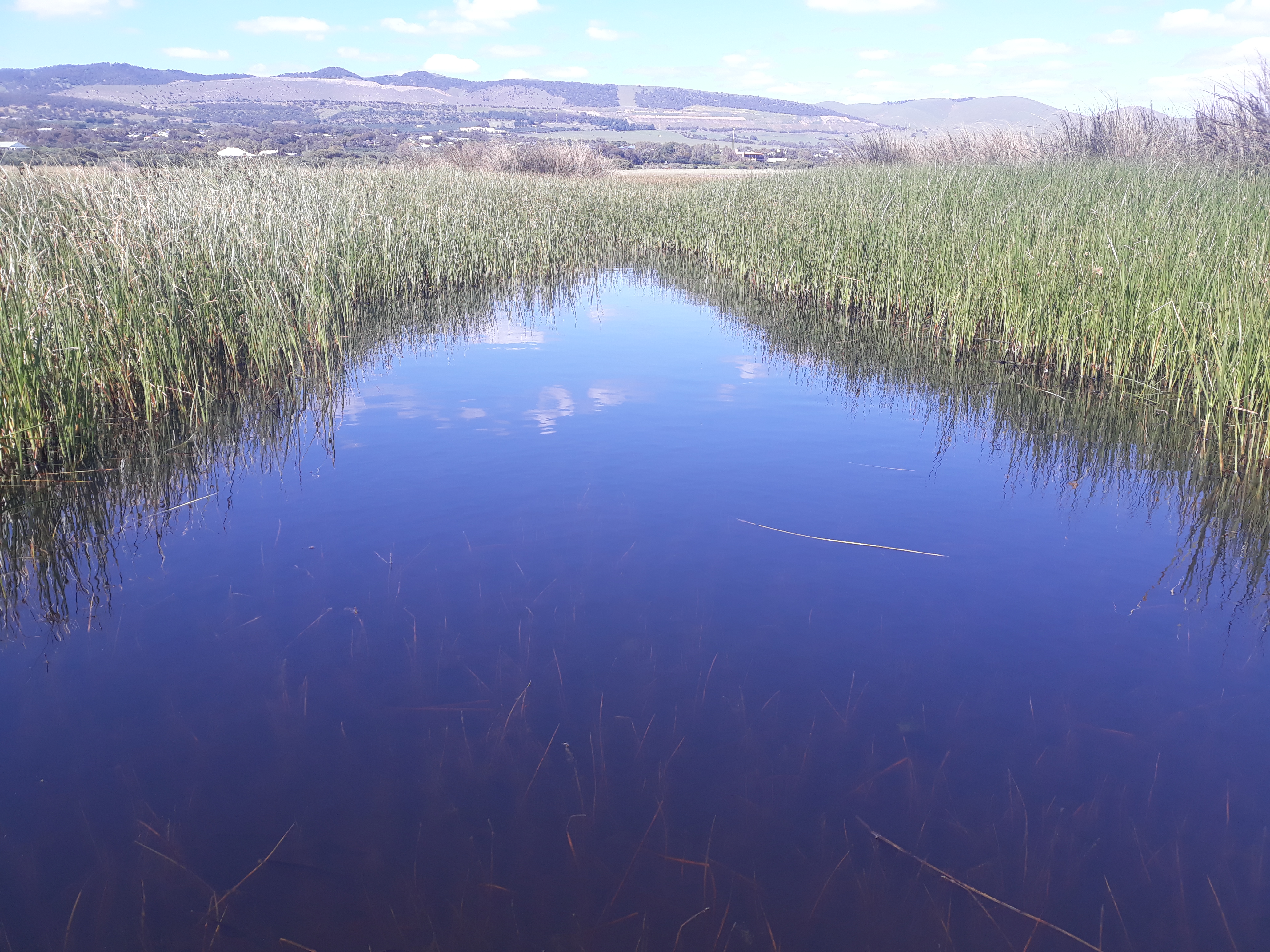
Reeds in the marsh, The Washpool, July 2023.

But even if things hadn’t changed for me, I suspect that I’d still finding myself wanting to argue with Andrea as much as I’d find myself wanting to agree with her. Because the thing that I learned during those years of writing alone, writing unseen, was that there is a value to creating something — art, literature, whatever — that has nothing to do with other people’s opinions, nothing to do with productivity or acclaim or results. What I learned (very slowly, very painfully) is that creating just your view, on repeat can in fact teach you something; it can take you somewhere new in your work. You may not be able to measure the work you create in private; you may not be able to quantify it. But when did art become something we need to measure and quantify, anyway? When did it become an outcome, a product?

I believe, although it’s taken me years to come to this understanding, that the practice of creating has its own value. The work you do as you create something, that feeling you get as you practise it of reaching out, of bringing something into the world, is an act of connection and hope. This is valuable. This is meaningful. And it can — it can — be enough.

Lately I’ve been reading …

It’s a long list today, as I try to catch up on some of my reading over the last few months. I hope you’ll enjoy one or two of the pieces I’ve listed here.

How are we to know

Other people’s words about … grief

And one time [Audun] drove in to Advocate Delhis Plass and picked me up off the floor where I was lying flat out on my stomach. Turid and the girls were in Trondheim, and I had no intention of getting up for a good while, but rather preferred to lie there with my forehead ground into the hard cold dusty floorboards, and I thought, how does one measure grief, is there a yardstick for grieving, is there any difference, say, between grieving for one person as opposed to two or three persons, or even four, as in my case, did all this fit on a yardstick, or could the level of grief register as on an instrument, such as a Geiger counter, and the closer the instrument got to the full power, the full height, the full number, the faster and louder the instrument would emit its familiar beep. And how was I to know when there was grief enough, and if grief was liquid like melting silver, could one then pour the grief into a litre measure and conclude, under these circumstances eight decilitres ought to be sufficient, and let the silver congeal hard and shiny not far below the rim. How was I to know. And how was I to know it really was grief I was feeling, it didn’t seem to resemble anything I had seen on film, or what others told me they had felt when their people died, and I was bewildered, for I didn’t cry, and when did one cry really, when you were alone, or in the company of witnesses. And if one were alone, what was the point, when no-one would see it, how was I to know, I didn’t have that yardstick, that litre measure. I had to deal with it myself, was that not so, I let no-one else inside, no-one else’s yardstick was of any use, no-one’s litre measure, and in a way it felt strangely irrelevant, no, not irrelevant, but rather beyond my field of vision. I could barely glimpse a dark swishing tail disappearing, and when I grasped it and held it fast, I was left with nothing but the tail in my hand. The rest was gone, like a lizard sacrificing its tail for freedom. I did try, and hard too, with open eyes to face what had happened, but I didn’t know what to do with what I saw, I had already watched most versions of the issue acted out on TV, they were used up, and I couldn’t think of any others. So then I simply tried not thinking about it at all. That didn’t work either. And so instead I wanted to find an image that could cover all this, after all it was my job, to turn the whirling liquid into something concrete, turn the waves of distracting electric shocks to the stomach into solid surface. but I didn’t have any images that were large enough, firm enough, and after a while I found it pretty exhausting. So I lay there until Audun arrived. He walked straight in, the door wasn’t locked, I had forgotten as usual, and before even seeing me, he said into the hallway, hello Arvid, for Christ’s sake, why don’t you answer the phone when I call. And it was true, often I didn’t answer, it was a breach of every rule, but I was afraid there might be an undertaker at the other end, although I knew the funerals I was supposed to attend lay behind me for now. And there came Audun, in through the living-room door and he saw me on the floor and said, what the hell are you doing down there. I’m thinking, I said. All right, he said, so what are you thinking about. Litre measures, I said, yardsticks, that kind of thing. Okay, he said, that sounds practical in a way, but you can get up now. I’m not sure I can, I said down into the floor, my lips cold against the cold planks, covered in dust, the vacuum cleaner hadn’t been out for a good while. Yes, you can, he said, just do it, and I’ll go to the kitchen and put the kettle on for coffee.
Ten minutes later when he came back with two full cups of coffee and milk and sugar on a tray, I was sitting on my chair at the desk. It wasn’t exactly Mont Blanc, but it had been a long climb.

from ‘Men in My Situation
by Per Petterson

I am thankful to say that I have never experienced a grief or sorrow of the kind that the narrator in the passage above, Arvid, has experienced, having lost his parents and siblings to a tragic accident at sea. But Petterson’s words, voiced through Arvid, move me all the same. Elsewhere, Arvid says, ‘[T]o be honest I was in a state of bottomless despair, it was the worst time, by far, I felt quite naked, quite cold’. And I think this is what the longer passage I’ve quoted in this post describes, really — Arvid’s feeling of utter nakedness in the face of his loss.

This is what I love about fiction, the way someone else’s words can move you to tears and wonder. That’s all from me today — I will leave you with Petterson’s words, however you measure them, and however they move you.

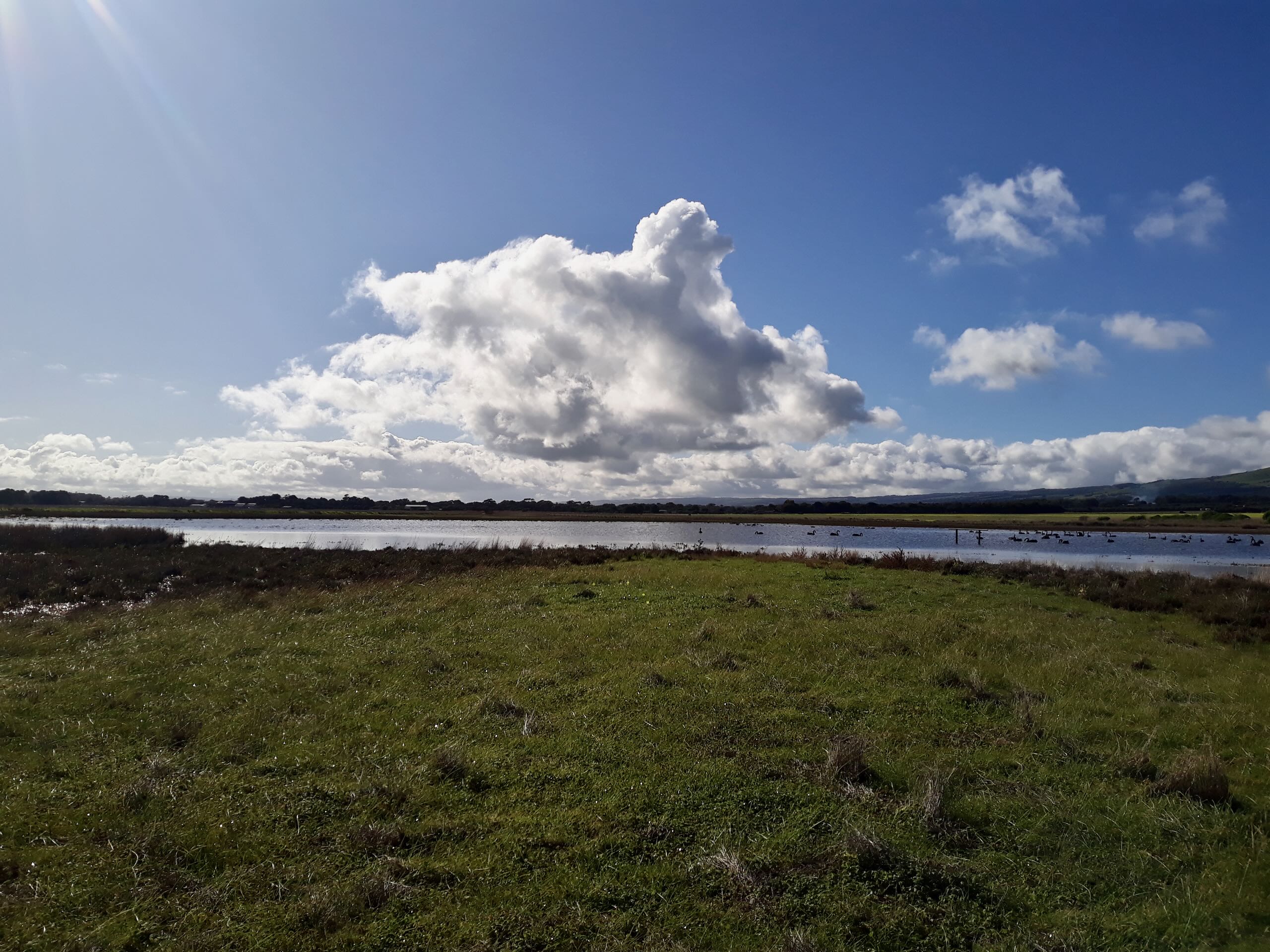
The Washpool, Sellicks Beach, July 2023.

Lately I’ve been reading …

In the ether

Other people’s words about … emails

Dorothy used to love email, used to have long, meaningful, occasionally thrilling email correspondences that involved the testing of ideas and the exchange of videos and music links. Email had been the way that she and the people she know or was getting to know had crafted personas, narrated events, made sense of their lives. Their way of life, alas, had ended. Long emails had ceased being the preferred mode of storytelling among her peers, or perhaps they no longer had so much to say to one another, and emails, though sealed with perfunctory hugs and kisses, had become businesslike. Sending a thoughtful email that she had drafted over several days and edited would, she knew, be a form of aggression; it would be foisting unpaid labour, a homework assignment, on a friend. She herself liked homework, but it was unreasonable to hope for such an email: There was too much television to keep up on, and if you wanted to know what someone was doing, you could usually find out on social media. Still, Dorothy had not stopped checking, expecting, or wishing that a good message might be out there, waiting in the ether just for her.

from ‘The Life of the Mind
by Christine Smallwood

Oh, how wryly I smiled when I read the passage above. My smile was wry on two counts — first, I come from a generation before Dorothy’s, and so I miss letters as well as emails. And second, there is so much to unpack here, from the description of a long, thoughtful email as a form of aggression (ouch!) through to that funny but terribly sad comment: There was too much television to keep up on.

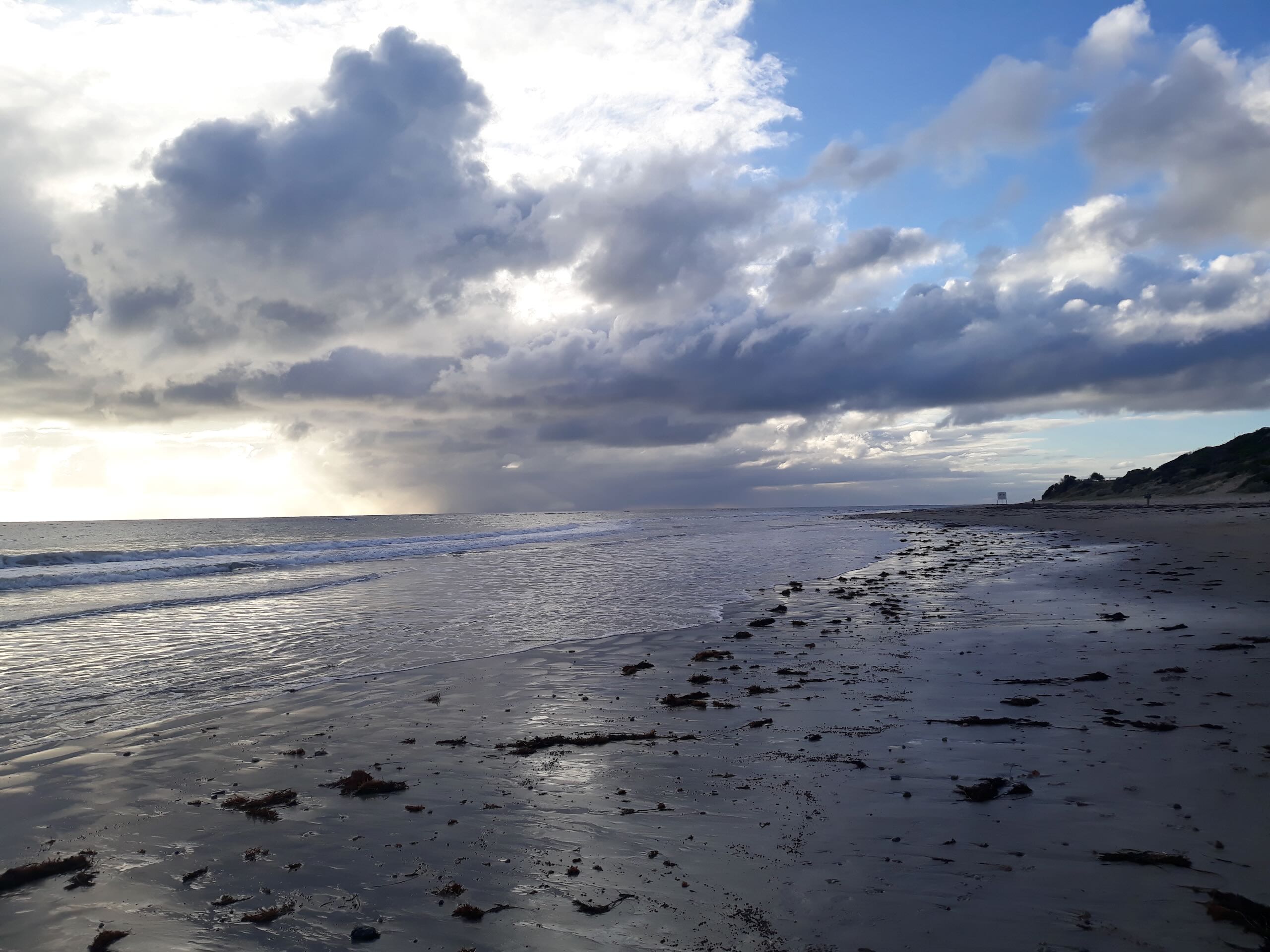
Shining sand, Aldinga Beach, May 2023.

Meanwhile, I’ve had some good news recently. As a result, my life has been exceptionally busy for reasons that I can’t (yet) go into, though I promise that I will when I can. But I couldn’t resist popping in to leave you all to enjoy the passage above for now.

As always, there are links to some reading below, too. I’ve listed a few more than usual, just to keep you going till I next write …

Rock pools, Aldinga Beach, May 2023.

Lately I’ve been reading …

How to write

Other people’s words about … writing (and shame)

The voice I wrote with felt new to me — unrestrained. For years I had been trying to cool down the temperature of my writing, to pull it back, pull it back, pull it back — neutralise it, contain it, make it crisp, clear, and sharp, every word carved out of crystal. This writing was nothing like that — it was drippy, messy, breezy. I was working through a mind frame, not a conceit. I was creating a world, not words on a page.

from ‘Vladimir
by Julia May Jonas

There is a practice called Loving Kindness Meditation that I first encountered some years ago when I was participating in a forty-day meditation challenge that involved raising money for a particular charity by pledging to my sponsors to meditate for ten or more minutes every day for forty days. Although I tried many different kinds of meditation during those forty days, and although ultimately I didn’t keep meditating after the challenge was over, the idea behind Loving Kindness Meditation has stuck with me. Essentially, this kind of meditation is about generating, through your meditation practice, kindness and love to other people — as well as to yourself.

There’s a quote by Femi Kayode about writing that I keep close to me whenever I myself am writing. I don’t remember where I got the quote from, and I’ve tried but failed to trace it back to its source. In it, though, Kayode says:

Most of all, write in love. Love for the characters — good or bad, and the story. Love for the reader, for the craft, for humanity. An unconditional compassion for the human condition is the one true gift I believe a writer can give the world.

I thought about Kayode’s words when I came across the passage I’ve quoted at the start of this post, from Julia May Jonas’s wonderful novel Vladimir. The narrator in Vladimir is, like me, a middle-aged female writer who has had two novels published early on in her writing career but has struggled to bring out a third novel. Now, when I think about the ten years I spent between having my second novel for young adults published and submitting my third manuscript to my agent, a novel for middle-grade readers that remains as yet unpublished, what I remember most is how I wrote and rewrote the same manuscript, then wrote and rewrote it some more, all the while trying to perfect it — all the while not understanding that there is no such thing as perfect, and that the search for perfection can take you a long way away from the place you started, that place of excitement and hope.

Stormy skies over the Port River, Port Adelaide, February 2023.

I mentioned recently that I’ve now begun working on a fourth manuscript, a literary fiction novel. This time around, in an attempt to break free of the tangle of lonely perfectionism that I’d somehow found myself ensnared in during the writing of my third novel, I’ve deliberately sought feedback from readers early on in the process. Predictably, some of the feedback I’ve received has been positive, and some less so. Your writing lacks introspection, one reader said. And: We never really get to know or understand your narrator, so it’s hard to care about what happens to her.

To be honest, I was a little shocked when I got this feedback. I thought I’d been writing with great restraint; I thought I’d been ‘showing, not telling’; I thought I’d been practising the principle of ‘less is more’. All those old writing saws. But I’ve slowly come to see, as I’ve mulled this feedback over, that in writing this way I’d been falling into the same trap as Jonas’s narrator, trying to carve my words out of crystal. To neutralise my writing. To contain it. To pull it back.

And here is where I find myself returning to the idea of loving kindness and compassion that I began this post with. It’s okay to try to improve your writing, to see the flaws in it and work hard to make it better: more interesting, perhaps, or more insightful, or more moving. But trying to improve your writing isn’t the same thing as condemning it. Because what is the act of trying to neutralise your writing other than a reflection of your own self-doubt and self-hatred? What is the act of trying to contain your words and thoughts other than a reflection of the shame you feel about yourself? What is this whole painful process, other than a way of saying to yourself that your writing is not good enough? That your characters are not good enough? That you, by extension, are not good enough?

Calmer waters, the Port River, Port Adelaide, February 2023.

In the end, what I’ve learned from all of this over the last few weeks (or perhaps over the last ten years) — what I’ve learned from Jonas’s words, and from the words of those people who were kind enough to read my manuscript and give me feedback, and from, finally, the words of Kayode — is that writing, any kind of writing, can’t come from a place of shame.

If, as a writer, you ask your readers to care about your characters, then you have to allow yourself to care about your characters, too. You have to write from a place of compassion. You have to write — yes — in love.

Lately I’ve been reading …