This world

Other people’s words about … kindness

Depictions of sex are notoriously hard to get right, and what sets those that work apart from those that don’t isn’t always obvious (although personally I feel that it helps if the writer avoids analogies with mountains and valleys, and doesn’t refer to a man’s ‘member’!). But I think the passage I’ve quoted above, from Clare Chambers’s lovely novel Small Pleasures — a novel set in 1957 — is one of the most moving sex scenes I’ve ever read.

It’s also somehow shocking. How many sex scenes have you read recently where the lovers were explicitly kind to each other? I can’t remember a single one. So when I say the scene is shocking, I mean, not that Chambers sets out to describe something graphic or taboo-breaking, but the opposite — that this is the word she uses, kind. And so even though they were unpractised, they were kind and that made it all right. How beautiful is that?

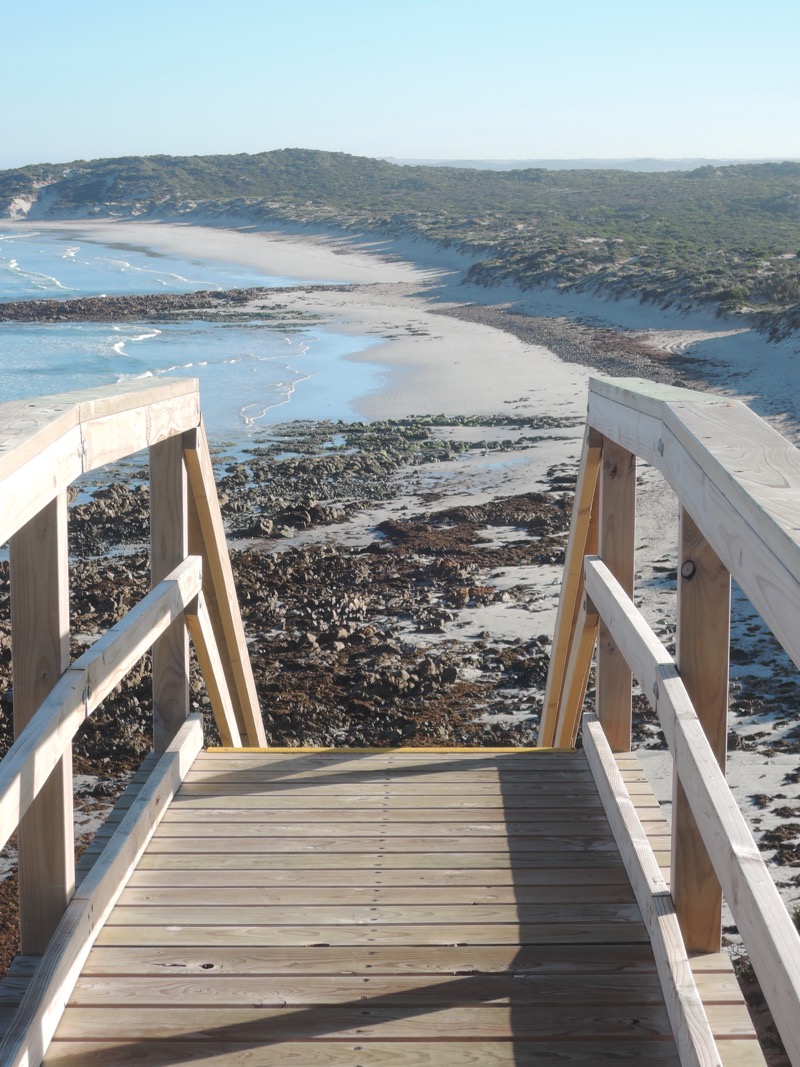
Deep Creek, September 2025.

I’ve been quiet over here for a while, not because I haven’t wanted to write a post, but because I didn’t know how to find the words to do so. Earlier this year, a toxic algal bloom hit the coast of South Australia. It began in regional locations but then spread to the metropolitan coast, killing marine animals in its wake and turning the ocean into a graveyard. Although scientists originally predicted that it would disperse during the cooler weather of the winter months, it hasn’t done so, and as summer approaches it’s clear that the bloom will remain for some time to come. There are thought to be several causes for it, among the most obvious of which is global warming: we are experiencing a marine heatwave in South Australia.

When I think about the algal bloom, I feel powerless and devastated. I have lived the whole of my adult life around the sea. My house is within walking distance of the sea. My holidays and camping trips are centred around the sea. I walk and run by the sea. I go to the sea to remind myself that there is another world beyond the human world — to tune the rhythm of my breathing into the rhythm of the waves, in and out. In and out.

But now what I feel when I go to the sea is grief.

Deep Creek, September 2025

It’s impossible for me to write a post here, on this blog in which I have for so many years celebrated my life by the sea, without acknowledging the algal bloom, and yet I find it almost equally impossible to write about it. And so this is the reason for my quietness. These words, even as I write them, do not come easily to me.

The effects of climate change are not kind. This is not a kind world.

Deep Creek, September 2025

I will finish by saying that the photographs that accompany this post come from a recent trip I made with a friend to Deep Creek, to the place where I spent a week on a writing residency around the same time last year.

Wait — let me rephrase that: I will finish by saying that Deep Creek is a place of stunning natural beauty and I am grateful for my time there, but that it, too, like the ocean, is vulnerable to climate change, because this is not a kind world.

It is not a kind world.

Lately I’ve been reading …

Soar

Other people’s words about … tea

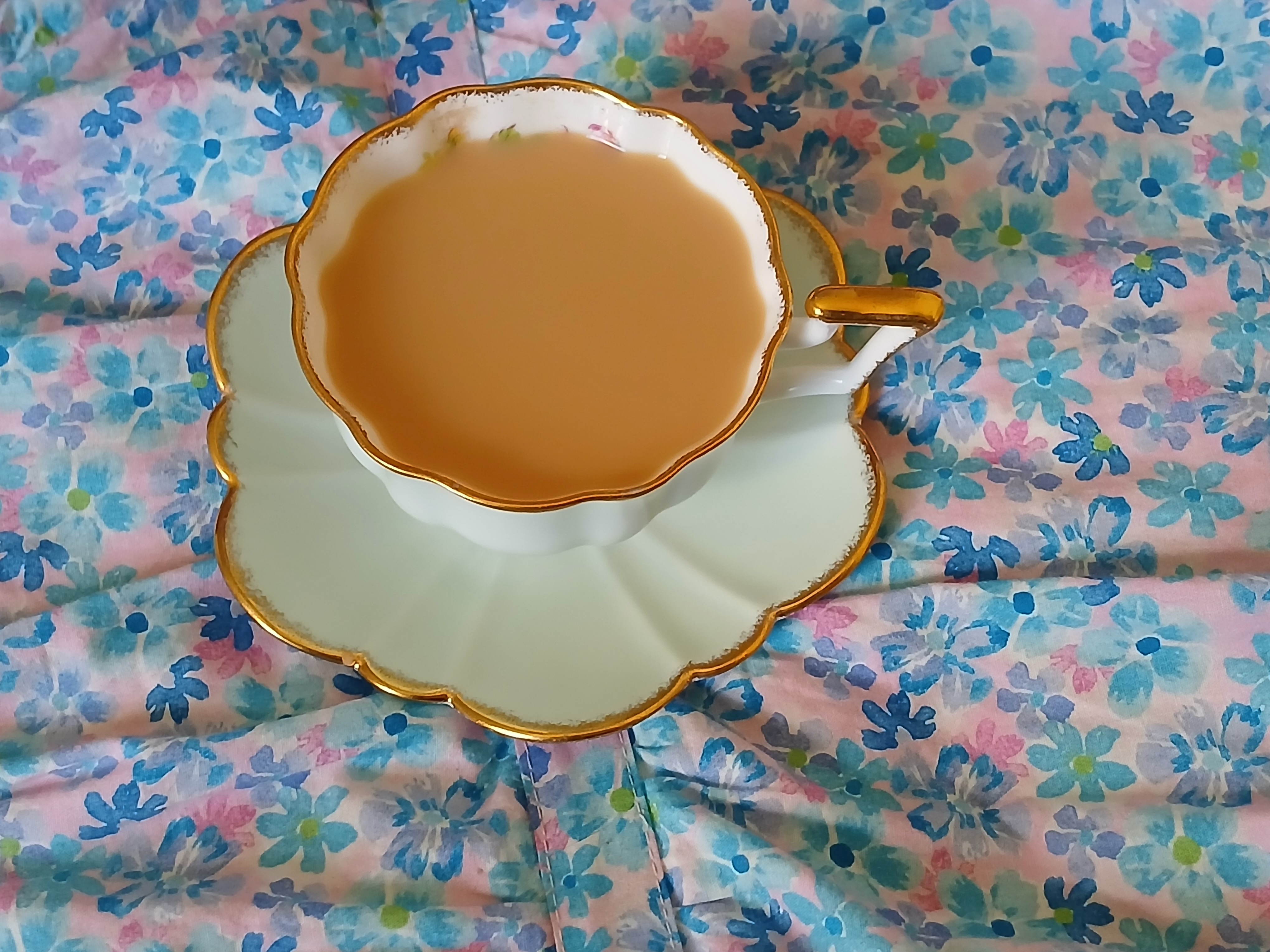
Once upon a time, I used to describe myself as someone who drank ‘endless cups of tea’ — which was indeed true, once upon a time — but these days I’m sensitive to caffeine, and so my morning pot of tea, the treasured pot of tea, is the only tea I drink for the day.

And while I drink that pot of tea, I write. Some years ago, when I decided to make a commitment to writing something every day, no matter how little, I linked the commitment I’d made, very strategically, to my morning pot of tea. That way, I told myself, even when I’m filled with doubt about whatever it is I’m writing at the time, even if every part of me wants to give up on it, even if procrastination and writer’s block are overwhelming me, I still put myself through the process each morning — because of the cup of tea that accompanies it.

That’s how I wrote Ravenous Girls, in fact — one pot of tea at a time.

Morning pot of tea, June 2025.

Tiffany Atkinson’s beautiful poem Tea — which I found in a book that a dear friend gave me, Sophie Dahl’s Ten Poems about Tea — isn’t about tea, not really. It starts with a simple, everyday gesture, a man making a woman a cup of tea, and then, like all the best poems, it takes flight. It soars.

It’s a poem to be read slowly, to be savoured, just like a pot of tea.

Lately I’ve been reading …

The soft clatter of keyboards

Other people’s words about … crying at work

The lines I’ve quoted in the passage above, which make up the opening sentences of Anna Kate Blair’s novel, The Modern, have stayed with me ever since I read it, some years ago now. The novel is about art, love, self-doubt and work — most of all, perhaps, about how in our society one of the things that determines our conception of ourselves, the way we see and value ourselves (and others), is work.

The ethos of work.

What I love, though, about this particular passage (which in fact turns out not to be particularly essential to the course of events throughout the rest of the novel, at least insofar as what happens to Sophia, the narrator), is its tragicomic depiction of women crying in the workplace. Blair dispenses here with the need to explain why Anthea and Joanna and Sophia are crying, and why they assume they have to keep their crying secret. Crying in the workplace, she implies, and secret crying in particular, is a commonplace for these women; they all simply assume, in some kind of tacit shared understanding of themselves and their lives, that they’ll end up crying at some point during the working week.

Aldinga Beach, May 2025.

I’ve worked in several workplaces over the years, and, just like Anthea and Joanna and Sophia, at some point in each job I’ve gone in search of a private place to cry. When I worked the afternoon shift in the call centre of a community health provider, I used to take the lift from the fourth floor down to the car park, walk around the corner of the building to a little alleyway on one side and lean against the wall to cry. When I was a cook, I’d step into the cool room and close the door behind me to cry in refrigerated privacy, crouched in among the cartons of milk and bowls of pastry cream and half-wheels of cheese. I’ve also done my fair share of crying in the office toilets like Anthea, and, yes, like Sophia, I’ve sat at my computer furtively blinking and dabbing at my eyes, all the while hoping that no-one would notice. And/or that no-one would notice me.

What is it about workplaces that reduces women, some women, to tears? Is crying part of our make-up, or is there something about the conditions of our workplaces — the buildings we work in, the people we talk to and report to, the conditions we’re bound by our salaries to — that makes us cry? Or is it rather the space the workplace occupies in our lives, the way it’s crammed in uneasily among everything else that belongs to our non-working selves, those selves we perhaps think of as our true selves?

I don’t know. But I think of Sophia, fellow workplace-weeper, from time to time and smile wryly.

May 2025

Lately I’ve been reading …

Treasure your beautiful world

Wild Geese (a poem by Mary Oliver)

You do not have to be good
You do not have to walk on your knees
for a hundred miles through the desert repenting.
You only have to let the soft animal of your body
love what it loves.
Tell me about despair, yours, and I will tell you mine.
Meanwhile the world goes on.
Meanwhile the sun and the clear pebbles of the rain
are moving across the landscapes,
over the prairies and the deep trees,
the mountains and the rivers.
Meanwhile the wild geese, high in the clean blue air,
are heading home again.
Whoever you are, no matter how lonely,
the world offers itself to your imagination,
calls to you like the wild geese, harsh and exciting –
over and over announcing your place
in the family of things.

It was the wonderful Gena Hemshaw who introduced me to Mary Oliver’s poem ‘Wild Geese’, and I have loved it ever since. Like Gena, I’ve found that the poem comforts me in times when the thoughts in my head are loud and tangled. And like Oliver herself, I’ve sought comfort in nature for many years. Looking up at the sky and down at the ground and out to the horizon reminds me of my place in the world. It heals me, if only temporarily.


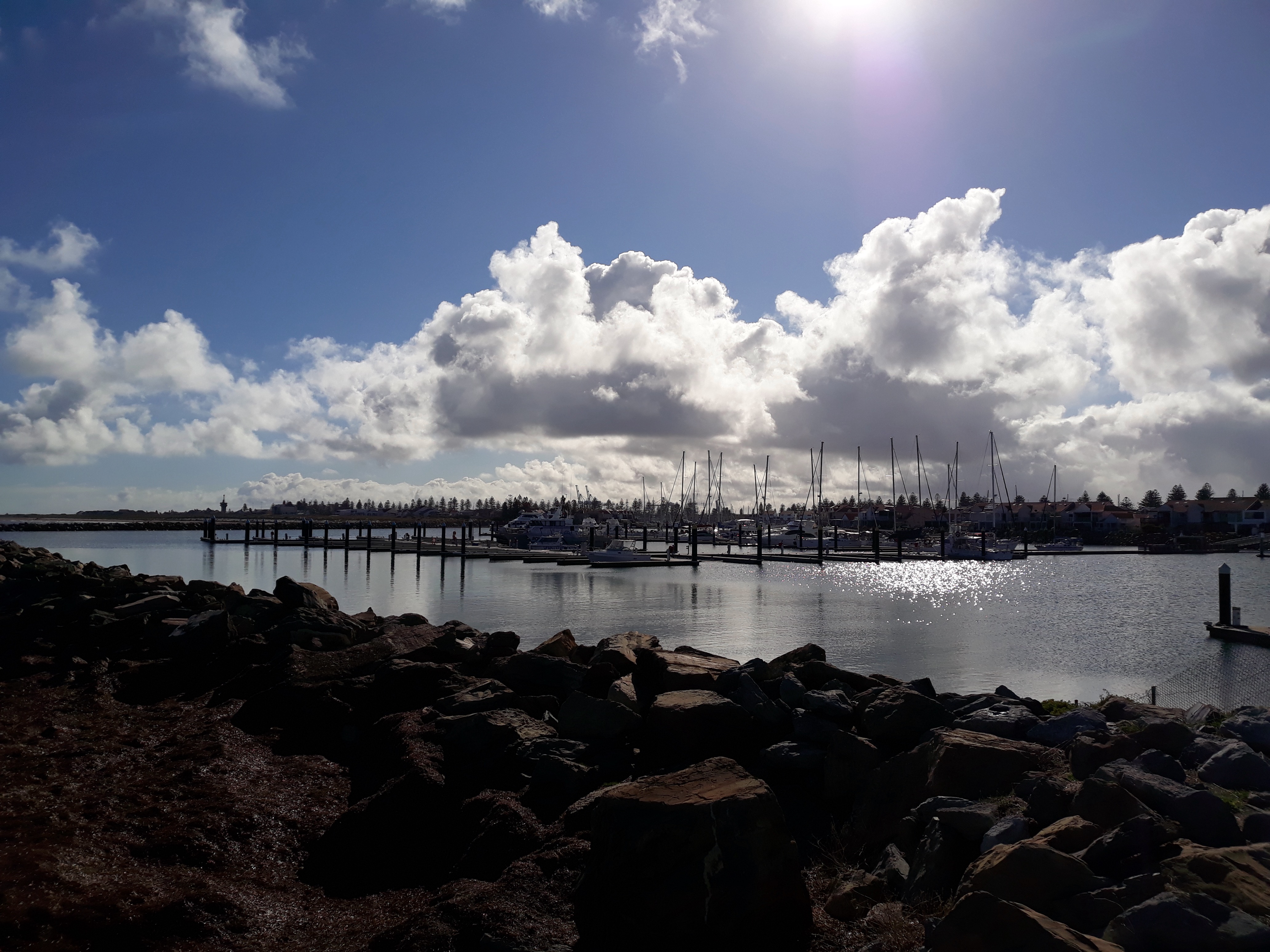
Light on water.


But how true are Oliver’s words these days? How much longer can we find solace in nature if by nature what we mean is the way things are naturally, the way things have always been and the way they always will be?

It is impossible to ignore the discussion scientists and environmentalists are now having across the world about the climate crisis, the climate emergency. (That is, it’s impossible to ignore unless — and forgive me for saying this, but I will say it anyway — unless you are a white, male, middle-aged politician who thinks only about getting re-elected for another term of leadership.) It is impossible, too, to ignore the evidence of it as we go about our days. Wildfires, polar ice melt, rising land and sea temperatures, coral bleaching, floods, not to mention pandemics — here they all are, right in front of our faces.

These days when I read Mary Oliver’s words I feel despair rise thick in my throat.


Clouds above water.


I work very hard to inject a positive note in the posts on this blog. I don’t intend this to be a site for depression and maudlin pondering. But I cannot find a positive note to interject here when it comes to our changing natural environment.

I can only urge you, each and every one of you, myself included, to read Oliver’s poem often, to experience the feelings that arise in you as you read it, and to do what you can, in whatever way you can, to treasure this beautiful world while we still have it. Meanwhile the world goes on, Oliver says, but does it anymore?


Dying light.


Lately I’ve been reading …

This is my work

Other people’s words about … the sea

Vale, Mary Oliver. I’m not a fan of all of her work — not by a long shot — but I do love the way she observed and wrote about nature: intimately, intricately, affectionately, quietly, humbly.

I go down to the shore in the morning
and depending on the hour the waves
are rolling in or moving out,
and I say, oh, I am miserable,
what shall—
what should I do? And the sea says
in its lovely voice:
Excuse me, I have work to do.

I Go Down to the Shore
by Mary Oliver

That lovely voice

Tipping point

Otherwise

I got out of bed
on two strong legs.
It might have been
otherwise. I ate
cereal, sweet
milk, ripe, flawless
peach. It might
have been otherwise.
I took the dog uphill
to the birch wood.
All morning I did
the work I love.

At noon I lay down
with my mate. It might
have been otherwise.
We ate dinner together
at a table with silver
candlesticks. It might
have been otherwise.
I slept in a bed
in a room with paintings
on the walls, and
planned another day
just like this day.
But one day, I know,
it will be otherwise.

by Jane Kenyon

I have never known whether this poem, which I love, is about gratitude or fear, joy or sorrow. Is Kenyon, who experienced terrible bouts of depression throughout her life, describing her gratitude for, and joy in, the small moments of beauty and happiness she has experienced on the day she describes in her poem — the peach, the walk with her dog, the work she loves, the time with her mate?

Or is she describing her fear of losing these moments — of tipping away from happiness, back down into sorrow and depression?

A small thing, this, of beauty.
It might have been otherwise.

It’s a see-saw, this poem, I think. The poet hangs in a kind of precarious balance between one life and the other, without knowing when the hinge will tip her down again, away from the things she loves. It might have been otherwise, she writes at the start, and then, later, sadder and more afraid: it will be otherwise (my emphasis).

Gratitude. Joy. Fear. Sorrow. Grief. Yearning. They’re all there in this one, short poem.

The poetry lover

Other people’s words about … poetry

It rained all day before we went for dinner at Melissa’s. I sat in bed in the morning writing poetry, hitting the return key whenever I wanted.

from ‘Conversations with Friends
by Sally Rooney

I had to smile when I read these words. In the last years of his career, my father, who was a professor of English literature, taught an undergraduate course on poetry. Ever a traditionalist, he taught his students to appreciate the form of the poems they read as well as the words themselves.

Though I’ve never studied English literature at university level, through some mysterious form of osmosis I absorbed some of what my father was teaching his students. Through this process, I now have a passing acquaintance with terms like blank verse and iambic pentameter, and with poetry forms such as sonnets and villanelles. And I’m with my father on this: discipline is a vital ingredient in poetry writing. Where there is no recognisable form or structure to a piece of writing, there is no poem: there are just words on a page, with a few strikes of the return key employed for good measure.

Funnily enough, when I happened to mention to my father that I was writing this post, he alerted me to this piece by David Campbell in The Australian, which my mother had first pointed out to him. In it, Campbell bewails the lack of rhyme, metre and set forms in current Australian poetry. Perhaps these things will become fashionable again one day. We can only hope.

Meanwhile, do you have a favourite poem? What is it? Here are the links to some of mine (including one by David Campbell), each of which transcends the strict form in which they are written in order to produce something more than its parts:

Tea, by Jehanne Dubrow (a sonnet, and the excuse for my tea-themed photo today)
Do Not Go Gentle into that Good Night, by Dylan Thomas (a villanelle)
On the Birth of a Son, by David Campbell (a sonnet)
The Watch, by Frances Darwin Conford (a strict rhyming system of which Campbell would most surely approve)

When the wall comes down

Other people’s words about … the view

When I was about fourteen or so, I studied a poem in school by David Campbell, called ‘On the Birth of a Son‘. It was a sonnet, and I didn’t know much about sonnets, except that Shakespeare wrote a lot of them. It never occurred to me that a contemporary poet might write one.

This sonnet by David Campbell has stayed in my mind ever since. It remains one of my favourite poems. Here it is, in its entirety:

The day the boy was born, the wall fell down
That flanks our garden. There’s an espaliered pear,
And then the wall I laboured with such care,
Such sweat and foresight, locking stone with stone,
To build. Well, it’s just a wall, but it’s my own,
I built it. Sitting in a garden chair
With flowers against the wall, it’s good to stare
Inwards. But now some freak of wind has blown
and tumbled it across the lawn — a sign
Perhaps. Indeed, when first I saw the boy,
I thought, he’s humble now, but wait a few
Years and we’ll see! — out following a line
Not of our choice at all. And then with joy
I looked beyond the stones and saw the view.

On the face of it, this poem is about becoming a parent — the fears new parents have; the limitations parenthood imposes on their lives; the unexpected, unsettling joys it rewards them with. So it might seem strange that Campbell’s words have always resonated with me, though I have chosen, deliberately, never to become a parent.

But that’s the thing about great poems: they are universal. They manage to strike a chord in different people at different times for different reasons.

For myself, every time I read this poem I am moved by the contrast the poet makes between the act of looking inward — at his safe, pretty, cosy life — and the act of looking up, out, to glimpse a view of the world, and his life, beyond.

The view beyond. Recently, I went on a holiday in Yorke Peninsula. I returned to one of my favourite spots, following a long, undulating, unpaved road to get there — one that is corrugated and dotted with puddle-holes, dusty with sand stirred up by other passing vehicles, and lined with dense thickets of bush where brown snakes lie coiled, sleeping.

Each day I passed my time the way I always pass my time there. Each day I woke to the same view.

But it is a spectacular view: of open skies, of wide seas, of sprawling cliffs and rolling sand dunes. It is a view of a life beyond the life I normally lead. It is a view that sets me free.

I live a small life: small things give me pleasure. I consider myself, mostly, lucky to be able to live this way. And yet it’s good to escape from time to time: to look up and out and beyond.

And to see, again, the beautiful view.

Notes

You can find a link to this poem here and here.