What, then, is this?

Other people’s words about … therapy

Sometimes I wonder why I come here [to see my psychoanalyst] when the coming is so iterative, so forced. Having to come here sometimes feels like the biggest problem I have. I feel like a lonely man visiting a brothel, the money changing hands, paying for understanding as some people pay for love. And just as that is not love, so this cannot be understanding. What, then, is it?

from ‘Aftermath
by Rachel Cusk

As I’ve mentioned here before, I spent several years in and out of therapy, being treated for anorexia and its aftermath. I will be forever grateful to the therapists I saw during those years. They treated me with respect, patience, warmth and compassion. And they listened. Oh, they listened.

But I stayed in therapy too long, I think. I believed at the time that I was seeking a cure for my constant sense of malaise. That cure seemed terribly elusive. Now I think it was elusive because, subconsciously, I knew there wasn’t one. What I was really reaching out for was understanding, and that is not something I found in therapy sessions.

Therapy is a strange process. It is, as Rachel Cusk says in the passage above, a transaction of sorts. When that transaction starts to make you feel worse rather than better, when you feel lonelier leaving the therapist’s office than you did on arriving, it’s time to stop. It really is as simple as that, though it took me some time to figure this out.

Post-therapy, am I still seeking understanding? Yes, of course — just like everyone else. Have I found it? Not really. Perhaps no-one ever does. What I have found, though, is solace. I find solace in pots of tea, and walks along the beach, and wanders through the bush. I find it in cakes I bake, and books I’m reading, and holidays I plan to go on. I find it in birdsong, and in leisurely bike rides, and in the company of friends and family and pets.

And I find solace in other people’s stories.

Tell me, then, where do you find solace?

Snatched phrases (on terror)

In the actual moment, you do not have a choice.
Grace finds you.
Acceptance hunts you down.

From ‘The Violet Hour: Great Writers at the End
by Katie Roiphe

Forgive me, but I’ve pulled Roiphe’s words out of context here. She is talking, specifically, about death: her fear of it, and her admiration of the way others face it. I don’t have the same preoccupation with death — or not yet, anyway: not in my mid-forties. I like to hope I have some way to go before it crosses my path.

Still, sometimes I think that fear is the great equaliser. Maybe you get through the terror because you have to get through the terror, Roiphe writes. It’s the same with all great fears, isn’t it?

Grace, acceptance, resilience, surrender — these are all things I’ve touched on before on this blog (here, for example, and here). May they come to you, too, in your moments of greatest fear: may they be your companions along the way.

Why I drink tea, not coffee

Other people’s words about … tea

The MOTH (the Man of the House) thinks the world’s drowning in a tsunami of expensive [cappuccino] froth. He’s fighting the trend single-handedly. He drinks tea made from tea leaves. He doesn’t like ‘gift’ teas that arrive with house guests and distant cousins …

DSCN2773

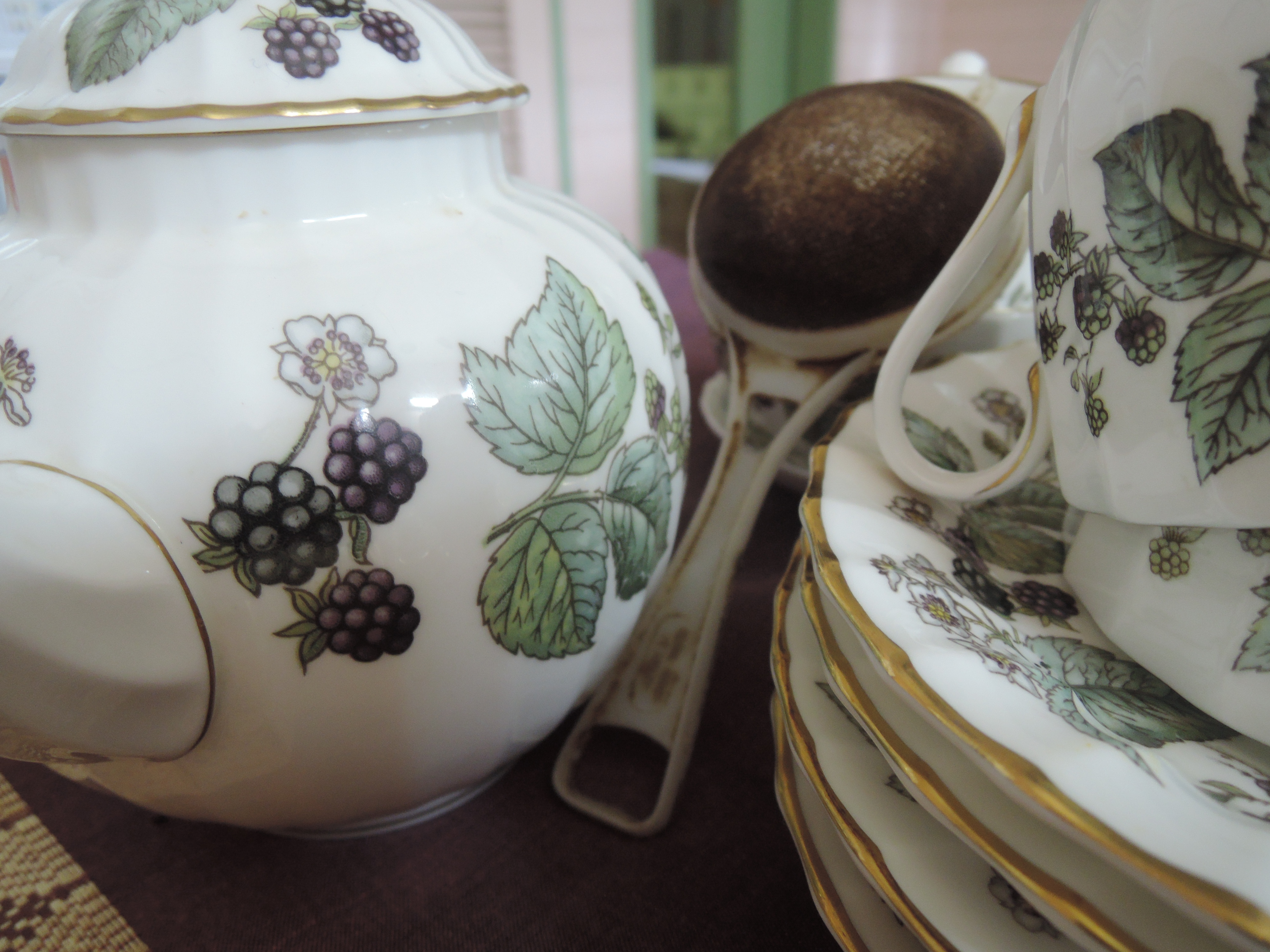
Every morning and most evenings, the MOTH makes tea following the rules set down by his mother. Bring a kettle of water to a ‘rolling’ boil. Warm the teapot. Put in a generous measure of loose tea. Fill the pot with boiling water, replace the lid and wait patiently. In the meantime, put out china cups and saucers, teaspoons, the sugar bowl and a jug of milk. Hot buttered toast and a jar of homemade marmalade will do nicely as well.

From ‘Tea and Sympathy’ by Pat McDermott
featured in
The Australian Women’s Weekly, July 2016

Old-time readers of this blog will know of my love for tea by now. I would rather give up wine, chocolate or cheese than give up my daily pot(s) of tea.

DSCN2777

Many years ago, I attempted to become a coffee drinker. I was working as a student barista in a cafe in Port Adelaide at the time, and the coffees I made for my customers smelt enticing. There is nothing better than the smell of freshly brewed coffee.

But. I soon discovered that I am extremely sensitive to caffeine. Give me a cappuccino at nine o’clock in the morning, and I will be jittery and fidgety and twitchy all day. I won’t sleep. I’ll still be awake the next morning, heart hammering away, eyes dry and wide. And don’t even get me started on that sense of the walls of the room caving in on me …

DSCN2776

My grandmother drank tea, and I remember her making me cups when I was a child: the ritual of it, the alluring whiff of mysterious adulthood that came with it. Still, for years after I’d begun reacting to coffee, I avoided drinking tea because I knew it also had caffeine in it, though in a smaller dose. Eventually, though, I became close to someone who was an inveterate tea-drinker, and I felt tempted again. Eventually, tea wooed me back in just the way that coffee had once done.

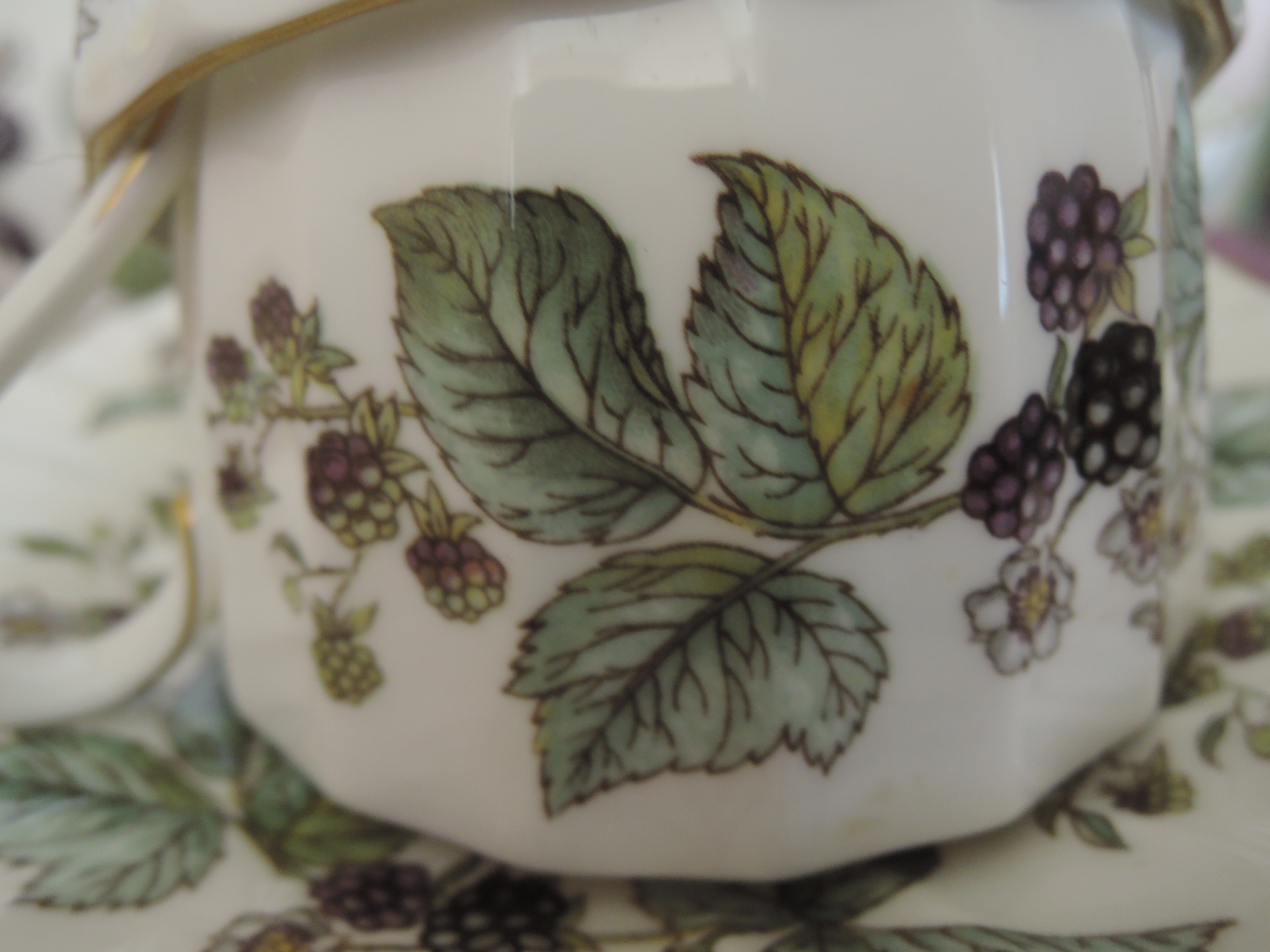
Maybe it’s the smaller amount of caffeine. Maybe it’s psychological. Maybe it’s the ritual of tea-making: my grandmother’s Royal Worcester china, the pot, the brewing, the accompaniment of sourdough toast spread with a (thick!) layer of my mother’s grapefruit marmalade or my father’s quince jam. Whatever it is, I have found that I can handle the caffeine in tea.

I read recently in The Australian Healthy Food Guide (p. 14) that Lord Twining, of Twinings Tea fame, has been known to state that anything less than nine cups of tea per day is a totally unsatisfying tea-drinking day. Clearly, Lord Twining may have vested interests in making statements like this … but I can’t help admiring such a line of thinking, all the same.

And so … let the tea-drinking continue!

The flesh is weak

Other people’s words about … well, elimination

Writers don’t often describe bodily functions in literature (other than sex). After all, reading is about escapism, right?

But in ‘The Prophets of Eternal Fjord’, Kim Leine describes the main character’s afflictions with — ahem — a sensitive colon so evocatively that his physical suffering becomes embedded into the story.

His intestines are in an uproar. He senses the ominous ripple of diarrhoea in the bowel, the quivering alarm of the sphincter.
(p. 114)

Morten Falck is an eighteenth-century missionary in the Danish colony of Greenland.

His bowels emit a series of shrill tones of varying intensity. He grimaces, then collects himself.
(p. 127)

This is a story of suffering, weakness, morality, intestinal discomfort and (perhaps) redemption.

It gushes from him the moment he pulls up his cassock and sits down on the privy seat, a mud-like mass, almost without smell, an inexhaustible landslide of brown. His intestines writhe in agony, and yet there is a considerable element of joy at being able to release, to discharge this spray of filth and empty the bowels. He groans, bites his hand and chuckles. His sphincter blares and squelches, and then there is silence. He feels more is to come and shifts his weight from side to side, bent double, his head between his bony knees, his hands massaging his stomach, but nothing is forthcoming. It is as if something is stuck inside him, a thick log of excrement blocking his passage. But most likely a fold of the intestine, he considers. He recalls images of the corpses he dissected and drew as a young man, and he sees now his own colon in his mind’s eye and the blockage that has occurred. He imagines its slow release and the sudden slop that comes with it. The thought of it helps. A new deluge is evacuated and his anus trumpets a fanfare.
(p. 151)

Seriously, how can you not admire such a vivid description of intestinal torture?
Come on, admit it — we’ve all been there at some time!


Everyday cake

Other people’s words about … cake

The other day, in a dark moment, I was trying to compile a list of things that make me feel better when I’m feeling bad.
(I write these lists often. You can draw your own conclusions about what this says about me!)
DSCN2556
One of the things that’s always on my list of consolations is: CAKE.
Cake never fails, right?
Lovely blogger Stacy Ladenburger talks about this over on her blog Delightful Crumb.
Her solution is something she calls ‘
Everyday Cake’ —
a cake to eat and bake through all life’s trials and tribulations.

DSCN2033

Everyday cake.
Even the idea consoles me …

Note:
I have never posted a recipe on my blog, and don’t intend to. One reason is my self-imposed word limit. It’s hard to publish a recipe in a post that’s 101 words or less.
But if you would like a recipe for everyday cake, I’d try Stacy’s recipes here and here.
And whatever recipe you try, I hope that baking and eating the end-result will console you as I have found it consoles me…

Early Autumn

Sometimes, in early Autumn, the days become sunny in a way utterly unlike summer.
The mornings are cool.
There’s a brief wave of heat in the afternoon,
before coolness returns with evening.

Grey heron standing in a rockpool 22 March 2016 12.12 pm
Grey heron standing in a rockpool
22 March 2016
12.12 pm

I wish you could hear the sounds accompanying today’s photo.
It was still.
Hot.
Intensely sunny.
I could hear gulls’ legs moving through the water,
and tiny rock-creatures made bubbling noises beneath the surface.

By late April, this weather will vanish,
and the grey skies of Autumn will begin.
You have to treasure these moments, don’t you?
Treasure them.
Treasure them.

The quality of blue (2)

As I mentioned in my previous post,
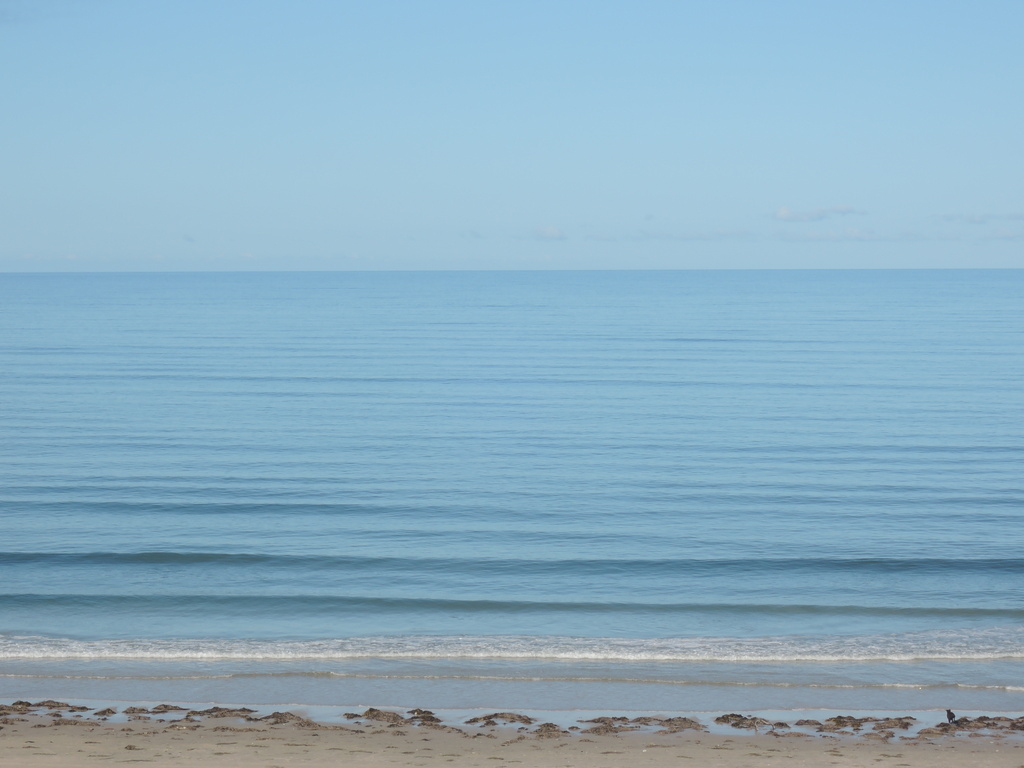
there is something about the colour of the sea in summer.
DSCN2536
The quality of blue is different from other times of the year.
DSCN2538
It’s silky blue.
Pearly blue.
The truest kind of blue.
DSCN2542
Blue sky.
Blue sea.
Bluer than blue.
DSCN2544
A celebration of blue.