We’ll see

Other people’s words about … getting sick

In the laboratory on the other hand it is rare that something totally out of the blue occurs. You set your own conditions and to a large extent the future is predetermined. Only some of the details are fluctuant. And even if something unexpected does occur you can usually work out the mechanism, uncover a logic that is always present in nature even if we don’t see it a lot of the time. Whereas in the clinic it sometimes felt as if there was not logic at all and that, when you were talking to the patients about what might happen to them, trying to answer their questions and so on, you might as well read their horoscope. “We’ll see,” you would say whenever a patient asked something as basic as “Will it work, doctor, the treatment?” or “What will happen?”, entirely reasonable questions, you might think, but completely unanswerable. “We’ll see,” you could only say, “we’ll see.”

from ‘This Living and Immortal Thing
by Austin Duffy

I used to be one of those people who loved watching medical dramas on TV — the ones set in emergency departments or in GP clinics or centred around a class of student surgeons. (You know the ones I mean.) It wasn’t the medical crises they depicted that I loved; it was the human dramas that the writers of the show wrote around those medical crises, the love stories, the broken hearts, the moral dilemmas — all those.

I’ve grown weary of those medical dramas, though. I don’t know if that’s just because I’ve become a more seasoned and cynical TV watcher overall or because I am more conscious now, as an older woman, of my own real-life encounters with the medical system. Whatever the reason, though, I recently very much enjoyed watching the TV dramatisation of Adam Kay’s memoir, This Is Going To Hurt (which I read some years ago). It’s a series I can highly recommend, even for the most seasoned watcher of medical dramas. (For starters, it’s so much more than a medical drama.)

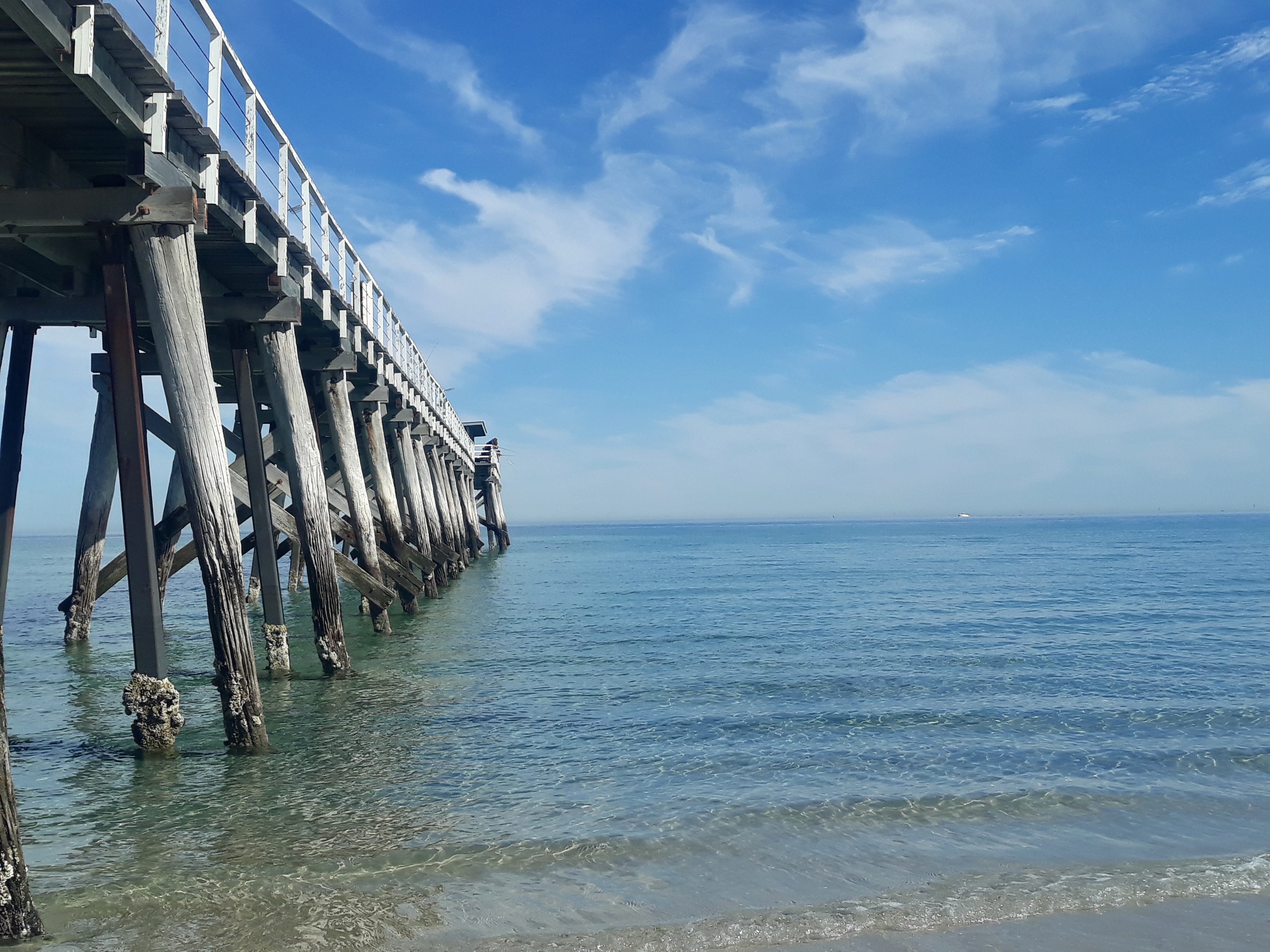
Another jetty photo! March 2024.

[It felt as though] you might as well read their horoscope, writes Austin Duffy’s narrator, an oncologist turned clinical researcher, in the passage I’ve quoted above. He captures here something I once thought I’d found in the medical dramas I watched (until I saw through their paper-thin, highly sexualised plots). We seek treatment from doctors for our illnesses and frailties, Duffy’s narrator reminds us, but they, our doctors, are only frail, too. Most of the time — I truly believe this — they are working in the dark, making the best guesses they can about how to make us better. Sometimes they get it right; sometimes they get it wrong.

Austin Duffy is himself an oncologist, and he writes beautifully about the medical world and how it intersects with the other parts of our lives, our hopes and longings and dreams. I find it humbling to read the reminder he gives us, through his narrator, that our bodies write their own narratives — and that sometimes (mostly?) all that we, like his narrator, can say about the course of our illness is … ‘We’ll see.’

Lately I’ve been reading …

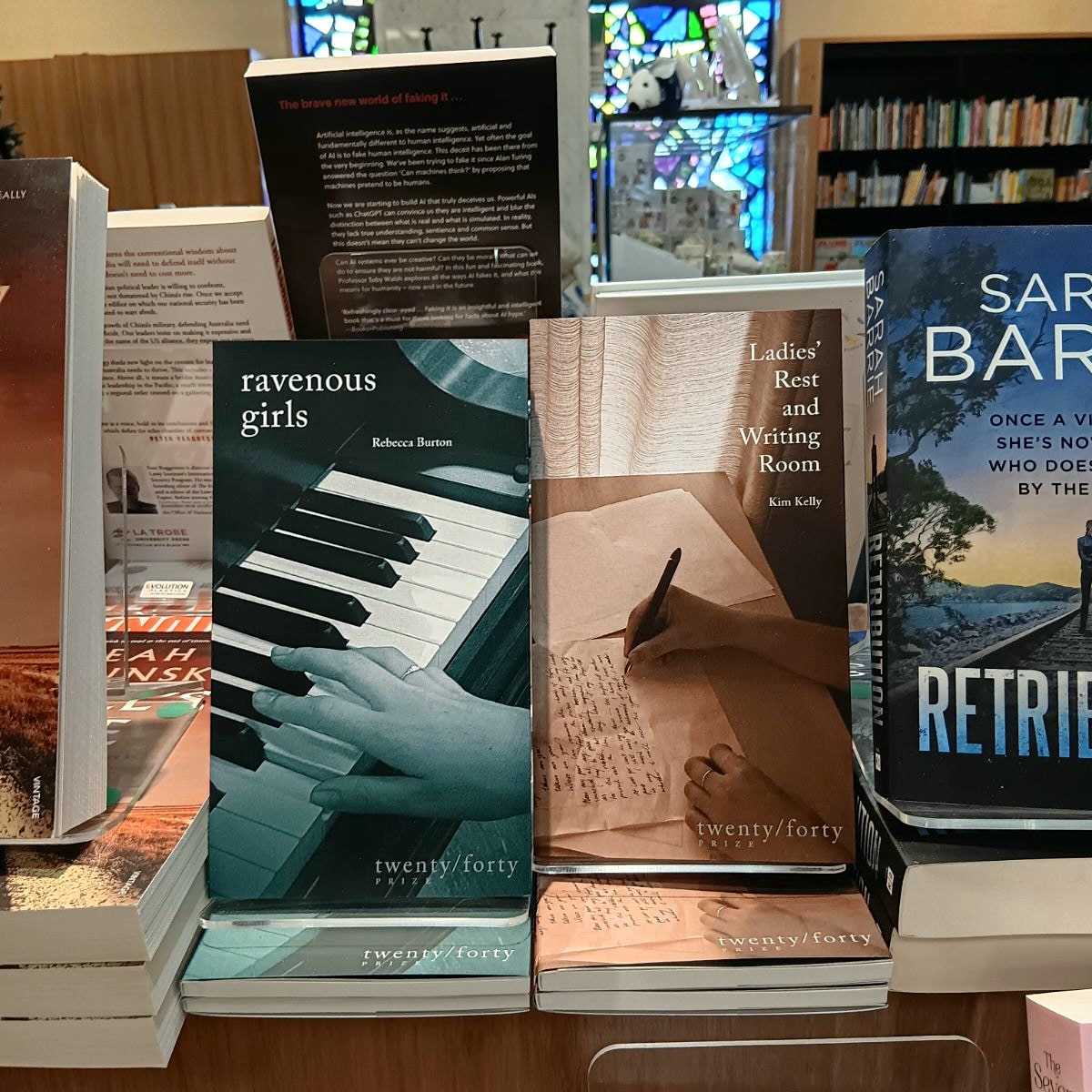
My novella, Ravenous Girls, is a story about two sisters in the 1980s, one of whom is receiving treatment for anorexia. Outside of fiction, there is some fascinating, erudite and nuanced writing about anorexia and eating disorders, as the articles I’ve linked to below all demonstrate. Each of these pieces, in their own way, moved me and made me think.


How do you know?

Other people’s words about … writing

Seamus went into the hall after Oliver, and they kicked the snow off their boots. Their professor had just come back from the bathroom. He put a hand on Seamus’s arm and said, ‘Great work, Seamus. It’s a good poem.’
‘Was it?’ Seamus asked. The professor’s expression opened just slightly. Oliver patted Seamus on his lower back and returned to the seminar room. It was Seamus and the professor alone in the hall. Seamus could feel himself dripping cold water on the rug.
‘Is that what you need? For someone to tell you that your work is good?’
Seamus flushed.
‘I don’t know what I need. I don’t know what I’m doing. I feel like I’m wasting my time.’
‘Oh, Seamus,’ the professor said, and Seamus looked at him.
‘How do you know?’ Seamus asked.
‘How do you know what?’ the professor retorted, his head jostling a little, like it was a game or a riddle.
‘How do you know you’re not just wasting your time?’
‘If you don’t know the answer to that, then I can’t do anything for you,’ the professor said with a chastening laugh.
Seamus felt that he had been slapped on the nose and called childish. The world grew deep and saturated. It felt as if something vast and Godlike had peeled back the veil of his life and peered in at him. He had gone around giving away all his power, seeking certainty, approval. But that’s what children did. Seamus had been a child, selfish and stubborn in his ways.

from ‘The Late Americans
by Brandon Taylor

I’ve been thinking again about the process of writing fiction — how a writer takes the story they hear inside their head and puts it into written words. That’s what the process involves for me, at least, most of the time. I hear a story in my mind, a story with a very distinct voice, and I try to translate that story into one that other people can read — a story on paper, a story on a screen. A story, I was going to say, that is tangible. Tangible is the wrong word, though. Perhaps what I mean is, a story that exists in a form that other people can access.

The strange, sad part of this process is that mostly, while the story is still inside my mind, it feels like a very beautiful thing, whereas once it becomes something I can share with other people, it often turns out not to be a beautiful thing at all.

Lizzie in a pool of sunshine (and a room with a view), Easter 2024.

Unlike Brandon Taylor’s character Seamus in the passage above, I have never studied writing. One of the reasons I haven’t is that I don’t think that studying writing will answer the question that I always have about my own writing, which is the same question that Seamus has, How do you know you’re not just wasting your time? The truth is that you can’t know, which is what (I think) the professor is trying to say to Seamus without actually spelling it out for him. You will never know. If you try to find out, you’re going down the wrong track, asking yourself the wrong question.

A better question, I think, would be, How do you sit with the fact that you don’t know whether you are wasting your time or not? But I don’t know the answer to that, either.

The other side of the jetty from the photo in my last post, Easter 2024.

Since my novella Ravenous Girls came out late last year, I’ve been working on a story centred around the same characters, a sequel of sorts — the next instalment. I don’t know whether it will ever get published; I don’t know whether what I’m writing is any good; I don’t know whether anyone will want to read it. Like Seamus, I keep wanting to ask someone whether I’m wasting my time, but there is no-one who can tell me.

And so, like Seamus, all I can do is sit with the unknowing. There’s nothing else you can do. There’s no other way through.

Lately I’ve been reading …

Becoming

Other people’s words about … leaving home

Much as I love my mother, much as I love that fabulous fridge, the free heating, the coffee grinder with whole, organic beans, much as I love reading on the sofa while she shifts and grunts over her Sudoku, I really did need to get away.

Meanwhile, some oozing, inner self knew what I was doing when I loaded up the boot of her car and broke her heart. When I made my mother drive me across town to a damp room in a run-down street, whose only attraction was the fact that she was not in it. I was going to fall apart. I had been so good, I had done all the things. Now, I wanted to sleep under a hedge and wake to the rain.

I also wanted to move out of this crap, overpriced town but I had not figured out where to go yet, so I was in a house in Ballybough that belonged to someone’s dead granny, first of all with Lily and, when she left for London, with her friend Stuart and one other randomer in the box room. Every time I went online, I found light-flooded interiors with potted plants the size of our kitchen. Outside, the red-brick streets were starting to look curated and I was just flicking through a life that wasn’t mine. Just flicking through.

from ‘The Wren, The Wren
by Anne Enright

I remember going away, leaving my childhood home, like the narrator in the passage above, Nell, does when she leaves her mother Carmel. I found it harder to break away than Nell and so I bought a plane ticket and flew overseas, because that was the only way I could make myself leave —- it required money; it required fear; it required loneliness; it required a non-refundable, one-way plane ticket to the other side of the world. I am not speaking figuratively here. As soon as I was on that plane, I felt afraid but I could not jump out —- that’s the thing about planes; you can’t jump out —- and so I went on flying away, leaving home (although, like Nell, I grew up and came home again eventually).

Path to the beach, Silver Sands, March 2024.

Last year I turned fifty-three and yet the stories that most move me, the books I most often read, are still, even now, about young people coming of age —- or if not young people, then people at moments in their lives when they become bigger or older or wiser or sadder, when they become in essence someone new, which is after all another form of coming of age. Perhaps what I mean is that I love stories of becoming.

Being fifty-three is a time when you come of age in another way. It is, you know, especially for women. I am right in the throes of that now, my last coming of age, perhaps.

It’s funny in some ways, because all the things I taught myself to do when I was younger, all the things I taught myself to do in order to grow up and look after myself and find a way of moving through the world with more ease (which is perhaps the very definition of finding a way to grow up) no longer work, not at fifty-three. My coping mechanisms, that is to say, are no longer effectual at helping me to cope — not because they no longer work, I don’t think, but because I simply can’t do them anymore.

Crooked tree and seat, The Washpool, March 2024.

For example.

You teach yourself to be intimate with other people -— a man you love, a friend you adore, another friend you trust. You teach yourself to be fit and strong. You teach yourself to drink a little wine every now and then, because it helps you to relax. You teach yourself to be okay with solitude. You teach yourself these things -— I taught myself these things -— but now these things, most of them, are slowly becoming inaccessible to me, simply by virtue of the fact that I am fifty-three. And fifty-three, I am finding, says no to these things. Physically, I mean. It says no.

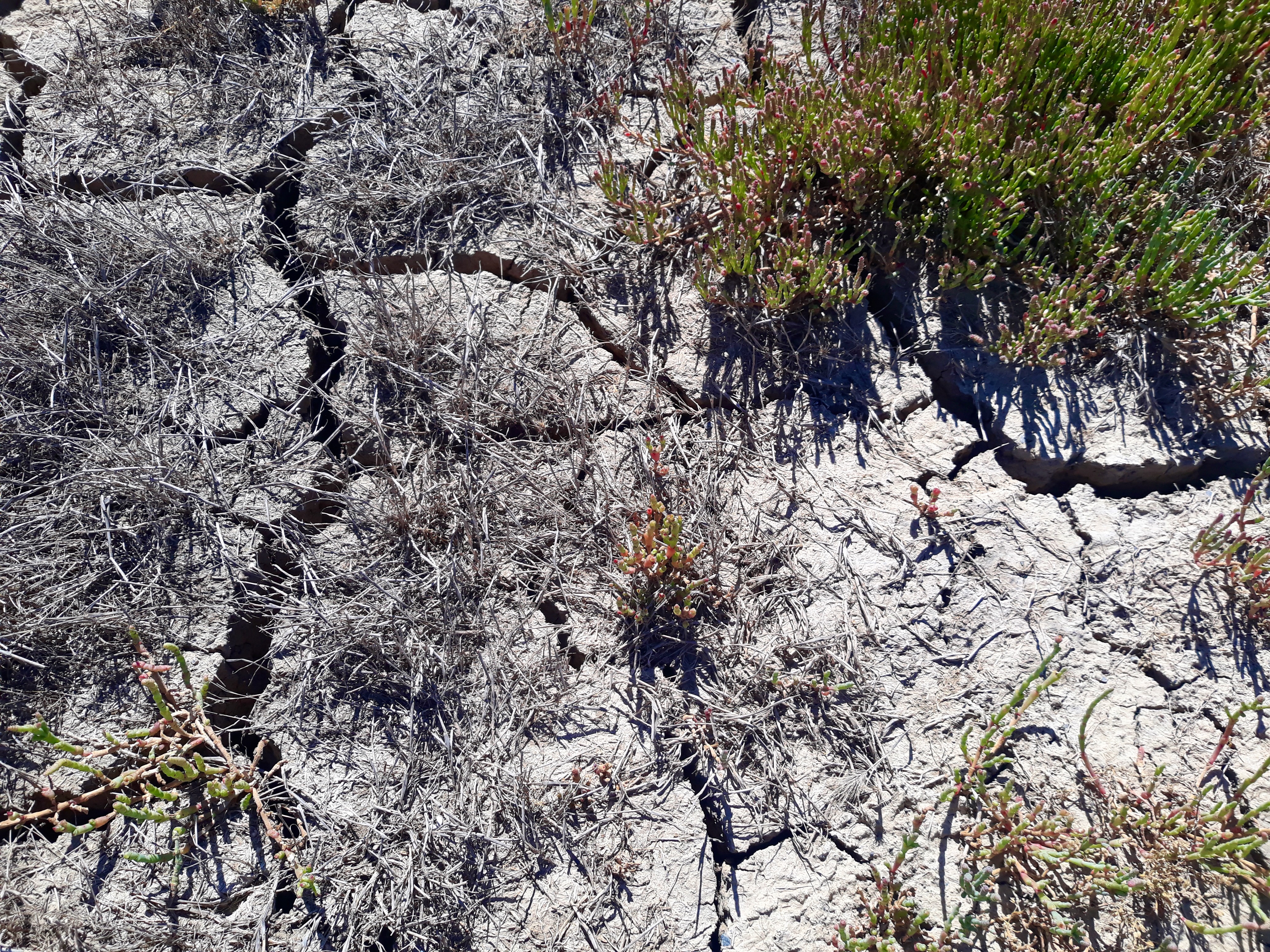
Cracked mud, March 2024.

So I look down the tunnel of my fifties and I see what every other fifty-year-old before me has seen, no doubt. And I do not feel, no matter what decision I make, as though I am growing bigger or wiser or sadder or in any way newer. I am growing older, definitely. There is that.

But then there are books like The Wren, The Wren. Because I lied a little when I said that all the coping mechanisms I taught myself as a younger woman no longer work for me. One of them still does. I read. I read. I read.

Lately I’ve been reading …

Inkling

Other people’s words about … self-perception

The evening was cold with a bolt of black cloud over the dome of the courts. Inside, a maitre d’ approached. He led me to a high marble table with several stools and a can of light on a chain.
Thankyou, I said. I’m waiting for two more.
They were already late. I wondered if the robust twists of bread stacked in a basket to my left were real or fake. I didn’t see anybody that I knew. The food was expensive but I would not be paying for it. At times like this I simply felt too large. I am not a large person but I felt too large, as if I’d bloated, as if I were rangier and wider and more ungainly than other people.

from ‘This Happy
by Niahm Campbell

I’ve experienced the feeling that Niamh Campbell’s narrator describes suddenly coming over her in the passage above — the feeling of largeness, of having an outsized body in comparison to other people’s bodies — so many times in my life that I’ve lost count. Till now, though, I’ve always assumed that it was one of those quirks that is unique to people who have lived with an eating disorder.

It’s certainly true that one of the motivations behind my anorexia was a longing to shrink my body. And I’m not alone in this; over the years I’ve met other people with anorexia who have expressed the same motivation. In fact, back when I was a teenager, in the early days of my treatment, the nurses frequently used to say to me and my fellow anorexic patients, ‘You deserve to take up space.’ It was a kind of motto they came out with when we were feeling low, when we said hateful things about ourselves; they would chant it at us — in an effort to distract us, or perhaps to dissuade us, or even, impossibly, to cure us.

You deserve to take up space.

Those words, that chant, never quite resonated with me. My sense of largeness didn’t feel spatial; it felt physical and embodied, the way one person might have a louder voice than another, or coarser hair. Still, even as the feeling came over me — even as at certain moments it took up all my awareness — I understood that it wasn’t an accurate one. At heart, I knew even then that my body wasn’t any larger than anyone else’s, and that it was my perceptions that were distorted rather than my body. It was just that I didn’t know how to adjust those perceptions.

In many ways, I think, I still don’t. Instead, I’ve learned to ignore my perceptions, to see them as a false signal blinking at me that I choose to ignore. Maybe that’s a rudimentary way of dealing with them, but it’s the most effective response I’ve come up with.

Branch across the path, December 2023.

Because today is the last day of the year, the last day of 2023, I’m going to move on now to an entirely different topic. I want to finish this post with a beautiful poem by Lisa Holstein called ‘Happy New Year’. The poem comes from her collection Dream Apartment; its words are poignant and filled with sadness but also beauty, and so I can’t think of any better ones with which to bring in the new year.

Is it selfish to wish for more than to survive?
I see you, bare arms gleaming in the sun-

struck snow, I see the browned roast
you brought to your wine-stained lips

the stack of books you read, and those boots
that last fall you loved yourself in.

I see you in them again on this roll call
morning stroll through what intimate data

strangers tell me about their lives.
Once upon a time I asked them to

or they asked me, who can recall,
I’m into it, I guess. I like to watch,

at least, I can’t seem to stop, but I can’t
bear to share, so I’ll tell you here:

the cat finally came home last night—
spooked by so many fireworks barking,

he hid somewhere unsearchable for a while
no matter how I called and called.

He chose me, I like to say since the day
I found him starving on the porch.

I know the night is full of unsteady boats
on cold seas and horrible cages

and people far more alone than me
I’m sorry for your loss, your cancer,

the accident you had no way to see coming
and the one you did have an inkling of

I’ve learned how important it is to say
because of how difficult it is to say

and how loudly loneliness fills the silence
although, like anything, it depends—

for instance, I still can’t unhitch my breath
from even the softest whisper of your name.

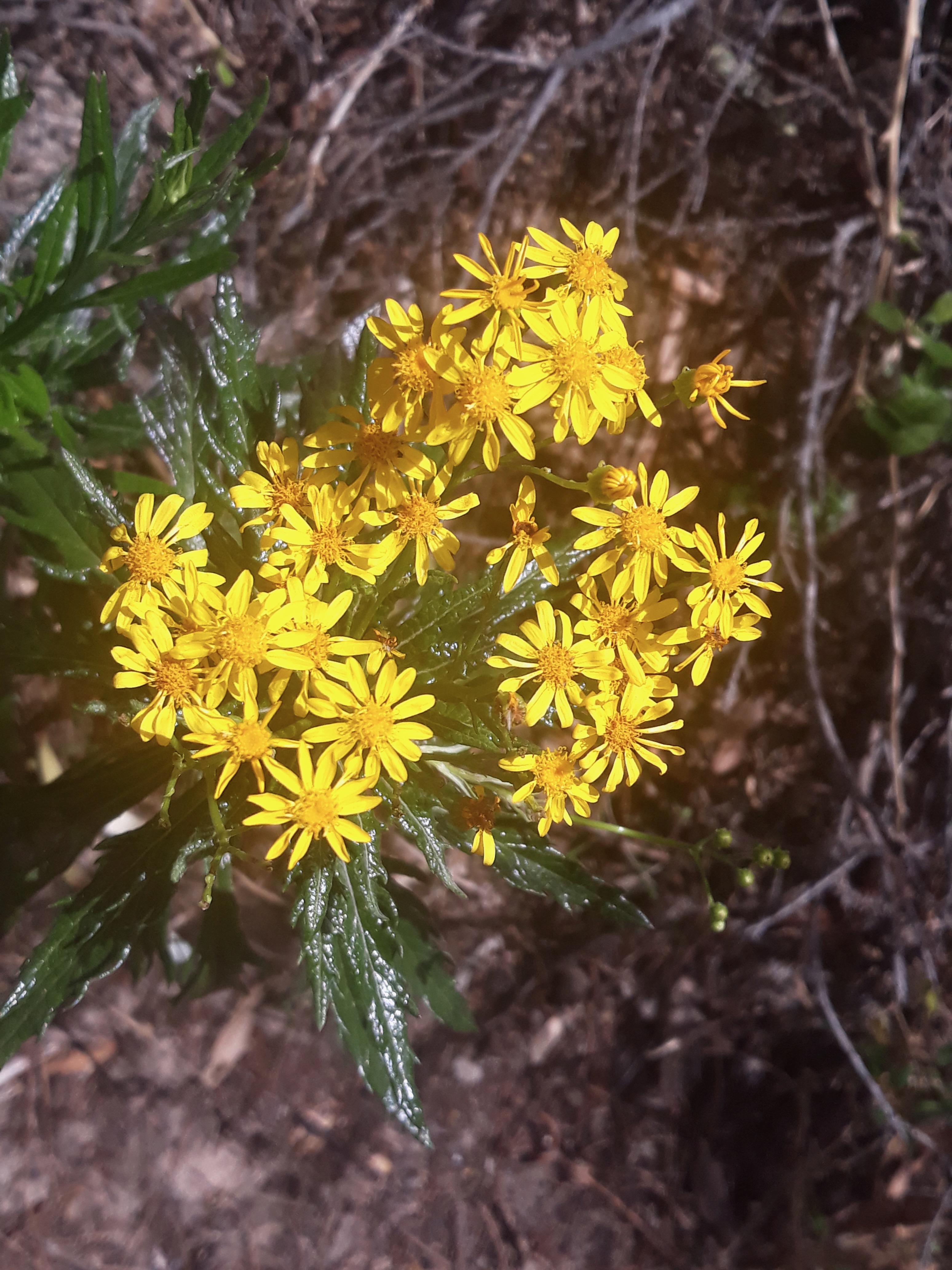
Late groundsel flower, December 2023.

Lately I’ve been reading …

All that food

Other people’s words about … not eating

Mae doesn’t look convinced, but she hands me another bowl, which I pass to TJ. He holds it in the space between us, locking eyes.
You didn’t take any, he says.
I took plenty, I say. I’m stuffed.
No. I watched you.
You must’ve blinked.
Then try some more.
I just told you–
Don’t be a dick, says TJ.
Boys, says Mae.
Her voice is terse enough to shut us up.
Mae holds our gaze until we’ve settled. Then she pours more wine into her coffee mug, twirling her food with a fork.
It’s been too long since we’ve been together, says Mae. Let’s make it a nice evening.
So TJ shoves the bowl of tomatoes my way. I scoop more onto my plate. Then I take bites from the spaghetti and the chicken, and it’s all delicious, and the three of us eat silently, until there’s something like a hum between us.
Is the bathroom still in the same place, I ask.
Mae points down the hallway. I don’t look at TJ when I stand. But once I’ve locked the door behind me, I turn on the faucet, and it’s maybe another five seconds before all that food leaves me.

from ‘Family Meal
by Bryan Washington

When I was a teenager receiving treatment for an eating disorder, people had certain fixed ideas about what kind of person was likely to experience anorexia. By ‘people’, I mean not just family and friends but doctors, psychiatrists, medical researchers. Anorexics, people thought then (because that was what we called people with anorexia in those years, anorexics, a label that many people would now object to), were generally white, middle-class, well-educated, high-achieving, likeable young women with a tendency towards perfectionism.

Perhaps, back then, this was true. Or perhaps, more likely, if you were anorexic but you happened to be male, poor, uneducated, older than twenty-five, queer, or a person of colour — or any combination of these things — then your anorexia went unrecognised. Undiagnosed. Untreated.

We know better than this now, I am thankful to say.

Fringe Lily, December 2023.

In the passage I’ve quoted above, Cam, one of the narrators of Bryan Washington’s second novel, Family Meal, is grieving the loss of his boyfriend, Kai, who died in unexpected, violent circumstances. Cam is Black and queer; he is also addicted to many things, including drugs, sex and, yes, starving himself. He is surrounded by friends who see what he is doing to himself and try to talk to him about it, try to show him that they see, and that they care, and that he doesn’t need to be alone. It takes him a long time to see this for himself, though.

Cam’s experience of struggling with food is different from mine, and that’s partly because of who each of us is — precisely because I did, after all, fit most of the anorexic stereotypes I’ve listed above — although it’s also partly because everyone’s struggle with food is, simply, different. But I am so glad, so glad, that contemporary literature that includes stories about anorexia and disordered eating has broadened to include other stories than ones like mine.

And it’s funny how, no matter what your background, no matter what your life experience, the feelings don’t change. I’m fucking suffocating from the weight of myself, Cam writes.

I remember feeling exactly the same.

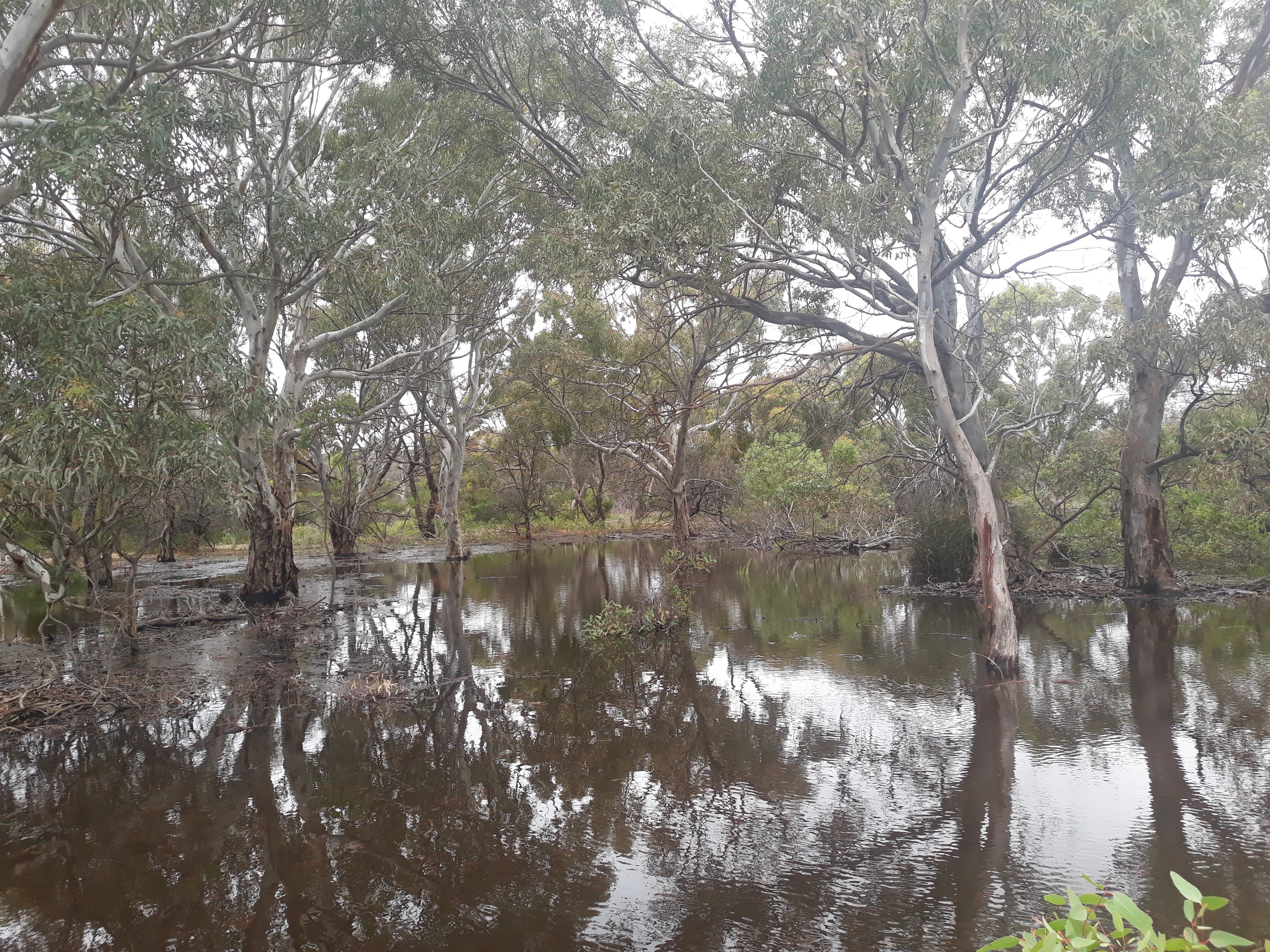
After the rain, Flooded scrub, November 2023.

Lately I’ve been reading …

Fumbling

Other people’s words about … growing up

I also felt like I was being pushed into a world where I didn’t understand the rules. The summer before we moved, a bunch of my friends at camp were caught kissing boys behind our cabin with their T-shirts off. I didn’t even know why a girl would take her T-shirt off with a boy, but I knew it was very wrong to do so, because they all got into big trouble. I’d started going to after-school ballroom dancing lessons in New York, which was something kids from my part of Manhattan did, maintaining an Upper East Side fantasy that we all still lived in an Edith Wharton novel. At the last dance, a boy put his hand on my bottom. Again, I couldn’t understand why a boy would want to touch my bottom, but I knew I didn’t like it. But I also knew that admitting I didn’t like it — like admitting I didn’t know why a boy would want to see my chest — would make people laugh at me. So I said nothing to him, to anyone.

from ‘Good Girls: A Story and Study of Anorexia
by Hadley Freeman

One of the things I loved about Hadley Freeman’s memoir Good Girls is that, as well as recounting the years during which she lived with anorexia, she also recounts her life post-anorexia, post-‘recovery’. While the story she tells of her rapid and precipitous descent into anorexia in early adolescence is vivid and poignant, it’s the rest of her story that most spoke to me — the years during which she maintained a pattern of restricted eating that wasn’t quite anorexia but also wasn’t quite wellness or sanity, the years when she lost herself to drug addiction, the years, finally, when she began to come to some kind of peace with herself.

It’s time that eating disorder narratives did this more often, I think. I said nothing … to anyone, Freeman writes in the passage above, and, elsewhere, So much of anorexia is about suppressed conversations. But I think this is as true, if not truer, of those years when a person who has survived anorexia begins to make their way back into life, those years when a person begins to try to make something of their life other than an anorexic one. (And they are years. For most people, the transition away from anorexia is long and slow and painful.) We need, in our narratives about anorexia, to engage with the whole experience, not just one part of it, the most clearly visible part. We need to tell the whole story. I hope that in the future there will be more writers like Freeman who do so.

Looking out onto Lake Burley Griffin, Canberra, November 2023.

I’ll return to this theme in future posts, because there’s so much to unpack here, and because it’s one of the things I was most conscious of when I wrote my novella, Ravenous Girls. In fact, though, what most drew me to the passage I’ve quoted in today’s post is something else. Here Freeman, describing her pre-anorexic period, her pre-adolescent years, writes, I also felt like I was being pushed into a world where I didn’t understand the rules. This is how I felt, too — at twelve years old, at thirteen, even at fourteen. I was what people kindly describe as a late bloomer, which is to say that I entered adolescence reluctantly, lingering in childhood for as long as I could, wishing that I could somehow stay a child forever. Teenage rituals, those fumbling intimacies between boys and girls that Freeman describes here, puzzled me. I knew this marked me out as different, or at least I believed that it did, and so, like Freeman, I remained quiet. I regret this quietness now. I see, looking back, that I was muting myself, retreating into a silence that wasn’t healthy or sustainable. As Freeman notes, it’s in suppressing conversations that anorexia steps in, and that was certainly true for me.

Ravenous Girls isn’t only a story about anorexia, though that’s a part of it. It’s a story about silence and muteness. Perhaps these are themes I’ll continue to explore for the rest of my life. It’s a theme that endlessly fascinates me.

For sale, November 2023.

Lately I’ve been reading …

I wrote a book!

I’m breaking from the usual format here on my blog today to announce some exciting news:

Yes, I wrote a book! Or, to be more precise, a novella.

Called Ravenous Girls, it’s one of the two winners of the inaugural 20/40 Publishing Prize, and its official release date is today.

Ravenous Girls tells the story of two teenage sisters who grow close over the course of a summer holiday in the mid-1980s when one of the girls is admitted to hospital with anorexia. Narrated by the younger sister, Frankie, later in her life, it explores the chasms that lie between adolescence and adulthood, sickness and health, intimacy and loneliness —- and how the events of that summer will affect the two girls for the rest of their lives.

Long-time readers of my blog will know that this book has been a long time coming. I can’t begin to tell you how thrilled and excited I am to have won the 20/40 Publishing Prize and to see my title in print.

I’m keeping things short and sweet for today (because, you know, celebrations are in order). I’ll be back again soon with my usual kind of post, but in the meantime, for those who are interested, you can find out more about Ravenous Girls and the 20/40 Publishing Prize here, buy Ravenous Girls here, or buy both of the prize-winning novellas here. (I’m usually somewhat camera-shy, but for anyone interested, you can watch an interview with me, fellow Prize-winning author Kim Kelly and publisher Julian Davies of Finlay Lloyd here — just scroll down to the bottom of the screen to find the videos.)

PS Congratulations to Kim Kelly, author of the other winner of the 20/40 Publishing Prize this year, The Ladies’ Rest and Writing Room, which is set in the bustling streets of 1920s Sydney and tells the story of two young women, each having suffered devastating loss, who are thrown together by unexpected circumstances.

Loss

Other people’s words about … doing what we love

It was a lie that Timo had not loved [playing] piano enough. He had loved it very much, but in a way that was difficult to describe. It was apophatic — he could only describe it through its negation. He only understood how much he loved the piano after he had given it up. Even that decision in hindsight seemed arbitrary, a whim. An act of petulance. But he had loved it, and he still did. Every day, he felt like a struck tuning fork, vibrating all the time. Except that it wasn’t pitch he was tuned to but something else, some horrible frequency cutting through the universe. Loss, he thought. It was loss.

from ‘The Late Americans
by Brandon Taylor

In the passage above, Taylor’s character Timo is a graduate student in Iowa who used to study music but then gave up. Sometimes, when he is on his own in the apartment he shares with his boyfriend, Fyodor, who works at a meat-packing plant, he sits listening to classical music recordings, losing himself in the music he so loves. But when Fyodor comes home, Timo switches the music off immediately, mid-piece, refusing to talk to Fyodor about this thing he so loves — refusing, also, to allow Fyodor to share in a part of him that in many ways still feels like the truest part of himself.

The Washpool, September 2023.

When I read the words I’ve quoted above, I thought about the times that I’ve given up writing over the years. Though I’m not beginning to claim that I am as talented a writer as Timo is a musician, nonetheless, writing for me has always been a channel of creativity, a tool that helps me make sense of and navigate the world. I don’t know why, honestly. I do know that I have a longing to make something beautiful (though this is another impulse I don’t really understand), and that writing is the only way I know how to (try to) do this. Maybe that’s why, every time I’ve ‘given up’ writing ‘for good’, I’ve returned to the practice later.

I’ve written before about how I’ve learned over the years to value my writing practice for the practice itself rather than for any measurable outcome. That’s partly what I’m saying again here, in response to the words I’ve quoted today. But it’s more than that, too. What Taylor expresses so beautifully is the same sense of loss I always feel when I stop writing. His image of a tuning fork vibrating to the wrong frequency describes this feeling beautifully. At the same time, I’d also describe the feeling another way, as a feeling of being muted. Silenced. When I don’t write, I feel as though I have lost my voice: I feel as though no-one hears me.

I understand, as a writer who is published very infrequently, that few people hear me, anyway. But writing is my way of speaking to the world, and not writing is the opposite of that. Not writing feels like grief.

The Washpool, September 2023.

Meanwhile, I’ll be back soon with another post about writing, and with a little piece of news, the news I’ve been hinting at for months now. Watch this space! ❤

Lately I’ve been reading …

Only connect: seeing someone

Other people’s words about … connection

‘So how is it [in prison]?’ I said [to Bunny]. ‘You look good.’
She did not look good. Her skin looked dull and she had a handful of tiny pimples on the left side of her face. Her hair was greasy at the roots. ‘It’s fine,’ she said. ‘I mean, I get by.’ She laughed.
‘Do you have any friends?’ I asked.
‘A couple,’ she said, licking up a palmful of M&Ms.
‘It’s just so good to see your face,’ I said, which was a lie. It was weird and sad to see her face. She didn’t look the same. But then she met my eyes fully for the first time, and the eye contact was so intense I felt I was falling, that if I didn’t concentrate I would lose consciousness. There was just her whole soul, right there. Looking at me. It was Bunny.

from ‘The Knockout Queen
by Rufi Thorpe

You know those moments when someone says something to you, or when you look at someone, and you feel a deep, true connection with them? That’s the kind of moment, I think, that Rufi Thorpe captures so movingly in the passage I’ve quoted today.

It’s hard to be frank in this way with another person, and it’s rarely sustainable, and so the intensity of the moment fades in the same way a bruise fades. That doesn’t mean you didn’t see each other.

It doesn’t mean you haven’t been seen.

Sunset, Deep Creek, August 2023.

Lately I’ve been reading …

Immeasurable

Other people’s words about … practising art alone

But you have a little secret: while you are not making Art anymore you are at least drawing every day. To tell anyone about this would be admitting there is a hole in your life, and you’d rather not say that out loud, except in therapy. But there you are, once a day, drawing the same thing over and over: that goddamned Empire State Building [which you can see from the floor-to-ceiling window in your new apartment]. You get up every morning (or afternoon, on the weekends, depending on the hangover), have a cup of coffee, sit at the card table near the window, and draw it, usually in pencil. If you have time, you’ll ink it. Sometimes, if you are running late from work, you do it at night instead, and then you add colour to the sketches, to reflect the building’s ever-changing lights. Sometimes you draw just the building and sometimes you draw the buildings around it and sometimes you draw the sky and sometimes you draw the bridge in the foreground and sometimes you draw the East River and sometimes you draw the window frame around the whole scene. You have sketchbooks full of these drawings. You could draw the same thing forever, you realise. ‘No man ever steps in the same river twice, for it’s not the same river, and it’s not the same man’ is a thing you read once. The Empire State Building is your river. And you don’t have to leave your apartment to step in it. Art feels safe for you again, even though you know you are not getting any better at it, that the work you are making could be sold to tourists on a sidewalk outside of Central Park on a sunny Saturday and that’s about it. There’s no challenge to it, no message, just your view, on repeat. But this is all you can do, this all you have to offer, and it is just enough to make you feel special.

from ‘All Grown Up
by Jami Attenberg

I have conflicting responses to the passage above. In many ways, Attenberg’s narrator, Andrea, reminds me of myself, although her creative practice is art and mine is writing. I certainly know what it’s like to stop showing people the material you are creating, to keep your practice to yourself, to see it as your own little secret. And I know the feeling that comes with doing this, too, which Andrea articulates elsewhere in her narrative — that feeling that what you are doing, the material you are creating, the act of creating it, is barely scratching a feverish itch.

Something changed for me about a year ago, though, after which I began tentatively showing people something I’d written — a few people, a very few people. This gave me the courage to do more with that particular piece of writing, and as a result I’m not in the same place anymore as Andrea, although all I can say about that for now is that I do have a piece of writing coming out later this year — a small piece, but a piece nonetheless — and I will tell you more when I can.

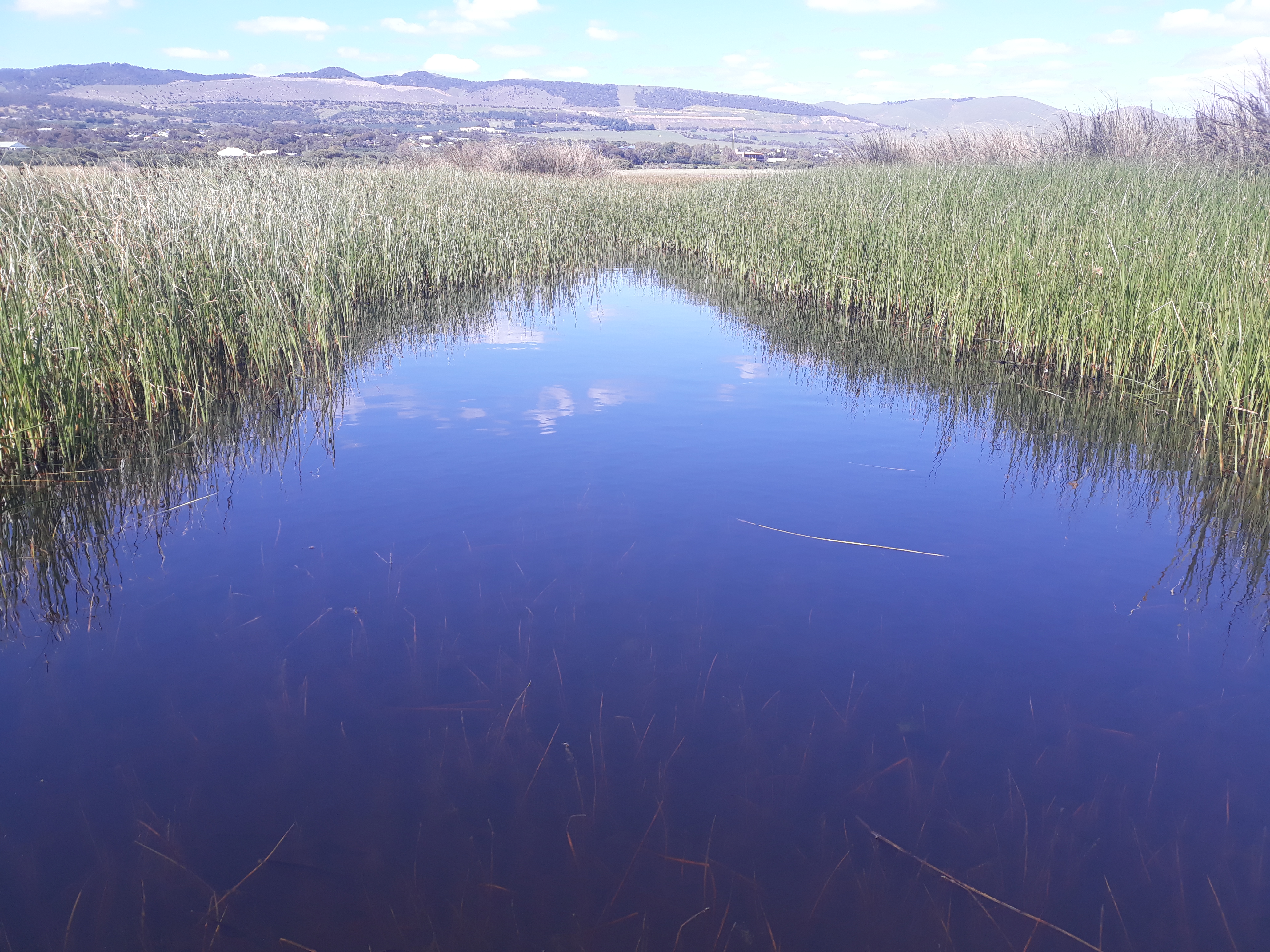
Reeds in the marsh, The Washpool, July 2023.

But even if things hadn’t changed for me, I suspect that I’d still finding myself wanting to argue with Andrea as much as I’d find myself wanting to agree with her. Because the thing that I learned during those years of writing alone, writing unseen, was that there is a value to creating something — art, literature, whatever — that has nothing to do with other people’s opinions, nothing to do with productivity or acclaim or results. What I learned (very slowly, very painfully) is that creating just your view, on repeat can in fact teach you something; it can take you somewhere new in your work. You may not be able to measure the work you create in private; you may not be able to quantify it. But when did art become something we need to measure and quantify, anyway? When did it become an outcome, a product?

I believe, although it’s taken me years to come to this understanding, that the practice of creating has its own value. The work you do as you create something, that feeling you get as you practise it of reaching out, of bringing something into the world, is an act of connection and hope. This is valuable. This is meaningful. And it can — it can — be enough.

Lately I’ve been reading …

It’s a long list today, as I try to catch up on some of my reading over the last few months. I hope you’ll enjoy one or two of the pieces I’ve listed here.