Sad place

Other people’s words about … funfairs

Deep down, the funfair was a sad place. You couldn’t hear yourself think. Everything was too bright and too big. The floor was covered in sawdust and underneath it, dirt. On the other side of the Round Up there was a wire fence around a patch of muddy grass with a few bits of hay, and inside the fence was the saddest horse you ever saw. Chestnut brown with white socks, covered in flies, its nose more or less touching the ground because its own head was too much for its neck to bear. It wasn’t just sad: there was something mean in it that wasn’t its fault. When I whispered to it, ‘hello, horse’, it slowly turned its whole body away.

from ‘Western Lane
by Chetna Mario

In my memory, the Cairo Zoo is a little like the funfair that Chetna Maroo’s narrator describes in the passage I’ve quoted above.

I visited the Cairo Zoo thirty-two years ago, just once. I didn’t take any photographs or record it in my diary at the time, and the man I visited it with, the man I was living with in Cairo, an American man, is no longer in regular touch with me, so I don’t know how accurately I’m recalling it. But in my memory the zoo was a place where the animal enclosures were small and narrow with bare ground and no grass, a place where the animals were thin with their ribs showing through their mangy fur. It was also a place where families wandered down the paths with an air of celebration and festivity, where children carried balloons and mothers pushed prams and vendors walked past, selling roses and snacks. It was a sad place. That’s how I remember it.

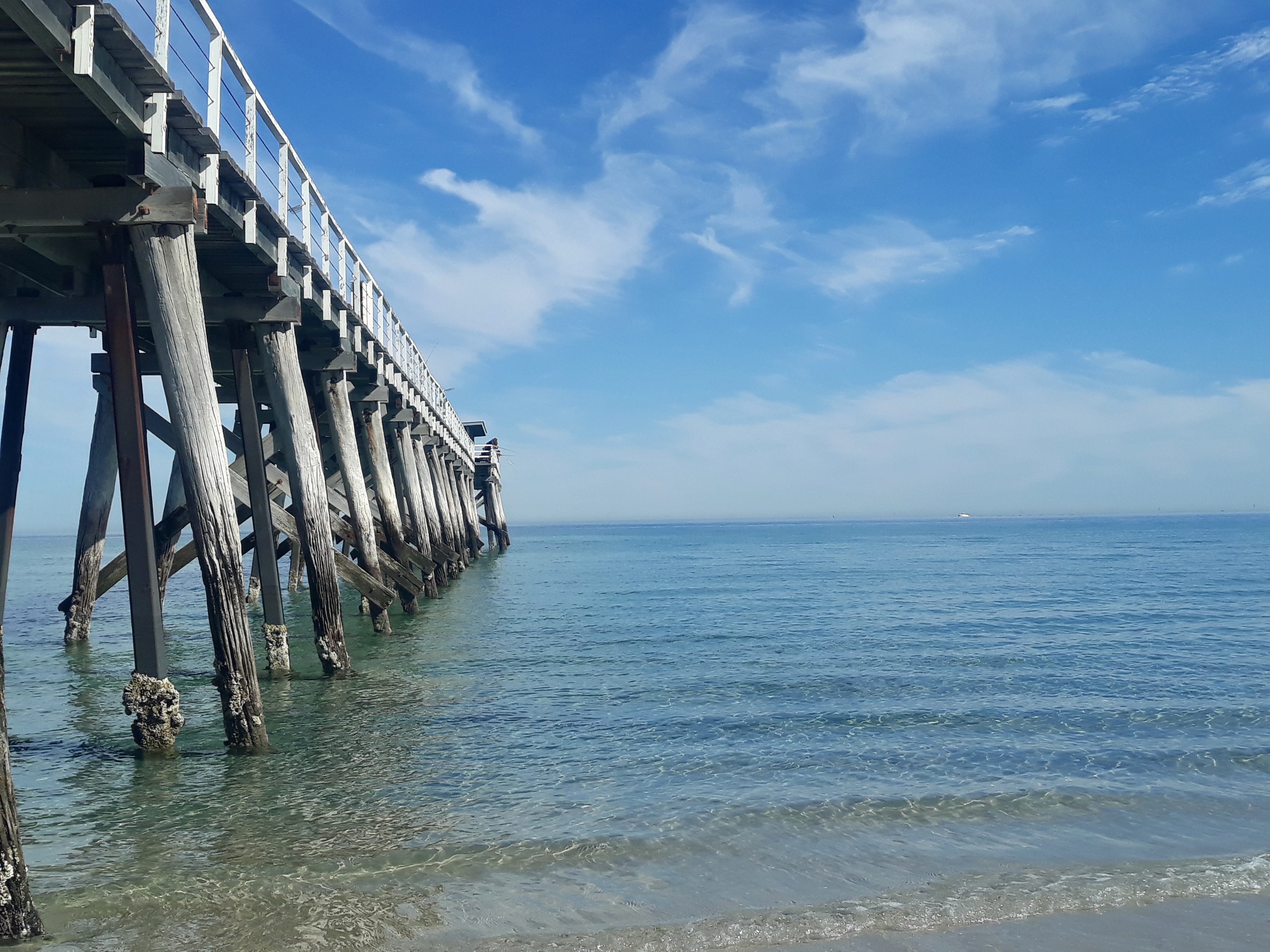
Largs Bay, June 2024.

In the camel enclosure, a camel stood before us, a camel whose toenails had grown so long that they curved down towards the ground. The American man and I stared silently back at the camel.

‘That’s cruel,’ I said at last, my voice wobbling. ‘They should cut its toes.’

‘I know,’ the American man said back.

He laughed helplessly and then he looked as though he might start to cry instead.

‘Let’s go,’ he said. ‘Oh God, Rebecca, let’s get out of here.’

And we fled.

How did we get to the zoo that day — by bus or train? I don’t know. Where did we go afterwards — back to our apartment in downtown Cairo or to the fiteer place that we loved for lunch? I don’t know. Is any of this memory true? I don’t know.

And if it’s not true, this memory, this story that I’ve just told you — even though I remember it that way — do I have the right to tell it to you?

I don’t know.

Lately I’ve been reading …

We’ll see

Other people’s words about … getting sick

In the laboratory on the other hand it is rare that something totally out of the blue occurs. You set your own conditions and to a large extent the future is predetermined. Only some of the details are fluctuant. And even if something unexpected does occur you can usually work out the mechanism, uncover a logic that is always present in nature even if we don’t see it a lot of the time. Whereas in the clinic it sometimes felt as if there was not logic at all and that, when you were talking to the patients about what might happen to them, trying to answer their questions and so on, you might as well read their horoscope. “We’ll see,” you would say whenever a patient asked something as basic as “Will it work, doctor, the treatment?” or “What will happen?”, entirely reasonable questions, you might think, but completely unanswerable. “We’ll see,” you could only say, “we’ll see.”

from ‘This Living and Immortal Thing
by Austin Duffy

I used to be one of those people who loved watching medical dramas on TV — the ones set in emergency departments or in GP clinics or centred around a class of student surgeons. (You know the ones I mean.) It wasn’t the medical crises they depicted that I loved; it was the human dramas that the writers of the show wrote around those medical crises, the love stories, the broken hearts, the moral dilemmas — all those.

I’ve grown weary of those medical dramas, though. I don’t know if that’s just because I’ve become a more seasoned and cynical TV watcher overall or because I am more conscious now, as an older woman, of my own real-life encounters with the medical system. Whatever the reason, though, I recently very much enjoyed watching the TV dramatisation of Adam Kay’s memoir, This Is Going To Hurt (which I read some years ago). It’s a series I can highly recommend, even for the most seasoned watcher of medical dramas. (For starters, it’s so much more than a medical drama.)

Another jetty photo! March 2024.

[It felt as though] you might as well read their horoscope, writes Austin Duffy’s narrator, an oncologist turned clinical researcher, in the passage I’ve quoted above. He captures here something I once thought I’d found in the medical dramas I watched (until I saw through their paper-thin, highly sexualised plots). We seek treatment from doctors for our illnesses and frailties, Duffy’s narrator reminds us, but they, our doctors, are only frail, too. Most of the time — I truly believe this — they are working in the dark, making the best guesses they can about how to make us better. Sometimes they get it right; sometimes they get it wrong.

Austin Duffy is himself an oncologist, and he writes beautifully about the medical world and how it intersects with the other parts of our lives, our hopes and longings and dreams. I find it humbling to read the reminder he gives us, through his narrator, that our bodies write their own narratives — and that sometimes (mostly?) all that we, like his narrator, can say about the course of our illness is … ‘We’ll see.’

Lately I’ve been reading …

My novella, Ravenous Girls, is a story about two sisters in the 1980s, one of whom is receiving treatment for anorexia. Outside of fiction, there is some fascinating, erudite and nuanced writing about anorexia and eating disorders, as the articles I’ve linked to below all demonstrate. Each of these pieces, in their own way, moved me and made me think.


How do you know?

Other people’s words about … writing

Seamus went into the hall after Oliver, and they kicked the snow off their boots. Their professor had just come back from the bathroom. He put a hand on Seamus’s arm and said, ‘Great work, Seamus. It’s a good poem.’
‘Was it?’ Seamus asked. The professor’s expression opened just slightly. Oliver patted Seamus on his lower back and returned to the seminar room. It was Seamus and the professor alone in the hall. Seamus could feel himself dripping cold water on the rug.
‘Is that what you need? For someone to tell you that your work is good?’
Seamus flushed.
‘I don’t know what I need. I don’t know what I’m doing. I feel like I’m wasting my time.’
‘Oh, Seamus,’ the professor said, and Seamus looked at him.
‘How do you know?’ Seamus asked.
‘How do you know what?’ the professor retorted, his head jostling a little, like it was a game or a riddle.
‘How do you know you’re not just wasting your time?’
‘If you don’t know the answer to that, then I can’t do anything for you,’ the professor said with a chastening laugh.
Seamus felt that he had been slapped on the nose and called childish. The world grew deep and saturated. It felt as if something vast and Godlike had peeled back the veil of his life and peered in at him. He had gone around giving away all his power, seeking certainty, approval. But that’s what children did. Seamus had been a child, selfish and stubborn in his ways.

from ‘The Late Americans
by Brandon Taylor

I’ve been thinking again about the process of writing fiction — how a writer takes the story they hear inside their head and puts it into written words. That’s what the process involves for me, at least, most of the time. I hear a story in my mind, a story with a very distinct voice, and I try to translate that story into one that other people can read — a story on paper, a story on a screen. A story, I was going to say, that is tangible. Tangible is the wrong word, though. Perhaps what I mean is, a story that exists in a form that other people can access.

The strange, sad part of this process is that mostly, while the story is still inside my mind, it feels like a very beautiful thing, whereas once it becomes something I can share with other people, it often turns out not to be a beautiful thing at all.

Lizzie in a pool of sunshine (and a room with a view), Easter 2024.

Unlike Brandon Taylor’s character Seamus in the passage above, I have never studied writing. One of the reasons I haven’t is that I don’t think that studying writing will answer the question that I always have about my own writing, which is the same question that Seamus has, How do you know you’re not just wasting your time? The truth is that you can’t know, which is what (I think) the professor is trying to say to Seamus without actually spelling it out for him. You will never know. If you try to find out, you’re going down the wrong track, asking yourself the wrong question.

A better question, I think, would be, How do you sit with the fact that you don’t know whether you are wasting your time or not? But I don’t know the answer to that, either.

The other side of the jetty from the photo in my last post, Easter 2024.

Since my novella Ravenous Girls came out late last year, I’ve been working on a story centred around the same characters, a sequel of sorts — the next instalment. I don’t know whether it will ever get published; I don’t know whether what I’m writing is any good; I don’t know whether anyone will want to read it. Like Seamus, I keep wanting to ask someone whether I’m wasting my time, but there is no-one who can tell me.

And so, like Seamus, all I can do is sit with the unknowing. There’s nothing else you can do. There’s no other way through.

Lately I’ve been reading …

All grown up

Other people’s words about … becoming an adult

When he got his first office job, he got dressed each morning with a certain ironic remove. It was a game that everyone had to play to make a living. To be an adult is to sell out, but as long as there’s someone to recognise the irony you bring to this game it’s easier to maintain a sense of self-respect. These days there’s nobody in his life who would understand that irony, and he suspects that he’s transmitting his signal on a wavelength only he can hear. He knows that the outside observer will think of him as at one with his blazer and button-down shirt; there’s no crack for the irony to push through and unhitch the image of an indifferent, middle-aged man. When [his] students look at him, what do they see? A hypocrite? [His old friends] Thora and August would have laughed about it.

from ‘The Trio
by Johanna Herman (translated by Kira Josefsson)

I ran into an acquaintance the other day whose daughter had told me many years ago, when she was around twenty years, that she wanted to be a writer, like me. To that end, she’d enrolled in a Creative Writing degree. She wasn’t going to compromise, she said. Why do a vocational degree when what she wanted to be was a writer?

I hemmed and hawed and said quietly, ‘It’s useful to have a vocational skill as a back-up, though.’

I haven’t seen this man or his daughter for many years, and so when I ran into him the other day, I asked after him and his wife and then after his daughter.

‘What’s she doing now?’ I asked.

‘Oh,’ he said, ‘she got her creative writing degree and now she’s working in the tax office.’

And then we shrugged at each other.

So it is.

Largs Bay Jetty, March 2024.

I still feel, when I’m getting ready for work, getting changed into my office clothes, that I’m taking on an identity that doesn’t match the ‘real’ me, though I’m not sure that I see the irony in this, as Johanna Hedman’s protagonist Hugo does. It feels more like a charade to me, a performance that isn’t very convincing. I doubt that I’m alone in this, though. As Hugo himself says: To be an adult is to sell out.

Indeed. Perhaps it’s unavoidable. In any case, here we all are.

Under the jetty, March 2024.

Lately I’ve been reading …

Community

Other people’s words about … social media and the internet

My suitcase was a water bottle, a P60, my clothes without a wardrobe and brutalised with creases — but, I thought, I should not be complaining, there was always someone who had it worse than me. Whenever I forgot, I looked at my phone or self-flagellated with the Guardian. There was a proliferation of opinions on Twitter about what it took to be a good, inclusive, progressive person, but I read such lists and threads on the cusp of going to Waitrose or preparing for sleep, whereupon they were quickly replaced with other lists: sliced bread to be bought, teeth to be brushed. When I remembered I had forgotten them, I felt like a terrible person anew. I wanted to discuss this with someone, but there was never any time. Quickly, I realised the absurd wealth of the places I had been in over the past year: rooms in which such discussions could be played with in theory, without urgency, at any time, and then set aside to be taken up at a later date. The internet was one such room: a constant, useless distress in my pocket. I had resolved to stop looking at my phone if I could help it; to turn off my notifications and live less theoretically.

from ‘Three Rooms
by Jo Hamya

We all bewail the role of social media and the internet in our lives while continuing to use it unceasingly, it seems to me, but I found the passage above by Jo Hamza’s narrator particularly poignant.

Recently, I read online about what some people are calling the ‘Nazi problem’ on Substack. I gather, from my brief research (online, of course), that Substack has been accused of not proactively removing Nazi content, and that as a result, people are now querying whether it’s an acceptable platform to continue to publish on. Some of the opinions I read (again, online) were by people who had only recently moved from another platform to Substack, and they were expressing exhaustion at the thought of moving to yet another platform.

I sympathise. I think it’s impossible to keep up with all the news about the relevant platforms. I prefer to work towards longevity and sustainability in one or two spaces — either the spaces you are most comfortable with or the spaces that you feel are most suitable for what you are writing about. For that reason, I’ve been writing this blog since 2014 here on WordPress, and I don’t intend to move away.

I hesitate to use the word community (despite its very common usage in this context), but nonetheless, here I am, still blogging away. And here you are, some of you, still reading my posts. So thank you. Truly, thank you ❤️.

Beach tree and seaweed, Island Beach, Kangaroo Island, January 2024.

I’ve spent the first couple of weeks of 2024 quietly, catching up with family and working. Since the publication of my novella, Ravenous Girls, in 2023, I’ve begun writing something new, a continuation in the story of the characters I introduced in Ravenous Girls. I am a slow, doubtful writer, and the publishing world is, in contrast, a fast, uncertain world, but I am quietly enjoying my writing these days — for the moment, at least.

And if there’s one thing I’ve learned about writing over the last few years, it’s that you have to celebrate the moments of joy and hope. They are rare and tentative and they quickly disappear, but they happen — every now and then.

PS On that note, if you are curious about my novella or my writing process, you can listen to me in conversation with Elizabeth Walton over on WordRoom, where we discuss novellas, anorexia, literary prizes, the difference between YA novels and literary fiction for adults … and much more.

Lately I’ve been reading …

Inkling

Other people’s words about … self-perception

The evening was cold with a bolt of black cloud over the dome of the courts. Inside, a maitre d’ approached. He led me to a high marble table with several stools and a can of light on a chain.
Thankyou, I said. I’m waiting for two more.
They were already late. I wondered if the robust twists of bread stacked in a basket to my left were real or fake. I didn’t see anybody that I knew. The food was expensive but I would not be paying for it. At times like this I simply felt too large. I am not a large person but I felt too large, as if I’d bloated, as if I were rangier and wider and more ungainly than other people.

from ‘This Happy
by Niahm Campbell

I’ve experienced the feeling that Niamh Campbell’s narrator describes suddenly coming over her in the passage above — the feeling of largeness, of having an outsized body in comparison to other people’s bodies — so many times in my life that I’ve lost count. Till now, though, I’ve always assumed that it was one of those quirks that is unique to people who have lived with an eating disorder.

It’s certainly true that one of the motivations behind my anorexia was a longing to shrink my body. And I’m not alone in this; over the years I’ve met other people with anorexia who have expressed the same motivation. In fact, back when I was a teenager, in the early days of my treatment, the nurses frequently used to say to me and my fellow anorexic patients, ‘You deserve to take up space.’ It was a kind of motto they came out with when we were feeling low, when we said hateful things about ourselves; they would chant it at us — in an effort to distract us, or perhaps to dissuade us, or even, impossibly, to cure us.

You deserve to take up space.

Those words, that chant, never quite resonated with me. My sense of largeness didn’t feel spatial; it felt physical and embodied, the way one person might have a louder voice than another, or coarser hair. Still, even as the feeling came over me — even as at certain moments it took up all my awareness — I understood that it wasn’t an accurate one. At heart, I knew even then that my body wasn’t any larger than anyone else’s, and that it was my perceptions that were distorted rather than my body. It was just that I didn’t know how to adjust those perceptions.

In many ways, I think, I still don’t. Instead, I’ve learned to ignore my perceptions, to see them as a false signal blinking at me that I choose to ignore. Maybe that’s a rudimentary way of dealing with them, but it’s the most effective response I’ve come up with.

Branch across the path, December 2023.

Because today is the last day of the year, the last day of 2023, I’m going to move on now to an entirely different topic. I want to finish this post with a beautiful poem by Lisa Holstein called ‘Happy New Year’. The poem comes from her collection Dream Apartment; its words are poignant and filled with sadness but also beauty, and so I can’t think of any better ones with which to bring in the new year.

Is it selfish to wish for more than to survive?
I see you, bare arms gleaming in the sun-

struck snow, I see the browned roast
you brought to your wine-stained lips

the stack of books you read, and those boots
that last fall you loved yourself in.

I see you in them again on this roll call
morning stroll through what intimate data

strangers tell me about their lives.
Once upon a time I asked them to

or they asked me, who can recall,
I’m into it, I guess. I like to watch,

at least, I can’t seem to stop, but I can’t
bear to share, so I’ll tell you here:

the cat finally came home last night—
spooked by so many fireworks barking,

he hid somewhere unsearchable for a while
no matter how I called and called.

He chose me, I like to say since the day
I found him starving on the porch.

I know the night is full of unsteady boats
on cold seas and horrible cages

and people far more alone than me
I’m sorry for your loss, your cancer,

the accident you had no way to see coming
and the one you did have an inkling of

I’ve learned how important it is to say
because of how difficult it is to say

and how loudly loneliness fills the silence
although, like anything, it depends—

for instance, I still can’t unhitch my breath
from even the softest whisper of your name.

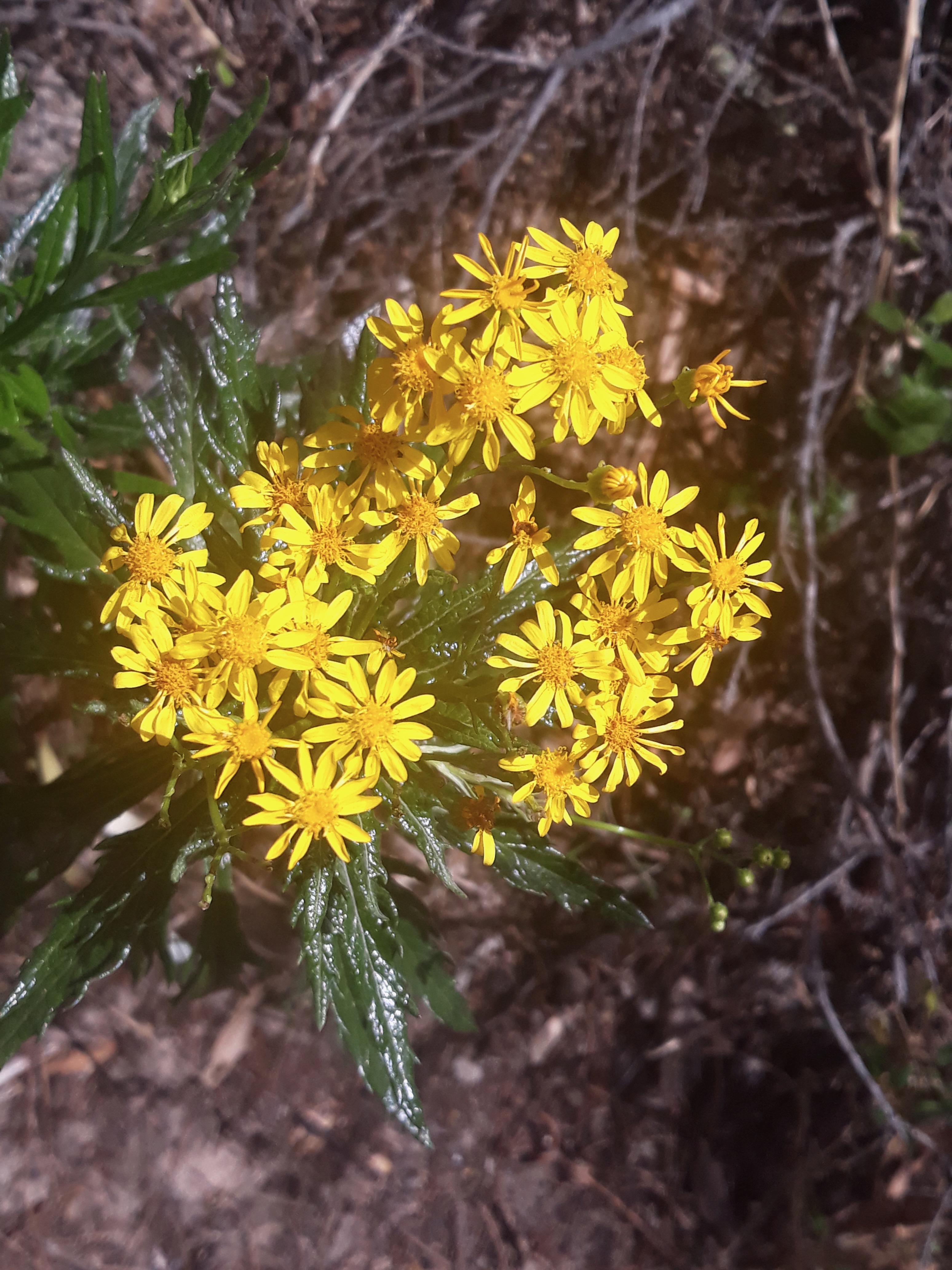
Late groundsel flower, December 2023.

Lately I’ve been reading …

All that food

Other people’s words about … not eating

Mae doesn’t look convinced, but she hands me another bowl, which I pass to TJ. He holds it in the space between us, locking eyes.
You didn’t take any, he says.
I took plenty, I say. I’m stuffed.
No. I watched you.
You must’ve blinked.
Then try some more.
I just told you–
Don’t be a dick, says TJ.
Boys, says Mae.
Her voice is terse enough to shut us up.
Mae holds our gaze until we’ve settled. Then she pours more wine into her coffee mug, twirling her food with a fork.
It’s been too long since we’ve been together, says Mae. Let’s make it a nice evening.
So TJ shoves the bowl of tomatoes my way. I scoop more onto my plate. Then I take bites from the spaghetti and the chicken, and it’s all delicious, and the three of us eat silently, until there’s something like a hum between us.
Is the bathroom still in the same place, I ask.
Mae points down the hallway. I don’t look at TJ when I stand. But once I’ve locked the door behind me, I turn on the faucet, and it’s maybe another five seconds before all that food leaves me.

from ‘Family Meal
by Bryan Washington

When I was a teenager receiving treatment for an eating disorder, people had certain fixed ideas about what kind of person was likely to experience anorexia. By ‘people’, I mean not just family and friends but doctors, psychiatrists, medical researchers. Anorexics, people thought then (because that was what we called people with anorexia in those years, anorexics, a label that many people would now object to), were generally white, middle-class, well-educated, high-achieving, likeable young women with a tendency towards perfectionism.

Perhaps, back then, this was true. Or perhaps, more likely, if you were anorexic but you happened to be male, poor, uneducated, older than twenty-five, queer, or a person of colour — or any combination of these things — then your anorexia went unrecognised. Undiagnosed. Untreated.

We know better than this now, I am thankful to say.

Fringe Lily, December 2023.

In the passage I’ve quoted above, Cam, one of the narrators of Bryan Washington’s second novel, Family Meal, is grieving the loss of his boyfriend, Kai, who died in unexpected, violent circumstances. Cam is Black and queer; he is also addicted to many things, including drugs, sex and, yes, starving himself. He is surrounded by friends who see what he is doing to himself and try to talk to him about it, try to show him that they see, and that they care, and that he doesn’t need to be alone. It takes him a long time to see this for himself, though.

Cam’s experience of struggling with food is different from mine, and that’s partly because of who each of us is — precisely because I did, after all, fit most of the anorexic stereotypes I’ve listed above — although it’s also partly because everyone’s struggle with food is, simply, different. But I am so glad, so glad, that contemporary literature that includes stories about anorexia and disordered eating has broadened to include other stories than ones like mine.

And it’s funny how, no matter what your background, no matter what your life experience, the feelings don’t change. I’m fucking suffocating from the weight of myself, Cam writes.

I remember feeling exactly the same.

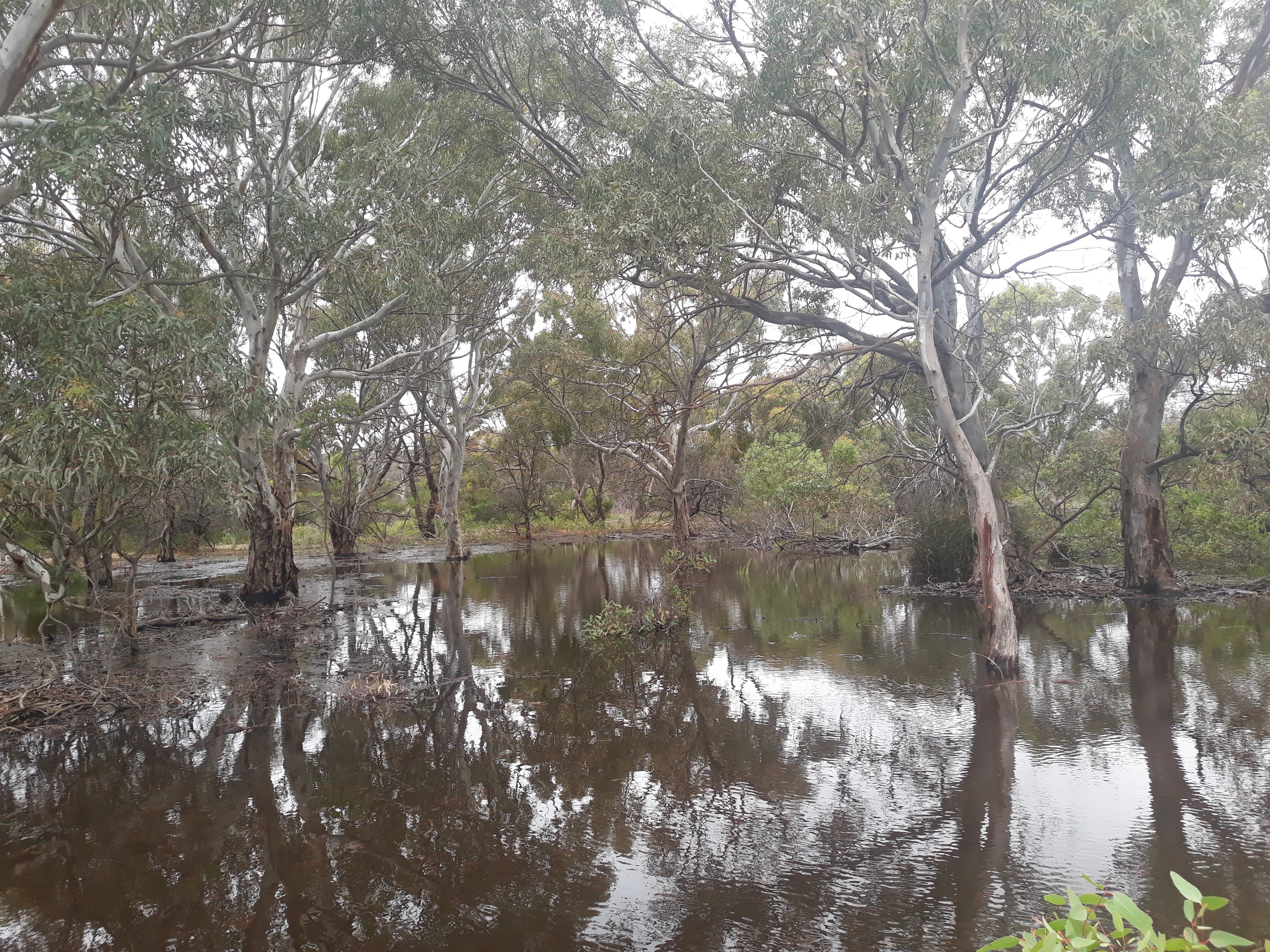
After the rain, Flooded scrub, November 2023.

Lately I’ve been reading …

Fumbling

Other people’s words about … growing up

I also felt like I was being pushed into a world where I didn’t understand the rules. The summer before we moved, a bunch of my friends at camp were caught kissing boys behind our cabin with their T-shirts off. I didn’t even know why a girl would take her T-shirt off with a boy, but I knew it was very wrong to do so, because they all got into big trouble. I’d started going to after-school ballroom dancing lessons in New York, which was something kids from my part of Manhattan did, maintaining an Upper East Side fantasy that we all still lived in an Edith Wharton novel. At the last dance, a boy put his hand on my bottom. Again, I couldn’t understand why a boy would want to touch my bottom, but I knew I didn’t like it. But I also knew that admitting I didn’t like it — like admitting I didn’t know why a boy would want to see my chest — would make people laugh at me. So I said nothing to him, to anyone.

from ‘Good Girls: A Story and Study of Anorexia
by Hadley Freeman

One of the things I loved about Hadley Freeman’s memoir Good Girls is that, as well as recounting the years during which she lived with anorexia, she also recounts her life post-anorexia, post-‘recovery’. While the story she tells of her rapid and precipitous descent into anorexia in early adolescence is vivid and poignant, it’s the rest of her story that most spoke to me — the years during which she maintained a pattern of restricted eating that wasn’t quite anorexia but also wasn’t quite wellness or sanity, the years when she lost herself to drug addiction, the years, finally, when she began to come to some kind of peace with herself.

It’s time that eating disorder narratives did this more often, I think. I said nothing … to anyone, Freeman writes in the passage above, and, elsewhere, So much of anorexia is about suppressed conversations. But I think this is as true, if not truer, of those years when a person who has survived anorexia begins to make their way back into life, those years when a person begins to try to make something of their life other than an anorexic one. (And they are years. For most people, the transition away from anorexia is long and slow and painful.) We need, in our narratives about anorexia, to engage with the whole experience, not just one part of it, the most clearly visible part. We need to tell the whole story. I hope that in the future there will be more writers like Freeman who do so.

Looking out onto Lake Burley Griffin, Canberra, November 2023.

I’ll return to this theme in future posts, because there’s so much to unpack here, and because it’s one of the things I was most conscious of when I wrote my novella, Ravenous Girls. In fact, though, what most drew me to the passage I’ve quoted in today’s post is something else. Here Freeman, describing her pre-anorexic period, her pre-adolescent years, writes, I also felt like I was being pushed into a world where I didn’t understand the rules. This is how I felt, too — at twelve years old, at thirteen, even at fourteen. I was what people kindly describe as a late bloomer, which is to say that I entered adolescence reluctantly, lingering in childhood for as long as I could, wishing that I could somehow stay a child forever. Teenage rituals, those fumbling intimacies between boys and girls that Freeman describes here, puzzled me. I knew this marked me out as different, or at least I believed that it did, and so, like Freeman, I remained quiet. I regret this quietness now. I see, looking back, that I was muting myself, retreating into a silence that wasn’t healthy or sustainable. As Freeman notes, it’s in suppressing conversations that anorexia steps in, and that was certainly true for me.

Ravenous Girls isn’t only a story about anorexia, though that’s a part of it. It’s a story about silence and muteness. Perhaps these are themes I’ll continue to explore for the rest of my life. It’s a theme that endlessly fascinates me.

For sale, November 2023.

Lately I’ve been reading …

Unspoken

Other people’s words about … desire

We stayed mostly silent, that morning, and my giddy feeling gave way to rational thought; my urban preoccupations returned. I was wondering why desire, if it were ordinary and human, always felt as if it had to stay hidden. I didn’t think that I could tell Robert of my feelings for Cara, but it seemed odd to leave it unspoken. It was as if the secrecy rendered the feelings taboo and made me wonder if they were dangerous when I knew they couldn’t be, that it was only that Robert would worry unnecessarily if he knew. It felt as if desire were only permissible in art, where it could be dramatised, made beautiful.

from ‘The Modern
by Anna Kate Blair

Sophia, the narrator of Anna Kate Blair’s wonderful novel The Modern is a thirty-year-old Australian woman living in New York on a fellowship with the Museum of Modern Art. She’s bisexual, though the term troubles her — not because she questions her attraction to men and women, but because the label itself bothers her. I didn’t want a term like besexual, she writes, that trailed a disclaimer, a need for clarification, behind it. But who was asking me to clarify? I rarely said it aloud. I didn’t want a term at all. I just wanted to exist in all my dimensions.

We talk so much these days about sexuality and gender, and that’s a good thing; where there was silence before, now there’s conversation. We talk about heterosexuality and heteronormativity and we write about their implications, and that’s a good thing, too. But I’m particularly fascinated by Blair’s thoughts, in the passage I’ve quoted at the start of this post, about desire. It’s true, I think, that desire retains its power most of all when it remains unspoken.

Daly Head, Yorke Peninsula, October 2023.

I’ve explored desire a little in two of my own books, my young adult novel Beyond Evie and most recently, though only in passing, in my novella Ravenous Girls. Like Sophia, labels trouble me. But I can’t help thinking that in part I wrote about desire in these books because, just as Sophia writes, that was the space where it felt most permissible for me to do so — because I could dramatise it, because I could (try to) make it beautiful.

Words, like stories, can be beautiful, can’t they? I hope so. That’s one of the reasons I write.

.

Daly Head, Yorke Peninsula, October 2023.

Moving on to on other reading-related matters, I’m taking a break today from my usual link to online essays that I’ve read recently because this month I’ve been focusing on reading novellas. Have you heard of Novellas in November? I’ve joined up, and I’m enjoying the chance to explore novellas, old and new, famous and not-so-famous. Feel free to join me over on Instagram for quotes from the novellas I’ve been enjoying, and for my thoughts about them.

Meanwhile, I’ll be back again with more of my usual posts soon.

I wrote a book!

I’m breaking from the usual format here on my blog today to announce some exciting news:

Yes, I wrote a book! Or, to be more precise, a novella.

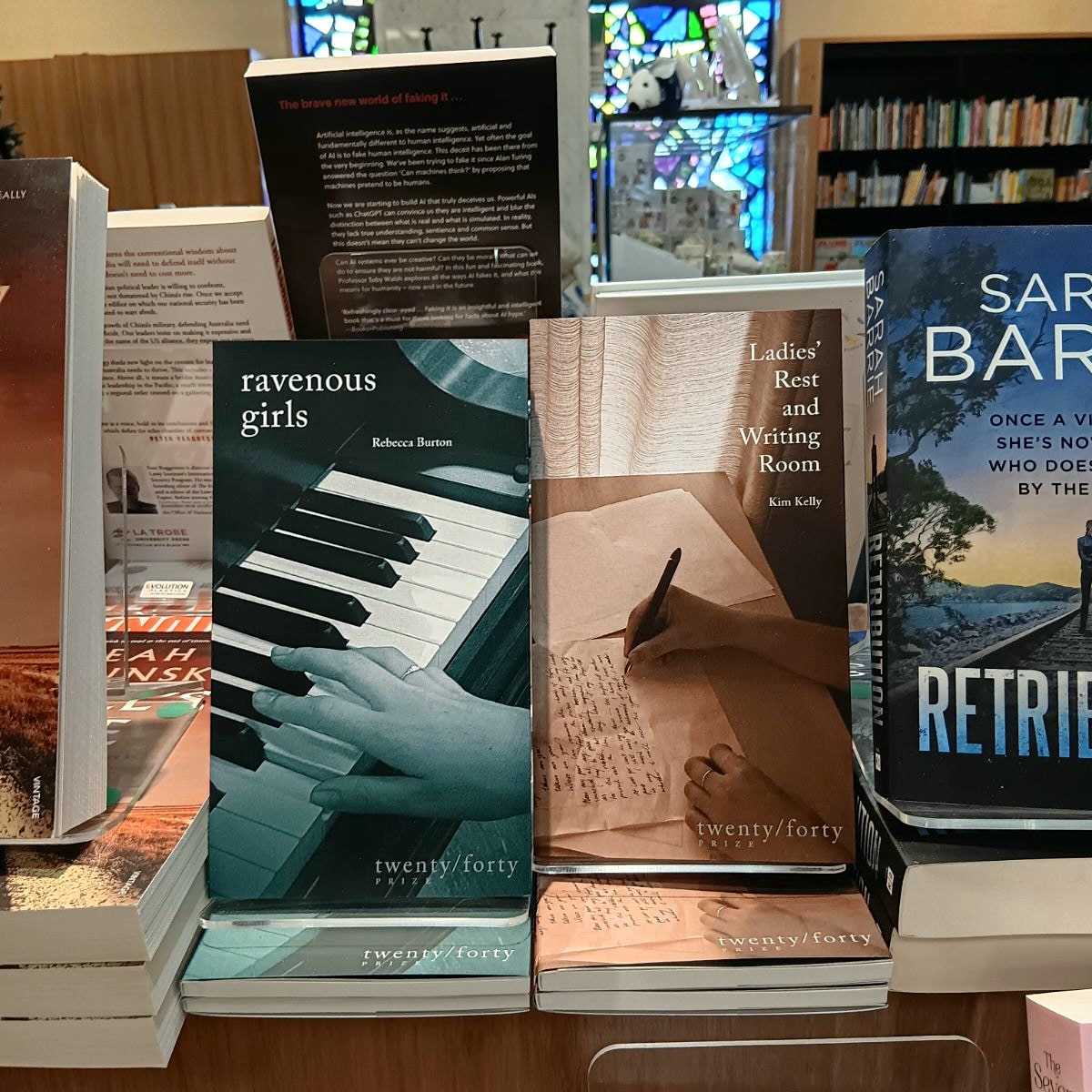
Called Ravenous Girls, it’s one of the two winners of the inaugural 20/40 Publishing Prize, and its official release date is today.

Ravenous Girls tells the story of two teenage sisters who grow close over the course of a summer holiday in the mid-1980s when one of the girls is admitted to hospital with anorexia. Narrated by the younger sister, Frankie, later in her life, it explores the chasms that lie between adolescence and adulthood, sickness and health, intimacy and loneliness —- and how the events of that summer will affect the two girls for the rest of their lives.

Long-time readers of my blog will know that this book has been a long time coming. I can’t begin to tell you how thrilled and excited I am to have won the 20/40 Publishing Prize and to see my title in print.

I’m keeping things short and sweet for today (because, you know, celebrations are in order). I’ll be back again soon with my usual kind of post, but in the meantime, for those who are interested, you can find out more about Ravenous Girls and the 20/40 Publishing Prize here, buy Ravenous Girls here, or buy both of the prize-winning novellas here. (I’m usually somewhat camera-shy, but for anyone interested, you can watch an interview with me, fellow Prize-winning author Kim Kelly and publisher Julian Davies of Finlay Lloyd here — just scroll down to the bottom of the screen to find the videos.)

PS Congratulations to Kim Kelly, author of the other winner of the 20/40 Publishing Prize this year, The Ladies’ Rest and Writing Room, which is set in the bustling streets of 1920s Sydney and tells the story of two young women, each having suffered devastating loss, who are thrown together by unexpected circumstances.