A thousand ways

Other people’s words about … making art

I can think of no-one who writes better about living in the modern world as an artist than Brandon Taylor. No-one, more particularly, who writes better about being a young, queer, Black male artist in the twenty-first century who is trying to practise art while not succumbing to the white gaze. (Taylor describes white supremacy in another wonderful passage in Minor Black Figures, as giving Black artists a tiny white man in your mind to argue with constantly all the way up and down until you died never having had a single thought that was not either about whiteness or a reaction to whiteness).

This is not my story, clearly. Still, as a (middle-aged, white, female, straight) writer, I feel a great deal of kinship with Wyeth in the passage above as he struggles with the value and integrity of his art practice. Yes, yes, yes.

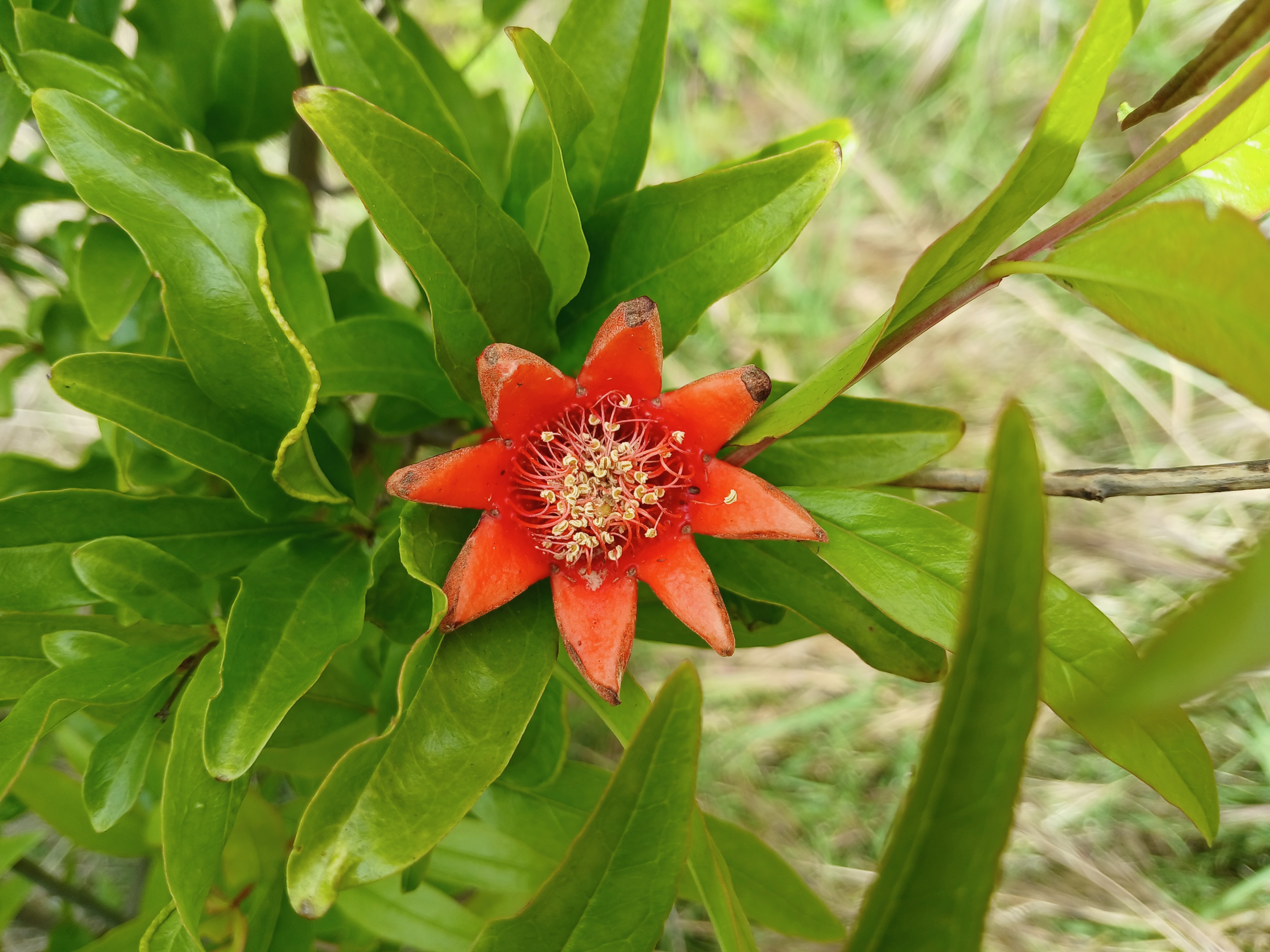
Pomegranate flower in my garden, November 2025.

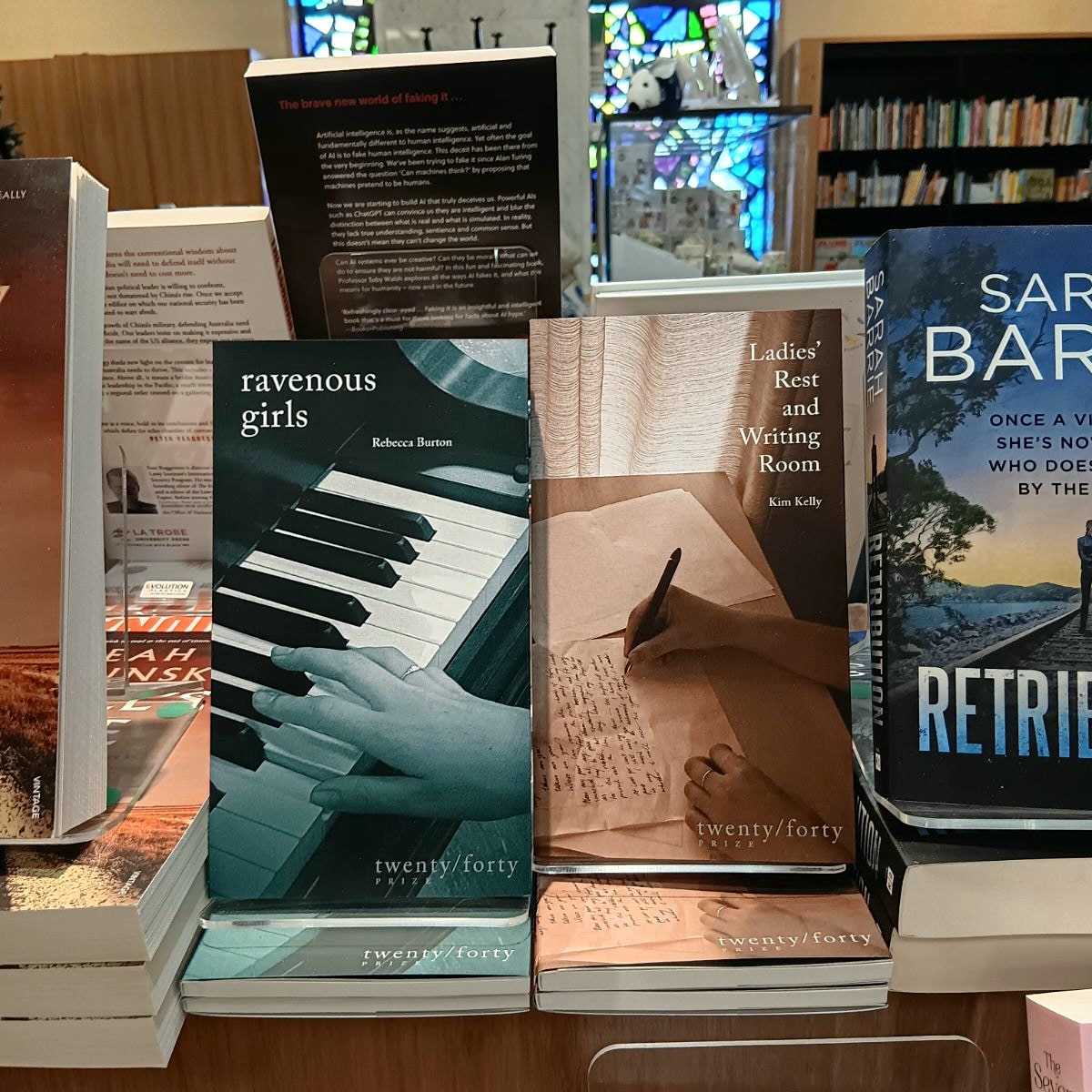
For myself, post-publication of my novella Ravenous Girls, I’m still writing. Still writing, still learning. I am often puzzled by the values I encounter in the publishing world and more broadly in the world of books and reading — puzzled by how writers seem to be valued more for their productivity and conformism than for what they have to say or how they say it. As a consequence, I don’t know if I’ll ever have another book published. But I do know that I will continue to write, and that the act of writing — when I separate myself from its place in the commercial world — is meaningful to me, in and of itself.

Or, as Taylor puts it: Anyway, it wasn’t like he was staking anything of value to anyone else — just his integrity.

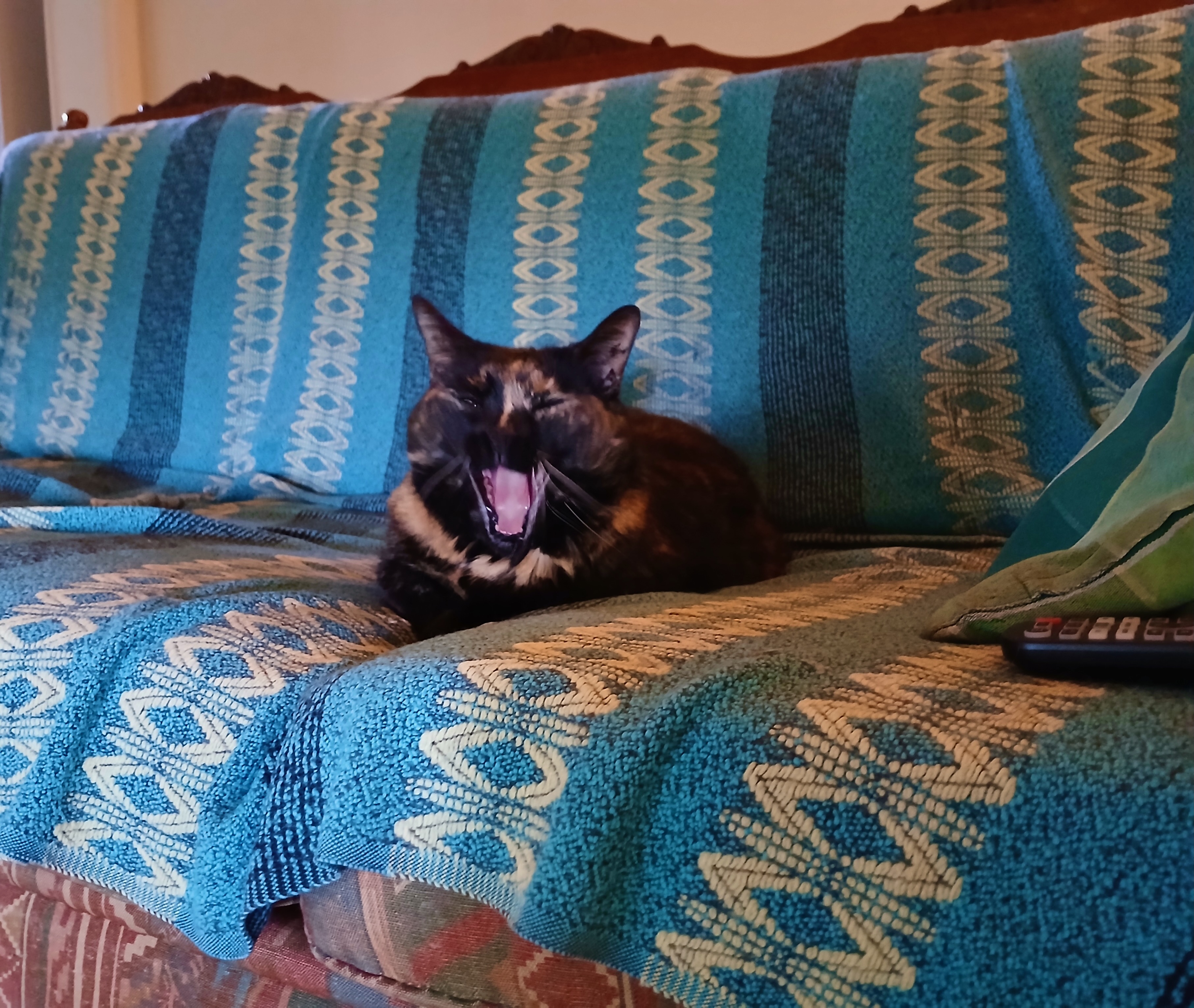
Lizzie mid-yawn, November 2025 (this cat has no issues with her own integrity!)

Lately I’ve been reading …

I’ve been exploring the world of short fiction in the last year, discovering some wonderful short stories, flash fiction and micro fiction in the process. Below I’ve listed some of the stories I’ve enjoyed — happy reading!

When the water runs dry

Other people’s words about … drought

Many years ago, when I was in my twenties and travelling overseas, my American boyfriend took me back home to meet his family and friends in Michigan. We had been living for the previous few months in Cairo, that famous desert city, and to begin with we had, like all Westerners, drunk bottled water, fearing that the local water might make us sick. But we didn’t have much money and we had read that the municipal water in Cairo was safe to drink, even for Westerners, and so after a few weeks we had transitioned to drinking tap water. Neither of us had become sick as a result, but the Cairo water was so heavily chlorinated (presumably to make it safe to drink) that even I, hailing from Adelaide, found it hard to stomach.

In my home town, the tap water was similarly heavily chlorinated — so heavily, in fact, that it was said that aeroplanes, landing in Adelaide to refuel, didn’t refill with local water. How apocryphal this story is, I am not sure, but in any case, back in Cairo my boyfriend and I had taken to adding Tang to our water to take the taste of chlorine away. When I think of Cairo now, I still think of the taste of the water we drank in our last few weeks there, tangy with artificial orange flavour. How it sat in your belly afterwards like a stone. It was in Cairo, not Adelaide, that I came to understand the meaning of the term hard water.

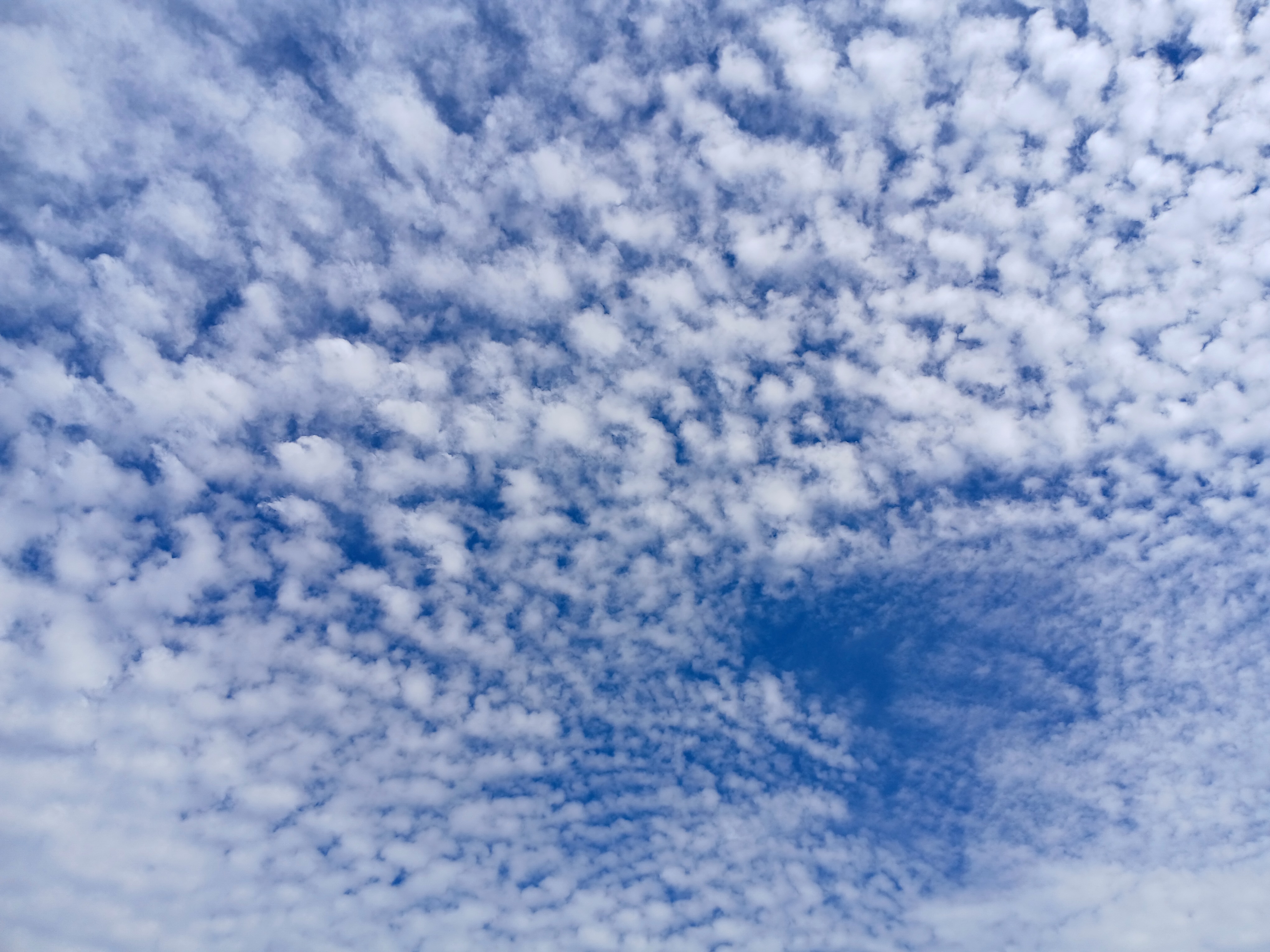
Clouds but no rain, Aldinga Beach, May 2025.

The narrator in Madeleine Watt’s quietly devastating novel Elegy, Southwest, Eloise, is a young Australian woman, twenty-nine years old in the present day, which makes her, I guess, a Millennial. And yet when I read the passage I’ve quoted above I thought of myself, most decidedly a Gen X-er, and my own reactions to water scarcity when I was travelling in the nineties. In Michigan, when my boyfriend left the tap running as he brushed his teeth, when his mother washed the dishes under a running tap, I struggled to swallow back my protests.

‘We’re surrounded by the Great Lakes,’ my boyfriend said, teasing me. ‘We’re hardly experiencing water scarcity.’

But my response to the sight of running water was instinctive, fundamental. Water was a precious resource. You didn’t waste it. You just didn’t.

This year in South Australia we’re experiencing record low rainfall. After the driest summer in thirty-three years, we’ve moved into an equally dry autumn, and we’ve been saved from water restrictions only through the existence of the desalination plant that opened in 2012 in response to the Millennium Drought. Meanwhile, the native local flora and fauna are visibly, heart-breakingly struggling to stay alive. Those beautiful wide blue skies of South Australia? I’ve come almost to dread them.

Like Eloise, I grew up watching Hollywood movies where teenagers hung out in malls with fountains in them. Like Eloise, I don’t remember seeing a fountain in our local malls (though in the much-loved TV comedy from the noughties Kath and Kim, the local shopping mall is aptly — prophetically? — named Fountain Lakes). And like Eloise, all these years later, in these years of drought after drought, I, too, want to ask: Who is in charge? Why isn’t somebody doing something?

Lately I’ve been reading …

Begin again

From the annals of The Great First Chapter Project

About a year ago my husband handed me a brochure for a retreat in a nearby mountain village. We were standing in our Beijing kitchen while the girls played make-believe dog at our feet. The brochure was more like a handmade pamphlet – four pieces of white computer paper folded in the middle and stapled three times along the crease. There was a grainy photo of a cement terrace on the cover, and a more alarming photo of people sitting in a room with their eyes closed, and text under the photos that explained something called a ‘day of silence’ and yoga and the chance for participants to reinvent themselves. My husband, Lukas, told me these things would make a good week’s vacation for me, and he smiled while I looked at the photos, but it was a distant smile.

from ‘Elsey Come Home
by Susan Conley

I’ve been thinking, as you do at this time of the year, about endings and beginnings. About the things I hoped for at the start of the year, and the things that happened, and the things that I wanted to happen but didn’t (or haven’t yet). And about next year too, of course — the same kind of things, what I hope for, what I dread, what I can plan for, what I can’t. What I might just have to take on the chin.

One of the things that happened for me this year was that, as part of winning the Deep Creek Residency, I got to have a conversation with a publisher after he’d read the first 20 pages of the manuscript I’m currently working on. I’m the kind of writer who works from project to project — that is to say, uncontracted — and I also spend years between publications, years working alone, writing and rewriting and doubting myself all the while, so this was an incredible opportunity, one I’ll be forever grateful for.

Over the course of one hour, the publisher and I talked about many things, one of which was how important it is to get the first few pages of your manuscript right. We talked about prologues. We talked about hooks. We talked about grabbing the reader within the first five pages. We talked. We talked. Oh, we talked.

And I’ve been thinking about beginnings ever since.

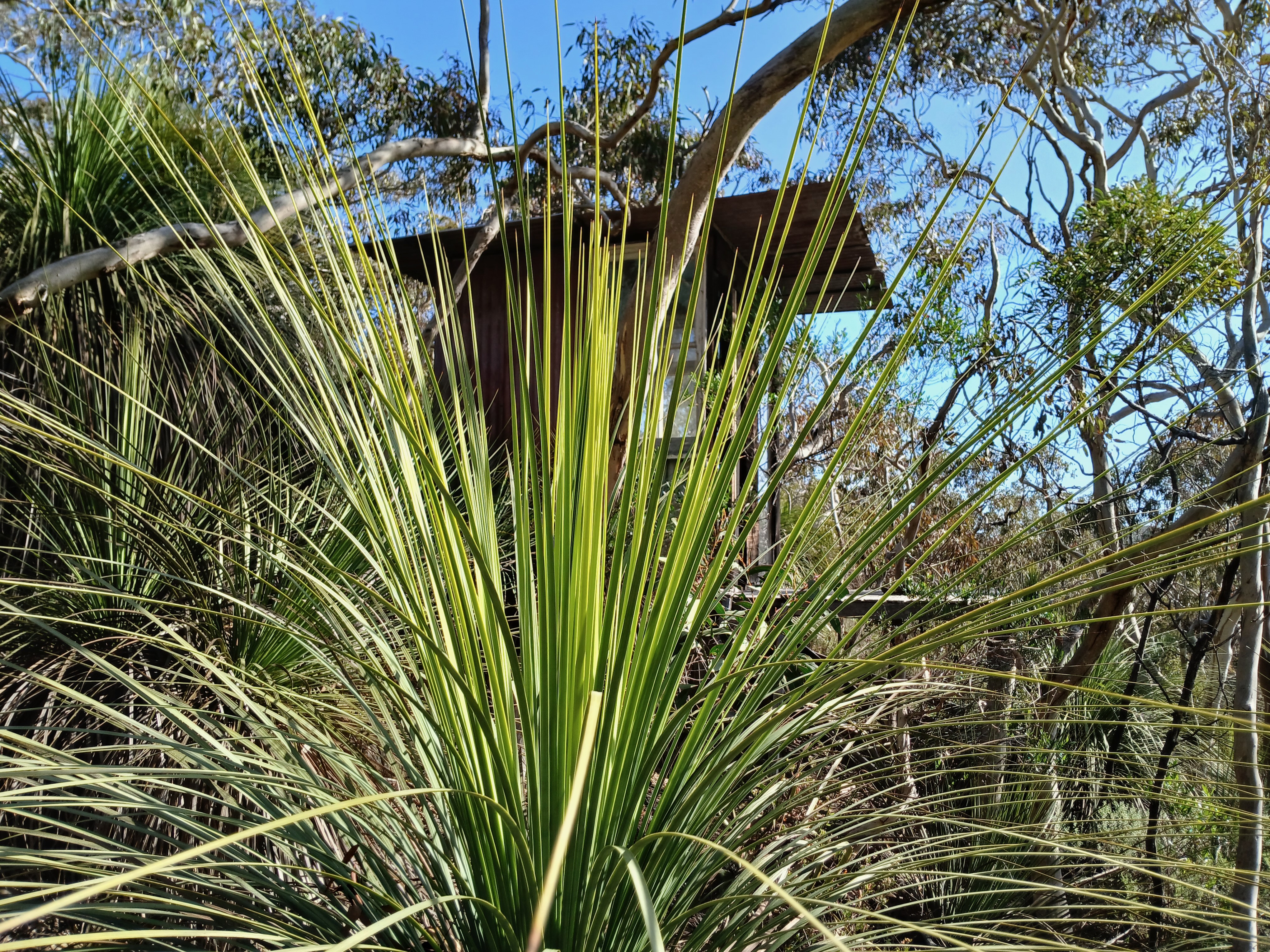
Abandoned writer’s cabin, Deep Creek, October 2024.

So much has changed for me in the last two years when it comes to writing. I’ve had my first piece of literary fiction published, my novella Ravenous Girls. I’ve begun work on my second piece. I’ve won a residency. So many beginnings! Somehow, it seems fitting to end my year of writing on this note, thinking about beginnings.

On this note, I’ve started collecting quotations from books whose first chapter, or first few paragraphs, or even — rarely — first sentences, grab me. I’m calling this The Great First Chapter project, and I can’t think of a better way to start than with the first paragraph I’ve quoted in this post, which comes from a novel I love, Susan Conley’s Elsey Come Home.

My husband, Lukas, told me these things would make a good week’s vacation for me, writes Conley, and he smiled while I looked at the photos, but it was a distant smile. There it is, the story lying ahead of us in a nutshell: the story of a husband and wife who love each other but are estranged, the story of a marriage that needs healing. I knew the moment I read this line for the first time that I would love this book, and I did.

View from the cabin, Deep Creek, October 2024.

Before I go, I wanted to mention some good news I’ve had recently. My story ‘A Farewell’ was shortlisted for the MIKI Prize and included in the MIKI Prize 2024 Anthology, which was launched last week, and just this week my story ‘City of Lights’ was highly commended in the Marj Wilke Short Story Award 2024. I’ve never really focused on writing shorter pieces before, but this year, while I was working on a longer manuscript, the one that the publisher and I were discussing, I also started writing and submitting stories here and there, where and when I can. I have a lot to learn, but when it comes to beginnings — this feels like another one.

The cabin from afar, Deep Creek, October 2024.

Lately I’ve been reading (and listening) …

End-times

Other people’s words about … the end of the world

It has been so many years — a decade of this, another decade before that of almost this. People take supplements, for vitamin D, for energy, complain the damp has reached their bones. It rains constantly and the fact of the rain, of the rain’s whole great impending somethingness, runs parallel to the day-to-day of work and sleep and lottery tickets, of yoga challenges, of buying fruit and paying taxes, of mopping floors and taking drugs on weekends and reading books and wondering what to do on dates. It’s exhausting, as it always was, to live with such a breadth of things to take up one’s attention — exhausting, the way there can be too much world, even in its final stages. Exhausting, to be so busy and so bored with no time left for either.

from ‘Private Rites
by Julia Armfield

In Private Rites, three sisters, Isla, Irene and Agnes, are living in the end-times of the world. Their world, their day-to-day, is one of endless rain, of land flooding, buildings subsiding, people drowning. It’s not the world we live in, not quite — and yet it is. When I read the passage above, I thought of the days of the Covid lockdowns, of 2020 and 2021 when on the one hand everything stopped — when no-one went out, when people lost their jobs and their lives — and yet on the other hand, people went on. They bought food; they spoke to their loved ones; they slept and ate and bickered and loved each other and tried to stay healthy and tried to stay apart from each other while also trying not to let go of each other. Armfield’s rainy, drowning world is a lot like that.

Pathway to Lameroo Beach, Darwin, August 2024.

The pandemic is over now, at least officially, and no-one speaks about it anymore, except in passing, but it has changed our lives forever. Meanwhile, in the background, there is the climate crisis, which was possibly what made it possible for a pandemic like Covid to happen in the first place, and which continues apace while we look away and go about our lives.

Vines at Lameroo Beach, Darwin, August 2024.

For me, Armfield’s words in the passage above capture all of this, the worry and the refusal to worry, the going on and the not quite going on. It is exhausting, and it is boring. Writing about it, I think, is important.

Lately I’ve been reading …

Fumbling

Other people’s words about … growing up

I also felt like I was being pushed into a world where I didn’t understand the rules. The summer before we moved, a bunch of my friends at camp were caught kissing boys behind our cabin with their T-shirts off. I didn’t even know why a girl would take her T-shirt off with a boy, but I knew it was very wrong to do so, because they all got into big trouble. I’d started going to after-school ballroom dancing lessons in New York, which was something kids from my part of Manhattan did, maintaining an Upper East Side fantasy that we all still lived in an Edith Wharton novel. At the last dance, a boy put his hand on my bottom. Again, I couldn’t understand why a boy would want to touch my bottom, but I knew I didn’t like it. But I also knew that admitting I didn’t like it — like admitting I didn’t know why a boy would want to see my chest — would make people laugh at me. So I said nothing to him, to anyone.

from ‘Good Girls: A Story and Study of Anorexia
by Hadley Freeman

One of the things I loved about Hadley Freeman’s memoir Good Girls is that, as well as recounting the years during which she lived with anorexia, she also recounts her life post-anorexia, post-‘recovery’. While the story she tells of her rapid and precipitous descent into anorexia in early adolescence is vivid and poignant, it’s the rest of her story that most spoke to me — the years during which she maintained a pattern of restricted eating that wasn’t quite anorexia but also wasn’t quite wellness or sanity, the years when she lost herself to drug addiction, the years, finally, when she began to come to some kind of peace with herself.

It’s time that eating disorder narratives did this more often, I think. I said nothing … to anyone, Freeman writes in the passage above, and, elsewhere, So much of anorexia is about suppressed conversations. But I think this is as true, if not truer, of those years when a person who has survived anorexia begins to make their way back into life, those years when a person begins to try to make something of their life other than an anorexic one. (And they are years. For most people, the transition away from anorexia is long and slow and painful.) We need, in our narratives about anorexia, to engage with the whole experience, not just one part of it, the most clearly visible part. We need to tell the whole story. I hope that in the future there will be more writers like Freeman who do so.

Looking out onto Lake Burley Griffin, Canberra, November 2023.

I’ll return to this theme in future posts, because there’s so much to unpack here, and because it’s one of the things I was most conscious of when I wrote my novella, Ravenous Girls. In fact, though, what most drew me to the passage I’ve quoted in today’s post is something else. Here Freeman, describing her pre-anorexic period, her pre-adolescent years, writes, I also felt like I was being pushed into a world where I didn’t understand the rules. This is how I felt, too — at twelve years old, at thirteen, even at fourteen. I was what people kindly describe as a late bloomer, which is to say that I entered adolescence reluctantly, lingering in childhood for as long as I could, wishing that I could somehow stay a child forever. Teenage rituals, those fumbling intimacies between boys and girls that Freeman describes here, puzzled me. I knew this marked me out as different, or at least I believed that it did, and so, like Freeman, I remained quiet. I regret this quietness now. I see, looking back, that I was muting myself, retreating into a silence that wasn’t healthy or sustainable. As Freeman notes, it’s in suppressing conversations that anorexia steps in, and that was certainly true for me.

Ravenous Girls isn’t only a story about anorexia, though that’s a part of it. It’s a story about silence and muteness. Perhaps these are themes I’ll continue to explore for the rest of my life. It’s a theme that endlessly fascinates me.

For sale, November 2023.

Lately I’ve been reading …

Immeasurable

Other people’s words about … practising art alone

But you have a little secret: while you are not making Art anymore you are at least drawing every day. To tell anyone about this would be admitting there is a hole in your life, and you’d rather not say that out loud, except in therapy. But there you are, once a day, drawing the same thing over and over: that goddamned Empire State Building [which you can see from the floor-to-ceiling window in your new apartment]. You get up every morning (or afternoon, on the weekends, depending on the hangover), have a cup of coffee, sit at the card table near the window, and draw it, usually in pencil. If you have time, you’ll ink it. Sometimes, if you are running late from work, you do it at night instead, and then you add colour to the sketches, to reflect the building’s ever-changing lights. Sometimes you draw just the building and sometimes you draw the buildings around it and sometimes you draw the sky and sometimes you draw the bridge in the foreground and sometimes you draw the East River and sometimes you draw the window frame around the whole scene. You have sketchbooks full of these drawings. You could draw the same thing forever, you realise. ‘No man ever steps in the same river twice, for it’s not the same river, and it’s not the same man’ is a thing you read once. The Empire State Building is your river. And you don’t have to leave your apartment to step in it. Art feels safe for you again, even though you know you are not getting any better at it, that the work you are making could be sold to tourists on a sidewalk outside of Central Park on a sunny Saturday and that’s about it. There’s no challenge to it, no message, just your view, on repeat. But this is all you can do, this all you have to offer, and it is just enough to make you feel special.

from ‘All Grown Up
by Jami Attenberg

I have conflicting responses to the passage above. In many ways, Attenberg’s narrator, Andrea, reminds me of myself, although her creative practice is art and mine is writing. I certainly know what it’s like to stop showing people the material you are creating, to keep your practice to yourself, to see it as your own little secret. And I know the feeling that comes with doing this, too, which Andrea articulates elsewhere in her narrative — that feeling that what you are doing, the material you are creating, the act of creating it, is barely scratching a feverish itch.

Something changed for me about a year ago, though, after which I began tentatively showing people something I’d written — a few people, a very few people. This gave me the courage to do more with that particular piece of writing, and as a result I’m not in the same place anymore as Andrea, although all I can say about that for now is that I do have a piece of writing coming out later this year — a small piece, but a piece nonetheless — and I will tell you more when I can.

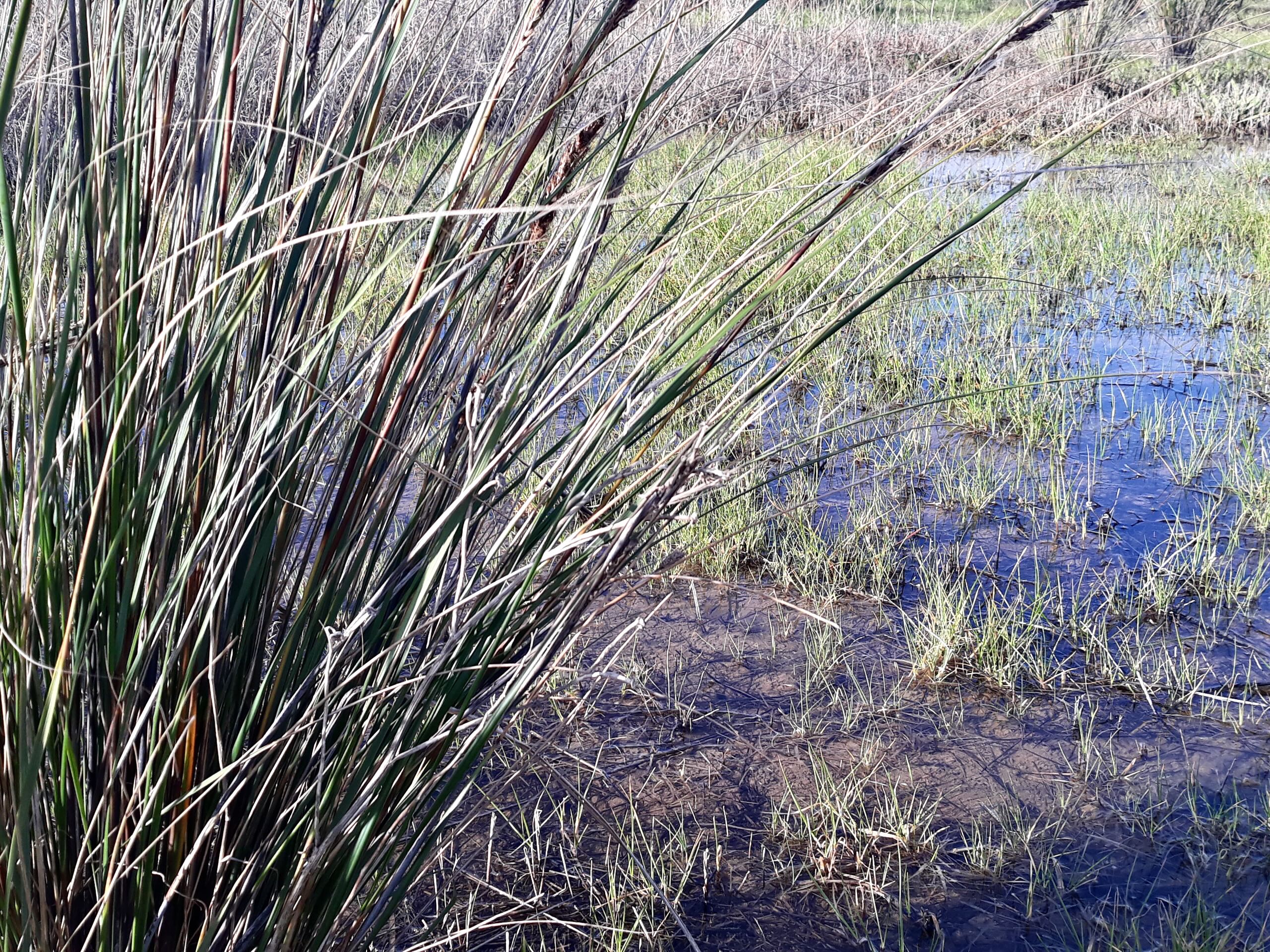
Reeds in the marsh, The Washpool, July 2023.

But even if things hadn’t changed for me, I suspect that I’d still finding myself wanting to argue with Andrea as much as I’d find myself wanting to agree with her. Because the thing that I learned during those years of writing alone, writing unseen, was that there is a value to creating something — art, literature, whatever — that has nothing to do with other people’s opinions, nothing to do with productivity or acclaim or results. What I learned (very slowly, very painfully) is that creating just your view, on repeat can in fact teach you something; it can take you somewhere new in your work. You may not be able to measure the work you create in private; you may not be able to quantify it. But when did art become something we need to measure and quantify, anyway? When did it become an outcome, a product?

I believe, although it’s taken me years to come to this understanding, that the practice of creating has its own value. The work you do as you create something, that feeling you get as you practise it of reaching out, of bringing something into the world, is an act of connection and hope. This is valuable. This is meaningful. And it can — it can — be enough.

Lately I’ve been reading …

It’s a long list today, as I try to catch up on some of my reading over the last few months. I hope you’ll enjoy one or two of the pieces I’ve listed here.

Solace

Other people’s words about … stepping outside

I went outside. Often I walked till the late hours. The sky’s was a darkness I could deal with. I wanted to stop living by the measures of everyone else: before and after, death and life, sea and self. Being out there — in towns where I spoke to no-one, in green deserted parks, along the edge of the gulf’s water — allowed me to turn inwards. It reflected the silence I felt in me. I wanted to be outdoors for good. Yes, I went outside.

from ‘The Memory Artist
by Katherine Brabon

Pasha, the narrator of Katherine Brabon’s novel The Memory Artist, is a Russian man in his mid-thirties, a writer trying to make sense of his life post-glasnost, post-perestroika. While the story in Brabon’s novel is about the effect of political repression on people, and particularly on artists, I found uncanny echoes in Pasha’s voice of my own thoughts and feelings (although not, clearly, in response to any political repression or trauma, neither of which I have experienced).

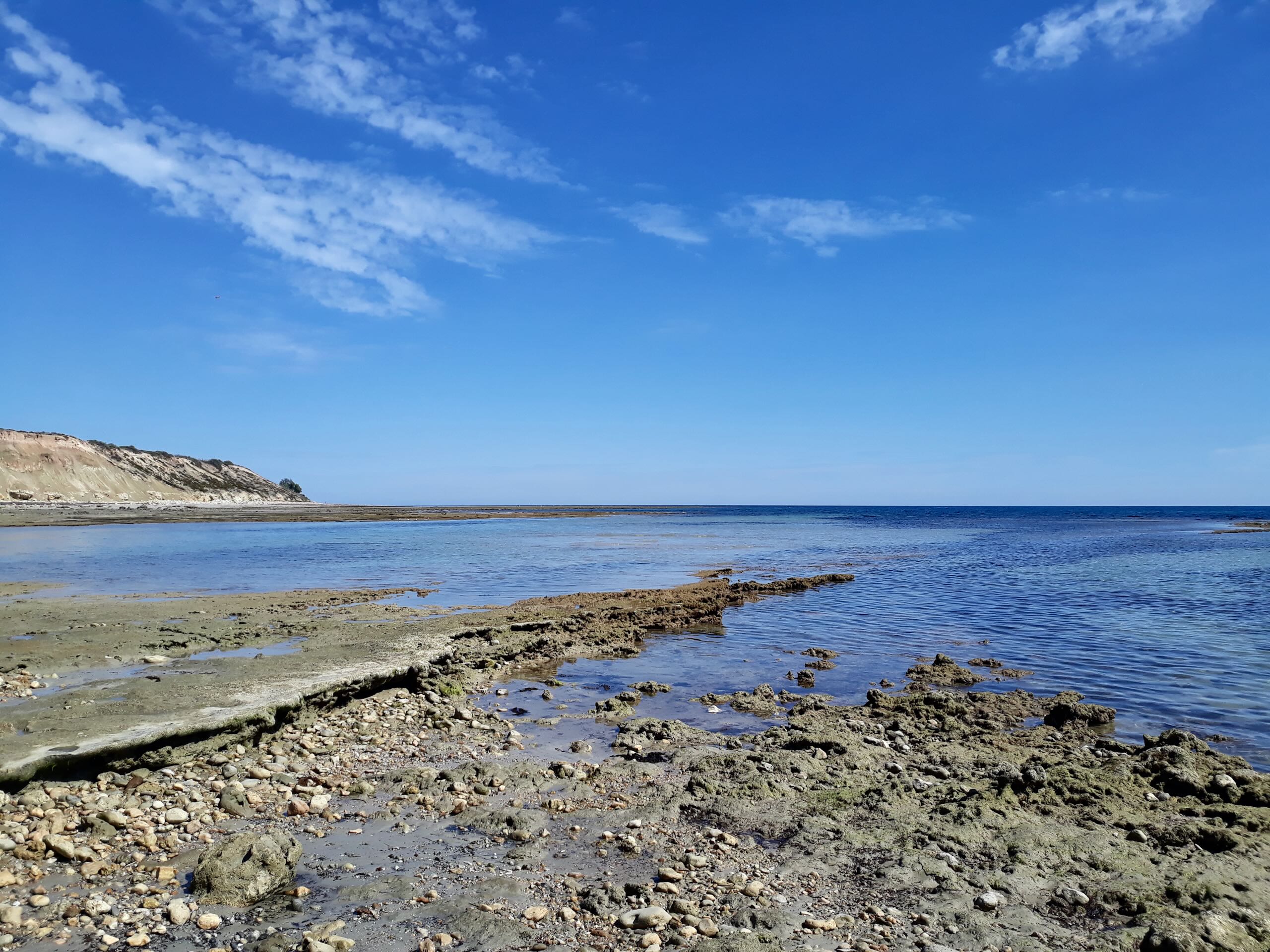
Sky and Sea, Snapper Point, April 2023.

I wanted to stop living by the measures of everyone else, Pasha writes, by which he means not that he wants to stop living, but that he wants to accord his own values to this life he is living. Where he finds it most possible to do this is outside, under the great arch of the sky.

It’s a similar impulse, I think, that makes running so appealing to me — running through the scrub, running on the beach, running beside the sea. It’s outside where I find some of the things I most long for in life: silence, neutrality, the sense that I could (if I went on running long enough, if I stayed outdoors long enough) dissolve.

Sometimes, when I’m inside going about my day — working, sleeping, eating, showering — I remind myself that the sky is just a few steps away, literally at my feet. It feels to me like the very definition of solace.

Sun and shadow, Aldinga Beach, April 2023.

Lately I’ve been reading …

An apology of sorts: today’s list is lengthy, I know, but it’s been a while since I last posted here, and meanwhile I’ve been enjoying my online reading! I hope you will dip in and out of the list below and find something that you enjoy.

Replenish

Other people’s words about … being alone

As the train left the station, I felt a sense of relief. I wanted to walk in the woods and among the trees. I wanted not to speak to anyone, only to see and hear, to feel lonely.

from ‘Cold Enough for Snow
by Jessica Au

I’ve been thinking a lot this year about solitude and loneliness, about participating socially and withdrawing. Though popular scientists and the mainstream media continue to exhort us to maintain our social connections as we age, both for the health of our brain and for our psychological wellbeing, I have come to believe that it’s just as important to be comfortable in your own skin as it is to be comfortable in a social context.

Garden pickings (1), October 2022.

Some years ago a friend said to me that what she admired most in me was that I am a person who has a rich inner life. I have often thought about her words and what they might mean. I tend to think of myself as introverted and shy, a social choker, and I often find myself wanting because of this. But the truth is that when I let go of my expectations of myself as a social creature, I am happy wandering the avenues of my mind.

I think that’s why I find such accord with Jessica Au’s words in the passage I’ve quoted above. What if loneliness wasn’t just a negative version of solitude? Why not embrace it for itself? In fact, why not seek replenishment from it?

Truly: why not?

Garden pickings (2), October 2022.

Lately I’ve been reading …

Only connect: Those small moments

Other people’s words about connection

Paul sat alongside Julian on the kitchen floor. There was a long moment that they didn’t touch, or even look at each other. Paul could feel them staring at the same patch of wall, the scar … in the yellow paint. When Paul breached the distance he expected Julian to recoil, but he didn’t. Paul had barely touched his arm when Julian collapsed against him. He lay with his head on Paul’s lap, hardly making a sound but for the scattered rhythm of his breathing.

From ‘These Violent Delights’
by Micah Nemerever

Here in Australia, while countries all over the rest of the world have spent the last few months steadily vaccinating their populations against Covid-19, our population has remained largely unvaccinated. But now, with the kind of predictability that it seems only our political leaders were unable to predict, the Delta strain of Covid-19 has arrived on our shores. And because, without vaccination, lockdown is the only form of protection we have against the virus, we are — state by state — moving into lockdown once again, as the new strain of infection spreads. South Australia, where I live, went into a strict seven-day lockdown at 6pm on Tuesday night. The lockdown will be extended if the outbreak continues to grow, which is what has happened in New South Wales and Victoria.

Right now, I’m working from home. I’m lucky to be in the kind of work where this is possible, I know, but that’s the best I can say about the situation. Lockdowns are funny things, aren’t they? They do funny things to your mind, to your thinking. Maybe they lock your mind down, too?


Turn your back. Look away.

Anyway, in my spare time during lockdown I am reading, reading, reading. (Also writing a little, too, but that’s another story.) The libraries are closed but I have enough books from my last trip to my local library to tide me over, at least for now. And so I’m reading stories that transport me to other places and times, sentences that move me to laughter and tears, words that depict small moments of connection, like the moment between Julian and Paul in the passage above.

Everyone has their own way of coping, I know. Me? When things are tough, I collapse into books the way Julian collapses into Paul. I can think of far worse ways to collapse.

Lately I’ve been reading …

Chasing clouds

Other people’s words about … running

Once he warmed up, once the tension was gone, once the sweat had properly broken and his breathing was rhythmically heavy and every twinge of stiffness and pain from previous workouts had been obliterated by adrenaline and endorphins, when all of that had happened, there was almost nowhere on earth he’d rather be, even on up-and-down back roads with no shoulder or, as now, on the old railroad path too crowded with entitled cyclists or groups of power-walking mums in their pastel tops and self-crimped hair.

For forty-five minutes, or an hour, or an hour and a half, the world was his, and he was alone in it. Blissfully, wonderfully, almost sacredly alone.

From ‘Release’
by Patrick Ness

One of the things I think I most love about running is that the act itself is so full of mysterious contradictions. For example, it’s hard work, and yet I look forward to it as a luxurious treat, in much the same way I look forward to eating an oversized piece of decadent chocolate cake. Similarly, when I’m running I feel as though I’m moving purposefully forward, following a path to something new. And yet it’s obvious that, unless your plan when you set out is to run away and never return, any run is circular, ending right back where it began.

Even the sense that I am on my own when I run — blissfully, wonderfully, almost sacredly alone, as Patrick Ness puts it in the excerpt above — is unreliable. I am never alone when I run. I run on roads, on shared paths, on trails, on beaches. There are always others inhabiting the space with me, running or walking or cycling or just sitting on a bench enjoying the view (like the views you see in the photographs I took for this post). Running, even for a lone runner like me, is an entirely communal activity.

Another contradiction: sometimes, when I feel unwell — headachey, perhaps, or queasy or tired or sleep-deprived — I know that from the moment I step outside those symptoms will leave me for the duration of my run. Probably, I’ll feel unwell again afterwards; running isn’t ever, in my experience, a cure. But for those fifteen or thirty or forty-five minutes when my feet are drumming the ground in the old, familiar rhythm, I know I’ll be symptom-free.

I have no explanation for this. It’s just part and parcel of this beloved thing I know as running.

Maybe that’s why running appeals to so many different kinds of people — because the concept itself, what it involves, what it means, is so flexible, so all-encompassing. Some of us run to lose weight; some of us run to get fit; some of us run to break records; some of us run to find joy. Whatever the reason, those of us who are physically lucky enough to be able to consider running for the long term, in whatever fashion we can manage, have one thing in common.

We know it makes us feel like a better version of ourselves.

Lately I’ve been reading …