
From the annals of The Great First Chapter Project
About a year ago my husband handed me a brochure for a retreat in a nearby mountain village. We were standing in our Beijing kitchen while the girls played make-believe dog at our feet. The brochure was more like a handmade pamphlet – four pieces of white computer paper folded in the middle and stapled three times along the crease. There was a grainy photo of a cement terrace on the cover, and a more alarming photo of people sitting in a room with their eyes closed, and text under the photos that explained something called a ‘day of silence’ and yoga and the chance for participants to reinvent themselves. My husband, Lukas, told me these things would make a good week’s vacation for me, and he smiled while I looked at the photos, but it was a distant smile.
from ‘Elsey Come Home‘
by Susan Conley
I’ve been thinking, as you do at this time of the year, about endings and beginnings. About the things I hoped for at the start of the year, and the things that happened, and the things that I wanted to happen but didn’t (or haven’t yet). And about next year too, of course — the same kind of things, what I hope for, what I dread, what I can plan for, what I can’t. What I might just have to take on the chin.
One of the things that happened for me this year was that, as part of winning the Deep Creek Residency, I got to have a conversation with a publisher after he’d read the first 20 pages of the manuscript I’m currently working on. I’m the kind of writer who works from project to project — that is to say, uncontracted — and I also spend years between publications, years working alone, writing and rewriting and doubting myself all the while, so this was an incredible opportunity, one I’ll be forever grateful for.
Over the course of one hour, the publisher and I talked about many things, one of which was how important it is to get the first few pages of your manuscript right. We talked about prologues. We talked about hooks. We talked about grabbing the reader within the first five pages. We talked. We talked. Oh, we talked.
And I’ve been thinking about beginnings ever since.
 Abandoned writer’s cabin, Deep Creek, October 2024.
So much has changed for me in the last two years when it comes to writing. I’ve had my first piece of literary fiction published, my novella Ravenous Girls. I’ve begun work on my second piece. I’ve won a residency. So many beginnings! Somehow, it seems fitting to end my year of writing on this note, thinking about beginnings.
On this note, I’ve started collecting quotations from books whose first chapter, or first few paragraphs, or even — rarely — first sentences, grab me. I’m calling this The Great First Chapter project, and I can’t think of a better way to start than with the first paragraph I’ve quoted in this post, which comes from a novel I love, Susan Conley’s Elsey Come Home.
My husband, Lukas, told me these things would make a good week’s vacation for me, writes Conley, and he smiled while I looked at the photos, but it was a distant smile. There it is, the story lying ahead of us in a nutshell: the story of a husband and wife who love each other but are estranged, the story of a marriage that needs healing. I knew the moment I read this line for the first time that I would love this book, and I did.
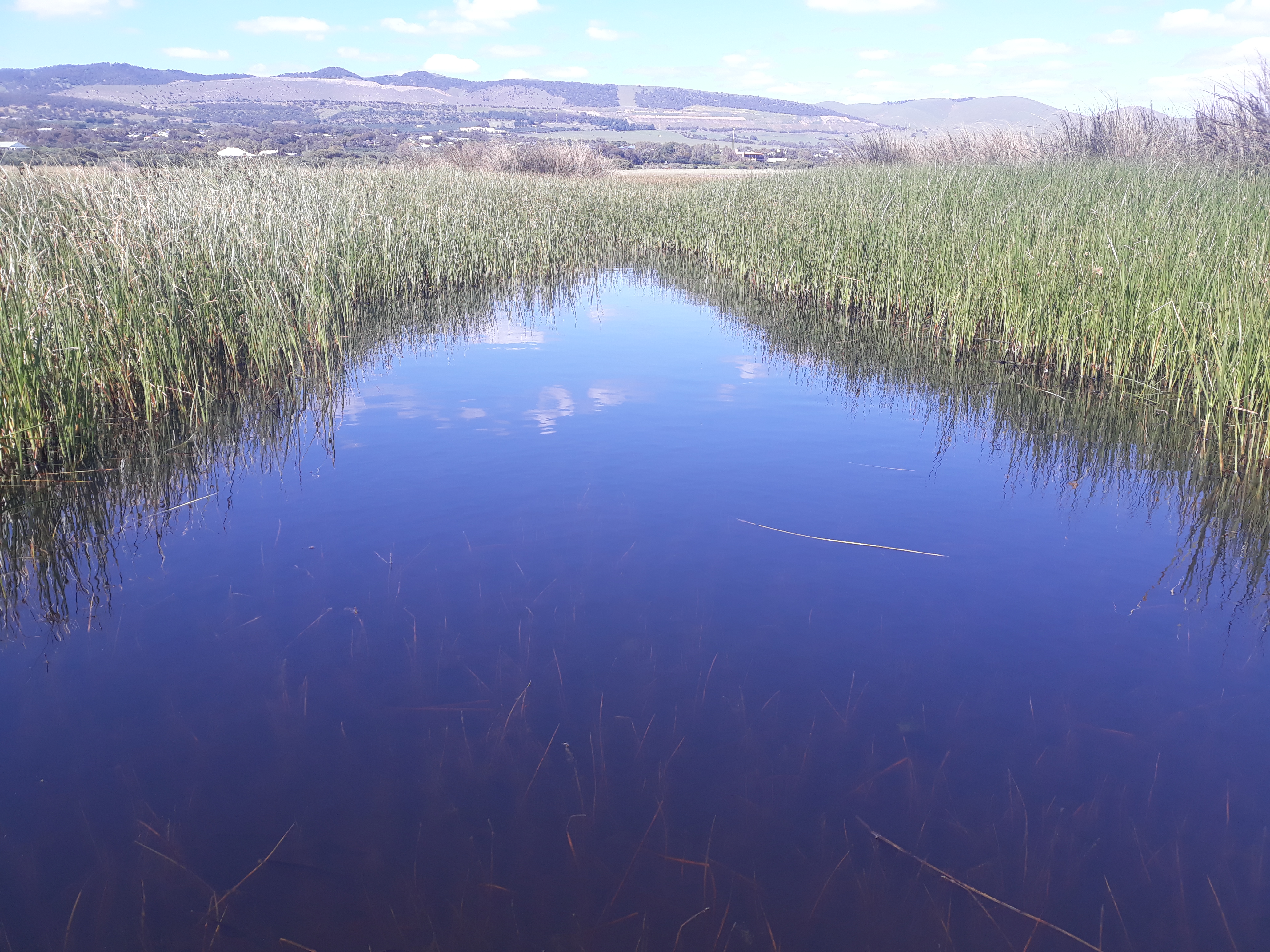
 View from the cabin, Deep Creek, October 2024.
Before I go, I wanted to mention some good news I’ve had recently. My story ‘A Farewell’ was shortlisted for the MIKI Prize and included in the MIKI Prize 2024 Anthology, which was launched last week, and just this week my story ‘City of Lights’ was highly commended in the Marj Wilke Short Story Award 2024. I’ve never really focused on writing shorter pieces before, but this year, while I was working on a longer manuscript, the one that the publisher and I were discussing, I also started writing and submitting stories here and there, where and when I can. I have a lot to learn, but when it comes to beginnings — this feels like another one.
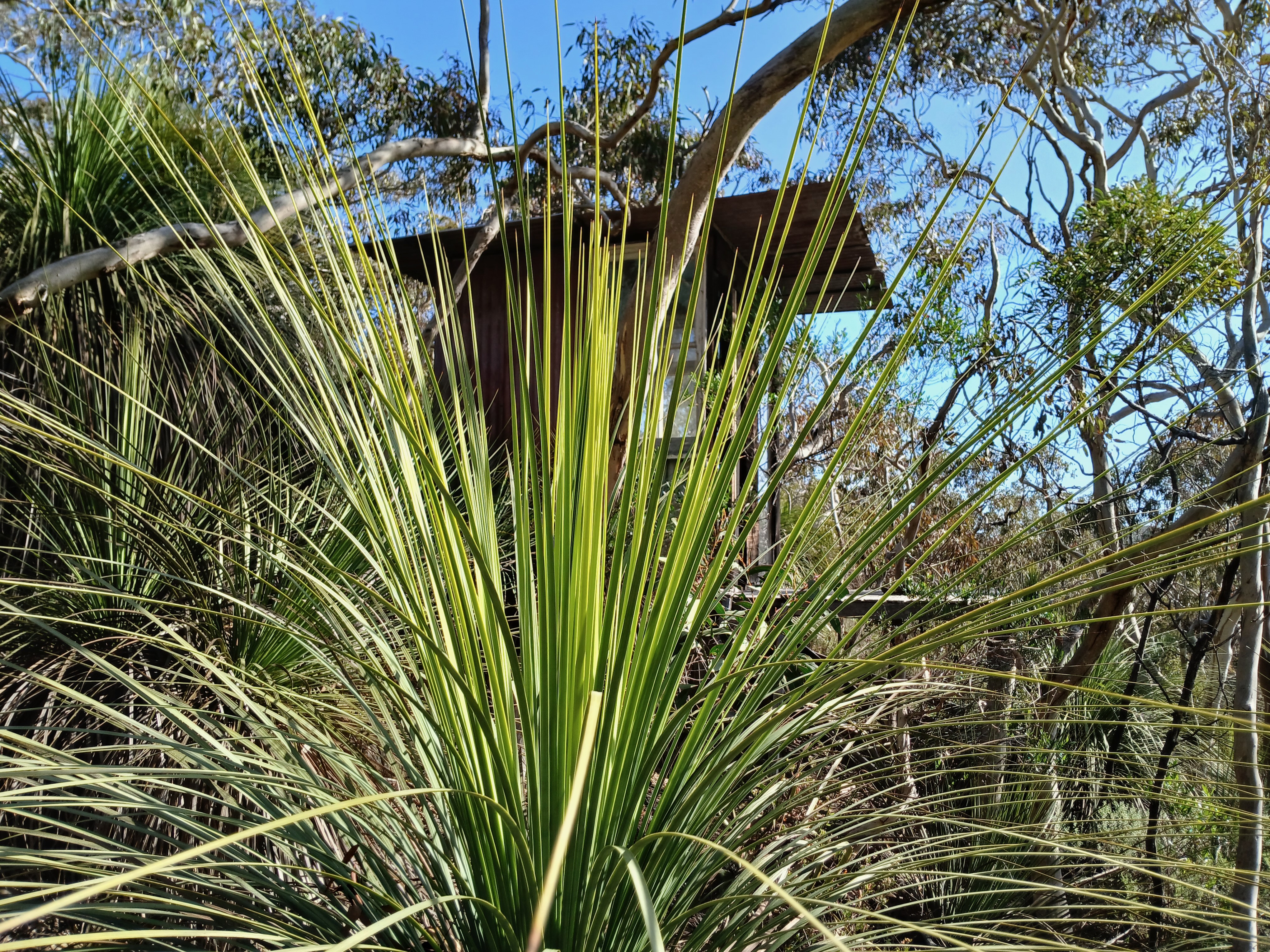 The cabin from afar, Deep Creek, October 2024.
Lately I’ve been reading (and listening) …
-
- Begin again: On the theme of beginnings, the most beautiful song I know is this one, by Measure.
- Don’t fuck around second-guessing the market. Write the book only you can write. Don’t write for an imagined audience. Don’t write for an imaginary critic. Challenge yourself according to your own intensely demanding critical apparatus. Give it to people who will be harsh. Read it aloud. Re-write and re-write and save the drafts: Timely words of encouragement from Max Porter, in conversation with Dizz Tate back in 2015.
- After you’ve learned to see every date, every man who expresses interest, every room you’re invited up to, as a plot point on the way to the inevitable climax where you get hurt—it makes your mind tangle up, like a sewing machine on a knotted stitch: Stella Mehlhoff, on the effect of coming of age as a post-#MeToo generation member. I’ll be honest, as a Gen X-er I find this piece unbearably sad, although I’m glad I read it. The #MeToo movement, Mehlhoff tells us, has made her generation of women afraid of sex, afraid of romance, afraid of dating. Is this true across the board? I hope not.
- Duck is delicious. Why can’t we have that?: This year, both as a reader and a writer, I discovered flash fiction, otherwise known as microfiction, or stories that are under 1,000 words. In this piece, Esquire offers its own version by sending out napkins around Thanksgiving to five authors and asking them to write a piece of fiction that fits on the napkin. The idea is quirky and genius, and I enjoyed most of the pieces here.
- If sadomasochism is a running theme in Normal People, Conversations with Friends and Fifty Shades of Grey, it is not because any of these novels evince the slightest interest in the transformative potential of subversive sex but rather because sexual quirks are readily legible as a form of deviance in want of normalization: I’m a huge fan of Sally Rooney’s fiction, although I can’t always pinpoint why. Her writing draws me in, moves me and makes me think, and yet it also troubles me. This piece, by Becca Rothfield back in 2021, back when Rooney had published only two novels, articulates some of the things I feel about Rooney’s writing — it’s long, but worth the read.














 twenty-one words