The narrow trail I had been following came to an end as it rose to meet the old grey asphalt road that runs up to the missile guidance station. Stepping from path to road means stepping up to see the whole expanse of the ocean, spreading uninterrupted to Japan. The same shock of pleasure comes every time I cross this boundary to discover the ocean again, an ocean shining like beaten silver on the brightest days, green on the overcast ones, brown with the muddy runoff of the streams and rivers washing far out to sea during winter floods, an opalescent mottling of blues on days of scattered clouds, only invisible on the foggiest of days, when the salt smell alone announces the change. This day the sea was a solid blue running toward an indistinct horizon where white mist blurred the transition to cloudless sky.
from ‘Wanderlust‘ by Rebecca Solnit
Rebecca Solnit’s words remind me of my own jaunts to and from the sea. So, no more words from me today — just a gallery of pictures I’ve taken over my own years of oceanside ramblings. You’ll recognise many of these pictures from earlier posts, no doubt, but collected here they convey, I hope, the many moods of the sea.
(Hover over the pictures to see their connection to the words above.)
Surrender to the bigger things. Let them hunt you down until they find you.
An ocean shining
Green on the overcast days
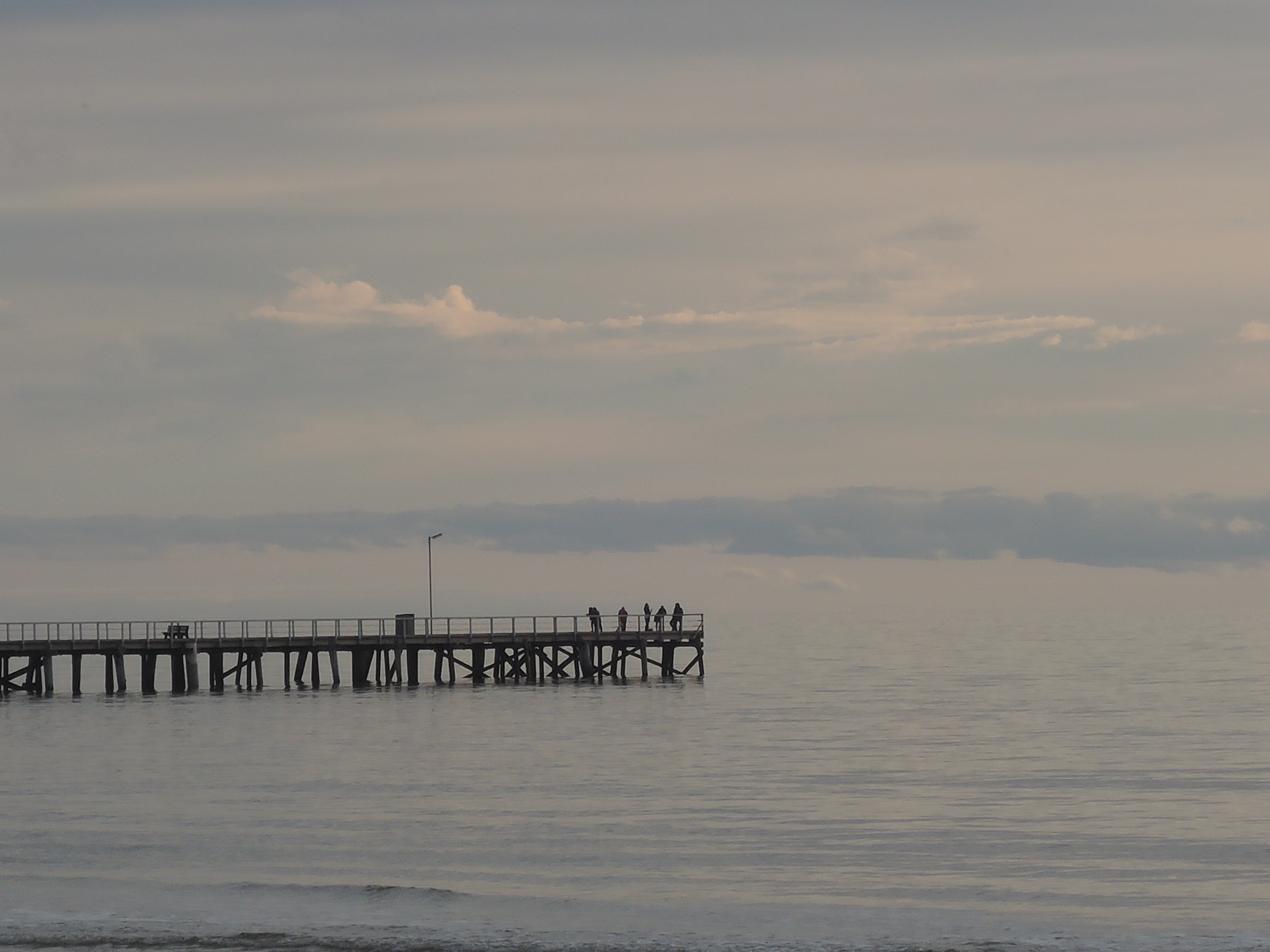
… solid blue running toward an indistinct horizon …
A bird calls with a sound like a pot being scraped,
and the moist air is cool on our skin.
from ‘The Collaborator‘ by Margaret Leroy
I love the way that worlds sometimes collide in the space of a few words. What kind of bird is Margaret Leroy describing here? I’m not sure: the characters in her book live on the Channel Islands during the Occupation in World War II — which is a long way from Australia.
And yet when I read her phrase, I thought instantly of our native red wattlebirds.
Australian birds are known for their startlingly loud calls. In fact, biologist Tim Low has devoted a whole book to this theme. In Where Song Began, he proposes that Australian plants produce such an abundance of nectar that some birds — honeyeaters in particular, including wattlebirds — have evolved with strong aggressive tendencies, which enable them to fight over and defend their sources of nectar. Their loud, harsh calls are a part of that aggression. (You can find a brief summary of this argument here.)
I have struggled for years to come up with words to describe the calls that red wattlebirds make. They are a mixture of chuckles, coughs, clicks, screeches, rattles, squawks and whistles: you can hear a sample on the website Birds in Backyards, whichprovides a link to a recording on this factsheet. (Click on ‘Top 40 Bird Songs’ at the top of the factsheet, and then click on the ‘Soundfile’ for the red wattlebird, which is the fourteenth bird on the list. But turn your volume up first. Wattlebirds are very noisy.)
Wattlebird on a wire
The recording misses something, though, as do my words. Neither effort really conveys the sound of the wattlebird’s call accurately: somehow, Margaret Leroy’s words come closer.
Serendipity, perhaps? Now, whenever I hear a wattlebird call, I will think of these words.
He put his hand out. One drop of water and then another.
Spitting, his [dad] called this kind of rain.
Not enough to fill the creeks, but enough to make the ferns droop and the ground smell like wet dog.
View of Perth and the Swan River from Kings Park Sunday 23 October 2016
Recently, I spent a weekend in Perth, Western Australia, celebrating a friend’s fiftieth birthday.
Read that sentence again. It doesn’t sound like much, does it? I hopped onto a plane in Adelaide on Friday afternoon, and arrived in Perth two hours later; I rented a small, sunlit apartment in West Perth for two nights; and then late on Sunday afternoon, I hopped onto another plane and flew back to Adelaide. This is the kind of thing people do all the time, if they can afford to. It’s what people call a ‘holiday’, a ‘break’.
And this trip was both of those things, and for me, that seems a little like a miracle.
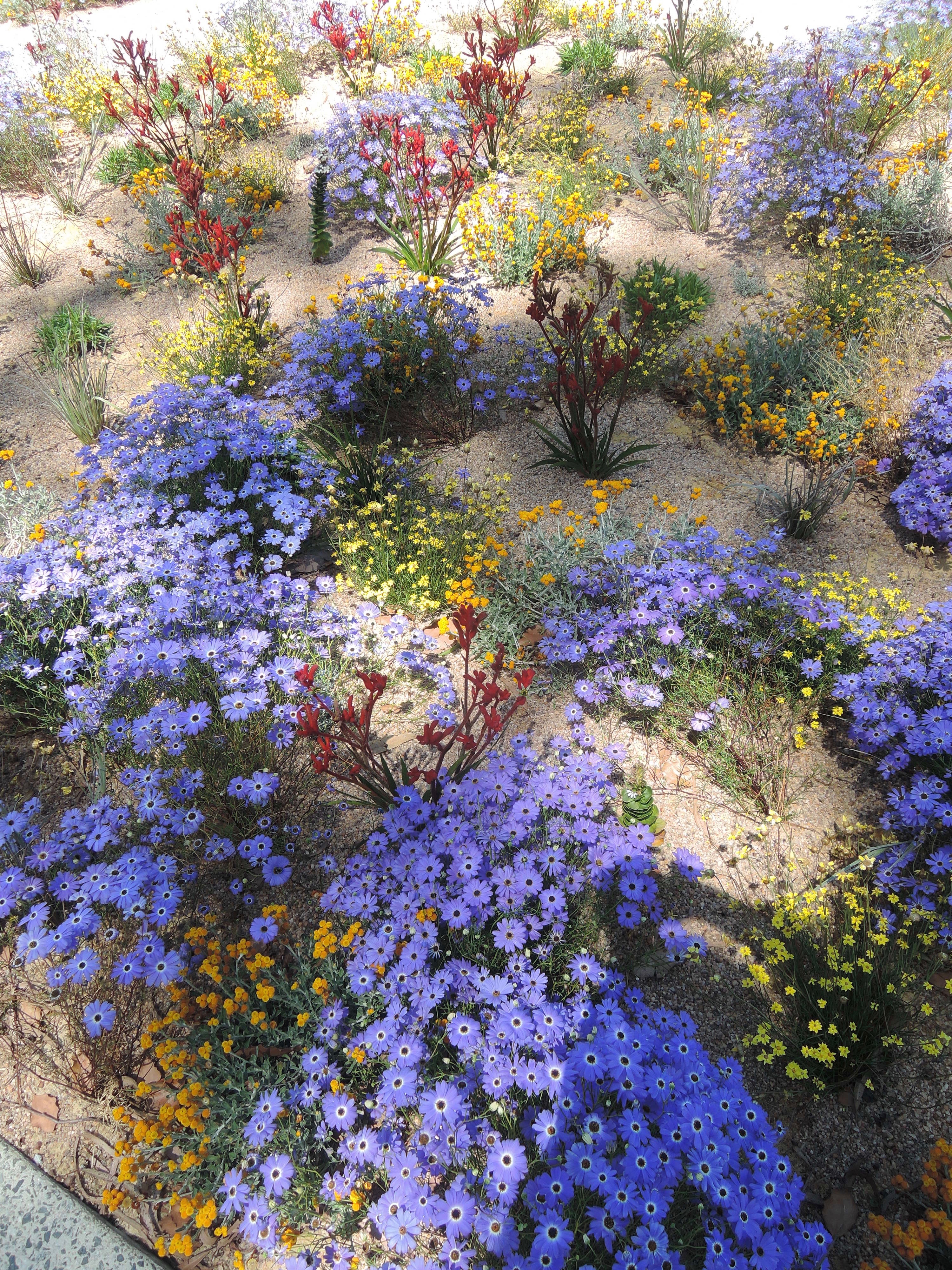
Wildflowers in Kings Park Sunday 23 October 2016
In my twenties, I spent over two years travelling and living overseas: waitressing in London, volunteering on an archaeology dig in Texas, working in a factory and then an ice cream shop in Germany, and, in my last year, teaching English in Cairo and Jakarta. I was a well-seasoned traveller by any standards. By that age, I had already had emetophobia — a fear of nausea and vomiting, which I have mentioned in passing on this blog before (here, for example) — for over fifteen years. It caused the odd anxiety attack, but nothing else. It certainly didn’t stop me from my travels.
But then, in my late thirties, something happened. Something — some edifice of bravery or stability or spontaneity inside of me — crumbled. For some reason, I began to feel queasy and nauseated more often, and so, because of the emetophobia, I began to feel anxious more often. The sickness and the anxiety always accompanied each other: sometimes it was hard to tell which came first. (This is the emetophobe’s eternal dilemma: Do I feel anxious because I am nauseous? Or do I feel I nauseous because I am anxious?)
My illness and anxiety seemed to be magnified when I travelled interstate or overseas. They became even worse if I was travelling in the company of people I loved, people I really wanted to travel with. I booked rash, non-refundable trips to visit my dearest friends who live interstate — Perth, New South Wales — and then cancelled my bookings, losing all the money I’d spent in the process. I planned holidays in Portugal and New York, with family, with friends, with people I loved, and then I cancelled those trips, too. I wanted to go on those trips, but I felt that I couldn’t.
In the end, I stopped going on holidays anywhere beyond the state borders of South Australia.
I just stopped.
Kings Park: more wildflowers
Fear of holidays is a very strange fear to have. Adelaide author Elisa Black is one of the few people who understand it:
The anxiety during this trip was so intense that it is almost too much to remember, no matter how hard I try. I know I thought I was going crazy. I know I was exhausted …
Constant dread, that is what I felt … What I wanted was to not feel this way, to be normal, but if that wasn’t possible then I wanted to crawl into a hole where I could be safe, where everything could be controlled …
from ‘The Anxiety Book‘ by Elisa Black
Those phrases: constant dread, and I wanted to crawl into a hole where I could be safe. They say it all. For me, they speak to a form of social anxiety. For many years, I have been ashamed of my phobia. What is there to fear about vomiting? And so, when I get nauseous, and the nausea triggers my anxiety, I am also flooded with feelings of shame. I try to act ‘normally’ during the course of an attack of nausea, but my terror and my shame impair my performance. (Note that word, with all its implications: ‘performance’.)
What I long for when I am nauseous is to be alone. I long for some kind of sanctuary.
Kings Park: A spot of shade
Fear of holidays and travel is one thing. But then, too, there’s the fear of flying.
Winter in Adelaide this year has been very stormy. We have had one of the rainiest winters ever recorded; we have had statewide power cuts; we have had floods. It is spring now, and yet winter still hovers and menaces. The night before I left for Perth, there was another storm, and when I went to walk my dog the following morning, I saw that branches from the pine trees that line the esplanade by the beach had come down, barring our path over the dunes.
It did not seem a very auspicious day for flying. All that wind! All that turbulence! I wondered — I truly wondered — if I could get on the plane and fly to Perth as I’d promised.
Wildflowers in Kings Park Saturday 22 October 2016
Oddly, I am not actually afraid of the act of flying itself: unlike many anxious fliers, I don’t fear plane crashes or hijacking. I once knew a woman who feared flying because she had a fear of sharks, but I don’t share this particular terror. My fear is, I think, more like a form of claustrophobia: it is a fear of becoming nauseated and thus anxious whilst I am trapped inside a machine, way up in the air, with no escape. I am not very good at staying still when I am anxious about being sick. I do not lie down, as most people do when they feel unwell: I go outside; I pace; I tremble; I sob melodramatically; I run away. I do not like to be witnessed or contained. An aeroplane is, unfortunately, the perfect vessel of witness and containment.
Scott Stossel shares my fear:
For instance, the fear of vomiting … makes me afraid of travel because I’m afraid I’ll vomit far from home. It makes me afraid of flying not for the conventional reason that I’m afraid that the plane will crash, although I also have that, but I’m afraid I’ll get motion sick and get nauseous … The horrible kind of self-fulfilling vicious cycle of emetophobia is that if you’re prone to acute anxiety and nervousness, as I am, it often manifests itself with stomach symptoms.
At first glance, today’s post might seem to be all about fear. Yet here I am, back from a wonderful weekend in Perth, despite all my fears.
So what I am writing about today is, in fact, celebration. Forgive me if it seems solipsistic, but this is about me breaking a pattern. It’s about me, stepping onto a plane; me, flying; me, not getting ill while I was on holiday as I’d feared (though I did get anxious). It’s about me being able to do something I’ve wanted to do for a long, long time. It is about some part of me being restored after all these years: rebuilt. Not recovered, exactly: I am still emetophobic; I still have a funny tummy; I am still anxious; I still find recovery, from both illness and anxiety, a problematic concept.
Most of all, what I am writing about today is hope.
Morning cuppa on the balcony: my own little sanctuary
By the way, if you should ever choose to holiday in Perth, you must visit Kings Park, where most of the photos on today’s post were taken. It is a beautiful place: a kind of sanctuary, if you like. Take a picnic there with you, or a book; go for a wander with friends.
Enjoy your time there. Celebrate it. Allow yourself to feel restored.
Picnic spot in Kings Park (Statue of woman with child, Peppermint Lawn) Saturday 22 October 2016
And, wherever you are today, whatever you are doing right now, breathe. Smile. Wonder.
Hope.
This photo is for my mother, and for the future holidays I hope to have with her
And perhaps not coincidentally, he also found himself doubting therapy — its promises, its premises — for the first time. He had never before questioned that therapy was, at worst, a benign treatment: when he was younger, he had even considered it a form of luxury, this right to speak about his life, essentially uninterrupted, for fifty minutes proof that he had somehow become someone whose life deserved such lengthy consideration, such an indulgent listener. But now, he was conscious of his own impatience with what he had begun to see as the sinister pedantry of therapy, its suggestion that life was somehow reparable, that there existed a societal norm and that the patient was being guided toward conforming to it.
‘You seem to be holding back, Willem,’ said Idriss — his shrink now for years — and he was quiet. Therapy, therapists, promised a rigorous lack of judgment (but wasn’t that an impossibility, to talk to a person and not be judged?), and yet behind every question was a nudge, one that pushed you gently but inexorably toward a recognition of some flaw, toward solving a problem you hadn’t known existed.
From ‘A Little Life’ by Hanya Yanaghihara (p. 568)
When I was sixteen, I received in-patient treatment for an eating disorder. Though my weight loss wasn’t life-threatening, I had become stuck in a pattern of abstinence that my doctor considered a risk to both my physical and my mental health in the long term. And so, into hospital I went.
I am grateful for the treatment I received during the six weeks I spent on that ward. I am grateful to the dietitian who laughed when I told her I didn’t like Mars Bars, and said, ‘That’s your anorexia speaking.’ (Actually, I genuinely don’t like Mars Bars, but I am extremely fond of Cherry Ripes, so I think I pass the test.) I am grateful to the plump, curly-haired nurse whose pudgy feet squelched in her white shoes as she plodded down the corridor carrying a bedpan, who said, ‘If you can’t help yourself to a biscuit from that tin on the table just because you feel like eating one, you’re not better.’ I am grateful to the patient in her mid-fifties who sat opposite the dinner table from me one evening, asking me to pour her a glass of water, ‘because, you see,’ she told me — and her face was a maze of articulated wrinkles and creases as she leaned across the table to speak, her shoulders prematurely humped, her voice husky from years of smoking instead of eating — ‘my wrist bones are so fragile from osteoporosis that I can’t lift the water jug in case I get a fracture.’
I am grateful to these people, because they helped to strip starvation of its glamour for me. Because they helped me to escape.
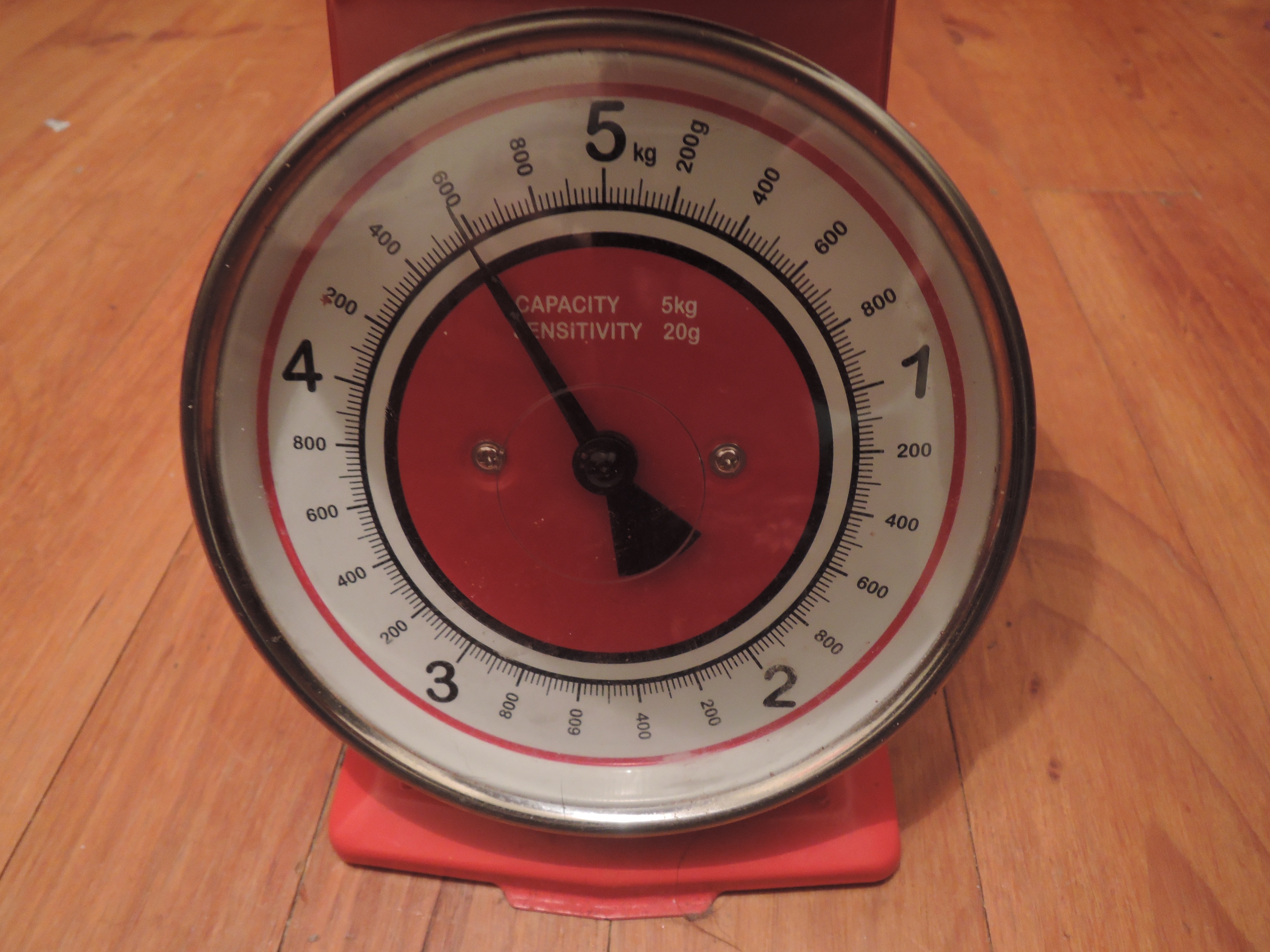
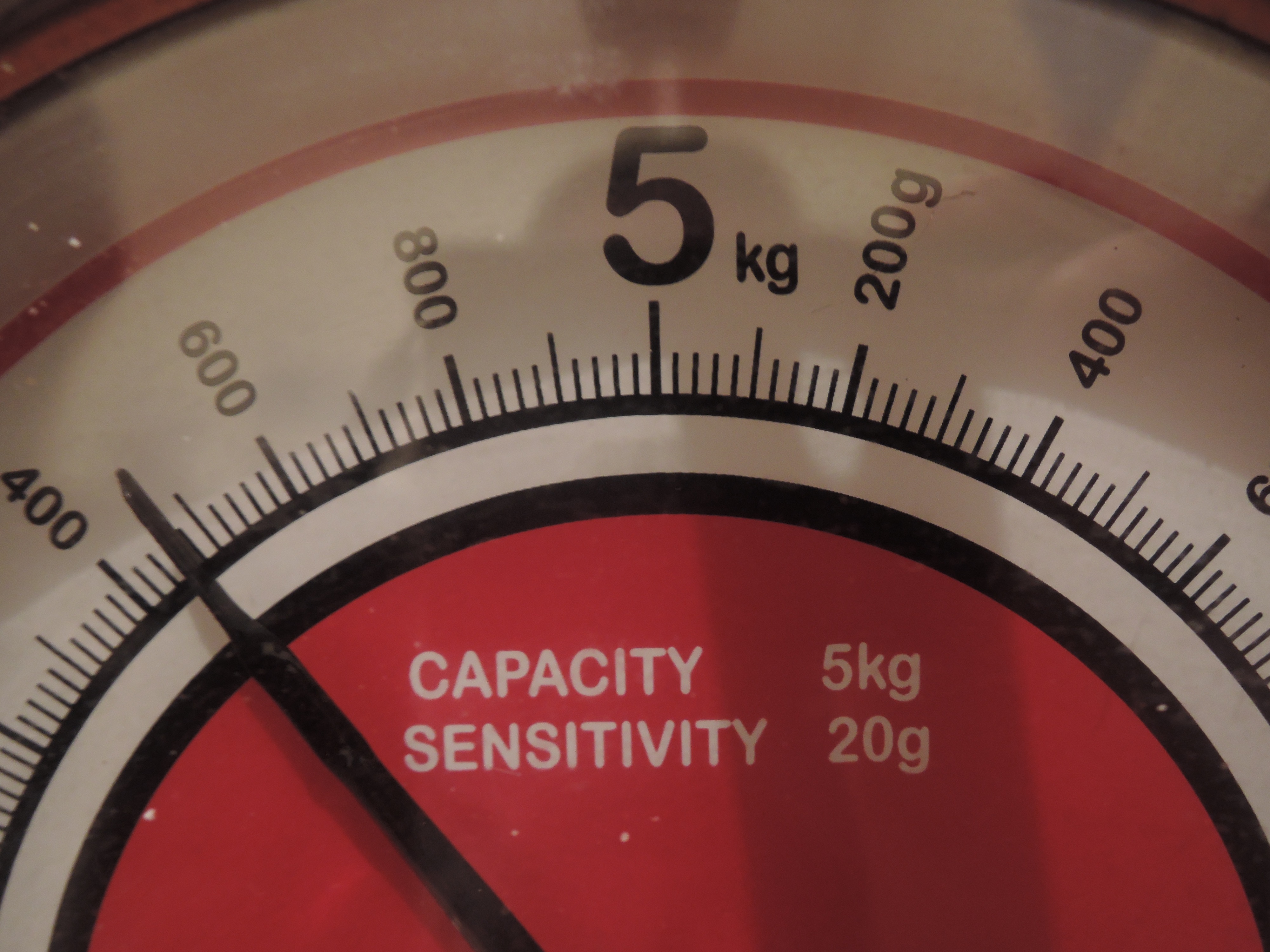
Regular weigh-ins were a part of the hospital treatment …
During my time in hospital and afterwards, my therapists talked to me about getting well, moving on, recovering, leading a normal life, finding happiness. Because we talked about these things, I assumed they were not only achievable but also desirable — essential, even. Many people make the same assumption.
But now I am not so sure. I don’t think therapy’s orientation towards focusing on health and happiness and normality is sinister (Yanaghihara’s word). But I do think, like Yanaghihara, that some people’s lives are not reparable, or that some aspects of their lives are not reparable. Some people suffer terribly, some people less so; in either case, there are times when a person’s suffering cannot be eased, either through therapy or through other means. In that context, perhaps there are qualities other than health and happiness which a person might explore. Resilience, for example. Dignity. Grace. Surrender.
I think of Viktor Frankl, who wrote so eloquently and poignantly about people’s need to find meaning in their suffering, if that suffering was unavoidable. I think we shy away from that word, these days — unavoidable. We form goals, we foster dreams, we try to shape our lives, based on that act of shying away. I think this is a mistake.
… but the number on the scale is only one factor in the equation
There is only so much you can can say in one post, and so I will leave the rest for another day. Instead, I will finish with some more words by Yanaghihara — words that, I think, complement these thoughts, though the millennial New York society she writes about is so far away from the terrible world of Frankl’s concentration camp:
But these were days of self-fulfillment, where settling for something that was not quite your first choice of a life seemed weak-willed and ignoble. Somewhere, surrendering to what seemed to be your fate had changed from being dignified to being a sign of your own cowardice. There were times when the pressure to achieve happiness felt almost oppressive, as if happiness were something that everyone should and could attain, and that any sort of compromise in its pursuit was somehow your fault.
(p. 41)
This is a tricky subject to write about, not least because it involves personal disclosure, if only on my side. But I would love to know what you, my readers, think about this. Please leave a comment and let me know. Your thoughts matter to me.
‘A book is a heart that only beats in the chest of another.’
from ‘The Faraway Nearby‘ by Rebecca Solnit
Sometimes, when I’m reading, a small phrase or a sentence will catch my eye, hidden away in the middle of the paragraph, or at the bottom of a page. Perhaps the words in that phrase snag my attention because they are beautiful; or perhaps the thought behind the phrase is beautiful — complex and lingering — despite the simplicity of the actual words.
I write these phrases down in a notebook and treasure them, as you might a necklace your mother gave you when you were a young woman, or a china teacup that once belonged to your grandmother. Sometimes, when I’m writing them down, the word ‘stolen’ creeps into my mind: there is something about the act of recording them which makes me feel I have snatched them from their creator and reappropriated them as mine, storing them inside my heart.
Snatched phrases: today’s post, quoting Rebecca Solnit’s beautiful words about books, is the first in an occasional series here with this theme. However you think of these words, whatever your definition of the word ‘stolen’, they are yours now, too. Writers write for others, after all; writing is about the transmission of words and ideas from a writer to his or her readers — readers like you and me.
And they are not really stolen at all, these words. It feels that way at first, because they are so precious and so beautiful. But in fact, it is the other way around: the words have stolen our hearts. To read is to be captured, over and over again. I can think of no better form of thievery.
I am haunted by waters. It may be that I’m too dry in myself, too English, or it may be simply that I’m susceptible to beauty, but I do not feel truly at ease on this earth unless there’s a river nearby.
from To the River by Olivia Laing
Haunted by waters. Isn’t that a beautiful phrase?
Though the words I’ve quoted above are about a river rather than the sea, still, they ring true for me. For most of my adult life — except for the two or three years I spent in my early twenties, travelling and working abroad — I have chosen to live within walking distance of the sea. In my late twenties and thirties, as I’ve mentioned before, I lived in a series of share households: different houses every eighteen months or so, different housemates. But each of those houses was close to the sea.
These days, I live in a house just a few minutes’ walk to the beach. Open a window, and you can hear waves rolling onto shore. Step onto the front porch, and you’ll smell seaweed drying out beyond the water’s reach — a damp, bleached, faintly rotten smell. Look around indoors, and you’ll see drifts of sand piling up in the corners.
The sea surrounds me. It’s how I make sense of things. It’s how I feel at ease.
There’s another phrase I love in the words above: susceptible to beauty.
Like anyone else, I have good days and bad days. There are days when I feel at home, here on this earth: when my skin feels comfortable beneath the layers of my clothes, and the warmth of the sun feels kind and good. And there are days when the world seems vast, alien, spinning, remote. What gets me through those latter kinds of day are tiny moments of beauty, out there by the water: pinpricks of sunlight sparkling on the tips of waves, like sequins on a piece of cloth; clouds chasing across the horizon, billowing and grey; a cluster of yellow flowers growing in the dip of a dune, petals cupped to reflect the light.
I took the photographs you see here late one August afternoon, just a few weeks ago. Sitting at my desk, working at my computer, I felt hemmed in suddenly: by streets and footpaths, by fences and cement driveways, by the sound of my neighbour hawking up sputum in his bathroom. The longing to get away from all of that was so strong it felt akin to starving. I felt hollow through and through.
I shut down my computer, stepped outside, and walked down the road to the sea.
Five minutes later there I was, standing on the sand, looking out at the water and the sky. It was close to sunset and I wandered a while along the shore, released at last: from work and worry and words. And I saw something, then, that I don’t know how to describe, though I’ll try: I saw spring coming. The air had a certain quality to it — a softness, perhaps, after the steely bleakness of winter. I thought that if I reached out with my hand I might touch that beautiful softness. It seemed possible, just for a moment.
Looking at the photographs now, I don’t see what I did then. Perhaps you don’t, either. But I know that I saw it, all the same. It was one of those moments — those tiny moments of beauty — to which I, like Olivia Laing, am susceptible.
I am grateful for those moments, is what I’m trying to say. They give me a kind of gladness. They bring me home.
She has always been the reader — no-one else in the family is that interested. She had carted her books from house to house as a student, the boxes growing in number each time, keeping them because she could not imagine doing otherwise, and because she thought that there was something permanent in a book, that it lasted forever. But now, when she takes an older paperback out to reread or loan, she is surprised at how fragile it has become, the paper threatening to tear in her hands if she turns the page, tiny black specks embedded in its tissue pages; bugs, probably. She should have cleared them out, she thinks. Packed them up in boxes for recycling. No-one would want them when she was gone.
From ‘Between a Wolf and a Dog‘ by Georgia Blain
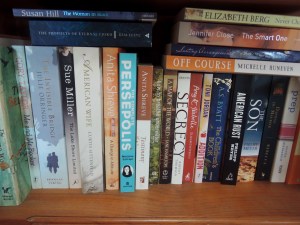
I grew up in a house in which every room contained a bookcase or a wall lined with bookshelves. I remember kneeling in front of those shelves as a child, scanning them, trying to make sense of the order in which they had been shelved, trying — with a child’s sense of incomprehension — to understand the titles. There were lots of orange paperback spines (oh, those old Penguin classics!). There were fat, hardback dictionaries — volume after volume of them. There were thick novels with white covers and raised lettering. There were books with titles like Fear of Flying, which didn’t seem to be about flying at all. There were books with titles containing words like ‘teach’ and ‘literature’ and ‘linguistics’ and ‘semantics’.
And none of these books had pictures in them.
I made a vow when I was about seven or eight years old that I would never, ever read an adult book. The books on my parents’ shelves seemed to be about — or to come from — a disturbing adult world: a world of which I knew I wanted no part. And so the first time I read a book without any illustrations, I felt half-proud, and half-afraid. Was I crossing over to adulthood now, after all? Could I stop myself? It seemed not. Reading, in the end, was more than just enjoyable: it was essential.
As a young woman, I lived for many years in a series of rented houses and share households. My housemates and I each had our own bedroom, but we shared saucepans and bowls and TVs and washing machines. We talked about the films we wanted to see, the music we liked to listen to, the books we had just read. We cooked for each other and shared bottles of cheap red wine and chardonnay. We borrowed novels from the local library, and bought tattered secondhand paperbacks from the local op shop.
During those years, I stored any books I owned on a makeshift shelf that I’d constructed by putting bricks on my bedroom floor and laying a plank of wood over the top of the bricks. Later, I went through a phase where I decided that lettuce crates were a cool way to store my books. I couldn’t bring myself to buy a proper bookshelf. I was afraid, I think, of making the commitment. A bookshelf spelled permanency. It spelled adulthood. It spelled turning into your parents. I wasn’t going to do that. (Why, I wonder, are we so fervently against turning into our elders when we are young? Now I would be honoured to think I was, or am, like either of my parents.)
I don’t remember exactly when I gave in to owning a bookshelf: to growing up, to admitting, happily, that I shared my parents’ passion for literature. I am glad that I did, though. The books on my shelves may one day fade, their pages tearing, their covers warping with damp. They may seem meaningless to anyone else. And yet there is something permanent in them: there is something that lasts forever, despite their physical frailty.
Reading transports to you another world: a world of someone else’s creation. It makes you feel things — sadness, joy, anger, bewilderment. Writers share their worlds with us; their books are their gifts. Those gifts leave an imprint on us. You can’t store that imprint on a plank of wood resting on a brick. You can’t stack it in a lettuce crate. And you certainly can’t pack it up and recycle it.
I think maybe [my father] liked the worlds in his head better than the real one. As far as I ever knew, he didn’t have any close friends … Once, when I was about nine or ten, I told him I wasn’t very popular at school. He told me that friends were overrated, because the only person you could ever really count on was yourself. Weirdly, that actually made me feel better.
from ‘Thanks for the Trouble‘ by Tommy Wallach
I am, I suppose, what most people would describe as introverted. There are other words that go along with this kind of description: shy, quiet, aloof, disengaged, uncertain, insecure, antisocial. Those are mostly negative words, I see. Perhaps they are coined by extroverts.
The year that we lived in England, I was at my most introverted: I had no friends at all. (Here’s a question: do you end up without friends because you are introverted, or do you become introverted because you have no friends?) I was fourteen, and I wandered those long school corridors with the white polished floors alone. I wore the wrong clothes, and I had the wrong accent, and I lived life at the wrong pace and the wrong volume. At lunch I sat in one of the stalls in the girls’ toilets, waiting the hour out. I listened to girls coming in and out, the cubicle doors swinging, the toilets flushing. My breath caught on the sweet spray of perfume they doused themselves with as they stood before the mirrors. I listened to their chatter, high and loud and lipsticked. And then I listened to the door to the girls’ room banging shut again, their footsteps receding down the white-floored corridors as they went back to wherever they had come from.
After the first few weeks, one of the school teachers took pity on me, and introduced me to a couple of girls in my class.
‘Go and sit with them at lunchtime,’ he said, with a look on his face that was half-pity and half-exasperation. He was small and balding and chipper. ‘They’re nice girls. They’ll look after you.’
Such well-meaning, misguided intentions! I looked at the two girls and they looked back at me. I could see they were as horrified at the prospect of me spending lunchtime with them as I was. And yet we all did what he said. They took me back to their lunchtime bench, and I sat with them and their friends — that day and the day after and the day after that. For months, in fact, I ate my sandwich with them silently; I sat with them silently; I watched them silently; I listened to them silently. They took to ignoring me, in the end. They went on with their lives — their parties and their gossip and their drinking and their shopping and their boyfriends — while I sat mute beside them, in what seems to me now almost a parody of introversion.
I have often thought back to that year in high school. I’ve thought about how, at night, I lay in the darkness of my bedroom, the one with the wallpaper with pretty sprigs of flowers dotted over it, and longed for popularity and friendship, for someone my own age to count on. I’ve thought about how I believed that I must be faulty in some way — weak, or cowardly, or defective — because I couldn’t do what other people my own age did instinctively: talk. Make connections. Relax. Laugh.
So it astonishes me now, to look back and see a different possibility, a different narrative, from the one I’ve just told. I don’t believe that friends are ‘overrated’, to use Wallach’s word. Still, I wonder: what if I had learned to trust myself during that year? What if I had learned that I was my own friend? What if I had allowed myself to like the world in my head at least as much as the real one? More broadly, what if we could teach all young people to count on themselves in this way? What, then?
I am not sure. But I think it’s important to listen to alternative narratives like the one in the words above: to retell our life-stories to ourselves, to seek out new plots, new endings. I think it’s important to trust your own inner world: to learn to turn to it in times of need, or in times of loneliness. Introversion, in this context, is irrelevant. What’s relevant is resilience. Resilience is all that matters.
Resilience, you will note, is not a negative word.
I didn’t fight my way across the finishing line — nor did I float. The significance of that marathon didn’t lie in speed or in pain, but in the exchange between my body and the city. I didn’t need a personal best trophy; I could prize the run on its own terms. After many years of early morning runs and all kinds of races, running is to me a way of being, not a way of testing myself against invisible antagonists and not a competition with my peers. I had nothing to vanquish but my doubts, and now — in ways I could never have predicted — running has brought me into a rich communion with the world. It still surprises me. I’m careful not to slip on dirt tracks, and I pay more attention to warnings about overstraining my knees than I used to. I want to avoid injury. I don’t want a show-stopping finish line moment. I want to keep running.
From ‘The Long Run‘ by Catriona Menzies-Pike
When I (briefly, as it turned out, at least for now) took up running again last year, it wasn’t the thought of speed, or competition, or races, or personal bests, that appealed to me. Nor, God forbid, was it the thought of getting super-fit and toned. Lone beast that I am, it wasn’t the thought of companionship, either: of joining a running team, or running with new friends. I know these are the things that runners often find joy in, but they weren’t drawcards for me.
No, what drew me back to running was what I remembered from the period in my twenties when I ran: how meditative running can make you feel. There is the beat of your heart, the rhythm of your feet, the taking-in and letting-out of your breath. There is the simplicity of moving your feet over the ground, taking you there (wherever ‘there’ is) and back again. There is the joy, afterwards, of feeling reawakened. And alive.
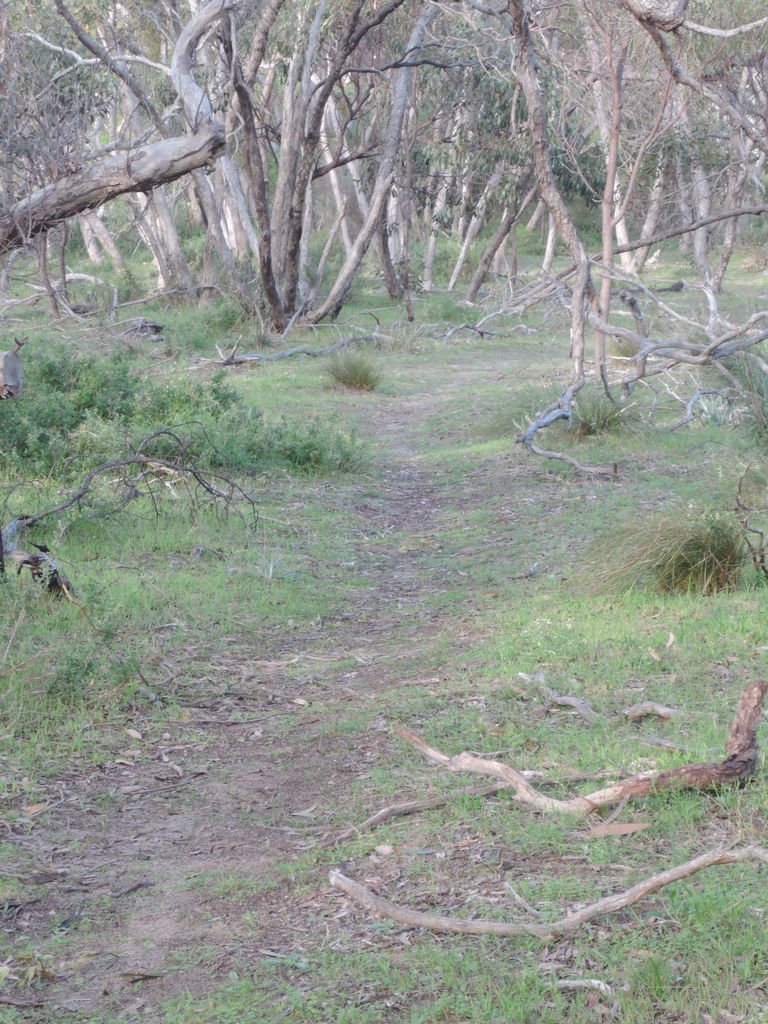
I’m careful not to slip on dirt tracks
I suspect that Catriona Menzies-Pike is a kindred spirit. Her whole book, if you care to read it, is an eloquent essay on how running helped to heal the grief she felt for her parents’ untimely death when she was still a child. It is also an exploration of the joys of running slowly — and making the choice to do so. Imagine running, but not forcing yourself to race. Imagine running, but allowing yourself to enjoy the moment rather than the end-result. Imagine running, with no particular aim in mind other than to take the time it takes.
Imagine.
A rich communion with the world
We talk big about fitness these days. We talk about heart-rate and VO2 and pace and gait. We talk about sub-four-hour marathons and heel-striking and foam rollers. We have instruments and apps to help us talk this talk — Garmins and GPS trackers and Apple Watches and the like. (Wait, maybe those instruments created the talk. Have you ever thought that?) So choosing to run slowly, in a world full of talk like this, is tantamount to an act of anti-consumerist, anti-conformist rebellion.
I don’t want a show-stopping finish line moment. Those words apply equally well to life as they do to running, don’t they? There’s another metaphor in the quote above, too. Running, Menzies-Pike says, still surprises me. I get that. I do.
Because life still surprises me. I hope it always will.









 twenty-one words
