Snatched phrases on … birds

‘It was eluding her again: the essence of bird.’

From ‘Nest
by Inga Simpson

I love this sentence. Jen, the protagonist of Nest, is an artist, and in this passage she is trying to draw a fairy wren.

I’m not an artist; in fact, I’m spectacularly untalented when it comes to drawing. But I know the feeling of trying to capture — in a photograph, perhaps, or in conversation, or in writing — what you see when you see a bird. To say that a bird flies, or that it sings, or that it is beautiful is true, but those descriptions come nowhere near to capturing what a bird really is, or how it makes you feel.

The essence of bird. Perhaps it will always elude me, as it does Jen. Perhaps that’s part of the fascination.

From my world to yours … and beyond

Other people’s words about … the blogosphere

I don’t know if I’ll make it to eight years of blogging. Probably not, to be honest. And that’s OK. Because the time I’ve spent in this corner of the internet has changed my life in the most unexpected and powerful way. That has nothing to do with me and everything to do with you, so THANK YOU.

From ‘ Reflections on 7 years of blogging
by Ali Feller of
Ali on the Run blog

It’s becoming quite a trend, isn’t it? Quitting blog writing. Decrying the blogosphere and what it has become. I’m saddened to find that some of my favourite bloggers, quoted in the passages dotted throughout this post, are pulling the plug on their blogging.

But I’m not about to do the same.

But it’s time friends. It’s time to pull the plug on my blog. I’ve been putting off this decision and this post for a very long time.

From ‘ So long, farewell
by Christine of
Love Life Surf blog

I’ve talked before about why I love blogging and the blogosphere. Many of the bloggers now leaving the blogosphere complain about how disingenuous bloggers are becoming: how curated so many blogs are; how inauthentic the bloggers’ voices have become; how blogs now function, simply, as the latest tool for a person who wants to build a portfolio in order to make a living through social media.

Honestly? In some ways, I agree. I wince when I realise I am wading through yet another post on a cooking blog filled with not one, not two, not five, but ten (or more) shots of the same dish, artfully presented amongst scrunched-up tea towels, autumnal leaves and battered enamel saucepans. And I wince even more when I find myself reading yet another post by a blogger announcing breathily, Guess what? Exciting news! I got a publishing contract!

I’m almost nostalgic for the early days of blogging (except I don’t really do nostalgia). It was enormous fun, but also an enormous consumer of time. I loved it at the beginning but foresaw early on many of the problems now associated with the internet, and now I’m happier doing it all in private. I always had faith that the appeal of printed books, face-to-face conversations, trips to the cinema, walking, swimming and camera-less experiences would never fade for me and now I am back where I was before I started blogging in 2005 … I’m writing a new book. I’ve moved on from writing about domesticity. I just live and breathe it, like I always did.

From ‘ As I live and breathe
by Jane Brocket of
yarnstorm press blog

But there’s still room in the blogosphere for sincerity. For vitality. For authenticity. There is. You just have to look a little harder to find it.

Some bloggers find joy in the blogging community; recently, for example, I read a lovely post by children’s author and fellow blogger Cynthia Reyes about bloggers helping bloggers. Her post would make any blogger think twice about stopping blogging.

Me? I blog for many reasons. I see blogging as a way of improving my writing: of learning to express myself better, learning to reach out to people, somehow, with my words. I see blogging as a form of connection to the rest of the world — if I show you my world, perhaps you will show me yours. I see it as a substitute for journal writing: a substitute that is better than the original because, due to the public nature of the domain in which my blog appears, there is discipline involved in the writing of each post, and discretion. And I see blogging, as I’ve said before, as a way of reaching towards beauty, wherever I can find it.

All of those are selfish reasons for blogging, I guess. But the corollary of writing a blog is spending time reading other people’s blogs: listening to what other bloggers have to say, seeing what they see, understanding what they believe (even if I don’t agree with them). Reading of any kind, no matter how enjoyable an activity it is, is inherently an unselfish act. It forces you to listen to other people. It can, if you let it, open your mind.

I think blogging offers a richer, more thoughtful, more all-compassing vehicle for expression than other forms of social media like, for example, Twitter (where pithiness is valued over thoughtfulness) and Instagram (where aesthetics are valued over normality). And for that reason alone, I will continue to participate in, and love, the blogosphere.

What about you? What do you think about the state of blogging today?

This moment, now

Other people’s words about … the everyday

The sunlit room is silent and there rises a kind of aural transparency through which a deeper background of sound emerges, intricately embroidered like an ocean bed seen through clear water: the sound of passing cars outside, of dogs barking and the distant keening of gulls, of fragments of conversation from the pavements below and music playing somewhere, of phones ringing, pots and pans clattering in a faraway restaurant kitchen, babies crying, workmen faintly hammering, of footsteps, of people breathing, and beneath it all a kind of pulse, the very heartbeat and hydraulics of the day.

From ‘Aftermath’
by Rachel Cusk

I’ve been saving this quote for a while. My copy of Aftermath came from the library, and so I can’t look the quote up again and remind myself of the context; but from memory, Cusk, who was at the time living and working in the British seaside town of Brighton, is in this passage writing of a visit to the dentist.

It’s easy to focus our attention on the beautiful things we see and hear around us. (I do it in my posts on this blog all the time.) But I love the way that Cusk does the opposite here: she takes an everyday moment — not a remarkable one, not even a particularly pleasant one — and describes it so vividly that the moment shines; it sings.

Sometimes, as I go about my own day — at moments when I am particularly busy, or grumpy, or stressed, or anxious — I make myself stop. I glance around; I tilt my head to one side to listen; I sniff the air. I make myself take everything in, just for that moment. It’s a way of stepping back, I suppose: of absorbing rather than participating. However unremarkable my surrounds at that moment, the act of stepping back from them and observing them creates a stillness inside of me.

That stillness is useful. It reminds me that I’m alive.

Look up from your work
every now and then.
Take a step back.

I suppose you could call this a form of anxiety management. I suppose you could say that I am teaching myself to be present, or trying to practise mindfulness. But I’m not consciously striving to do any of these things: the act feels more instinctive than that. It feels, simply, as though it is an important — no, an essential — thing to do, every now and then.

And that’s what Cusk does in this passage, I think: she grabs a very ordinary moment, she witnesses it and she breathes life (a heartbeat, a kind of pulse) into it.

And somehow, along the way, with the words she uses, she breathes magic into her day.

The standstill

Other people’s words about … writing

I knew I was writing a book about anaesthesia, but I didn’t know why. Nor did I know why it mattered to me that I didn’t know. Why does anyone do anything? What I was struggling with … was not simply why I was writing (and consequently, I felt, what I was really writing about), but who was doing the writing. There seemed to me two ‘me’s — each with their own agendas and itineraries and neither able or prepared to communicate with the other. Everything one wrote, the other rejected. One I will call the journalist — a pragmatic procedural self, this ‘me’ positioning myself as the objective observer reporting on what I found in my travels. The other I will call the dreamer. Not in the romantic sense, but the dreamer as fool, blundering around, kicking up fragments of a different story.

from ‘Anaesthesia’
by Kate Cole-Adams

I’ve been writing the same book for the last seven years, and that seems to me, in today’s world of electronic publishing and social media, a very long time. It is a long time. I’m a realist: I know that there are no guarantees I’ll ever finish it; and I know, too, that even if I do, there no guarantees it will get published. Still, for whatever reason, I find I can’t write any faster than I do.

So I was encouraged when I read that it took Kate Cole-Adams ten years or so to research, write and publish her non-fiction book Anaesthesia, from which I’ve quoted above. It’s a very fine book, worth taking ten years to write, I think. I found myself marking out several passages as I read it — passages I returned to over and over, and thought about using for one or more of my blog posts. So the quote I’ve used today may be just the first: there will be more to come, I hope.

Everything one [part of me] wrote, the other rejected. It occurred to me when I read these words that, over and above her own personal experience of her self, which Anaesthesia in part explores, what Cole-Adams is really describing in this passage is writer’s block. People think of writer’s block as being unable to write, but I don’t think that’s what it is, not really. In my experience it’s more a case of writing and writing, but hating everything that you write. You write, you write, you delete, you delete. Eventually, you come to a writing standstill.

At a standstill —
or poised to soar?

I like Cole-Adams’s image of herself, the writer, as dreamer and fool, blundering around, kicking up fragments of a different story. For me, too, that’s what writing often seems to be about. And sometimes — just sometimes — when you allow this to happen, when you allow the judgmental, procedural part of yourself to step back from the stage, it seems okay that this is how it feels.

At moments like this, it seems okay, too, to be taking your time to write what you write. Five years. Seven years. Nine years. Ten. It’s all part of the blundering, right?

The poetry lover

Other people’s words about … poetry

It rained all day before we went for dinner at Melissa’s. I sat in bed in the morning writing poetry, hitting the return key whenever I wanted.

from ‘Conversations with Friends
by Sally Rooney

I had to smile when I read these words. In the last years of his career, my father, who was a professor of English literature, taught an undergraduate course on poetry. Ever a traditionalist, he taught his students to appreciate the form of the poems they read as well as the words themselves.

Though I’ve never studied English literature at university level, through some mysterious form of osmosis I absorbed some of what my father was teaching his students. Through this process, I now have a passing acquaintance with terms like blank verse and iambic pentameter, and with poetry forms such as sonnets and villanelles. And I’m with my father on this: discipline is a vital ingredient in poetry writing. Where there is no recognisable form or structure to a piece of writing, there is no poem: there are just words on a page, with a few strikes of the return key employed for good measure.

Funnily enough, when I happened to mention to my father that I was writing this post, he alerted me to this piece by David Campbell in The Australian, which my mother had first pointed out to him. In it, Campbell bewails the lack of rhyme, metre and set forms in current Australian poetry. Perhaps these things will become fashionable again one day. We can only hope.

Meanwhile, do you have a favourite poem? What is it? Here are the links to some of mine (including one by David Campbell), each of which transcends the strict form in which they are written in order to produce something more than its parts:

Tea, by Jehanne Dubrow (a sonnet, and the excuse for my tea-themed photo today)
Do Not Go Gentle into that Good Night, by Dylan Thomas (a villanelle)
On the Birth of a Son, by David Campbell (a sonnet)
The Watch, by Frances Darwin Conford (a strict rhyming system of which Campbell would most surely approve)

Creating ephemera

Other people’s words about … cooking

I’ve decided I need to make things with my hands, it’s my new thing. Everything else is just so intangible and bullshit. I know that really when you get down to it, cooking produces ephemera just like all the other crap we all do … but at least for a moment there’s a thing, you know?

From ‘The Innocents
By Francesca Segal

I often wonder why food writing has become so popular in the last few years. There are so very many food blogs and cookbooks and cooking magazines. Equally, there are so very many people who read them (including me). Why?

One of the reasons, I think, is that food photography is beautiful. Food photographs make use of beautiful props, gorgeous landscapes, natural light. They woo you. Though what they ostensibly promise you is a tasty meal, underneath they promise you something else entirely. If you make this recipe, they murmur to you, you, too, will have produced something beautiful. You, too, can lead a beautiful life.

(Instagram Syndrome, anyone?)

So Segal is right, in the passage I’ve quoted above: cooking produces ephemera, essentially. And yet — and yet — it doesn’t feel that way. When you look at a food photograph; when you tell yourself you’ll make it; when you go out and buy the ingredients and come home and spend a couple of hours cooking it; when you dish it up on the table and eat it with your loved ones — when you do all this, you feel like what you have in front of you is a thing, as Segal puts it: a thing that you made.

Even if, in the end, all you do is read the damn recipe and look at the damn photographs — still, that promise gusts through you. You might make this recipe. You might produce something beautiful. You might just make something.

I’ve spoken about my love of baking before. I’m sure I’m as sucked in by the ephemera industry as anyone else, but still, I keep going back for more. There’s always another cake to make, right? And the next one you make might even turn out to look as beautiful as it did in the photograph you spent so many hours drooling and dreaming over …

My own food photographs, as the pictures in this post amply illustrate, lack all the qualities that good food photographs require. Still, in case you should want to join the ephemera celebration, here’s a list of some of my (current) favourite food blogs:

delightful crumb
(for thoughtful words and beautiful recipes from Stacy in California)
oh, ladycakes
(for meticulously photographed vegan baking from Ashlae in Denver, Colorado)
ruby & cake
(for food with a lovely and quirky slant from Ruby in the Blue Mountains, Australia)
what should I eat for breakfast today
(for simple breakfast recipes from the wonderful, drily humorous Marta)
three little halves
(for gorgeous photos and illustrations from Aleksandra in New York)
Brooklyn supper
(from Elizabeth and Brian in New York)
eat in my kitchen
(for simple, stylish recipes from Mieke in Berlin)
the alimental sage
(for sporadic but lovely recipes from Camilla in Melbourne, Australia)
dagforever
(for tasty recipes and hilarious commentary
from my French, bench-loving friend Anne in Perth)

Happy cooking (and dreaming), everyone! Rebecca xo

Snatched phrases on … the weather

‘Someone once told me it was bad blogging and boring writing
to wax lyrical about the weather but I can’t help it.
And I am not sorry.’

from Ruby and Cake blog,
this
post

Well, as you may have guessed by now, I’m with Ruby on this. I love waxing lyrical about the weather, and have been doing so, on and off, ever since I began writing this blog, back in April 2014.

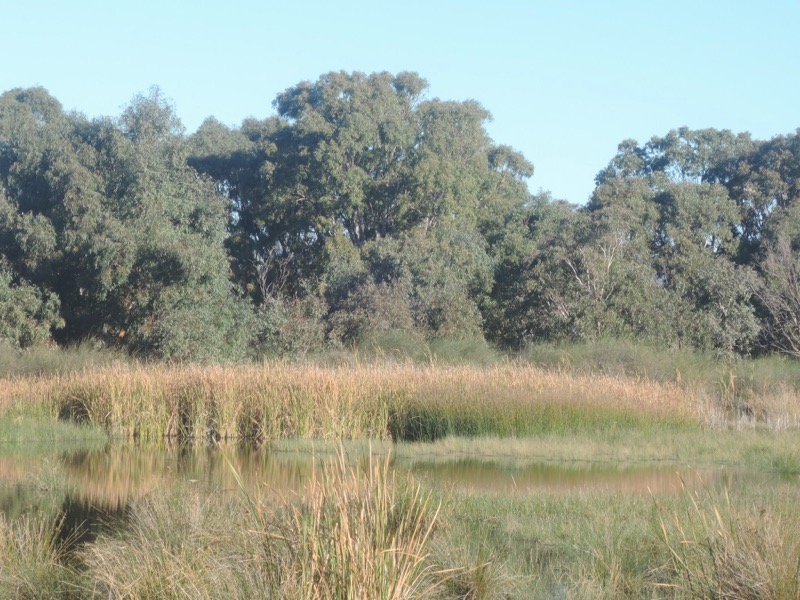
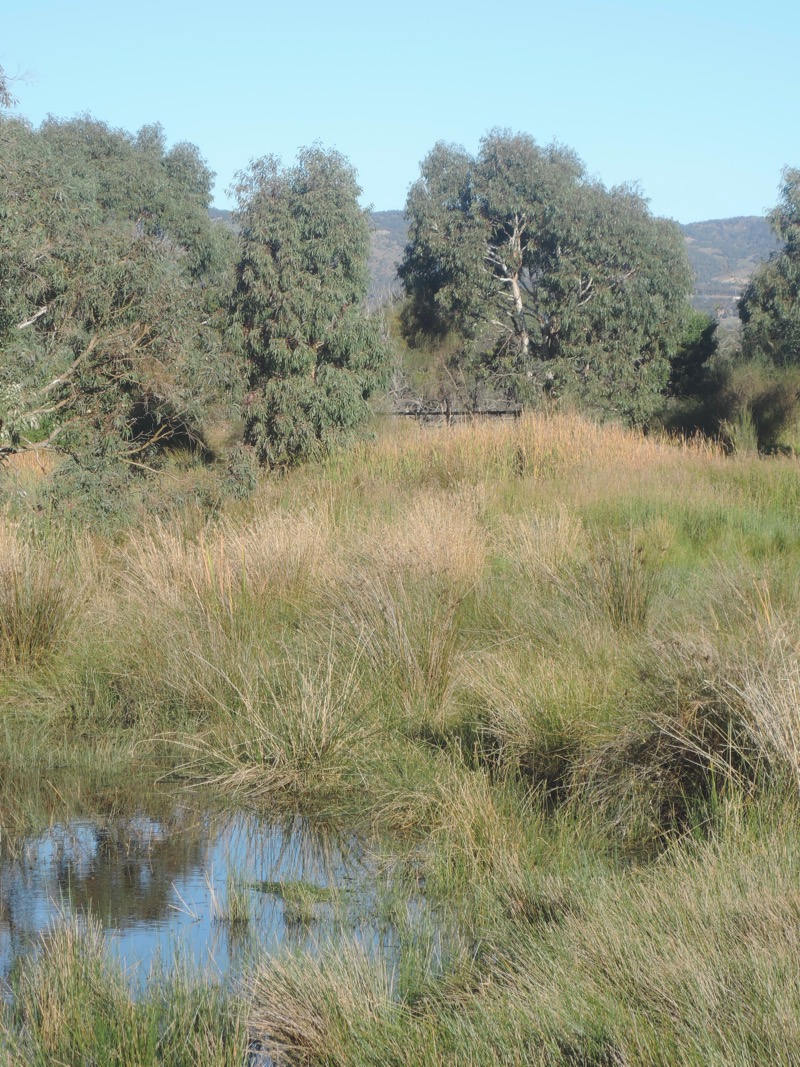
And when I’m not waxing lyrical about the weather, I’m taking photographs in celebration of it instead. So, to continue the weather celebrations, here are some photos from one of my latest saunters out and about.

This particular jaunt took place in early June, a time of year when we expect rain and clouds and wind here in South Australia. But, as I’ve mentioned several times before recently, in my usual waxing-lyrical-about-the-weather mode, that’s not the weather we’ve had at all this June. This day was just one of a number lately that began cold, crisp and clear, and progressed into soft, still sunniness.

If I were to say anything more here about how clear and true the sun shone as I wandered through the wetlands that day, or about how the sunshine filled me with joy, I’d be venturing into waxing-purple territory. (That, I believe, is the stage that follows the waxing-lyrical stage.) So I’ll leave you to enjoy these photos without further ado.

Although PS Like Ruby, as far as talking about the weather goes, I’m. Just. Not. Sorry.

A breakfast of clouds and chocolate

Other people’s words about … what works

Chocolate at breakfast has always seemed wrong to me somehow. It seemed too decadent and lusty, entirely out of place, like watching a sex scene on television when your parents are in the room. But I have now spent eight mornings eating chocolate granola for breakfast, and I have concluded –- with all due gratitude to [my husband] Brandon, my personal granola pusher –- that chocolate is, once and for all, perfectly acceptable at any time of day. I had been a doubter for so many years, but now, good lord, I get it. And I think this revelation might, quite possibly, be the cosmic purpose of our marriage.

From ‘All We Ever Really Want to Do
by Molly Wizenberg of Orangette blog

I came to Molly Wizenberg’s blog only recently, many years behind most people. There are so many cooking blogs out there in the internet-world now, and so many of them are so beautiful, that it is easy to feel overwhelmed, or bored, or cynical. Moreover, the idea of using a recipe to introduce a post that discusses a theme entirely unrelated to food — in other words, to discuss life — has become such a common approach amongst food bloggers that it seems to me to be verging on the clichéd. But Molly was one of the early bloggers to take this approach, and she writes well, which makes all the difference. I will be reading her blog again, I’m sure.

As for chocolate at breakfast — well, why not? A therapist I used to see once said to me, as I agonised over how to live my life better (or rather, how not to live it so very, very badly): Life is short. Do what works. Though I’ve left much of his counsel far behind, I think about these particular words of his from time to time. Life is short, indeed. If chocolate works, then eat it. Please.

(Alternatively, you could try cake. Cake never fails for me.)

Meanwhile, today is my first day of two weeks’ annual leave. I currently have two part-time jobs, so time away from both of them simultaneously can be hard to pull off. The next fortnight feels incredibly precious to me.

For some of that time, I plan to go to Yorke Peninsula again. Autumn is in full swing now: my holiday there will be different from my last trip to Yorkes, back in February. There will be clouds; there will be rain; there will be wind. It will be too cold to swim, so I’ll walk miles down the beach and along the clifftops. I’ll sleep late into the morning and go to bed early at night. And I will read.

I’ll read.

I’ll read.

Afterwards, I’ll come home grateful for heaters and hot showers, and ready — already — for the next trip, whenever that happens to be.

I don’t know if, like Molly, I’ll be eating chocolate for breakfast while I’m away. It doesn’t matter. Life is short, and these are the things that work for me. That’s why I do them.

All in all, it’s not such a bad way to live.

The big ‘I’

Other people’s words about … the view

Sit. Quietly. Turn your awareness to your heart space.

Now imagine you’re sitting on a small wooden bench with yourself. Imagine you’re doing so in that space in the centre of your chest. There you are, sitting to your right, the little nattering humanoid that you are, berating yourself for eating too much at lunch and debating whether to hang the washing out or not. This little nattering self is your little ‘i’. You (the big ‘I’) can watch it all. Yep, there you are, sitting quietly, looking out at a view, over treetops down to an ocean. On your little bench. Together. You’re just hanging, nowhere to go, nothing to do. The two of you …

From ‘First, We Make the Beast Beautiful
by Sarah wilson

It was my friend and fellow blogger, Anne, who first alerted me to the appeal of benches — I mean, real benches, in real life. In her ‘Bench Series‘, she posts photos of benches that she’s snapped from all over the world. I’d never really looked at benches before, except as convenient things to sit on while I rested and took a moment to enjoy the view before me. Now I find myself noticing them (and photographing them) all the time.

The kind of bench Sarah Wilson describes in the passage I’ve quoted above, though, is a metaphorical bench, one that you can only find within yourself. It’s a place where you can sit while you encounter, and learn to accommodate, your two selves: the busy, superficial, language-oriented self that churns out thoughts night and day, and the deeper, quieter, wordless self that lies beneath all the nagging chatter.

The idea of the two selves isn’t unique to Wilson. It’s an idea common to many systems of thought, one we’ve all become more familiar with since the recent popularisation of mindfulness-based practices and therapies. But I particularly like the way she uses the image of sitting on a bench to explain it. It’s a simple, vivid, accessible reminder of how easy it is to get caught up in (and believe) your own thoughts.

A thought, after all, is only that: a thought. It may be true; it may not. Thoughts and the truth exist independently of each other. When I first came across this idea (here), it seemed both counterintuitive and revolutionary to me. I’m still grappling with it.

Wilson again:

And then it might occur to you that your little mate ‘i’ is just that — a little mate sitting next to you. And that this Big ‘I’ is who you really are. It feels deep and close and yet so vast.

Okay, I’ll admit I winced, at first, when I read these words. First, I’m not sure that the quieter self (the one Wilson calls the Big ‘I’) is deep or close or vast — or, indeed, in any way somehow ‘better’ than any other part of our self. I think that it just is.

Second, I was troubled by her use of the phrase little mate both to describe the thinking self, and to distinguish that self from the non-thinking self. I found the phrase overly colloquial, like some kind of condescending attempt to make a difficult concept more user-friendly to her less educated readers. But I have slowly come to feel the opposite way about her wording. The word mate implies friendship: it implies love, acceptance, forgiveness. Also fun. That’s helpful, I think. Why vilify a part of yourself, when you can instead smile and make friends with it?

Wilson uses meditation to find her bench. As you know, I don’t. But I don’t think that matters. What matters is that you know the bench exists — and that you know how to find it, however you get there.

And whether or not your prefer your benches real or whether you prefer them metaphorical, I wish you many sun-dappled, peaceful benches of your own in your life, wherever you happen to be.