When the water runs dry

Other people’s words about … drought

Many years ago, when I was in my twenties and travelling overseas, my American boyfriend took me back home to meet his family and friends in Michigan. We had been living for the previous few months in Cairo, that famous desert city, and to begin with we had, like all Westerners, drunk bottled water, fearing that the local water might make us sick. But we didn’t have much money and we had read that the municipal water in Cairo was safe to drink, even for Westerners, and so after a few weeks we had transitioned to drinking tap water. Neither of us had become sick as a result, but the Cairo water was so heavily chlorinated (presumably to make it safe to drink) that even I, hailing from Adelaide, found it hard to stomach.

In my home town, the tap water was similarly heavily chlorinated — so heavily, in fact, that it was said that aeroplanes, landing in Adelaide to refuel, didn’t refill with local water. How apocryphal this story is, I am not sure, but in any case, back in Cairo my boyfriend and I had taken to adding Tang to our water to take the taste of chlorine away. When I think of Cairo now, I still think of the taste of the water we drank in our last few weeks there, tangy with artificial orange flavour. How it sat in your belly afterwards like a stone. It was in Cairo, not Adelaide, that I came to understand the meaning of the term hard water.

Clouds but no rain, Aldinga Beach, May 2025.

The narrator in Madeleine Watt’s quietly devastating novel Elegy, Southwest, Eloise, is a young Australian woman, twenty-nine years old in the present day, which makes her, I guess, a Millennial. And yet when I read the passage I’ve quoted above I thought of myself, most decidedly a Gen X-er, and my own reactions to water scarcity when I was travelling in the nineties. In Michigan, when my boyfriend left the tap running as he brushed his teeth, when his mother washed the dishes under a running tap, I struggled to swallow back my protests.

‘We’re surrounded by the Great Lakes,’ my boyfriend said, teasing me. ‘We’re hardly experiencing water scarcity.’

But my response to the sight of running water was instinctive, fundamental. Water was a precious resource. You didn’t waste it. You just didn’t.
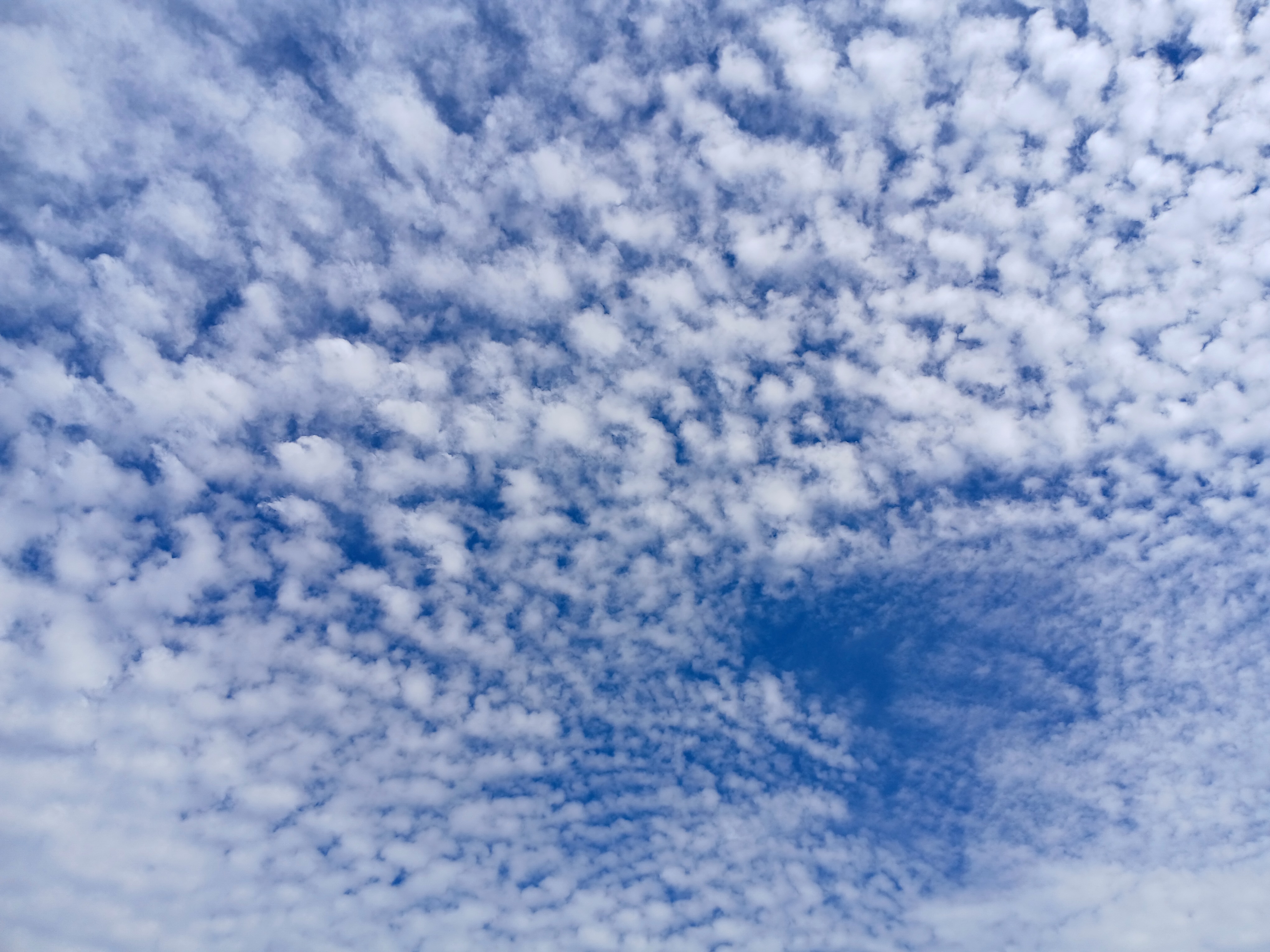
This year in South Australia we’re experiencing record low rainfall. After the driest summer in thirty-three years, we’ve moved into an equally dry autumn, and we’ve been saved from water restrictions only through the existence of the desalination plant that opened in 2012 in response to the Millennium Drought. Meanwhile, the native local flora and fauna are visibly, heart-breakingly struggling to stay alive. Those beautiful wide blue skies of South Australia? I’ve come almost to dread them.

Like Eloise, I grew up watching Hollywood movies where teenagers hung out in malls with fountains in them. Like Eloise, I don’t remember seeing a fountain in our local malls (though in the much-loved TV comedy from the noughties Kath and Kim, the local shopping mall is aptly — prophetically? — named Fountain Lakes). And like Eloise, all these years later, in these years of drought after drought, I, too, want to ask: Who is in charge? Why isn’t somebody doing something?

Lately I’ve been reading …

A sad place

Other people’s words about … accessing feelings

Some years ago an older woman said to me that she had noticed she didn’t cry very much anymore. She said that when she was younger she had been someone who cried easily, when she was sad, when she was angry, sometimes when she was happy. But now, in her seventies, the tears didn’t well up anymore.

I remember thinking that that wouldn’t be the case for me. I remember thinking that I would always be someone who cried a lot — too much, probably, rather than not enough. I have always cried copiously and easily and very often self-piteously. I have cried at the most inappropriate times, during moments that weren’t about me at all, moments when I should have been comforting someone, not dealing with my own emotions.

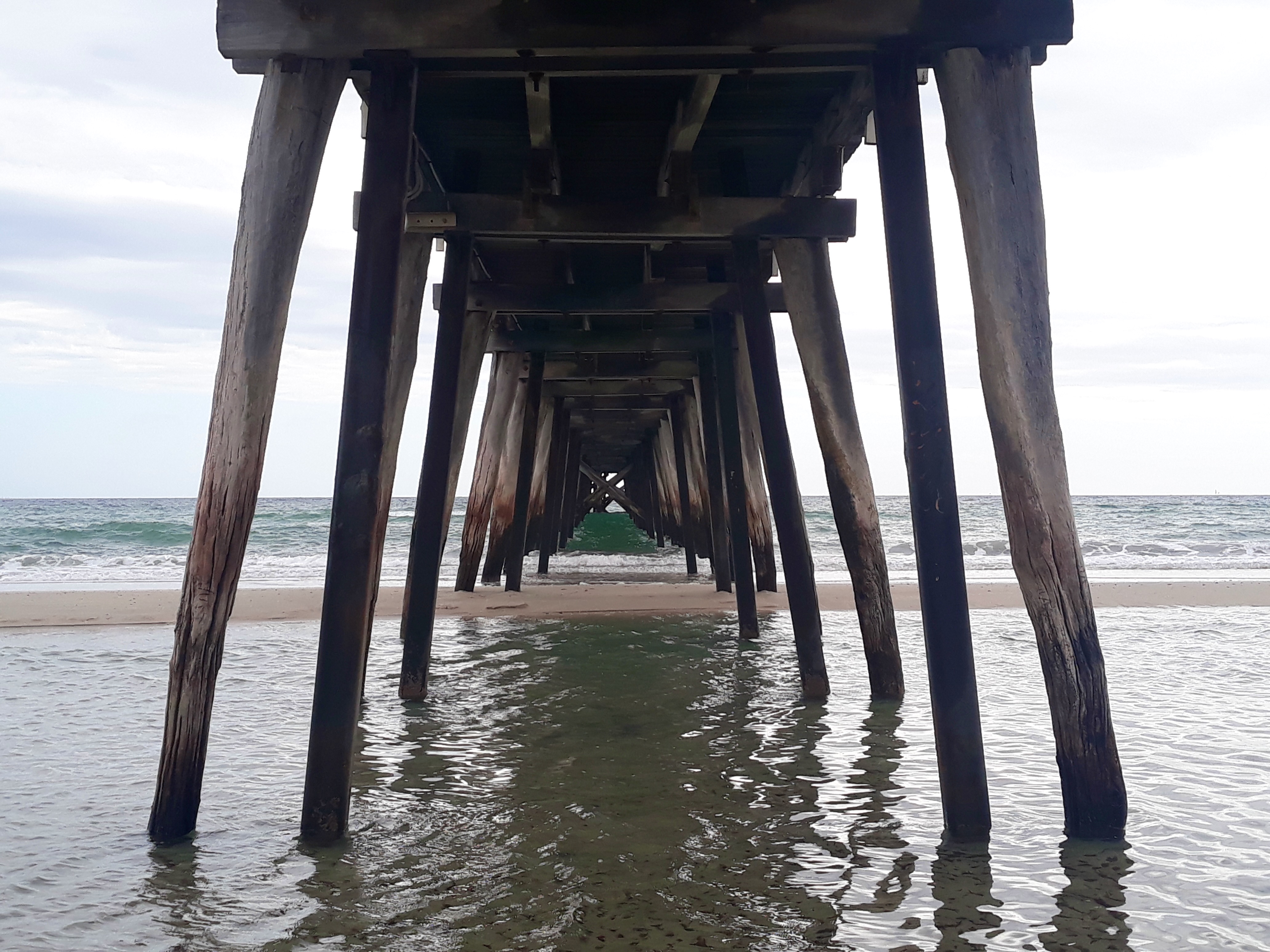
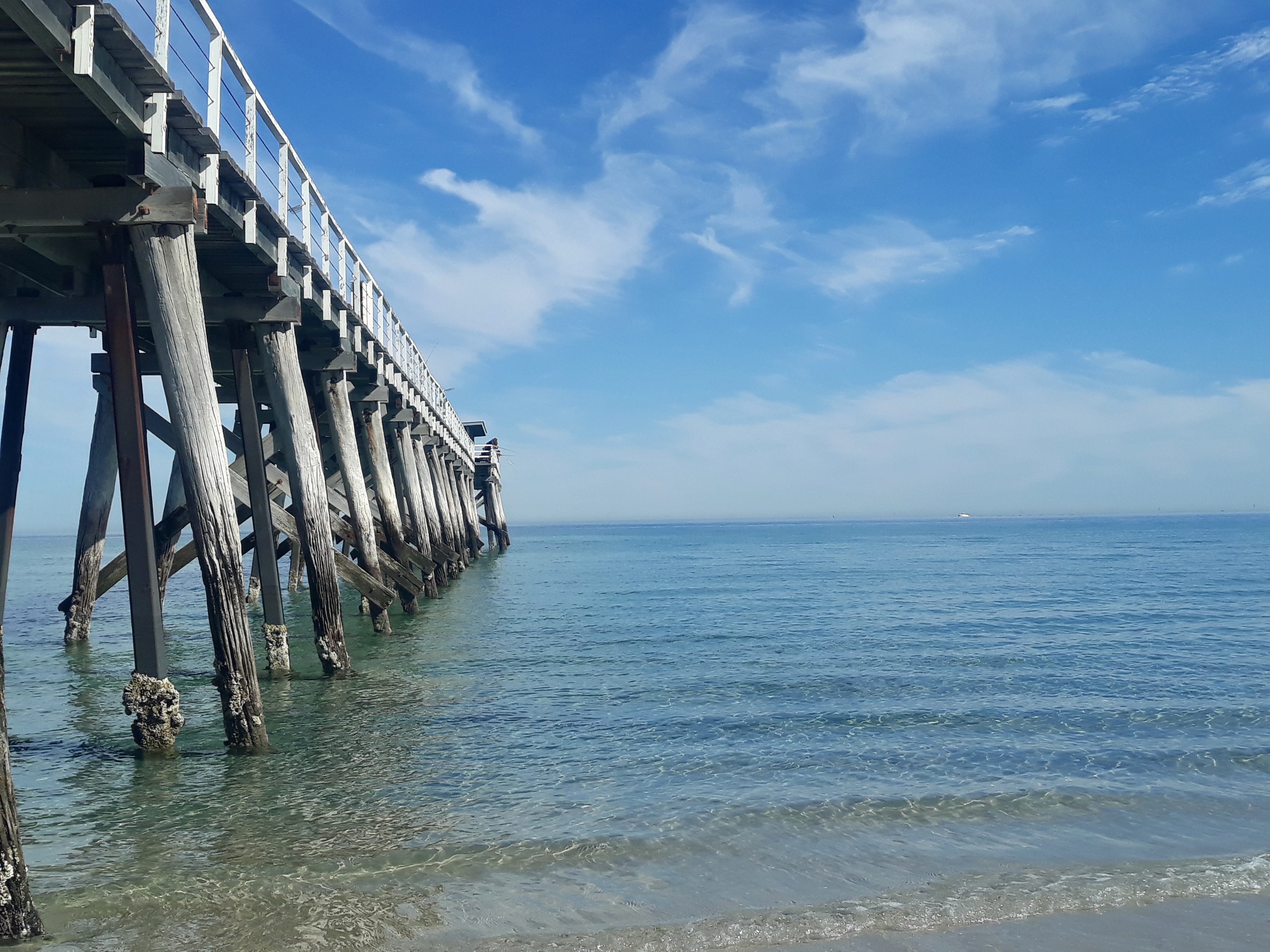
Largs Bay Jetty, April 2025.

And yet here I am, mid-fifties, and it’s happening to me, too. In the passage I’ve quoted above from Tove Ditlevesen’s memoir, Ditlevsen is describing the way she felt as a teenager, but the feelings she expresses in this passage describe the way I often feel now, the way the older woman I mentioned above also expressed feeling. It’s a feeling of seeing sad things, being moved by them, being aware that I’m sad about them even, but not being able to access the sadness itself directly. When I do cry, it’s usually, like the adolescent Ditlevesen, when the feeling is being conveyed to me through another medium — a book, a film, a poem, a song.

I miss crying. Perhaps that sounds odd or self-indulgent, but I miss the feeling that came when my eyes grew hot and tears fell down my cheeks and my throat tightened and my breath snagged. I miss the feeling of being there with my sadness, right there. I miss the feeling that follows a crying bout, too, that feeling of being healed, even if only temporarily.

The world is a sad place right now. People will say in response to this that the world has always been sad for someone somewhere, and that’s true. Partly, then, I say that it’s a sad place from a place of privilege, because I’ve experienced times when it seemed that there was a lot of hope in the world, if you could only learn to access it. Still, when I think about the climate crisis, when I think about Presidents Trump and Putin and Xi Jinping and Yoon Suk Yeol, when I think about the rise of Artificial Intelligence, the world seems to me a very sad place indeed. Would it help if I were able to cry about this? I don’t know. Like the adolescent Divletsen, I don’t think very much of reality.

Lately I’ve been reading …

Like breath

Other people’s words about … places that reside within our hearts

During our visit to the jungle, while we slept on the verandah at 3 AM, night would be suddenly alive with disturbed peacocks. A casual movement from one of them roosting in the trees would waken them all and, so fussing, sounding like branches full of cats, they would weep weep loud into the night.

One evening I kept the tape recorder beside my bed and wakened by them once more out of a deep sleep automatically pressed the machine on to record them. Now, and here, Canadian February, I write this in the kitchen and play that section of cassette to hear not just peacocks but all the noises of the night behind them — inaudible then because they were always there like breath. In this silent room (with its own unheard hum of fridge fluorescent light) there are these frogs as loud as river, grunting, the whistle of other birds brash and sleepy, but in that night so modest behind the peacocks they were unfocused by the brain — nothing more than darkness, all those sweet loud younger brothers of the night.

from ‘Running in the Family
by Michael Ondaatje

I have just spent a week away in Deep Creek, having been chosen as this year’s lucky winner of the Deep Creek Residency for writers. I spent that week away writing, reading, bushwalking, running, writing again, then writing some more. It was a joyous time, the rarest privilege, to be given time away simply to write.

Daytime, Deep Creek, October 2024.

In our lives, I think that there are some places, connected to some times, that are somehow magic, that come to us through luck or stealth or a great deal of planning and then reside with us forever. These places become a part of the fabric of who we are, though we may not always understand why, and what we feel, when we think of them or remember them or revisit them, is a sense of awe — a sense of connection to something deeper than we can articulate.

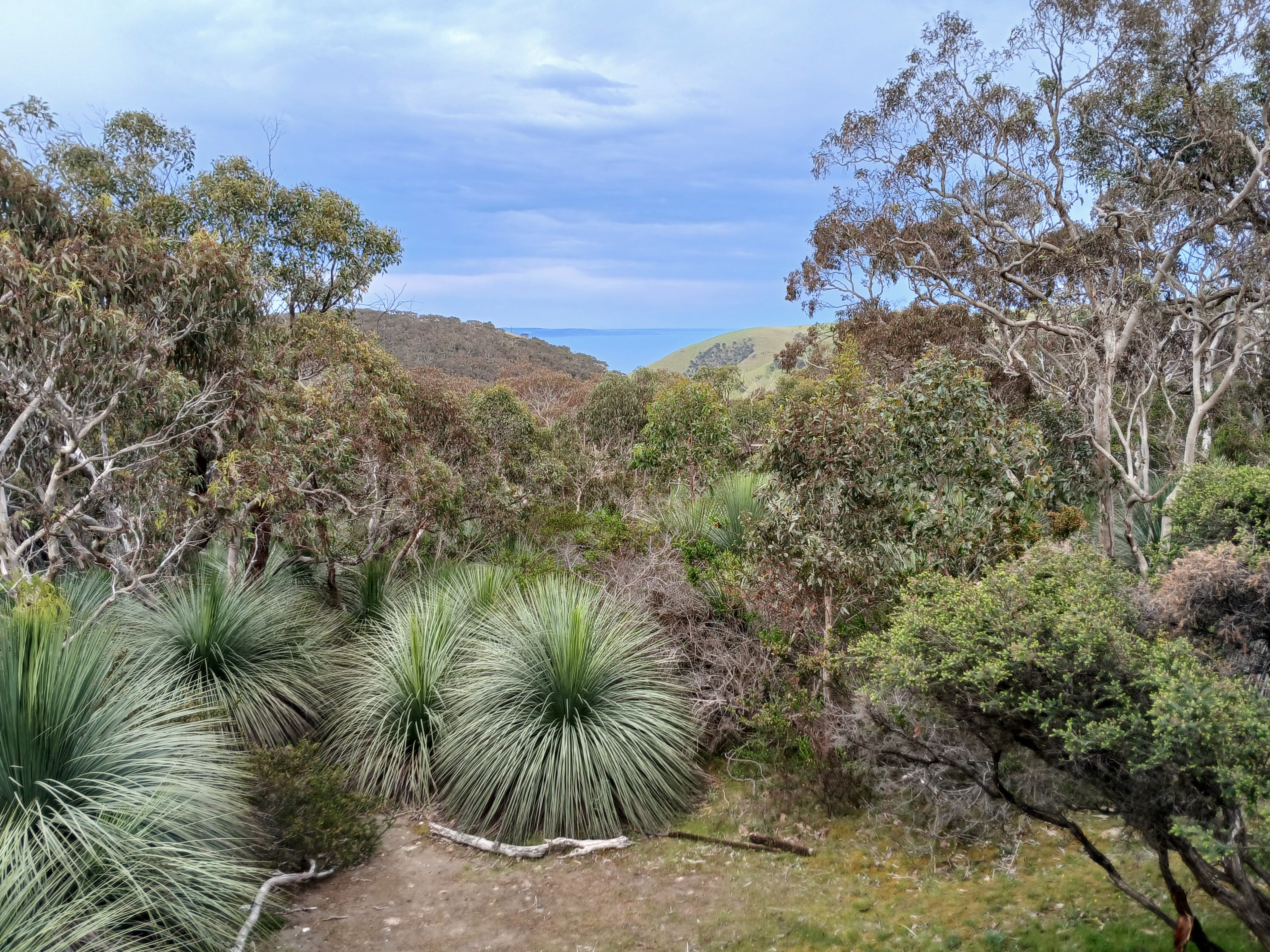
Gully of grass trees, Deep Creek, October 2024.

Deep Creek, place of grass trees and rolling hills and shrike thrushes calling in the trees, place of kangaroos and echidnas and sheep and shingleback lizards, place of tawny frogmouths and fogs and sunshine and rain and big, big skies — Deep Creek is, anyway, one of those places for me, a place close to my heart. I have left Deep Creek now, and the hopes and dreams I went there with — that I would write copiously and productively, that the story I’m writing is worth telling, that the manuscript I’m working on might one day get published — may or may not come true, but Deep Creek is still with me and always will be. I don’t know how else to put it.

Resting place, Deep Creek, October 2024.

And this is what I love about the passage I’ve quoted above by Michael Ondaatje, the way he captures the mystery of a place, its essence; the way it has become a part of him. I have never been to the jungle that he writes of, never heard peacocks who weep weep loud into the night. But in Deep Creek I have felt what Ondaatje describes. In Deep Creek I have felt that I have found a place that will, like breath, always be with me.

First light, Deep Creek, October 2024.

Lately I’ve been reading …

Unrequited

Other people’s words about … a woman’s desire

The meat was ready, steaming, when I lifted the lid of the pot. As I sliced it up I pictured meeting the ambassador in the hotel room. First, he will open the door and clasp me in his arms, I decided, putting a plate in front of my husband. He will kiss the hollow of my throat very softly, and then he will gaze upon me, I decided, like he did today, but with much more tenderness. I cut my potatoes up into tiny pieces. My husband chewed and chewed, with the mouth that never kissed me. He will lay me down on the soft white bed and undo the buttons slowly, I decided. He will kiss my eyelids. I will place my hands on his smooth back, I decided as I chewed. I will clutch him to me but not too hard, not like a drowning person. The light will be dim. The bedding will be spotless. He will tell me that he has seen what nobody else has ever noticed. He will say, ‘It’s you I’ve wanted all along, Elodie. I see you, Elodie. You. You.’

from ‘Cursed Bread
by Sophie Mackintosh

I came back to Elodie’s story again today, having quoted from it once before. Elodie’s story continues to compel me — her longing for her husband to desire her, to see her, oh, to want her. Though Elodie is young and has her life ahead of her, I wonder whether the feelings and desires she expresses in her narrative, those feelings and desires that in her tiny village community are so forbidden, are a little like those an older woman might feel, a woman my age, on realising that the desires she once thought might be realised are now out of reach.

I wonder.

Largs Bay Jetty, May 2024.

I’ve spent the last few weeks quietly. Post-Covid, I still feel tired. It’s a funny kind of tiredness, not so much a feeling of lethargy as a feeling of being tissue-thin, emotionally and physically. I don’t know how else to describe it. Still, I’ve been walking and reading and even writing (a little), and I had a quiet moment of celebration a couple of weeks ago when I saw ten hooded plovers at Aldinga Beach.

Yes, ten. I have never seen so many before, and I walked home feeling quietly jubilant.

Bracken fern, May 2024.

Lately I’ve been reading …

How do you know?

Other people’s words about … writing

Seamus went into the hall after Oliver, and they kicked the snow off their boots. Their professor had just come back from the bathroom. He put a hand on Seamus’s arm and said, ‘Great work, Seamus. It’s a good poem.’
‘Was it?’ Seamus asked. The professor’s expression opened just slightly. Oliver patted Seamus on his lower back and returned to the seminar room. It was Seamus and the professor alone in the hall. Seamus could feel himself dripping cold water on the rug.
‘Is that what you need? For someone to tell you that your work is good?’
Seamus flushed.
‘I don’t know what I need. I don’t know what I’m doing. I feel like I’m wasting my time.’
‘Oh, Seamus,’ the professor said, and Seamus looked at him.
‘How do you know?’ Seamus asked.
‘How do you know what?’ the professor retorted, his head jostling a little, like it was a game or a riddle.
‘How do you know you’re not just wasting your time?’
‘If you don’t know the answer to that, then I can’t do anything for you,’ the professor said with a chastening laugh.
Seamus felt that he had been slapped on the nose and called childish. The world grew deep and saturated. It felt as if something vast and Godlike had peeled back the veil of his life and peered in at him. He had gone around giving away all his power, seeking certainty, approval. But that’s what children did. Seamus had been a child, selfish and stubborn in his ways.

from ‘The Late Americans
by Brandon Taylor

I’ve been thinking again about the process of writing fiction — how a writer takes the story they hear inside their head and puts it into written words. That’s what the process involves for me, at least, most of the time. I hear a story in my mind, a story with a very distinct voice, and I try to translate that story into one that other people can read — a story on paper, a story on a screen. A story, I was going to say, that is tangible. Tangible is the wrong word, though. Perhaps what I mean is, a story that exists in a form that other people can access.

The strange, sad part of this process is that mostly, while the story is still inside my mind, it feels like a very beautiful thing, whereas once it becomes something I can share with other people, it often turns out not to be a beautiful thing at all.

Lizzie in a pool of sunshine (and a room with a view), Easter 2024.

Unlike Brandon Taylor’s character Seamus in the passage above, I have never studied writing. One of the reasons I haven’t is that I don’t think that studying writing will answer the question that I always have about my own writing, which is the same question that Seamus has, How do you know you’re not just wasting your time? The truth is that you can’t know, which is what (I think) the professor is trying to say to Seamus without actually spelling it out for him. You will never know. If you try to find out, you’re going down the wrong track, asking yourself the wrong question.

A better question, I think, would be, How do you sit with the fact that you don’t know whether you are wasting your time or not? But I don’t know the answer to that, either.

The other side of the jetty from the photo in my last post, Easter 2024.

Since my novella Ravenous Girls came out late last year, I’ve been working on a story centred around the same characters, a sequel of sorts — the next instalment. I don’t know whether it will ever get published; I don’t know whether what I’m writing is any good; I don’t know whether anyone will want to read it. Like Seamus, I keep wanting to ask someone whether I’m wasting my time, but there is no-one who can tell me.

And so, like Seamus, all I can do is sit with the unknowing. There’s nothing else you can do. There’s no other way through.

Lately I’ve been reading …

Solace

Other people’s words about … stepping outside

I went outside. Often I walked till the late hours. The sky’s was a darkness I could deal with. I wanted to stop living by the measures of everyone else: before and after, death and life, sea and self. Being out there — in towns where I spoke to no-one, in green deserted parks, along the edge of the gulf’s water — allowed me to turn inwards. It reflected the silence I felt in me. I wanted to be outdoors for good. Yes, I went outside.

from ‘The Memory Artist
by Katherine Brabon

Pasha, the narrator of Katherine Brabon’s novel The Memory Artist, is a Russian man in his mid-thirties, a writer trying to make sense of his life post-glasnost, post-perestroika. While the story in Brabon’s novel is about the effect of political repression on people, and particularly on artists, I found uncanny echoes in Pasha’s voice of my own thoughts and feelings (although not, clearly, in response to any political repression or trauma, neither of which I have experienced).

Sky and Sea, Snapper Point, April 2023.

I wanted to stop living by the measures of everyone else, Pasha writes, by which he means not that he wants to stop living, but that he wants to accord his own values to this life he is living. Where he finds it most possible to do this is outside, under the great arch of the sky.

It’s a similar impulse, I think, that makes running so appealing to me — running through the scrub, running on the beach, running beside the sea. It’s outside where I find some of the things I most long for in life: silence, neutrality, the sense that I could (if I went on running long enough, if I stayed outdoors long enough) dissolve.

Sometimes, when I’m inside going about my day — working, sleeping, eating, showering — I remind myself that the sky is just a few steps away, literally at my feet. It feels to me like the very definition of solace.

Sun and shadow, Aldinga Beach, April 2023.

Lately I’ve been reading …

An apology of sorts: today’s list is lengthy, I know, but it’s been a while since I last posted here, and meanwhile I’ve been enjoying my online reading! I hope you will dip in and out of the list below and find something that you enjoy.

Please

Other people’s words about … chronic pain

I told [my parents] how that afternoon I had actually gone and seen another psychologist [for help with my chronic migraine]. I was just feeling so low and so down, and a friend had recommended her, and she could squeeze me in. I told her the pain would come and the pain would go, and that I couldn’t control it, that some days I would be fine, more than fine, ecstatic, but that other days the pain would return and I would slide into a depression so deep I could not see my way out. I told her I felt like a rat in an experiment, a rat made to drink water — sometimes the water was normal but other times the water shocked with an electricity so violent that I would swear never to drink it again, but then I would see everyone else drinks water and I would wonder why I couldn’t do that too. I told her I just wanted to drink the water. Sometimes I could, but mostly I couldn’t and I never knew when. I told her I just wanted to know why. It had been years since I’d had the initial migraine, but even now, right then, the pain had returned and I couldn’t read or write or — I told her I was sick of being an experiment, that I just wanted answers, someone to help. Then I asked her if she could help. I asked if she’d ever heard of anything like this before and then I told her please. I said, Please, I would just really appreciate it if you could help, and she just smiled and told me she’d seen it all before. Then she got out a piece of paper and a pen and told me to rewrite negative self-thoughts as positive self-thoughts. I asked her what she meant. She said, Well, you could rewrite ‘I am worthless’ as ‘I am special’; ‘I am alone’ as ‘I am loved’; ‘I am useless’ as ‘I am capable’. And then she sat back and pushed the pen and paper towards me and told me to try. I told Mum and Dad I just got up and left, then — because I knew she was just the same as everyone else — full of bullshit just like the whole world was full of bullshit. I told them it was like I was eight years old, and everyone was playing pretend.

from ‘Train Lord
by Oliver Mol

There was a period in my life some years ago when a headache settled over me which, despite all the cures and treatments I tried in response to it (both conventional and alternative) would not fade away. Unlike the chronic headache that Oliver Mol describes seeking treatment for in the passage above, my headache wasn’t a migraine: the pain I experienced was of a milder kind, what doctors call a tension headache. This meant that, unlike Mol, I could still function. That is to say, I could still present to the world an image of myself functioning. Unlike him, I could still read and write; I could still watch television and use computers; I could still get myself to work.

Still, the pain during that period was omnipresent. It varied in intensity: sometimes it was faint, just a light tingling sensation at the edge of my eyelids or (oddly) inside my nose; sometimes it was strong and persistent, as though someone had lodged a heavy, blunt object (a hammer? a mallet?) into the top of my head and was pressing this object — pressing and pressing it — down into my skull. Sometimes the headache made me feel dizzy and sick, and this, because of my phobia about vomiting, triggered bouts of anxiety that weakened my ability to cope with the pain. On days like that, I felt desperate. I made a mask of my face in social contexts; I disappeared from my desk at work to cry behind the closed door of a toilet cubicle; I made excuses and went home early from gatherings (or didn’t go to them at all). I felt myself, or the person I thought of as myself, slowly disintegrating.

I hadn’t known until then how much my sense of myself as a social creature, and as a socially worthy creature, was predicated on an assumption of my good health. I’ve since learned that this is an experience common to people experiencing chronic pain or illness, but I didn’t know that then.

Aldinga Scrub, summer flooding, January 2023.

Mol’s migraine lasted ten months initially (although later it returned for another few months). My headache faded away around the two-year mark. I still don’t know why, really — whether the cure was due to something I did, or to one of the treatments I tried, or simply to plain luck. Sometimes it returns, settling over me for a day, or a few days, or a week, or a few weeks — but eventually it leaves again. And because of this, because the pattern has changed, because I know now, or at least allow myself to assume, that the pain is only temporary, I have learned simply to wait it out when it visits. To let it run its course.

And yet. That word: temporary. And then I told her please, Mol writes, and that’s what it feels like, even now, when I’m in the midst of a long headache: a prayer to someone, anyone, to make sure that the pain is only temporary, that it won’t take over again the way it did for those two years. Because once you’ve felt it, you never forget it: the way pain changes you, the way it writes itself on you, the way it renders you powerless. The way it robs you of yourself.

This, I think, is what Mol’s psychologist failed to see. Perhaps the worst thing, when you are experiencing chronic pain or illness, is the sense of betrayal that accompanies your pain. You feel, first, as though your body has betrayed you, this body you have been lucky enough never really to have thought about before, which until now has performed for you mostly without pain or grievance; and then, second, as though the people around you — the ‘experts’ you have consulted — have betrayed you, too, with their so-called treatments and cures, with the promises they make you, with the money they take from you, all to no end; and then, third, as though the world itself has betrayed you, in its refusal to operate in a way that is manageable or meaningful for you in your pain.

If, in the end, you are lucky enough to get relief from your pain, what you never quite forget is that when you were in pain, you changed. You no longer knew yourself. You became a person who said, Please.

Lately I’ve been reading …

Speak

Other people’s words about … despair

She sat across from him. For some reason, he removed his glasses and set them on the gold table. His naked eyes were as dark as the burnished leather they sat on and held a startling amount of despair. The effect struck her as indecent, as if he’d disrobed. ‘Put your glasses back on,’ she wanted to tell him. ‘For God’s sake.’

from ‘Vacuum in the Dark
by Jen Beagin

I’ve been thinking a lot recently about the things people say to each other and the things they don’t. And about subtext, which is not quite the same thing but is part of it all the same.

Over the last couple of years, having written and submitted a middle-grade fiction manuscript to my agent which has as yet to find a home with a publisher, I’ve been writing a literary fiction manuscript. I haven’t mentioned this here till now, in part because my writing in that area is still so new and tentative, and in part because when I say the words, ‘I am writing a literary fiction manuscript’, all I hear is my own internal mocking laughter.

You? says the voice in head, that little internalised voice. How could you possibly presume to have something to say in the literary fiction field? How could you assume that much writing talent of yourself? That much wisdom?

Bracken fern, light and shadow, January 2023.

It’s impossible to say whether what I’m writing will ever be something complete, let alone publishable. That’s the risk any writer takes, whether they have had previous books published, as I have, or not. But what I am writing about in that manuscript is in part what Jen Beagin describes so beautifully in the passage I’ve quoted above: our unwillingness to witness each other’s despair. Our inability to talk about it or bring it to light. Our constant need to reassure each other with upbeat, optimistic conversation and good cheer.

I am not by nature a cheerful person. Nor am I an optimist. Nor am I a skilled conversationalist. At fifty-two, I still find myself getting midway through a conversation with another person, only to realise that I have revealed too much of myself: my fears, my doubts, my sadnesses. (Actually, ‘I still find myself’ is the wrong way to put this; in fact, the right way to put this would be, ‘I increasingly find myself’.) Maybe this isn’t evident to the person I’m talking to, or maybe it is. I’m never sure. But I often feel like the man Beagin describes in the passage above: glasses off, the truth in my eyes revealed. This is not a comfortable place to find myself.

But increasingly I believe in the importance of confronting the secrets we see in other people’s eyes. I believe in meeting those secrets head-on. I believe in talking about them. Perhaps what I am saying here is that secrets don’t have to be the subtext to the conversations we have with other people: they can be the essence of our conversations. They can be where we meet.

Common everlasting flowers, January 2023.

Lately I’ve been reading …

Revelation

Other people’s words about … secrets

‘Philip,’ [his mother Rose] said. ‘There are things I could tell you.’
‘Tell them,’ Philip said.
‘No.’
‘Why not? I’m prepared.’
She turned, looked at [Philip’s father Owen] slumped on the sofa. ‘Because I don’t believe that just because something’s a secret it therefore by definition has to be revealed,’ Rose said. ‘Keeping certain secrets secret is important to — the general balance of life, the common utility.’

From ‘The Lost Language of Cranes

by David Leavitt

I have always been fascinated by people like Philip’s mother Rose in the passage above: people who keep their own counsel. I have a tendency to do the opposite — to over-share, to talk to people for advice, to feel guilty if the life I lead isn’t entirely transparent. I’m not sure why. I may just be wired that way, but I suspect that years of therapy during adolescence and early adulthood ingrained this way of being in me. When you are used to talking things through with someone on a weekly basis, it can feel odd — unsafe, even — once you stop.

Gnarled trunk, early July 2022.

I like Rose’s matter-of-fact statement that secrets don’t have to be revealed. Sometimes, when I am uncertain about a course of action or a decision I have to make, I think of the oath that I’m told doctors must take: ‘First, do no harm.’ I find this oath, applied to life in general, one of the most useful creeds I know.

And so I find myself thinking that Rose may be right. If keeping a secret doesn’t harm anyone, then why feel compelled to reveal it? Why not learn to live in silence with one’s own truths?

Waterways, early July 2022.

Lately I’ve been reading …

Stumble

Other people’s words about … being an adult

I’ve joked all my life about my complete incapacity with money. Nothing has made me more anxious than dealing with finances. Trying to do my accounts caused a fog in my brain, a feeling near panic. I sensed, with the same primitive instincts that locate danger, that money is something that invalidates me, that cancels me out. I was afraid of it, afraid of its mysterious mechanisms. I loathed it, and yet it ruled my life …

Before I was in my fifties, I had no idea, until an accountant added it up, how much I earned in a year. I couldn’t read my financial records and I didn’t possess the smallest notion of what to do if I did. To me, all these things were as punitive and arbitrary as the love of God, which passeth all understanding.

From ‘Monsters: A Reckoning

by Alison Croggon

For the last few years I have lived with a similar sense of incapacity at the edges of my awareness to the one that Alison Croggon describes in the passage above. My incapacity is partly, like Croggon’s, about financial matters: though I finally learned to manage to file my tax return in my early thirties, for example, I have yet to come to terms with superannuation and all its requirements. (I make flippant jokes to friends about how I plan to live in a tent after retirement. And then I say: ‘Besides, what’s retirement, anyway? I’ll have to keep working to pay my bills till the day I die.’)

But that fog in my brain that Croggon describes descends on me in other areas, too. I have been aware since my late twenties that I had lost, or couldn’t locate, several crucial documents of identity — my birth certificate, my Australian citizenship certificate. I stumbled along without these documents, managing to get by using my passport instead, until, around the time I began to avoid getting in planes, I let my passport lapse, too, until it no longer qualified as a document that could establish my identity.

And still, even then, I put off applying for a replacement birth certificate or citizenship certificate. I was terrified that I would find once I started the application process that I wouldn’t qualify for those documents anymore. I was terrified I would no longer be able to prove that I am who I am. (Whoever that is.) I was terrified, in other words, that the application process would, as Croggon puts it, cancel me out.


Fog at Deep Creek.

I have lived my life like this for years. Decades, even. But in the space of the last three weeks — and I apologise for the clumsiness of the segue here, but it is all I can muster — in addition to re-establishing my identity and regaining my papers, I have bought a house and I have sold a house. Somewhere in those last three weeks I have also walked through a doorway out into the sunshine — a real, physical doorway, I mean, not a metaphorical one — and rolled my ankle, possibly tearing a ligament (still trying to figure that out). As a result of this I find myself now, quite literally, limping and stumbling through my days.


After the fog cleared.

I apologised earlier for the clumsiness of my segue, but the clumsiness I was referring to, though not intentional, was hardly coincidental. Though it shames me to say this, I find it impossible to talk with any grace or even with any sense of safe passage about the things I have been doing recently: proving my identity, applying for home loans, buying and selling and moving house. They are things that most people have to do at some point in their lives in our society, I know, but going through them makes me feel sick enough, my stomach churning, my head spinning. Talking about it, writing about it, processing it is too much. That fog in the brain again.

It takes a certain level of privilege to be in the position I am in, to have got through my life the way I have till now: no questions to answer, no endless need to prove who I am. The colour of my skin, the family I am part of, the certainty that I am lucky enough to feel about my gender and sexuality, the generation I was born into — all of these things have allowed me, and will continue to allow me, to choose to make myself powerless in the ways I have chosen to till now.


Deep Creek reflections.

And yet. That doesn’t mean the terror isn’t real. It doesn’t mean the choices I’ve made haven’t felt instinctive, primitive, inevitable; it doesn’t mean they haven’t felt like choices at all. It doesn’t mean I won’t keep limping through the days, wondering when I will be able to walk — or maybe, one day, even run? — again.

Lately I’ve been reading …

  • Through the Window: Rather than a number of articles, today I’m sending you this link instead, the Griffith Review‘s wonderful series of essays about the experience of living through the coronavirus pandemic. If you are interested in any kind of coronavirus chronicles, I can highly recommend any of the essays on this list.