This world

Other people’s words about … kindness

Depictions of sex are notoriously hard to get right, and what sets those that work apart from those that don’t isn’t always obvious (although personally I feel that it helps if the writer avoids analogies with mountains and valleys, and doesn’t refer to a man’s ‘member’!). But I think the passage I’ve quoted above, from Clare Chambers’s lovely novel Small Pleasures — a novel set in 1957 — is one of the most moving sex scenes I’ve ever read.

It’s also somehow shocking. How many sex scenes have you read recently where the lovers were explicitly kind to each other? I can’t remember a single one. So when I say the scene is shocking, I mean, not that Chambers sets out to describe something graphic or taboo-breaking, but the opposite — that this is the word she uses, kind. And so even though they were unpractised, they were kind and that made it all right. How beautiful is that?

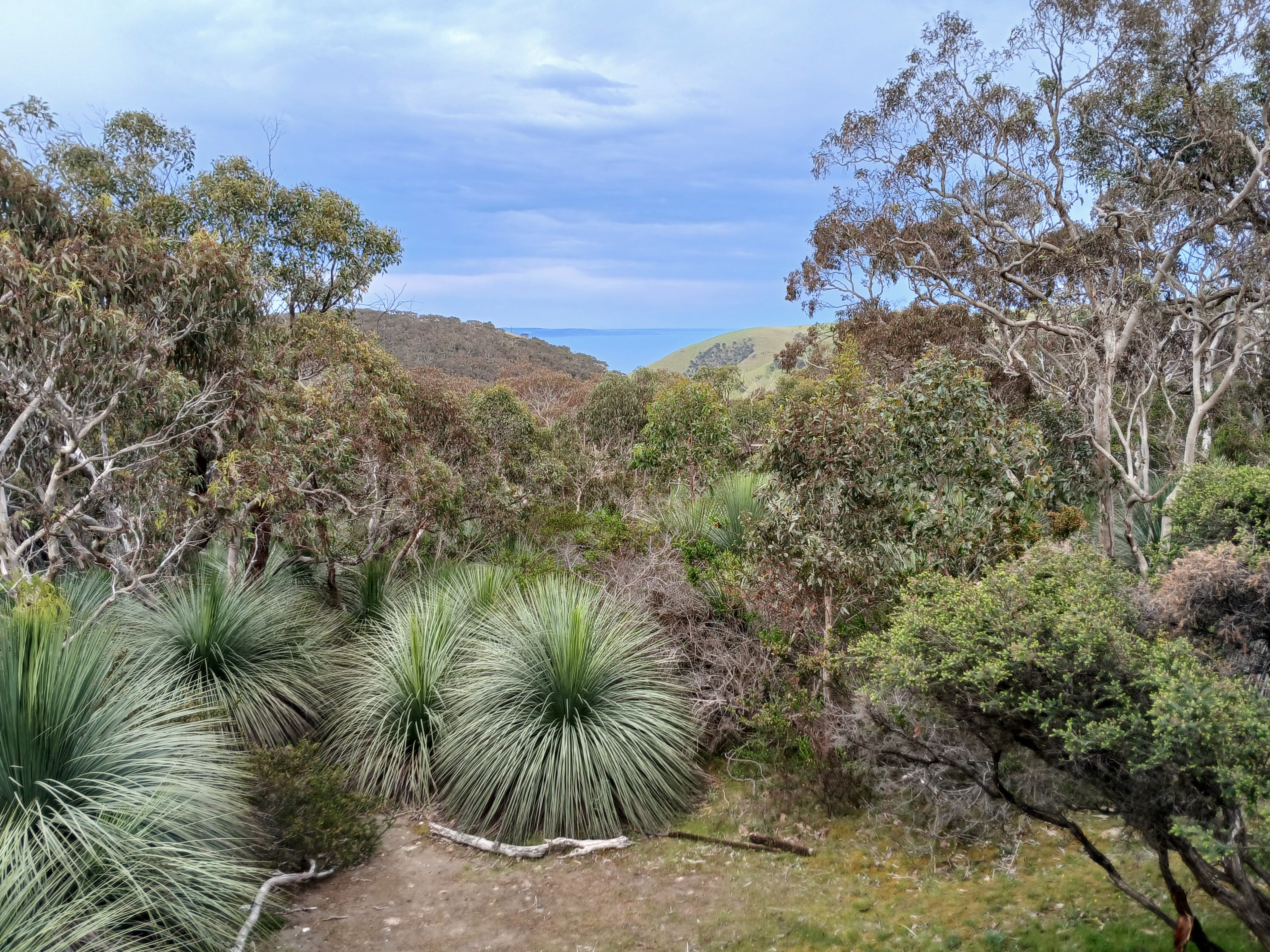
Deep Creek, September 2025.

I’ve been quiet over here for a while, not because I haven’t wanted to write a post, but because I didn’t know how to find the words to do so. Earlier this year, a toxic algal bloom hit the coast of South Australia. It began in regional locations but then spread to the metropolitan coast, killing marine animals in its wake and turning the ocean into a graveyard. Although scientists originally predicted that it would disperse during the cooler weather of the winter months, it hasn’t done so, and as summer approaches it’s clear that the bloom will remain for some time to come. There are thought to be several causes for it, among the most obvious of which is global warming: we are experiencing a marine heatwave in South Australia.

When I think about the algal bloom, I feel powerless and devastated. I have lived the whole of my adult life around the sea. My house is within walking distance of the sea. My holidays and camping trips are centred around the sea. I walk and run by the sea. I go to the sea to remind myself that there is another world beyond the human world — to tune the rhythm of my breathing into the rhythm of the waves, in and out. In and out.

But now what I feel when I go to the sea is grief.

Deep Creek, September 2025

It’s impossible for me to write a post here, on this blog in which I have for so many years celebrated my life by the sea, without acknowledging the algal bloom, and yet I find it almost equally impossible to write about it. And so this is the reason for my quietness. These words, even as I write them, do not come easily to me.

The effects of climate change are not kind. This is not a kind world.

Deep Creek, September 2025

I will finish by saying that the photographs that accompany this post come from a recent trip I made with a friend to Deep Creek, to the place where I spent a week on a writing residency around the same time last year.

Wait — let me rephrase that: I will finish by saying that Deep Creek is a place of stunning natural beauty and I am grateful for my time there, but that it, too, like the ocean, is vulnerable to climate change, because this is not a kind world.

It is not a kind world.

Lately I’ve been reading …

When the water runs dry

Other people’s words about … drought

Many years ago, when I was in my twenties and travelling overseas, my American boyfriend took me back home to meet his family and friends in Michigan. We had been living for the previous few months in Cairo, that famous desert city, and to begin with we had, like all Westerners, drunk bottled water, fearing that the local water might make us sick. But we didn’t have much money and we had read that the municipal water in Cairo was safe to drink, even for Westerners, and so after a few weeks we had transitioned to drinking tap water. Neither of us had become sick as a result, but the Cairo water was so heavily chlorinated (presumably to make it safe to drink) that even I, hailing from Adelaide, found it hard to stomach.

In my home town, the tap water was similarly heavily chlorinated — so heavily, in fact, that it was said that aeroplanes, landing in Adelaide to refuel, didn’t refill with local water. How apocryphal this story is, I am not sure, but in any case, back in Cairo my boyfriend and I had taken to adding Tang to our water to take the taste of chlorine away. When I think of Cairo now, I still think of the taste of the water we drank in our last few weeks there, tangy with artificial orange flavour. How it sat in your belly afterwards like a stone. It was in Cairo, not Adelaide, that I came to understand the meaning of the term hard water.

Clouds but no rain, Aldinga Beach, May 2025.

The narrator in Madeleine Watt’s quietly devastating novel Elegy, Southwest, Eloise, is a young Australian woman, twenty-nine years old in the present day, which makes her, I guess, a Millennial. And yet when I read the passage I’ve quoted above I thought of myself, most decidedly a Gen X-er, and my own reactions to water scarcity when I was travelling in the nineties. In Michigan, when my boyfriend left the tap running as he brushed his teeth, when his mother washed the dishes under a running tap, I struggled to swallow back my protests.

‘We’re surrounded by the Great Lakes,’ my boyfriend said, teasing me. ‘We’re hardly experiencing water scarcity.’

But my response to the sight of running water was instinctive, fundamental. Water was a precious resource. You didn’t waste it. You just didn’t.

This year in South Australia we’re experiencing record low rainfall. After the driest summer in thirty-three years, we’ve moved into an equally dry autumn, and we’ve been saved from water restrictions only through the existence of the desalination plant that opened in 2012 in response to the Millennium Drought. Meanwhile, the native local flora and fauna are visibly, heart-breakingly struggling to stay alive. Those beautiful wide blue skies of South Australia? I’ve come almost to dread them.

Like Eloise, I grew up watching Hollywood movies where teenagers hung out in malls with fountains in them. Like Eloise, I don’t remember seeing a fountain in our local malls (though in the much-loved TV comedy from the noughties Kath and Kim, the local shopping mall is aptly — prophetically? — named Fountain Lakes). And like Eloise, all these years later, in these years of drought after drought, I, too, want to ask: Who is in charge? Why isn’t somebody doing something?

Lately I’ve been reading …

My body, my self

Other people’s words about … other people’s writing

I think this is one of the best critiques I’ve read about the written world today. How do we escape the aesthetic smallness of scope and affective numbness? I don’t know, but I think Eisenberg is onto something here.

Taperoo Beach, March 2025.

Leah, one of the two main protagonists of Housemates, is fat and queer and in love with her housemate Bernie, who is attracted to Leah but not driven to pursue the attraction, or at least not initially. And here again Eisenberg questions our social mores, the platitudes we repeat to ourselves and to others, this time about the discourse of sexuality. Was she more or less comfortable among queers than she was among everyone else? Bernie asks herself. About the same, came the answer. But if she really listened, really paused, there was another answer, which was: less. The style. The discordance, the mismatching, the pride, the attracting of attention and the comfort in that attention, the physicality to dance, to fuck, to march. The physical in Bernie felt meant for other uses.

Leah and Bernie move in a world where people pride themselves for being other, for not living according to the usual socially accepted order. And yet their world, too, demands acceptance and conformity to certain philosophical and sexual tenets. I love how Bernie has the courage to question the over-sexualised expectations that she perceives the people around her to have of themselves and others. The physical in Bernie felt meant for other uses. Now that’s a celebratory sentence if there ever was one.

Taperoo Beach, March 2025.

Lately I’ve been reading …

How do you see the world?

Other people’s words about … the deeper truth

At dinner, my mother had asked about my own life. I had said that Laurie and I were wondering about whether or not to have children. My mother said that we should, that children were a good thing. At the time, I had agreed. But what I really wanted to say was that we talked about it often, while cooking dinner or walking to the shops or making coffee. We talked about every aspect over and over, each of us adding tiny life-like details, or going over hundreds of different possibilities, like physicists in endless conjecture. How hurtful would we be when we were both exhausted and sleep-deprived? How would we go for money? How would we stay fulfilled while at the same time caring so completely for another? We asked our friends, all of whom were frank and honest. Some of them said that it was possible to find a way through, especially as their children got older. Others said that all the weakest points of our relationship would be laid bare. Others still said that it was a euphoric experience, if only you surrendered yourself to it. And yet really, these thoughtful offerings meant nothing, because it was impossible, ultimately, to compare one life to another, and we always ended up essentially in the same place where we had begun. I wondered if my mother had ever asked these questions, if she’d ever had the luxury of them. I had never particularly wanted children, but somehow I felt the possibility of it now, as lovely and elusive as a poem. Another part of me wondered if it was okay either way, not to know, not be sure. That I could let life happen to me in a sense, and that perhaps this was the deeper truth all along, that we control nothing and no-one, though really I didn’t know that either.

from ‘Cold Enough For Snow
by Jessica Au

If you are someone who loves books, who loves reading — if you are someone to whom reading is fundamental to your life — you will know what I mean when I say that there are certain books, a handful of books, that, when you read them, change your life. Jessica Au’s Cold Enough For Snow is one of those books for me. It made me feel, when I reached the end of it, that I was seeing the world differently: its textures, its colours, the way I breathed the world in. There is a quality to Au’s writing, to the story she is telling, that is as lovely and elusive as a poem — and this is the kind of writing that changes the world for me.

Other books that have had the same effect on me? As I say, there are just a handful. Garth Greenwell’s What Belongs To You is one: Greenwell, with his layered sentences built of clause piled upon clause, writes about shame in a way that, for me, no other writer comes close to. Also: Sally Rooney’s Conversations With Friends, Katherine Brabon’s The Shut Ins, Bryan Washington’s Memorial, Alexander Chee’s Edinburgh.

Everlasting Daisies, Morialta Falls, November 2024.

Each of the books I’ve named above is different from the others, but what they all share, I think, is a certain interiority. Whether through Rooney’s flat, prosaic narrative and dialogue or Washington’s choppy, plain sentences, we see the world through the eyes of their characters — and in doing so, we see the world anew.

I can think of no higher praise for a writer than to say of their writing: This has changed my world. So, I’m curious. What are the books that have changed your world? Drop a comment below — I’d love to know.

Lately I’ve been reading …

I’ve gone back through some of my oldest bookmarks for some of the pieces listed below. Even now, years after bookmarking them, these pieces still resonate with me in some way. I hope they do for you, too.

Like breath

Other people’s words about … places that reside within our hearts

During our visit to the jungle, while we slept on the verandah at 3 AM, night would be suddenly alive with disturbed peacocks. A casual movement from one of them roosting in the trees would waken them all and, so fussing, sounding like branches full of cats, they would weep weep loud into the night.

One evening I kept the tape recorder beside my bed and wakened by them once more out of a deep sleep automatically pressed the machine on to record them. Now, and here, Canadian February, I write this in the kitchen and play that section of cassette to hear not just peacocks but all the noises of the night behind them — inaudible then because they were always there like breath. In this silent room (with its own unheard hum of fridge fluorescent light) there are these frogs as loud as river, grunting, the whistle of other birds brash and sleepy, but in that night so modest behind the peacocks they were unfocused by the brain — nothing more than darkness, all those sweet loud younger brothers of the night.

from ‘Running in the Family
by Michael Ondaatje

I have just spent a week away in Deep Creek, having been chosen as this year’s lucky winner of the Deep Creek Residency for writers. I spent that week away writing, reading, bushwalking, running, writing again, then writing some more. It was a joyous time, the rarest privilege, to be given time away simply to write.

Daytime, Deep Creek, October 2024.

In our lives, I think that there are some places, connected to some times, that are somehow magic, that come to us through luck or stealth or a great deal of planning and then reside with us forever. These places become a part of the fabric of who we are, though we may not always understand why, and what we feel, when we think of them or remember them or revisit them, is a sense of awe — a sense of connection to something deeper than we can articulate.

Gully of grass trees, Deep Creek, October 2024.

Deep Creek, place of grass trees and rolling hills and shrike thrushes calling in the trees, place of kangaroos and echidnas and sheep and shingleback lizards, place of tawny frogmouths and fogs and sunshine and rain and big, big skies — Deep Creek is, anyway, one of those places for me, a place close to my heart. I have left Deep Creek now, and the hopes and dreams I went there with — that I would write copiously and productively, that the story I’m writing is worth telling, that the manuscript I’m working on might one day get published — may or may not come true, but Deep Creek is still with me and always will be. I don’t know how else to put it.

Resting place, Deep Creek, October 2024.

And this is what I love about the passage I’ve quoted above by Michael Ondaatje, the way he captures the mystery of a place, its essence; the way it has become a part of him. I have never been to the jungle that he writes of, never heard peacocks who weep weep loud into the night. But in Deep Creek I have felt what Ondaatje describes. In Deep Creek I have felt that I have found a place that will, like breath, always be with me.

First light, Deep Creek, October 2024.

Lately I’ve been reading …

We cannot know

Other people’s words about … writing about life

‘We cannot know.’ If used sparingly, this is one of the strongest phrases in the biographer’s language. It reminds us that the suave study-of-a-life we are reading, for all its detail, length and footnotes, for all its factual certainties and confident hypotheses, can only be a public version of a public life, and a partial version of a private life. Biography is a collection of holes tied together with string, and nowhere more so than with the sexual and amatory life. For some there is nothing easier than understanding the sex life of someone you’ve never met, and easier still when they’re conveniently dead; or in posthumously adding another conquest to the dance card of a known Don Juan. Others simplify things by maintaining that human sexual habits have always been more or less the same, the only variables being the degree of hypocrisy and cover-up.
But sex is a world in which self-deception can so easily present itself as objective fact, and ‘brutal honesty’ is no more likely to be true than shy evasiveness or sentimental melodrama as an explanation of what really took place. Oscar Wilde may have been a ‘posing sodomite’, but such evidence as we have suggests he preferred intercrural sex, and if so was not technically a ‘sodomite’ at all. We cannot know. Sara Bernhardt was a nymphomaniac. Oh, but she was also incapable of orgasm. Until she had the problem fixed by means of an ingenious surgical implant — which is reliably attested by that ‘hysterical duplicitous gossip’ Jean Lorrain, and then recorded in the [j]ournal of Edmond de Goncourt, whose views on women were old-fashioned to say the least. We cannot know. Robert de Montesquiou was a flamboyant homosexual, except that his biographer thinks he was too coldly fastidious to indulge his Hellenic urges, while [Samuel] Pozzi’s biographer thinks he may have been impotent from around 1884, and remained so. We cannot know. Pozzi had a reputation as ‘an incorrigible seducer’, a doctor who slept with his patients, who may even have used his consultations as foreplay. He also kept all the letters he had received from women over a sexual career of half a century or more. Yet after his death, Mme Pozzi instructed her son Jean to burn them all. So we cannot know a large amount … We may speculate as long as we also admit that our speculations are novelistic, and that the novel has almost as many forms as there are forms of love and sex.

from ‘The Man in the Red Coat
by Julian Barnes

Many years ago, my mother and I embarked together on a reading project for a year, our own little book club before book clubs were a thing. Our reading theme was American novels, and we took it in turns to pick a novel, one by one over the course of the year, which we each then assiduously read; afterwards, we caught up over coffee to talk about it. I remember this year with great fondness as a time of shared reading and conversations, conversations that began with reading and literature but moved on, as all good conversations do, to other things. Art. Love. Life.

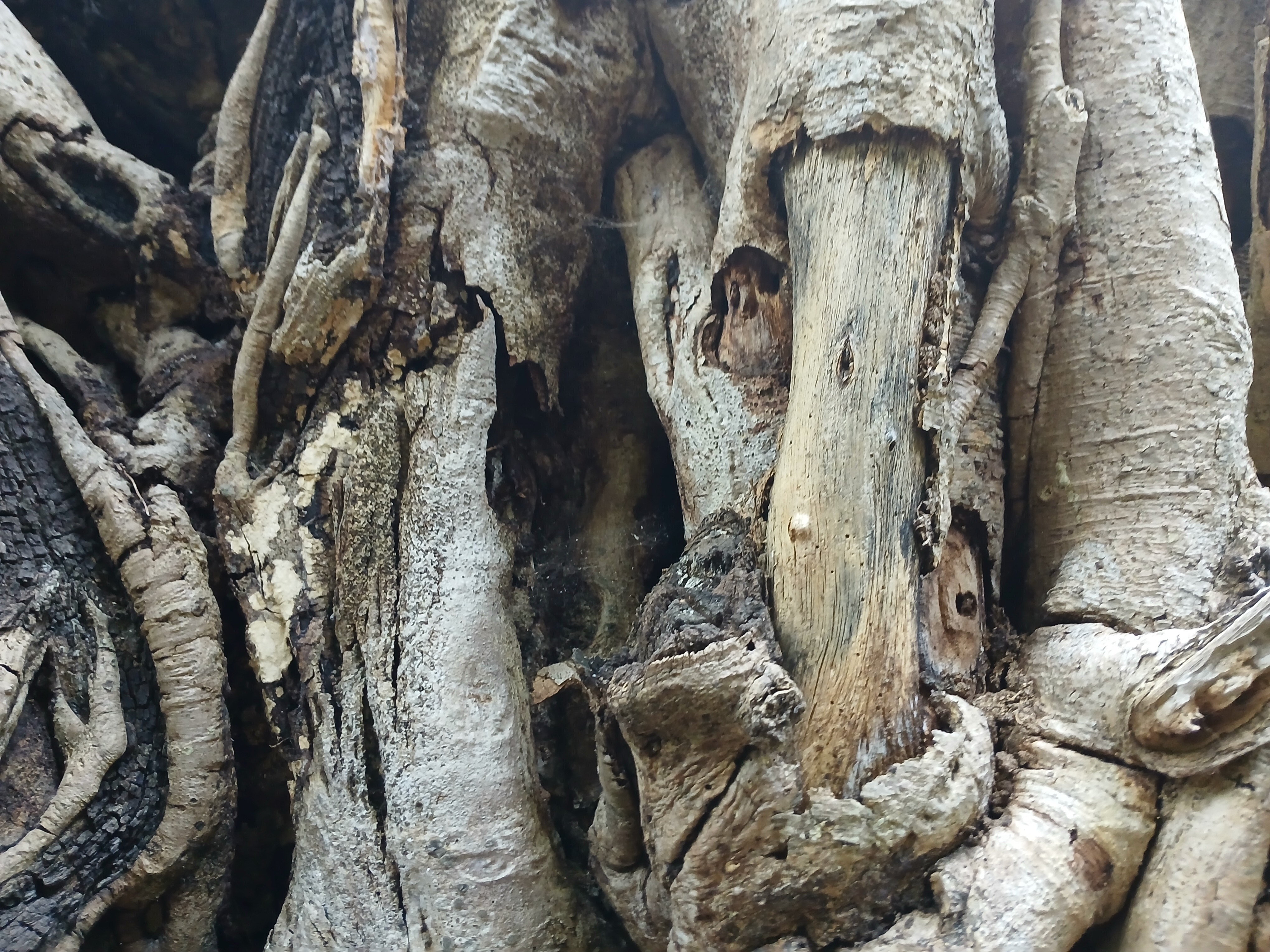
Knotted trunk, Lameroo Beach, Darwin, August 2024.

Recently we’ve begun another reading project together, one that we hope will involve some writing further down the track. As a result, my reading choices, which usually tend to fiction only, and generally to contemporary literary fiction at that, have widened. I’m reading fiction and non-fiction, works by contemporary writers and works by long-dead ones, works by women and works by men. Hence The Man in the Red Coat, which I might not otherwise have come across.

We cannot know. I’ve quoted Barnes at length here (which I hope he will forgive me for) because I love the virtuosity of this passage, the way he begins with a simple assertion, a certain truth, and then moves on in the space of a couple of paragraphs to cover themes at once intimate and specific to the period he is writing about (the Belle Epoque) but also meta-textual, concerning the art of biography itself, that collection of holes tied together with string. (What a lovely image that is.) And then, somehow, we arrive at the end of this flight of thought with another assertion, equally simple but bold, about the essence of novels and fiction.

We cannot know. Indeed.

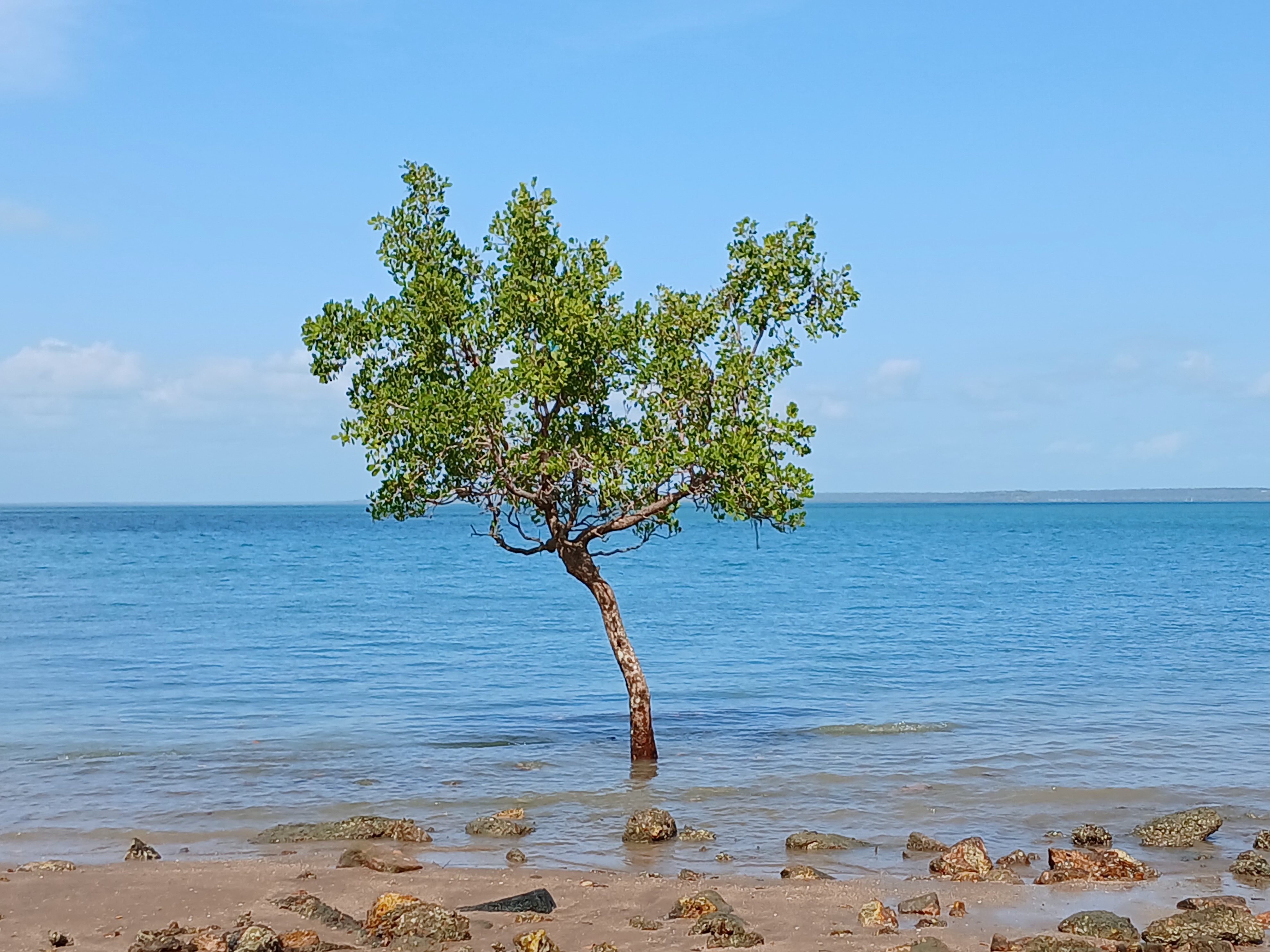
Mangrove tree at Lameroo Beach, Darwin, August 2024.

The photographs in this post, like the ones in my previous post, come from a recent trip I took to Darwin. I’d never been to Darwin before and was only there fleetingly on this occasion, but I fell in love with it, all of it. Darwin in the dry season: place of sunny days, rainforest-lined beaches, mangroves and vines and bush-stone curlews. When you visit somewhere new, you see things through a stranger’s eyes, which is to say that you don’t see its inner workings, its inner truth. Does that mean that you see its truth or something else, your own hypothesis of the place? We cannot know. But oh, the privilege of having the opportunity to see it anyway.

Lately I’ve been reading …

End-times

Other people’s words about … the end of the world

It has been so many years — a decade of this, another decade before that of almost this. People take supplements, for vitamin D, for energy, complain the damp has reached their bones. It rains constantly and the fact of the rain, of the rain’s whole great impending somethingness, runs parallel to the day-to-day of work and sleep and lottery tickets, of yoga challenges, of buying fruit and paying taxes, of mopping floors and taking drugs on weekends and reading books and wondering what to do on dates. It’s exhausting, as it always was, to live with such a breadth of things to take up one’s attention — exhausting, the way there can be too much world, even in its final stages. Exhausting, to be so busy and so bored with no time left for either.

from ‘Private Rites
by Julia Armfield

In Private Rites, three sisters, Isla, Irene and Agnes, are living in the end-times of the world. Their world, their day-to-day, is one of endless rain, of land flooding, buildings subsiding, people drowning. It’s not the world we live in, not quite — and yet it is. When I read the passage above, I thought of the days of the Covid lockdowns, of 2020 and 2021 when on the one hand everything stopped — when no-one went out, when people lost their jobs and their lives — and yet on the other hand, people went on. They bought food; they spoke to their loved ones; they slept and ate and bickered and loved each other and tried to stay healthy and tried to stay apart from each other while also trying not to let go of each other. Armfield’s rainy, drowning world is a lot like that.

Pathway to Lameroo Beach, Darwin, August 2024.

The pandemic is over now, at least officially, and no-one speaks about it anymore, except in passing, but it has changed our lives forever. Meanwhile, in the background, there is the climate crisis, which was possibly what made it possible for a pandemic like Covid to happen in the first place, and which continues apace while we look away and go about our lives.

Vines at Lameroo Beach, Darwin, August 2024.

For me, Armfield’s words in the passage above capture all of this, the worry and the refusal to worry, the going on and the not quite going on. It is exhausting, and it is boring. Writing about it, I think, is important.

Lately I’ve been reading …

Disjunction

Other people’s words about … getting divorced

I went to a gymnasium most afternoons between half past five and dinner time, because exercise kept me clearheaded writing copy in the daytime, and fresher-looking through the evening. The gymnasium had a running track on the roof. Going round and round it, regarding the view of upper Broadway electric light signs, or thinking that the person who invented the sweat shirt had no sense of design, or just counting off twenty laps to the mile, and debating detachedly whether to be energetic and run three miles, or lazy and stop at two, I felt very contented. Thump, thump, thump, around a board track. It was a simple occupation, but an absorbing one.
That feeling of running, of having been running endlessly, so that I was breathless, yet must go on running forever, seemed to sum up my life. Running through days of posing as an efficient young business woman, through nights of posing as a sophisticated young woman about town. Running from the memory of Peter, toward something or nothing, it did not matter which.

from ‘Ex-Wife
by Ursula Parrott

You could think, reading the passage above, that you were reading something from a book by a contemporary female author, a Millennial or a Gen Z writer, that you were reading a modern sad-girl novel. But you would be mistaken. Ursula Parrott published her wonderful novel, The Ex-Wife, in 1929. I am astonished at how true Patricia’s story, and Patricia’s voice, still rings now.

I read The Ex-Wife just before I came down with my first bout of Covid, and now, picking the novel up again and reading the words from it that I’ve quoted above, which so struck a chord with me at the time I read it, I wonder if I’ll ever run again the way Patricia describes, which is the way I remember running. Thump, thump, thump. I know that everyone feels like this after Covid, and I assume that it will pass. Still, the feeling of disjunction between the me who read Parrott’s novel a few weeks ago and the me writing this post is jarring.

Norfolk pine trees and autumn sunshine post-Covid, April 2024.

In The Ex-Wife Patricia’s husband has just broken up with her and she is trying to make sense of being, yes, an ex-wife. Though divorce is now far commoner than it was when Parrott wrote her novel; and though we accept the idea of wives committing adultery as much as we do the idea of husbands doing so; and though many women no longer feel the need to marry at all — still, it seems to me that Patricia’s feelings reflect what a young, heartbroken woman might feel now in a similar situation. Patricia feels betrayed by her ex-husband Peter, who leaves her after she confesses to him that she has slept with another man (even though he has, all along, been sleeping with another woman); she loves him, still, as much as she hates him; she wants to move on but can’t; and meanwhile she tries to make her way as a young, single, independent woman through the world. How familiar does all of that sound?

I am grateful to live in a world post-third wave feminism. I am grateful to live in a world that has allowed the #MeToo movement to happen finally. And yet. And yet. There is still so much that needs to change in this space. So very much.

Cuddly Covid companion, April 2024.

Lately I’ve been reading …


How do you know?

Other people’s words about … writing

Seamus went into the hall after Oliver, and they kicked the snow off their boots. Their professor had just come back from the bathroom. He put a hand on Seamus’s arm and said, ‘Great work, Seamus. It’s a good poem.’
‘Was it?’ Seamus asked. The professor’s expression opened just slightly. Oliver patted Seamus on his lower back and returned to the seminar room. It was Seamus and the professor alone in the hall. Seamus could feel himself dripping cold water on the rug.
‘Is that what you need? For someone to tell you that your work is good?’
Seamus flushed.
‘I don’t know what I need. I don’t know what I’m doing. I feel like I’m wasting my time.’
‘Oh, Seamus,’ the professor said, and Seamus looked at him.
‘How do you know?’ Seamus asked.
‘How do you know what?’ the professor retorted, his head jostling a little, like it was a game or a riddle.
‘How do you know you’re not just wasting your time?’
‘If you don’t know the answer to that, then I can’t do anything for you,’ the professor said with a chastening laugh.
Seamus felt that he had been slapped on the nose and called childish. The world grew deep and saturated. It felt as if something vast and Godlike had peeled back the veil of his life and peered in at him. He had gone around giving away all his power, seeking certainty, approval. But that’s what children did. Seamus had been a child, selfish and stubborn in his ways.

from ‘The Late Americans
by Brandon Taylor

I’ve been thinking again about the process of writing fiction — how a writer takes the story they hear inside their head and puts it into written words. That’s what the process involves for me, at least, most of the time. I hear a story in my mind, a story with a very distinct voice, and I try to translate that story into one that other people can read — a story on paper, a story on a screen. A story, I was going to say, that is tangible. Tangible is the wrong word, though. Perhaps what I mean is, a story that exists in a form that other people can access.

The strange, sad part of this process is that mostly, while the story is still inside my mind, it feels like a very beautiful thing, whereas once it becomes something I can share with other people, it often turns out not to be a beautiful thing at all.

Lizzie in a pool of sunshine (and a room with a view), Easter 2024.

Unlike Brandon Taylor’s character Seamus in the passage above, I have never studied writing. One of the reasons I haven’t is that I don’t think that studying writing will answer the question that I always have about my own writing, which is the same question that Seamus has, How do you know you’re not just wasting your time? The truth is that you can’t know, which is what (I think) the professor is trying to say to Seamus without actually spelling it out for him. You will never know. If you try to find out, you’re going down the wrong track, asking yourself the wrong question.

A better question, I think, would be, How do you sit with the fact that you don’t know whether you are wasting your time or not? But I don’t know the answer to that, either.

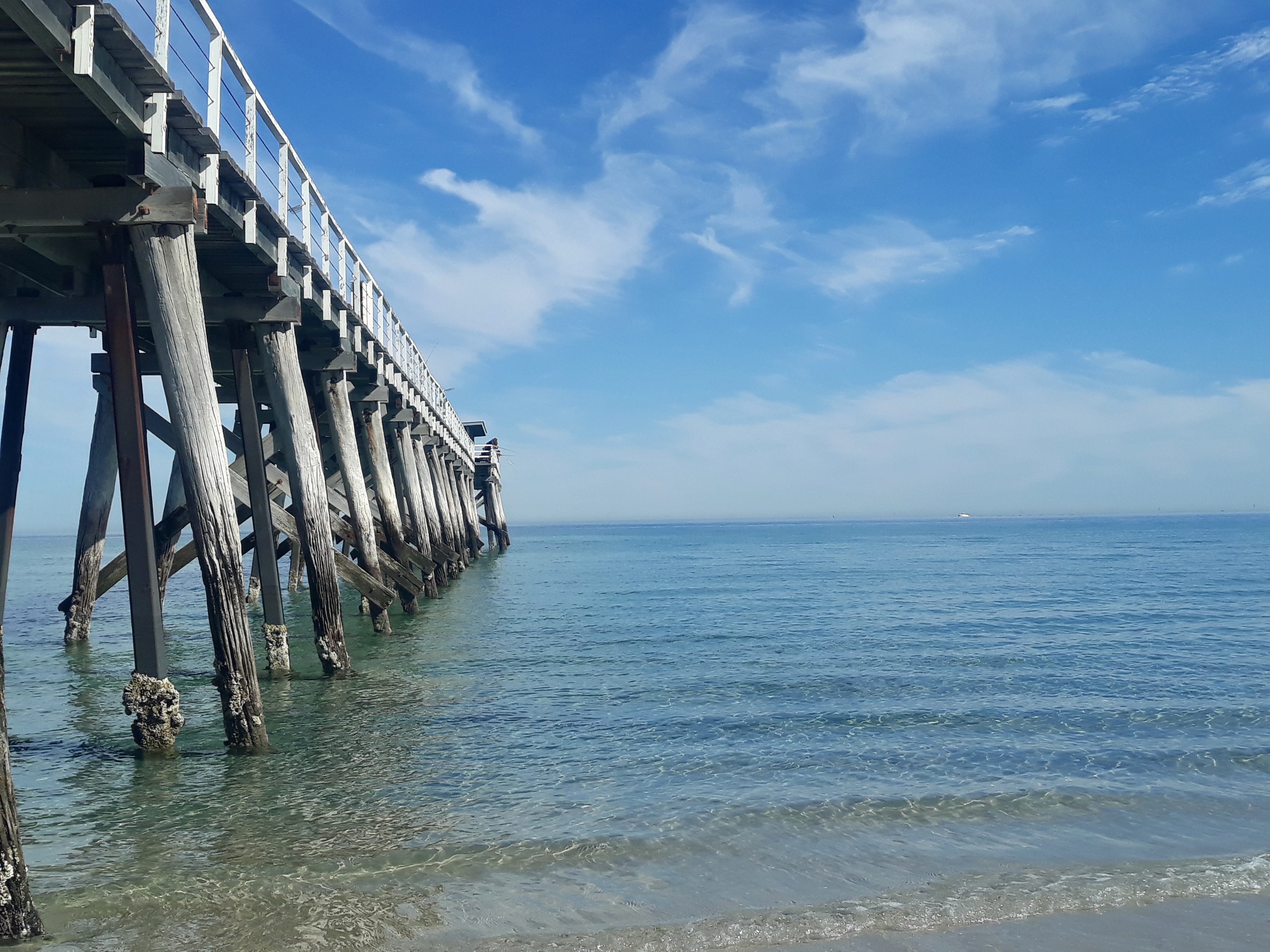
The other side of the jetty from the photo in my last post, Easter 2024.

Since my novella Ravenous Girls came out late last year, I’ve been working on a story centred around the same characters, a sequel of sorts — the next instalment. I don’t know whether it will ever get published; I don’t know whether what I’m writing is any good; I don’t know whether anyone will want to read it. Like Seamus, I keep wanting to ask someone whether I’m wasting my time, but there is no-one who can tell me.

And so, like Seamus, all I can do is sit with the unknowing. There’s nothing else you can do. There’s no other way through.

Lately I’ve been reading …

All grown up

Other people’s words about … becoming an adult

When he got his first office job, he got dressed each morning with a certain ironic remove. It was a game that everyone had to play to make a living. To be an adult is to sell out, but as long as there’s someone to recognise the irony you bring to this game it’s easier to maintain a sense of self-respect. These days there’s nobody in his life who would understand that irony, and he suspects that he’s transmitting his signal on a wavelength only he can hear. He knows that the outside observer will think of him as at one with his blazer and button-down shirt; there’s no crack for the irony to push through and unhitch the image of an indifferent, middle-aged man. When [his] students look at him, what do they see? A hypocrite? [His old friends] Thora and August would have laughed about it.

from ‘The Trio
by Johanna Herman (translated by Kira Josefsson)

I ran into an acquaintance the other day whose daughter had told me many years ago, when she was around twenty years, that she wanted to be a writer, like me. To that end, she’d enrolled in a Creative Writing degree. She wasn’t going to compromise, she said. Why do a vocational degree when what she wanted to be was a writer?

I hemmed and hawed and said quietly, ‘It’s useful to have a vocational skill as a back-up, though.’

I haven’t seen this man or his daughter for many years, and so when I ran into him the other day, I asked after him and his wife and then after his daughter.

‘What’s she doing now?’ I asked.

‘Oh,’ he said, ‘she got her creative writing degree and now she’s working in the tax office.’

And then we shrugged at each other.

So it is.

Largs Bay Jetty, March 2024.

I still feel, when I’m getting ready for work, getting changed into my office clothes, that I’m taking on an identity that doesn’t match the ‘real’ me, though I’m not sure that I see the irony in this, as Johanna Hedman’s protagonist Hugo does. It feels more like a charade to me, a performance that isn’t very convincing. I doubt that I’m alone in this, though. As Hugo himself says: To be an adult is to sell out.

Indeed. Perhaps it’s unavoidable. In any case, here we all are.

Under the jetty, March 2024.

Lately I’ve been reading …