Only connect: Talking honestly

Other people’s words about … connection

I was never sure how honest I was supposed to be with friends. I didn’t think honesty was romantically or sexually loaded, but I felt sometimes that my understanding of friendship was distorted. I was always trying to determine, with everyone, whether I was on the right side of an invisible line. If asked, I’d always argue that the problem was with normative approaches to intimacy, though I’d never been asked. It had worked for Grace Hartigan and Frank O’Hara, I thought, and then I remembered that it hadn’t. I felt, talking to Cara, that perhaps I was veering into something too unstudied, but I wasn’t sure that could stop me today. I wanted comfort; I wanted to feel close to somebody.
‘I suppose I’m lonely,’ I said.

from ‘The Modern
by Anna Kate Blair

When it comes to friendships and intimacy, I am someone, like Blair’s narrator, Sophia, in the passage above, who is always struggling to interpret whether I am on the right side of an invisible line. I am frequently aware of my tendency to dive deep into conversations at an emotional level. At the same time I’m aware that most people aren’t comfortable with that depth, or with the emotional intensity that comes with it. In conversation I often try to pull back because of this, to reign myself in, although mostly I fail. It’s a dance I do, back and forth across that invisible line, over and over.

I am not sure whether people, when they’re talking to me, notice this or not. Maybe this is just part of my intensity, my awareness of it. But I like Sophia’s use of the word honest in this context. It is a loaded term, to my way of thinking. Not everyone fronts up to conversations wanting intimacy or intensity. Not everyone wants to engage in emotional honesty.

There’s that dance again. I don’t think I’ll ever figure it out.

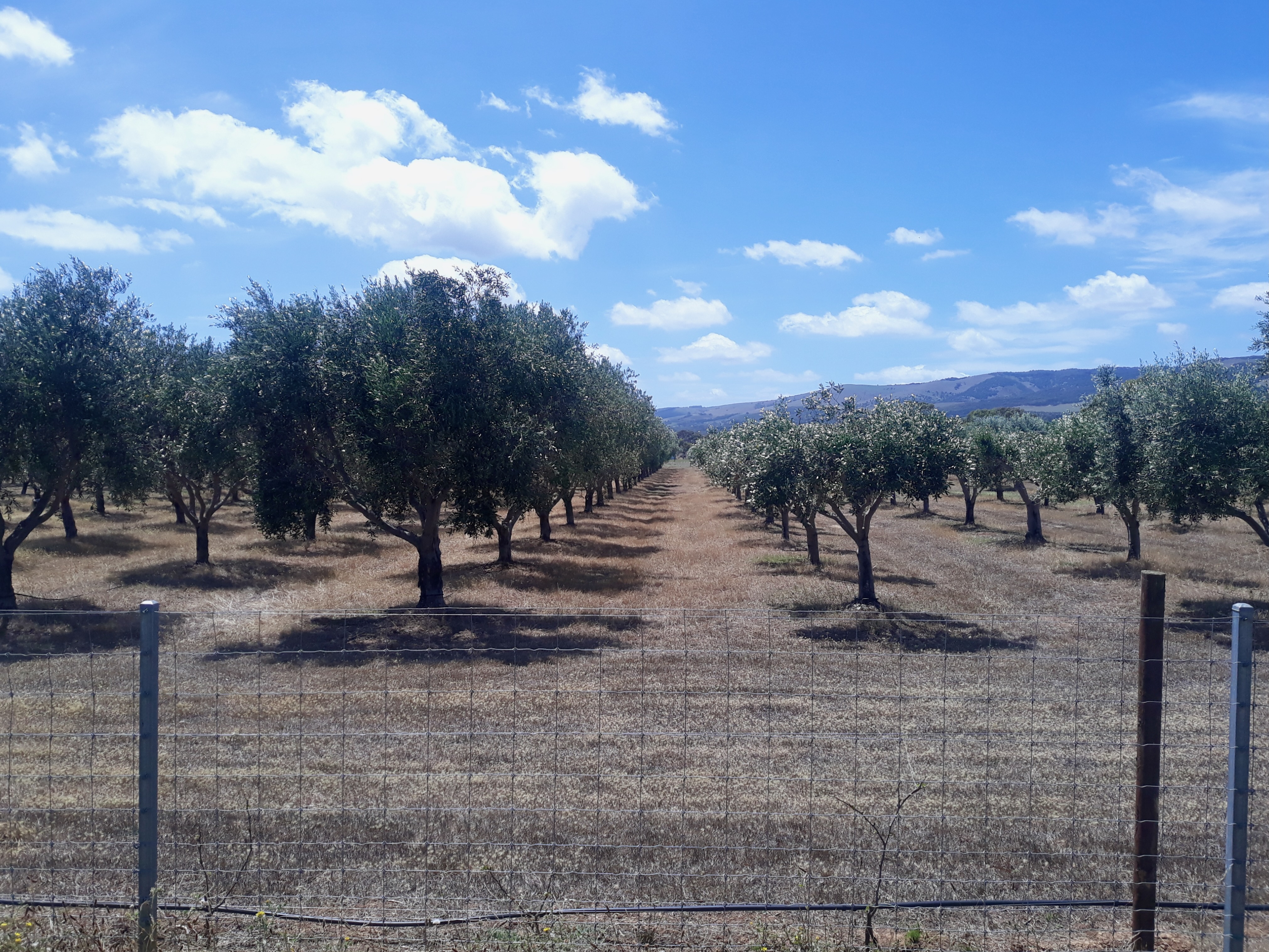
Olive groves, Aldinga, January 2024.

On another note altogether, I’ve been immersing myself in books set in Cairo recently, partly because I lived there briefly when I was twenty-two and partly because I’d like to write a story set there myself one day. Talk to anyone who’s spent any time in Cairo and soon enough they’ll tell you that it’s not like any other city, that when you leave Cairo, you carry with you a kind of sense-memory that never leaves you. Reading these books has reminded me of this. Here’s Noor Naga’s male narrator, an Egyptian boy from Shobrakheit, in her wonderful, extraordinary novel If An Egyptian Cannot Speak English:

From Damanhour, I took the train to Cairo and inside it the air was very brown, like closet air. I fell asleep and woke up with a man feeling my thigh through my torn pocket. People think anyone with a camera will have coins instead of skin inside his pocket. When I arrived in Ramses Station in Cairo, the air was people. Nowhere you looked wasn’t people. You could turn into an alley and find fifty Sudanese men, bluer than black, with cheeks like shoulder blades and ankles like knives, or else women as tall as I am, women so pale you could see rivered blood at their wrists and neck …

If you read one book on Cairo this year, make it Naga’s novel. It will leave you with as much of a sense-memory as Cairo itself, I swear.

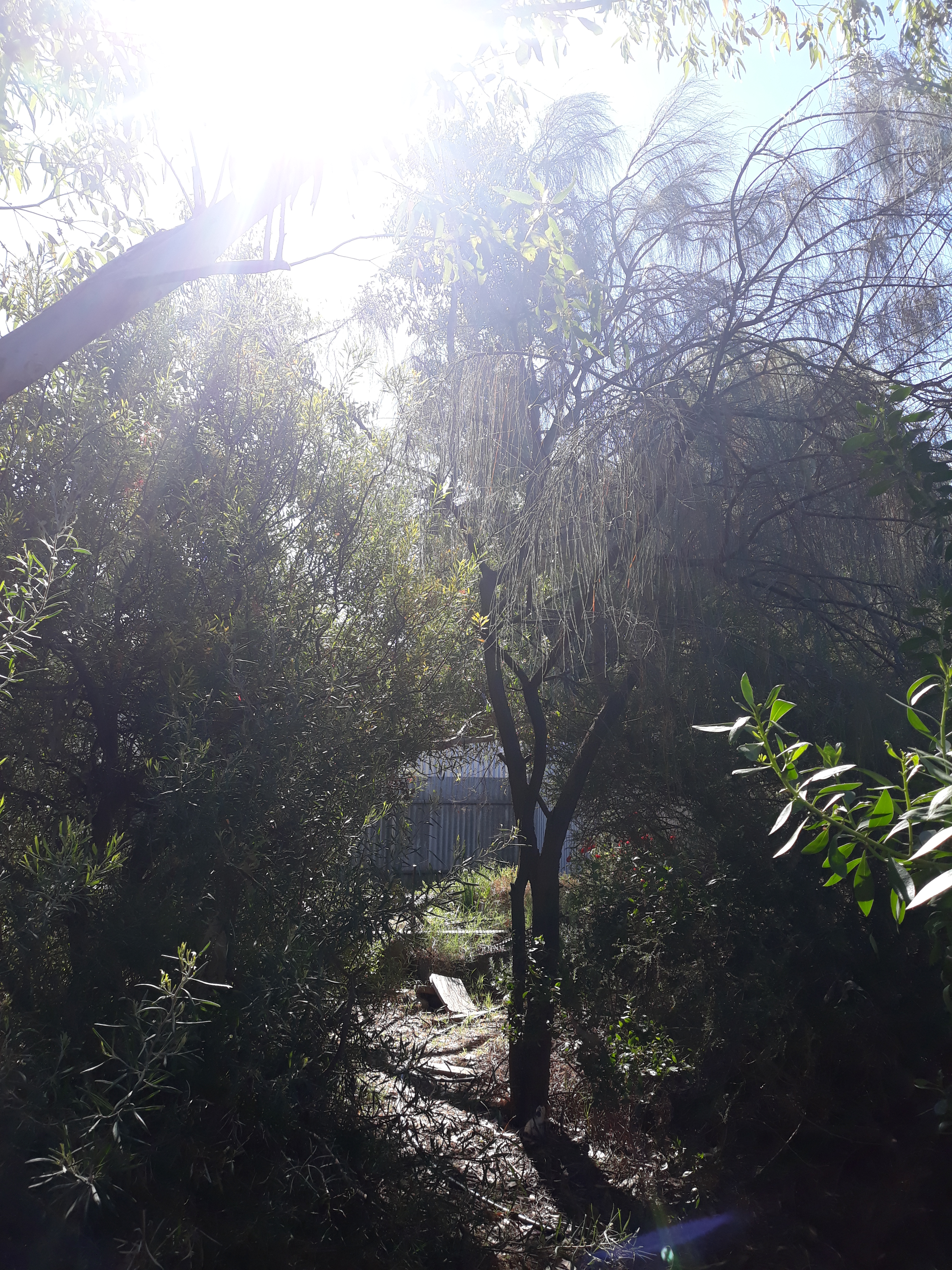
Sunlit tree, Taperoo, February 2024.

Lately I’ve been reading …

Grasp

Other people’s words about … reading

After most of my long days at work, I would arrive back at the flat, pour myself a glass of wine or vodka and read, mainly short stories and poetry. I wasn’t reading novels because I didn’t want that kind of continuity; I didn’t want to carry over any part of narrative from one day to the next. Sometimes I read poetry in languages I didn’t fully understand — with a sense of the meaning, but reaching for it, grasping after it. One of my other pleasures was smoking, but I didn’t dwell or savour; I narrowed it down to lighting up and the first few drags — after that I lost interest. I read like I smoked: fixating on my new favourite in its entirety to begin with and then honing in on the exact phrase or phrases that gave me the fix, then reading only for those, discarding the rest and when that poem had been emptied out, moving on to the next.

from ‘Signs of Life
by Anna Raverat

I’m not a smoker and I love reading novels far more than I do short stories or poetry, but still, I found myself smiling in recognition when I read the narrator’s description in the passage by Raverat above about her approach to reading. I experience myself, these days, as a greedy reader — greedy for beautiful words, phrases, images, moments, greedy for the fix they give me, while often the plot or theme of a novel remains distant or abstract to me.

Pathway, Sellicks Beach, July 2023.

Reading has been an important part of my life for as long as I can remember, though the reasons for its importance to me has varied over the years. These days, it feels like an escape for me from the world, or perhaps more accurately an escape into someone else’s world — that world they create with their words. And, like anyone addicted to their fix, I’m not about to give it up.

Little green bench (a place to read in when the warmer weather returns?)
Sellicks Beach, July 2023.

Lately I’ve been reading …

Today’s reading list is exclusively about animals and pets — for all the animal-lovers out there! xo


Solace

Other people’s words about … stepping outside

I went outside. Often I walked till the late hours. The sky’s was a darkness I could deal with. I wanted to stop living by the measures of everyone else: before and after, death and life, sea and self. Being out there — in towns where I spoke to no-one, in green deserted parks, along the edge of the gulf’s water — allowed me to turn inwards. It reflected the silence I felt in me. I wanted to be outdoors for good. Yes, I went outside.

from ‘The Memory Artist
by Katherine Brabon

Pasha, the narrator of Katherine Brabon’s novel The Memory Artist, is a Russian man in his mid-thirties, a writer trying to make sense of his life post-glasnost, post-perestroika. While the story in Brabon’s novel is about the effect of political repression on people, and particularly on artists, I found uncanny echoes in Pasha’s voice of my own thoughts and feelings (although not, clearly, in response to any political repression or trauma, neither of which I have experienced).

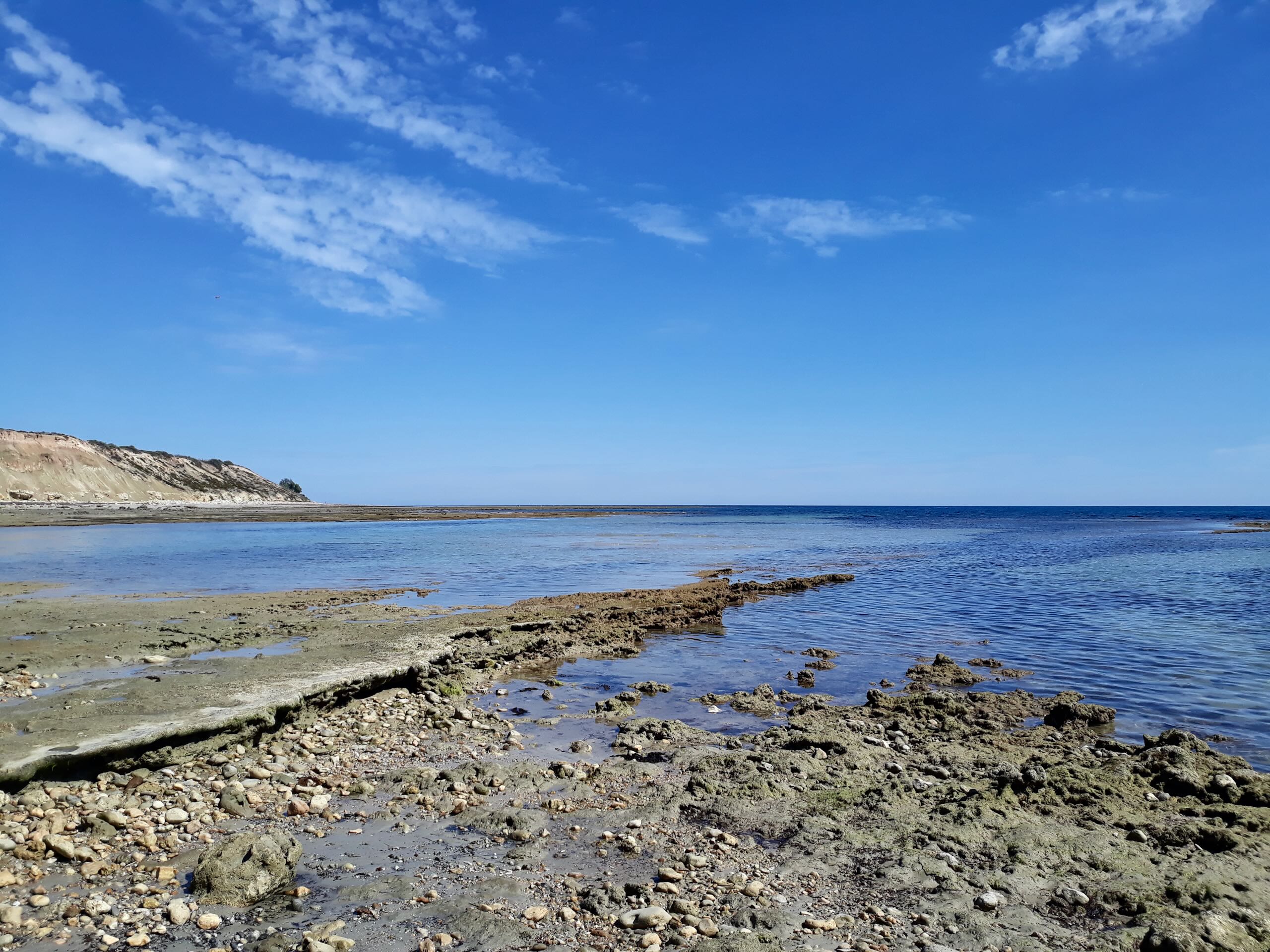
Sky and Sea, Snapper Point, April 2023.

I wanted to stop living by the measures of everyone else, Pasha writes, by which he means not that he wants to stop living, but that he wants to accord his own values to this life he is living. Where he finds it most possible to do this is outside, under the great arch of the sky.

It’s a similar impulse, I think, that makes running so appealing to me — running through the scrub, running on the beach, running beside the sea. It’s outside where I find some of the things I most long for in life: silence, neutrality, the sense that I could (if I went on running long enough, if I stayed outdoors long enough) dissolve.

Sometimes, when I’m inside going about my day — working, sleeping, eating, showering — I remind myself that the sky is just a few steps away, literally at my feet. It feels to me like the very definition of solace.

Sun and shadow, Aldinga Beach, April 2023.

Lately I’ve been reading …

An apology of sorts: today’s list is lengthy, I know, but it’s been a while since I last posted here, and meanwhile I’ve been enjoying my online reading! I hope you will dip in and out of the list below and find something that you enjoy.

Revelation

Other people’s words about … secrets

‘Philip,’ [his mother Rose] said. ‘There are things I could tell you.’
‘Tell them,’ Philip said.
‘No.’
‘Why not? I’m prepared.’
She turned, looked at [Philip’s father Owen] slumped on the sofa. ‘Because I don’t believe that just because something’s a secret it therefore by definition has to be revealed,’ Rose said. ‘Keeping certain secrets secret is important to — the general balance of life, the common utility.’

From ‘The Lost Language of Cranes

by David Leavitt

I have always been fascinated by people like Philip’s mother Rose in the passage above: people who keep their own counsel. I have a tendency to do the opposite — to over-share, to talk to people for advice, to feel guilty if the life I lead isn’t entirely transparent. I’m not sure why. I may just be wired that way, but I suspect that years of therapy during adolescence and early adulthood ingrained this way of being in me. When you are used to talking things through with someone on a weekly basis, it can feel odd — unsafe, even — once you stop.

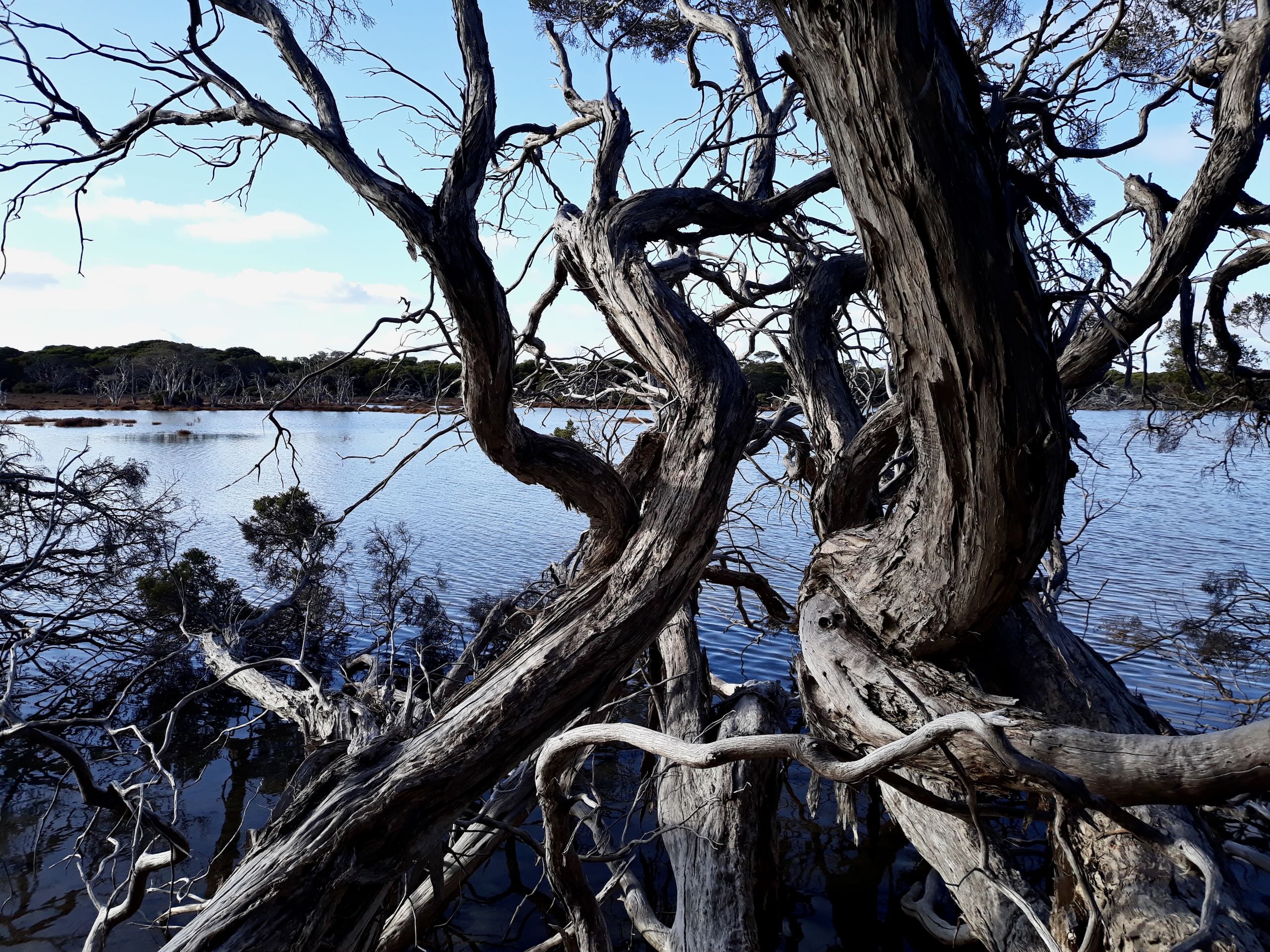
Gnarled trunk, early July 2022.

I like Rose’s matter-of-fact statement that secrets don’t have to be revealed. Sometimes, when I am uncertain about a course of action or a decision I have to make, I think of the oath that I’m told doctors must take: ‘First, do no harm.’ I find this oath, applied to life in general, one of the most useful creeds I know.

And so I find myself thinking that Rose may be right. If keeping a secret doesn’t harm anyone, then why feel compelled to reveal it? Why not learn to live in silence with one’s own truths?

Waterways, early July 2022.

Lately I’ve been reading …

Absolution

Other people’s words about … being loved

We were sitting on a cushioned bench [in the pub]. Eddie had one thick thigh crossed over the other, and he was wagging his right foot gently. He was wearing beautiful Italian brogues and talking to the man next to him, laughing at something a little too loudly, and then suddenly he turned to me, rested his hand on my leg and asked softly was I okay.
‘You okay there, pet? Can I get you something?’
It was there in the tone. I knew that I was loved as I had never been before. I don’t mean that Eddie loved me with remarkable passion or insight. I don’t mean that I felt most fully myself with him. I mean that, in the strangest way, I felt forgiven. For as long as I could remember there’d been a vague disquiet in me, as if I lived in the shadow of some humiliation whose particulars I could not recall. Until Eddie, until he absolved me, I hadn’t known there was any other way to feel.

From ‘When Light is Like Water

by Molly McCloskey

In the last few years I’ve noticed that when I’m reading a book or watching a movie the two kinds of scenes that most move me are those where two people connect for the first time (mostly, though not always, through falling in love) and those where someone forgives someone else.

Both kinds of scenes make me cry. I’m still not sure whether my tears come from a place of catharsis or from a place of yearning.


Port Adelaide, early April 2022.

I particularly love how Molly McCloskey’s narrator, Rachel, elucidates her experience of falling in love with her first husband in the passage above: how she moves away from romance to something gentler, and kinder, and deeper.

Like Rachel, I can’t remember a time when I didn’t live with a sense that I was inherently wrong, flawed, in need of forgiveness. I sense that my experience is a relatively common one, but I also sense that in me the feeling is perhaps particularly strong.


Aldinga wetlands, April 2022.

How to manage anxiety: Be kind. Be curious. I read these words somewhere once. I remind myself of them from time to time. In their simplicity and compassion, they are helpful. What McCloskey’s narrator Rachel understands in the passage above is that kindness is inherent in true love. I think that’s why her words move me so much.

Lately I’ve been reading …

Still here

Other people’s words about … the safety of books

I walk from the museum to the train and take it downtown where I get off and go to a coffee shop I used to go to before I worked full time. I was in grad school for six years — English literature, mid- to late-twentieth century, British and American, forgotten or actively discarded female writers: Penelope Fitzgerald, Anita Brookner, Jean Rhys, Nella Larsen, Lucia Berlin. There was a time when I thought giving books to other people — showing them their richness, their quiet, secret, temporary safety — could be a useful way to spend one’s life. I spent another five years as a part-time adjunct, waitress, admin assistant. Once, for six months, I wrote quizzes to accompany the bad books put out by an education corporation, but I was fired because I couldn’t keep my sentences short enough.

From ‘Want

by Lynn Steger Strong

It’s been a while since I posted here, for which I apologise. In the last few months I’ve moved house, lost my car in a car crash and sprained my ankle. In addition (and somewhat unexpectedly), the house I bought and moved into had no running water beyond a garden tap, and the sale of the house I moved out of fell through three days before settlement.


In the garden (1).

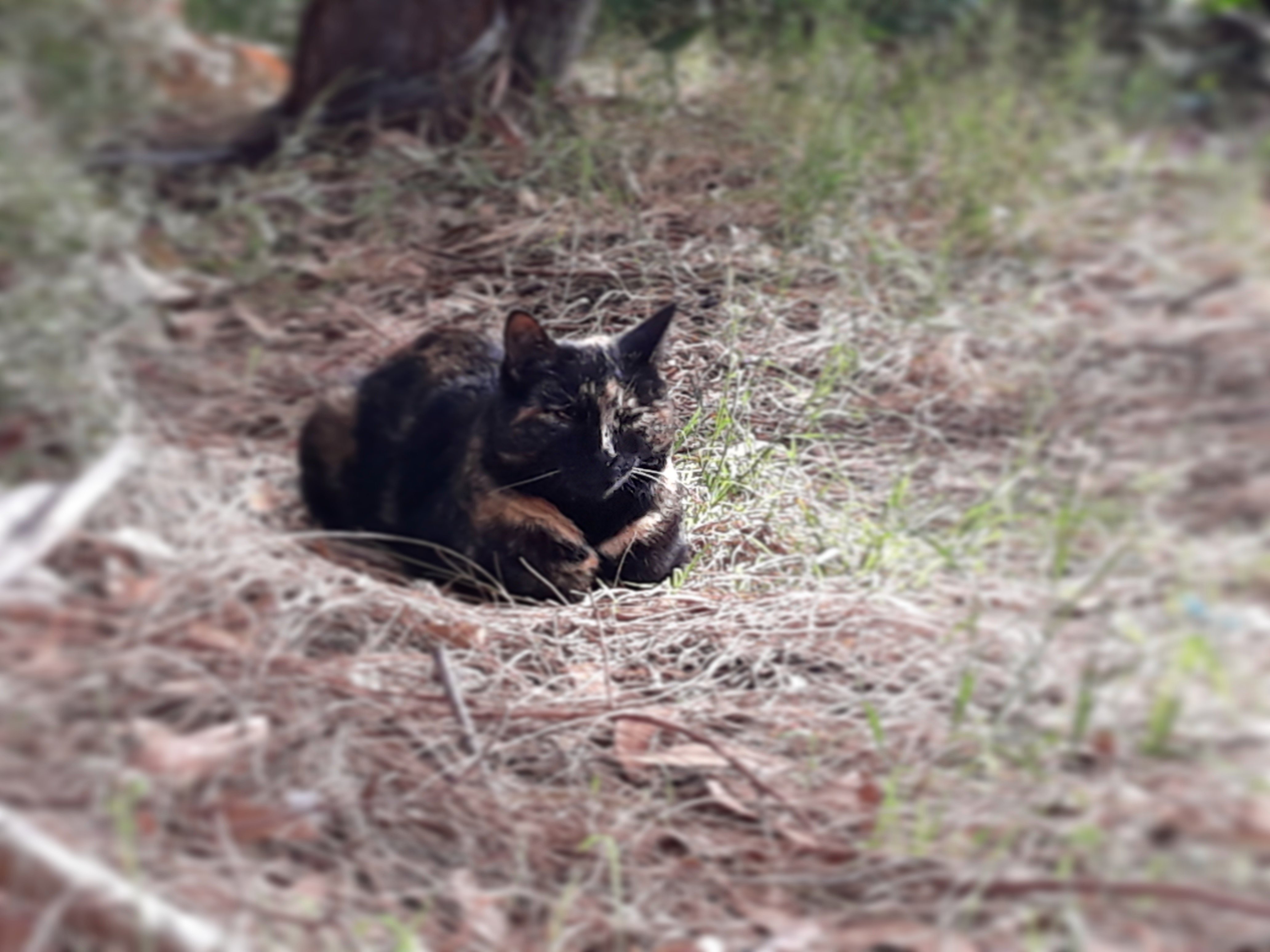
But I’m still here in the new house, still alive, still breathing. And Lizzie, the little cat who appeared in my garden at the old house two years ago, is with me, too. Though she still won’t allow human touch, she has managed the move quite splendidly so far. On the advice of the cat rescue organisation who helped me trap her and move her into the new house, I’m keeping her indoors for several weeks before attempting to allow her back outside. I hope that when I do open the door for her into the garden she’ll choose to stay with me.

I hope, I hope, I hope.


In the garden (2).

When I moved into my old house, there were no trees and the garden was a bare patch of ground covered with a pervasive weed called caltrop (three-corner jacks). I pulled out all the caltrop and then planted trees and watched them grow. When Lizzie arrived years later, she sat beneath the trees or wandered down the path beneath them from one end of the garden to the other. In the end, though I often think of myself as an indoor person, as someone who lives more richly in my inner world than the outer world, I found it far harder to leave those trees, that garden, than I did to leave the house itself.

My new house is bigger than the last one, and still within walking distance of the beach, but once again there are no trees. So I’m back to planting trees again, back to watching them grow.


Still within walking distance.

In the midst of it all, as the pandemic continues, as South Australia finally opens its borders to the rest of the world, I’ve also submitted a manuscript to my literary agent and written the first draft of another one. The manuscript I submitted to my agent is doing the rounds and has so far been rejected by six publishers, and I don’t know if it will ever be published. And the other manuscript, the first draft of which I’ve just completed — well, it’s still very much a first draft. It has a long, long way to go, many more drafts, before it will tell the story I want it to tell.

But both as a reader and as a writer, I still believe, like Lynn Steger Strong’s narrator in the passage I’ve quoted above, that giving books to other people — showing them their richness, their quiet, secret, temporary safety — [can] be a useful way to spend one’s life. After all this time, all these years, reading and writing still enrich my days and fill my life with purpose.

I’m still here. I hope you are, too.

Stumble

Other people’s words about … being an adult

I’ve joked all my life about my complete incapacity with money. Nothing has made me more anxious than dealing with finances. Trying to do my accounts caused a fog in my brain, a feeling near panic. I sensed, with the same primitive instincts that locate danger, that money is something that invalidates me, that cancels me out. I was afraid of it, afraid of its mysterious mechanisms. I loathed it, and yet it ruled my life …

Before I was in my fifties, I had no idea, until an accountant added it up, how much I earned in a year. I couldn’t read my financial records and I didn’t possess the smallest notion of what to do if I did. To me, all these things were as punitive and arbitrary as the love of God, which passeth all understanding.

From ‘Monsters: A Reckoning

by Alison Croggon

For the last few years I have lived with a similar sense of incapacity at the edges of my awareness to the one that Alison Croggon describes in the passage above. My incapacity is partly, like Croggon’s, about financial matters: though I finally learned to manage to file my tax return in my early thirties, for example, I have yet to come to terms with superannuation and all its requirements. (I make flippant jokes to friends about how I plan to live in a tent after retirement. And then I say: ‘Besides, what’s retirement, anyway? I’ll have to keep working to pay my bills till the day I die.’)

But that fog in my brain that Croggon describes descends on me in other areas, too. I have been aware since my late twenties that I had lost, or couldn’t locate, several crucial documents of identity — my birth certificate, my Australian citizenship certificate. I stumbled along without these documents, managing to get by using my passport instead, until, around the time I began to avoid getting in planes, I let my passport lapse, too, until it no longer qualified as a document that could establish my identity.

And still, even then, I put off applying for a replacement birth certificate or citizenship certificate. I was terrified that I would find once I started the application process that I wouldn’t qualify for those documents anymore. I was terrified I would no longer be able to prove that I am who I am. (Whoever that is.) I was terrified, in other words, that the application process would, as Croggon puts it, cancel me out.


Fog at Deep Creek.

I have lived my life like this for years. Decades, even. But in the space of the last three weeks — and I apologise for the clumsiness of the segue here, but it is all I can muster — in addition to re-establishing my identity and regaining my papers, I have bought a house and I have sold a house. Somewhere in those last three weeks I have also walked through a doorway out into the sunshine — a real, physical doorway, I mean, not a metaphorical one — and rolled my ankle, possibly tearing a ligament (still trying to figure that out). As a result of this I find myself now, quite literally, limping and stumbling through my days.


After the fog cleared.

I apologised earlier for the clumsiness of my segue, but the clumsiness I was referring to, though not intentional, was hardly coincidental. Though it shames me to say this, I find it impossible to talk with any grace or even with any sense of safe passage about the things I have been doing recently: proving my identity, applying for home loans, buying and selling and moving house. They are things that most people have to do at some point in their lives in our society, I know, but going through them makes me feel sick enough, my stomach churning, my head spinning. Talking about it, writing about it, processing it is too much. That fog in the brain again.

It takes a certain level of privilege to be in the position I am in, to have got through my life the way I have till now: no questions to answer, no endless need to prove who I am. The colour of my skin, the family I am part of, the certainty that I am lucky enough to feel about my gender and sexuality, the generation I was born into — all of these things have allowed me, and will continue to allow me, to choose to make myself powerless in the ways I have chosen to till now.


Deep Creek reflections.

And yet. That doesn’t mean the terror isn’t real. It doesn’t mean the choices I’ve made haven’t felt instinctive, primitive, inevitable; it doesn’t mean they haven’t felt like choices at all. It doesn’t mean I won’t keep limping through the days, wondering when I will be able to walk — or maybe, one day, even run? — again.

Lately I’ve been reading …

  • Through the Window: Rather than a number of articles, today I’m sending you this link instead, the Griffith Review‘s wonderful series of essays about the experience of living through the coronavirus pandemic. If you are interested in any kind of coronavirus chronicles, I can highly recommend any of the essays on this list.

Only connect: Those small moments

Other people’s words about connection

Paul sat alongside Julian on the kitchen floor. There was a long moment that they didn’t touch, or even look at each other. Paul could feel them staring at the same patch of wall, the scar … in the yellow paint. When Paul breached the distance he expected Julian to recoil, but he didn’t. Paul had barely touched his arm when Julian collapsed against him. He lay with his head on Paul’s lap, hardly making a sound but for the scattered rhythm of his breathing.

From ‘These Violent Delights’
by Micah Nemerever

Here in Australia, while countries all over the rest of the world have spent the last few months steadily vaccinating their populations against Covid-19, our population has remained largely unvaccinated. But now, with the kind of predictability that it seems only our political leaders were unable to predict, the Delta strain of Covid-19 has arrived on our shores. And because, without vaccination, lockdown is the only form of protection we have against the virus, we are — state by state — moving into lockdown once again, as the new strain of infection spreads. South Australia, where I live, went into a strict seven-day lockdown at 6pm on Tuesday night. The lockdown will be extended if the outbreak continues to grow, which is what has happened in New South Wales and Victoria.

Right now, I’m working from home. I’m lucky to be in the kind of work where this is possible, I know, but that’s the best I can say about the situation. Lockdowns are funny things, aren’t they? They do funny things to your mind, to your thinking. Maybe they lock your mind down, too?


Turn your back. Look away.

Anyway, in my spare time during lockdown I am reading, reading, reading. (Also writing a little, too, but that’s another story.) The libraries are closed but I have enough books from my last trip to my local library to tide me over, at least for now. And so I’m reading stories that transport me to other places and times, sentences that move me to laughter and tears, words that depict small moments of connection, like the moment between Julian and Paul in the passage above.

Everyone has their own way of coping, I know. Me? When things are tough, I collapse into books the way Julian collapses into Paul. I can think of far worse ways to collapse.

Lately I’ve been reading …

Chasing clouds

Other people’s words about … getting lost

I said earlier that I have no special running talents. In fact, I have one: getting lost.

No-one gets lost like I do. It’s not just a running thing. It’s a getting lost thing.

I’ve been lost when running, walking, driving, cycling, sailing, using public transport, even (once) taking a taxi, on at least three continents, since I first ventured out into the world as an unaccompanied teenager. I’ve temporarily abandoned a car in Milton Keynes, and once phoned [my wife] Clare from the outskirts of Northampton to warn her that I might not find my way home for days. I’ve never been lost on a running track (yet), but I have been lost indoors — not just temporarily disoriented, but properly, sit-down-and-cry-and-wait-to-die lost — on a disastrous visit to the Birmingham branch of Ikea.

From ‘Running Free’
by Richard Askwith

I am someone who gets lost as easily as Richard Askwith. I live in Australia, not England, so I’ve never got lost in Milton Keynes or Northampton, but I have certainly been to the Adelaide branch of Ikea and experienced that sense of utter lostness that he so delightfully describes as sit-down-and-cry-and-wait-to-die lost. (Though, actually, I would call that particular kind of ‘lost’ an Ikea thing rather than a getting lost thing. Just saying … )


Dune’s counterpane:
How can you ever feel lost when these are the things you see along your way?

I don’t just get lost physically, either. I frequently feel lost in a metaphorical sense, too. I admire anyone who seems to know (or who feels as though they know) where they are going in life. I don’t. I never have. The older I get, the more strongly I become aware of my inner sense of lostness.

Often, this innate sense of lostness feels like a burden. But not always. Because the thing about setting off towards one place and ending up somewhere else entirely, somewhere you hadn’t planned on and don’t recognise at all, is that you get the chance to explore.


Lizzie the garden cat:
A lost cat, but also a found one.

I’m talking metaphorically here again, of course. But the older I get, the more strongly I also come to understand the importance of being willing to explore, willing to wander, willing to wonder. And sometimes, in hopeful moments, I see many years of exploring and wandering and wondering ahead of me.

I like that thought.

Lately I’ve been reading …

Chasing clouds

Other people’s words about … running

Once he warmed up, once the tension was gone, once the sweat had properly broken and his breathing was rhythmically heavy and every twinge of stiffness and pain from previous workouts had been obliterated by adrenaline and endorphins, when all of that had happened, there was almost nowhere on earth he’d rather be, even on up-and-down back roads with no shoulder or, as now, on the old railroad path too crowded with entitled cyclists or groups of power-walking mums in their pastel tops and self-crimped hair.

For forty-five minutes, or an hour, or an hour and a half, the world was his, and he was alone in it. Blissfully, wonderfully, almost sacredly alone.

From ‘Release’
by Patrick Ness

One of the things I think I most love about running is that the act itself is so full of mysterious contradictions. For example, it’s hard work, and yet I look forward to it as a luxurious treat, in much the same way I look forward to eating an oversized piece of decadent chocolate cake. Similarly, when I’m running I feel as though I’m moving purposefully forward, following a path to something new. And yet it’s obvious that, unless your plan when you set out is to run away and never return, any run is circular, ending right back where it began.

Even the sense that I am on my own when I run — blissfully, wonderfully, almost sacredly alone, as Patrick Ness puts it in the excerpt above — is unreliable. I am never alone when I run. I run on roads, on shared paths, on trails, on beaches. There are always others inhabiting the space with me, running or walking or cycling or just sitting on a bench enjoying the view (like the views you see in the photographs I took for this post). Running, even for a lone runner like me, is an entirely communal activity.

Another contradiction: sometimes, when I feel unwell — headachey, perhaps, or queasy or tired or sleep-deprived — I know that from the moment I step outside those symptoms will leave me for the duration of my run. Probably, I’ll feel unwell again afterwards; running isn’t ever, in my experience, a cure. But for those fifteen or thirty or forty-five minutes when my feet are drumming the ground in the old, familiar rhythm, I know I’ll be symptom-free.

I have no explanation for this. It’s just part and parcel of this beloved thing I know as running.

Maybe that’s why running appeals to so many different kinds of people — because the concept itself, what it involves, what it means, is so flexible, so all-encompassing. Some of us run to lose weight; some of us run to get fit; some of us run to break records; some of us run to find joy. Whatever the reason, those of us who are physically lucky enough to be able to consider running for the long term, in whatever fashion we can manage, have one thing in common.

We know it makes us feel like a better version of ourselves.

Lately I’ve been reading …