A thousand ways

Other people’s words about … making art

I can think of no-one who writes better about living in the modern world as an artist than Brandon Taylor. No-one, more particularly, who writes better about being a young, queer, Black male artist in the twenty-first century who is trying to practise art while not succumbing to the white gaze. (Taylor describes white supremacy in another wonderful passage in Minor Black Figures, as giving Black artists a tiny white man in your mind to argue with constantly all the way up and down until you died never having had a single thought that was not either about whiteness or a reaction to whiteness).

This is not my story, clearly. Still, as a (middle-aged, white, female, straight) writer, I feel a great deal of kinship with Wyeth in the passage above as he struggles with the value and integrity of his art practice. Yes, yes, yes.

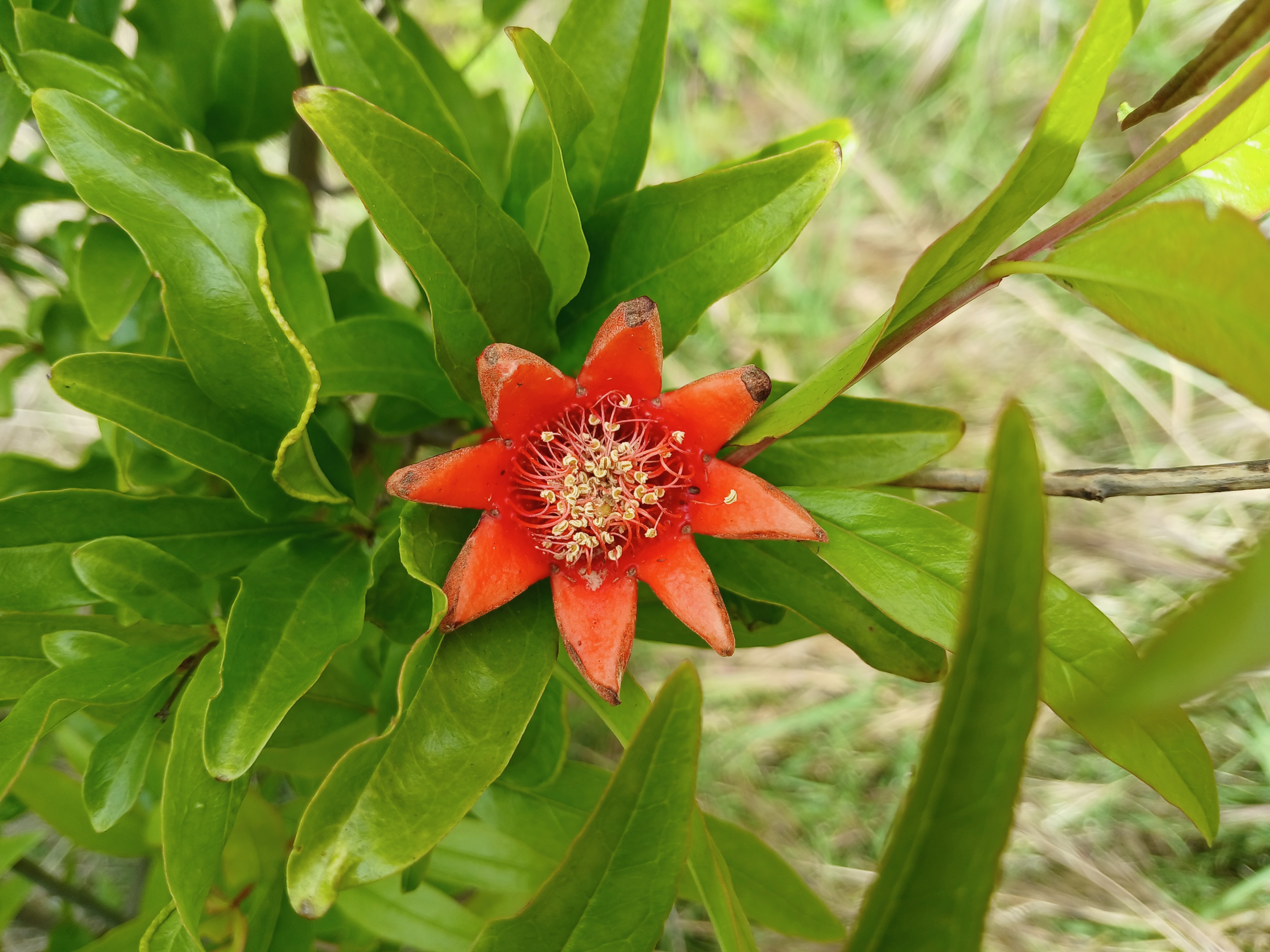
Pomegranate flower in my garden, November 2025.

For myself, post-publication of my novella Ravenous Girls, I’m still writing. Still writing, still learning. I am often puzzled by the values I encounter in the publishing world and more broadly in the world of books and reading — puzzled by how writers seem to be valued more for their productivity and conformism than for what they have to say or how they say it. As a consequence, I don’t know if I’ll ever have another book published. But I do know that I will continue to write, and that the act of writing — when I separate myself from its place in the commercial world — is meaningful to me, in and of itself.

Or, as Taylor puts it: Anyway, it wasn’t like he was staking anything of value to anyone else — just his integrity.

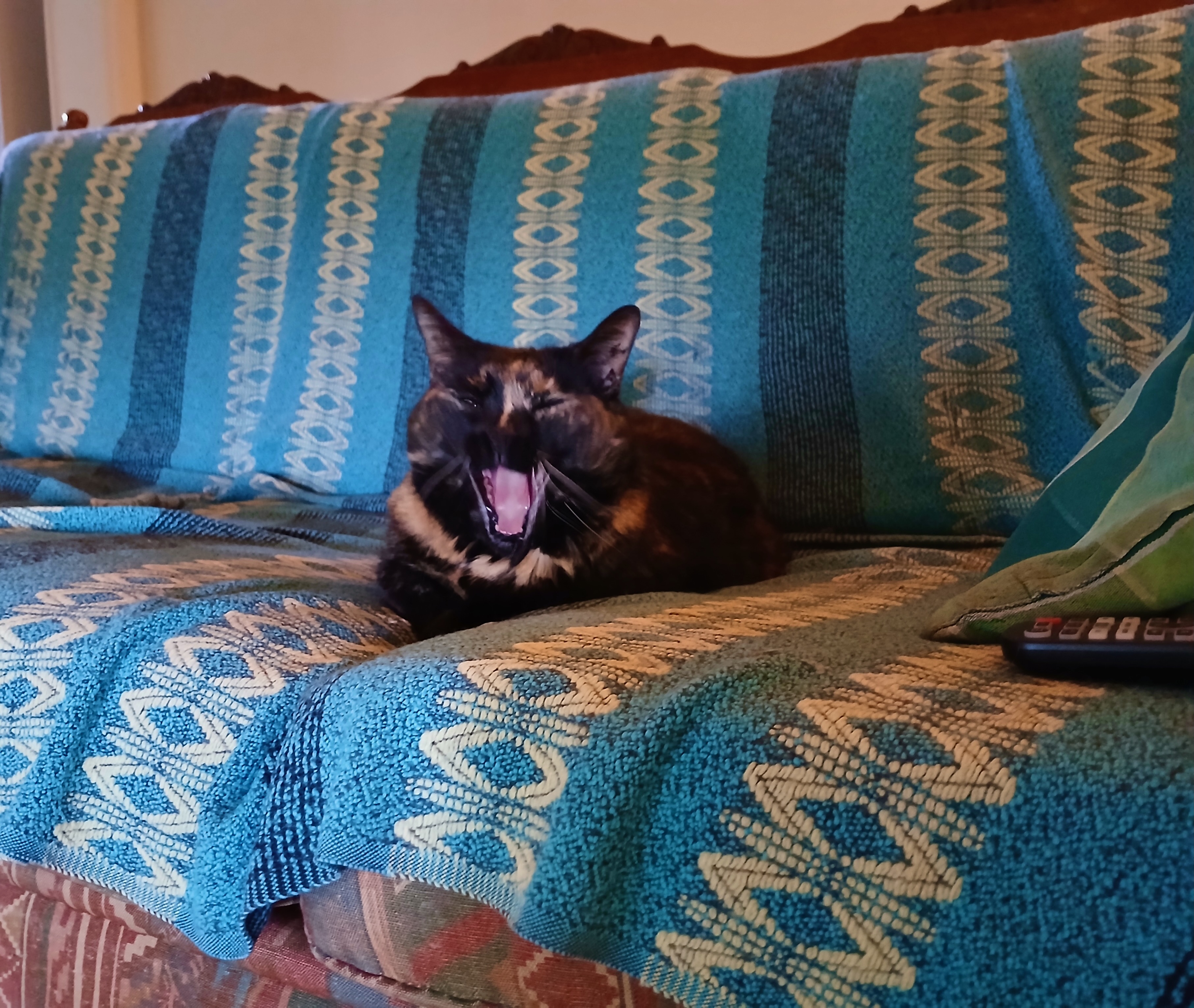
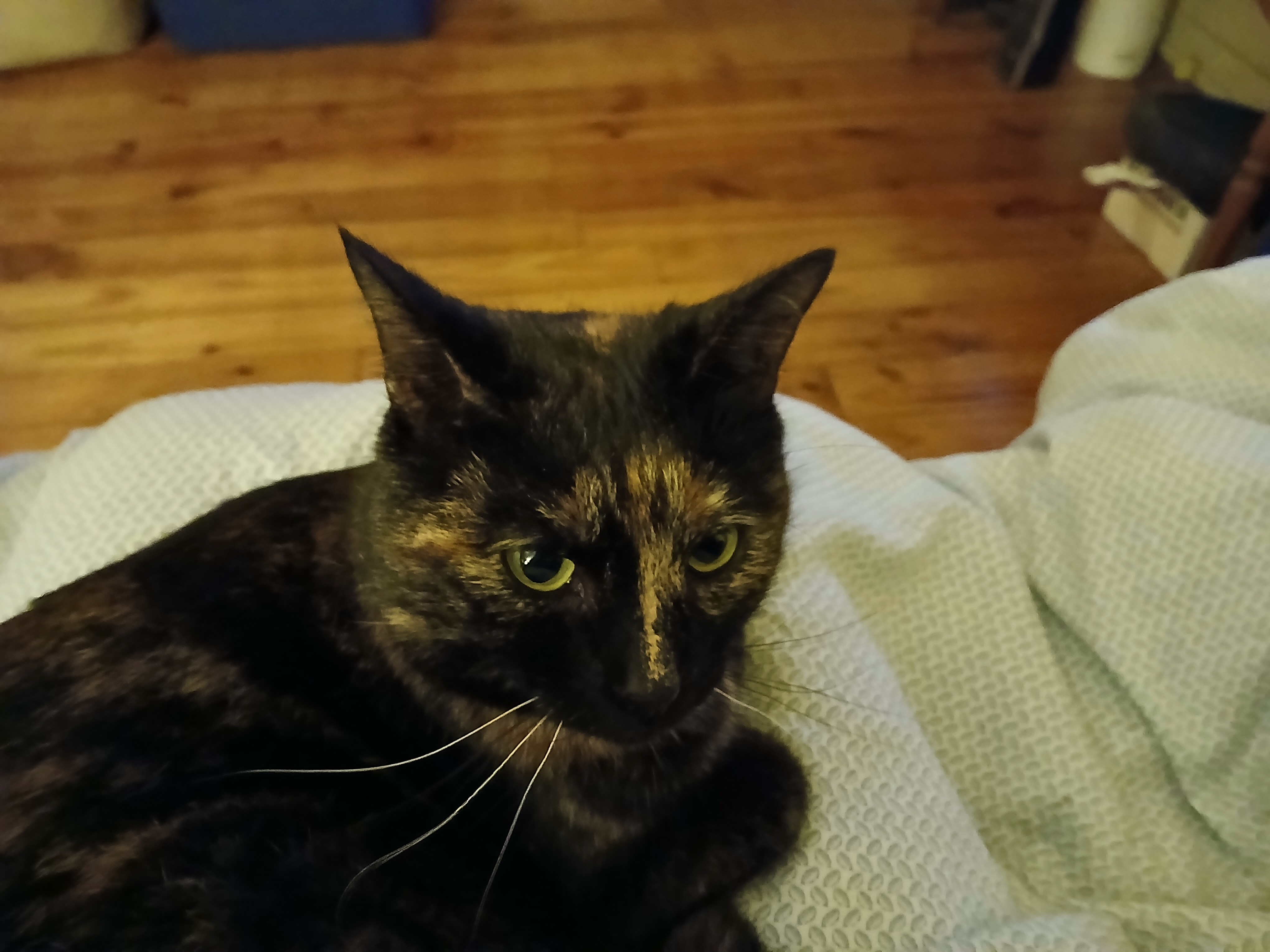
Lizzie mid-yawn, November 2025 (this cat has no issues with her own integrity!)

Lately I’ve been reading …

I’ve been exploring the world of short fiction in the last year, discovering some wonderful short stories, flash fiction and micro fiction in the process. Below I’ve listed some of the stories I’ve enjoyed — happy reading!

This world

Other people’s words about … kindness

Depictions of sex are notoriously hard to get right, and what sets those that work apart from those that don’t isn’t always obvious (although personally I feel that it helps if the writer avoids analogies with mountains and valleys, and doesn’t refer to a man’s ‘member’!). But I think the passage I’ve quoted above, from Clare Chambers’s lovely novel Small Pleasures — a novel set in 1957 — is one of the most moving sex scenes I’ve ever read.

It’s also somehow shocking. How many sex scenes have you read recently where the lovers were explicitly kind to each other? I can’t remember a single one. So when I say the scene is shocking, I mean, not that Chambers sets out to describe something graphic or taboo-breaking, but the opposite — that this is the word she uses, kind. And so even though they were unpractised, they were kind and that made it all right. How beautiful is that?

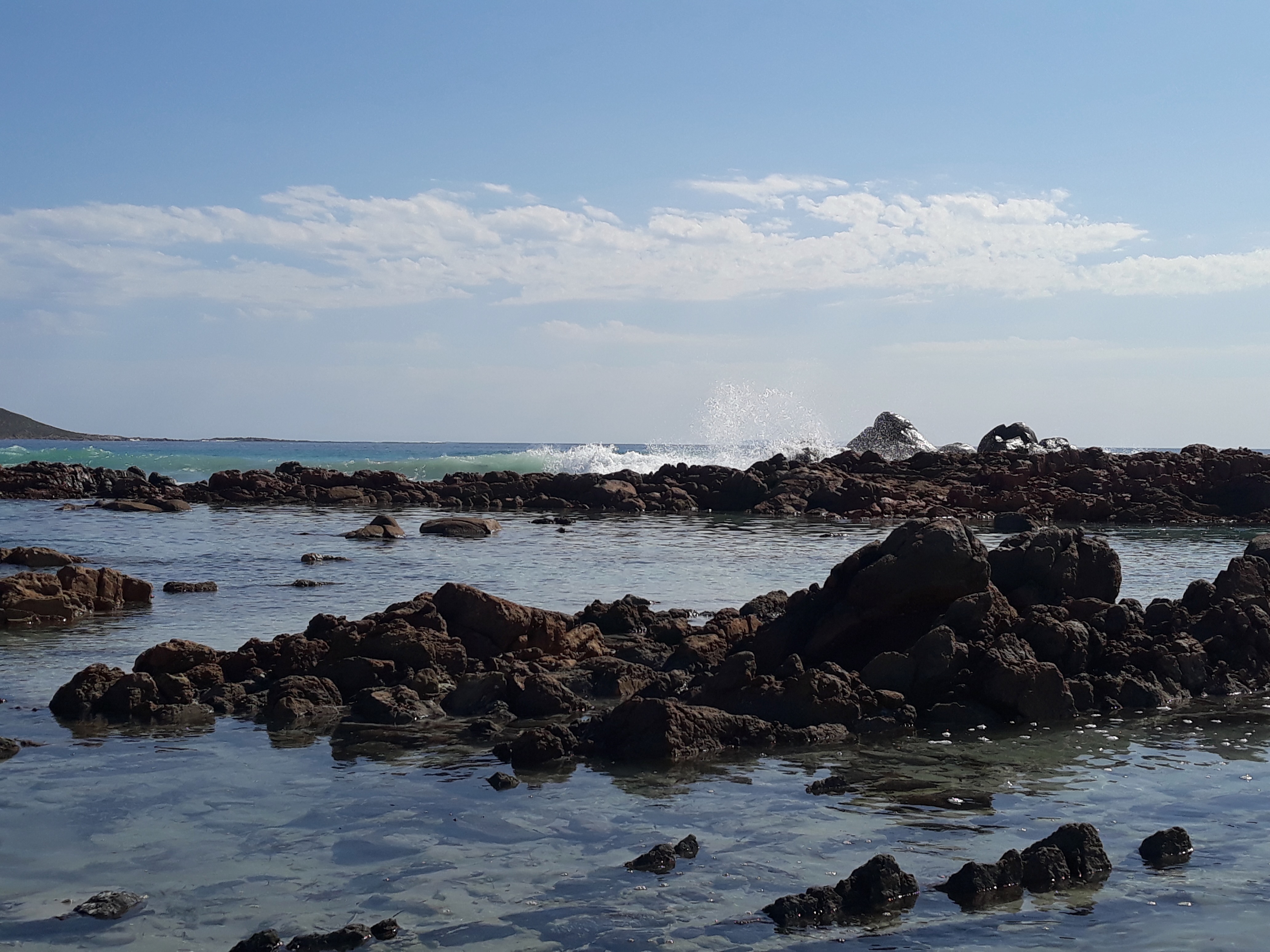
Deep Creek, September 2025.

I’ve been quiet over here for a while, not because I haven’t wanted to write a post, but because I didn’t know how to find the words to do so. Earlier this year, a toxic algal bloom hit the coast of South Australia. It began in regional locations but then spread to the metropolitan coast, killing marine animals in its wake and turning the ocean into a graveyard. Although scientists originally predicted that it would disperse during the cooler weather of the winter months, it hasn’t done so, and as summer approaches it’s clear that the bloom will remain for some time to come. There are thought to be several causes for it, among the most obvious of which is global warming: we are experiencing a marine heatwave in South Australia.

When I think about the algal bloom, I feel powerless and devastated. I have lived the whole of my adult life around the sea. My house is within walking distance of the sea. My holidays and camping trips are centred around the sea. I walk and run by the sea. I go to the sea to remind myself that there is another world beyond the human world — to tune the rhythm of my breathing into the rhythm of the waves, in and out. In and out.

But now what I feel when I go to the sea is grief.

Deep Creek, September 2025

It’s impossible for me to write a post here, on this blog in which I have for so many years celebrated my life by the sea, without acknowledging the algal bloom, and yet I find it almost equally impossible to write about it. And so this is the reason for my quietness. These words, even as I write them, do not come easily to me.

The effects of climate change are not kind. This is not a kind world.

Deep Creek, September 2025

I will finish by saying that the photographs that accompany this post come from a recent trip I made with a friend to Deep Creek, to the place where I spent a week on a writing residency around the same time last year.

Wait — let me rephrase that: I will finish by saying that Deep Creek is a place of stunning natural beauty and I am grateful for my time there, but that it, too, like the ocean, is vulnerable to climate change, because this is not a kind world.

It is not a kind world.

Lately I’ve been reading …

Begin again

From the annals of The Great First Chapter Project

About a year ago my husband handed me a brochure for a retreat in a nearby mountain village. We were standing in our Beijing kitchen while the girls played make-believe dog at our feet. The brochure was more like a handmade pamphlet – four pieces of white computer paper folded in the middle and stapled three times along the crease. There was a grainy photo of a cement terrace on the cover, and a more alarming photo of people sitting in a room with their eyes closed, and text under the photos that explained something called a ‘day of silence’ and yoga and the chance for participants to reinvent themselves. My husband, Lukas, told me these things would make a good week’s vacation for me, and he smiled while I looked at the photos, but it was a distant smile.

from ‘Elsey Come Home
by Susan Conley

I’ve been thinking, as you do at this time of the year, about endings and beginnings. About the things I hoped for at the start of the year, and the things that happened, and the things that I wanted to happen but didn’t (or haven’t yet). And about next year too, of course — the same kind of things, what I hope for, what I dread, what I can plan for, what I can’t. What I might just have to take on the chin.

One of the things that happened for me this year was that, as part of winning the Deep Creek Residency, I got to have a conversation with a publisher after he’d read the first 20 pages of the manuscript I’m currently working on. I’m the kind of writer who works from project to project — that is to say, uncontracted — and I also spend years between publications, years working alone, writing and rewriting and doubting myself all the while, so this was an incredible opportunity, one I’ll be forever grateful for.

Over the course of one hour, the publisher and I talked about many things, one of which was how important it is to get the first few pages of your manuscript right. We talked about prologues. We talked about hooks. We talked about grabbing the reader within the first five pages. We talked. We talked. Oh, we talked.

And I’ve been thinking about beginnings ever since.

Abandoned writer’s cabin, Deep Creek, October 2024.

So much has changed for me in the last two years when it comes to writing. I’ve had my first piece of literary fiction published, my novella Ravenous Girls. I’ve begun work on my second piece. I’ve won a residency. So many beginnings! Somehow, it seems fitting to end my year of writing on this note, thinking about beginnings.

On this note, I’ve started collecting quotations from books whose first chapter, or first few paragraphs, or even — rarely — first sentences, grab me. I’m calling this The Great First Chapter project, and I can’t think of a better way to start than with the first paragraph I’ve quoted in this post, which comes from a novel I love, Susan Conley’s Elsey Come Home.

My husband, Lukas, told me these things would make a good week’s vacation for me, writes Conley, and he smiled while I looked at the photos, but it was a distant smile. There it is, the story lying ahead of us in a nutshell: the story of a husband and wife who love each other but are estranged, the story of a marriage that needs healing. I knew the moment I read this line for the first time that I would love this book, and I did.

View from the cabin, Deep Creek, October 2024.

Before I go, I wanted to mention some good news I’ve had recently. My story ‘A Farewell’ was shortlisted for the MIKI Prize and included in the MIKI Prize 2024 Anthology, which was launched last week, and just this week my story ‘City of Lights’ was highly commended in the Marj Wilke Short Story Award 2024. I’ve never really focused on writing shorter pieces before, but this year, while I was working on a longer manuscript, the one that the publisher and I were discussing, I also started writing and submitting stories here and there, where and when I can. I have a lot to learn, but when it comes to beginnings — this feels like another one.

The cabin from afar, Deep Creek, October 2024.

Lately I’ve been reading (and listening) …

How do you see the world?

Other people’s words about … the deeper truth

At dinner, my mother had asked about my own life. I had said that Laurie and I were wondering about whether or not to have children. My mother said that we should, that children were a good thing. At the time, I had agreed. But what I really wanted to say was that we talked about it often, while cooking dinner or walking to the shops or making coffee. We talked about every aspect over and over, each of us adding tiny life-like details, or going over hundreds of different possibilities, like physicists in endless conjecture. How hurtful would we be when we were both exhausted and sleep-deprived? How would we go for money? How would we stay fulfilled while at the same time caring so completely for another? We asked our friends, all of whom were frank and honest. Some of them said that it was possible to find a way through, especially as their children got older. Others said that all the weakest points of our relationship would be laid bare. Others still said that it was a euphoric experience, if only you surrendered yourself to it. And yet really, these thoughtful offerings meant nothing, because it was impossible, ultimately, to compare one life to another, and we always ended up essentially in the same place where we had begun. I wondered if my mother had ever asked these questions, if she’d ever had the luxury of them. I had never particularly wanted children, but somehow I felt the possibility of it now, as lovely and elusive as a poem. Another part of me wondered if it was okay either way, not to know, not be sure. That I could let life happen to me in a sense, and that perhaps this was the deeper truth all along, that we control nothing and no-one, though really I didn’t know that either.

from ‘Cold Enough For Snow
by Jessica Au

If you are someone who loves books, who loves reading — if you are someone to whom reading is fundamental to your life — you will know what I mean when I say that there are certain books, a handful of books, that, when you read them, change your life. Jessica Au’s Cold Enough For Snow is one of those books for me. It made me feel, when I reached the end of it, that I was seeing the world differently: its textures, its colours, the way I breathed the world in. There is a quality to Au’s writing, to the story she is telling, that is as lovely and elusive as a poem — and this is the kind of writing that changes the world for me.

Other books that have had the same effect on me? As I say, there are just a handful. Garth Greenwell’s What Belongs To You is one: Greenwell, with his layered sentences built of clause piled upon clause, writes about shame in a way that, for me, no other writer comes close to. Also: Sally Rooney’s Conversations With Friends, Katherine Brabon’s The Shut Ins, Bryan Washington’s Memorial, Alexander Chee’s Edinburgh.

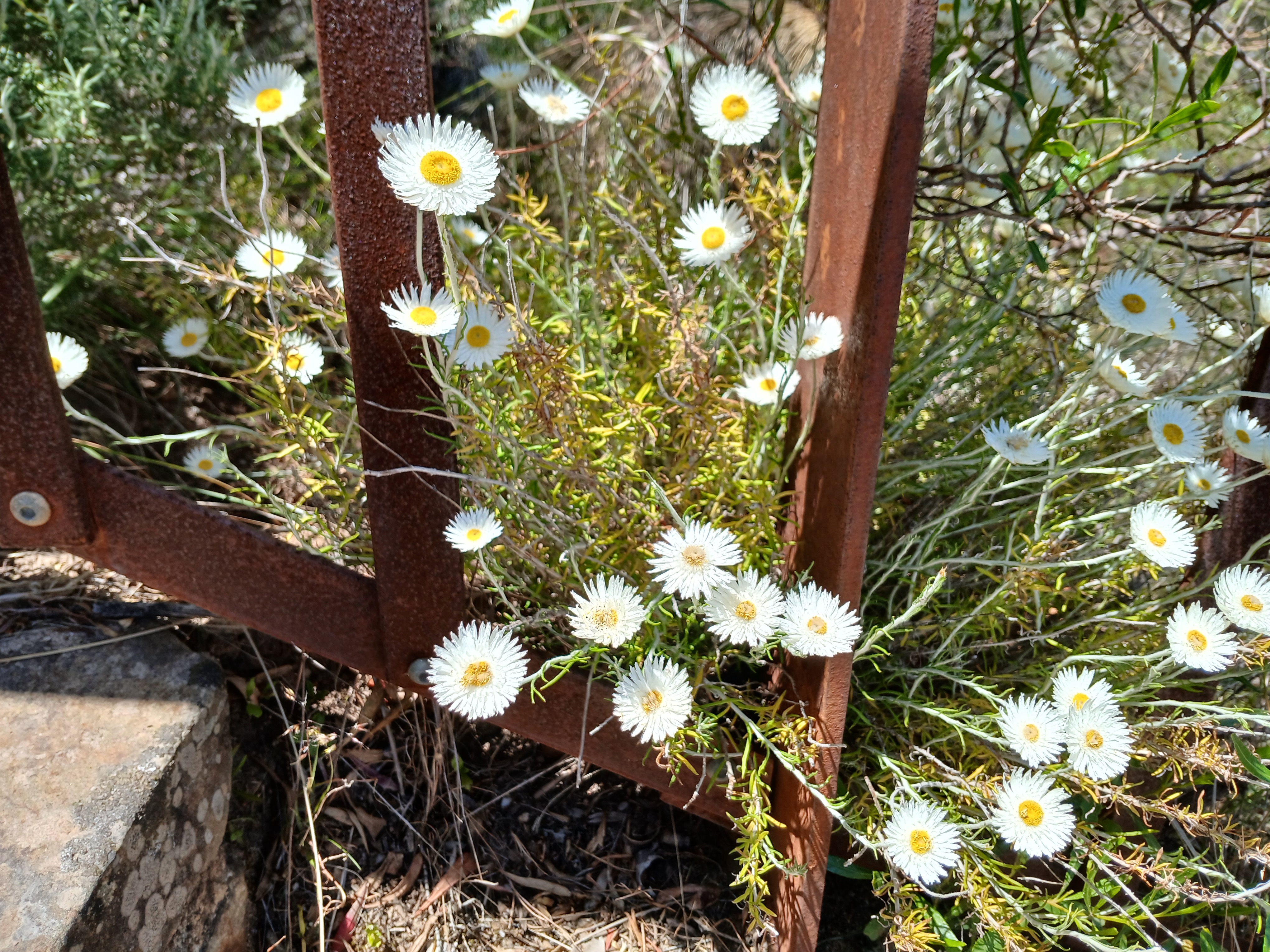
Everlasting Daisies, Morialta Falls, November 2024.

Each of the books I’ve named above is different from the others, but what they all share, I think, is a certain interiority. Whether through Rooney’s flat, prosaic narrative and dialogue or Washington’s choppy, plain sentences, we see the world through the eyes of their characters — and in doing so, we see the world anew.

I can think of no higher praise for a writer than to say of their writing: This has changed my world. So, I’m curious. What are the books that have changed your world? Drop a comment below — I’d love to know.

Lately I’ve been reading …

I’ve gone back through some of my oldest bookmarks for some of the pieces listed below. Even now, years after bookmarking them, these pieces still resonate with me in some way. I hope they do for you, too.

Like breath

Other people’s words about … places that reside within our hearts

During our visit to the jungle, while we slept on the verandah at 3 AM, night would be suddenly alive with disturbed peacocks. A casual movement from one of them roosting in the trees would waken them all and, so fussing, sounding like branches full of cats, they would weep weep loud into the night.

One evening I kept the tape recorder beside my bed and wakened by them once more out of a deep sleep automatically pressed the machine on to record them. Now, and here, Canadian February, I write this in the kitchen and play that section of cassette to hear not just peacocks but all the noises of the night behind them — inaudible then because they were always there like breath. In this silent room (with its own unheard hum of fridge fluorescent light) there are these frogs as loud as river, grunting, the whistle of other birds brash and sleepy, but in that night so modest behind the peacocks they were unfocused by the brain — nothing more than darkness, all those sweet loud younger brothers of the night.

from ‘Running in the Family
by Michael Ondaatje

I have just spent a week away in Deep Creek, having been chosen as this year’s lucky winner of the Deep Creek Residency for writers. I spent that week away writing, reading, bushwalking, running, writing again, then writing some more. It was a joyous time, the rarest privilege, to be given time away simply to write.

Daytime, Deep Creek, October 2024.

In our lives, I think that there are some places, connected to some times, that are somehow magic, that come to us through luck or stealth or a great deal of planning and then reside with us forever. These places become a part of the fabric of who we are, though we may not always understand why, and what we feel, when we think of them or remember them or revisit them, is a sense of awe — a sense of connection to something deeper than we can articulate.

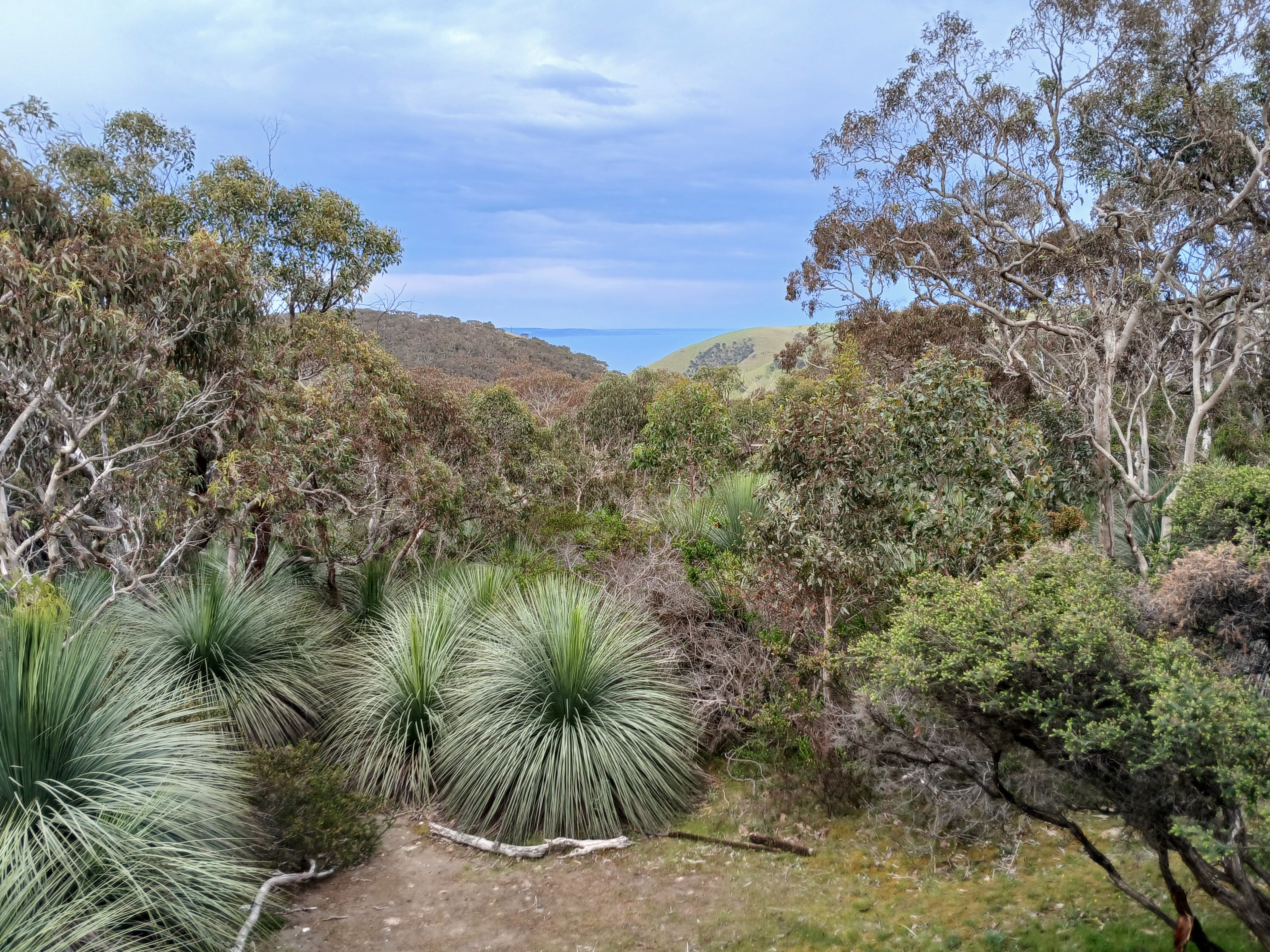
Gully of grass trees, Deep Creek, October 2024.

Deep Creek, place of grass trees and rolling hills and shrike thrushes calling in the trees, place of kangaroos and echidnas and sheep and shingleback lizards, place of tawny frogmouths and fogs and sunshine and rain and big, big skies — Deep Creek is, anyway, one of those places for me, a place close to my heart. I have left Deep Creek now, and the hopes and dreams I went there with — that I would write copiously and productively, that the story I’m writing is worth telling, that the manuscript I’m working on might one day get published — may or may not come true, but Deep Creek is still with me and always will be. I don’t know how else to put it.

Resting place, Deep Creek, October 2024.

And this is what I love about the passage I’ve quoted above by Michael Ondaatje, the way he captures the mystery of a place, its essence; the way it has become a part of him. I have never been to the jungle that he writes of, never heard peacocks who weep weep loud into the night. But in Deep Creek I have felt what Ondaatje describes. In Deep Creek I have felt that I have found a place that will, like breath, always be with me.

First light, Deep Creek, October 2024.

Lately I’ve been reading …

Stay true

Other people’s words about … reading

When I get to our house, Lauren and Edith are both asleep. The house is dark and quiet, and warm too — the solidity of English homes is a welcome point of difference to Australia, where we were used to draughty Edwardian weatherboards — and, still buzzing with the thoughts that occurred to me on my walk home, I pour myself a tumbler of the Aldi whiskey we got on special, and, thinking of how a quiet house and a calm world allow a reader to become their book, and how, at the same time, it is the act of solitary reading that produces that quietness and the calmness, and how, at the same time, it is the reader’s desire to be a model reader, their desire for quietness and for calmness, that makes it so — thinking of that, I sit down at the dining table in the living room and try to remember the thoughts I had on my walk home — as if thoughts can be possessed, rather than experienced; as if my thoughts are a book that I can lean into, to which I can be true, and through such trueness of reading make order, quiet and calm where before there was none.

from ‘Anam
by Andre Dao

There are a couple of things that resonated with me in the passage I’ve quoted above from Andre Dao’s award-winning novel, Anam.

First, there’s the mention of draughty Australian houses. I thought, reading these words, of the grey, rainy winter days of my own childhood in South Australia, although unlike Dao, I grew up in a 1920s colonial-style house rather than a weatherboard one. Our house had french windows and a verandah with wrought-iron lace trimming and a terrazzo floor. The ceilings in the house were high and the walls were thick, and we had central heating, but we used it sparingly. In June and July, then, when the days were at their shortest, those rooms were cold; I remember going to bed with a hot water bottle to warm my feet on. Even in adulthood — perhaps especially in adulthood — the houses I’ve lived in have been chilly in winter, the kind of chilly that requires you to wear several layers to ward it off.

In Australia, we like to believe that we don’t experience cold weather, and to an extent that is true — but there is nothing like the internal climate of a poorly heated house to remind you that winter does exist here. It does indeed get cold.

Guinea Flower, Aldinga Scrub, September 2024.

But the main theme of this passage is reading, and the quietness and calmness we seek from it. A quiet house and a calm world — isn’t that what most of us want? How wonderful it is that reading, an activity whose seeming simplicity belies its complexity, can give this to us.

How wonderful, too, that in discussing this Dao takes us from the idea of reading books to reading our own thoughts — and how we may stay true to them.

Lizzie, August 2024.

Lately I’ve been reading …

All that food

Other people’s words about … not eating

Mae doesn’t look convinced, but she hands me another bowl, which I pass to TJ. He holds it in the space between us, locking eyes.
You didn’t take any, he says.
I took plenty, I say. I’m stuffed.
No. I watched you.
You must’ve blinked.
Then try some more.
I just told you–
Don’t be a dick, says TJ.
Boys, says Mae.
Her voice is terse enough to shut us up.
Mae holds our gaze until we’ve settled. Then she pours more wine into her coffee mug, twirling her food with a fork.
It’s been too long since we’ve been together, says Mae. Let’s make it a nice evening.
So TJ shoves the bowl of tomatoes my way. I scoop more onto my plate. Then I take bites from the spaghetti and the chicken, and it’s all delicious, and the three of us eat silently, until there’s something like a hum between us.
Is the bathroom still in the same place, I ask.
Mae points down the hallway. I don’t look at TJ when I stand. But once I’ve locked the door behind me, I turn on the faucet, and it’s maybe another five seconds before all that food leaves me.

from ‘Family Meal
by Bryan Washington

When I was a teenager receiving treatment for an eating disorder, people had certain fixed ideas about what kind of person was likely to experience anorexia. By ‘people’, I mean not just family and friends but doctors, psychiatrists, medical researchers. Anorexics, people thought then (because that was what we called people with anorexia in those years, anorexics, a label that many people would now object to), were generally white, middle-class, well-educated, high-achieving, likeable young women with a tendency towards perfectionism.

Perhaps, back then, this was true. Or perhaps, more likely, if you were anorexic but you happened to be male, poor, uneducated, older than twenty-five, queer, or a person of colour — or any combination of these things — then your anorexia went unrecognised. Undiagnosed. Untreated.

We know better than this now, I am thankful to say.

Fringe Lily, December 2023.

In the passage I’ve quoted above, Cam, one of the narrators of Bryan Washington’s second novel, Family Meal, is grieving the loss of his boyfriend, Kai, who died in unexpected, violent circumstances. Cam is Black and queer; he is also addicted to many things, including drugs, sex and, yes, starving himself. He is surrounded by friends who see what he is doing to himself and try to talk to him about it, try to show him that they see, and that they care, and that he doesn’t need to be alone. It takes him a long time to see this for himself, though.

Cam’s experience of struggling with food is different from mine, and that’s partly because of who each of us is — precisely because I did, after all, fit most of the anorexic stereotypes I’ve listed above — although it’s also partly because everyone’s struggle with food is, simply, different. But I am so glad, so glad, that contemporary literature that includes stories about anorexia and disordered eating has broadened to include other stories than ones like mine.

And it’s funny how, no matter what your background, no matter what your life experience, the feelings don’t change. I’m fucking suffocating from the weight of myself, Cam writes.

I remember feeling exactly the same.

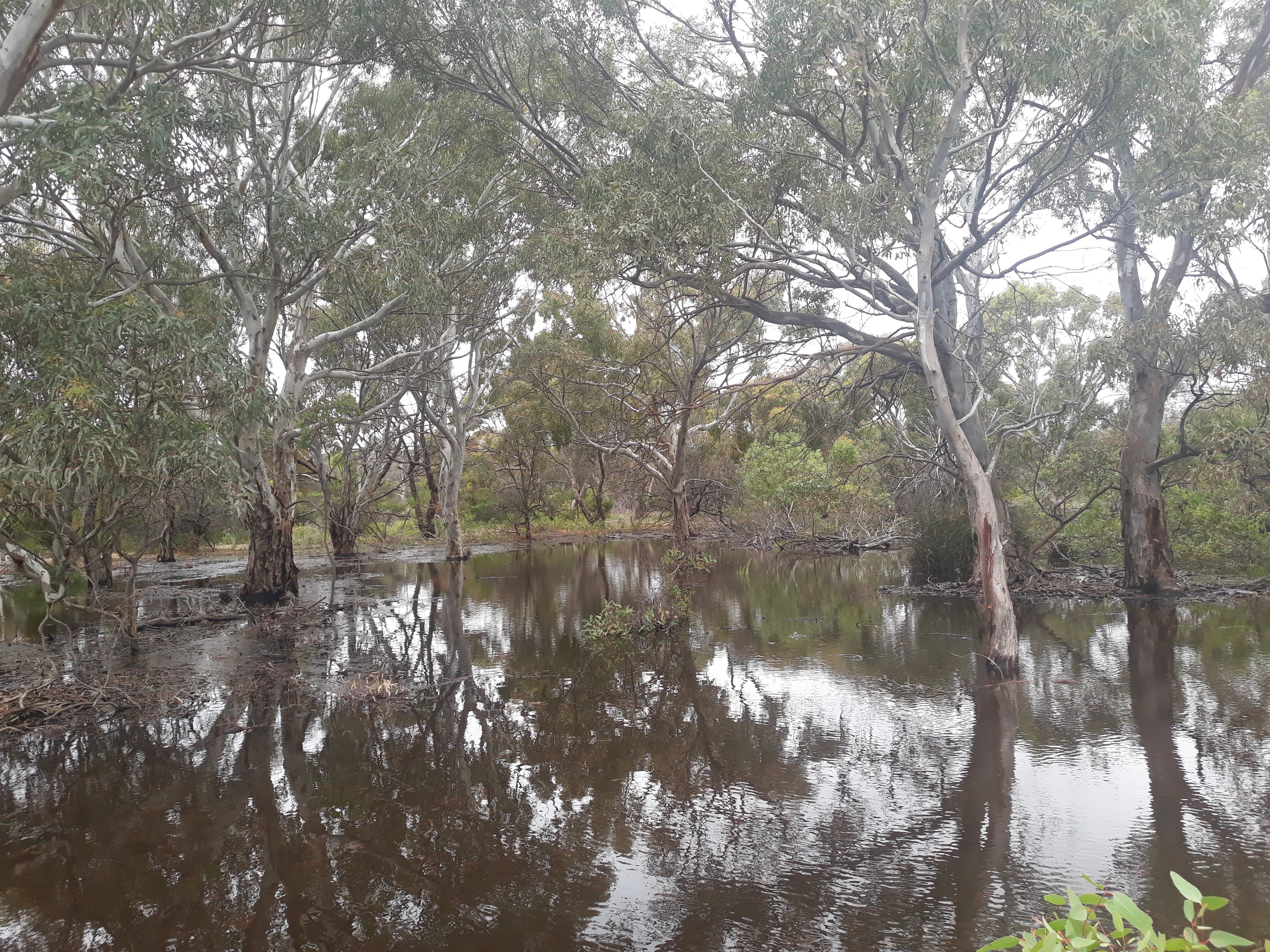
After the rain, Flooded scrub, November 2023.

Lately I’ve been reading …

Fumbling

Other people’s words about … growing up

I also felt like I was being pushed into a world where I didn’t understand the rules. The summer before we moved, a bunch of my friends at camp were caught kissing boys behind our cabin with their T-shirts off. I didn’t even know why a girl would take her T-shirt off with a boy, but I knew it was very wrong to do so, because they all got into big trouble. I’d started going to after-school ballroom dancing lessons in New York, which was something kids from my part of Manhattan did, maintaining an Upper East Side fantasy that we all still lived in an Edith Wharton novel. At the last dance, a boy put his hand on my bottom. Again, I couldn’t understand why a boy would want to touch my bottom, but I knew I didn’t like it. But I also knew that admitting I didn’t like it — like admitting I didn’t know why a boy would want to see my chest — would make people laugh at me. So I said nothing to him, to anyone.

from ‘Good Girls: A Story and Study of Anorexia
by Hadley Freeman

One of the things I loved about Hadley Freeman’s memoir Good Girls is that, as well as recounting the years during which she lived with anorexia, she also recounts her life post-anorexia, post-‘recovery’. While the story she tells of her rapid and precipitous descent into anorexia in early adolescence is vivid and poignant, it’s the rest of her story that most spoke to me — the years during which she maintained a pattern of restricted eating that wasn’t quite anorexia but also wasn’t quite wellness or sanity, the years when she lost herself to drug addiction, the years, finally, when she began to come to some kind of peace with herself.

It’s time that eating disorder narratives did this more often, I think. I said nothing … to anyone, Freeman writes in the passage above, and, elsewhere, So much of anorexia is about suppressed conversations. But I think this is as true, if not truer, of those years when a person who has survived anorexia begins to make their way back into life, those years when a person begins to try to make something of their life other than an anorexic one. (And they are years. For most people, the transition away from anorexia is long and slow and painful.) We need, in our narratives about anorexia, to engage with the whole experience, not just one part of it, the most clearly visible part. We need to tell the whole story. I hope that in the future there will be more writers like Freeman who do so.

Looking out onto Lake Burley Griffin, Canberra, November 2023.

I’ll return to this theme in future posts, because there’s so much to unpack here, and because it’s one of the things I was most conscious of when I wrote my novella, Ravenous Girls. In fact, though, what most drew me to the passage I’ve quoted in today’s post is something else. Here Freeman, describing her pre-anorexic period, her pre-adolescent years, writes, I also felt like I was being pushed into a world where I didn’t understand the rules. This is how I felt, too — at twelve years old, at thirteen, even at fourteen. I was what people kindly describe as a late bloomer, which is to say that I entered adolescence reluctantly, lingering in childhood for as long as I could, wishing that I could somehow stay a child forever. Teenage rituals, those fumbling intimacies between boys and girls that Freeman describes here, puzzled me. I knew this marked me out as different, or at least I believed that it did, and so, like Freeman, I remained quiet. I regret this quietness now. I see, looking back, that I was muting myself, retreating into a silence that wasn’t healthy or sustainable. As Freeman notes, it’s in suppressing conversations that anorexia steps in, and that was certainly true for me.

Ravenous Girls isn’t only a story about anorexia, though that’s a part of it. It’s a story about silence and muteness. Perhaps these are themes I’ll continue to explore for the rest of my life. It’s a theme that endlessly fascinates me.

For sale, November 2023.

Lately I’ve been reading …

Unspoken

Other people’s words about … desire

We stayed mostly silent, that morning, and my giddy feeling gave way to rational thought; my urban preoccupations returned. I was wondering why desire, if it were ordinary and human, always felt as if it had to stay hidden. I didn’t think that I could tell Robert of my feelings for Cara, but it seemed odd to leave it unspoken. It was as if the secrecy rendered the feelings taboo and made me wonder if they were dangerous when I knew they couldn’t be, that it was only that Robert would worry unnecessarily if he knew. It felt as if desire were only permissible in art, where it could be dramatised, made beautiful.

from ‘The Modern
by Anna Kate Blair

Sophia, the narrator of Anna Kate Blair’s wonderful novel The Modern is a thirty-year-old Australian woman living in New York on a fellowship with the Museum of Modern Art. She’s bisexual, though the term troubles her — not because she questions her attraction to men and women, but because the label itself bothers her. I didn’t want a term like besexual, she writes, that trailed a disclaimer, a need for clarification, behind it. But who was asking me to clarify? I rarely said it aloud. I didn’t want a term at all. I just wanted to exist in all my dimensions.

We talk so much these days about sexuality and gender, and that’s a good thing; where there was silence before, now there’s conversation. We talk about heterosexuality and heteronormativity and we write about their implications, and that’s a good thing, too. But I’m particularly fascinated by Blair’s thoughts, in the passage I’ve quoted at the start of this post, about desire. It’s true, I think, that desire retains its power most of all when it remains unspoken.

Daly Head, Yorke Peninsula, October 2023.

I’ve explored desire a little in two of my own books, my young adult novel Beyond Evie and most recently, though only in passing, in my novella Ravenous Girls. Like Sophia, labels trouble me. But I can’t help thinking that in part I wrote about desire in these books because, just as Sophia writes, that was the space where it felt most permissible for me to do so — because I could dramatise it, because I could (try to) make it beautiful.

Words, like stories, can be beautiful, can’t they? I hope so. That’s one of the reasons I write.

.

Daly Head, Yorke Peninsula, October 2023.

Moving on to on other reading-related matters, I’m taking a break today from my usual link to online essays that I’ve read recently because this month I’ve been focusing on reading novellas. Have you heard of Novellas in November? I’ve joined up, and I’m enjoying the chance to explore novellas, old and new, famous and not-so-famous. Feel free to join me over on Instagram for quotes from the novellas I’ve been enjoying, and for my thoughts about them.

Meanwhile, I’ll be back again with more of my usual posts soon.

I wrote a book!

I’m breaking from the usual format here on my blog today to announce some exciting news:

Yes, I wrote a book! Or, to be more precise, a novella.

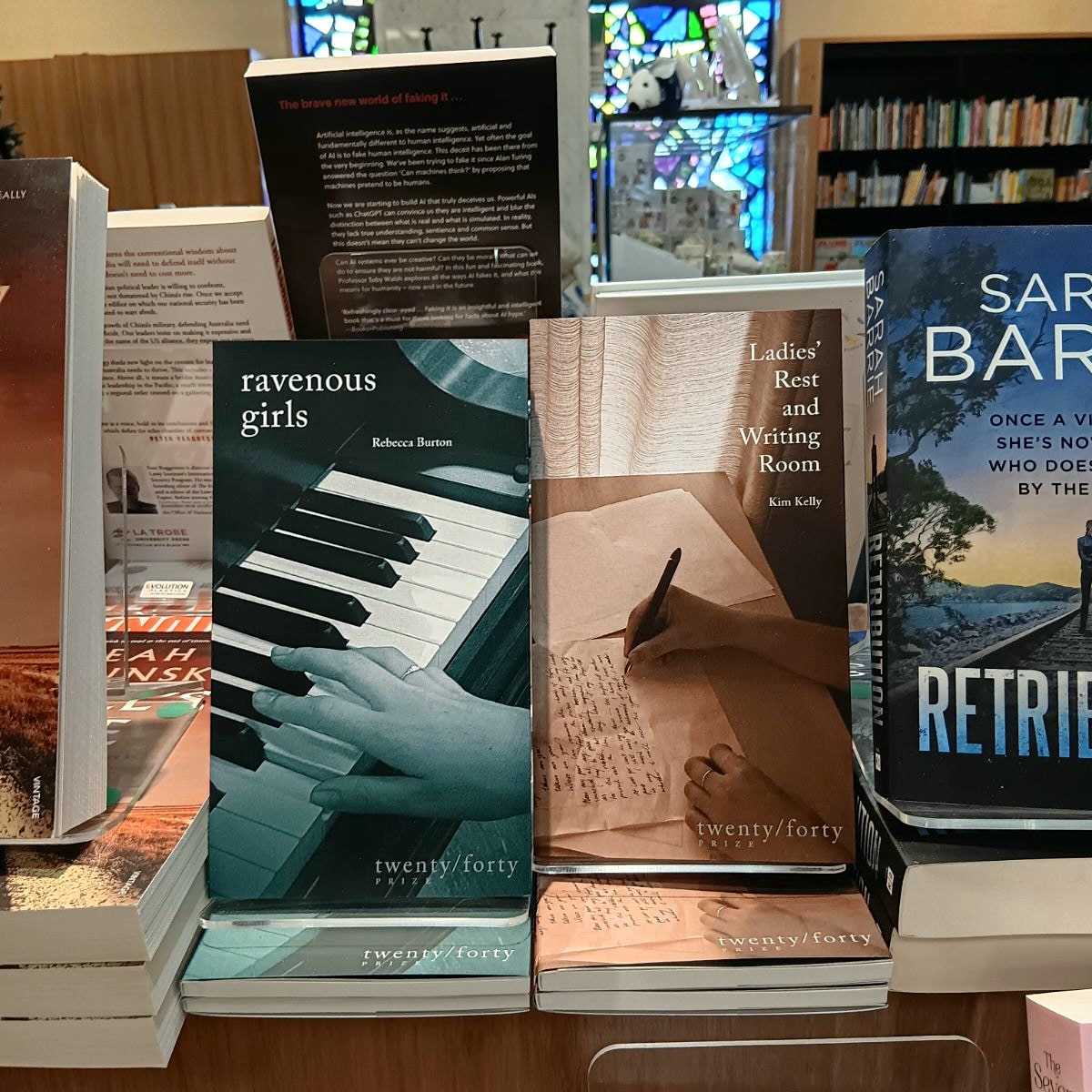
Called Ravenous Girls, it’s one of the two winners of the inaugural 20/40 Publishing Prize, and its official release date is today.

Ravenous Girls tells the story of two teenage sisters who grow close over the course of a summer holiday in the mid-1980s when one of the girls is admitted to hospital with anorexia. Narrated by the younger sister, Frankie, later in her life, it explores the chasms that lie between adolescence and adulthood, sickness and health, intimacy and loneliness —- and how the events of that summer will affect the two girls for the rest of their lives.

Long-time readers of my blog will know that this book has been a long time coming. I can’t begin to tell you how thrilled and excited I am to have won the 20/40 Publishing Prize and to see my title in print.

I’m keeping things short and sweet for today (because, you know, celebrations are in order). I’ll be back again soon with my usual kind of post, but in the meantime, for those who are interested, you can find out more about Ravenous Girls and the 20/40 Publishing Prize here, buy Ravenous Girls here, or buy both of the prize-winning novellas here. (I’m usually somewhat camera-shy, but for anyone interested, you can watch an interview with me, fellow Prize-winning author Kim Kelly and publisher Julian Davies of Finlay Lloyd here — just scroll down to the bottom of the screen to find the videos.)

PS Congratulations to Kim Kelly, author of the other winner of the 20/40 Publishing Prize this year, The Ladies’ Rest and Writing Room, which is set in the bustling streets of 1920s Sydney and tells the story of two young women, each having suffered devastating loss, who are thrown together by unexpected circumstances.