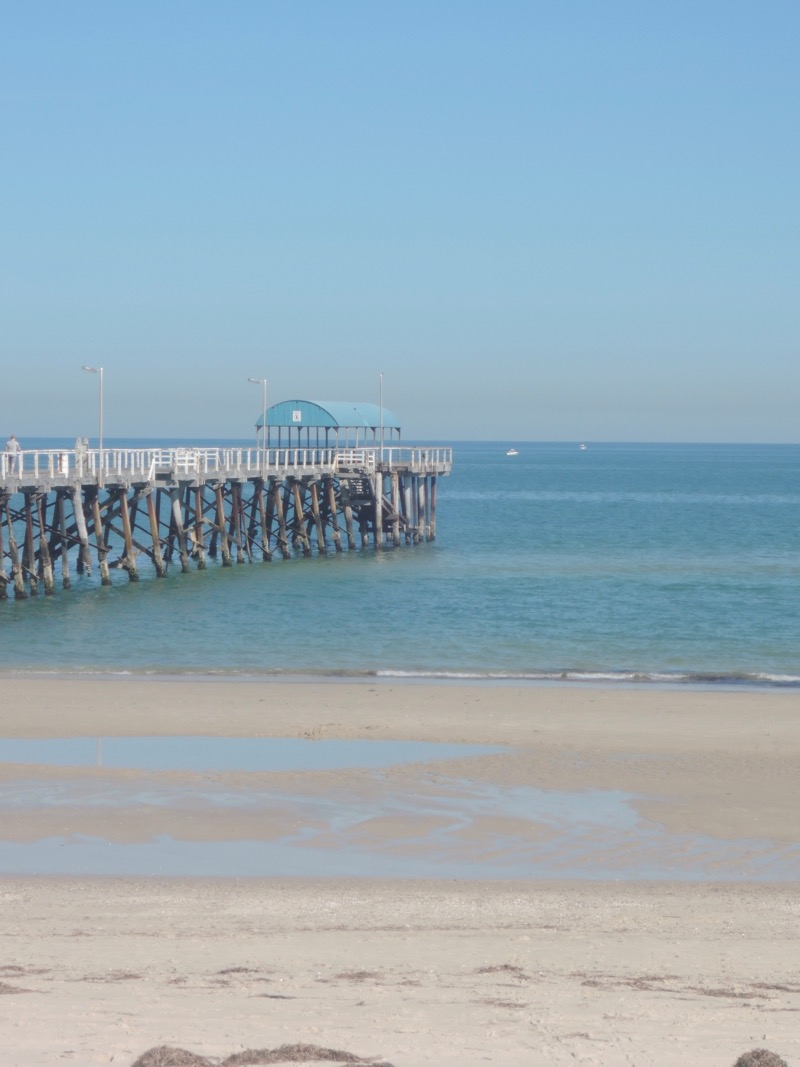
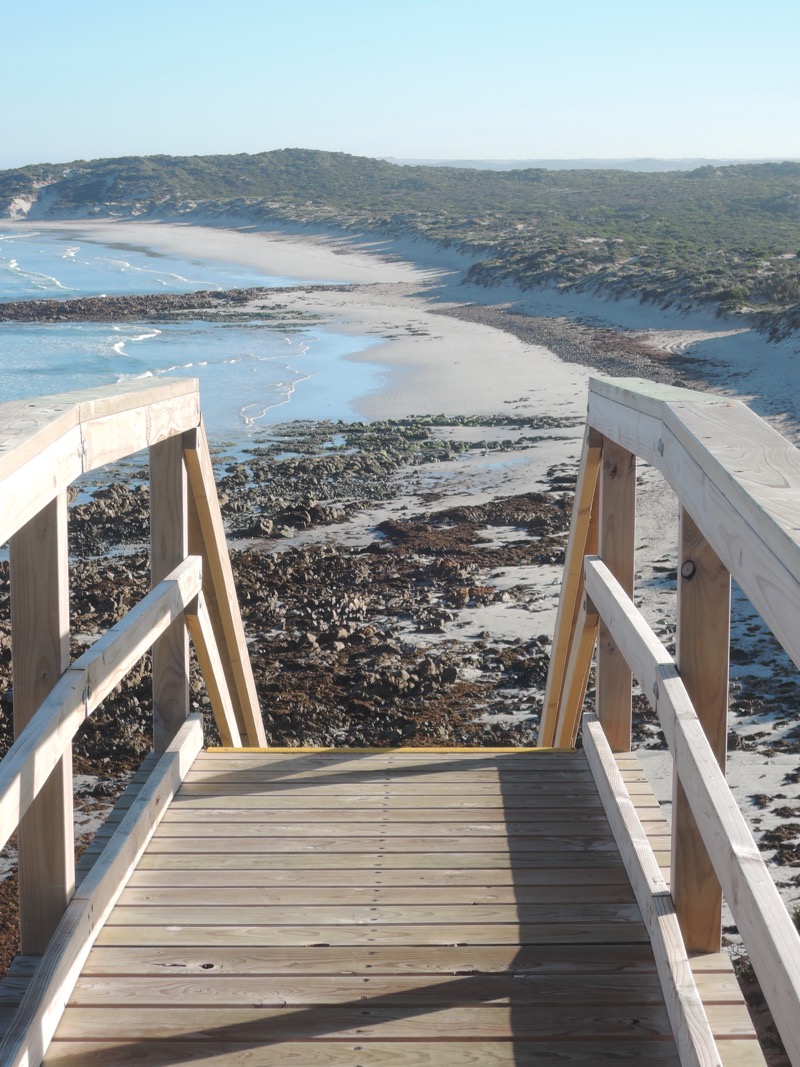
‘If he put his feet in to the water here at the beach in Jarmuli,
he was dipping them in the universe.’
From ‘Sleeping on Jupiter’
by Anuradha Roy
(tales from the birdgirl)
‘Swagger’ might be common jargon now, but let’s not confuse the situation. Swagger is earned. It can be grimy or graceful. It can be innate, but it’s also finessed. It’s the feeling that makes you sit a little taller and reinforces your backbone. We sweat with swagger when we infuse a shameless confidence into movement. To sweat with swagger is to redefine what it means to be an athlete and create unapologetic greatness along the way. When we sweat with swagger, we test the limits of human potential. When our footsteps are powered by motivation and a strong community, the cadence is a drumbeat to doing something epic. Sweat is magic. Swagger is the glisten.
from ‘Shut up and Run‘
by Robyn Arzón
First, a story of my own, before I address the words I’ve quoted above.
The day before Easter, I woke with my stomach roiling. It was my first official day off work for a while, and when I pulled the curtains back from the window above my bed, I saw clear skies and sunshine through the glass. Lying there in bed, a little before seven o’clock, I felt every part of me rebel at the thought of languishing the day away inside, sprawled out on the sofa, feeling ill.
And so I got up, and I pulled on my oldest pair of trousers — the pair with the faint bike-chain stain on the left leg. I threw my camera and some spare coins into my backpack, and I got on my bike and rode away from the house.
The moment I started cycling, I could feel something inside of me begin to unfurl. I am a tense person, and mostly this tension is a mental thing, but it manifests itself in me physically, too: in my muscles. This is something I have only just begun to realise. I had been sore for days before this bike ride, my right hip aching from stooping over the computer in the office, the muscles in the hollow of my back raw from constantly bracing myself (against what? staying still?), my stomach queasy and unsettled.
So I pedalled slowly. Gently.
The route took me south-west — first along the coast, past two jetties; then south-east a little way, where the coastal road came to a dead end. Then, when the coastal road started back up again, I turned back west and cycled alongside the sea once more, past the third jetty. I rode with my head up, glancing about me: at the wide, cloudless sky, and the opal-coloured sea, and the faint line dividing the two of them. Lycra-clad cyclists sped by me in a whoosh of tyres and sweat — mostly men, some women; most of them younger than me, but some older — and I said, ‘G’day’ to each one of them and gave them a little smile of greeting and acknowledgment, though I’m not sure that any of them heard me or noticed.
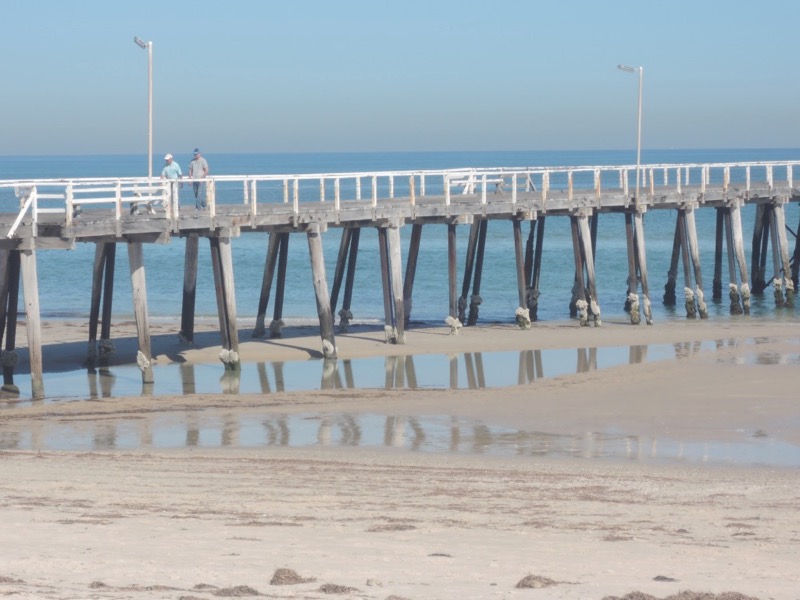
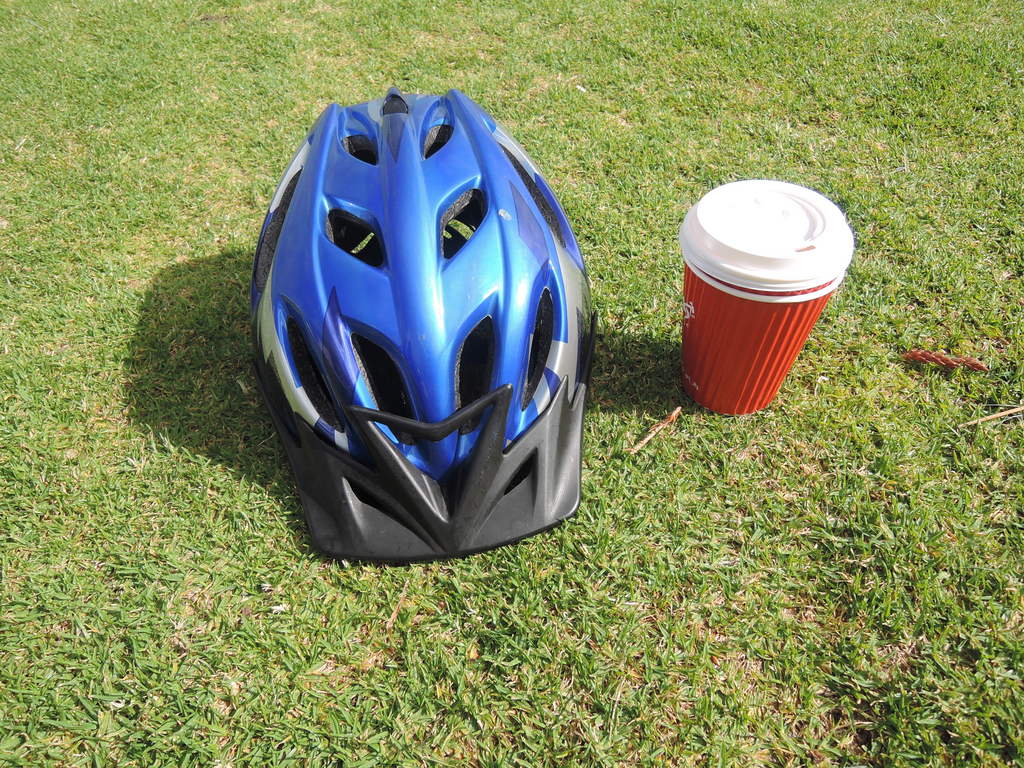
When I got to the fourth jetty (the one pictured in most of the photos in today’s post) I stopped and parked my bike. I wandered across the main road to the supermarket and bought some dried-fruit-and-nut mix, and then I dropped into my favourite café at that particular beach and ordered a take-away cup of tea. They’ve recently started selling tea made from leaf tea instead of teabags there, even for take-away drinks, which is a little thing, I know, but it makes me very happy. I carried my lidded red cardboard cup of too-milky leaf tea back across the road and plopped myself down in the middle of the foreshore square. And there I sat, cross-legged on the sun-warmed grass, nibbling my fruit and nuts, sipping my tea, looking (and looking) at the sea.
In a few weeks’ time, the grass in that foreshore square will be wet with rain, and a cold wind will whip between the lamp-posts up over the grey roof of the pavilion. I contemplated this a while, stretching my arms out behind me, resting my weight back, feeling the blades of grass tickle my palms. The beach was only a few steps away from where I sat on the grass, and I could see the jetty pylons reflected in the water, and I’ve said it once already in this post, but little things like that — they make me very happy indeed.
So what has this to do with the words I quoted at the beginning of this post? There was a bit of sweat involved in my bike ride, sure, but there was no swagger. I cannot say I moved with shameless confidence or unapologetic greatness. I was motivated, certainly, but I did nothing epic or magic. I am certain I did not glisten.
Thank goodness.
I do not wish this post to be unkind. I do not wish to say, as Arzón herself says many times throughout her book, I call bullshit on her words. But then there’s this:
Our inner monologue can turn can’t into can and dreams into realities. Extinguish doubt with action. Let’s write the story that says we are a little better than yesterday. We can push ourselves to where we want to be. It’s going to take a little sweat, though. Happy is something you do, baby, and only you are responsible for your happiness. Life is happening right now, so stop making up excuses and tell me, what do you want your story to be? Do you want to be a runner? Have you always dreamed of completing a marathon? Whatever it is, write it down, look back on it, and own it.
These sentences — sentences like this — worry me. Arzón’s thoughts are not unique; her words are a part of a general conversation, one that I hear around me almost every day. And it is a conversation I can’t help fretting about. I am alarmed when I hear someone confuse athletic prowess with personal greatness. Or when I hear someone link the idea of their becoming a better person, of their living a better life, with the act of slipping on a pair of running shoes. Or when I hear someone use words and phrases like ‘strive’ and ‘focus’ and ‘dedication’ and human potential (that last is Arzón again) to describe, not acts of goodness, let alone greatness, but essentially self-centred feats of fitness and strength, speed and endurance.
I decided to do one thing with my life — epic shit — and I want you to come along for the ride, Arzón writes, of her long-distance running. Maybe I’m wrong, but those words make me feel empty and sad.
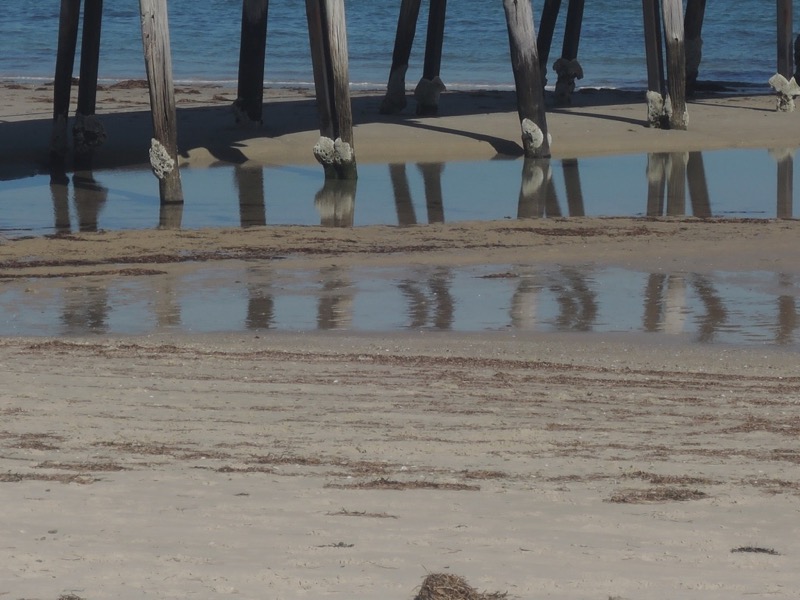
Having said that, I also do not wish this post to turn into a lecture, or a rant. I do not wish to moralise. So I will just say this: I took my bike ride that morning slowly, because that was what the day asked of me, and what my life seems to be asking of me generally right now — regardless of my dreams, regardless of whatever kind of story I might prefer to write about myself. It was a gentle ride, and I felt gentler for it afterwards (though still somewhat unwell).
And that, I think, is how I want to live out my days: gently. Slowly. With kindness, both to myself and to others. With humility.
Tell me, am I alone in this? How do you want to live?
From ‘The Violet Hour: Great Writers at the End‘
by Katie Roiphe
Forgive me, but I’ve pulled Roiphe’s words out of context here. She is talking, specifically, about death: her fear of it, and her admiration of the way others face it. I don’t have the same preoccupation with death — or not yet, anyway: not in my mid-forties. I like to hope I have some way to go before it crosses my path.
Still, sometimes I think that fear is the great equaliser. Maybe you get through the terror because you have to get through the terror, Roiphe writes. It’s the same with all great fears, isn’t it?
Grace, acceptance, resilience, surrender — these are all things I’ve touched on before on this blog (here, for example, and here). May they come to you, too, in your moments of greatest fear: may they be your companions along the way.
Do the anxiety. Then leave it there. This is our challenge.
from ‘First, We Make the Beast Beautiful: A New Story about Anxiety‘
by Sarah Wilson
Simple words, huh? They apply to all manner of ills, I think — not just anxiety. They are about staying in the present: doing the hard stuff when it comes up, not questioning it or agonising over it … and then leaving it behind and moving on.
There are no solutions to anxiety out there, Wilson argues further on: no cures or fixes. So you just do it …
… and then you leave it.
This makes great sense to me.
Today’s photos? They’re from one of my latest bushwalks, a couple of weeks ago: mid-March. It was a still, grey afternoon, and when I first began to walk, the colours seemed drab, and the birdsong was muted, and the air felt unkind and cold.
But as I wandered on, I began to see a few flowers despite the greyness, and I came upon a kangaroo, which stiffened at my bumbling approach and then bounded away. I heard the sea murmur somewhere through and beyond the thicket of trees, and a magpie began to carol, low and soft.
I had done my day, and I had left it there, and things were fine. Just fine.
While I was [at Maharishi’s meditation course in the Alps] I managed to meditate for up to four hours a day, but back home it all seemed difficult again. And then, gradually, as I listened to the lectures it dawned on me that meditation was for recluses or people inclined that way. Prolonged practice could only result in a detachment from life that, although it might be better, I didn’t want. I didn’t want to become indifferent to anything, and as I watched those closest to Maharishi it seemed to me that they had this desire, gift, need — however you want to put it. I wanted to be in the middle of ordinary life trying to make the best of it even if — I could see more clearly now — it entailed my making the same mistakes many times. I didn’t want to give my life to anyone, I wanted to have it and use it and be an ordinary householder. So gradually I stopped. I think of Maharishi with great respect and affection, and I am sure that there is a spiritual hierarchy in which I am merely on the lower rungs. That was it.
from ‘Slipstream‘
by Elizabeth Jane Howard
I’ve written before about how I tried meditation recently (again), before deciding, finally, that it didn’t work for me. I don’t want to bore you by repeating myself endlessly on this blog; please feel free to read my older posts about the topic if you’re interested. Most particularly, what has worked for me, post-meditation, has been learning to spend my days looking outward rather than inward.
I do particularly like Elizabeth Jane Howard’s spin on the theme, though. That’s why I’m revisiting it today. Perhaps, when she wrote the words above, meditation wasn’t considered to be the cure-all that it often is now; perhaps, for that reason, her words were less transgressive than they seem to me as I read them today. Still, I find her words wise and humble and filled with gratitude. Ironic, isn’t it? Those three things — wisdom, humility, gratitude — are all things we are often told we may develop through practising meditation.

Like Howard, the older I get, the more I realise how attached I am to life — and how much I want to stay attached. My days are filled with petty, mucky angst, and I like them that way. Yes, I have bad days — days when my head aches, and my stomach churns, and my throat crawls with a hot kind of sickness and I can’t figure out why; days when my thoughts seem fevered and panicked and tumbling and disconnected; days when it takes all my effort to get dressed for work, and go in, and sit at my desk, and stay seated there, and stay still, oh, just stay still.
Still, even as I wait the bad days out, not knowing how else to get through them, I find myself wanting, in my strange, fierce way, to hold onto them. Because, like Howard, I want to be in the middle of ordinary life trying to make the best of it.
It’s about honouring life, really, isn’t it? That’s what I want to strive for. That’s all. That’s really all.
As Paul and I were cresting the last hill, as I was squinting into the darkening woods to make out the path, a couple of deer lifted their heads at once and differentiated themselves from the trees.
We stared at them, and they at us, for a full thirty seconds without moving. They multiplied as we looked at them. There were three at first, then there were four, then there were five. They were the exact color of the bark and leaves –- gray brown –- but the skin around their eyes was red. I felt the breeze on their backs lift the braid from my chest and set it down over my shoulder.
‘They’re going to get us,’ Paul whispered. He reached for my hand.
‘They’re a herd,’ I reminded him. ‘They’re afraid of us.’
Two more appeared. Paul shivered.
From ‘History of Wolves‘
by Emily Fridlund
There are many places I like to go bushwalking in, but one of my favourites is the Aldinga Scrub. When I walk there, particularly at certain times of the day, I am always conscious that I might encounter a roo or too. There are traces of them throughout the Scrub.
Sometimes a kangaroo appears before me in plain sight — in a clearing in a patch of sunlight, enjoying the last rays of the sun, joey in pouch.
But sometimes there are roos in front of me all the time, without my even realising it. I don’t know what alerts me to them then. It might be the faintest rustle in the leaves around me, or a slight movement — an ear-twitch, perhaps. Sometimes a sense comes over me, simply: a dawning awareness that I am not alone any more, that I am being watched, and regarded, and assessed.
Kangaroos are not naturally aggressive towards humans, as far as I know, or not during encounters like this. But still, like all wild animals, they are protective of each other and of their young. And so, when I come across a roo or two (or more) in this way — when they differentiate themselves from the bushes around them, as Linda, the narrator in the passage above, beautifully puts it — I make sure to stop and take one or two steps back. I let the kangaroos know I’m not a threat. We regard each other a while, creature to creature, acknowledging each other. It’s not fear I feel then, like Paul, the little boy in the quote above: it’s respect.
And then I move on, leaving them to their world, re-entering my own.
When I was about fourteen or so, I studied a poem in school by David Campbell, called ‘On the Birth of a Son‘. It was a sonnet, and I didn’t know much about sonnets, except that Shakespeare wrote a lot of them. It never occurred to me that a contemporary poet might write one.
This sonnet by David Campbell has stayed in my mind ever since. It remains one of my favourite poems. Here it is, in its entirety:
The day the boy was born, the wall fell down
That flanks our garden. There’s an espaliered pear,
And then the wall I laboured with such care,
Such sweat and foresight, locking stone with stone,
To build. Well, it’s just a wall, but it’s my own,
I built it. Sitting in a garden chair
With flowers against the wall, it’s good to stare
Inwards. But now some freak of wind has blown
and tumbled it across the lawn — a sign
Perhaps. Indeed, when first I saw the boy,
I thought, he’s humble now, but wait a few
Years and we’ll see! — out following a line
Not of our choice at all. And then with joy
I looked beyond the stones and saw the view.
On the face of it, this poem is about becoming a parent — the fears new parents have; the limitations parenthood imposes on their lives; the unexpected, unsettling joys it rewards them with. So it might seem strange that Campbell’s words have always resonated with me, though I have chosen, deliberately, never to become a parent.
But that’s the thing about great poems: they are universal. They manage to strike a chord in different people at different times for different reasons.
For myself, every time I read this poem I am moved by the contrast the poet makes between the act of looking inward — at his safe, pretty, cosy life — and the act of looking up, out, to glimpse a view of the world, and his life, beyond.
The view beyond. Recently, I went on a holiday in Yorke Peninsula. I returned to one of my favourite spots, following a long, undulating, unpaved road to get there — one that is corrugated and dotted with puddle-holes, dusty with sand stirred up by other passing vehicles, and lined with dense thickets of bush where brown snakes lie coiled, sleeping.
Each day I passed my time the way I always pass my time there. Each day I woke to the same view.
But it is a spectacular view: of open skies, of wide seas, of sprawling cliffs and rolling sand dunes. It is a view of a life beyond the life I normally lead. It is a view that sets me free.
I live a small life: small things give me pleasure. I consider myself, mostly, lucky to be able to live this way. And yet it’s good to escape from time to time: to look up and out and beyond.
And to see, again, the beautiful view.
Notes
Some writers describe nature beautifully; some express their characters’ inner lives with great insight and pathos; some describe people pithily. I came across two writers of the latter kind recently.
How’s the following for a description of someone, for example?
He had the countenance of someone who’d weathered a thousand tiny insults; they were etched into the lines of his forehead and cheeks. He had the drawn, inelastic face of either a serious smoker (with no time for the inconvenience of food) or a fastidious vegan whose pursuit of a healthy lifestyle had left him on the verge of sickness.
from ‘A Smell of Burning: The Story of Epilepsy‘
by Colin Grant
(p. 2)
Colin Grant’s book is a memoir about life with a brother who lived with, and ultimately died from, epilepsy. It’s also a history of epilepsy’s treatment (both cultural and medical) over the last two millennia. But it was Grant’s descriptions of people which really held me.
He held disgust in his nose, a magnificent diaphanous beak with thread-like blue veins and tobacco stains on the nostril hair and dividing septum, usually slightly cocked and in a permanent sneer.
(p. 16)
After I’d finished reading A Smell of Burning, I moved on (in a completely non-sequitur fashion) to Angela Carter. I’d never read any of her novels before, though people had told me over and over that I should. I’m still only partway through The Magic Toyshop, but already, I’m relishing Carter’s descriptions of the characters who populate her story.
Here she is on five-year-old Victoria:
Victoria had no sense of guilt. She had no sense at all. She was a round, golden pigeon who cooed. She rolled in the sun and tore butterflies into little pieces when she could catch them.
(p. 6)
And here’s her description of twelve-year-old Jonathan:
Jonathon ate like a blind force of nature, clearing through mounds of food like a tank through the side of a house. He ate until there was no more to eat; then stopped, put knife and fork or spoon and fork together neatly, wiped his mouth with his handkerchief and went away to make model boats.
(p. 4)
Meanwhile, when Melanie, the fifteen-year-old protagonist of Carter’s story, first meets Finn, she watches him from afar before he notices her. When she does capture his attention, he fixes his gaze upon her before speaking:
His eyes were a curious grey green. His Atlantic-coloured regard went over Melanie like a wave; she submerged in it. She would have been soaked if it had been water.
(p. 38)
These are snatched phrases, I guess, more than anything. But that’s the thing about the experience of reading: it’s not just about plot, or emotion, or catharsis. It’s about the little things, too: the words and the phrases; the asides and the diversions. The sentences I’ve quoted above aptly capture the essence of the people they’re depicting: they made me smile in recognition (and wry admiration) and then re-read them, just in case I didn’t miss anything. And, like the characters they’re describing, they stayed in my mind long after I’d put the books aside to get on with the business of my day.
They stayed in my mind. I can think of no greater praise for someone’s ability to write — and no greater reason to keep on reading — than that.
Over the last year I have discovered a passion for birds and wildflowers in particular, along with the ever-present kangaroos. I love the texture of bark, the colour of leaves and mosses, I’m utterly fascinated with the fact that I can walk around our small patch of natural bushland each day and find something I’ve never noticed before. Or find something I have noticed before, but it catches my eye for a different reason.
from ‘Fifteen Acres: A Small Slice of Paradise‘ blog
by Lisa from Central Victoria, Australia
I came across Lisa’s blog only recently and instantly realised she is a kindred blogger. Her blog documents her growing understanding of, knowledge about, and love for all the species of native flora and fauna that live on her block of land in rural Central Victoria. I get the feeling that Lisa has learned about her patch of land simply by walking through it and observing.
One of my favourite parts of the world in my state is Aldinga Scrub. I didn’t even know about the scrub’s existence until I was well into adulthood: it was the beach nearby — with its beautiful cliffs, its blue waters, its fish-inhabited and bird-dotted reef, its wide sands — which initially attracted me.
The first time I walked through the Aldinga Scrub, I was just curious. I had heard that it was the last remnant of original coastal bushland in South Australia, and so I wanted to see what it was like. A year later, going through another phase of feeling inexplicably agitated and uncomfortable in my own skin, I decided to try walking there more often. I thought that, if I made the effort to look outwards at the world around me instead of looking inwards into my own seething internal landscape, I might find solace.
And I did.
A small kind of miracle happened as I revisited the Scrub again and again. As I wandered, I began to wonder. As I wondered, I stopped. As I stopped, I observed. As I observed, I noticed, as Lisa puts it. And then, at last, I started to see and to learn.
Something else happened, too. I began to inhabit the world around me during those walks. Inhabitation — it’s a powerful word. Maybe it’s pretentious. Maybe it’s corny? And yet that’s how it feels.
It never stops, this seeing, learning, wondering, inhabiting. That’s another kind of miracle.
The pictures in this post are photographs I’ve taken over the years on my many visits to, and walks through, the Aldinga Scrub. Here you can see it in its many moods, its many seasons, its many tempers. I don’t know if my photographs can convey the wonder I felt as I took them, or the remembered sense of discovery I feel now when I return to them, but I hope that they convey, at least, the deep joy that my wandering has brought me.
That’s the thing, you see — noticing is both a humble and a joyful process. It’s a privilege to inhabit this kind of joy.
I’d asked [my disabled friend] Jessie when a doctor had last looked at her. She couldn’t remember, so [while Jessie was staying with me] I went to my doctor, still Jock Ledingham’s wife, Una, at her practice, which was in their home in Ladbroke Square.
Una listened to me kindly, and then asked if anyone was nursing her. ‘Only me.’ There was an awkward pause, and then I added, hardly audible, ‘And I’m afraid I’m very bad at it.’ Lack of food and sleep made me start crying again.
‘I’m going to make you a tomato sandwich,’ she said. ‘All my family can manage a tomato sandwich whatever they are feeling like.’ She did, and I ate it, and felt much better.
from ‘Slipstream: A Memoir‘
by Elizabeth Jane Howard (p. 147)
When I was a child, my mother would sometimes make my sister and me tomato rolls for dinner instead of our usual cooked meal. This was a summertime-only ritual — she saved it for those evenings when the air was thick and heavy with heat. My sister and I would have spent the day dipping in and out of the swimming pool, so that our skin and hair reeked of chlorine. We’d come inside and stretch out on the carpet in the living-room at the front of our house, next to an electric fan. We’d read, or watch the cricket on television, or play Lego, or colour in, while the fan blew warm air over us and our hair dripped down our backs, forming great wet circles on our t-shirts. And then, at last, it was dinnertime.
My mother made her tomato rolls with white bread — the kind that is crusty on the outside and fluffy on the inside. She cut the rolls lengthwise in thirds rather than in halves, and then spread each layer thickly with butter. Over the butter she laid slices of tomato. Then, as a last touch, she seasoned the tomato with salt. (Never pepper. Children hate pepper.)
These were the days before Australians of Anglosaxon heritage knew about things like basil or coriander, ricotta or feta. We had never eaten avocado or garlic or extra virgin olive oil. We didn’t know of the existence of focaccia bread or ciabatta or sourdough. Most people ate margarine in preference to butter, thinking it was a healthier option. And we ate salt with everything — we lived in a hot climate, after all; we needed to replace the salt we’d sweated out during the day. So a tomato roll was just what it sounded like: a tomato roll. Nothing more, nothing less.
It’s almost forty years since I ate one of my mother’s tomato rolls, and yet when I read Elizabeth Jane Howard’s words above about the curative powers of a tomato sandwich, I was instantly transported back to those simple summer meals my mother made us.
Bread. Butter. Tomatoes. Salt. I still think of this particular combination of food as the ultimate luxury, the greatest treat.
And as a symbol of my mother’s love.