Chocolate at breakfast has always seemed wrong to me somehow. It seemed too decadent and lusty, entirely out of place, like watching a sex scene on television when your parents are in the room. But I have now spent eight mornings eating chocolate granola for breakfast, and I have concluded –- with all due gratitude to [my husband] Brandon, my personal granola pusher –- that chocolate is, once and for all, perfectly acceptable at any time of day. I had been a doubter for so many years, but now, good lord, I get it. And I think this revelation might, quite possibly, be the cosmic purpose of our marriage.
I came to Molly Wizenberg’s blog only recently, many years behind most people. There are so many cooking blogs out there in the internet-world now, and so many of them are so beautiful, that it is easy to feel overwhelmed, or bored, or cynical. Moreover, the idea of using a recipe to introduce a post that discusses a theme entirely unrelated to food — in other words, to discuss life — has become such a common approach amongst food bloggers that it seems to me to be verging on the clichéd. But Molly was one of the early bloggers to take this approach, and she writes well, which makes all the difference. I will be reading her blog again, I’m sure.
As for chocolate at breakfast — well, why not? A therapist I used to see once said to me, as I agonised over how to live my life better (or rather, how not to live it so very, very badly): Life is short. Do what works. Though I’ve left much of his counsel far behind, I think about these particular words of his from time to time. Life is short, indeed. If chocolate works, then eat it. Please.
(Alternatively, you could try cake. Cake never fails for me.)
Meanwhile, today is my first day of two weeks’ annual leave. I currently have two part-time jobs, so time away from both of them simultaneously can be hard to pull off. The next fortnight feels incredibly precious to me.
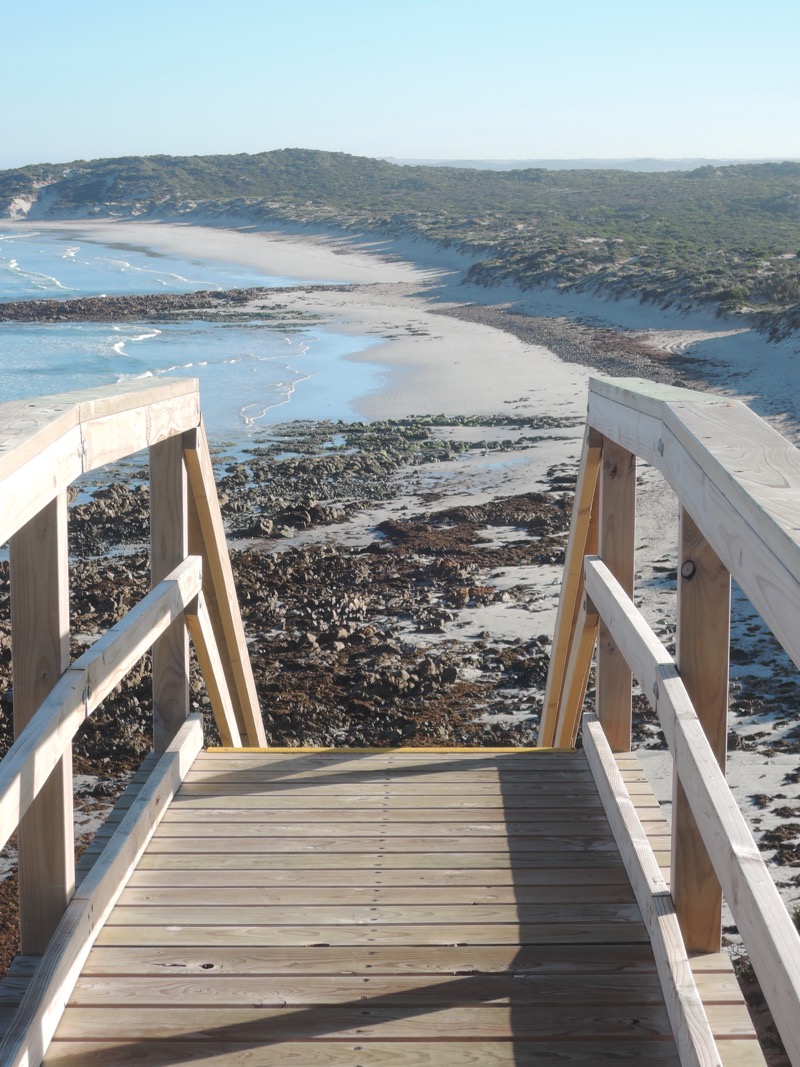
For some of that time, I plan to go to Yorke Peninsula again. Autumn is in full swing now: my holiday there will be different from my last trip to Yorkes, back in February. There will be clouds; there will be rain; there will be wind. It will be too cold to swim, so I’ll walk miles down the beach and along the clifftops. I’ll sleep late into the morning and go to bed early at night. And I will read.
I’ll read.
I’ll read.
Afterwards, I’ll come home grateful for heaters and hot showers, and ready — already — for the next trip, whenever that happens to be.
I don’t know if, like Molly, I’ll be eating chocolate for breakfast while I’m away. It doesn’t matter. Life is short, and these are the things that work for me. That’s why I do them.
‘Swagger’ might be common jargon now, but let’s not confuse the situation. Swagger is earned. It can be grimy or graceful. It can be innate, but it’s also finessed. It’s the feeling that makes you sit a little taller and reinforces your backbone. We sweat with swagger when we infuse a shameless confidence into movement. To sweat with swagger is to redefine what it means to be an athlete and create unapologetic greatness along the way. When we sweat with swagger, we test the limits of human potential. When our footsteps are powered by motivation and a strong community, the cadence is a drumbeat to doing something epic. Sweat is magic. Swagger is the glisten.
from ‘Shut up and Run‘ by Robyn Arzón
First, a story of my own, before I address the words I’ve quoted above.
The day before Easter, I woke with my stomach roiling. It was my first official day off work for a while, and when I pulled the curtains back from the window above my bed, I saw clear skies and sunshine through the glass. Lying there in bed, a little before seven o’clock, I felt every part of me rebel at the thought of languishing the day away inside, sprawled out on the sofa, feeling ill.
And so I got up, and I pulled on my oldest pair of trousers — the pair with the faint bike-chain stain on the left leg. I threw my camera and some spare coins into my backpack, and I got on my bike and rode away from the house.
The moment I started cycling, I could feel something inside of me begin to unfurl. I am a tense person, and mostly this tension is a mental thing, but it manifests itself in me physically, too: in my muscles. This is something I have only just begun to realise. I had been sore for days before this bike ride, my right hip aching from stooping over the computer in the office, the muscles in the hollow of my back raw from constantly bracing myself (against what? staying still?), my stomach queasy and unsettled.
So I pedalled slowly. Gently.
The route took me south-west — first along the coast, past two jetties; then south-east a little way, where the coastal road came to a dead end. Then, when the coastal road started back up again, I turned back west and cycled alongside the sea once more, past the third jetty. I rode with my head up, glancing about me: at the wide, cloudless sky, and the opal-coloured sea, and the faint line dividing the two of them. Lycra-clad cyclists sped by me in a whoosh of tyres and sweat — mostly men, some women; most of them younger than me, but some older — and I said, ‘G’day’ to each one of them and gave them a little smile of greeting and acknowledgment, though I’m not sure that any of them heard me or noticed.
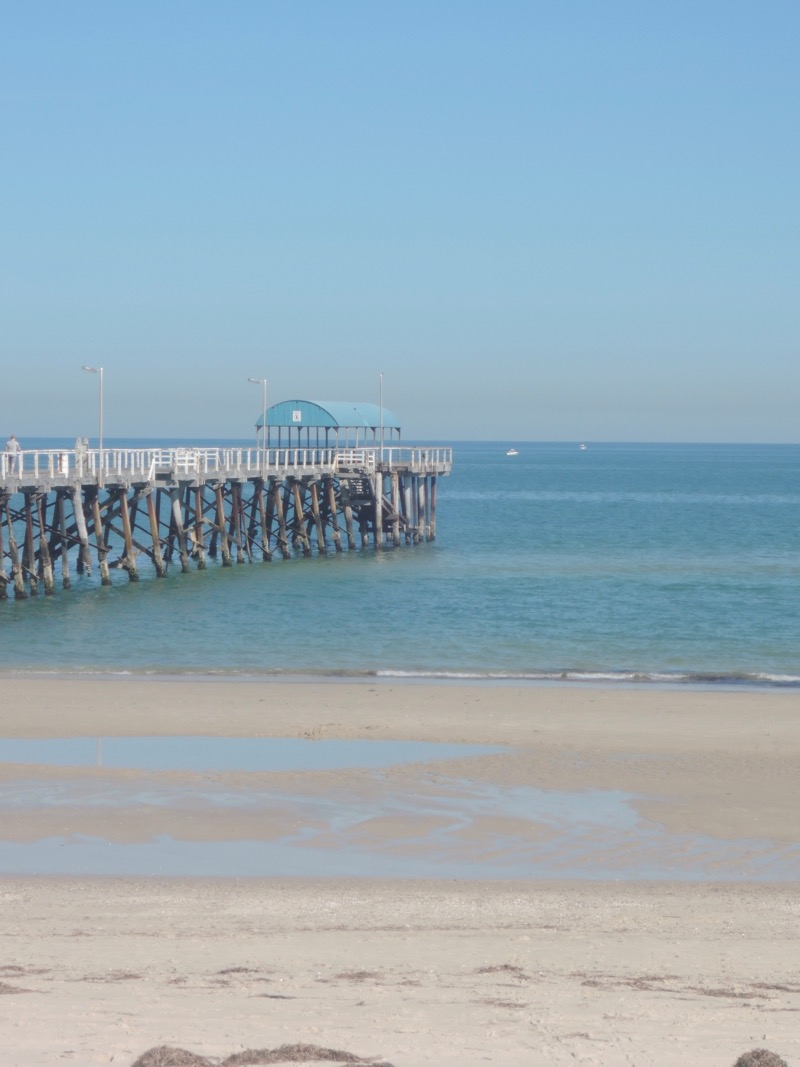
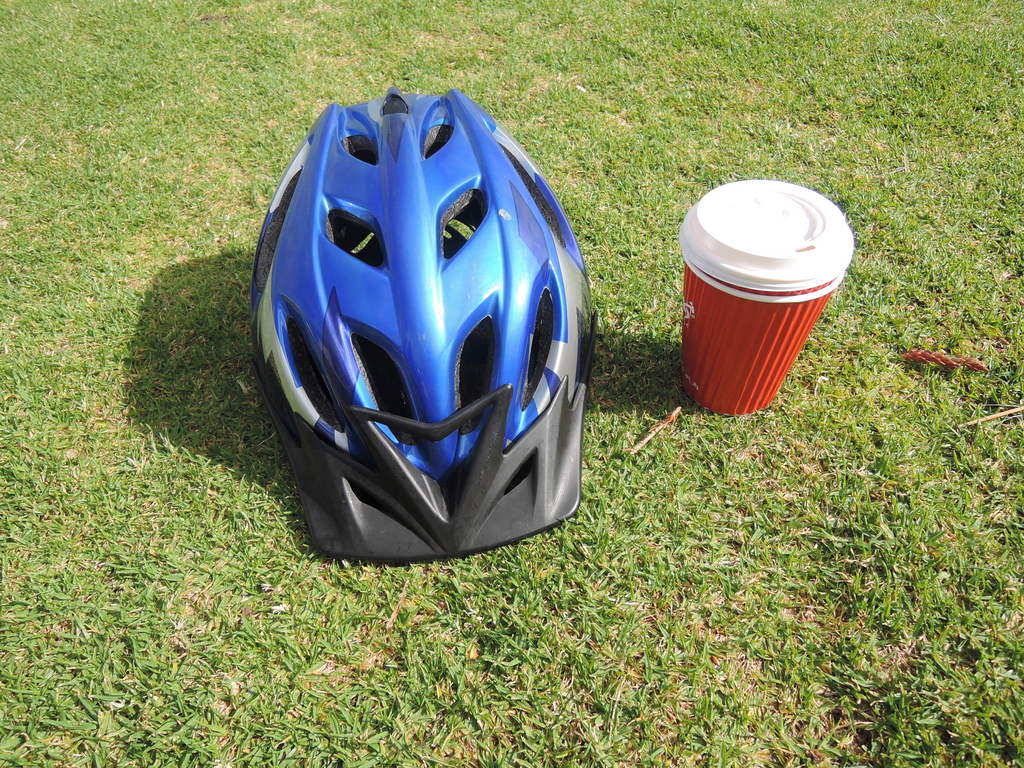
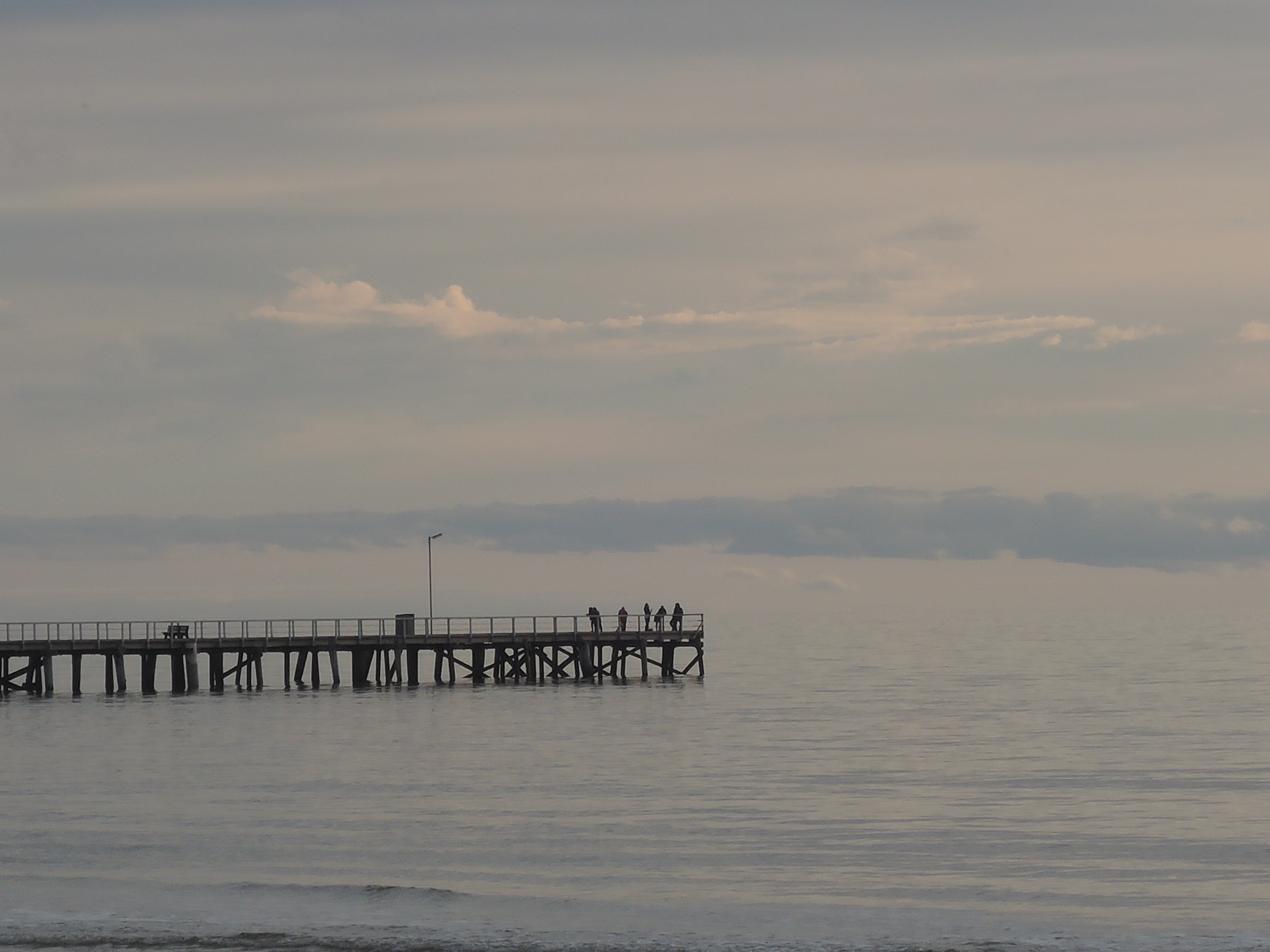
When I got to the fourth jetty (the one pictured in most of the photos in today’s post) I stopped and parked my bike. I wandered across the main road to the supermarket and bought some dried-fruit-and-nut mix, and then I dropped into my favourite café at that particular beach and ordered a take-away cup of tea. They’ve recently started selling tea made from leaf tea instead of teabags there, even for take-away drinks, which is a little thing, I know, but it makes me very happy. I carried my lidded red cardboard cup of too-milky leaf tea back across the road and plopped myself down in the middle of the foreshore square. And there I sat, cross-legged on the sun-warmed grass, nibbling my fruit and nuts, sipping my tea, looking (and looking) at the sea.
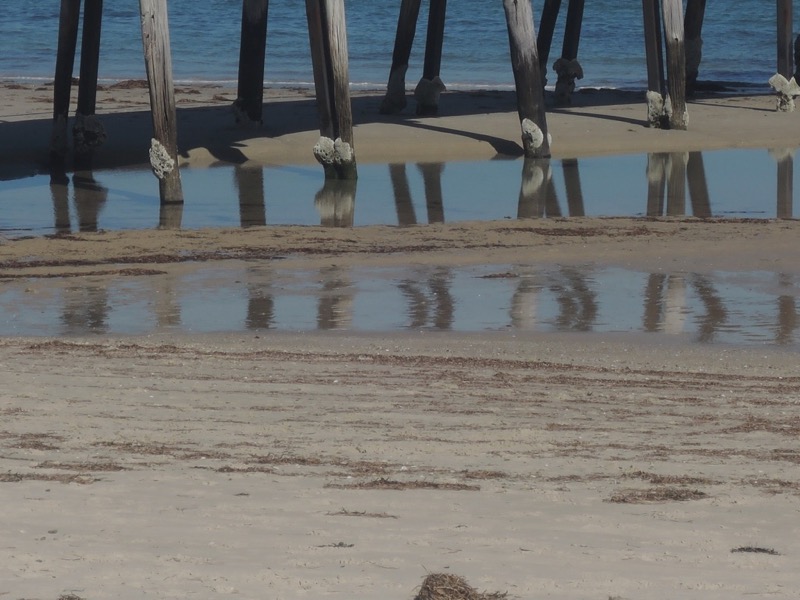
In a few weeks’ time, the grass in that foreshore square will be wet with rain, and a cold wind will whip between the lamp-posts up over the grey roof of the pavilion. I contemplated this a while, stretching my arms out behind me, resting my weight back, feeling the blades of grass tickle my palms. The beach was only a few steps away from where I sat on the grass, and I could see the jetty pylons reflected in the water, and I’ve said it once already in this post, but little things like that — they make me very happy indeed.
So what has this to do with the words I quoted at the beginning of this post? There was a bit of sweat involved in my bike ride, sure, but there was no swagger. I cannot say I moved with shameless confidence or unapologetic greatness. I was motivated, certainly, but I did nothing epic or magic. I am certain I did not glisten.
Thank goodness.
I do not wish this post to be unkind. I do not wish to say, as Arzón herself says many times throughout her book, I call bullshit on her words. But then there’s this:
Our inner monologue can turn can’t into can and dreams into realities. Extinguish doubt with action. Let’s write the story that says we are a little better than yesterday. We can push ourselves to where we want to be. It’s going to take a little sweat, though. Happy is something you do, baby, and only you are responsible for your happiness. Life is happening right now, so stop making up excuses and tell me, what do you want your story to be? Do you want to be a runner? Have you always dreamed of completing a marathon? Whatever it is, write it down, look back on it, and own it.
These sentences — sentences like this — worry me. Arzón’s thoughts are not unique; her words are a part of a general conversation, one that I hear around me almost every day. And it is a conversation I can’t help fretting about. I am alarmed when I hear someone confuse athletic prowess with personal greatness. Or when I hear someone link the idea of their becoming a better person, of their living a better life, with the act of slipping on a pair of running shoes. Or when I hear someone use words and phrases like ‘strive’ and ‘focus’ and ‘dedication’ and human potential (that last is Arzón again) to describe, not acts of goodness, let alone greatness, but essentially self-centred feats of fitness and strength, speed and endurance.
I decided to do one thing with my life — epic shit — and I want you to come along for the ride, Arzón writes, of her long-distance running. Maybe I’m wrong, but those words make me feel empty and sad.
Having said that, I also do not wish this post to turn into a lecture, or a rant. I do not wish to moralise. So I will just say this: I took my bike ride that morning slowly, because that was what the day asked of me, and what my life seems to be asking of me generally right now — regardless of my dreams, regardless of whatever kind of story I might prefer to write about myself. It was a gentle ride, and I felt gentler for it afterwards (though still somewhat unwell).
And that, I think, is how I want to live out my days: gently. Slowly. With kindness, both to myself and to others. With humility.
Tell me, am I alone in this? How do you want to live?
When I was about fourteen or so, I studied a poem in school by David Campbell, called ‘On the Birth of a Son‘. It was a sonnet, and I didn’t know much about sonnets, except that Shakespeare wrote a lot of them. It never occurred to me that a contemporary poet might write one.
This sonnet by David Campbell has stayed in my mind ever since. It remains one of my favourite poems. Here it is, in its entirety:
The day the boy was born, the wall fell down That flanks our garden. There’s an espaliered pear, And then the wall I laboured with such care, Such sweat and foresight, locking stone with stone, To build. Well, it’s just a wall, but it’s my own, I built it. Sitting in a garden chair With flowers against the wall, it’s good to stare Inwards. But now some freak of wind has blown and tumbled it across the lawn — a sign Perhaps. Indeed, when first I saw the boy, I thought, he’s humble now, but wait a few Years and we’ll see! — out following a line Not of our choice at all. And then with joy I looked beyond the stones and saw the view.
On the face of it, this poem is about becoming a parent — the fears new parents have; the limitations parenthood imposes on their lives; the unexpected, unsettling joys it rewards them with. So it might seem strange that Campbell’s words have always resonated with me, though I have chosen, deliberately, never to become a parent.
But that’s the thing about great poems: they are universal. They manage to strike a chord in different people at different times for different reasons.
For myself, every time I read this poem I am moved by the contrast the poet makes between the act of looking inward — at his safe, pretty, cosy life — and the act of looking up, out, to glimpse a view of the world, and his life, beyond.
The view beyond. Recently, I went on a holiday in Yorke Peninsula. I returned to one of my favourite spots, following a long, undulating, unpaved road to get there — one that is corrugated and dotted with puddle-holes, dusty with sand stirred up by other passing vehicles, and lined with dense thickets of bush where brown snakes lie coiled, sleeping.
Each day I passed my time the way I always pass my time there. Each day I woke to the same view.
But it is a spectacular view: of open skies, of wide seas, of sprawling cliffs and rolling sand dunes. It is a view of a life beyond the life I normally lead. It is a view that sets me free.
I live a small life: small things give me pleasure. I consider myself, mostly, lucky to be able to live this way. And yet it’s good to escape from time to time: to look up and out and beyond.
‘[I] stare at the water.
It’s shot with moon, silver leaking all over the surface.’
from ‘Words in Deep Blue‘ by Cath Crowley
Okay, so I don’t have any photos of the sea in moonlight, because I have as yet to figure out night-time photography.
But the words above reminded me of one of the things I love about the sea, and one of the reasons I so frequently post other people’s words about it, accompanied by my own photos: I love how the sea changes colour, depending on the season, the temperature, the weather, the time of day, the tide. The colours you see below — blue, green, pewter, turquoise, gold, silver — are just some of the many colours of the sea.
You may recognise some of these photos from earlier posts on this blog. Forgive the repetitiveness. That is one of the things about the ocean, I think: the wonder it instils in you, each time you see it, each time you visit it. It repeats itself, over and over.
Summer came, clanging days of glaring sunshine in the seaside town where I live, the gulls screaming in the early dawn, a glittering agitation everywhere, the water a vista of smashed light.
From ‘Aftermath‘ by Rachel Cusk
I live in a seaside suburb like Rachel Cusk. Gulls scream outside my window most mornings, flapping over the roof, perching on the top of the stobie poles. I find great solace in their shrieks. Like the call of a wattlebird, there is nothing elegant or beautiful in a gull’s cry. It is gloriously unapologetic, and harsh, and guttural, and wild.
There is a particular kind of summer day at the beach: the sand is so hot along the path from the road across the dunes that if you are making your way barefoot — or if you are a dog — you have to run over it towards the shore to prevent the soles of your feet (or paws!) from burning. The sky throbs; the air is windless, hot, salt-scented; and gulls stand in the shallows, waggling their legs as they stare down into the clear water, searching (I think) for fish. It’s so quiet in the hot stillness that you can hear the little lapping, bubbling noises the water makes as the gulls’ legs move about in it.
A vista of smashed light
I haven’t swum in the sea much this summer. Due to the storms in December and early January, the water is muddied and polluted. But I love the beach at this time of the year, regardless. I feel no glittering agitation, as Cusk does: only joy.
It’s the heat. And the light. And the gull-shriek-rent air.
The narrow trail I had been following came to an end as it rose to meet the old grey asphalt road that runs up to the missile guidance station. Stepping from path to road means stepping up to see the whole expanse of the ocean, spreading uninterrupted to Japan. The same shock of pleasure comes every time I cross this boundary to discover the ocean again, an ocean shining like beaten silver on the brightest days, green on the overcast ones, brown with the muddy runoff of the streams and rivers washing far out to sea during winter floods, an opalescent mottling of blues on days of scattered clouds, only invisible on the foggiest of days, when the salt smell alone announces the change. This day the sea was a solid blue running toward an indistinct horizon where white mist blurred the transition to cloudless sky.
from ‘Wanderlust‘ by Rebecca Solnit
Rebecca Solnit’s words remind me of my own jaunts to and from the sea. So, no more words from me today — just a gallery of pictures I’ve taken over my own years of oceanside ramblings. You’ll recognise many of these pictures from earlier posts, no doubt, but collected here they convey, I hope, the many moods of the sea.
(Hover over the pictures to see their connection to the words above.)
Surrender to the bigger things. Let them hunt you down until they find you.
An ocean shining
Green on the overcast days
… solid blue running toward an indistinct horizon …
View of Perth and the Swan River from Kings Park Sunday 23 October 2016
Recently, I spent a weekend in Perth, Western Australia, celebrating a friend’s fiftieth birthday.
Read that sentence again. It doesn’t sound like much, does it? I hopped onto a plane in Adelaide on Friday afternoon, and arrived in Perth two hours later; I rented a small, sunlit apartment in West Perth for two nights; and then late on Sunday afternoon, I hopped onto another plane and flew back to Adelaide. This is the kind of thing people do all the time, if they can afford to. It’s what people call a ‘holiday’, a ‘break’.
And this trip was both of those things, and for me, that seems a little like a miracle.
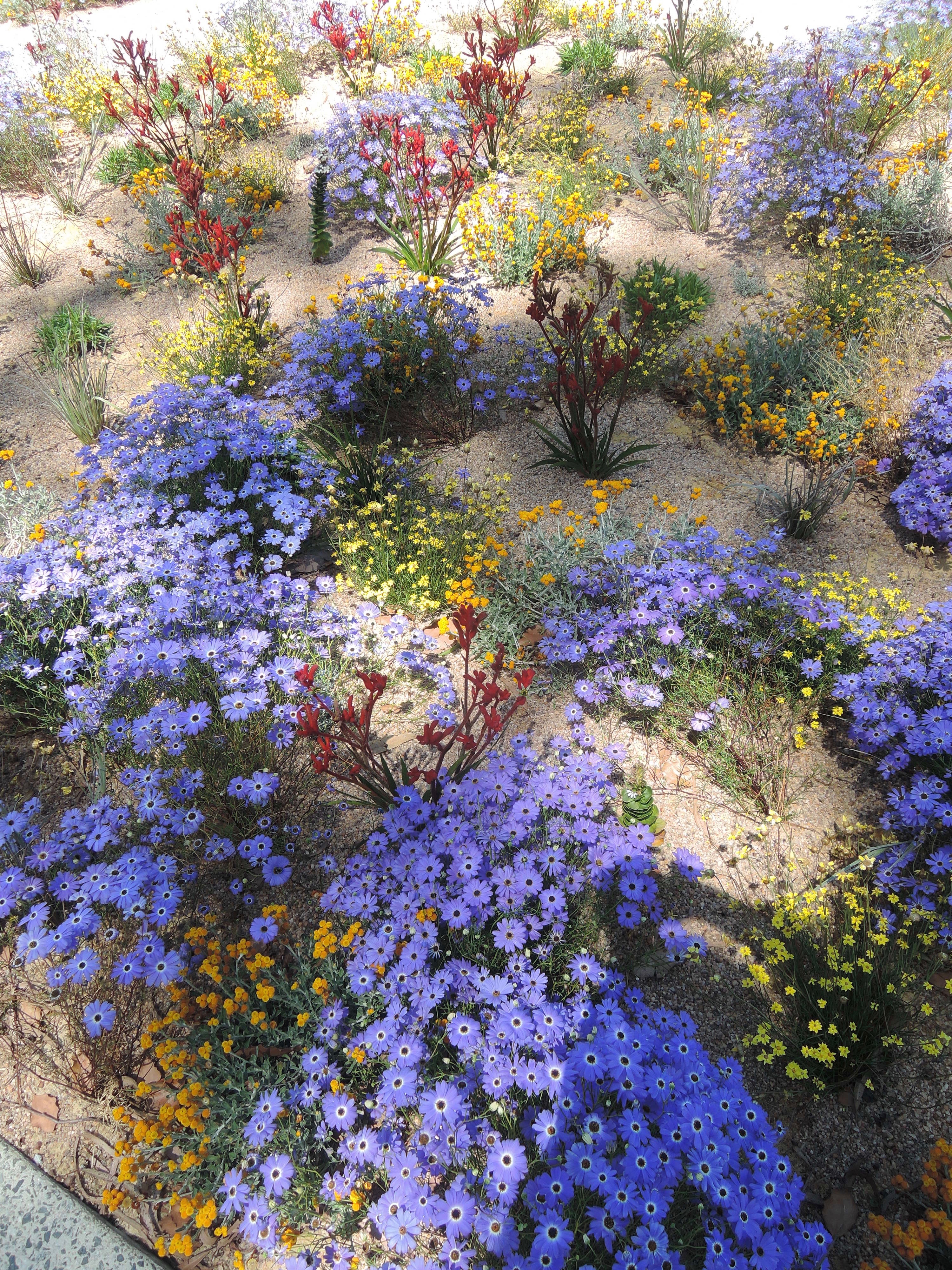
Wildflowers in Kings Park Sunday 23 October 2016
In my twenties, I spent over two years travelling and living overseas: waitressing in London, volunteering on an archaeology dig in Texas, working in a factory and then an ice cream shop in Germany, and, in my last year, teaching English in Cairo and Jakarta. I was a well-seasoned traveller by any standards. By that age, I had already had emetophobia — a fear of nausea and vomiting, which I have mentioned in passing on this blog before (here, for example) — for over fifteen years. It caused the odd anxiety attack, but nothing else. It certainly didn’t stop me from my travels.
But then, in my late thirties, something happened. Something — some edifice of bravery or stability or spontaneity inside of me — crumbled. For some reason, I began to feel queasy and nauseated more often, and so, because of the emetophobia, I began to feel anxious more often. The sickness and the anxiety always accompanied each other: sometimes it was hard to tell which came first. (This is the emetophobe’s eternal dilemma: Do I feel anxious because I am nauseous? Or do I feel I nauseous because I am anxious?)
My illness and anxiety seemed to be magnified when I travelled interstate or overseas. They became even worse if I was travelling in the company of people I loved, people I really wanted to travel with. I booked rash, non-refundable trips to visit my dearest friends who live interstate — Perth, New South Wales — and then cancelled my bookings, losing all the money I’d spent in the process. I planned holidays in Portugal and New York, with family, with friends, with people I loved, and then I cancelled those trips, too. I wanted to go on those trips, but I felt that I couldn’t.
In the end, I stopped going on holidays anywhere beyond the state borders of South Australia.
I just stopped.
Kings Park: more wildflowers
Fear of holidays is a very strange fear to have. Adelaide author Elisa Black is one of the few people who understand it:
The anxiety during this trip was so intense that it is almost too much to remember, no matter how hard I try. I know I thought I was going crazy. I know I was exhausted …
Constant dread, that is what I felt … What I wanted was to not feel this way, to be normal, but if that wasn’t possible then I wanted to crawl into a hole where I could be safe, where everything could be controlled …
from ‘The Anxiety Book‘ by Elisa Black
Those phrases: constant dread, and I wanted to crawl into a hole where I could be safe. They say it all. For me, they speak to a form of social anxiety. For many years, I have been ashamed of my phobia. What is there to fear about vomiting? And so, when I get nauseous, and the nausea triggers my anxiety, I am also flooded with feelings of shame. I try to act ‘normally’ during the course of an attack of nausea, but my terror and my shame impair my performance. (Note that word, with all its implications: ‘performance’.)
What I long for when I am nauseous is to be alone. I long for some kind of sanctuary.
Kings Park: A spot of shade
Fear of holidays and travel is one thing. But then, too, there’s the fear of flying.
Winter in Adelaide this year has been very stormy. We have had one of the rainiest winters ever recorded; we have had statewide power cuts; we have had floods. It is spring now, and yet winter still hovers and menaces. The night before I left for Perth, there was another storm, and when I went to walk my dog the following morning, I saw that branches from the pine trees that line the esplanade by the beach had come down, barring our path over the dunes.
It did not seem a very auspicious day for flying. All that wind! All that turbulence! I wondered — I truly wondered — if I could get on the plane and fly to Perth as I’d promised.
Wildflowers in Kings Park Saturday 22 October 2016
Oddly, I am not actually afraid of the act of flying itself: unlike many anxious fliers, I don’t fear plane crashes or hijacking. I once knew a woman who feared flying because she had a fear of sharks, but I don’t share this particular terror. My fear is, I think, more like a form of claustrophobia: it is a fear of becoming nauseated and thus anxious whilst I am trapped inside a machine, way up in the air, with no escape. I am not very good at staying still when I am anxious about being sick. I do not lie down, as most people do when they feel unwell: I go outside; I pace; I tremble; I sob melodramatically; I run away. I do not like to be witnessed or contained. An aeroplane is, unfortunately, the perfect vessel of witness and containment.
Scott Stossel shares my fear:
For instance, the fear of vomiting … makes me afraid of travel because I’m afraid I’ll vomit far from home. It makes me afraid of flying not for the conventional reason that I’m afraid that the plane will crash, although I also have that, but I’m afraid I’ll get motion sick and get nauseous … The horrible kind of self-fulfilling vicious cycle of emetophobia is that if you’re prone to acute anxiety and nervousness, as I am, it often manifests itself with stomach symptoms.
At first glance, today’s post might seem to be all about fear. Yet here I am, back from a wonderful weekend in Perth, despite all my fears.
So what I am writing about today is, in fact, celebration. Forgive me if it seems solipsistic, but this is about me breaking a pattern. It’s about me, stepping onto a plane; me, flying; me, not getting ill while I was on holiday as I’d feared (though I did get anxious). It’s about me being able to do something I’ve wanted to do for a long, long time. It is about some part of me being restored after all these years: rebuilt. Not recovered, exactly: I am still emetophobic; I still have a funny tummy; I am still anxious; I still find recovery, from both illness and anxiety, a problematic concept.
Most of all, what I am writing about today is hope.
Morning cuppa on the balcony: my own little sanctuary
By the way, if you should ever choose to holiday in Perth, you must visit Kings Park, where most of the photos on today’s post were taken. It is a beautiful place: a kind of sanctuary, if you like. Take a picnic there with you, or a book; go for a wander with friends.
Enjoy your time there. Celebrate it. Allow yourself to feel restored.
Picnic spot in Kings Park (Statue of woman with child, Peppermint Lawn) Saturday 22 October 2016
And, wherever you are today, whatever you are doing right now, breathe. Smile. Wonder.
Hope.
This photo is for my mother, and for the future holidays I hope to have with her
I am haunted by waters. It may be that I’m too dry in myself, too English, or it may be simply that I’m susceptible to beauty, but I do not feel truly at ease on this earth unless there’s a river nearby.
from To the River by Olivia Laing
Haunted by waters. Isn’t that a beautiful phrase?
Though the words I’ve quoted above are about a river rather than the sea, still, they ring true for me. For most of my adult life — except for the two or three years I spent in my early twenties, travelling and working abroad — I have chosen to live within walking distance of the sea. In my late twenties and thirties, as I’ve mentioned before, I lived in a series of share households: different houses every eighteen months or so, different housemates. But each of those houses was close to the sea.
These days, I live in a house just a few minutes’ walk to the beach. Open a window, and you can hear waves rolling onto shore. Step onto the front porch, and you’ll smell seaweed drying out beyond the water’s reach — a damp, bleached, faintly rotten smell. Look around indoors, and you’ll see drifts of sand piling up in the corners.
The sea surrounds me. It’s how I make sense of things. It’s how I feel at ease.
There’s another phrase I love in the words above: susceptible to beauty.
Like anyone else, I have good days and bad days. There are days when I feel at home, here on this earth: when my skin feels comfortable beneath the layers of my clothes, and the warmth of the sun feels kind and good. And there are days when the world seems vast, alien, spinning, remote. What gets me through those latter kinds of day are tiny moments of beauty, out there by the water: pinpricks of sunlight sparkling on the tips of waves, like sequins on a piece of cloth; clouds chasing across the horizon, billowing and grey; a cluster of yellow flowers growing in the dip of a dune, petals cupped to reflect the light.
I took the photographs you see here late one August afternoon, just a few weeks ago. Sitting at my desk, working at my computer, I felt hemmed in suddenly: by streets and footpaths, by fences and cement driveways, by the sound of my neighbour hawking up sputum in his bathroom. The longing to get away from all of that was so strong it felt akin to starving. I felt hollow through and through.
I shut down my computer, stepped outside, and walked down the road to the sea.
Five minutes later there I was, standing on the sand, looking out at the water and the sky. It was close to sunset and I wandered a while along the shore, released at last: from work and worry and words. And I saw something, then, that I don’t know how to describe, though I’ll try: I saw spring coming. The air had a certain quality to it — a softness, perhaps, after the steely bleakness of winter. I thought that if I reached out with my hand I might touch that beautiful softness. It seemed possible, just for a moment.
Looking at the photographs now, I don’t see what I did then. Perhaps you don’t, either. But I know that I saw it, all the same. It was one of those moments — those tiny moments of beauty — to which I, like Olivia Laing, am susceptible.
I am grateful for those moments, is what I’m trying to say. They give me a kind of gladness. They bring me home.










 twenty-one words
