Hint

Other people’s words about … the world below

For a time I was obsessed with the idea that I could live under the sea. Not … using a great tank of air strapped to my neck. No, I wanted to dive deep down, skimming the sandy bottom of the ocean with my bare skin. I wanted to glide through fingers of pink weed and velvety fronds of green and come face to face with a mullet, or a gummy shark, slide up to the rubbery flank of a great whale and feel her song vibrate through my cheek to the very centre of my brain and understand what she told me.

From ‘Skylarking
by Kate Mildenhall

We’ve all felt like the narrator in Skylarking, at some point in our lives, haven’t we? Living by the ocean, as she does in Kate Mildenhall’s novel, I often think about the world below the surface of the water.

In the summer heat, on days like the one pictured below, I feel like that even more. It was about 5 pm on a day in the middle of January when I took this photo, and it was 42 degrees Celsius. It was too hot, truly, to spend much time with a camera in my hand. Moments after I’d put the camera away, I slipped into that silky, blue expanse and felt the water washing softly over my skin.

Sometimes when I swim on afternoons like this, I see shoals of little white fish darting ahead of me, or a blue swimmer crab scuttling along the bottom of the sand bed. Sometimes I see a sting-ray. Sometimes I feel fronds of seagrass and kelp brushing over my limbs as I swim. They are tiny hints of that underwater world that seems so fascinating and so close, and yet, somehow, so very far from reach …

The best-laid plans

Other people’s words about … waiting

Nick didn’t call me that morning, or that night. He didn’t call me the next day, or the day after that. Nobody did. Gradually the waiting began to feel less like waiting and more like this was simply what life was: the distracting tasks undertaken while the thing you are waiting for continues not to happen. I applied for jobs and turned up for seminars. Things went on.

From ‘Conversations with Friends
by Sally Rooney

I hadn’t planned to write this post. I thought that I would be — I planned to be — too busy to post anything between now and next week. I had family celebrations planned, after all, and a holiday trip away with a dear friend, and even a couple of shifts at work.

But I haven’t been well this Christmas, and so most of my plans for the holiday period so far haven’t eventuated.

Christmas is a tricky time, isn’t it? For some reason, I often get sick around this time of the year (and at other times of celebration). Like Sally Rooney’s narrator, Frances, in the passage above, I keep waiting for this to change, but the thing I am waiting for — not to get sick at Christmas, not to feel sad about getting sick at Christmas — continue[s] not to happen.

So why am I writing a post now, after all? Partly, I’m writing because I have unexpected time on my hands. Mostly, though, I’m writing because I wanted to reach out to other people who might also be feeling sad — whether unexpectedly or otherwise — this Christmas.

I don’t have any advice. I wish I did. The only thing I can find to do at times like this is to wait them out — which is ironic, given Rooney’s words above.

Still, whoever you are, wherever you are, if you are feeling sad right now, know this: you are not alone. Sadness is part and parcel of the deal.

And it passes.

Like the weather, like the tide, like footsteps in the sand, like all those hackneyed things — like Christmas, even — sadness, too, passes.

Snatched phrases on … (Christmas and) the sea

‘The sea is flat silver under a lapis sky.’

From ‘I am, I am, I am’
by Maggie O’Farrell

Christmas in my neck of the woods is all about summer, so what better way to celebrate it than by the sea?

That’s how I’ll be spending my Christmas season, anyway — how about you?

Meanwhile, I just wanted to wish a quick merry Christmas to everyone who reads this blog.

Thank you for your companionship once again this year … and here’s to more reading next year, as well as walking, wandering and (of course) time spent by the sea!

Rebecca xo

Snatched phrases on … the sea

‘The sea pronounces something,
over and over, in a hoarse whisper;
I cannot quite make it out. But God knows I have tried.’

From ‘Teaching a Stone to Talk’
by Annie Dillard

Sometimes when I’m walking on the beach I close my eyes and listen to the sea as I keep walking. It’s a way of shutting out the beauty of the visual world, in order to concentrate on the other kinds of beauty accessible to me at that moment, in that particular space.

The sea murmurs.
It sighs.
It whispers.
It roars.

Like Dillard, I can’t make out the language of the sea  …

… although unlike her I’m not sure that I want to try.

I’m happy just to keep listening.

On turning forty-seven

Other people’s words about … living small

He wasn’t a big man anymore. He wouldn’t be famous, like he’d dreamed as a kid, teaching himself to sign his name in all curved letters so he would be prepared to autograph a football. He would live a small life, and instead of depressing him, the thought became comforting. For the first time, he no longer felt trapped. Instead, he felt safe.

from ‘The Mothers
by Brit Bennett

Each year, as the number of years I’ve lived on this planet grows, I feel my own life shrink in the scheme of things. And to my own surprise, I have come to find this process, in the words of the protagonist in the passage I’ve quoted above, comforting and safe rather than depressing.

Call it ageing …

Small …

… or perspective …

Smaller …

… or necessity.

Smaller still …

Whatever it is — this passage to smallness, this losing yourself within the bigness of the world — can feel downright joyful, you know?

Note:
I’m not the only blogger who likes to reflect on their birthdays. I loved this post from Nicole from Eat this Poem , who reads Elizabeth Bishop’s poem ‘The Bight’ each year on her birthday. I had not come across this poem before and am so grateful Nicole has drawn my attention to it. It’s a beautiful poem, definitely worth reading each year (if not more often)!

Leafless

Other people’s words about … winter light

The sun was like a moon in this country, and in its light I felt as if I was looking at everything through a pearl. It was cold and the trees had no leaves. I had never seen a leafless tree before.

from ‘Sleeping on Jupiter
by Anuradha Roy

I love this description by Anuradha Roy of a Northern Hemisphere winter, as seen through the eyes of a young Indian woman accustomed to living in the tropics. I remember feeling the same way myself when I left Australia in my twenties to travel through Britain, Europe and North America (and, later, elsewhere). For a year I lived and worked in Germany, as I’ve mentioned once before, in a small industrial town in Nordrhein-Westfalen, not far from Dortmund and Dusseldorf. To begin with, from November through to April, before my German was fluent enough for me to find another job, I worked in a factory.

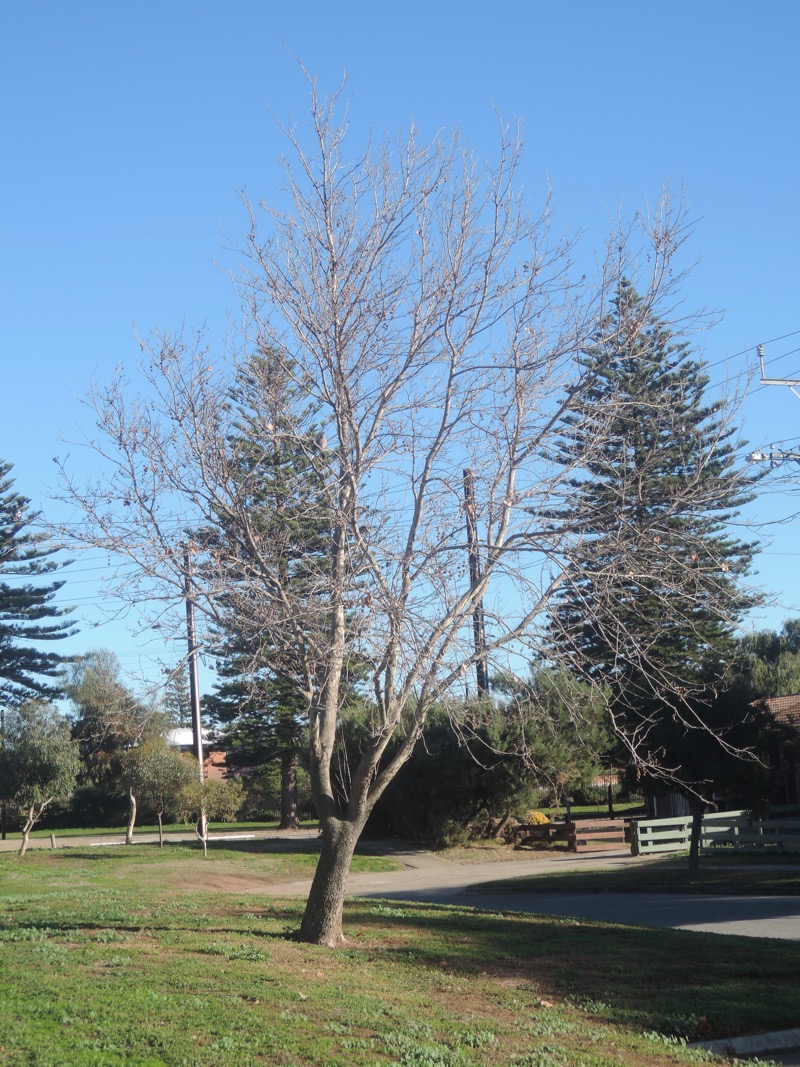
Leafless tree on Gedville Street,
between the coast and the railway station

During those winter months in Germany, I rose each day just before six o’clock and walked through the dark streets of town to the station, where I caught a train and then a bus to the factory district. My shift started at around seven-thirty, but daylight didn’t filter through the glass panels of the workshop ceiling until well after nine-thirty. I left work at four o’clock — first back on the bus and then onto the train; then back on foot through the streets towards the fourth-floor apartment I shared with a German friend. By the time I reached the door that led from the street of our apartment building into the stairwell, the sky had darkened again.

I thought, as I shuttled from home to railway station to bus to factory and then back in reverse, that I might never see broad daylight again.

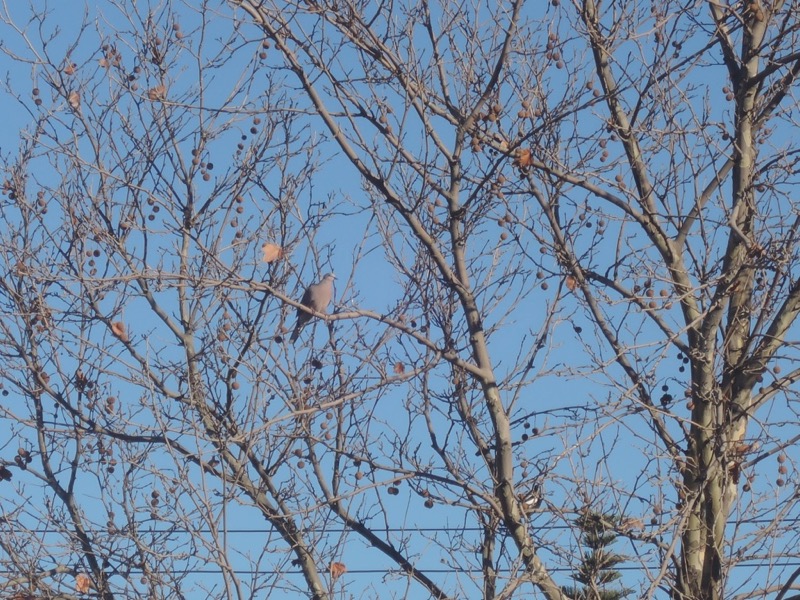
Dove in leafless tree

The trees that lined the street on which I lived during those months were European trees, native to the area, and so they were deciduous. Their leafless, bare branches formed stark silhouettes against the grey apartment buildings and the grey, clouded sky. It didn’t snow, but even in the few hours of daylight we were granted, the sun stayed hidden, a faded white ball in that streak of grey sky. Everything seemed cold and grey. I, too, felt cold and grey.

Leafless tree leaning into a house near Largs Bay School

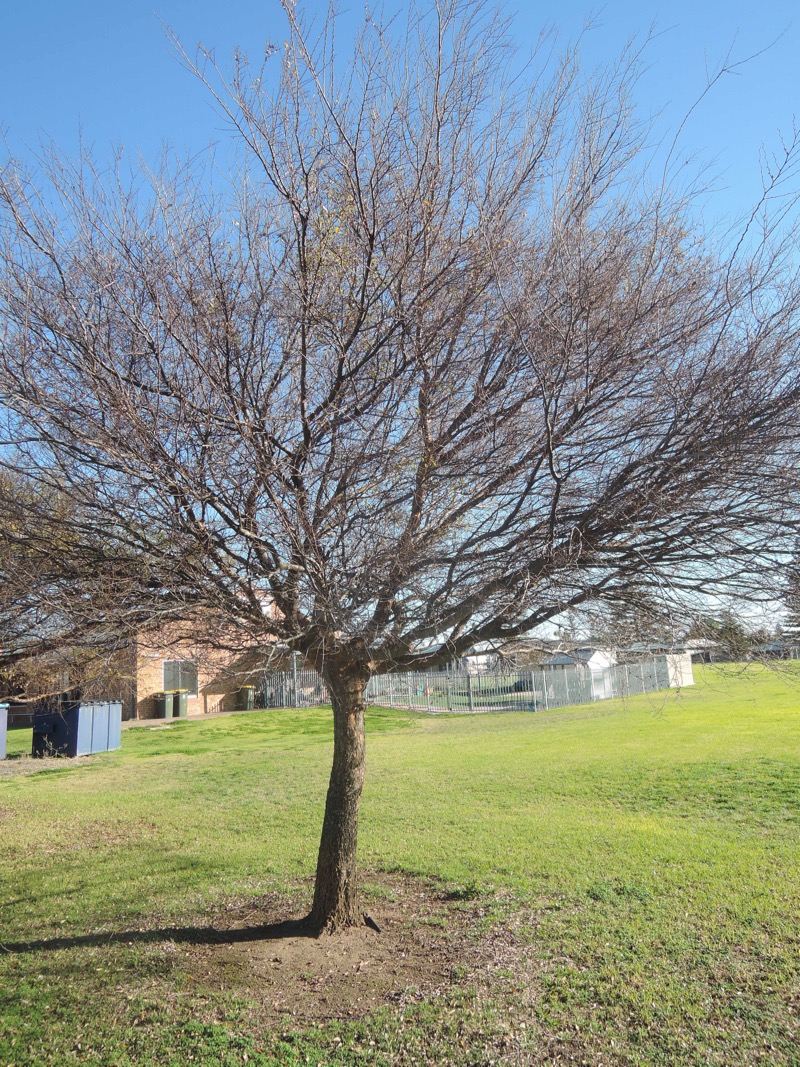
Though Australia does have a few native deciduous trees, most native vegetation is evergreen. And so, even though the winters here in South Australia can at times feel very grey, most leafless trees — like the ones I photographed to accompany today’s post, all of which grow in the neighbourhood where I live — are imports from countries like Germany: cousins of those trees that lined the streets of the town where I worked all those years ago.

Leafless tree on the school oval
on Gedville Street

I’m a home-body these days. I love the Australian sun. I love the wide arch of sky and the shifting, glittering, restless ocean. I love the grey-green leaves of eucalypts, the drooping pods of acacia trees, the red bristles of bottlebrush flowers, the golden needles of the sheoaks. I couldn’t live anywhere else now. This is home to me.

Travelling brought me a lot of joy, though, and it taught me things I could never have learned if I’d stayed at home. My love for this place is a part of what my travels taught me, I think. Those bare-branched trees were a gift. They led me back home.

Even leafless trees don’t seem leafless here
when you look at them closely!

But no-one was awake

Other people’s words about … the sound of the sea

Sometime after midnight the rain and the wind stopped. The room filled with the sound and smell of the ocean, both amplified somehow, as if it were about to pour through the windows, full of storm debris — ground up shells, rotting wood, seaweed, the husks of marine animals, endless other fragments suspended in the salt water, all of it caught in the roar of the waves. But by then there was no one awake to hear.

from ‘The Restorer
by Michael Sala

Having lived in various houses by the sea ever since my early twenties, I’ve noticed how the smell that drifts towards my house from the beach differs not just from day to day, but from house to house. Where I live now, my house is pretty much at sea level, and though it stands several streets back from the beach, on days when the wind is westerly, blowing straight off the ocean, the air that drifts into my yard is rank with the smell of salt and damp sand and rotting seaweed.

The sea is shallow here, too; you can wade out for quite some distance from the shore, heading towards the horizon, without the water rising much above waist level. You can see this, I hope, in the photos illustrating this post, all of which I took a few weeks ago on one of my early-autumn strolls along the beach.

But it’s the sound of the sea I’m thinking of right now, rather than the scents or the sights. As I write, it’s three o’clock in the morning and — unlike in Michael Sala’s description, quoted above — I am awake to hear the roar of the waves.

I’ve always been a light sleeper. Sometimes the sounds of the house wake me in the middle of the night — the rattle of my window, the sway of an open door. Sometimes it’s my dog who wakes me, sleeping on his blanket in the laundry, sighing and licking his chops, letting out a little snore.

I don’t always get back to sleep easily once I’ve woken. On nights like this, it’s the sound of the sea through the window that comforts me in my sleeplessness, connecting me to something outside myself, outside my house, outside the long, dark, lonely night.

In the morning, the sea will sound different — more distant, somehow, less intimate. But we’re not there yet.

Not yet.

A prayer

Other people’s words about … the view

At the back of the hotel was a garden. Along its edge ran an earthen pathway pillared by palms. it ended in a low iron gate. They had not noticed the gate before, but now they saw it opened directly onto the beach. Stepping through the gate, they were confronted by the white and blue of ocean and beach in limpid morning light. Bare-chested fishermen were pushing wooden boats into the surf, chanting prayers together for luck. Women in fluorescent knee-high saris walked past in pairs and threes, with fish-baskets on their heads.

From ‘Sleeping on Jupiter
by Anurahda Roy

First, an update: I didn’t go to Yorke Peninsula during my fortnight of annual leave as I’d planned, after all. For a variety of reasons, it was impossible to get there. Instead, I spent some time holidaying along the coast down south. So the view from the steps down to the beach was different from the one I’d anticipated, though it was still a view to revel in.

A view to revel in

I complained recently about my dread of autumn and winter, those months of the year I always think of as the grey months. But my complaints this year were premature. Sometimes in South Australia, in the early weeks of autumn, the wind dies off, giving way to still, sunny days; endless blue skies; cold, clear nights. That’s how it’s been here for the last four weeks. I could not have picked better weather for a holiday by the sea, despite my last-minute change in location.

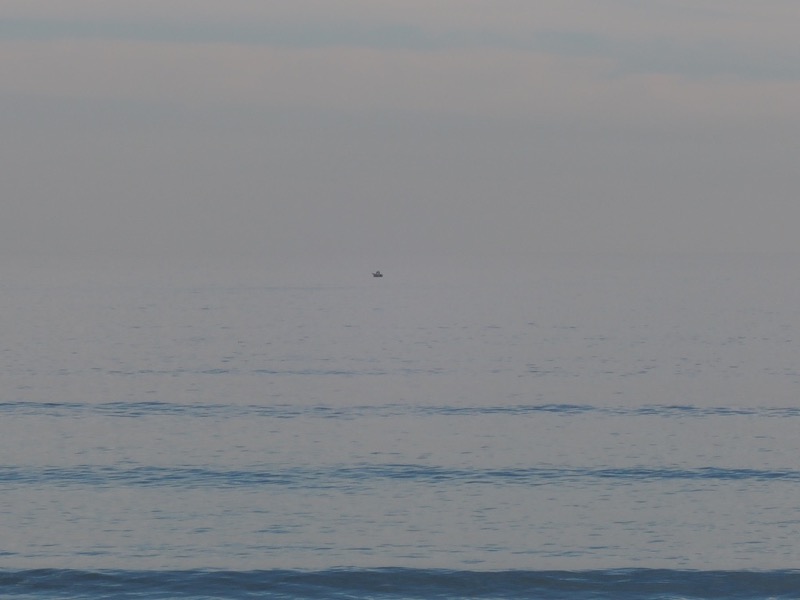
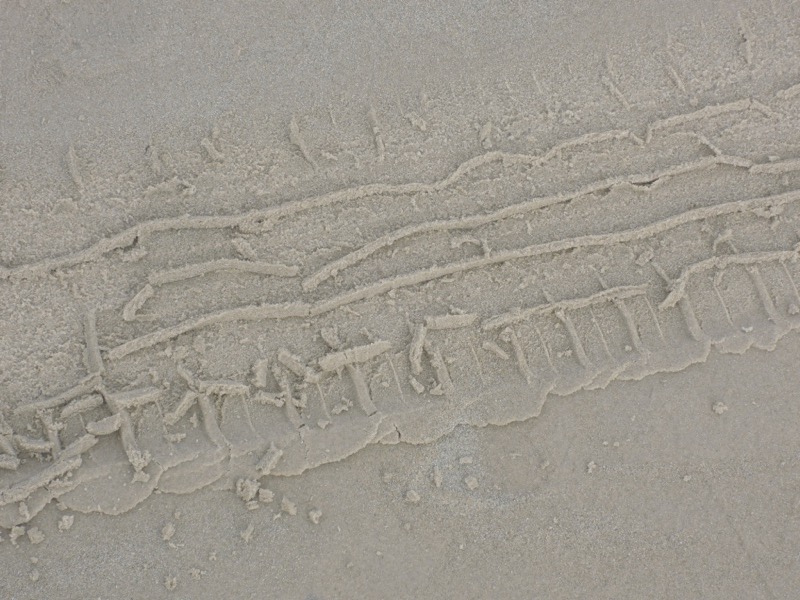
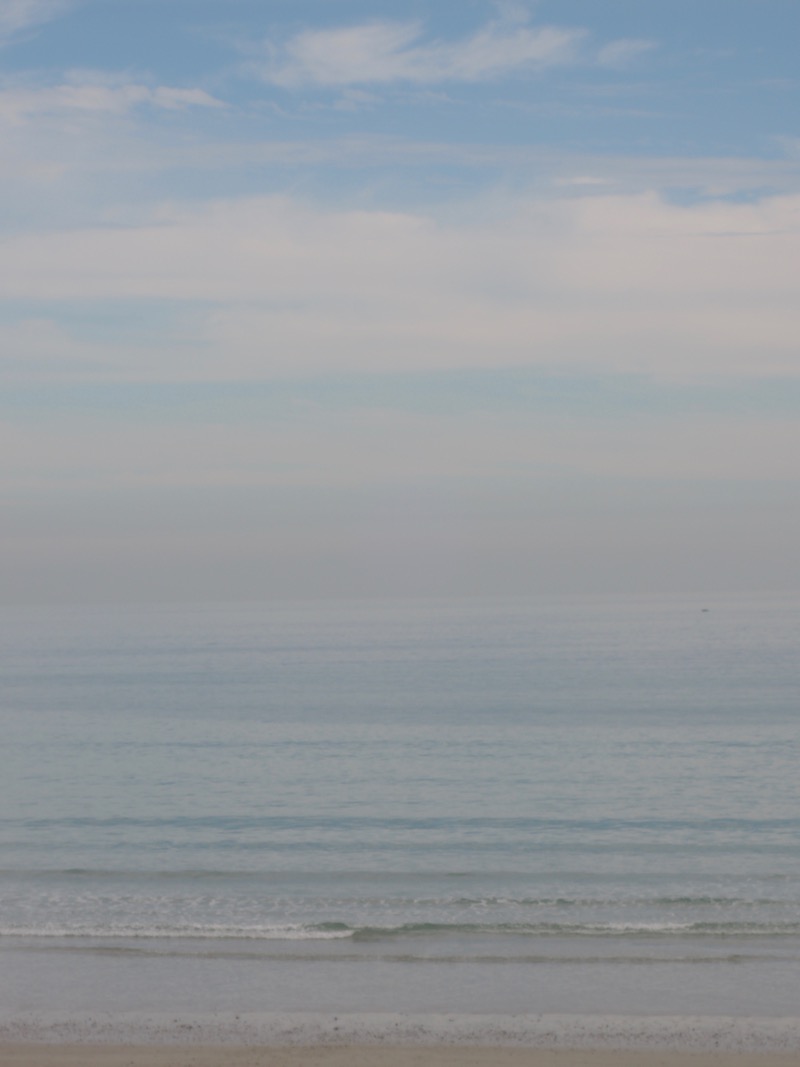
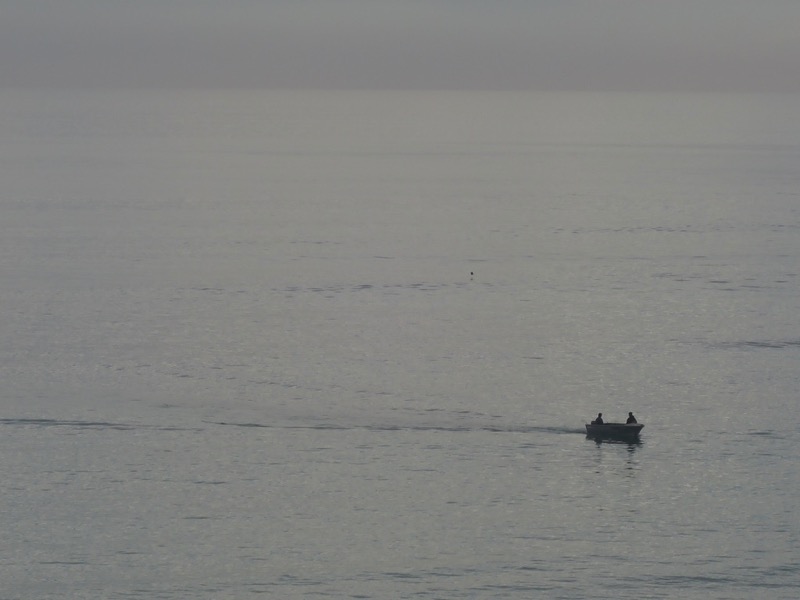
One afternoon I took a walk heading south along Aldinga Beach, beyond the spot where cars are permitted to drive onto the beach to launch fishing boats. It was one of those days where the horizon — that mysterious line between the sky and the sea — seems almost invisible. A boat glided over the surface, somehow suspended between the two, and the headland in the distance was shrouded in a mist of sea spray. The sea changed colour as I walked, from opaque blue, to glassy blue, and then to silver.

Tyre tracks in the sand
Invisible horizon
Gliding boat
Sea spray shrouding the headland
Opaque blue
Glassy blue
Silver and shining

As I walked, I thought about the words I’ve quoted right at the top of this post. I write about the beach here on my blog as a place, always, of beauty and wonder: a place where I swim and stroll, wander and wonder. But that’s a very Western, privileged, twenty-first-century way of viewing it, isn’t it? The beach in the world Anurahda Roy describes — modern-day India — is another place entirely; and her sea is a different entity. In her world, the sea provides the means for people to strive to make a living, and the making of that living obscures the beautiful view.

I am lucky enough, mostly, not to feel the need to chant a morning prayer for luck, as the fishermen in Roy’s passage do. But if I were the praying type, I would utter a prayer of thanks for the view of the beach I had that day, and for every moment I got to spend by it.

Epic

Other people’s words about … sweat

‘Swagger’ might be common jargon now, but let’s not confuse the situation. Swagger is earned. It can be grimy or graceful. It can be innate, but it’s also finessed. It’s the feeling that makes you sit a little taller and reinforces your backbone. We sweat with swagger when we infuse a shameless confidence into movement. To sweat with swagger is to redefine what it means to be an athlete and create unapologetic greatness along the way. When we sweat with swagger, we test the limits of human potential. When our footsteps are powered by motivation and a strong community, the cadence is a drumbeat to doing something epic. Sweat is magic. Swagger is the glisten.

from ‘Shut up and Run
by Robyn Arzón

First, a story of my own, before I address the words I’ve quoted above.

The day before Easter, I woke with my stomach roiling. It was my first official day off work for a while, and when I pulled the curtains back from the window above my bed, I saw clear skies and sunshine through the glass. Lying there in bed, a little before seven o’clock, I felt every part of me rebel at the thought of languishing the day away inside, sprawled out on the sofa, feeling ill.

And so I got up, and I pulled on my oldest pair of trousers — the pair with the faint bike-chain stain on the left leg. I threw my camera and some spare coins into my backpack, and I got on my bike and rode away from the house.

The moment I started cycling, I could feel something inside of me begin to unfurl. I am a tense person, and mostly this tension is a mental thing, but it manifests itself in me physically, too: in my muscles. This is something I have only just begun to realise. I had been sore for days before this bike ride, my right hip aching from stooping over the computer in the office, the muscles in the hollow of my back raw from constantly bracing myself (against what? staying still?), my stomach queasy and unsettled.

So I pedalled slowly. Gently.

The route took me south-west — first along the coast, past two jetties; then south-east a little way,  where the coastal road came to a dead end. Then, when the coastal road started back up again, I turned back west and cycled alongside the sea once more, past the third jetty. I rode with my head up, glancing about me: at the wide, cloudless sky, and the opal-coloured sea, and the faint line dividing the two of them. Lycra-clad cyclists sped by me in a whoosh of tyres and sweat — mostly men, some women; most of them younger than me, but some older — and I said, ‘G’day’ to each one of them and gave them a little smile of greeting and acknowledgment, though I’m not sure that any of them heard me or noticed.

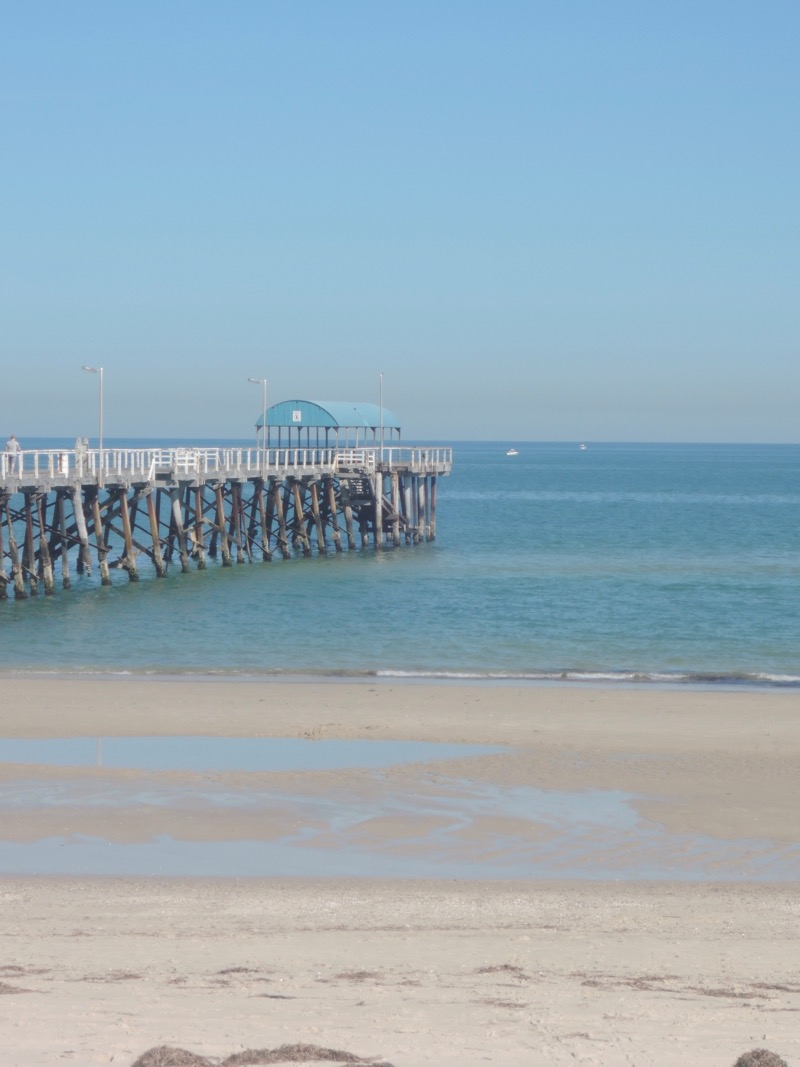
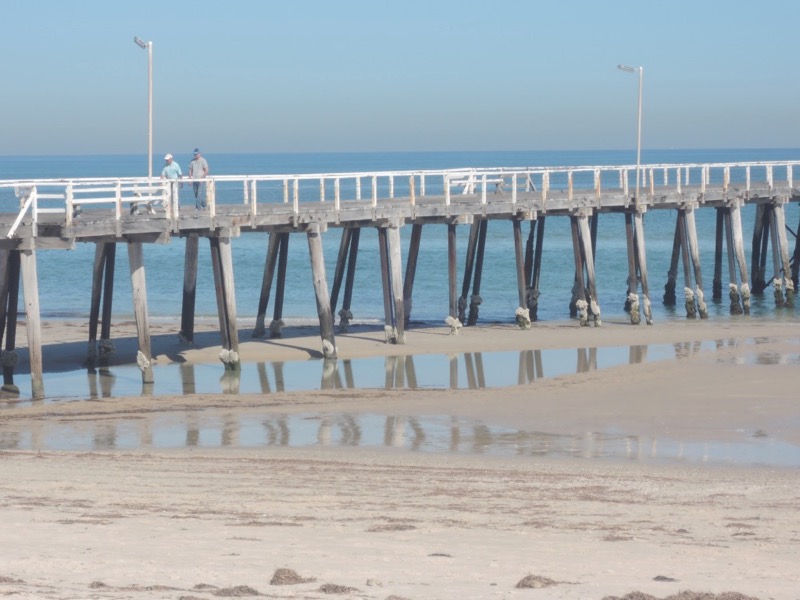
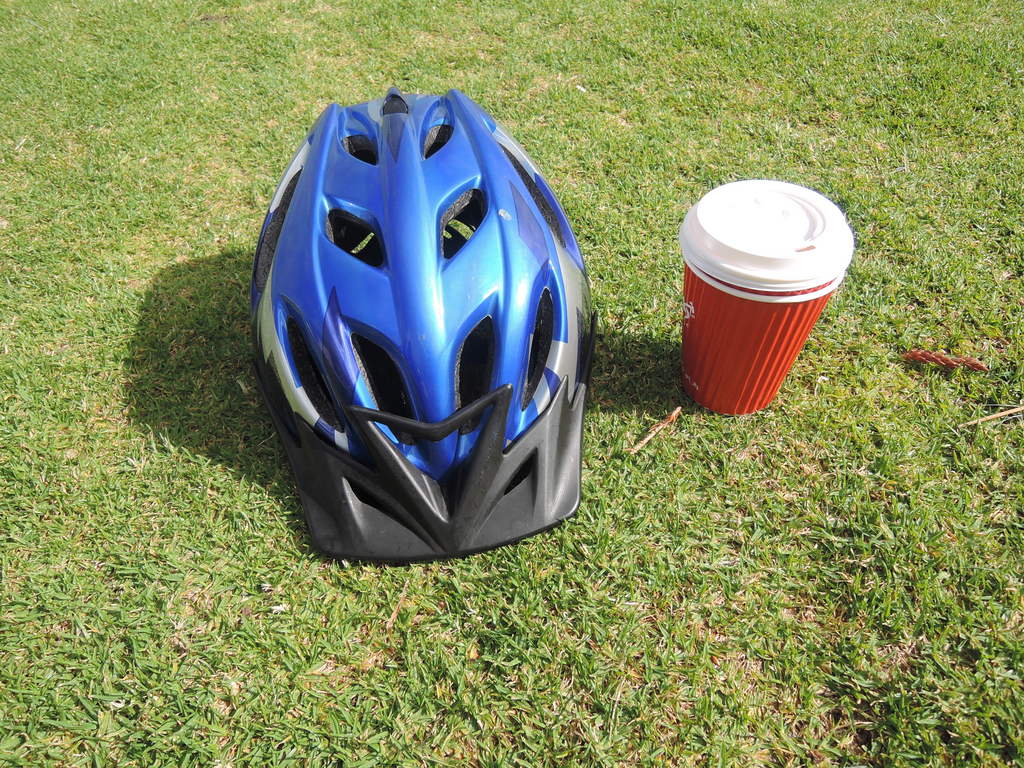
When I got to the fourth jetty (the one pictured in most of the photos in today’s post) I stopped and parked my bike. I wandered across the main road to the supermarket and bought some dried-fruit-and-nut mix, and then I dropped into my favourite café at that particular beach and ordered a take-away cup of tea. They’ve recently started selling tea made from leaf tea instead of teabags there, even for take-away drinks, which is a little thing, I know, but it makes me very happy. I carried my lidded red cardboard cup of too-milky leaf tea back across the road and plopped myself down in the middle of the foreshore square. And there I sat, cross-legged on the sun-warmed grass, nibbling my fruit and nuts, sipping my tea, looking (and looking) at the sea.

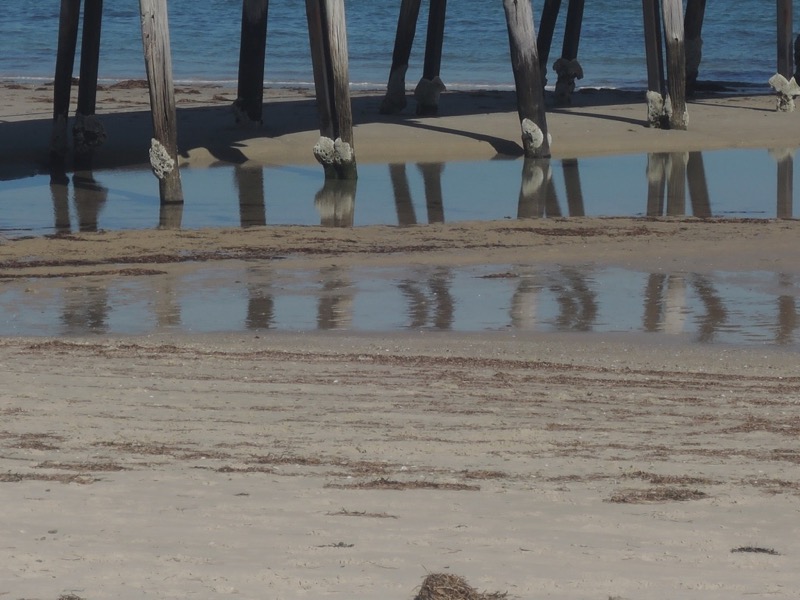
In a few weeks’ time, the grass in that foreshore square will be wet with rain, and a cold wind will whip between the lamp-posts up over the grey roof of the pavilion. I contemplated this a while, stretching my arms out behind me, resting my weight back, feeling the blades of grass tickle my palms. The beach was only a few steps away from where I sat on the grass, and I could see the jetty pylons reflected in the water, and I’ve said it once already in this post, but little things like that — they make me very happy indeed.
So what has this to do with the words I quoted at the beginning of this post? There was a bit of sweat involved in my bike ride, sure, but there was no swagger. I cannot say I moved with shameless confidence or unapologetic greatness. I was motivated, certainly, but I did nothing epic or magic. I am certain I did not glisten.

Thank goodness.
I do not wish this post to be unkind. I do not wish to say, as Arzón herself says many times throughout her book, I call bullshit on her words. But then there’s this:

Our inner monologue can turn can’t into can and dreams into realities. Extinguish doubt with action. Let’s write the story that says we are a little better than yesterday. We can push ourselves to where we want to be. It’s going to take a little sweat, though. Happy is something you do, baby, and only you are responsible for your happiness. Life is happening right now, so stop making up excuses and tell me, what do you want your story to be? Do you want to be a runner? Have you always dreamed of completing a marathon? Whatever it is, write it down, look back on it, and own it.

These sentences — sentences like this — worry me. Arzón’s thoughts are not unique; her words are a part of a general conversation, one that I hear around me almost every day. And it is a conversation I can’t help fretting about. I am alarmed when I hear someone confuse athletic prowess with personal greatness. Or when I hear someone link the idea of their becoming a better person, of their living a better life, with the act of slipping on a pair of running shoes. Or when I hear someone use words and phrases like ‘strive’ and ‘focus’ and ‘dedication’ and human potential (that last is Arzón again) to describe, not acts of goodness, let alone greatness, but essentially self-centred feats of fitness and strength, speed and endurance.

I decided to do one thing with my life — epic shit — and I want you to come along for the ride, Arzón writes, of her long-distance running. Maybe I’m wrong, but those words make me feel empty and sad.
Having said that, I also do not wish this post to turn into a lecture, or a rant. I do not wish to moralise. So I will just say this: I took my bike ride that morning slowly, because that was what the day asked of me, and what my life seems to be asking of me generally right now — regardless of my dreams, regardless of whatever kind of story I might prefer to write about myself. It was a gentle ride, and I felt gentler for it afterwards (though still somewhat unwell).

And that, I think, is how I want to live out my days: gently. Slowly. With kindness, both to myself and to others. With humility.

Tell me, am I alone in this? How do you want to live?