When the wall comes down

Other people’s words about … the view

When I was about fourteen or so, I studied a poem in school by David Campbell, called ‘On the Birth of a Son‘. It was a sonnet, and I didn’t know much about sonnets, except that Shakespeare wrote a lot of them. It never occurred to me that a contemporary poet might write one.

This sonnet by David Campbell has stayed in my mind ever since. It remains one of my favourite poems. Here it is, in its entirety:

The day the boy was born, the wall fell down
That flanks our garden. There’s an espaliered pear,
And then the wall I laboured with such care,
Such sweat and foresight, locking stone with stone,
To build. Well, it’s just a wall, but it’s my own,
I built it. Sitting in a garden chair
With flowers against the wall, it’s good to stare
Inwards. But now some freak of wind has blown
and tumbled it across the lawn — a sign
Perhaps. Indeed, when first I saw the boy,
I thought, he’s humble now, but wait a few
Years and we’ll see! — out following a line
Not of our choice at all. And then with joy
I looked beyond the stones and saw the view.

On the face of it, this poem is about becoming a parent — the fears new parents have; the limitations parenthood imposes on their lives; the unexpected, unsettling joys it rewards them with. So it might seem strange that Campbell’s words have always resonated with me, though I have chosen, deliberately, never to become a parent.

But that’s the thing about great poems: they are universal. They manage to strike a chord in different people at different times for different reasons.

For myself, every time I read this poem I am moved by the contrast the poet makes between the act of looking inward — at his safe, pretty, cosy life — and the act of looking up, out, to glimpse a view of the world, and his life, beyond.

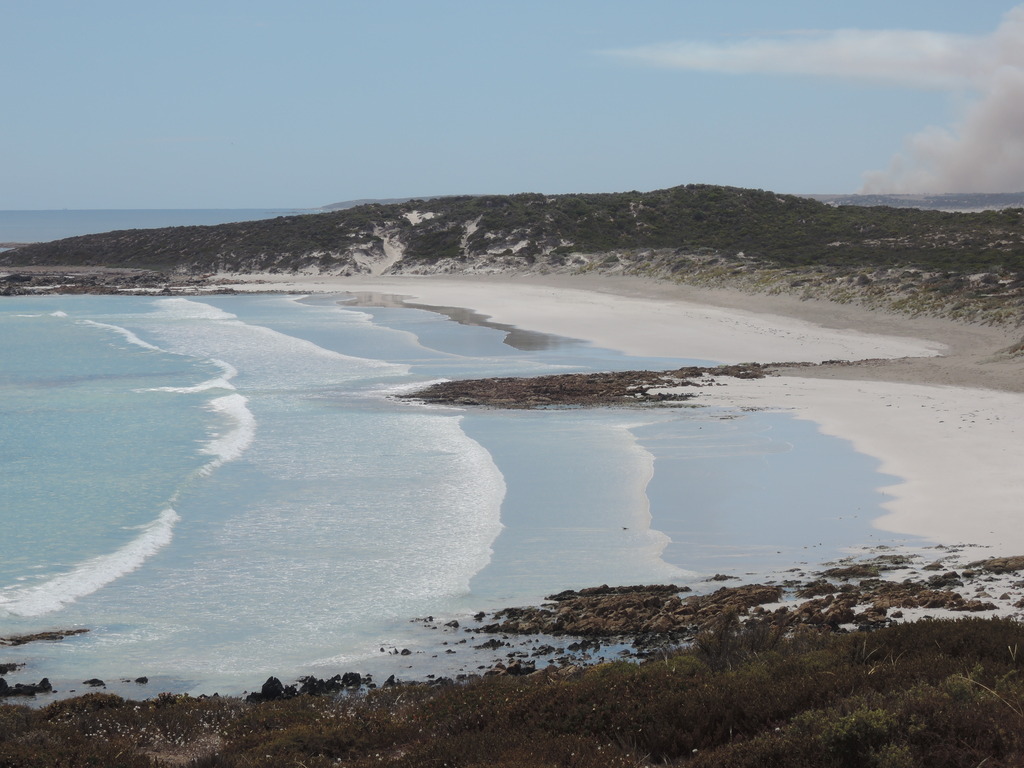
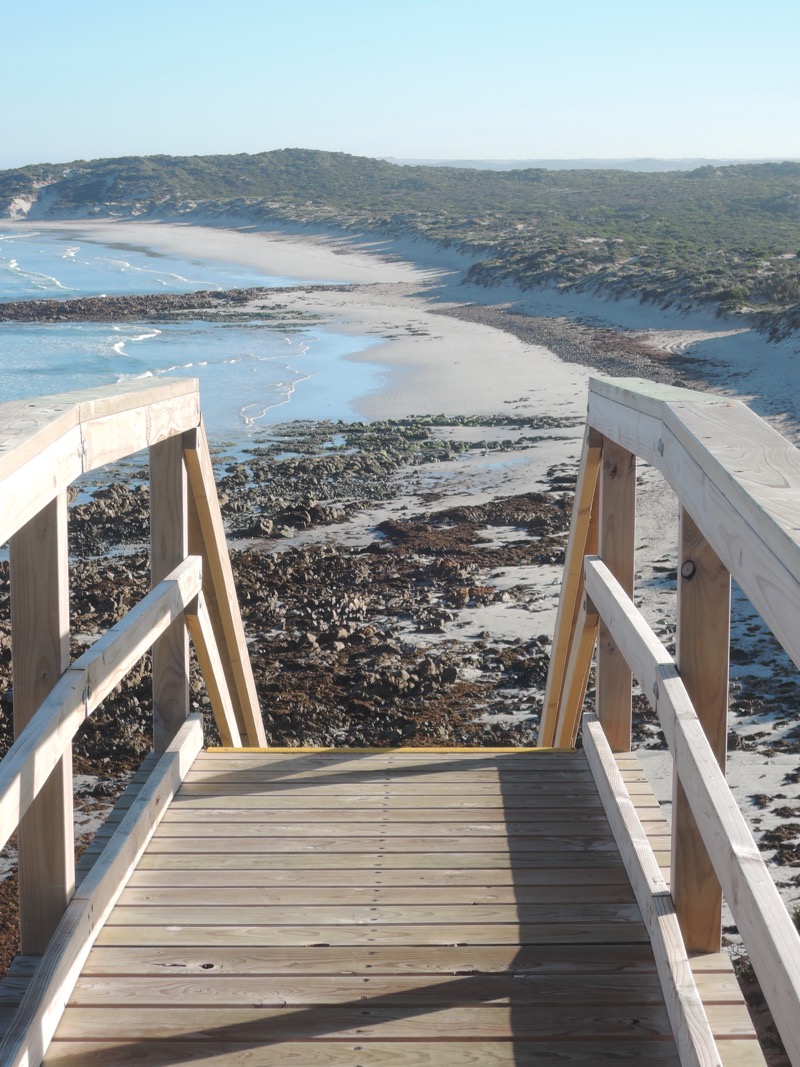
The view beyond. Recently, I went on a holiday in Yorke Peninsula. I returned to one of my favourite spots, following a long, undulating, unpaved road to get there — one that is corrugated and dotted with puddle-holes, dusty with sand stirred up by other passing vehicles, and lined with dense thickets of bush where brown snakes lie coiled, sleeping.

Each day I passed my time the way I always pass my time there. Each day I woke to the same view.

But it is a spectacular view: of open skies, of wide seas, of sprawling cliffs and rolling sand dunes. It is a view of a life beyond the life I normally lead. It is a view that sets me free.
I live a small life: small things give me pleasure. I consider myself, mostly, lucky to be able to live this way. And yet it’s good to escape from time to time: to look up and out and beyond.

And to see, again, the beautiful view.

Notes

You can find a link to this poem here and here.

Snatched phrases (on the sea)

‘[I] stare at the water.
It’s shot with moon, silver leaking all over the surface.’

from ‘Words in Deep Blue
by Cath Crowley

Okay, so I don’t have any photos of the sea in moonlight, because I have as yet to figure out night-time photography.

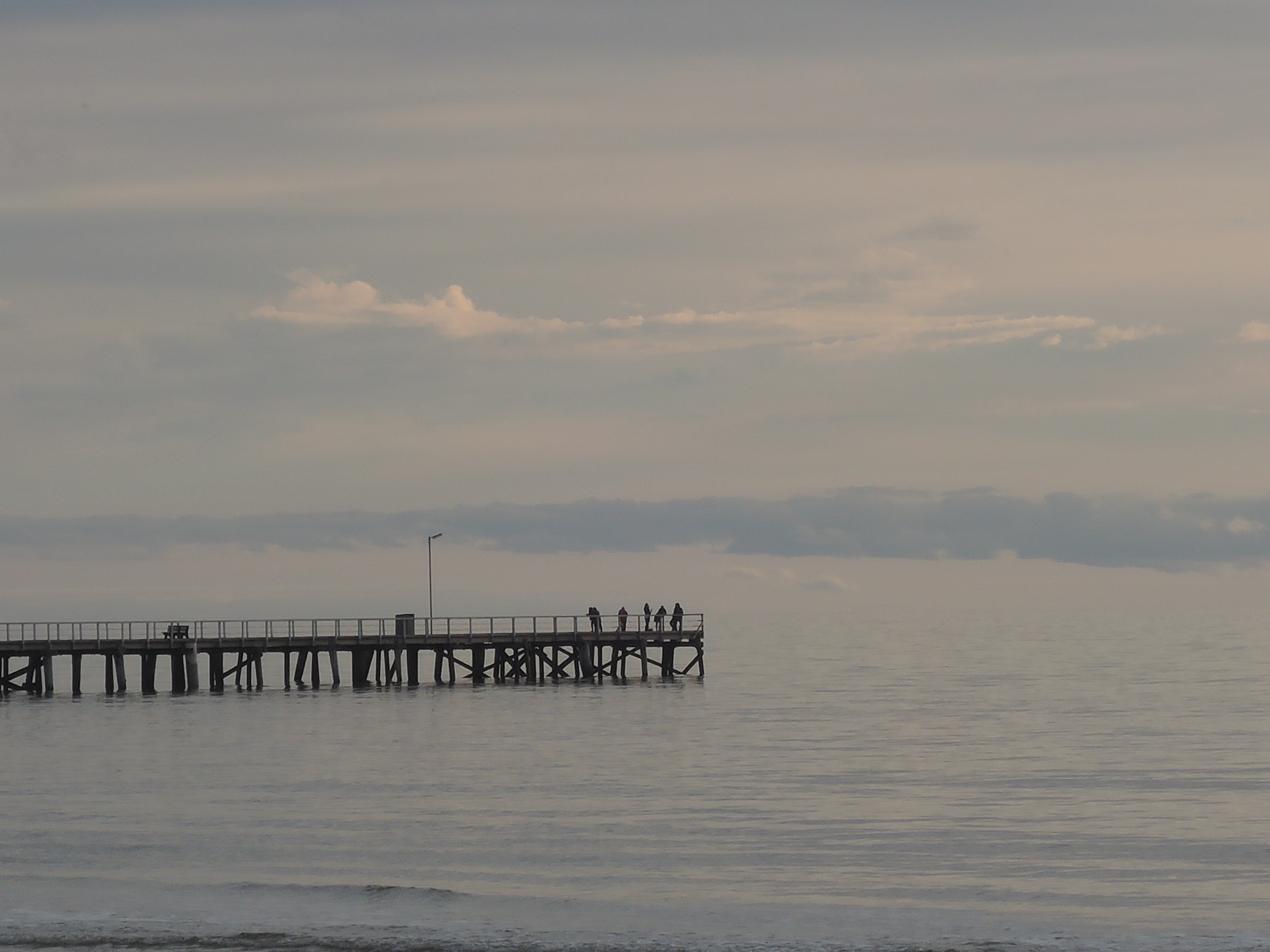
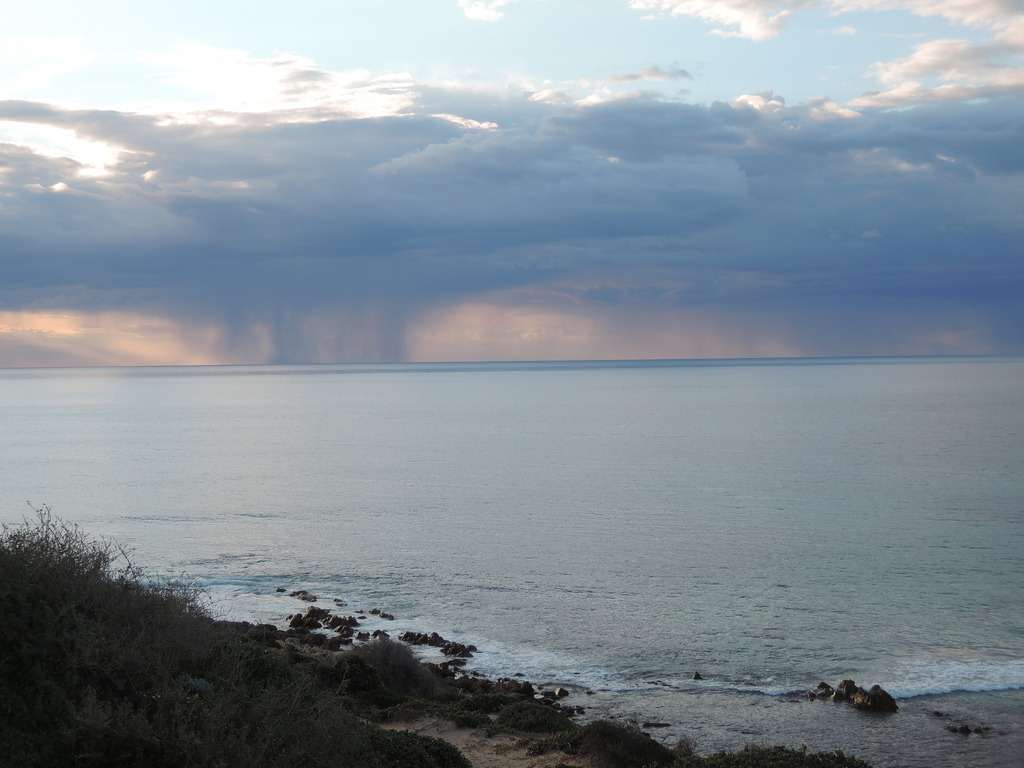
But the words above reminded me of one of the things I love about the sea, and one of the reasons I so frequently post other people’s words about it, accompanied by my own photos: I love how the sea changes colour, depending on the season, the temperature, the weather, the time of day, the tide. The colours you see below — blue, green, pewter, turquoise, gold, silver — are just some of the many colours of the sea.

You may recognise some of these photos from earlier posts on this blog. Forgive the repetitiveness. That is one of the things about the ocean, I think: the wonder it instils in you, each time you see it, each time you visit it. It repeats itself, over and over.

When summer came

Other people’s words about … summer

Summer came, clanging days of glaring sunshine in the seaside town where I live, the gulls screaming in the early dawn, a glittering agitation everywhere, the water a vista of smashed light.

From ‘Aftermath
by Rachel Cusk

I live in a seaside suburb like Rachel Cusk. Gulls scream outside my window most mornings, flapping over the roof, perching on the top of the stobie poles. I find great solace in their shrieks. Like the call of a wattlebird, there is nothing elegant or beautiful in a gull’s cry. It is gloriously unapologetic, and harsh, and guttural, and wild.

There is a particular kind of summer day at the beach: the sand is so hot along the path from the road across the dunes that if you are making your way barefoot — or if you are a dog — you have to run over it towards the shore to prevent the soles of your feet (or paws!) from burning. The sky throbs; the air is windless, hot, salt-scented; and gulls stand in the shallows, waggling their legs as they stare down into the clear water, searching (I think) for fish. It’s so quiet in the hot stillness that you can hear the little lapping, bubbling noises the water makes as the gulls’ legs move about in it.

A vista of smashed light.
A vista of smashed light

I haven’t swum in the sea much this summer. Due to the storms in December and early January, the water is muddied and polluted. But I love the beach at this time of the year, regardless. I feel no glittering agitation, as Cusk does: only joy.

It’s the heat. And the light. And the gull-shriek-rent air.

A shock of pleasure

Other people’s words about … the sea

The narrow trail I had been following came to an end as it rose to meet the old grey asphalt road that runs up to the missile guidance station. Stepping from path to road means stepping up to see the whole expanse of the ocean, spreading uninterrupted to Japan. The same shock of pleasure comes every time I cross this boundary to discover the ocean again, an ocean shining like beaten silver on the brightest days, green on the overcast ones, brown with the muddy runoff of the streams and rivers washing far out to sea during winter floods, an opalescent mottling of blues on days of scattered clouds, only invisible on the foggiest of days, when the salt smell alone announces the change. This day the sea was a solid blue running toward an indistinct horizon where white mist blurred the transition to cloudless sky.

from ‘Wanderlust
by Rebecca Solnit

Rebecca Solnit’s words remind me of my own jaunts to and from the sea. So, no more words from me today — just a gallery of pictures I’ve taken over my own years of oceanside ramblings. You’ll recognise many of these pictures from earlier posts, no doubt, but collected here they convey, I hope, the many moods of the sea.

(Hover over the pictures to see their connection to the words above.)


At ease on this earth

Other people’s words about … beauty

I am haunted by waters. It may be that I’m too dry in myself, too English, or it may be simply that I’m susceptible to beauty, but I do not feel truly at ease on this earth unless there’s a river nearby.

from To the River
by Olivia Laing

Haunted by waters. Isn’t that a beautiful phrase?

Though the words I’ve quoted above are about a river rather than the sea, still, they ring true for me. For most of my adult life — except for the two or three years I spent in my early twenties, travelling and working abroad — I have chosen to live within walking distance of the sea. In my late twenties and thirties, as I’ve mentioned before, I lived in a series of share households: different houses every eighteen months or so, different housemates. But each of those houses was close to the sea.

These days, I live in a house just a few minutes’ walk to the beach. Open a window, and you can hear waves rolling onto shore. Step onto the front porch, and you’ll smell seaweed drying out beyond the water’s reach — a damp, bleached, faintly rotten smell. Look around indoors, and you’ll see drifts of sand piling up in the corners.

The sea surrounds me. It’s how I make sense of things. It’s how I feel at ease.

DSCN2831

There’s another phrase I love in the words above: susceptible to beauty.

Like anyone else, I have good days and bad days. There are days when I feel at home, here on this earth: when my skin feels comfortable beneath the layers of my clothes, and the warmth of the sun feels kind and good. And there are days when the world seems vast, alien, spinning, remote. What gets me through those latter kinds of day are tiny moments of beauty, out there by the water: pinpricks of sunlight sparkling on the tips of waves, like sequins on a piece of cloth; clouds chasing across the horizon, billowing and grey; a cluster of yellow flowers growing in the dip of a dune, petals cupped to reflect the light.

DSCN2833

I took the photographs you see here late one August afternoon, just a few weeks ago. Sitting at my desk, working at my computer, I felt hemmed in suddenly: by streets and footpaths, by fences and cement driveways, by the sound of my neighbour hawking up sputum in his bathroom. The longing to get away from all of that was so strong it felt akin to starving. I felt hollow through and through.

I shut down my computer, stepped outside, and walked down the road to the sea.

DSCN2832

Five minutes later there I was, standing on the sand, looking out at the water and the sky. It was close to sunset and I wandered a while along the shore, released at last: from work and worry and words. And I saw something, then, that I don’t know how to describe, though I’ll try: I saw spring coming. The air had a certain quality to it — a softness, perhaps, after the steely bleakness of winter. I thought that if I reached out with my hand I might touch that beautiful softness. It seemed possible, just for a moment.

Looking at the photographs now, I don’t see what I did then. Perhaps you don’t, either. But I know that I saw it, all the same. It was one of those moments — those tiny moments of beauty — to which I, like Olivia Laing, am susceptible.

I am grateful for those moments, is what I’m trying to say. They give me a kind of gladness. They bring me home.

How (not) to surf

Other people’s words about … surfing

He tried to show me the basics [of surfing], but he made it look too simple. Surfing was in his muscle memory, in his blood, in his thoughts. It was like his shadow, simply part of him …

We got back into the water one more time, and the sea tugged me under and tossed me around under a wave, like a plaything, like it was laughing at me. I came up ready to go home, mouth full of salt, hair full of sand.

from Season of Salt & Honey
by Hannah Tunnicliffe
( p. 134)

I know a man who is a surfer. In his fifties now, he started surfing in his teens, catching a ride to the south coast with an older friend who had a driver’s licence.

Though I love the sea, I have a fear of waves, of getting dumped. Still, when I first came to know this man (nearly twenty years ago now), I wanted to give surfing a go. I wanted to see what made him love it so. I asked him if he could help me brave the waves.

So one day, we paddled out into the salt water, he on his surfboard and I on my boogie board, paddling hard. He set me up for a couple of waves. Each time, when the wave rolled towards me, he said, ‘Now!’ and then, when I froze, he gave my board a push, and away I went. I rode the wave towards shore, lying flat on my belly on the board as he’d shown me, and it was fast and terrifying and exhilarating all at once.

And I got it. I got what he felt out there in the ocean. I got the magic of it. The awe.

Yorke Peninsula waves
Waves

But I’ve never attempted it again. I can’t read the waves or the currents. I’m afraid of getting caught in a rip. I don’t understand the sea. I love it; I’m awed by it; but I don’t know it.

She gives me that sad, hopeful look that says [surfing] can be for everyone, should be for everyone. That surfing is the best thing in the world. Her strange, blue-grey eyes fix on me, like she wants to explain. I imagine her in the sea, like a fish, moving as though made for the water. She would know where to put her feet, how to balance, how to fall without hurting herself, without drowning. She’s probably one of those girls who rides the waves as though she’s dancing with the whole of the ocean; her and the water taking different roles, moving in different ways. The ocean leads and she simply responds.

(p. 134)

I think, for me, the sea will always remain a beautiful, mysterious, unknown quantity. There are different ways of loving it, perhaps. Mine isn’t the way of the surfer, but it’s still there. It will always be there. I have lived by the sea for twenty years or more now, and the sand and the salt and the sea are in my blood.

And that is enough for me.

Storm approaching, Yorke Peninsula
Storm approaching.

Roll and thunder and hiss

Other people’s words about … the sea (again)

I could see the sea from the terrace, and the lawns. It looked grey and uninviting, great rollers sweeping in to the bay past the beacon on the headland. I pictured them surging into the little cove and breaking with a roar upon the rocks, then running swift and strong to the shelving beach. If I stood on the terrace and listened I could hear the murmur of the sea below me, low and sullen. A dull, persistent sound that never ceased. And the gulls flew inland too, driven by the weather. They hovered above the house in circles, wheeling and crying, flapping their spread wings. I began to understand why some people could not bear the clamour of the sea. It has a mournful harping noise sometimes, and the very persistence of it, that eternal roll and thunder and hiss, plays a jagged tune upon the nerves.

From Rebecca
by Daphne du Maurier

Rebecca is one of my favourite books. The unnamed narrator’s character — shy, very English, young, terribly lacking in confidence — is exquisitely drawn. The plot is an absolute cracker. And if you want to find out how to use short sentences to build suspense (and I mean short! sentences), read the last half of the book. I have never seen them used so effectively. Stop reading at your peril.

The sea looked grey and uninviting

And then there is the sea. It’s almost a character in itself in Rebecca. Here in this quote, and elsewhere, the sea is a dark, brooding presence. We’re not talking sunshine and sun tans and happy childhood memories here. This is a sea that threatens and menaces, that fills the reader with a terrible sense of foreboding.

You know me by now. These won’t be the last words I quote about the sea. But honestly? I think they will always be, for me, up there with the best.

The one-legged seagull

Questions, questions, questions

Sunset at Taperoo 17 January 2016 7.15 pm

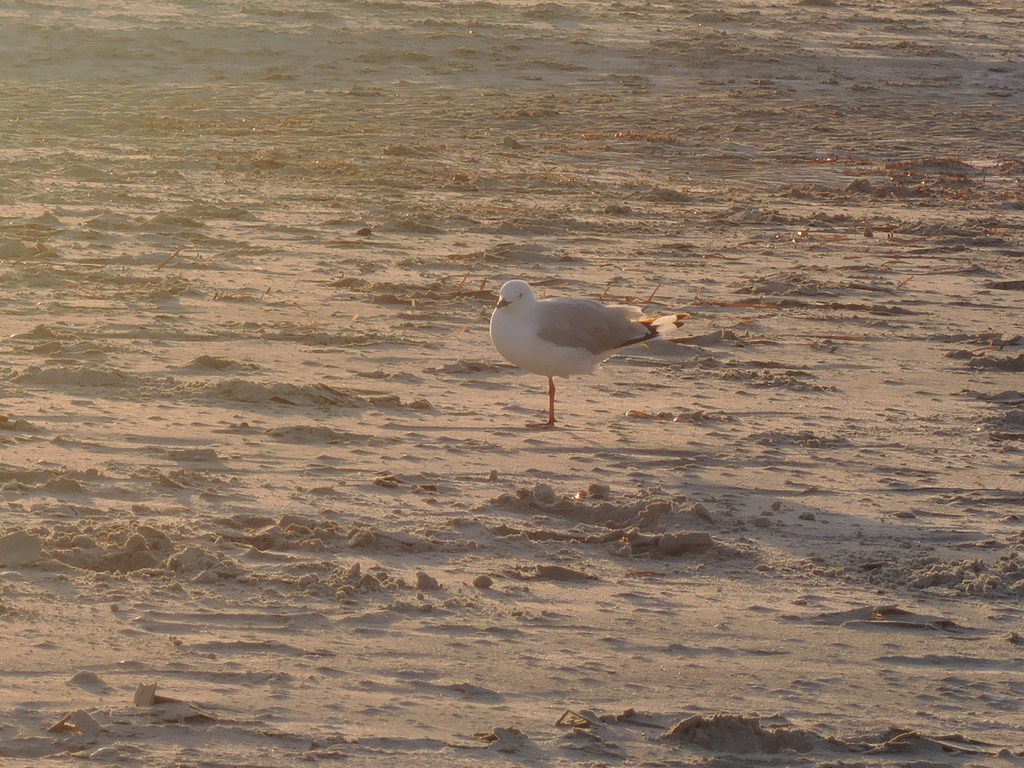
If you’ve seen a one-legged seagull, you’ll know what I mean.
Why are there so many of them?
Do they lose their legs during epic battles for territory?
Why don’t their predators attack other parts of their bodies? (Do seagulls have predators?)
And then, too:
How do one-legged seagulls survive?
Do they grow replacement legs, like reptiles grow new tails?
Or does the remaining leg grow stronger over time?
So many questions.
I could google for answers, I suppose,
but I’m enjoying the mystery …