The one true story

Other people’s words on … writing

He said, ‘What is your job as a writer of fiction?’ And she said that her job as a writer of fiction was to report on the human condition, to tell us who we are and what we think and what we do.

from ‘My name is Lucy Barton
by Elizabeth Strout

When I first began this blog, I was adamant that, though I am a published writer, my blog would not be about writing. A writer can blog about things other than writing, right? A writer isn’t just a writer: a writer is a person; a writer has a life. That’s what I wanted to blog about.

Besides, it seemed to me that blogging about writing would be, in my case, an inexcusably audacious act. My thinking went like this: I have published only two books. I haven’t published anything since 2010. My books have gone out of print. What can I tell anyone about writing? Who would want to read what I had the temerity to say?

Early drafts: an audacious act

I don’t much like the word ‘writer’. Perhaps it’s because I haven’t published much and don’t make a living from my writing, but I feel pretentious and arrogant when I call myself one. I think of myself instead as someone who has written two books, and would like to write another one, but is struggling to do so.

That’s another word I don’t like: ‘struggle’. When I first began writing stories and fiction, the writing was an act of joy. It was a process of humble discovery. Each word that I wrote, each sentence, each chapter, was a journey. I was learning to do something new. I was learning to do something I loved. I was learning.
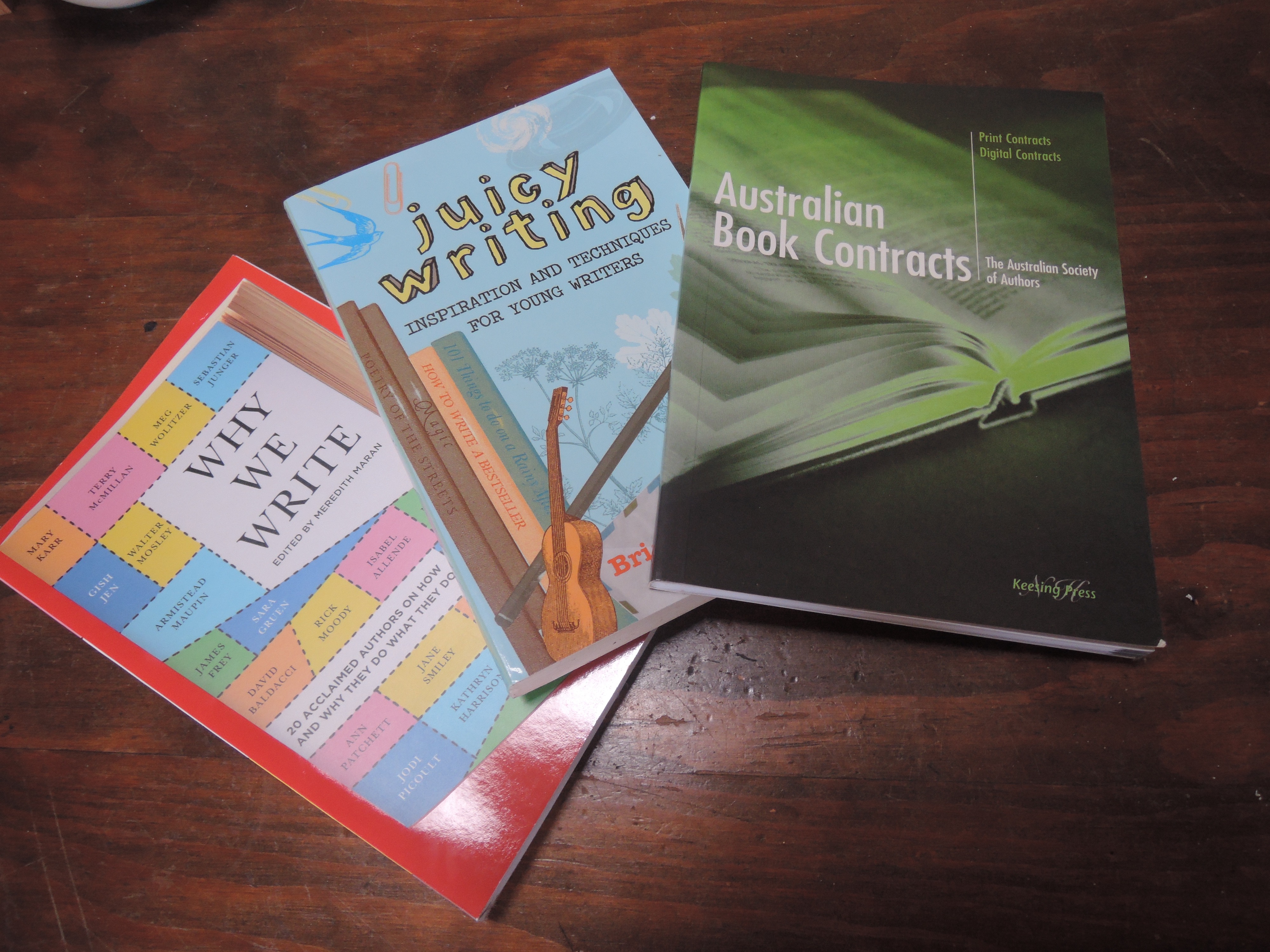
Writing is a learning process
Lessons in writing: all part of the learning process

So when I first read the words I’ve quoted above from Elizabeth Strout, I thought: Yes! Writing fiction, for me, has always been about opening myself up to sorrow, and to joy, and to humility, and to discovery. It’s about expressing those things, however afraid I am to do so. It’s about making sense of my life. It’s about trying to make something beautiful. It’s about having the temerity — the audacity, the arrogance — to share my words with other people: people who, like me, love reading.

Most of all, writing fiction, like blogging, is about sharing.

And so that’s the reason I’m posting these words about writing today. Call it pretension; call it temerity. Call it audacity; call it arrogance. Call it learning; call it sorrow; call it joy.

Elizabeth Strout again (from the same book):

You will have only one story … You’ll write your one story many ways. Don’t ever worry about story. You have only one.

Maybe this is the only story I have to share, but that doesn’t mean it’s not worth sharing.

The butterfly bush

Other people’s words about … English gardens

The garden was in a jungle state of desuetude: weeds were everywhere. The top lawn descended to a second, where was a tangled rose garden and sun-dial: thence further descent, past more noble trees to a third lawn in the middle of which was a pond, or miniature lake. It had an off-centre well-scaped island, containing one weeping willow and some iris out of flower. Pigeons flew heavily out of bushes like people leaving a play of which they disapproved. Rabbits cavorted and then escaped their attention just in time. A huge old buddleia was spattered with either tortoise-shell or Painted Lady butterflies. Arabella seemed delighted by the whole thing.

from ‘Odd Girl Out
by Elizabeth Jane Howard

When I was fourteen years old, my family spent a year away from Australia, living in England. My whole family, on both sides, comes from the UK; my sister and I were born there, too. We migrated to Australia when I was three.

So the year back in England was a homecoming of sorts, for my parents, at least. We lived in an old stone coach house, in Oxfordshire. As I remember it, the coach house stood on stilts in the gardens of a much grander house, also built of stone. There were brambles, and two black cats — one bold and prowling, the other timid and long-haired and neurotic — and several peacocks strutted the spreading lawns, letting out frightening, ghoulish shrieks beneath our windows. That year, the winter in England was unusually severe, and drifts of snow built up in the garden and in the country lanes leading to our house. My bedroom in that cold house was tiny, with room only for a single bed, a chest of drawers, and the hot-water boiler. Because of the presence of the boiler, though, I remember my room as being always cosy and warm. It had cheerful Laura Ashley wallpaper with sprigs of tiny green flowers dotted all over it.

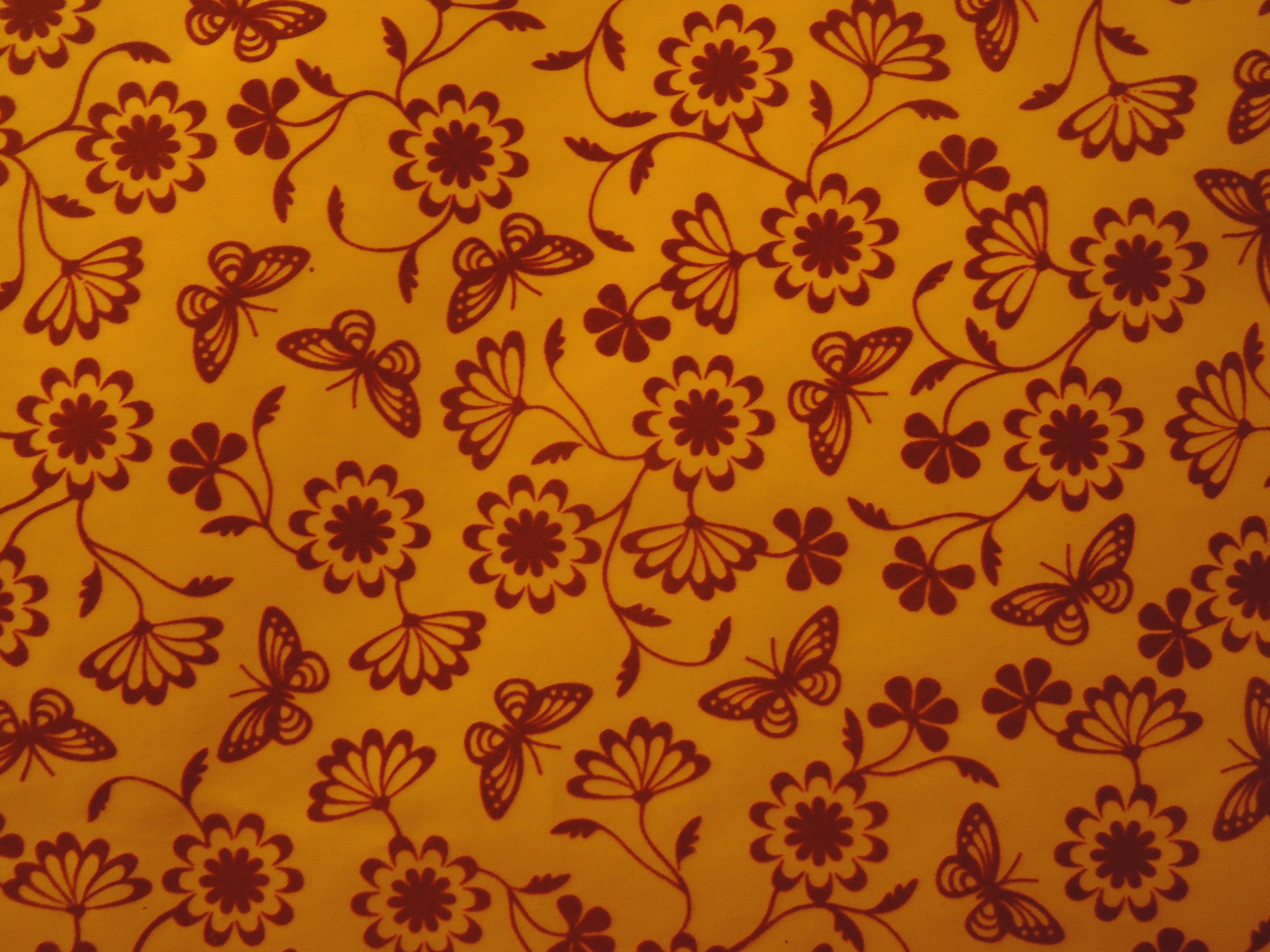
Butterfly poster
Butterfly poster

My grandparents on my mother’s side had retired to live in Dorset, and we spent many weekends there. My grandfather loved to garden; he had a small allotment on the fringe of the village, where he grew runner beans and potatoes and lettuce and — that most English of vegetables — spring greens. Their own backyard was small, with a stone wall at the end, beyond which cows grazed in a field.

Near the house grew a bush with beautiful purple flowers. Memory is a strange thing — I remember this bush as a buddleia bush; I remember my grandfather telling me that’s what it was; and I remember the butterflies that visited it in the spring, drinking nectar from the flowers, their wings warmed by the sun as they clustered on the blossoms. Now, years later, my mother tells me the bush wasn’t a buddleia at all: it couldn’t have been, because my grandmother considered buddleias weeds. It was, in fact, a lilac tree.

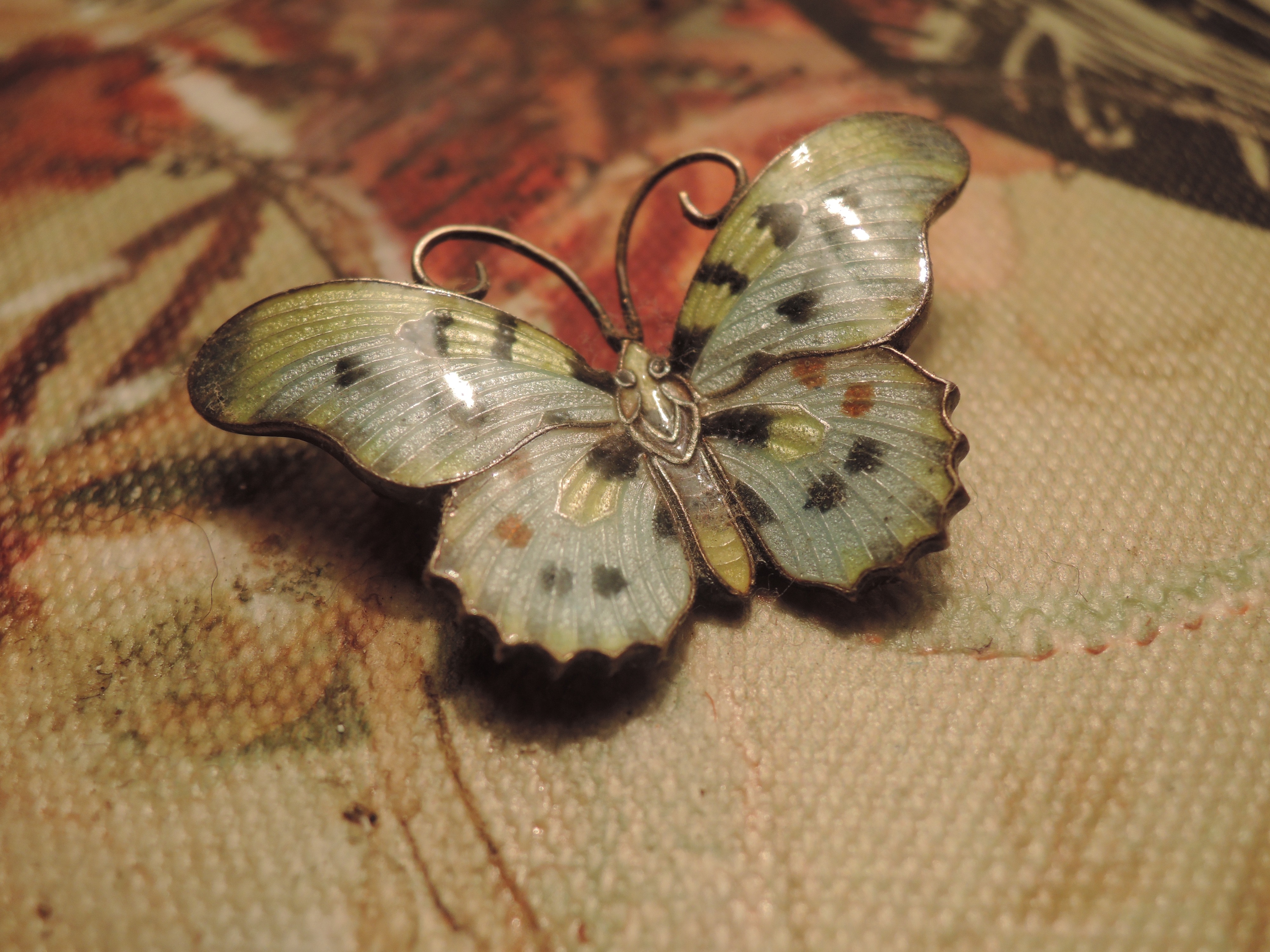
Butterfly brooch (1)
Butterfly brooch

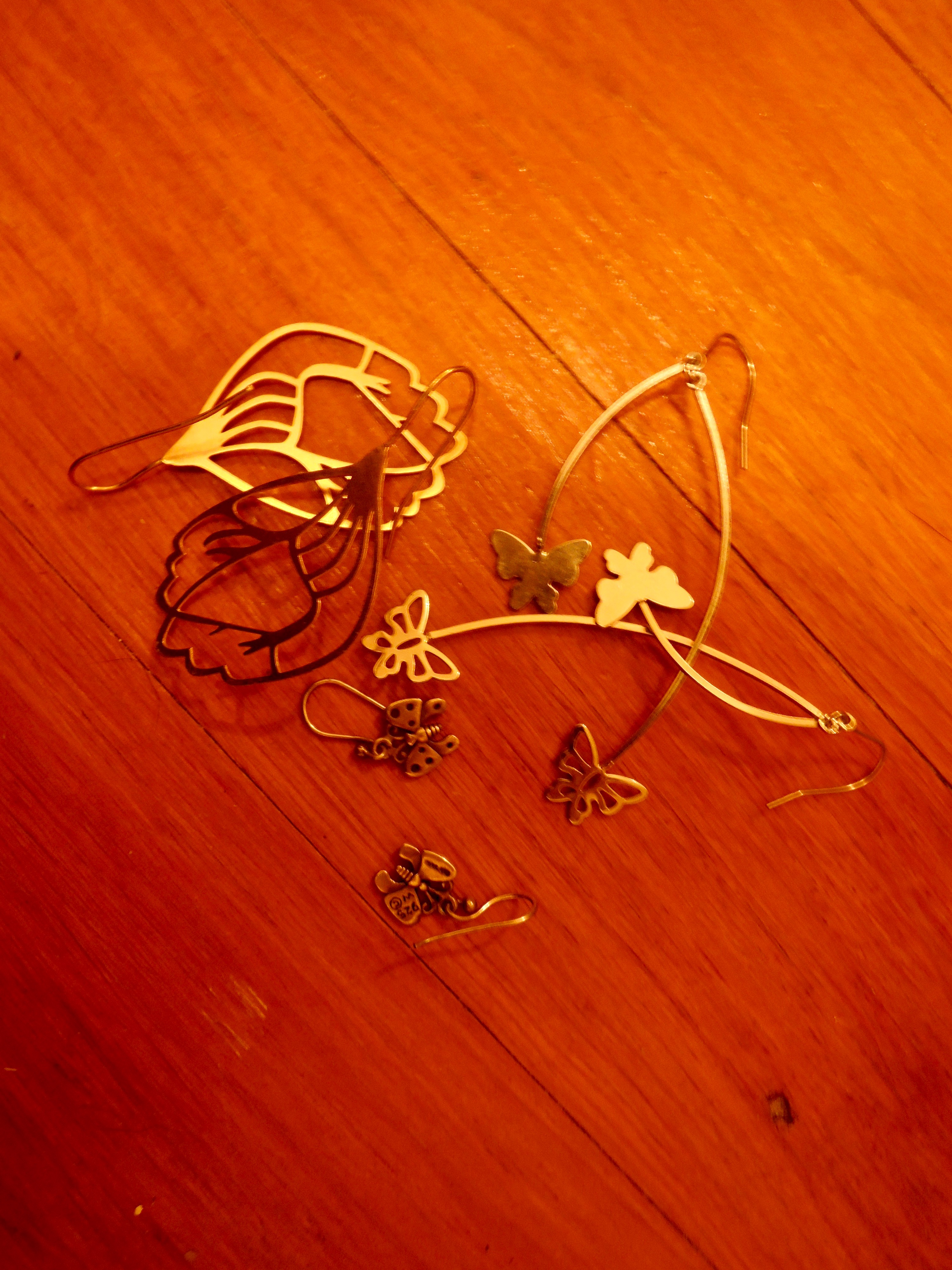
However faulty my memory is, I know that it was in my grandfather’s garden that I learned to distinguish between tortoiseshells and painted ladies and swallowtails and cabbage whites. Though we returned to Australia a year later, I retained my love for butterflies. The butterflies here are different, and I delight in them just as much, so much so that my house is cluttered with butterfly ornaments and trinkets and gifts from friends.

Assorted butterfly earrings

How do I remember England and our time there? That’s another memory for another time. Lest anyone wonder, this post isn’t intended to be a commentary, condemnatory or otherwise, about the recent Brexit. The timing of this post is purely coincidental. Still, what I love about the words from Elizabeth Jane Howard in the quote above is how, in just a few sentences, they capture an English summer in all its Englishness … at least as I remember it.


The flesh is weak

Other people’s words about … well, elimination

Writers don’t often describe bodily functions in literature (other than sex). After all, reading is about escapism, right?

But in ‘The Prophets of Eternal Fjord’, Kim Leine describes the main character’s afflictions with — ahem — a sensitive colon so evocatively that his physical suffering becomes embedded into the story.

His intestines are in an uproar. He senses the ominous ripple of diarrhoea in the bowel, the quivering alarm of the sphincter.
(p. 114)

Morten Falck is an eighteenth-century missionary in the Danish colony of Greenland.

His bowels emit a series of shrill tones of varying intensity. He grimaces, then collects himself.
(p. 127)

This is a story of suffering, weakness, morality, intestinal discomfort and (perhaps) redemption.

It gushes from him the moment he pulls up his cassock and sits down on the privy seat, a mud-like mass, almost without smell, an inexhaustible landslide of brown. His intestines writhe in agony, and yet there is a considerable element of joy at being able to release, to discharge this spray of filth and empty the bowels. He groans, bites his hand and chuckles. His sphincter blares and squelches, and then there is silence. He feels more is to come and shifts his weight from side to side, bent double, his head between his bony knees, his hands massaging his stomach, but nothing is forthcoming. It is as if something is stuck inside him, a thick log of excrement blocking his passage. But most likely a fold of the intestine, he considers. He recalls images of the corpses he dissected and drew as a young man, and he sees now his own colon in his mind’s eye and the blockage that has occurred. He imagines its slow release and the sudden slop that comes with it. The thought of it helps. A new deluge is evacuated and his anus trumpets a fanfare.
(p. 151)

Seriously, how can you not admire such a vivid description of intestinal torture?
Come on, admit it — we’ve all been there at some time!


Running and baking

Other people’s words about … running

I’ve been reading Y Lee’s lemonpi blog on and off for years. She is Australian and she loves to bake. What more can I say?

I was tickled by her recent post entitled When exercise ruins your waistline, in which she says how much she loves running, and then adds:

Running gives me time to think. Unfortunately, most of my ‘thinking’ tends to veer sharply towards the solemn contemplation of potential baked goods (thereby negating all the good work that running accomplishes). Which is incidentally how I came about to make a big batch of shortcrust pastry.

Inspired by this thinking, I went for a big long walk on the beach (my current version of running), and conjured up visions of what I might bake next … Not good for the waistline, assuredly, but very good for the spirit!

Self-transcendence

If you are ever in need of an answer or feel a little lost in this great big world, go out there and hit the trails. Leave the Garmin at home and just get out there and be. Connect with nature. Listen to the whispers of breeze in the trees or the ramblings of the nearby stream. Eventually, you will find what you are looking for and perhaps, in time, you will find yourself as well.


The words I’ve quoted above come from the blog So what? I run.
(Read the whole post here.)
For me, they apply whether I’m walking or running.

Because of my knee injury, it’s all about walking for me right now.
And I’m okay with that.

It’s all about the connection with the world around me:
it’s vital.
It’s healing.

And in the spirit of the quote above,
I’m posting today some photos from one of my favourite walks.

You don’t need phones or apps or pedometers or fitbits.
You just need time to look,
to listen,
to breathe.

A letter to you

Dear reader,
I’m taking a little break for a few weeks.
I love blogging and the blogosphere, but right now I need time to think and to refresh myself. And to breathe!
So I’ll pop in again after Christmas, and let you know what’s happening.
In the meantime, rest assured I’ll be drinking tea, and following paths, and going for bush walksand always, always delighting in the small things — those things I like to blog about: the small, sweet moments of joy.
— Rebecca xo

Crazy teapot lady
Crazy teapot lady

When all is said and done

Other people’s words about … staying still

Do you ever have the urge to just move?
Metaphorically, I mean — not physically. That feeling inside — that longing not to feel stuck anymore.
I do. (Midlife crisis, anybody?!)
I don’t think there are any answers to this longing. I think the more we try to move — to push on, to change — the more we forget the grace there is in surrender.
In simply staying still.
Maybe you’re not an ABBA-tragic like me (I know! I know!). But today I give you a song that helps me with this.
Have a listen.
See what you think.

Listen to the song: ‘When all is said and done’, by ABBA*

* Note:
Click on the orange ‘play’ button at the top of the page in this link to listen to the song. It’s one of my favourites. The song is about the end of a relationship … but I think it works equally well if you think of it as talking about the end of a phase in your life. (Bear with me here. I know ABBA aren’t known for the literary nature of their lyrics! I did warn you I was an ABBA-tragic … )

Me and Mrs Jones: Telling it like it is

Other people’s words about … social media

As I’ve mentioned before, I don’t do Facebook or Instagram .
(Or Pinterest … Or Snapchat.) And I never, ever take selfies.
Blogging is as far as I go.
One of the reasons is this:
It’s a bright, shiny world out there on social media.
Everything is beautiful in Insta-World.
But that’s not real life.
Life is a series of moments — some of them beautiful, some of them not —
and social media doesn’t capture that.
Here’s what lovely blogger Sheena has to say on the subject:

Social media is great, right? It’s the perfect way for me to stay connected to friends, see the world from different points of view, I can use it to work from home, and let’s all agree….it’s fun! It’s also the WORST….we all paint this picture of the perfect little world we live in–only showing our best of the best moments….it’s not at ALL a real representation of life. And I think sometimes it’s too easy to get caught up in that, don’t you think?

You’ve heard the term “Keeping up with the Joneses”, right? Did you know the phrase dates back to the early 1900s? I mean really, what was it that Jones Family was doing that was worth keeping up with–growing better potatoes? Riding a faster horse? Now, with social media, we know every little detail of the Joneses life. Where they are going and who they are with and how they got there! What they are eating and when they are eating it! What their perfect house looks like, what their perfect kids look like, and what their perfect face looks like, because now the Joneses share lots of pictures of their outstretched arms and close-up faces. They definitely didn’t have to worry about selfies back in 1913.

Those Joneses are BUSY, and they are everywhere. Doing everything. And rubbing it in your face.

Behind the square (1 October 2015)
from the little red house

My take?
Life isn’t picture-perfect.
And that’s —
just —
fine.

Life cycle

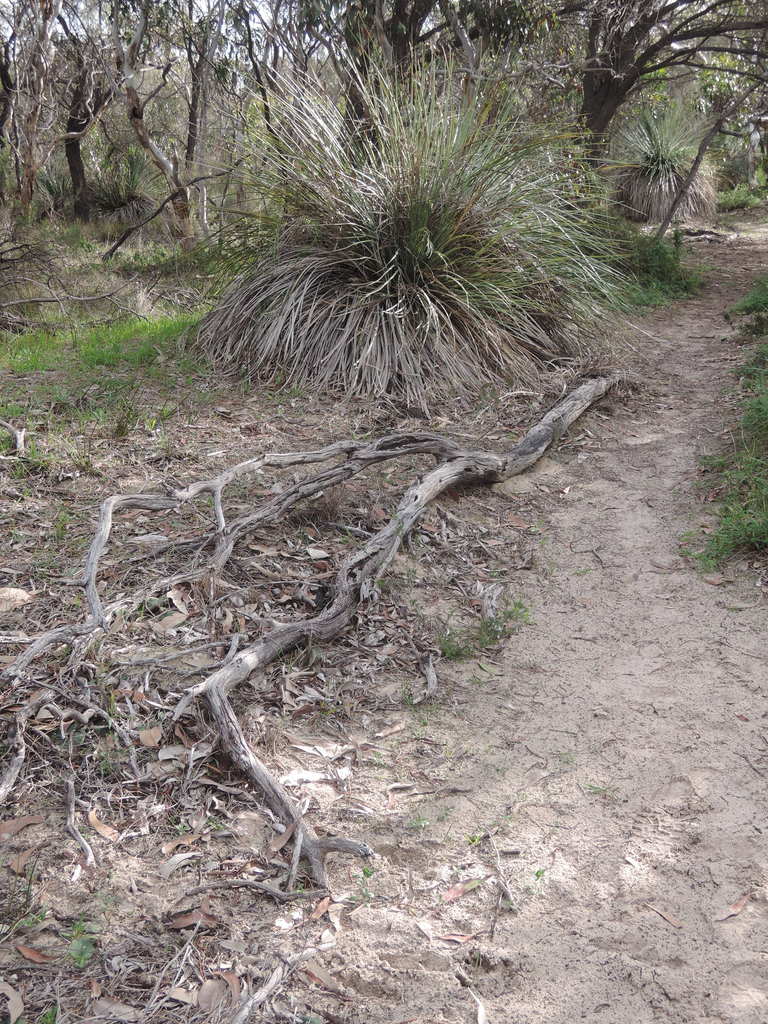
One of my favourite native plants is the grasstree.
In the last few weeks, walking through the bush,
I’ve glimpsed grasstrees at all stages of their life cycle.

Some were growing and establishing themselves:

DSCN2064

DSCN2067

Some were flowering:

DSCN2218

DSCN2219

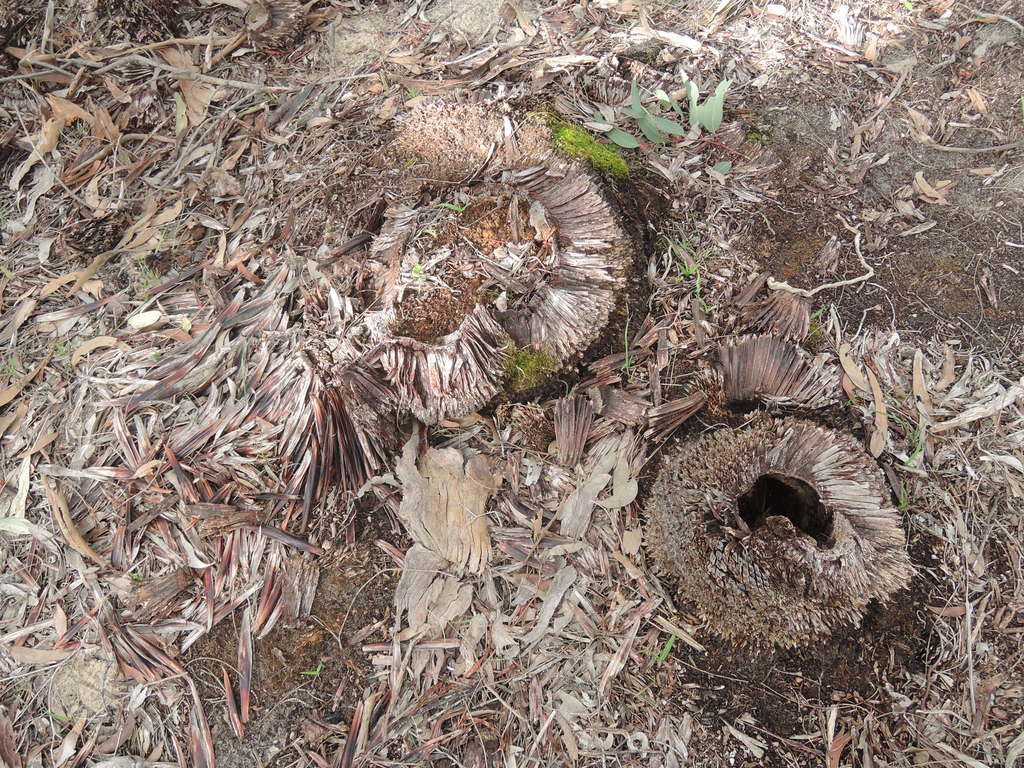
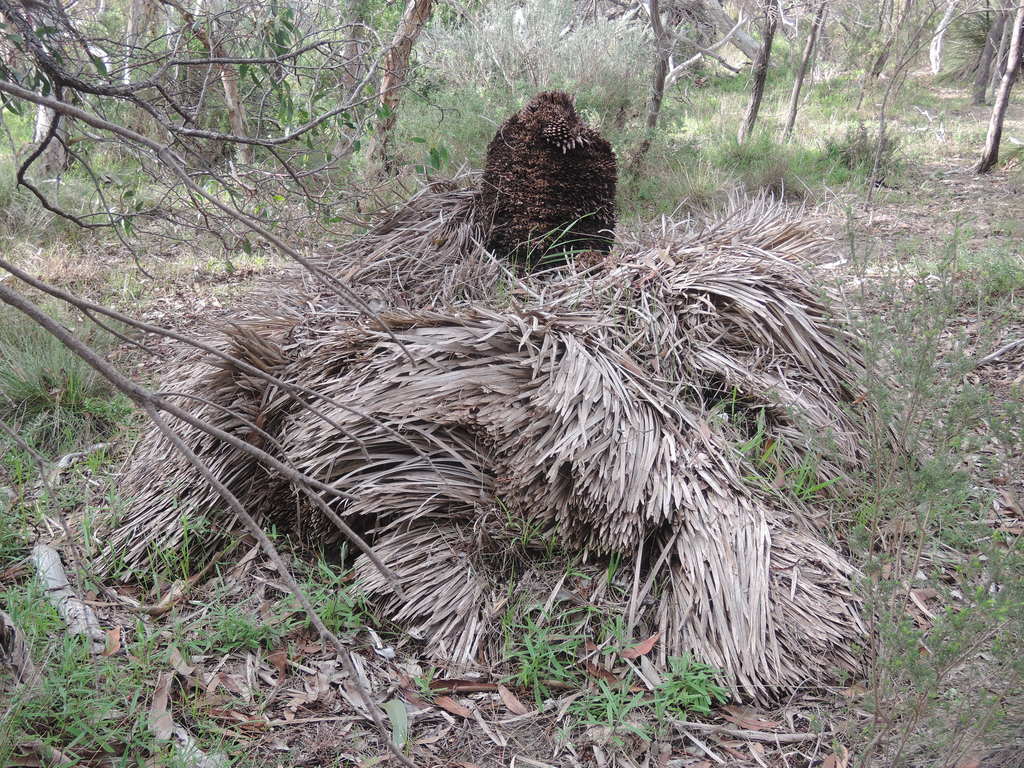
And some were dying and decaying:

DSCN2058

DSCN2059

At each stage of their life
grasstrees seem to me unique, strange, prehistoric …
and beautiful.

Twenty-one breaths

Recently, I’ve been reading about the power of breathing.
As I understand it, when we’re busy or stressed or even excited,
we activate our sympathetic nervous system,
moving into ‘fight or flight’ mode.
19 November 2014 054
But when we stop —
to sleep, rest, meditate, relax,
or simply just to breathe —
we activate our parasympathetic nervous system.
And it’s then we can heal ourselves:
of anxiety and sickness and angst.

Winter sunset at Aldinga Beach
Winter sunset

So now — in keeping with my blog’s theme —
I stop several times daily to take twenty-one deep breaths.

In (through the nose).
Out (through the mouth).
In.
Out.
In.
Out.
Healing.
Healing.
Healing.