Begin again

From the annals of The Great First Chapter Project

About a year ago my husband handed me a brochure for a retreat in a nearby mountain village. We were standing in our Beijing kitchen while the girls played make-believe dog at our feet. The brochure was more like a handmade pamphlet – four pieces of white computer paper folded in the middle and stapled three times along the crease. There was a grainy photo of a cement terrace on the cover, and a more alarming photo of people sitting in a room with their eyes closed, and text under the photos that explained something called a ‘day of silence’ and yoga and the chance for participants to reinvent themselves. My husband, Lukas, told me these things would make a good week’s vacation for me, and he smiled while I looked at the photos, but it was a distant smile.

from ‘Elsey Come Home
by Susan Conley

I’ve been thinking, as you do at this time of the year, about endings and beginnings. About the things I hoped for at the start of the year, and the things that happened, and the things that I wanted to happen but didn’t (or haven’t yet). And about next year too, of course — the same kind of things, what I hope for, what I dread, what I can plan for, what I can’t. What I might just have to take on the chin.

One of the things that happened for me this year was that, as part of winning the Deep Creek Residency, I got to have a conversation with a publisher after he’d read the first 20 pages of the manuscript I’m currently working on. I’m the kind of writer who works from project to project — that is to say, uncontracted — and I also spend years between publications, years working alone, writing and rewriting and doubting myself all the while, so this was an incredible opportunity, one I’ll be forever grateful for.

Over the course of one hour, the publisher and I talked about many things, one of which was how important it is to get the first few pages of your manuscript right. We talked about prologues. We talked about hooks. We talked about grabbing the reader within the first five pages. We talked. We talked. Oh, we talked.

And I’ve been thinking about beginnings ever since.

Abandoned writer’s cabin, Deep Creek, October 2024.

So much has changed for me in the last two years when it comes to writing. I’ve had my first piece of literary fiction published, my novella Ravenous Girls. I’ve begun work on my second piece. I’ve won a residency. So many beginnings! Somehow, it seems fitting to end my year of writing on this note, thinking about beginnings.

On this note, I’ve started collecting quotations from books whose first chapter, or first few paragraphs, or even — rarely — first sentences, grab me. I’m calling this The Great First Chapter project, and I can’t think of a better way to start than with the first paragraph I’ve quoted in this post, which comes from a novel I love, Susan Conley’s Elsey Come Home.

My husband, Lukas, told me these things would make a good week’s vacation for me, writes Conley, and he smiled while I looked at the photos, but it was a distant smile. There it is, the story lying ahead of us in a nutshell: the story of a husband and wife who love each other but are estranged, the story of a marriage that needs healing. I knew the moment I read this line for the first time that I would love this book, and I did.

View from the cabin, Deep Creek, October 2024.

Before I go, I wanted to mention some good news I’ve had recently. My story ‘A Farewell’ was shortlisted for the MIKI Prize and included in the MIKI Prize 2024 Anthology, which was launched last week, and just this week my story ‘City of Lights’ was highly commended in the Marj Wilke Short Story Award 2024. I’ve never really focused on writing shorter pieces before, but this year, while I was working on a longer manuscript, the one that the publisher and I were discussing, I also started writing and submitting stories here and there, where and when I can. I have a lot to learn, but when it comes to beginnings — this feels like another one.
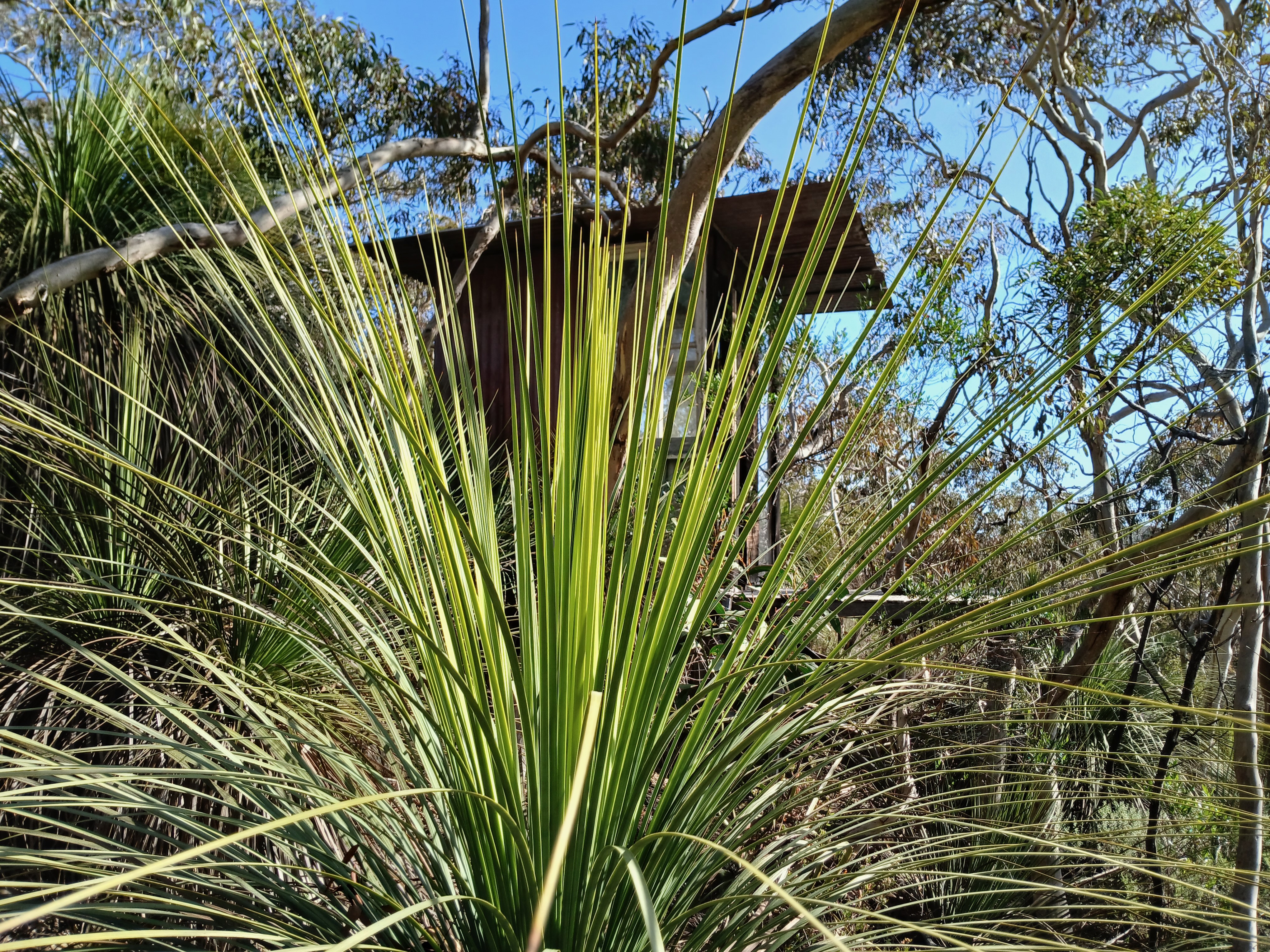
The cabin from afar, Deep Creek, October 2024.

Lately I’ve been reading (and listening) …

How do you see the world?

Other people’s words about … the deeper truth

At dinner, my mother had asked about my own life. I had said that Laurie and I were wondering about whether or not to have children. My mother said that we should, that children were a good thing. At the time, I had agreed. But what I really wanted to say was that we talked about it often, while cooking dinner or walking to the shops or making coffee. We talked about every aspect over and over, each of us adding tiny life-like details, or going over hundreds of different possibilities, like physicists in endless conjecture. How hurtful would we be when we were both exhausted and sleep-deprived? How would we go for money? How would we stay fulfilled while at the same time caring so completely for another? We asked our friends, all of whom were frank and honest. Some of them said that it was possible to find a way through, especially as their children got older. Others said that all the weakest points of our relationship would be laid bare. Others still said that it was a euphoric experience, if only you surrendered yourself to it. And yet really, these thoughtful offerings meant nothing, because it was impossible, ultimately, to compare one life to another, and we always ended up essentially in the same place where we had begun. I wondered if my mother had ever asked these questions, if she’d ever had the luxury of them. I had never particularly wanted children, but somehow I felt the possibility of it now, as lovely and elusive as a poem. Another part of me wondered if it was okay either way, not to know, not be sure. That I could let life happen to me in a sense, and that perhaps this was the deeper truth all along, that we control nothing and no-one, though really I didn’t know that either.

from ‘Cold Enough For Snow
by Jessica Au

If you are someone who loves books, who loves reading — if you are someone to whom reading is fundamental to your life — you will know what I mean when I say that there are certain books, a handful of books, that, when you read them, change your life. Jessica Au’s Cold Enough For Snow is one of those books for me. It made me feel, when I reached the end of it, that I was seeing the world differently: its textures, its colours, the way I breathed the world in. There is a quality to Au’s writing, to the story she is telling, that is as lovely and elusive as a poem — and this is the kind of writing that changes the world for me.

Other books that have had the same effect on me? As I say, there are just a handful. Garth Greenwell’s What Belongs To You is one: Greenwell, with his layered sentences built of clause piled upon clause, writes about shame in a way that, for me, no other writer comes close to. Also: Sally Rooney’s Conversations With Friends, Katherine Brabon’s The Shut Ins, Bryan Washington’s Memorial, Alexander Chee’s Edinburgh.

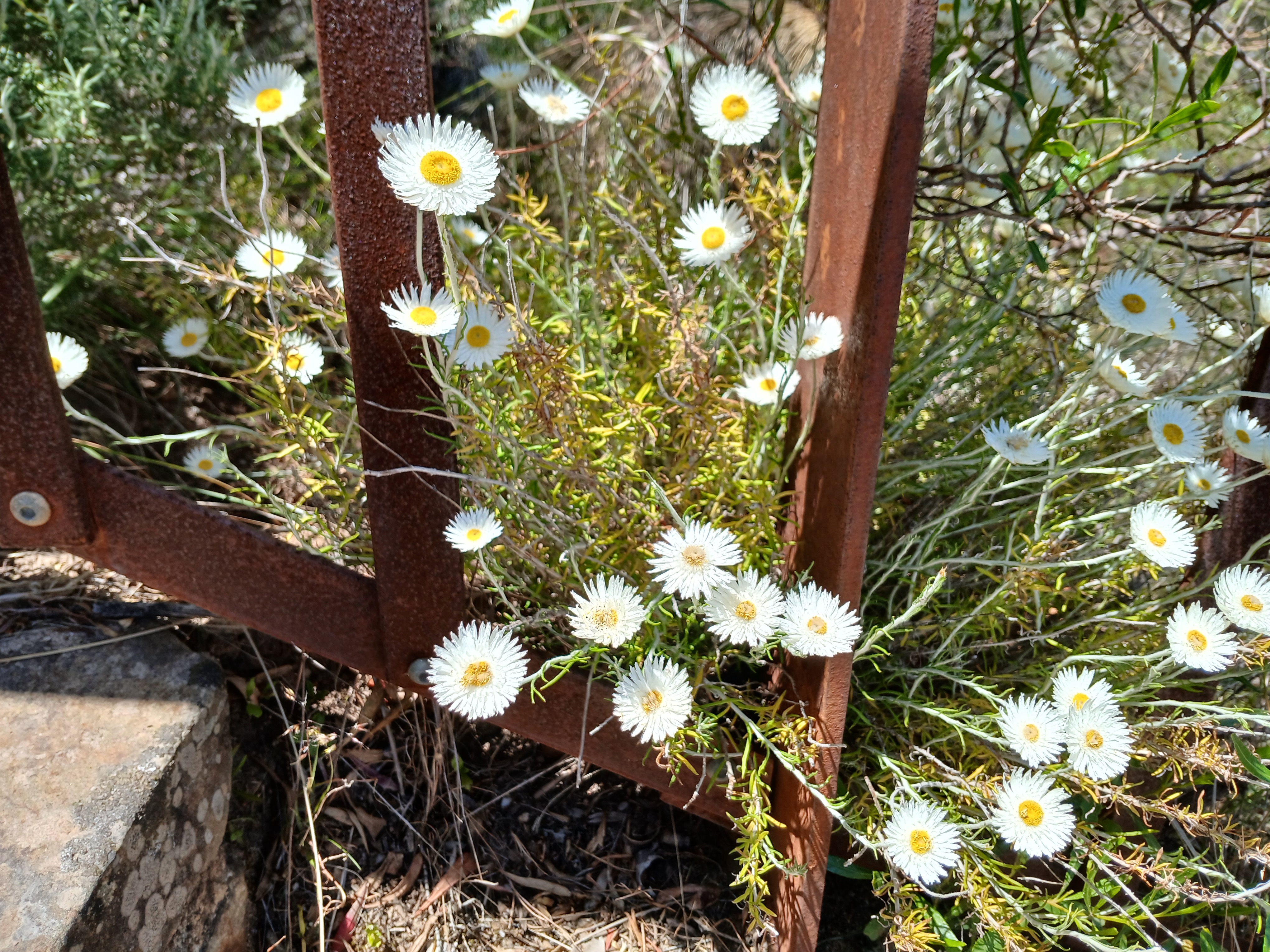
Everlasting Daisies, Morialta Falls, November 2024.

Each of the books I’ve named above is different from the others, but what they all share, I think, is a certain interiority. Whether through Rooney’s flat, prosaic narrative and dialogue or Washington’s choppy, plain sentences, we see the world through the eyes of their characters — and in doing so, we see the world anew.

I can think of no higher praise for a writer than to say of their writing: This has changed my world. So, I’m curious. What are the books that have changed your world? Drop a comment below — I’d love to know.

Lately I’ve been reading …

I’ve gone back through some of my oldest bookmarks for some of the pieces listed below. Even now, years after bookmarking them, these pieces still resonate with me in some way. I hope they do for you, too.

Echo

Other people’s words about … intimacy

He exhales. In the spring he would sometimes wake up at night beside Marianne, and if she was awake they would move into each other’s arms until he could feel himself inside her. He didn’t have to say anything, except to ask her if it was alright, and she always said it was. Nothing else in his life compared to what he felt then. Often he wished he could fall asleep inside her body. It was something he could never have with anyone else, and he would never want to. Afterwards they’d just go back to sleep in each other’s arms, without speaking.

from ‘Normal People
by Sally Rooney

I don’t know anyone who writes about intimacy better than Sally Rooney, especially in her first two novels, Conversations with Friends and Normal People. What I love about Rooney’s writing is that she understands how our emotions convey themselves to us by manifesting themselves physically. Connor’s longing for Marianne in the passage above, his longing to be inside her, is both physical and emotional. It’s all-encompassing, unspeakable, the kind of intimacy that he doesn’t have words for — that most of us don’t have words for. Only Sally Rooney, as I said, can write this way.

Port Elliot, June 2024.

I’ve been thinking over the last few months about why I write and what I want to write about next, now that my novella Ravenous Girls is out in the world. And I’ve been writing, too, or trying to. Earlier this year, in fact, I submitted part of a new manuscript, the manuscript I’ve been thinking about over the last few months, to the Deep Creek Residency — and this week I found out to my excitement that, based on the strength of the material I’d submitted, I have been named the winner for 2024 of the residency. Which is deeply exciting.

It’s funny how writing works, though — by the time I got the news about winning the residency, I’d pretty much convinced myself that this manuscript, or the version of it that I’d worked on and submitted to the residency, was unfeasible. Clunky. Strained. Embarrassing, even.

So maybe I was wrong about that; maybe I somehow got myself lost inside my own echo chamber. This happens to me over and over again whenever I’m writing, and yet each time it happens to me, it astonishes me anew. It’s not a place I recommend staying in very long, this echo chamber. It’s a desolate, lonely place.

Aldinga Beach, June 2024.

Partly what I’m writing about in my new manuscript is Cairo. Partly what I’m writing about is the two sisters that I wrote about in Ravenous Girls, Frankie and Justine, at a later stage in their lives. And partly what I’m writing about is intimacy, not in the way that Sally Rooney writes about intimacy, but intimacy nonetheless.

Intimacy, which is its own terrifying echo chamber.

Lately I’ve been reading …

Loss

Other people’s words about … doing what we love

It was a lie that Timo had not loved [playing] piano enough. He had loved it very much, but in a way that was difficult to describe. It was apophatic — he could only describe it through its negation. He only understood how much he loved the piano after he had given it up. Even that decision in hindsight seemed arbitrary, a whim. An act of petulance. But he had loved it, and he still did. Every day, he felt like a struck tuning fork, vibrating all the time. Except that it wasn’t pitch he was tuned to but something else, some horrible frequency cutting through the universe. Loss, he thought. It was loss.

from ‘The Late Americans
by Brandon Taylor

In the passage above, Taylor’s character Timo is a graduate student in Iowa who used to study music but then gave up. Sometimes, when he is on his own in the apartment he shares with his boyfriend, Fyodor, who works at a meat-packing plant, he sits listening to classical music recordings, losing himself in the music he so loves. But when Fyodor comes home, Timo switches the music off immediately, mid-piece, refusing to talk to Fyodor about this thing he so loves — refusing, also, to allow Fyodor to share in a part of him that in many ways still feels like the truest part of himself.

The Washpool, September 2023.

When I read the words I’ve quoted above, I thought about the times that I’ve given up writing over the years. Though I’m not beginning to claim that I am as talented a writer as Timo is a musician, nonetheless, writing for me has always been a channel of creativity, a tool that helps me make sense of and navigate the world. I don’t know why, honestly. I do know that I have a longing to make something beautiful (though this is another impulse I don’t really understand), and that writing is the only way I know how to (try to) do this. Maybe that’s why, every time I’ve ‘given up’ writing ‘for good’, I’ve returned to the practice later.

I’ve written before about how I’ve learned over the years to value my writing practice for the practice itself rather than for any measurable outcome. That’s partly what I’m saying again here, in response to the words I’ve quoted today. But it’s more than that, too. What Taylor expresses so beautifully is the same sense of loss I always feel when I stop writing. His image of a tuning fork vibrating to the wrong frequency describes this feeling beautifully. At the same time, I’d also describe the feeling another way, as a feeling of being muted. Silenced. When I don’t write, I feel as though I have lost my voice: I feel as though no-one hears me.

I understand, as a writer who is published very infrequently, that few people hear me, anyway. But writing is my way of speaking to the world, and not writing is the opposite of that. Not writing feels like grief.

The Washpool, September 2023.

Meanwhile, I’ll be back soon with another post about writing, and with a little piece of news, the news I’ve been hinting at for months now. Watch this space! ❤

Lately I’ve been reading …

Grasp

Other people’s words about … reading

After most of my long days at work, I would arrive back at the flat, pour myself a glass of wine or vodka and read, mainly short stories and poetry. I wasn’t reading novels because I didn’t want that kind of continuity; I didn’t want to carry over any part of narrative from one day to the next. Sometimes I read poetry in languages I didn’t fully understand — with a sense of the meaning, but reaching for it, grasping after it. One of my other pleasures was smoking, but I didn’t dwell or savour; I narrowed it down to lighting up and the first few drags — after that I lost interest. I read like I smoked: fixating on my new favourite in its entirety to begin with and then honing in on the exact phrase or phrases that gave me the fix, then reading only for those, discarding the rest and when that poem had been emptied out, moving on to the next.

from ‘Signs of Life
by Anna Raverat

I’m not a smoker and I love reading novels far more than I do short stories or poetry, but still, I found myself smiling in recognition when I read the narrator’s description in the passage by Raverat above about her approach to reading. I experience myself, these days, as a greedy reader — greedy for beautiful words, phrases, images, moments, greedy for the fix they give me, while often the plot or theme of a novel remains distant or abstract to me.

Pathway, Sellicks Beach, July 2023.

Reading has been an important part of my life for as long as I can remember, though the reasons for its importance to me has varied over the years. These days, it feels like an escape for me from the world, or perhaps more accurately an escape into someone else’s world — that world they create with their words. And, like anyone addicted to their fix, I’m not about to give it up.

Little green bench (a place to read in when the warmer weather returns?)
Sellicks Beach, July 2023.

Lately I’ve been reading …

Today’s reading list is exclusively about animals and pets — for all the animal-lovers out there! xo


Replenish

Other people’s words about … being alone

As the train left the station, I felt a sense of relief. I wanted to walk in the woods and among the trees. I wanted not to speak to anyone, only to see and hear, to feel lonely.

from ‘Cold Enough for Snow
by Jessica Au

I’ve been thinking a lot this year about solitude and loneliness, about participating socially and withdrawing. Though popular scientists and the mainstream media continue to exhort us to maintain our social connections as we age, both for the health of our brain and for our psychological wellbeing, I have come to believe that it’s just as important to be comfortable in your own skin as it is to be comfortable in a social context.

Garden pickings (1), October 2022.

Some years ago a friend said to me that what she admired most in me was that I am a person who has a rich inner life. I have often thought about her words and what they might mean. I tend to think of myself as introverted and shy, a social choker, and I often find myself wanting because of this. But the truth is that when I let go of my expectations of myself as a social creature, I am happy wandering the avenues of my mind.

I think that’s why I find such accord with Jessica Au’s words in the passage I’ve quoted above. What if loneliness wasn’t just a negative version of solitude? Why not embrace it for itself? In fact, why not seek replenishment from it?

Truly: why not?

Garden pickings (2), October 2022.

Lately I’ve been reading …

Roar

Other people’s words about … country and city life

Ramesh was used to the sounds of the suburbs. He never noticed barking dogs or level crossings. On the train to work every morning he turned up the volume of his audiobook so it was louder than other passengers’ mobile phone conversations. But [tonight he was in] the country [and it] roared. He could hear the air move in the trees. He had grown up in Croydon, moved to Glasgow at seventeen, back to London at twenty-three, then Sydney at thirty-six. As a child he’d stood outside his parents’ bedroom listening to his father’s whistling snore. He liked living in places where he could hear others alive. He reached for his phone where it sat charging. For an instant he saw his hands illuminated in the bluish light of its screen. He set his rain sound app to the setting called ‘Harbour Storm’.

‘What are you doing?’ Henry croaked. His face was pressed to the pillow. ‘You don’t need that tonight.’ 

Ramesh opened his mouth to argue, then he heard the rain outside, like gunfire on the corrugated iron roof.

from ‘Pulse Points
by Jennifer Down

I love this passage, not because I’m in accordance with Ramesh, but for the opposite reason. I love the ‘roar’ of the country. I spend most of my time living in a house in the suburbs. It’s close to the beach, which I love, but it’s even closer to the railway line, a line that trains zip up and down every half an hour from five in the morning until midnight.

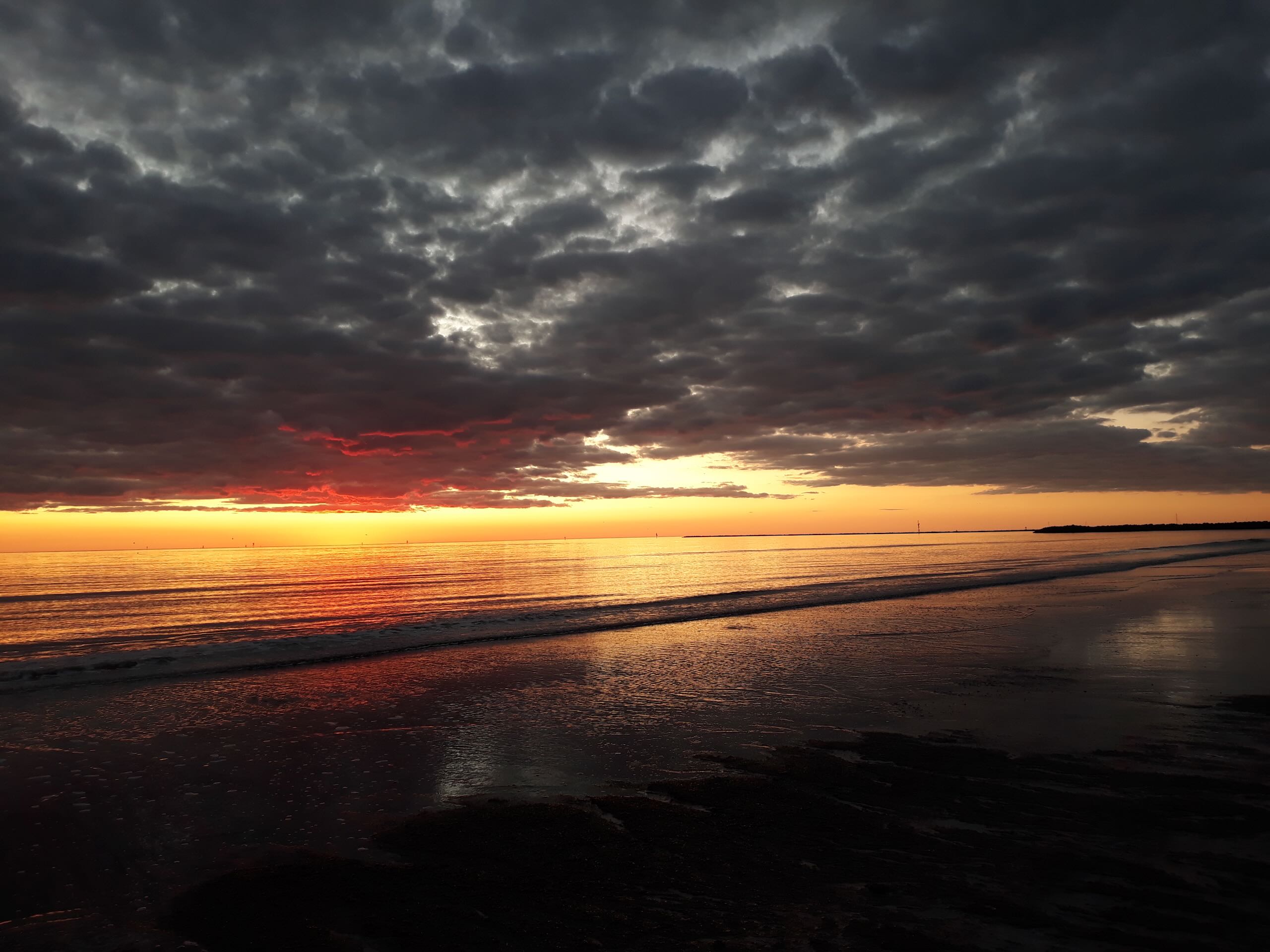
Sunset, early August 2022.

I don’t mind the sound of trains, actually — as suburban sounds go, I find it vaguely comforting — but when I leave my house to stay outside the city, to visit Aldinga Scrub or to camp in Yorke Peninsula, I feel a knot inside my chest of which I wasn’t even aware releasing itself.

Sounds I love when I am away from the city: the dull roar of the ocean at the end of the road (yes, another roar). The whistle of a hot wind through the trees. A frogmouth letting out its low, persistent, booming call at dusk. A shrike thrush singing. A magpie warbling. Frogs croaking. Insects clicking in the grass. And, yes, like Ramesh, the rain drumming on the roof.

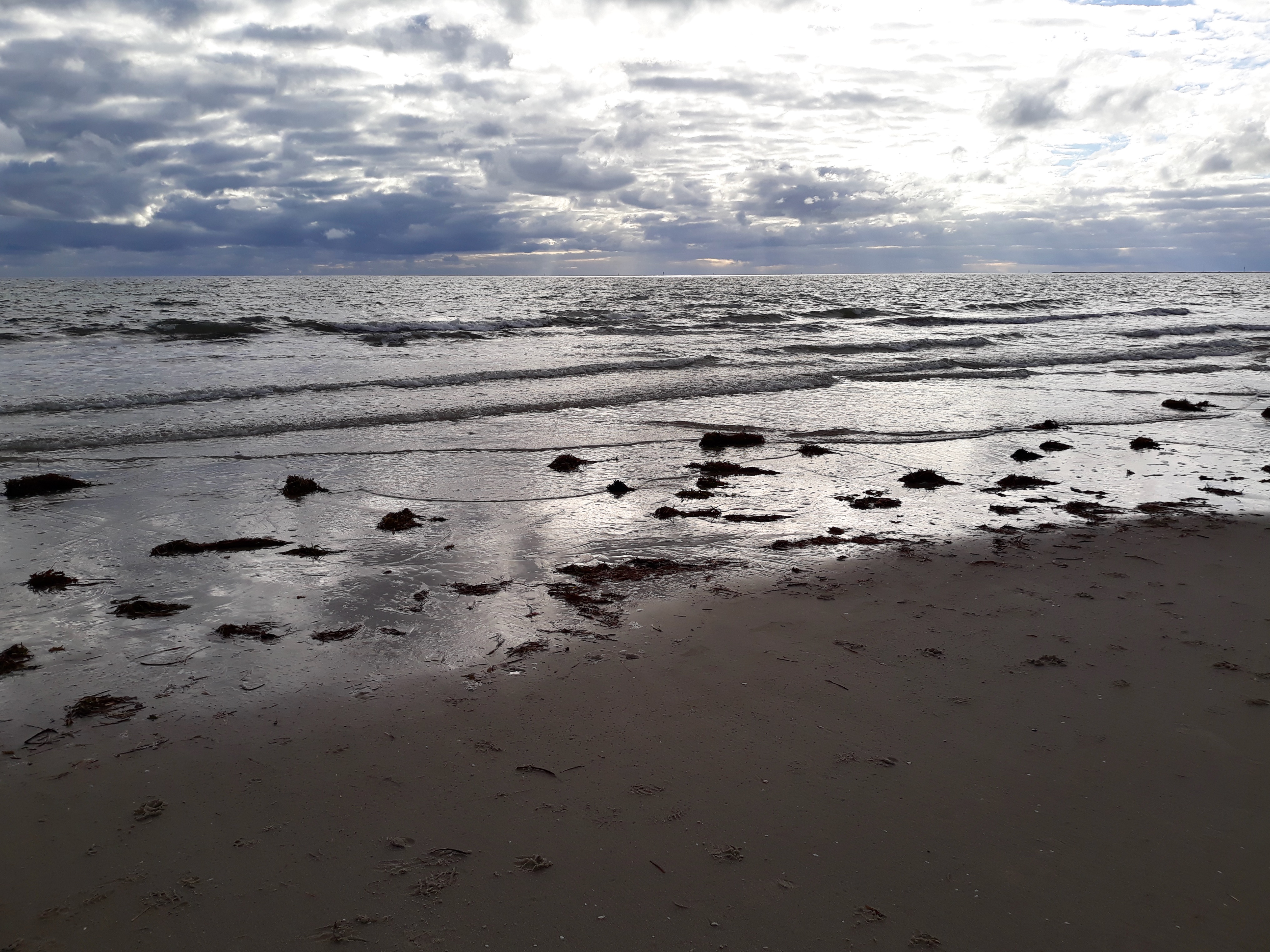
Still, the photo accompanying my post today, like so many of my photos on this blog these days, comes from the suburban beach at the end of the street I live on. The sand is being eroded away and there are car parks dotted along the coast line and on most weekends a food truck selling hot donuts sets up shop during daylight hours.

But it’s still the beach. It’s still wide and beautiful and open and … The sea still roars.

Lately I’ve been reading …

It’s a lengthy list today, because I’ve been reading far more than I’ve been posting. But I hope you find something interesting below.

How to go on

Other people’s words about … hard work

He worked construction down on the river, where they were putting up a new footbridge. His own job involved the careful freighting of materials onto the platform where the crane rested on the water. There were times when he thought he’d get sick from the motion of the barge, the constant shifting underfoot. There were times when his hands hurt from lifting and pushing and turning, tightening the straps until they wouldn’t give, tightening them until it seemed impossible that anyone would ever be able to set them loose again. Days when his back ached and his stomach hurt and his hair was peppered with grit, when his eyes burned, and his nose burned from the stench of oil and of the river, which was dying a slow, choked death via a series of minor diversions. But then, on bright winter days, he’d look up and see the geese tracking across the sky, moving up there free as air, and he’d think that there was something beautiful left in the world. And he could go on like that, as long as there was something beautiful left in the world.

From ‘Filthy Animals

by Brandon Taylor

I work in a call centre, an office job, unlike Brandon Taylor’s character Hartjes in the passage above. It’s not a physically demanding job. Even so, there are days when my head aches from breathing in stale, recycled office air, when my hips ache from sitting too long, when my voice croaks from talking for hours on the phone, when my stomach hurts from choking down my emotion after a difficult phone call. In the end, just like Hartjes, I feel my job in my body.


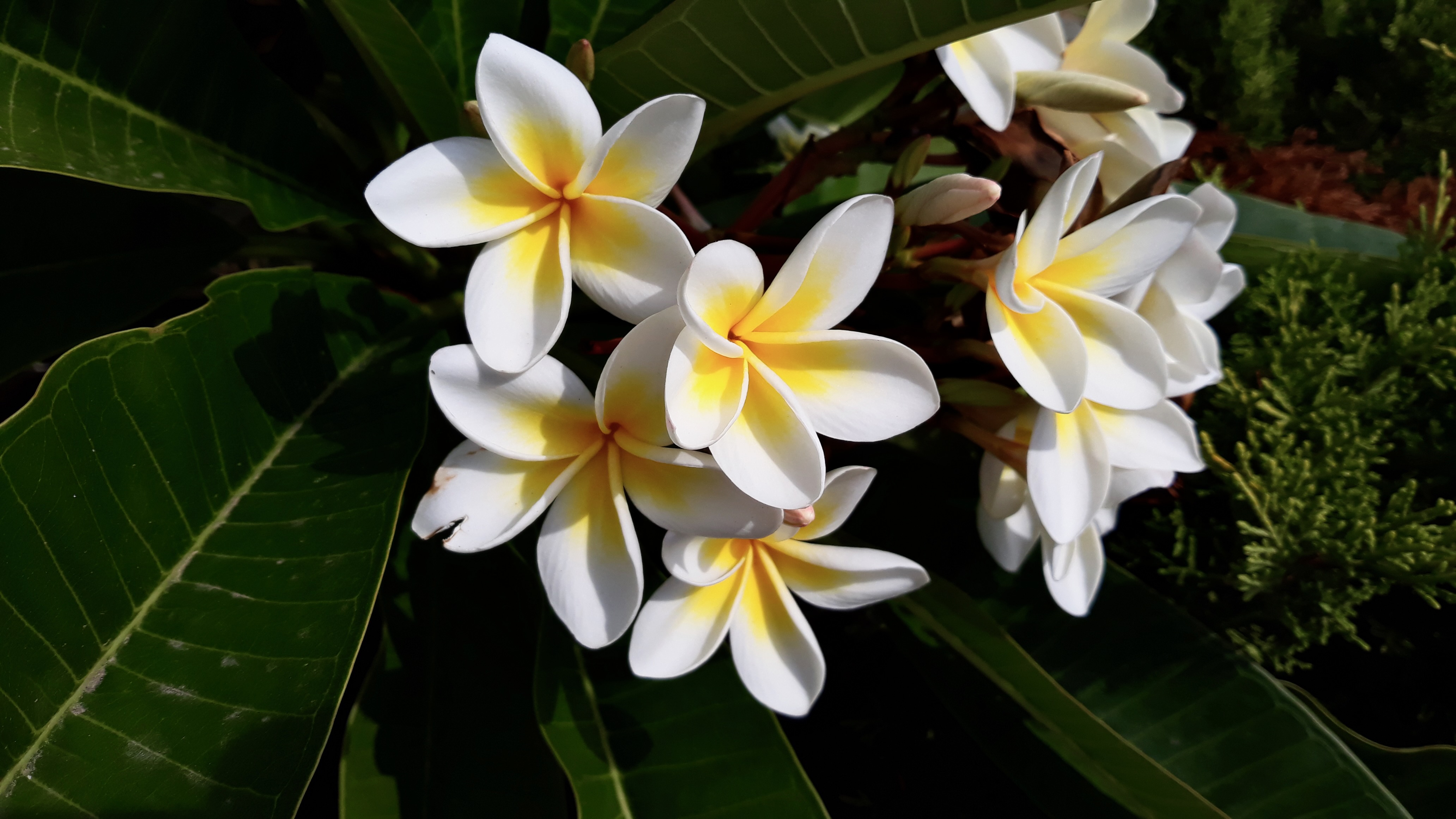
Neighbourhood frangipani tree, Taperoo, April 2022.


What grabs me most in the passage above is the river, in all its symbolism, dying its slow, choked death. Like Hartjes, I find myself looking up from my day, seeking the sky, seeking the air, seeking a glimpse of beauty and wonder.

That brief hint of beauty. That brief reminder of how to carry on.

Lately I’ve been reading …

Chasing clouds

Other people’s words about … getting lost

I said earlier that I have no special running talents. In fact, I have one: getting lost.

No-one gets lost like I do. It’s not just a running thing. It’s a getting lost thing.

I’ve been lost when running, walking, driving, cycling, sailing, using public transport, even (once) taking a taxi, on at least three continents, since I first ventured out into the world as an unaccompanied teenager. I’ve temporarily abandoned a car in Milton Keynes, and once phoned [my wife] Clare from the outskirts of Northampton to warn her that I might not find my way home for days. I’ve never been lost on a running track (yet), but I have been lost indoors — not just temporarily disoriented, but properly, sit-down-and-cry-and-wait-to-die lost — on a disastrous visit to the Birmingham branch of Ikea.

From ‘Running Free’
by Richard Askwith

I am someone who gets lost as easily as Richard Askwith. I live in Australia, not England, so I’ve never got lost in Milton Keynes or Northampton, but I have certainly been to the Adelaide branch of Ikea and experienced that sense of utter lostness that he so delightfully describes as sit-down-and-cry-and-wait-to-die lost. (Though, actually, I would call that particular kind of ‘lost’ an Ikea thing rather than a getting lost thing. Just saying … )


Dune’s counterpane:
How can you ever feel lost when these are the things you see along your way?

I don’t just get lost physically, either. I frequently feel lost in a metaphorical sense, too. I admire anyone who seems to know (or who feels as though they know) where they are going in life. I don’t. I never have. The older I get, the more strongly I become aware of my inner sense of lostness.

Often, this innate sense of lostness feels like a burden. But not always. Because the thing about setting off towards one place and ending up somewhere else entirely, somewhere you hadn’t planned on and don’t recognise at all, is that you get the chance to explore.


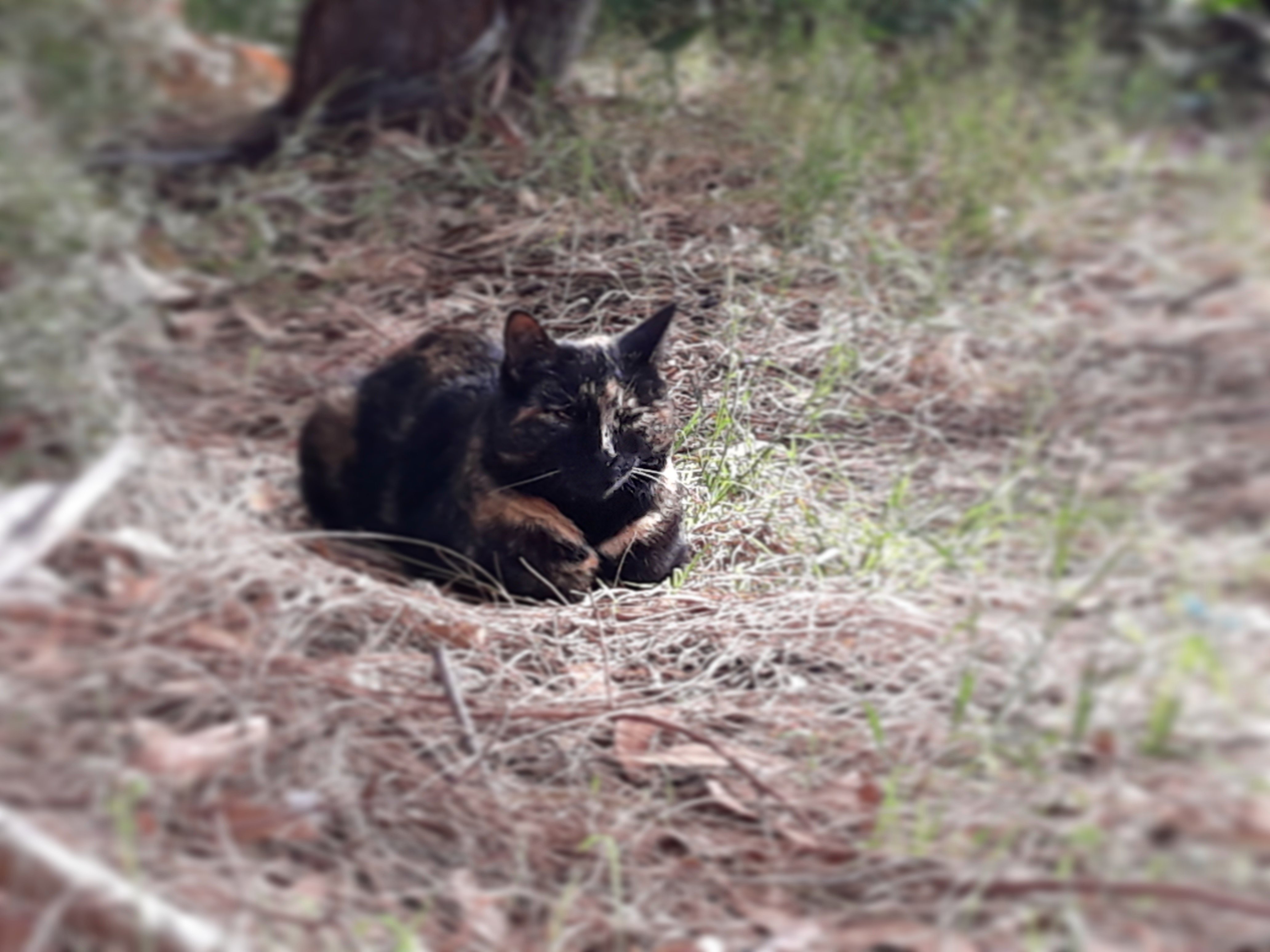
Lizzie the garden cat:
A lost cat, but also a found one.

I’m talking metaphorically here again, of course. But the older I get, the more strongly I also come to understand the importance of being willing to explore, willing to wander, willing to wonder. And sometimes, in hopeful moments, I see many years of exploring and wandering and wondering ahead of me.

I like that thought.

Lately I’ve been reading …

Chasing clouds

Other people’s words about … running

Once he warmed up, once the tension was gone, once the sweat had properly broken and his breathing was rhythmically heavy and every twinge of stiffness and pain from previous workouts had been obliterated by adrenaline and endorphins, when all of that had happened, there was almost nowhere on earth he’d rather be, even on up-and-down back roads with no shoulder or, as now, on the old railroad path too crowded with entitled cyclists or groups of power-walking mums in their pastel tops and self-crimped hair.

For forty-five minutes, or an hour, or an hour and a half, the world was his, and he was alone in it. Blissfully, wonderfully, almost sacredly alone.

From ‘Release’
by Patrick Ness

One of the things I think I most love about running is that the act itself is so full of mysterious contradictions. For example, it’s hard work, and yet I look forward to it as a luxurious treat, in much the same way I look forward to eating an oversized piece of decadent chocolate cake. Similarly, when I’m running I feel as though I’m moving purposefully forward, following a path to something new. And yet it’s obvious that, unless your plan when you set out is to run away and never return, any run is circular, ending right back where it began.

Even the sense that I am on my own when I run — blissfully, wonderfully, almost sacredly alone, as Patrick Ness puts it in the excerpt above — is unreliable. I am never alone when I run. I run on roads, on shared paths, on trails, on beaches. There are always others inhabiting the space with me, running or walking or cycling or just sitting on a bench enjoying the view (like the views you see in the photographs I took for this post). Running, even for a lone runner like me, is an entirely communal activity.

Another contradiction: sometimes, when I feel unwell — headachey, perhaps, or queasy or tired or sleep-deprived — I know that from the moment I step outside those symptoms will leave me for the duration of my run. Probably, I’ll feel unwell again afterwards; running isn’t ever, in my experience, a cure. But for those fifteen or thirty or forty-five minutes when my feet are drumming the ground in the old, familiar rhythm, I know I’ll be symptom-free.

I have no explanation for this. It’s just part and parcel of this beloved thing I know as running.

Maybe that’s why running appeals to so many different kinds of people — because the concept itself, what it involves, what it means, is so flexible, so all-encompassing. Some of us run to lose weight; some of us run to get fit; some of us run to break records; some of us run to find joy. Whatever the reason, those of us who are physically lucky enough to be able to consider running for the long term, in whatever fashion we can manage, have one thing in common.

We know it makes us feel like a better version of ourselves.

Lately I’ve been reading …