How are we to know

Other people’s words about … grief

And one time [Audun] drove in to Advocate Delhis Plass and picked me up off the floor where I was lying flat out on my stomach. Turid and the girls were in Trondheim, and I had no intention of getting up for a good while, but rather preferred to lie there with my forehead ground into the hard cold dusty floorboards, and I thought, how does one measure grief, is there a yardstick for grieving, is there any difference, say, between grieving for one person as opposed to two or three persons, or even four, as in my case, did all this fit on a yardstick, or could the level of grief register as on an instrument, such as a Geiger counter, and the closer the instrument got to the full power, the full height, the full number, the faster and louder the instrument would emit its familiar beep. And how was I to know when there was grief enough, and if grief was liquid like melting silver, could one then pour the grief into a litre measure and conclude, under these circumstances eight decilitres ought to be sufficient, and let the silver congeal hard and shiny not far below the rim. How was I to know. And how was I to know it really was grief I was feeling, it didn’t seem to resemble anything I had seen on film, or what others told me they had felt when their people died, and I was bewildered, for I didn’t cry, and when did one cry really, when you were alone, or in the company of witnesses. And if one were alone, what was the point, when no-one would see it, how was I to know, I didn’t have that yardstick, that litre measure. I had to deal with it myself, was that not so, I let no-one else inside, no-one else’s yardstick was of any use, no-one’s litre measure, and in a way it felt strangely irrelevant, no, not irrelevant, but rather beyond my field of vision. I could barely glimpse a dark swishing tail disappearing, and when I grasped it and held it fast, I was left with nothing but the tail in my hand. The rest was gone, like a lizard sacrificing its tail for freedom. I did try, and hard too, with open eyes to face what had happened, but I didn’t know what to do with what I saw, I had already watched most versions of the issue acted out on TV, they were used up, and I couldn’t think of any others. So then I simply tried not thinking about it at all. That didn’t work either. And so instead I wanted to find an image that could cover all this, after all it was my job, to turn the whirling liquid into something concrete, turn the waves of distracting electric shocks to the stomach into solid surface. but I didn’t have any images that were large enough, firm enough, and after a while I found it pretty exhausting. So I lay there until Audun arrived. He walked straight in, the door wasn’t locked, I had forgotten as usual, and before even seeing me, he said into the hallway, hello Arvid, for Christ’s sake, why don’t you answer the phone when I call. And it was true, often I didn’t answer, it was a breach of every rule, but I was afraid there might be an undertaker at the other end, although I knew the funerals I was supposed to attend lay behind me for now. And there came Audun, in through the living-room door and he saw me on the floor and said, what the hell are you doing down there. I’m thinking, I said. All right, he said, so what are you thinking about. Litre measures, I said, yardsticks, that kind of thing. Okay, he said, that sounds practical in a way, but you can get up now. I’m not sure I can, I said down into the floor, my lips cold against the cold planks, covered in dust, the vacuum cleaner hadn’t been out for a good while. Yes, you can, he said, just do it, and I’ll go to the kitchen and put the kettle on for coffee.
Ten minutes later when he came back with two full cups of coffee and milk and sugar on a tray, I was sitting on my chair at the desk. It wasn’t exactly Mont Blanc, but it had been a long climb.

from ‘Men in My Situation
by Per Petterson

I am thankful to say that I have never experienced a grief or sorrow of the kind that the narrator in the passage above, Arvid, has experienced, having lost his parents and siblings to a tragic accident at sea. But Petterson’s words, voiced through Arvid, move me all the same. Elsewhere, Arvid says, ‘[T]o be honest I was in a state of bottomless despair, it was the worst time, by far, I felt quite naked, quite cold’. And I think this is what the longer passage I’ve quoted in this post describes, really — Arvid’s feeling of utter nakedness in the face of his loss.

This is what I love about fiction, the way someone else’s words can move you to tears and wonder. That’s all from me today — I will leave you with Petterson’s words, however you measure them, and however they move you.
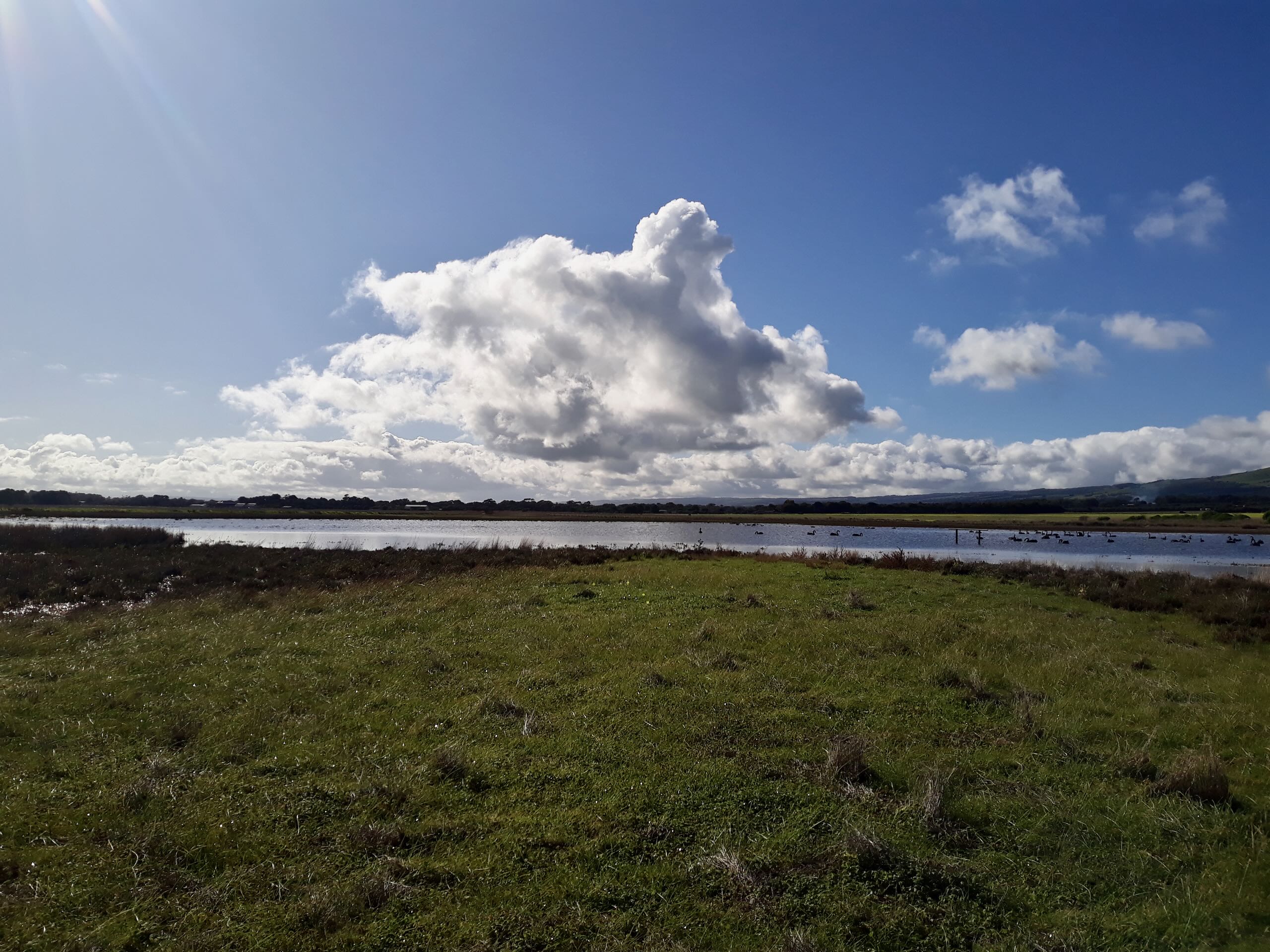
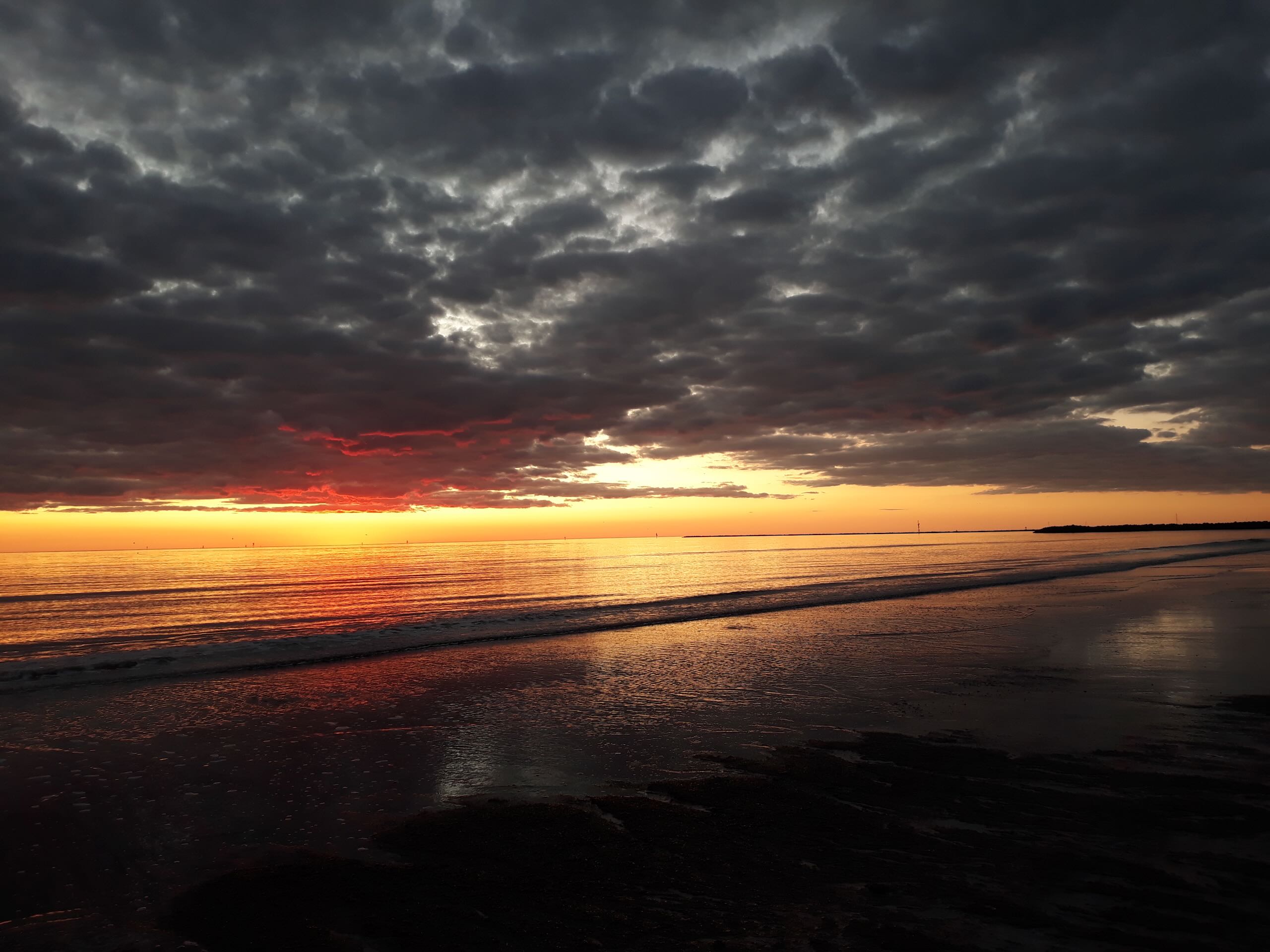
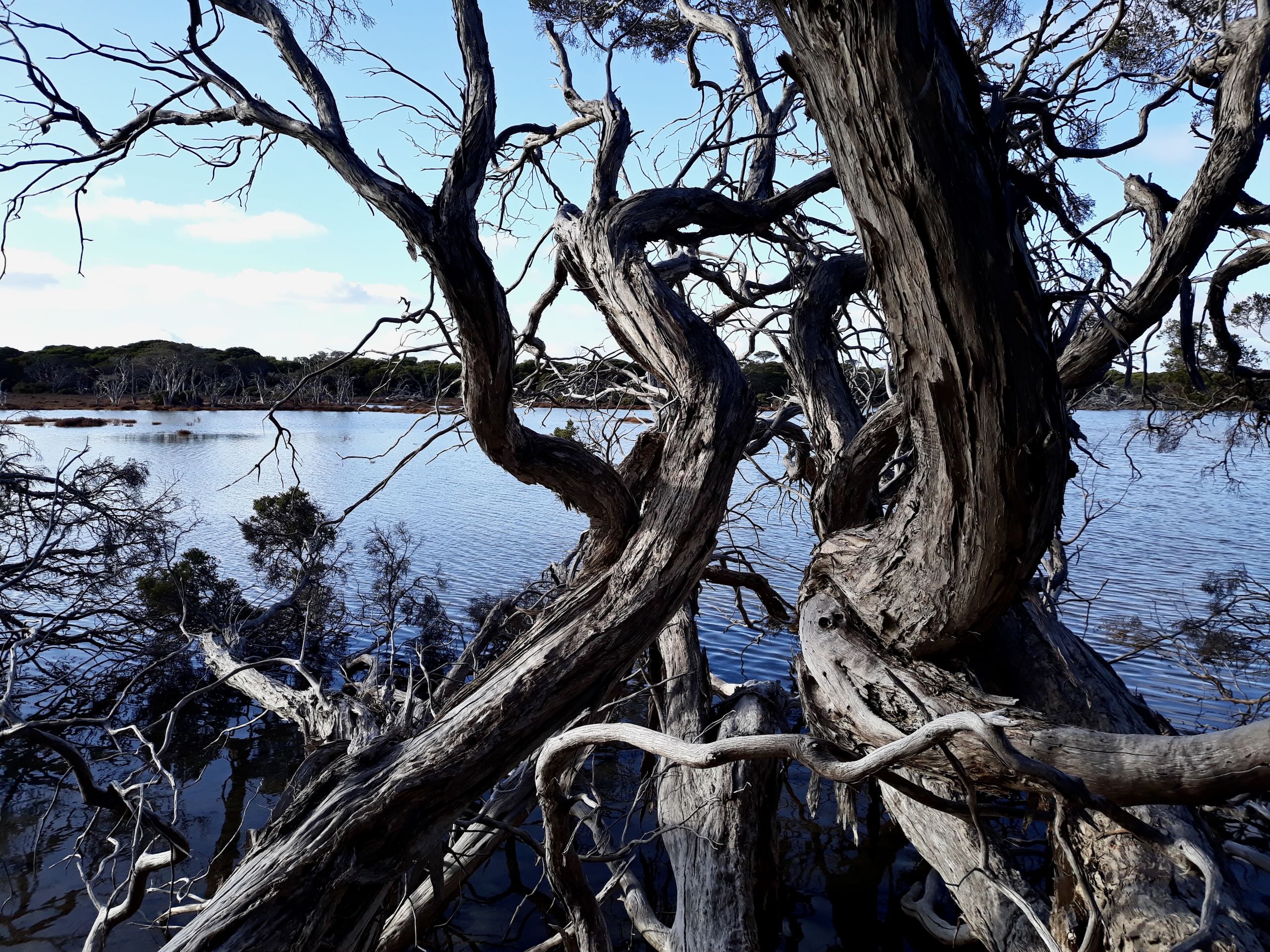
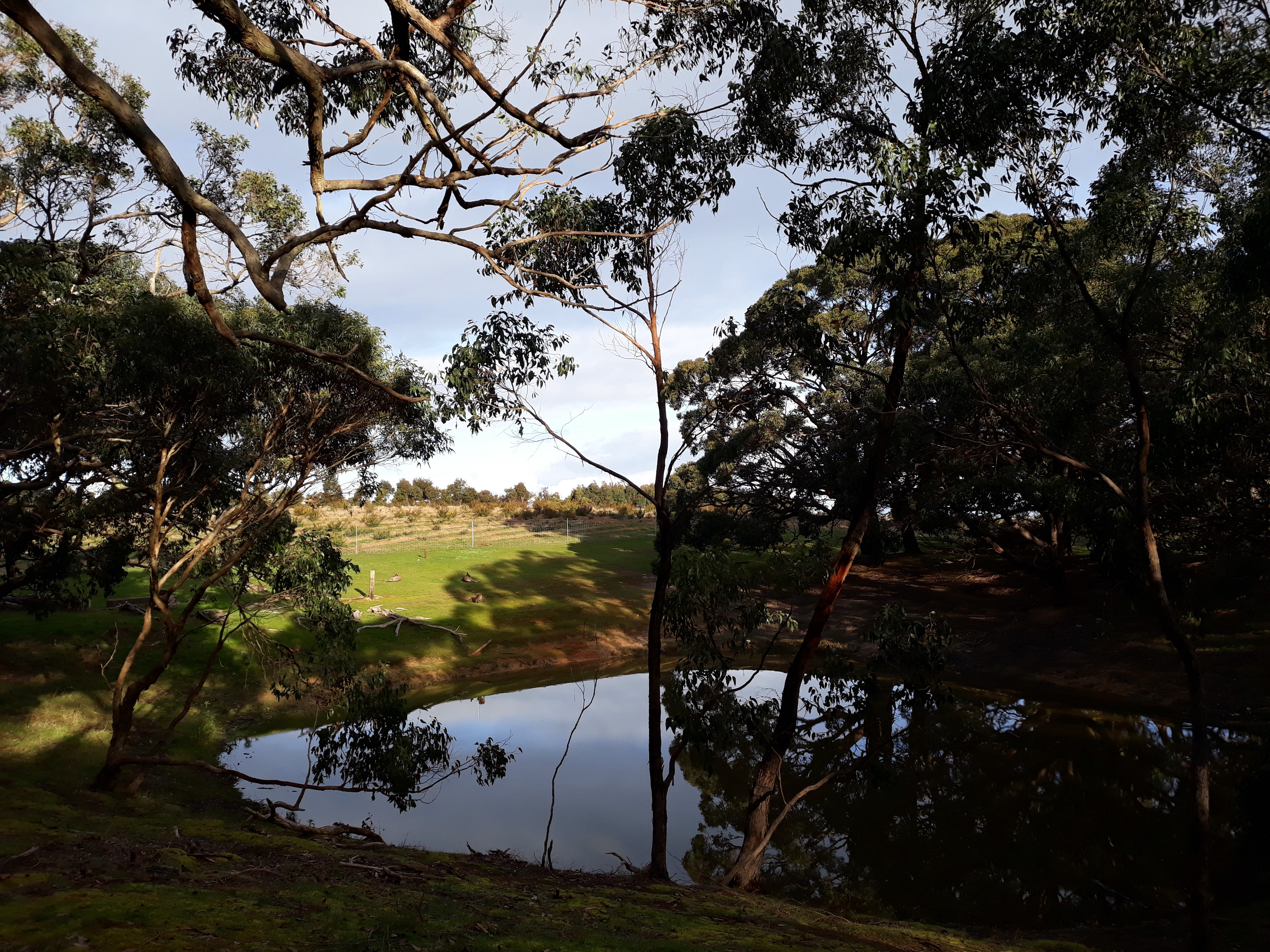
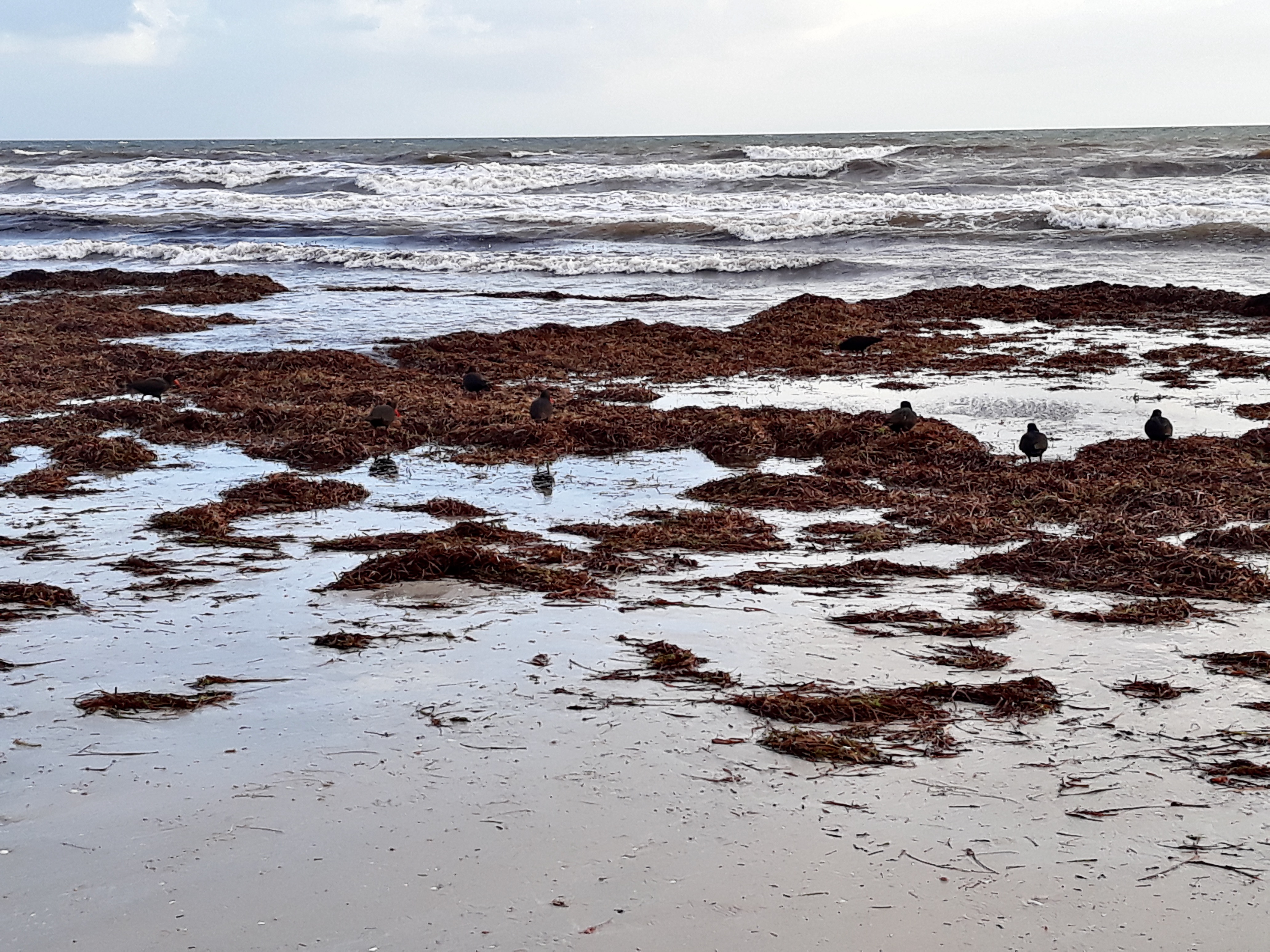
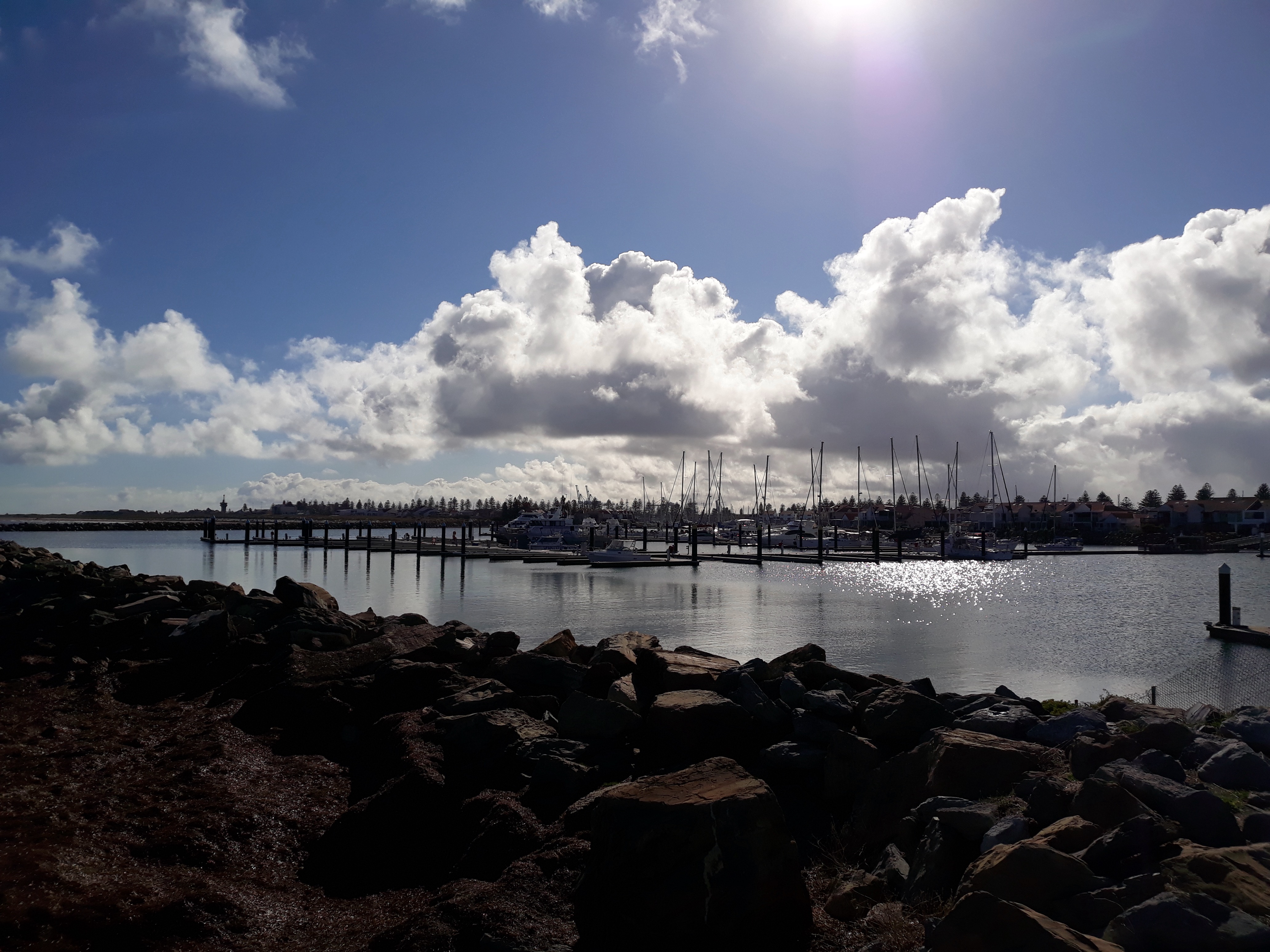
The Washpool, Sellicks Beach, July 2023.

Lately I’ve been reading …

Ravaging

Other people’s words about … growing older as a woman

The things they don’t tell you about menopause are multiple and ever-changing, newly horrifying with every fresh wave.

I know there are positives. Apparently you no longer care what people think about you. Apparently you have come into your power, you are a wise elder, you don’t give a shit about what anyone else might say.

Only you do. The thing no-one tells you about menopause is that you look like you don’t care because your face is set that way, because you get used to trying not to care until you imagine it is true. But you do care. It is ravaging and you do care, you really do.

from ‘Fat Girl Dancing
by Kris Kneen

I can’t think of a time when I didn’t care about what other people think about me. I have always been someone who cares too much about this, who compares myself with others and finds myself wanting in every way I can think of to be found wanting.

This hasn’t changed as I’ve got older. Like Kneen, I’ve heard the truisms around ageing; I’ve listened to and read the interviews in which famous older women tell their interviewer that at fifty/sixty/seventy they feel wiser/calmer/happier/more beautiful than at any previous stage in their life — and I’ve believed them. (Let it be said, I am somewhat suggestible when it comes to what other people say. It comes with the territory.)

Sunset, Taperoo Beach, June 2023.

I was thinking, when I first read Kneen’s words, about writing a post here about how we as women are objectified; about how that’s why, when we reach menopause, we feel the way Kneen describes; about how, though objectification feels odious, being silently discarded feels even worse. But this morning as I sat down to write this post, I found that what I wanted to say was something else.

What I really want to say is that one of the things I have come to realise as I grow older is that the pieces of received wisdom I’ve absorbed over the years rarely work for me when I try to apply them to myself. Over and over again over the years, I’ve had to discard those generalisations — about living, about being a woman, about growing older, about finding some level of happiness or contentment or peace — and find my own truth.

At fifty-two, I certainly don’t feel that I am coming into my power, and I could not feel further from being a wise elder. But I do know that in the years that lie ahead of me, if I am lucky enough to live them, I will continue to need to find my own path through life. I will continue to need to turn away from those truisms and pieces of received wisdom about how my life should appear to me. And I will continue to need to be less suggestible. Because I do care; I really do. I always will.

Black and white, Taperoo Beach, June 2023.

Lately I’ve been reading …

Roar

Other people’s words about … country and city life

Ramesh was used to the sounds of the suburbs. He never noticed barking dogs or level crossings. On the train to work every morning he turned up the volume of his audiobook so it was louder than other passengers’ mobile phone conversations. But [tonight he was in] the country [and it] roared. He could hear the air move in the trees. He had grown up in Croydon, moved to Glasgow at seventeen, back to London at twenty-three, then Sydney at thirty-six. As a child he’d stood outside his parents’ bedroom listening to his father’s whistling snore. He liked living in places where he could hear others alive. He reached for his phone where it sat charging. For an instant he saw his hands illuminated in the bluish light of its screen. He set his rain sound app to the setting called ‘Harbour Storm’.

‘What are you doing?’ Henry croaked. His face was pressed to the pillow. ‘You don’t need that tonight.’ 

Ramesh opened his mouth to argue, then he heard the rain outside, like gunfire on the corrugated iron roof.

from ‘Pulse Points
by Jennifer Down

I love this passage, not because I’m in accordance with Ramesh, but for the opposite reason. I love the ‘roar’ of the country. I spend most of my time living in a house in the suburbs. It’s close to the beach, which I love, but it’s even closer to the railway line, a line that trains zip up and down every half an hour from five in the morning until midnight.

Sunset, early August 2022.

I don’t mind the sound of trains, actually — as suburban sounds go, I find it vaguely comforting — but when I leave my house to stay outside the city, to visit Aldinga Scrub or to camp in Yorke Peninsula, I feel a knot inside my chest of which I wasn’t even aware releasing itself.

Sounds I love when I am away from the city: the dull roar of the ocean at the end of the road (yes, another roar). The whistle of a hot wind through the trees. A frogmouth letting out its low, persistent, booming call at dusk. A shrike thrush singing. A magpie warbling. Frogs croaking. Insects clicking in the grass. And, yes, like Ramesh, the rain drumming on the roof.

Still, the photo accompanying my post today, like so many of my photos on this blog these days, comes from the suburban beach at the end of the street I live on. The sand is being eroded away and there are car parks dotted along the coast line and on most weekends a food truck selling hot donuts sets up shop during daylight hours.

But it’s still the beach. It’s still wide and beautiful and open and … The sea still roars.

Lately I’ve been reading …

It’s a lengthy list today, because I’ve been reading far more than I’ve been posting. But I hope you find something interesting below.

Only [dis]connect

Other people’s words about … beauty

I wondered if a more complex language like [my mother’s native language] Korean had a singular word to describe the feeling of getting off a long shift of a physically demanding job and finding that, for at least half an hour after, everything, every last thing, was too beautiful to bear.

Jenny asked the question so simply — ‘Okay, what do you want to talk about?’ — and I nearly reached across the table and grabbed her hands back, whispered thanks against each of her knuckles. I was about to ask her opinion on lakes and oceans — which did she prefer, contained and musty, or vast and salty? — when she suddenly sat up straight, eyes wide. ‘So — what did you think of that meeting today? Hold nothing back.’

‘Oh,’ I said. ‘I don’t know, it was fine.’

from Pizza Girl
by Jean Kyoung Frazier

I thought of Sally Rooney’s novel Beautiful World, Where Are You? when I read the passage above. In Beautiful World, Rooney’s characters variously mourn the loss of the sense they used to have that they were moving through a beautiful world, or they lament the ugliness of the everyday world, or they remark upon what Rooney calls a hidden reality: the presence at all times, in all places, of a beautiful world.

Sunset, early July 2022.

I think this is what Kyuoung Frazier’s narrator is getting at. She wants to tell Jenny about the beautiful world she sees all around her — but Jenny, like everyone else in the narrator’s life, either doesn’t want to hear what she has to say or doesn’t know how to hear it.

Some years ago when I was going through a difficult patch, a friend of mine offered to exchange a daily photograph with me via text message. ‘We’ll just send each other a picture of something we see,’ she said. ‘Something we like. Something that makes us smile. We’ll share our pictures, and it’ll be a way to reach out. To say hello.’

Dune flowers, early July 2022.

We ended up exchanging daily photographs for over a year, and it was a way to say hello, but it was also so much more. What I loved most about our exchange, beyond the sense of connection it gave me with another human being, was the knowledge that we were each finding something beautiful in our day and then sharing it with someone else. Passing the beauty on.

Maybe we should all share more beauty. Maybe it doesn’t matter if beauty is fleeting and makes us feel fragile. Maybe that’s exactly why we should keep on sharing it.

Before sunset, early July 2022.

Lately I’ve been reading …

Revelation

Other people’s words about … secrets

‘Philip,’ [his mother Rose] said. ‘There are things I could tell you.’
‘Tell them,’ Philip said.
‘No.’
‘Why not? I’m prepared.’
She turned, looked at [Philip’s father Owen] slumped on the sofa. ‘Because I don’t believe that just because something’s a secret it therefore by definition has to be revealed,’ Rose said. ‘Keeping certain secrets secret is important to — the general balance of life, the common utility.’

From ‘The Lost Language of Cranes

by David Leavitt

I have always been fascinated by people like Philip’s mother Rose in the passage above: people who keep their own counsel. I have a tendency to do the opposite — to over-share, to talk to people for advice, to feel guilty if the life I lead isn’t entirely transparent. I’m not sure why. I may just be wired that way, but I suspect that years of therapy during adolescence and early adulthood ingrained this way of being in me. When you are used to talking things through with someone on a weekly basis, it can feel odd — unsafe, even — once you stop.

Gnarled trunk, early July 2022.

I like Rose’s matter-of-fact statement that secrets don’t have to be revealed. Sometimes, when I am uncertain about a course of action or a decision I have to make, I think of the oath that I’m told doctors must take: ‘First, do no harm.’ I find this oath, applied to life in general, one of the most useful creeds I know.

And so I find myself thinking that Rose may be right. If keeping a secret doesn’t harm anyone, then why feel compelled to reveal it? Why not learn to live in silence with one’s own truths?

Waterways, early July 2022.

Lately I’ve been reading …

Stumble

Other people’s words about … being an adult

I’ve joked all my life about my complete incapacity with money. Nothing has made me more anxious than dealing with finances. Trying to do my accounts caused a fog in my brain, a feeling near panic. I sensed, with the same primitive instincts that locate danger, that money is something that invalidates me, that cancels me out. I was afraid of it, afraid of its mysterious mechanisms. I loathed it, and yet it ruled my life …

Before I was in my fifties, I had no idea, until an accountant added it up, how much I earned in a year. I couldn’t read my financial records and I didn’t possess the smallest notion of what to do if I did. To me, all these things were as punitive and arbitrary as the love of God, which passeth all understanding.

From ‘Monsters: A Reckoning

by Alison Croggon

For the last few years I have lived with a similar sense of incapacity at the edges of my awareness to the one that Alison Croggon describes in the passage above. My incapacity is partly, like Croggon’s, about financial matters: though I finally learned to manage to file my tax return in my early thirties, for example, I have yet to come to terms with superannuation and all its requirements. (I make flippant jokes to friends about how I plan to live in a tent after retirement. And then I say: ‘Besides, what’s retirement, anyway? I’ll have to keep working to pay my bills till the day I die.’)

But that fog in my brain that Croggon describes descends on me in other areas, too. I have been aware since my late twenties that I had lost, or couldn’t locate, several crucial documents of identity — my birth certificate, my Australian citizenship certificate. I stumbled along without these documents, managing to get by using my passport instead, until, around the time I began to avoid getting in planes, I let my passport lapse, too, until it no longer qualified as a document that could establish my identity.

And still, even then, I put off applying for a replacement birth certificate or citizenship certificate. I was terrified that I would find once I started the application process that I wouldn’t qualify for those documents anymore. I was terrified I would no longer be able to prove that I am who I am. (Whoever that is.) I was terrified, in other words, that the application process would, as Croggon puts it, cancel me out.


Fog at Deep Creek.

I have lived my life like this for years. Decades, even. But in the space of the last three weeks — and I apologise for the clumsiness of the segue here, but it is all I can muster — in addition to re-establishing my identity and regaining my papers, I have bought a house and I have sold a house. Somewhere in those last three weeks I have also walked through a doorway out into the sunshine — a real, physical doorway, I mean, not a metaphorical one — and rolled my ankle, possibly tearing a ligament (still trying to figure that out). As a result of this I find myself now, quite literally, limping and stumbling through my days.


After the fog cleared.

I apologised earlier for the clumsiness of my segue, but the clumsiness I was referring to, though not intentional, was hardly coincidental. Though it shames me to say this, I find it impossible to talk with any grace or even with any sense of safe passage about the things I have been doing recently: proving my identity, applying for home loans, buying and selling and moving house. They are things that most people have to do at some point in their lives in our society, I know, but going through them makes me feel sick enough, my stomach churning, my head spinning. Talking about it, writing about it, processing it is too much. That fog in the brain again.

It takes a certain level of privilege to be in the position I am in, to have got through my life the way I have till now: no questions to answer, no endless need to prove who I am. The colour of my skin, the family I am part of, the certainty that I am lucky enough to feel about my gender and sexuality, the generation I was born into — all of these things have allowed me, and will continue to allow me, to choose to make myself powerless in the ways I have chosen to till now.


Deep Creek reflections.

And yet. That doesn’t mean the terror isn’t real. It doesn’t mean the choices I’ve made haven’t felt instinctive, primitive, inevitable; it doesn’t mean they haven’t felt like choices at all. It doesn’t mean I won’t keep limping through the days, wondering when I will be able to walk — or maybe, one day, even run? — again.

Lately I’ve been reading …

  • Through the Window: Rather than a number of articles, today I’m sending you this link instead, the Griffith Review‘s wonderful series of essays about the experience of living through the coronavirus pandemic. If you are interested in any kind of coronavirus chronicles, I can highly recommend any of the essays on this list.

Legacy

Other people’s words about … a beached whale

For as long as there have been humans, the whale has been a portentous animal. A whale warrants pause — be it for amazement, or for mourning. Its appearance and its disappearance are significant. On the beach, an individual whale’s [beaching and] death may not prove ‘global’ in the way of its body powering down abruptly, like a switch being flicked, but, in a different sense, the deaths of whales today are global. The decline of a sperm whale — [its belly, when dissected post-mortem,] filled with sheeting and ropes, plant-pots and hosepipes — belongs to a class of environmental threat that, over the past few decades, has become dispersed across entire ocean systems, taking on transhemispheric proportions. This whale’s body serves as an accounting of the legacies of industry and culture that have not only escaped the limits of our control, but now lie outside the range of our sensory perception, and, perhaps even more worryingly, beyond technical quantification. We struggle to understand the sprawl of our impact, but there it is, within one cavernous stomach: pollution, climate, animal welfare, wildness, commerce, the future, and the past. Inside the whale, the world.

From ‘Fathoms

by Rebecca Giggs

If you want to read only one book about climate change, and if you want that book to be one whose narrative ranges from the scientific to the literary to the philosophical to the emotional, and if you want it to be a book that explores metaphors and symbols right alongside facts and evidence, then Rebecca Giggs’s book is the one I’d encourage you to read. We struggle to understand the sprawl of our impact, Giggs writes of climate change. But if you read her book you will come closer to understanding.

Vista.


I’ve been quiet here on my blog recently, mostly because it’s hard to know what to say right now. The global pandemic continues. So does the climate emergency. And so, too, does my own little life, which I continue to pass by walking on the beach, by showing up to work, by writing a book that I hope one day will be published, by (maybe) moving house, and by growing older but not necessarily any wiser.

The pictures in today’s post come from a holiday I took last month in Deep Creek, a national park in the heart of the Fleurieu Peninsula. In my next post, I’ll feature more photos from the same part of the world, a part of the world so beautiful it’s hard not to feel your heart break with wonder and awe as you move through it.


Grasstree world.

Transhemispheric. That’s not a word I’ve come across before, but it’s an apt one to use if you’re trying to comprehend the size of humanity’s impact on the natural environment. I thought about that, too, while I was in Deep Creek. I thought and thought and thought.

Lately I’ve been reading …

Only connect: Those small moments

Other people’s words about connection

Paul sat alongside Julian on the kitchen floor. There was a long moment that they didn’t touch, or even look at each other. Paul could feel them staring at the same patch of wall, the scar … in the yellow paint. When Paul breached the distance he expected Julian to recoil, but he didn’t. Paul had barely touched his arm when Julian collapsed against him. He lay with his head on Paul’s lap, hardly making a sound but for the scattered rhythm of his breathing.

From ‘These Violent Delights’
by Micah Nemerever

Here in Australia, while countries all over the rest of the world have spent the last few months steadily vaccinating their populations against Covid-19, our population has remained largely unvaccinated. But now, with the kind of predictability that it seems only our political leaders were unable to predict, the Delta strain of Covid-19 has arrived on our shores. And because, without vaccination, lockdown is the only form of protection we have against the virus, we are — state by state — moving into lockdown once again, as the new strain of infection spreads. South Australia, where I live, went into a strict seven-day lockdown at 6pm on Tuesday night. The lockdown will be extended if the outbreak continues to grow, which is what has happened in New South Wales and Victoria.

Right now, I’m working from home. I’m lucky to be in the kind of work where this is possible, I know, but that’s the best I can say about the situation. Lockdowns are funny things, aren’t they? They do funny things to your mind, to your thinking. Maybe they lock your mind down, too?


Turn your back. Look away.

Anyway, in my spare time during lockdown I am reading, reading, reading. (Also writing a little, too, but that’s another story.) The libraries are closed but I have enough books from my last trip to my local library to tide me over, at least for now. And so I’m reading stories that transport me to other places and times, sentences that move me to laughter and tears, words that depict small moments of connection, like the moment between Julian and Paul in the passage above.

Everyone has their own way of coping, I know. Me? When things are tough, I collapse into books the way Julian collapses into Paul. I can think of far worse ways to collapse.

Lately I’ve been reading …

Treasure your beautiful world

Wild Geese (a poem by Mary Oliver)

You do not have to be good
You do not have to walk on your knees
for a hundred miles through the desert repenting.
You only have to let the soft animal of your body
love what it loves.
Tell me about despair, yours, and I will tell you mine.
Meanwhile the world goes on.
Meanwhile the sun and the clear pebbles of the rain
are moving across the landscapes,
over the prairies and the deep trees,
the mountains and the rivers.
Meanwhile the wild geese, high in the clean blue air,
are heading home again.
Whoever you are, no matter how lonely,
the world offers itself to your imagination,
calls to you like the wild geese, harsh and exciting –
over and over announcing your place
in the family of things.

It was the wonderful Gena Hemshaw who introduced me to Mary Oliver’s poem ‘Wild Geese’, and I have loved it ever since. Like Gena, I’ve found that the poem comforts me in times when the thoughts in my head are loud and tangled. And like Oliver herself, I’ve sought comfort in nature for many years. Looking up at the sky and down at the ground and out to the horizon reminds me of my place in the world. It heals me, if only temporarily.


Light on water.


But how true are Oliver’s words these days? How much longer can we find solace in nature if by nature what we mean is the way things are naturally, the way things have always been and the way they always will be?

It is impossible to ignore the discussion scientists and environmentalists are now having across the world about the climate crisis, the climate emergency. (That is, it’s impossible to ignore unless — and forgive me for saying this, but I will say it anyway — unless you are a white, male, middle-aged politician who thinks only about getting re-elected for another term of leadership.) It is impossible, too, to ignore the evidence of it as we go about our days. Wildfires, polar ice melt, rising land and sea temperatures, coral bleaching, floods, not to mention pandemics — here they all are, right in front of our faces.

These days when I read Mary Oliver’s words I feel despair rise thick in my throat.


Clouds above water.


I work very hard to inject a positive note in the posts on this blog. I don’t intend this to be a site for depression and maudlin pondering. But I cannot find a positive note to interject here when it comes to our changing natural environment.

I can only urge you, each and every one of you, myself included, to read Oliver’s poem often, to experience the feelings that arise in you as you read it, and to do what you can, in whatever way you can, to treasure this beautiful world while we still have it. Meanwhile the world goes on, Oliver says, but does it anymore?


Dying light.


Lately I’ve been reading …

Chasing clouds

Other people’s words about … getting lost

I said earlier that I have no special running talents. In fact, I have one: getting lost.

No-one gets lost like I do. It’s not just a running thing. It’s a getting lost thing.

I’ve been lost when running, walking, driving, cycling, sailing, using public transport, even (once) taking a taxi, on at least three continents, since I first ventured out into the world as an unaccompanied teenager. I’ve temporarily abandoned a car in Milton Keynes, and once phoned [my wife] Clare from the outskirts of Northampton to warn her that I might not find my way home for days. I’ve never been lost on a running track (yet), but I have been lost indoors — not just temporarily disoriented, but properly, sit-down-and-cry-and-wait-to-die lost — on a disastrous visit to the Birmingham branch of Ikea.

From ‘Running Free’
by Richard Askwith

I am someone who gets lost as easily as Richard Askwith. I live in Australia, not England, so I’ve never got lost in Milton Keynes or Northampton, but I have certainly been to the Adelaide branch of Ikea and experienced that sense of utter lostness that he so delightfully describes as sit-down-and-cry-and-wait-to-die lost. (Though, actually, I would call that particular kind of ‘lost’ an Ikea thing rather than a getting lost thing. Just saying … )


Dune’s counterpane:
How can you ever feel lost when these are the things you see along your way?

I don’t just get lost physically, either. I frequently feel lost in a metaphorical sense, too. I admire anyone who seems to know (or who feels as though they know) where they are going in life. I don’t. I never have. The older I get, the more strongly I become aware of my inner sense of lostness.

Often, this innate sense of lostness feels like a burden. But not always. Because the thing about setting off towards one place and ending up somewhere else entirely, somewhere you hadn’t planned on and don’t recognise at all, is that you get the chance to explore.


Lizzie the garden cat:
A lost cat, but also a found one.

I’m talking metaphorically here again, of course. But the older I get, the more strongly I also come to understand the importance of being willing to explore, willing to wander, willing to wonder. And sometimes, in hopeful moments, I see many years of exploring and wandering and wondering ahead of me.

I like that thought.

Lately I’ve been reading …