When the water runs dry

Other people’s words about … drought

Many years ago, when I was in my twenties and travelling overseas, my American boyfriend took me back home to meet his family and friends in Michigan. We had been living for the previous few months in Cairo, that famous desert city, and to begin with we had, like all Westerners, drunk bottled water, fearing that the local water might make us sick. But we didn’t have much money and we had read that the municipal water in Cairo was safe to drink, even for Westerners, and so after a few weeks we had transitioned to drinking tap water. Neither of us had become sick as a result, but the Cairo water was so heavily chlorinated (presumably to make it safe to drink) that even I, hailing from Adelaide, found it hard to stomach.

In my home town, the tap water was similarly heavily chlorinated — so heavily, in fact, that it was said that aeroplanes, landing in Adelaide to refuel, didn’t refill with local water. How apocryphal this story is, I am not sure, but in any case, back in Cairo my boyfriend and I had taken to adding Tang to our water to take the taste of chlorine away. When I think of Cairo now, I still think of the taste of the water we drank in our last few weeks there, tangy with artificial orange flavour. How it sat in your belly afterwards like a stone. It was in Cairo, not Adelaide, that I came to understand the meaning of the term hard water.

Clouds but no rain, Aldinga Beach, May 2025.

The narrator in Madeleine Watt’s quietly devastating novel Elegy, Southwest, Eloise, is a young Australian woman, twenty-nine years old in the present day, which makes her, I guess, a Millennial. And yet when I read the passage I’ve quoted above I thought of myself, most decidedly a Gen X-er, and my own reactions to water scarcity when I was travelling in the nineties. In Michigan, when my boyfriend left the tap running as he brushed his teeth, when his mother washed the dishes under a running tap, I struggled to swallow back my protests.

‘We’re surrounded by the Great Lakes,’ my boyfriend said, teasing me. ‘We’re hardly experiencing water scarcity.’

But my response to the sight of running water was instinctive, fundamental. Water was a precious resource. You didn’t waste it. You just didn’t.
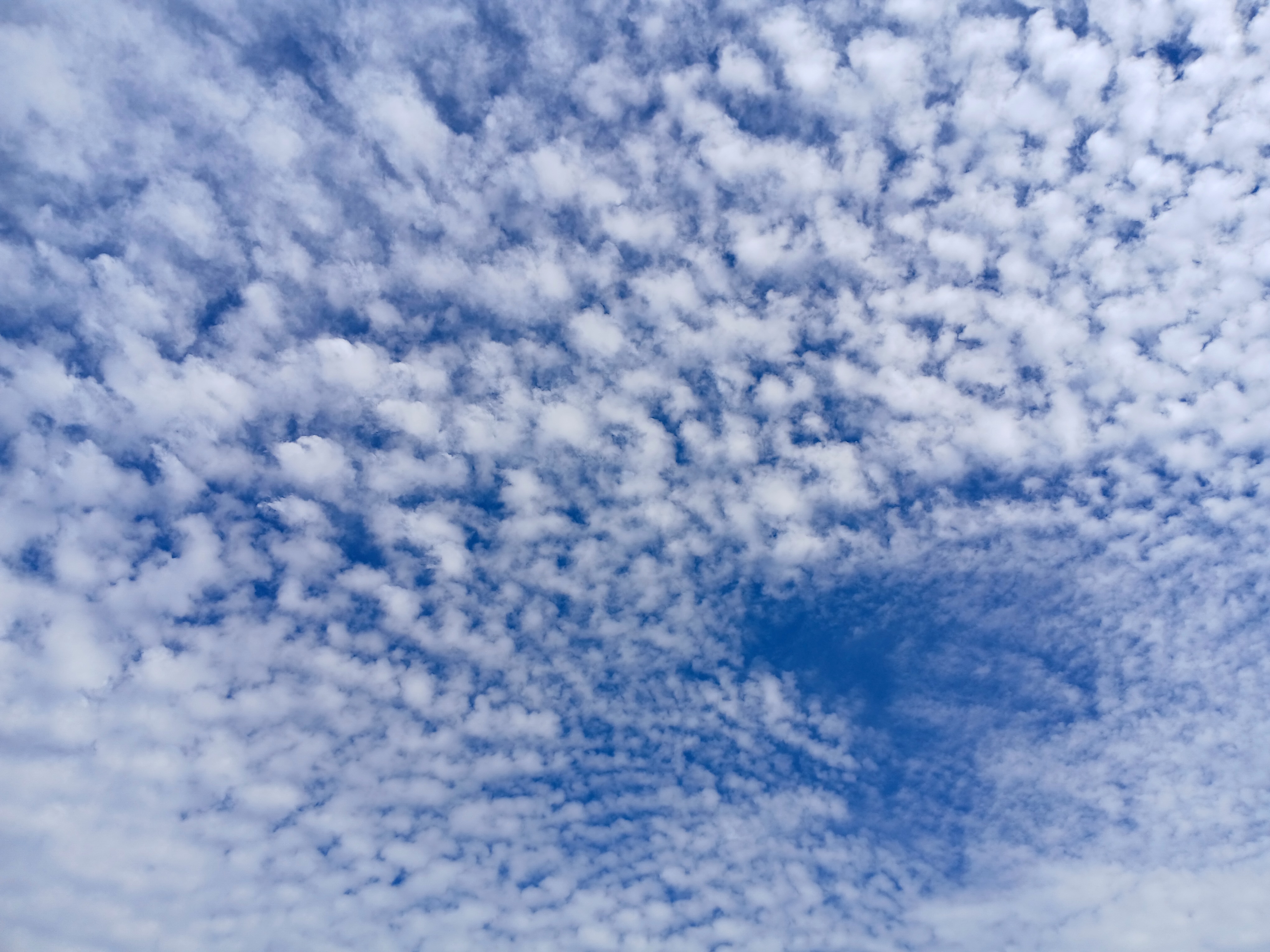
This year in South Australia we’re experiencing record low rainfall. After the driest summer in thirty-three years, we’ve moved into an equally dry autumn, and we’ve been saved from water restrictions only through the existence of the desalination plant that opened in 2012 in response to the Millennium Drought. Meanwhile, the native local flora and fauna are visibly, heart-breakingly struggling to stay alive. Those beautiful wide blue skies of South Australia? I’ve come almost to dread them.

Like Eloise, I grew up watching Hollywood movies where teenagers hung out in malls with fountains in them. Like Eloise, I don’t remember seeing a fountain in our local malls (though in the much-loved TV comedy from the noughties Kath and Kim, the local shopping mall is aptly — prophetically? — named Fountain Lakes). And like Eloise, all these years later, in these years of drought after drought, I, too, want to ask: Who is in charge? Why isn’t somebody doing something?

Lately I’ve been reading …

A sad place

Other people’s words about … accessing feelings

Some years ago an older woman said to me that she had noticed she didn’t cry very much anymore. She said that when she was younger she had been someone who cried easily, when she was sad, when she was angry, sometimes when she was happy. But now, in her seventies, the tears didn’t well up anymore.

I remember thinking that that wouldn’t be the case for me. I remember thinking that I would always be someone who cried a lot — too much, probably, rather than not enough. I have always cried copiously and easily and very often self-piteously. I have cried at the most inappropriate times, during moments that weren’t about me at all, moments when I should have been comforting someone, not dealing with my own emotions.

Largs Bay Jetty, April 2025.

And yet here I am, mid-fifties, and it’s happening to me, too. In the passage I’ve quoted above from Tove Ditlevesen’s memoir, Ditlevsen is describing the way she felt as a teenager, but the feelings she expresses in this passage describe the way I often feel now, the way the older woman I mentioned above also expressed feeling. It’s a feeling of seeing sad things, being moved by them, being aware that I’m sad about them even, but not being able to access the sadness itself directly. When I do cry, it’s usually, like the adolescent Ditlevesen, when the feeling is being conveyed to me through another medium — a book, a film, a poem, a song.

I miss crying. Perhaps that sounds odd or self-indulgent, but I miss the feeling that came when my eyes grew hot and tears fell down my cheeks and my throat tightened and my breath snagged. I miss the feeling of being there with my sadness, right there. I miss the feeling that follows a crying bout, too, that feeling of being healed, even if only temporarily.

The world is a sad place right now. People will say in response to this that the world has always been sad for someone somewhere, and that’s true. Partly, then, I say that it’s a sad place from a place of privilege, because I’ve experienced times when it seemed that there was a lot of hope in the world, if you could only learn to access it. Still, when I think about the climate crisis, when I think about Presidents Trump and Putin and Xi Jinping and Yoon Suk Yeol, when I think about the rise of Artificial Intelligence, the world seems to me a very sad place indeed. Would it help if I were able to cry about this? I don’t know. Like the adolescent Divletsen, I don’t think very much of reality.

Lately I’ve been reading …

Decoded

Other people’s words about … language and interpreting

When I was a young woman I studied French, German and Mandarin at university. I had a facility for language, for words, and in those days I thought that I might one day become an interpreter in one of these languages, like the narrator in Katie Kitamura’s novel Intimacies. I studied all three languages for a year, having also studied French and German at high school, and then at the end of the year, which was the end of my first year at university, having achieved distinctions in all three subjects, I left university, left Australia, and didn’t return home to resume my studies for another three years.

By then I’d decided not to pursue a career in languages at all. I had understood from my travels that my natural shyness and introversion would make the kinds of context in which an interpreter works difficult for me, and I had decided not to challenge myself in that way. Funnily enough, this realisation came to me while I was living in Germany, where I had gone to live for a year to become fluent in German. Funnily enough, I should add, by the time I came to the realisation that interpreting wasn’t for me, I was almost entirely fluent in German. Anyway, I came back to Australia and left all of this behind, my fluency in German, my plans to be an interpreter, all of that.

Footprints in the sand, March 2025.

It’s funny, though, because Katie Kitamura’s description in the passage I’ve quoted above of the experience of being so immersed in the pursuit of choosing the correct word that you lose all sense of meaning is something I am deeply familiar with in another context — editing. As an editor, I have edited books in the fields of geology, medicine, history, literature and religion. On hearing this, people frequently say to me, ‘Wow, you must have learned a lot about geology/medicine/history/literature/religion!’ But the truth is, I don’t absorb that kind of information when I’m editing. Like Kitamura’s interpreter, I decode the language I’m working with in the material I’m editing — meaning that I make sure that the sentences are grammatically correct, that there are no spelling errors, that the writer has presented their argument cogently — but that doesn’t necessarily mean that I understand it.

You literally do not know what you are saying, says Kitamura’s narrator of interpreting. Likewise, I would say of editing, I literally do not know what I am reading.

There are times when I regret losing the languages I learned when I was younger. There are times when I wish I had tried a little harder, thought a little more laterally, about how a person like me might use her language skills in her career without needing to be a gifted conversationalist or gregarious extrovert. But perhaps in the end my love for words and decoding language are what led me to become an editor, even if only by default. And I am, despite everything, grateful to have found my way to an editing life. It has served me well.

Lately I’ve been reading …

My body, my self

Other people’s words about … other people’s writing

I think this is one of the best critiques I’ve read about the written world today. How do we escape the aesthetic smallness of scope and affective numbness? I don’t know, but I think Eisenberg is onto something here.

Taperoo Beach, March 2025.

Leah, one of the two main protagonists of Housemates, is fat and queer and in love with her housemate Bernie, who is attracted to Leah but not driven to pursue the attraction, or at least not initially. And here again Eisenberg questions our social mores, the platitudes we repeat to ourselves and to others, this time about the discourse of sexuality. Was she more or less comfortable among queers than she was among everyone else? Bernie asks herself. About the same, came the answer. But if she really listened, really paused, there was another answer, which was: less. The style. The discordance, the mismatching, the pride, the attracting of attention and the comfort in that attention, the physicality to dance, to fuck, to march. The physical in Bernie felt meant for other uses.

Leah and Bernie move in a world where people pride themselves for being other, for not living according to the usual socially accepted order. And yet their world, too, demands acceptance and conformity to certain philosophical and sexual tenets. I love how Bernie has the courage to question the over-sexualised expectations that she perceives the people around her to have of themselves and others. The physical in Bernie felt meant for other uses. Now that’s a celebratory sentence if there ever was one.

Taperoo Beach, March 2025.

Lately I’ve been reading …

Mirror

Other people’s words about … hunger

The narrator in the passage I’ve quoted above from Katherine Brabon’s novel Body Friend isn’t anorexic — her illness is of another kind, some kind of autoimmune illness that Brabon leaves unnamed throughout the novel. Still, I’m fascinated by the way the narrator’s thinking in this passage aligns itself with a kind of anorexic thinking pattern, a pattern that Brabon identifies instead as a cliché of gender. The thoughts the narrator expresses here, the murky shame she feels, remind me of the way I used to think about my body, my hunger, my appetites, my eating patterns when I was still experiencing the symptoms of anorexia (both before and after treatment — indeed, for years after treatment).

My first boyfriend, when I was in my early twenties, was a tall, naturally thin guy (very thin) whose appetite waxed and waned; he would eat nothing for hours, opting to smoke cigarettes instead, and then he’d suddenly become ravenous and eat his way through what seemed to me vast quantities of food, the equivalent of several meals at once. He didn’t exercise much, perhaps because he wasn’t a natural athlete.

My second boyfriend, meanwhile, whom I met in my late twenties, was a slow eater, someone who put his fork down between bites, to talk, to smoke, to drink. He didn’t always finish what was on his plate; if he’d had enough, he stopped eating, which seemed miraculous to me, evidence that he felt a freedom from compulsion around food and eating that I couldn’t imagine ever feeling myself. He loved exercising — he had been a runner in his twenties, until injury forced him to stop, and he shaped his days instead around surfing and cycling and swimming.

With both of them, doubting my own hunger, suspicious of my own greed, I would, like Brabon’s narrator, mirror their eating patterns. I would skip breakfast, even though doing so made me feel faint within a couple of hours. I would try to leave some food on my plate, even if I wanted to eat it all. I would try to slow down the speed at which I ate. When I was with my first boyfriend, I didn’t exercise much at all. Moving in with my second boyfriend, though, I took up cycling and swimming. I did these things because I knew instinctively that they, my boyfriends — the habits they had formed that determined the way they lived their lives — were right, whereas I was inherently wrong.

Native pelargoniums on the beach path, Taperoo, January 2025.

What drives this kind of thinking — or what drove it for me, anyway — is self-hatred and fear. I had believed for years that my appetites were out of proportion, that they needed curbing, taming; it was this belief that had led me into an eating disorder in the first place. I didn’t yet understand that appetite is a tricky word (a signifier, to borrow Brabon’s word), and that it can refer to things beyond food, things like desire and longing and hope, so that in trying to tame my appetite for food, I was also trying to tame those other appetites, the ones that truly frightened me.

Brabon’s narrator is experiencing other fears than the fears I experienced, and yet I think her fear has a similar source to the fear that I felt — fear of her own body, of what it can do if left to itself. Fear of its inherent faultiness. Its inherent gluttony. Fear that, if left to our own resources, we are like the cat that eats until it vomits, no better than that, equally repulsive.

Even today, I still feel those same fears sometimes (perhaps, after all, that’s where the gender cliché comes in), but I no longer feel the compulsion to mirror myself in someone else’s habits. And I am deeply grateful for this.

Lately I’ve been reading …

Disappear

Other people’s words about … identity

I grew up as a member of a generation that didn’t recognise people who have the kinds of feelings that Ed expresses in the passage I’ve quoted above, a generation that didn’t have the words that a person like Ed — a person who feels that the body they were born into doesn’t reflect their true gender — might need to reach for. That is to say, the vocabulary that Ed and his friends use in Oisin McKenna’s novel, Evenings and Weekends, isn’t a vocabulary that I or my contemporaries used or even had access to. As a corollary of this, the space that Ed and his friends occupy in the world isn’t a space that many people knew how to occupy when I was in my teens and early twenties.

This isn’t to say that people didn’t question their gender identity in those years, only that the conversation around gender identity barely existed. As a consequence, many people — many, many people — didn’t recognise that it might be a conversation they wanted to have, either with themselves or with others.

And yet when I read the passage above, I am moved less by Ed’s uncertainty about his gender than by his unwillingness to be labelled. In theory, the language of gender identification that’s available to him, which wasn’t available to people of previous generations, should free him to articulate his identity, but in practice he finds the labels as constraining as they are freeing.

For better or for worse, this is the power of language. It gives us the tools to express ourselves, but in doing so it determines the way we experience the world. I’m no discourse analyst but this, I think, is what Ed is struggling most deeply with. Kudos to McKenna for finding a way to put it so succinctly and movingly in fiction.

Still, for me the most devastating thing about this passage is that even though Ed has the language to express the way he feels, he remains ultimately so unhappy, so desperate, that his deepest, truest, most instinctive response is to wish to be obliterated. 

The language may have changed, but the sadness, the desperation, hasn’t. What Ed wants is to be invisible. Indeed. I don’t have any answers, but I’m glad that novelists like McKenna are brave enough to explore these ideas, because they matter. As language changes, so does the world, and if fiction can help us to explore the consequences, then fiction, too, matters.

Lizzie, January 2025. (Okay, so, unlike Ed, she may not have words or language to express herself … but she is still a very effective communicator!)

Lately I’ve been reading …