Chasing clouds

It was the week of daffodils, and they were everywhere — outside everyone’s fences and shrubs, jubilant. It was that perfect running weather: cool and damp, still a little cloudy over the water.

From ‘Alternative Remedies for Loss’
by Joanna Cantor

The photos in today’s post come from a run I went on in early October, a muggy, warm, cloudy spring day, perfect for running, though different from the conditions Cantor describes above.

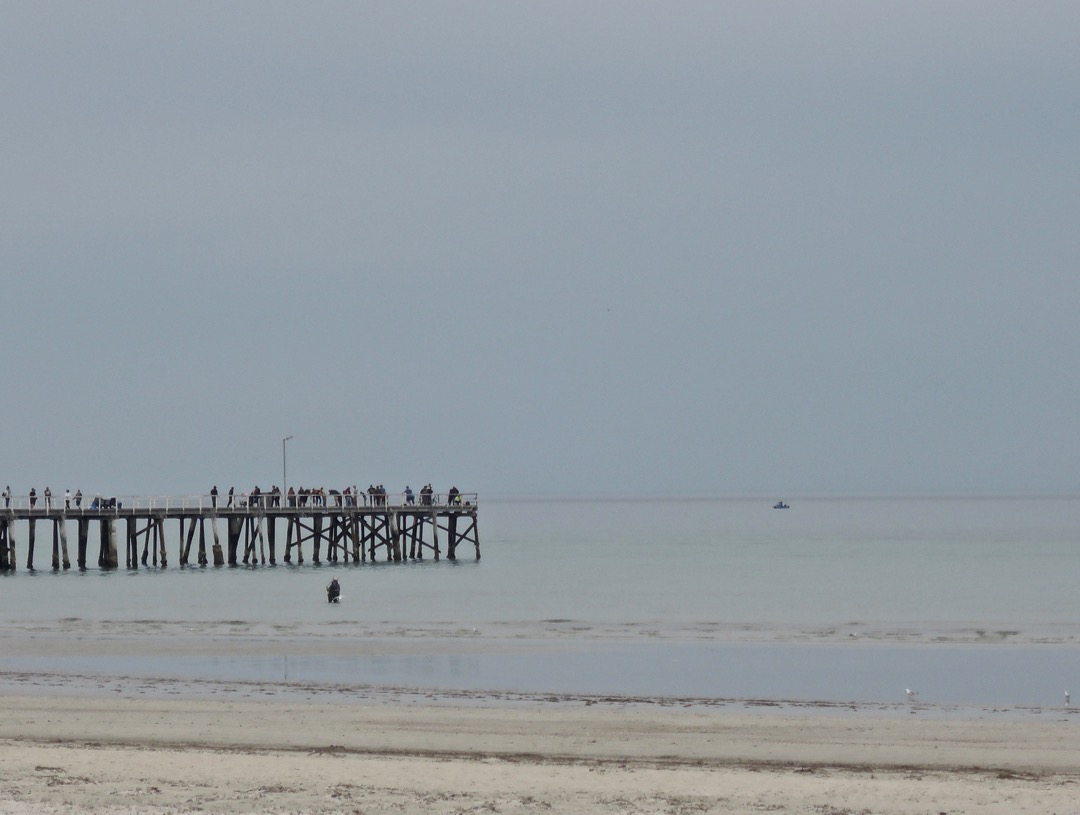
It was also the Monday of the October long weekend, as well as the first weekend of the school holidays, so the jetties at Semaphore and Largs Bay were jostling with people, and kids paddled and squealed in the water. Dogs dashed about on the shore, chasing balls.

This year, oddly, the usual swathes of variable groundsel flowers didn’t appear on the dunes around Taperoo and Largs Bay. But the pigface plants blossomed as usual, their astonishing purple brightness undimmed by the cloudy sky above.

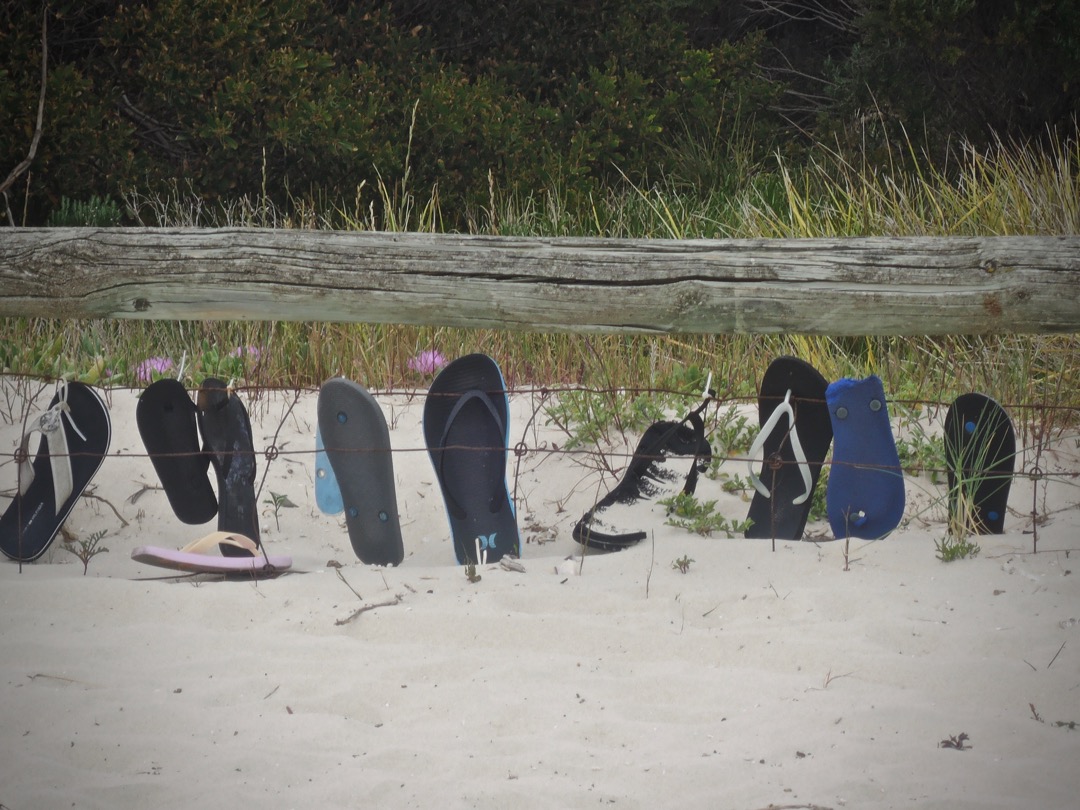
On the way home, I left the beach by a path I don’t usually take, and found this array of beach-thongs dotting the fence post, which brought a smile to my face:

Whatever your definition of perfect running weather, I’m pretty certain that any day on which you finish up your run with a smile comes close to perfect, regardless!

Chasing clouds

When the run does its work, I will become lost in its beating heart.
We run on.

From ‘Running with the Pack’
by Mark Rowlands

Today’s photos come from a run I went on in early September on a day when the first faint hint of spring was in the air.

I followed a path that wound through scrub and vineyards and wetlands and beach.

Somewhere along the path, an elderly couple were standing, leaning against a wooden fence. The man greeted me as I came closer, and called out, ‘Where have you come from? Where does this path lead to?’ And so I stopped to chat to them, describing how to get to the beach from where they were.

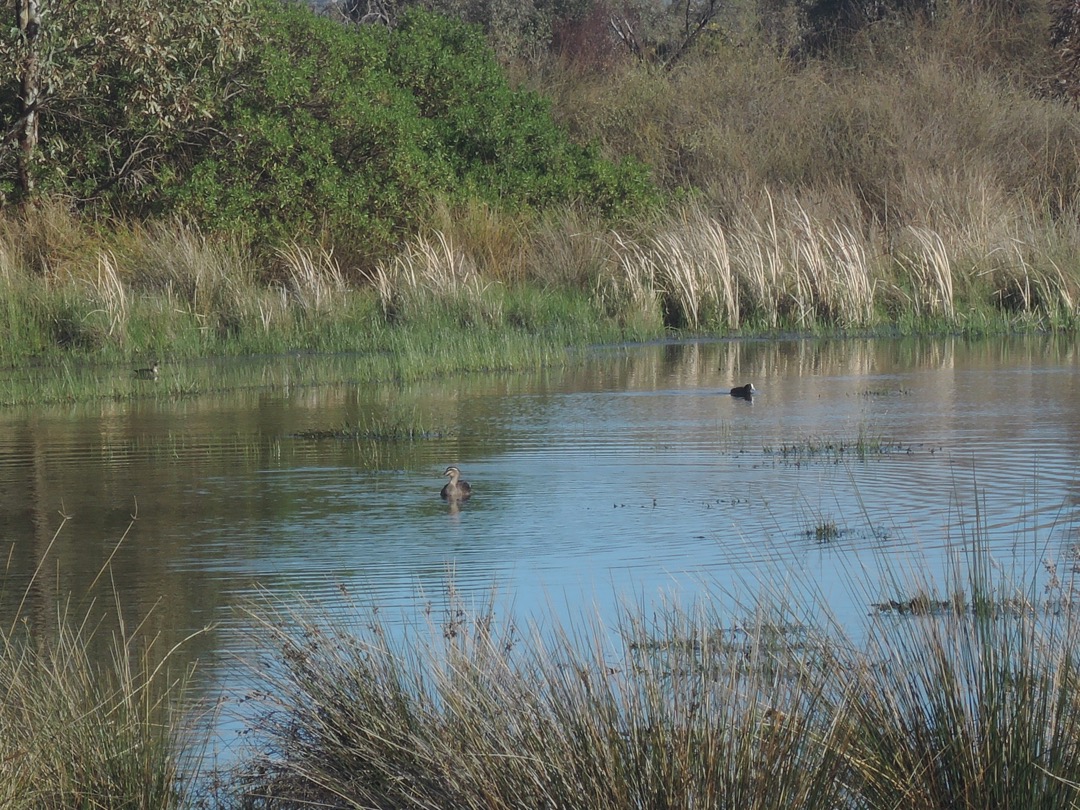
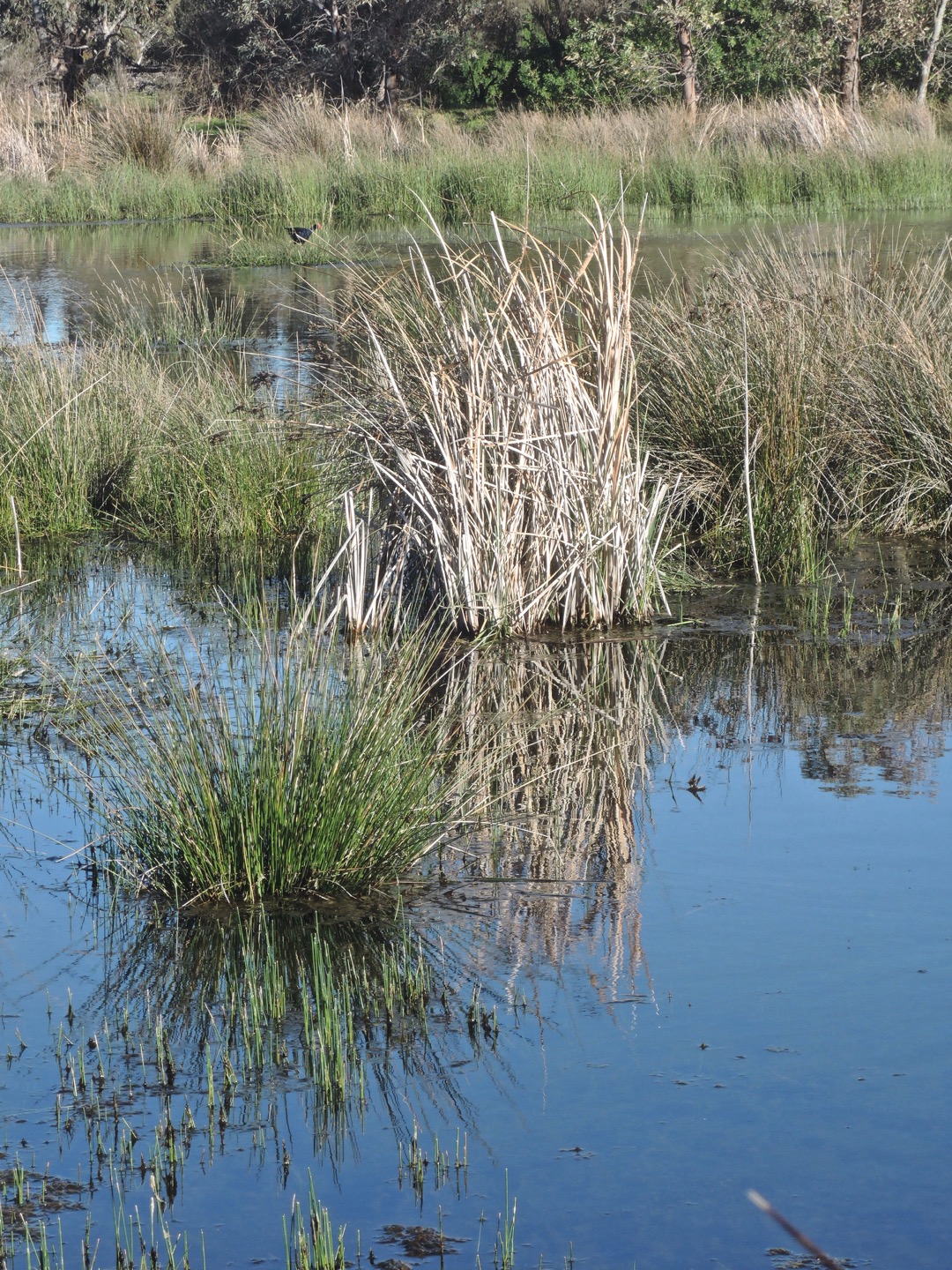
In the wetlands I pulled out my camera. The pictures show the landscape, but they don’t convey the sounds — frogs croaking, a hidden moorhen squawking wildly in amongst the reeds.

And they don’t convey the feeling of the sun on my skin, either: warm and sweet and new, the way the sun always feels in the first, early days of spring.

Chasing clouds

If I am thinking at all when I run, this is a sign of a run gone wrong — or, at least, of a run that has not yet gone right. The run does not yet have me in its grip. I am not yet in the heartbeat of the run; the rhythm of the run has not done its hypnotic work. On every long run that has gone right, there comes a point where thinking stops and thoughts begin.

From ‘Running with the Pack:
Thoughts from the Road on Meaning & Mortality’

by Mark Rowlands

I suspect — no, in fact, I know — that I don’t run far enough, or long enough, or hard enough to have experienced the same kind of long run to which Mark Rowlands is referring here. And yet, even on my kind of run — the kind of run when you run simply for the joy of the moment and nothing else — there comes a point when the rhythm of the run [begins to do] its hypnotic work for me.

That’s why I came back to running, twenty years after I stopped. I am a worrier, a thinker — no, an over-thinker. But I’m not when I run. For those twenty years when I stopped running, I couldn’t forget the sweet spot I used to find at some point during a run, when, as Rowland puts it, thinking stops and thoughts begin. And I couldn’t find it, either — not outside of running.

Elsewhere in his book, Rowlands has this to say about why he runs:

People sometimes assess the quality of their runs in terms of times, distances and also in more sophisticated ways: the AIs — the number, duration and intensity of the aerobic intervals they have inserted into the miles they have run; the TUT — the total uphill time and so on. But, as far as I am concerned, times, distances, AIs, TUTs — these are all just contingencies, incidentals. Every run has its own heartbeat; the years have taught me this. The heartbeat of the run is the essence of the run, what the run really is.

I’m with Rowlands here. I don’t do tech — either in my day-to-day life or while I’m out running. I don’t own a smartphone, or a fitbit, or a garmin. I don’t even own a pedometer. The only things I take with me when I go for a run are my (non-digital) watch and (sometimes, but not always) my camera. That’s it. I put my watch on my wrist, and I hold my camera in one hand, and then I go out and run. I know roughly how far I run, but only roughly, which is exactly how I like it.

Every run has its own heartbeat, Rowlands says, and then, without skipping a beat: the years have taught me this. Those words — heartbeat, the years, taught — have nothing to do with AIs or TUTs (neither of which I’d heard of, before I read Rowlands’s book), and everything to do with living. With learning. With growing.

Which are some of the other reasons that I run.

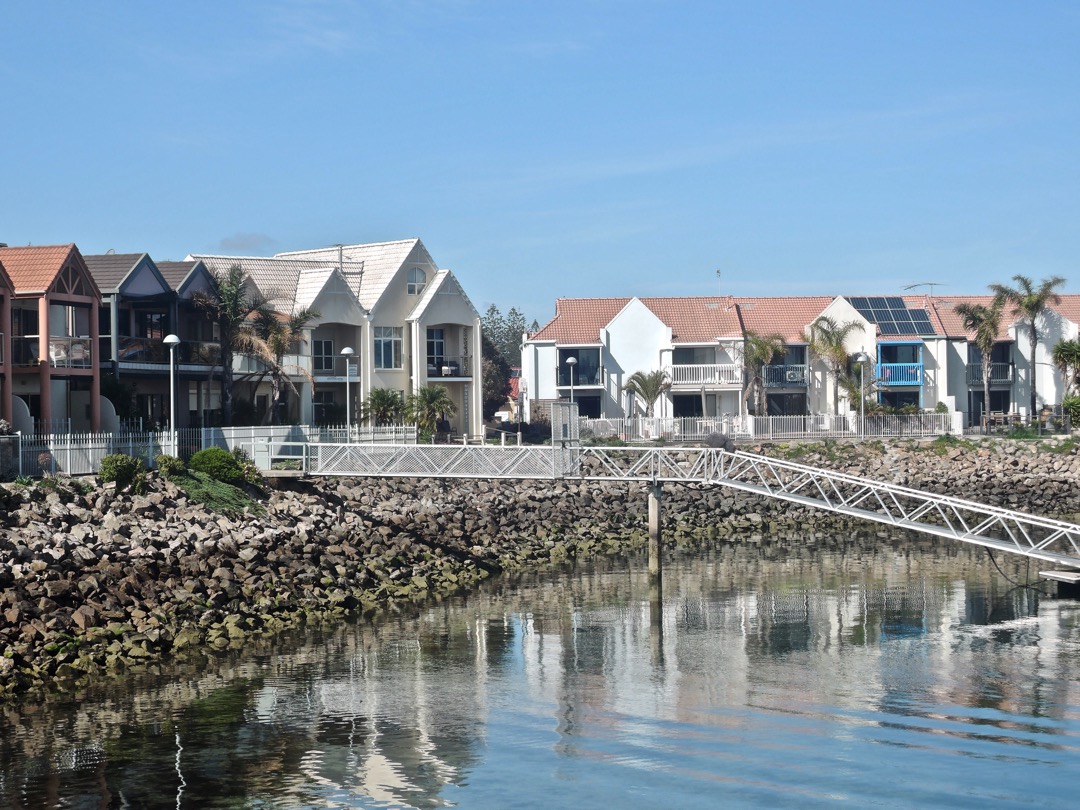
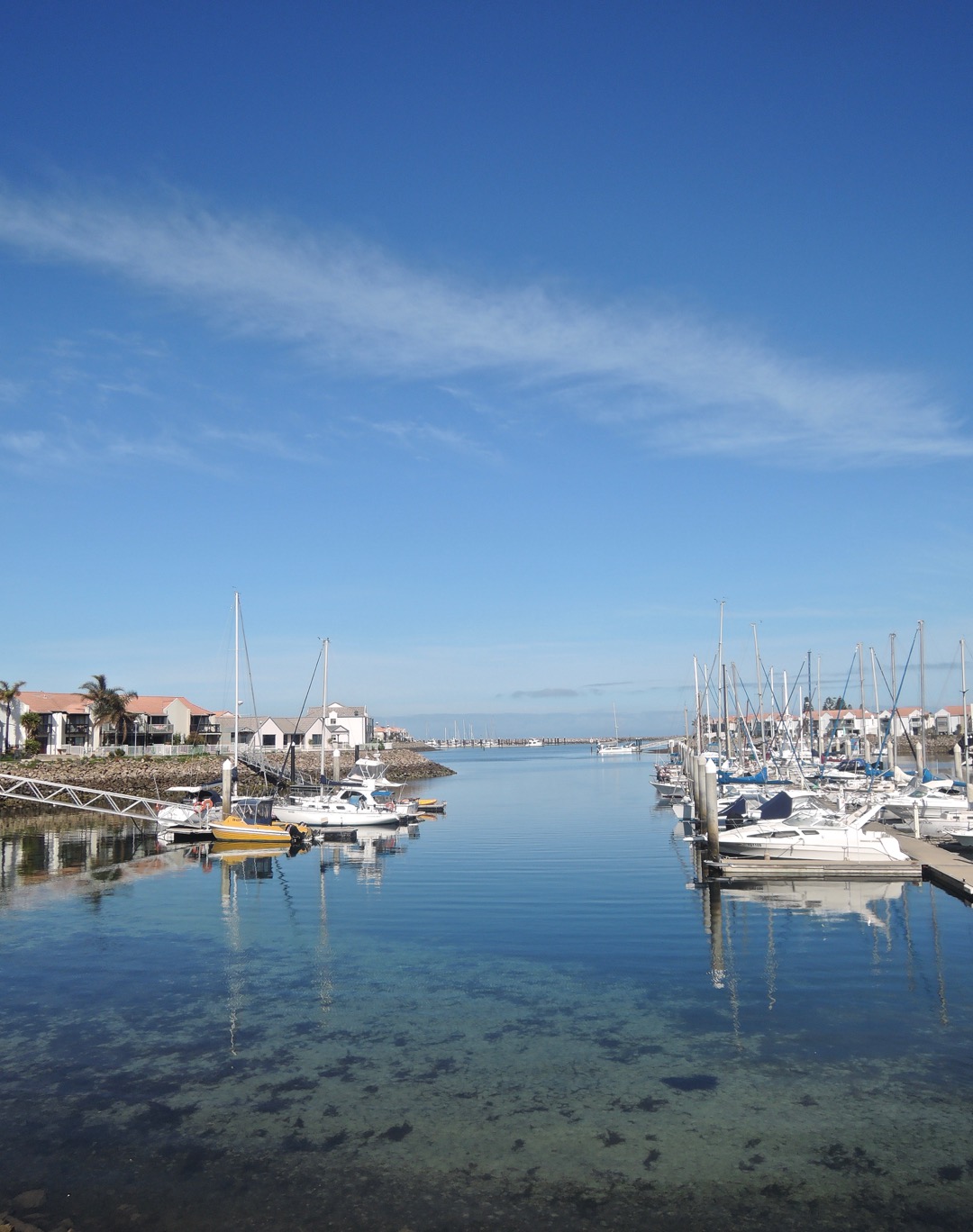
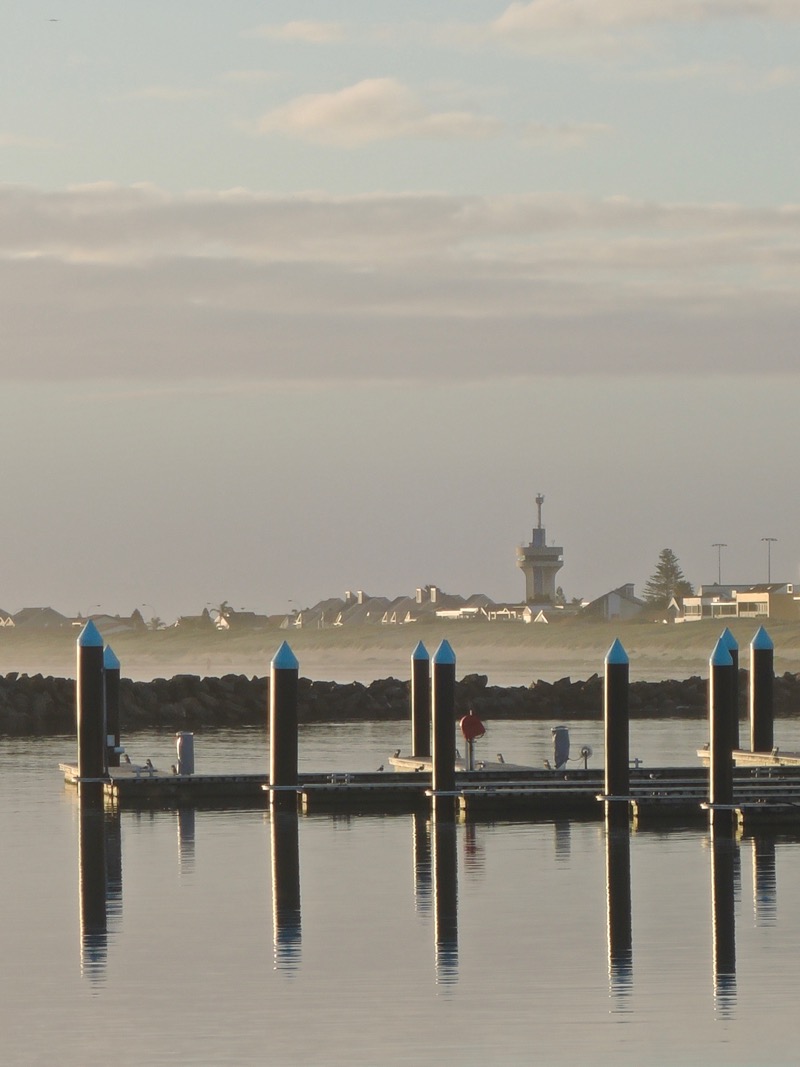
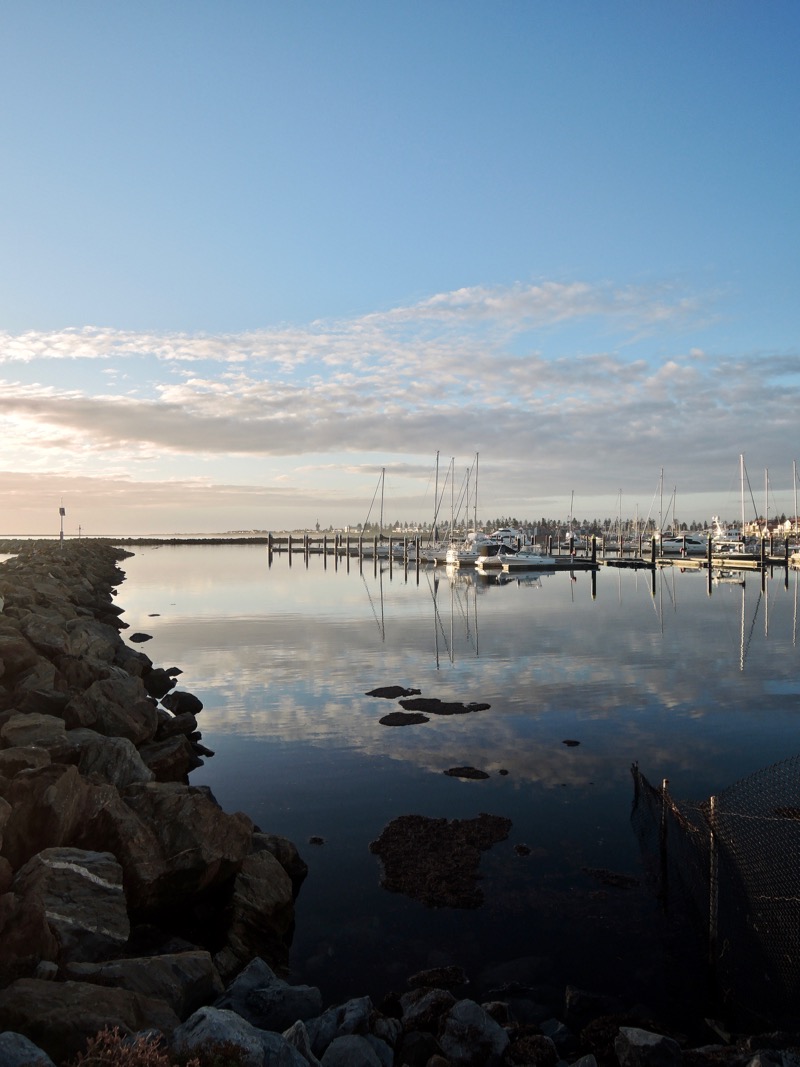
I took the photos you see in today’s post on a run in the North Haven area one Sunday morning in late August. I ran beyond the breakwater and along the water’s edge by the yacht club and marina. As you can see, there was virtually no wind, though the air was brisk and cold.

It was a blue day — blue sky, blue water, blue paint on the boat ramps. Blue. Blue. Blue. My eyes felt wide open to the blue. I had promised myself that I would stop whenever I wanted to, whenever I saw something that struck my fancy, and that is what I did: I ran and stopped, ran and stopped, ran and stopped. I ran into the blue. I lost my rhythm and then found it again, several times, and it took me a while to figure out that this was my rhythm, on that morning, at least.

And I felt, as I often do when I’m out running, that I had found my heartbeat again: that I had heard it, and understood it, and honoured it.

That, too, is why I run.

Chasing clouds

Running affords the freedom of distance, coupled with the literary appeal of solitude. There’s a meditative cadence to the union of measured breaths and metered strides. Writers and runners both operate on linear planes,
and the running writer soon realises [that] the relationship between art and sport is a mutually beneficial one.’

From ‘Why Writers Run’
by Nick Ripatrazone
in The Atlantic

I’d heard about the connection between writing and running before — or at least about certain writers, like Joyce Carol Oates and Haruki Murakami, who run as well as write, and who believe that their running helps their writing. And I’d always understood the connection instinctively, though I don’t think I could have put it into words as Ripatrazone does (fairly baldly and glibly in some spots, it must be said) in his piece for The Atlantic, which I’ve quoted throughout this post.

Running, the argument goes, clears the mind. Writers stuck on a sentence should lace their sneakers and go for a jog, knowing that when they return, they will be a bit sweatier, more tired, but often more charged to run with their words. This is Ripatrazone’s advice, at any rate.

While I would quibble with any shoulds when it comes to either running or writing — what works for some people won’t work for others; and one person’s meditative jog is another person’s sweaty, heart-pounding, back-spasming nightmare — Ripatrazone also has this to say, which I love:

Writing exists in that odd mental space between imagination and intellect, between the organic and the planned. Runners must learn to accept the same paradoxes, to realise that each individual run has its own narrative,
with twists and turns and strains.’

I’ve been struggling for some time to articulate why writing became such a tortured process for me over the last couple of years, and, equally, why I turned to running around this time with such joy. I knew that when I ran I felt a sense of clarity that I don’t otherwise feel; but still, I didn’t think the two things were connected — especially since, not long after I began to run again regularly, I made the decision to stop writing altogether, at least for now.

Now, though, reading Ripatrazone’s words, I wonder if it was that odd mental space … between the organic and the planned that running creates in me that allowed me to stop writing.

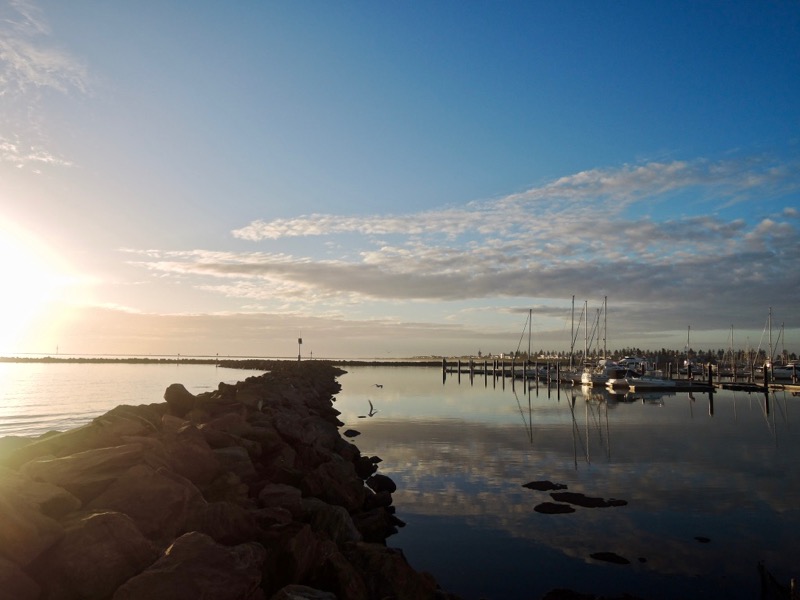
The only way I can explain this is to tell the story behind the pictures in today’s post, which I took on a short, gentle run in late July, after a particularly torrid day at work. I made it onto the beach before the sun set. Once there, I ran with the sun ahead of me rather than at my back. And at the halfway point, at the breakwater, I stopped.

I stopped.

I stopped.

I took these photos, and I breathed in, and I felt the lowering sun on my skin, and I felt everything inside of me, finally, stop.

This, I think, is what running does for me: it allows me to stop. It brings me into a kind of stillness I don’t feel at any other time. Running, stopping, finding stillness: to say that these things are intimately connected with each other seems a contradiction in terms. But perhaps it’s not, because something shifted inside of me when I took up running again last year: I felt it almost immediately. That shift was what allowed me to stop writing, which was something — I see now — I had to do, in order to move forward in my life: and to move forward, also, in my writing (again, that contradiction in terms).

Perhaps, in the end, Ripatrazone puts it better than me — not in his clichéd injunction to writers to run in order to improve their writing, but in his description of the paradoxes that both writers and runners must face.

In any case, on the day that I’m speaking of, the day that I took these photos, once I had stopped for a while to breathe in, and to look about, and to rest, I knew that I was ready to move again. And so I turned and ran homewards, with the sun sinking into the sea behind me and the air gradually chilling, and a sense of stillness all about me, and also inside of me.

Deep, deep inside.

Chasing clouds

‘It took me years to see that path and to find my pace.
When I finally got moving, I hoped I might be able to run forever.’

From ‘The Long Run’
by Catriona Menzies-Pike

We’ve had an unusually dry, cold winter in South Australia this year — the driest, I heard recently, since the mid-1960s — and so the days in the last few weeks have been mostly clear and crisp. Global warming and environmental concerns aside, I love this weather.

And here’s a first — I have even grown to love the short days this year!

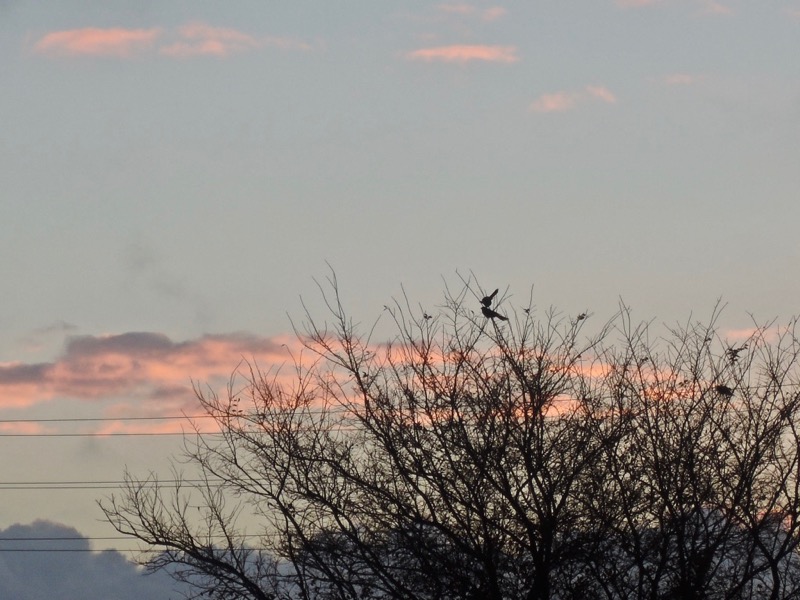
Sunrise, bird, tree.

Some mornings, I get up around 6 am, and go for a run before work, as the sun rises. Running before breakfast, I’ve discovered, is a completely different beast from running later in the day: sleepy and not yet well-fed, I run more slowly (which may not seem possible, but apparently is) but also somehow more smoothly. It is as though the calm of the night, the deep, rhythmic breathing of sleep, still hang over me. I feel light, buoyant, in my body and in my mind, as though I’m still moving through my dreams. My joints are loose and easy, and the exertion of the run seems somehow separate from me, not part of the dream I’m in.

Meanwhile, as I run along the esplanade path or by the shore, the sky grows rosy to the landward east; and the sea turns from silver, to grey, to blue, to the west; and the scent of the sand drifts up to me, filled with chill and damp; and sometimes a sliver of moon hangs above the tops of the pine trees lining the coast.

And I know that I’m awake. Alive. Grateful to be here.

Chasing clouds

‘It took me years to see that path and to find my pace.
When I finally got moving, I hoped I might be able to run forever.’

From ‘The Long Run’
by Catriona Menzies-Pike

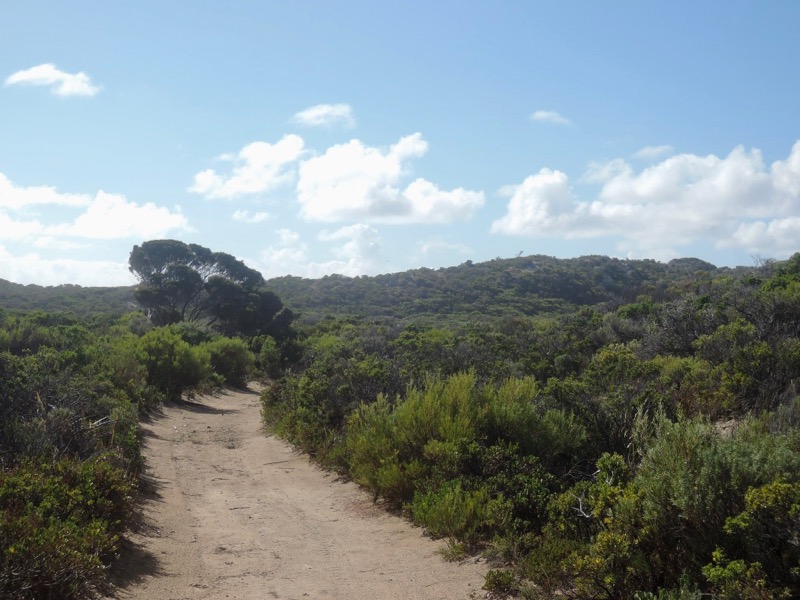
I recently spent a week holidaying in one of my favourite spots, near a clifftop in the Yorke Peninsula region. It was mid-Autumn, and the weather, like the view, changed every day, sometimes every minute.

During one of the sunnier hours, I went for a run in the bushland that lies behind the dunes and cliffs. I took off my running shoes and ran barefoot along the winding sandy track that rises and dips through the scrubland. Despite the lack of rain in the previous months, the bushland here seemed to me quite lush (at least by South Australian standards).

I finished my run at the base of the highest dune, and then I trundled up to the top of the dune to look down on the beach and shoreline below.

It was a moment of silver seas and blue skies — a moment worth celebrating.

Chasing clouds

‘Some athletes love to talk about what a simple sport running is.
They say that all you need is a pair of sneakers.
That’s not true.
What you need is some freedom of movement
and the ability to see a clear path ahead of you.
It took me years to see that path and to find my pace.
When I finally got moving, I hoped I might be able to run forever.’

From ‘The Long Run’
by Catriona Menzies-Pike

Around about a year ago, I wrote a post on this blog in response to lawyer-turned-long-distance-runner Robyn Arzón’s book Shut Up and Run. In that post, I wrote, in angry contradiction to Arzón, about the virtues of taking things slowly, of living humbly, of letting things unfold gently, whether or not your life is unfolding as you wish it would, or as you think it should. (You can read the post — which, by the way, I still stand by — in its entirety here.)

Here’s the thing about running, though, as an activity, as a practice: it lends itself to metaphors. That’s why so many runners, like Arzón and Menzies-Pike, write about it. Speed, distance, endurance, cadence, rhythm, pace — all of those things can be metaphors for something else: for life. It took me years to see that path and to find my pace, Menzies-Pike writes, of her running. And: When I finally got moving, I hoped I might be able to run forever.

Don’t tell me she’s not talking in metaphors.

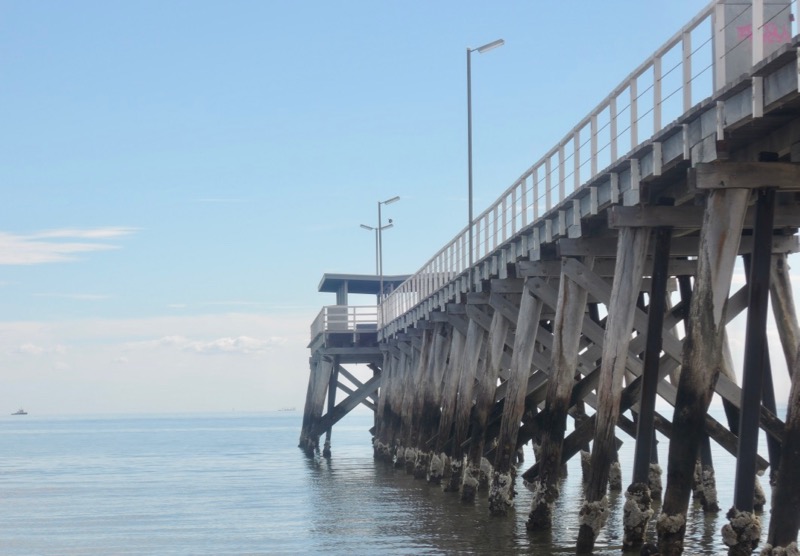
As for me, I stopped mid-run — on a gorgeous, warm, still day last week; a day when all of coastal Adelaide seemed to be bathed in soft sunshine — to take the photos you see in today’s post. Afterwards, I put my camera away and lingered at the shore a while, before wandering back from the beach to the foreshore path and setting off again, back home.

Days like that — days of running beneath a soft blue sky, beside a silken blue sea — are days, simply, to be grateful for, days that feel as though they are unfolding as they should, or at least as you wish they would.

And so this post is the first in a new series on my blog entitled Chasing clouds. It is a companion series to my Out and about series, in essence. The theme in that series is walking; the theme in this one is running. Running, for me — like walking — is about wandering, about wondering. It is about chasing clouds.

Of course I’m using metaphors. Running, for me, is about hope.

Miracle

Other people’s words about … running

Soon, he is at the base of the mountains, his heart rate is at least 140, and the peaks tower over him like wild, hungry beasts. It is this moment in which Russ understands himself best. In which he could easily say, my name is Russ Fletcher, I am a man living a certain sort of life, and I am happy.This gasping moment is free of obligation, of expectation and that bruised yellow past. It is only Russ and his beating man’s heart, Russ and the cloud of his breath as it unfurls white in the cold morning, Russ and the burn, burn of his legs. The needle-prick attention of his mind, as it focuses on blazing extremities. Running, Russ is okay. Running, he moves forward.

From ‘Girl in Snow
by Danya Kukafka

I have a chequered history with running, but recently, I’ve taken up the habit on my own terms. Here’s how it goes: every day, either before or after work, I make the effort to stroll down the road to the beach, and then, once I’m on the sand, a few metres from the shore, I break into a run for a few minutes. Often, honestly, I run for only five minutes or so before slowing down, turning around and heading back home. I guess it’s as much about getting fresh air into my lungs, moving my limbs a little before or after sitting at a desk all day, feeling sand crumble beneath the soles of my feet, as it is about anything you might want to call ‘fitness’ or ‘athleticism’.

Occasionally, though — once or twice a week, if I’m lucky — I run for a longer time, for twenty minutes or so, taking my camera with me (so that I can stop along the way to take photos like the ones in this post). No matter how slowly I run, or how heavy my legs seem to become, or how tired I was beforehand, or even, some days, how sub-par I felt before I set off, there is always a moment on these runs when I feel, like Russ in the passage above, that I understand [my]self best, a moment when I feel free of obligation, of expectation, of that bruised yellow past.

A couple of years ago, when I first took up running again after a lapse of twenty years, I hoped to run for much longer times, to run much further distances. That seemed to be what every other runner did, after all. And that’s what I wanted to be: a runner.

But running is like everything else in life: what works for other people isn’t necessarily what works for me. And over the last two or three years, I’ve learned — at first to my bitter (childish?) disappointment, and then, slowly, to my joy — that I can find a way to run on my own terms and still find pleasure in it. Still find release. Still find hope. And reason. And courage. And peace. And, like Russ, who runs when he’s both joyous (as in the first quote) and terribly sad (as in the next quote), freedom.

Russ runs. He takes off down the sterile … streets … All he can do now is push — move his body, sweat it out, keep inching forward. For now, he focuses on his own limbs and the miracle ways in which they serve him. The freedom of the open Colorado sky.

I thought at first, when I couldn’t run the distances I wanted to run, the distances I thought I should run, the way everyone else seemed to, that I was giving up. It took me a while to understand that finding a way to run that worked for me wasn’t so much about giving up as it was about learning to surrender.

Surrendering is not the same as giving up. I didn’t understand this before. I am glad that I am beginning to now.

Epic

Other people’s words about … sweat

‘Swagger’ might be common jargon now, but let’s not confuse the situation. Swagger is earned. It can be grimy or graceful. It can be innate, but it’s also finessed. It’s the feeling that makes you sit a little taller and reinforces your backbone. We sweat with swagger when we infuse a shameless confidence into movement. To sweat with swagger is to redefine what it means to be an athlete and create unapologetic greatness along the way. When we sweat with swagger, we test the limits of human potential. When our footsteps are powered by motivation and a strong community, the cadence is a drumbeat to doing something epic. Sweat is magic. Swagger is the glisten.

from ‘Shut up and Run
by Robyn Arzón

First, a story of my own, before I address the words I’ve quoted above.

The day before Easter, I woke with my stomach roiling. It was my first official day off work for a while, and when I pulled the curtains back from the window above my bed, I saw clear skies and sunshine through the glass. Lying there in bed, a little before seven o’clock, I felt every part of me rebel at the thought of languishing the day away inside, sprawled out on the sofa, feeling ill.

And so I got up, and I pulled on my oldest pair of trousers — the pair with the faint bike-chain stain on the left leg. I threw my camera and some spare coins into my backpack, and I got on my bike and rode away from the house.

The moment I started cycling, I could feel something inside of me begin to unfurl. I am a tense person, and mostly this tension is a mental thing, but it manifests itself in me physically, too: in my muscles. This is something I have only just begun to realise. I had been sore for days before this bike ride, my right hip aching from stooping over the computer in the office, the muscles in the hollow of my back raw from constantly bracing myself (against what? staying still?), my stomach queasy and unsettled.

So I pedalled slowly. Gently.

The route took me south-west — first along the coast, past two jetties; then south-east a little way,  where the coastal road came to a dead end. Then, when the coastal road started back up again, I turned back west and cycled alongside the sea once more, past the third jetty. I rode with my head up, glancing about me: at the wide, cloudless sky, and the opal-coloured sea, and the faint line dividing the two of them. Lycra-clad cyclists sped by me in a whoosh of tyres and sweat — mostly men, some women; most of them younger than me, but some older — and I said, ‘G’day’ to each one of them and gave them a little smile of greeting and acknowledgment, though I’m not sure that any of them heard me or noticed.

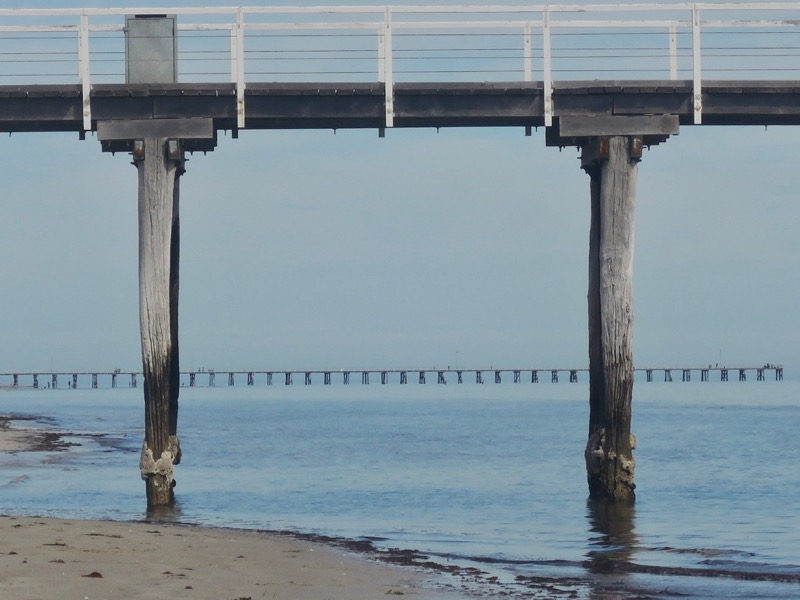
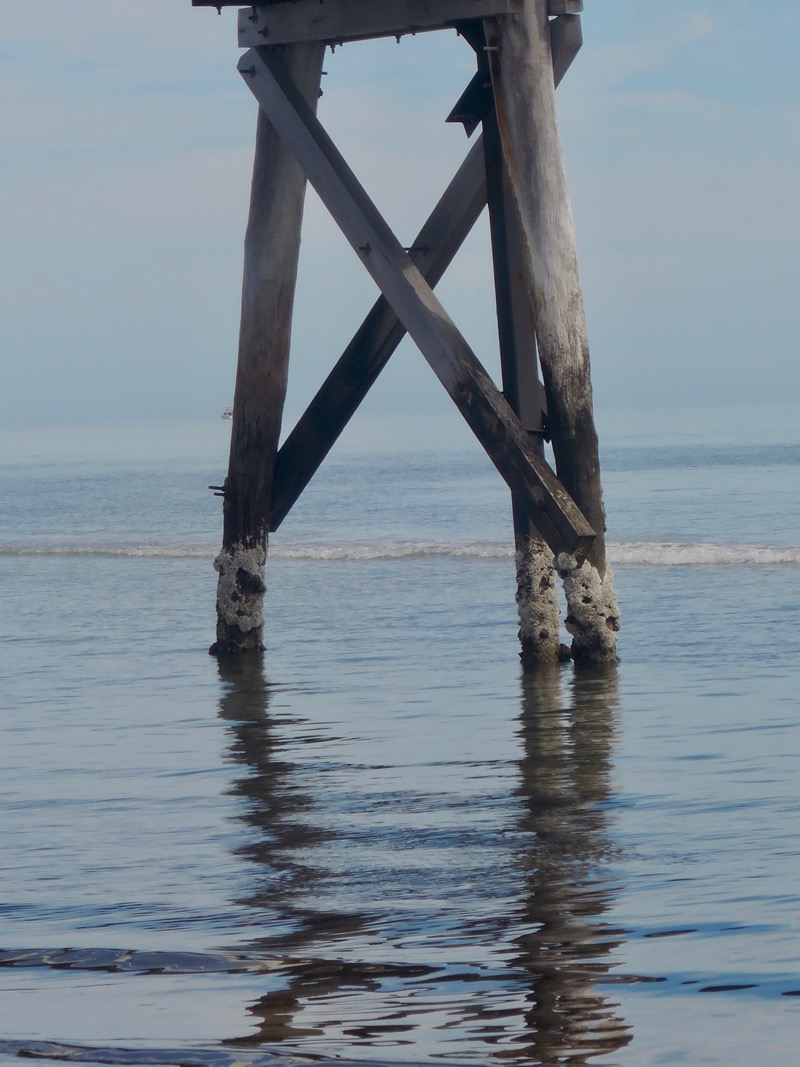
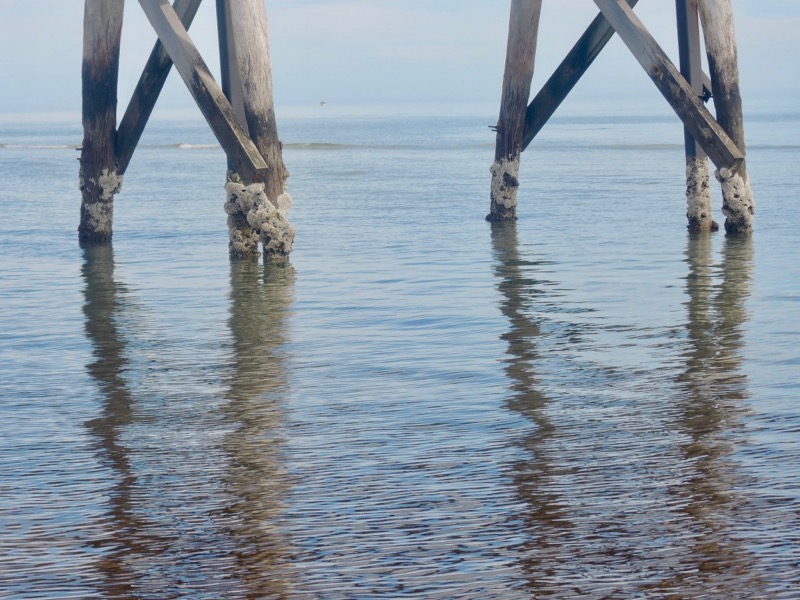
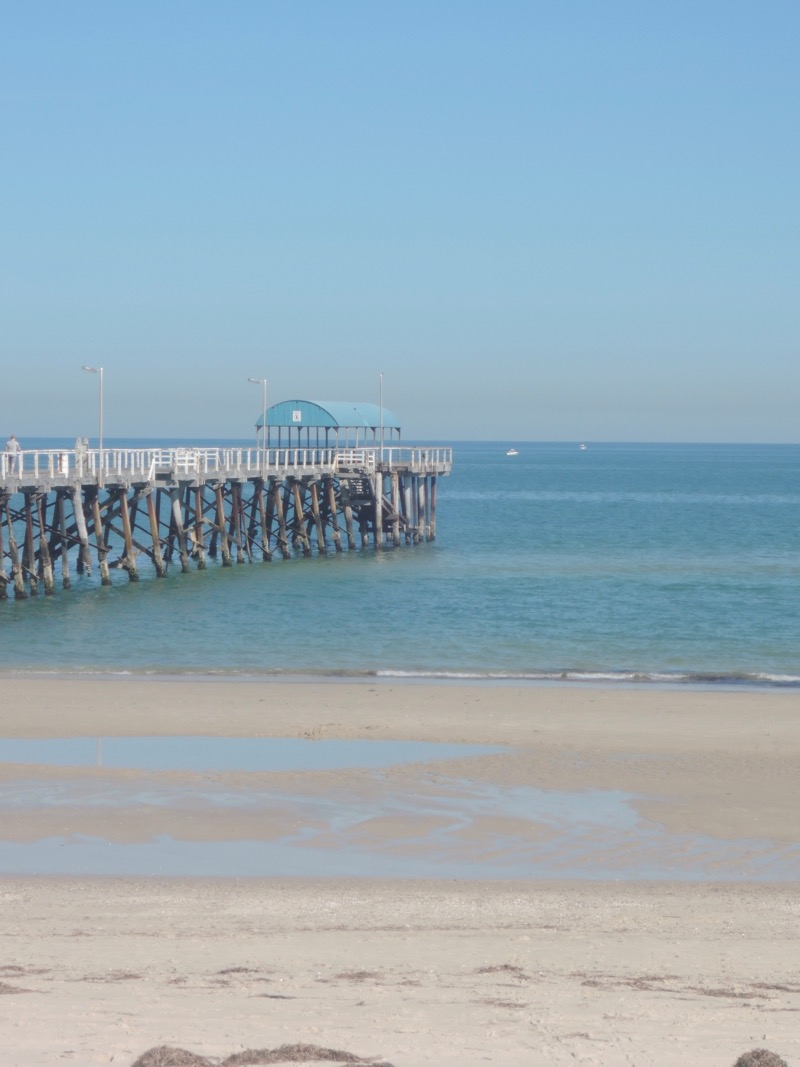
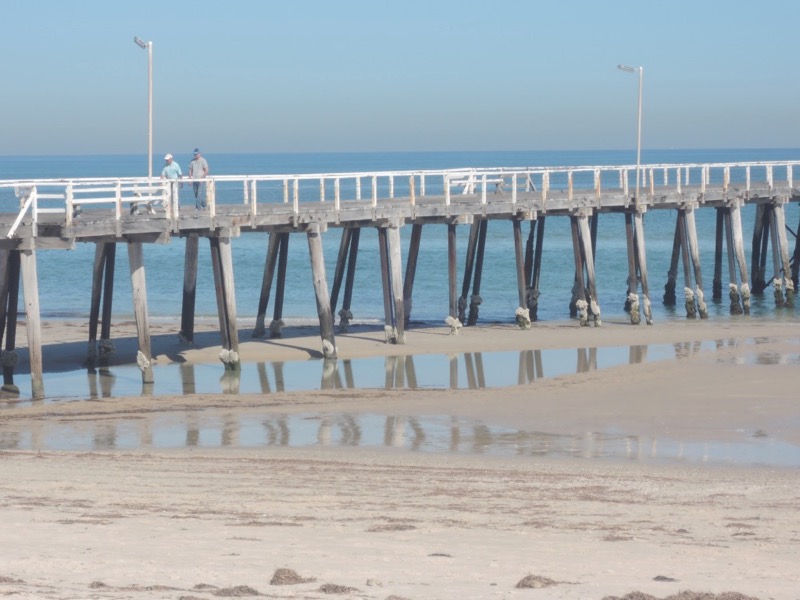
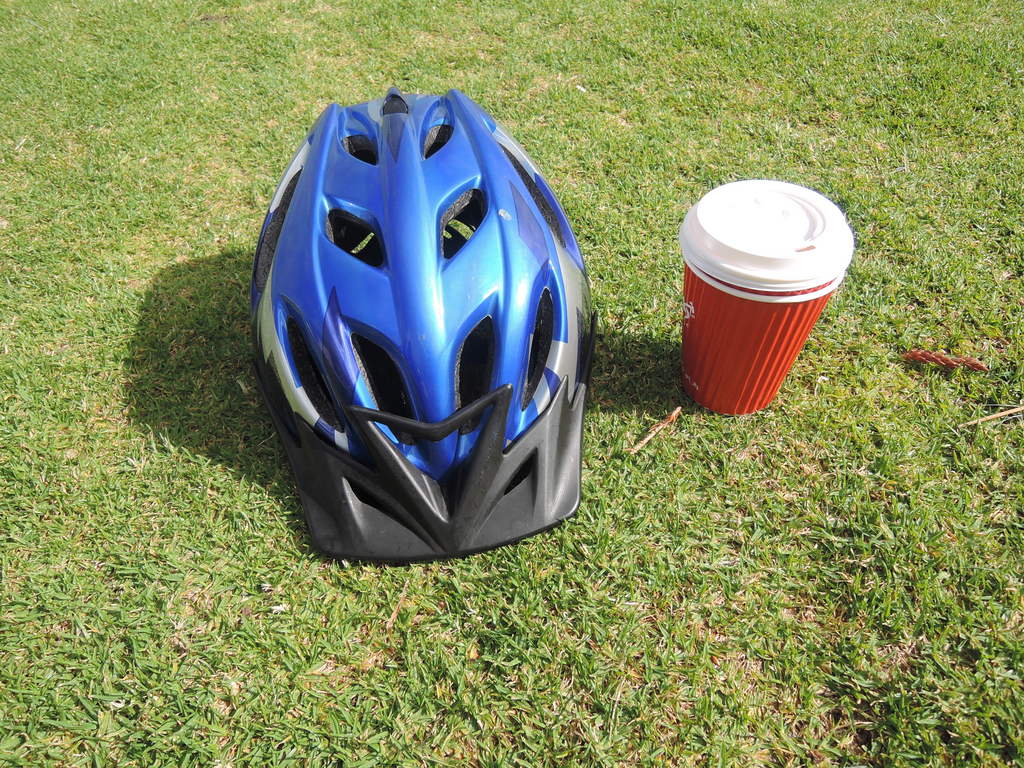
When I got to the fourth jetty (the one pictured in most of the photos in today’s post) I stopped and parked my bike. I wandered across the main road to the supermarket and bought some dried-fruit-and-nut mix, and then I dropped into my favourite café at that particular beach and ordered a take-away cup of tea. They’ve recently started selling tea made from leaf tea instead of teabags there, even for take-away drinks, which is a little thing, I know, but it makes me very happy. I carried my lidded red cardboard cup of too-milky leaf tea back across the road and plopped myself down in the middle of the foreshore square. And there I sat, cross-legged on the sun-warmed grass, nibbling my fruit and nuts, sipping my tea, looking (and looking) at the sea.

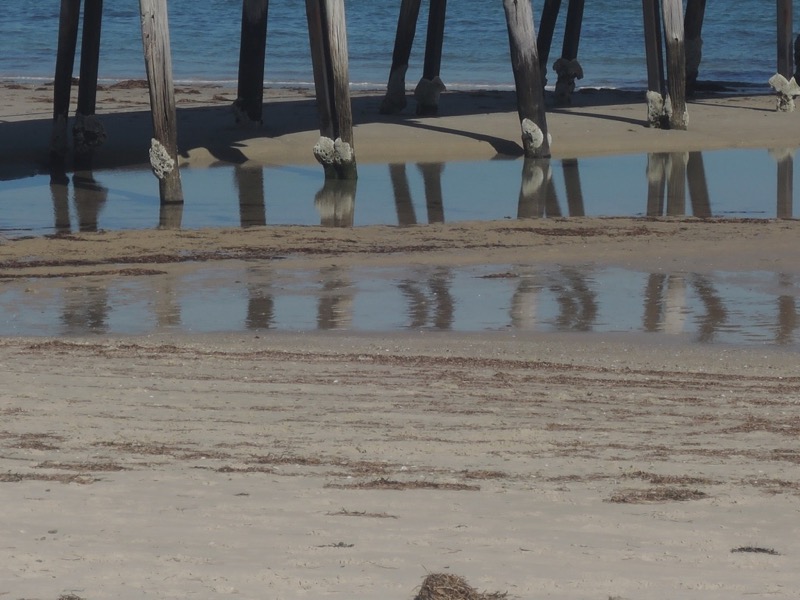
In a few weeks’ time, the grass in that foreshore square will be wet with rain, and a cold wind will whip between the lamp-posts up over the grey roof of the pavilion. I contemplated this a while, stretching my arms out behind me, resting my weight back, feeling the blades of grass tickle my palms. The beach was only a few steps away from where I sat on the grass, and I could see the jetty pylons reflected in the water, and I’ve said it once already in this post, but little things like that — they make me very happy indeed.
So what has this to do with the words I quoted at the beginning of this post? There was a bit of sweat involved in my bike ride, sure, but there was no swagger. I cannot say I moved with shameless confidence or unapologetic greatness. I was motivated, certainly, but I did nothing epic or magic. I am certain I did not glisten.

Thank goodness.
I do not wish this post to be unkind. I do not wish to say, as Arzón herself says many times throughout her book, I call bullshit on her words. But then there’s this:

Our inner monologue can turn can’t into can and dreams into realities. Extinguish doubt with action. Let’s write the story that says we are a little better than yesterday. We can push ourselves to where we want to be. It’s going to take a little sweat, though. Happy is something you do, baby, and only you are responsible for your happiness. Life is happening right now, so stop making up excuses and tell me, what do you want your story to be? Do you want to be a runner? Have you always dreamed of completing a marathon? Whatever it is, write it down, look back on it, and own it.

These sentences — sentences like this — worry me. Arzón’s thoughts are not unique; her words are a part of a general conversation, one that I hear around me almost every day. And it is a conversation I can’t help fretting about. I am alarmed when I hear someone confuse athletic prowess with personal greatness. Or when I hear someone link the idea of their becoming a better person, of their living a better life, with the act of slipping on a pair of running shoes. Or when I hear someone use words and phrases like ‘strive’ and ‘focus’ and ‘dedication’ and human potential (that last is Arzón again) to describe, not acts of goodness, let alone greatness, but essentially self-centred feats of fitness and strength, speed and endurance.

I decided to do one thing with my life — epic shit — and I want you to come along for the ride, Arzón writes, of her long-distance running. Maybe I’m wrong, but those words make me feel empty and sad.
Having said that, I also do not wish this post to turn into a lecture, or a rant. I do not wish to moralise. So I will just say this: I took my bike ride that morning slowly, because that was what the day asked of me, and what my life seems to be asking of me generally right now — regardless of my dreams, regardless of whatever kind of story I might prefer to write about myself. It was a gentle ride, and I felt gentler for it afterwards (though still somewhat unwell).

And that, I think, is how I want to live out my days: gently. Slowly. With kindness, both to myself and to others. With humility.

Tell me, am I alone in this? How do you want to live?

It’s not always about speed. Or winning.

Other people’s words about … running (slowly)

I didn’t fight my way across the finishing line — nor did I float. The significance of that marathon didn’t lie in speed or in pain, but in the exchange between my body and the city. I didn’t need a personal best trophy; I could prize the run on its own terms. After many years of early morning runs and all kinds of races, running is to me a way of being, not a way of testing myself against invisible antagonists and not a competition with my peers. I had nothing to vanquish but my doubts, and now — in ways I could never have predicted — running has brought me into a rich communion with the world. It still surprises me. I’m careful not to slip on dirt tracks, and I pay more attention to warnings about overstraining my knees than I used to. I want to avoid injury. I don’t want a show-stopping finish line moment. I want to keep running.

From ‘The Long Run
by Catriona Menzies-Pike

When I (briefly, as it turned out, at least for now) took up running again last year, it wasn’t the thought of speed, or competition, or races, or personal bests, that appealed to me. Nor, God forbid, was it the thought of getting super-fit and toned. Lone beast that I am, it wasn’t the thought of companionship, either: of joining a running team, or running with new friends. I know these are the things that runners often find joy in, but they weren’t drawcards for me.

No, what drew me back to running was what I remembered from the period in my twenties when I ran: how meditative running can make you feel. There is the beat of your heart, the rhythm of your feet, the taking-in and letting-out of your breath. There is the simplicity of moving your feet over the ground, taking you there (wherever ‘there’ is) and back again. There is the joy, afterwards, of feeling reawakened. And alive.

I'm careful not to slip on dirt tracks
I’m careful not to slip on dirt tracks

I suspect that Catriona Menzies-Pike is a kindred spirit. Her whole book, if you care to read it, is an eloquent essay on how running helped to heal the grief she felt for her parents’ untimely death when she was still a child. It is also an exploration of the joys of running slowly — and making the choice to do so. Imagine running, but not forcing yourself to race. Imagine running, but allowing yourself to enjoy the moment rather than the end-result. Imagine running, with no particular aim in mind other than to take the time it takes.

Imagine.

A rich communion with the world

We talk big about fitness these days. We talk about heart-rate and VO2 and pace and gait. We talk about sub-four-hour marathons and heel-striking and foam rollers. We have instruments and apps to help us talk this talk — Garmins and GPS trackers and Apple Watches and the like. (Wait, maybe those instruments created the talk. Have you ever thought that?) So choosing to run slowly, in a world full of talk like this, is tantamount to an act of anti-consumerist, anti-conformist rebellion.

I don’t want a show-stopping finish line moment. Those words apply equally well to life as they do to running, don’t they? There’s another metaphor in the quote above, too. Running, Menzies-Pike says, still surprises me. I get that. I do.

Because life still surprises me. I hope it always will.