Becoming

Other people’s words about … leaving home

Much as I love my mother, much as I love that fabulous fridge, the free heating, the coffee grinder with whole, organic beans, much as I love reading on the sofa while she shifts and grunts over her Sudoku, I really did need to get away.

Meanwhile, some oozing, inner self knew what I was doing when I loaded up the boot of her car and broke her heart. When I made my mother drive me across town to a damp room in a run-down street, whose only attraction was the fact that she was not in it. I was going to fall apart. I had been so good, I had done all the things. Now, I wanted to sleep under a hedge and wake to the rain.

I also wanted to move out of this crap, overpriced town but I had not figured out where to go yet, so I was in a house in Ballybough that belonged to someone’s dead granny, first of all with Lily and, when she left for London, with her friend Stuart and one other randomer in the box room. Every time I went online, I found light-flooded interiors with potted plants the size of our kitchen. Outside, the red-brick streets were starting to look curated and I was just flicking through a life that wasn’t mine. Just flicking through.

from ‘The Wren, The Wren
by Anne Enright

I remember going away, leaving my childhood home, like the narrator in the passage above, Nell, does when she leaves her mother Carmel. I found it harder to break away than Nell and so I bought a plane ticket and flew overseas, because that was the only way I could make myself leave —- it required money; it required fear; it required loneliness; it required a non-refundable, one-way plane ticket to the other side of the world. I am not speaking figuratively here. As soon as I was on that plane, I felt afraid but I could not jump out —- that’s the thing about planes; you can’t jump out —- and so I went on flying away, leaving home (although, like Nell, I grew up and came home again eventually).

Path to the beach, Silver Sands, March 2024.

Last year I turned fifty-three and yet the stories that most move me, the books I most often read, are still, even now, about young people coming of age —- or if not young people, then people at moments in their lives when they become bigger or older or wiser or sadder, when they become in essence someone new, which is after all another form of coming of age. Perhaps what I mean is that I love stories of becoming.

Being fifty-three is a time when you come of age in another way. It is, you know, especially for women. I am right in the throes of that now, my last coming of age, perhaps.

It’s funny in some ways, because all the things I taught myself to do when I was younger, all the things I taught myself to do in order to grow up and look after myself and find a way of moving through the world with more ease (which is perhaps the very definition of finding a way to grow up) no longer work, not at fifty-three. My coping mechanisms, that is to say, are no longer effectual at helping me to cope — not because they no longer work, I don’t think, but because I simply can’t do them anymore.

Crooked tree and seat, The Washpool, March 2024.

For example.

You teach yourself to be intimate with other people -— a man you love, a friend you adore, another friend you trust. You teach yourself to be fit and strong. You teach yourself to drink a little wine every now and then, because it helps you to relax. You teach yourself to be okay with solitude. You teach yourself these things -— I taught myself these things -— but now these things, most of them, are slowly becoming inaccessible to me, simply by virtue of the fact that I am fifty-three. And fifty-three, I am finding, says no to these things. Physically, I mean. It says no.

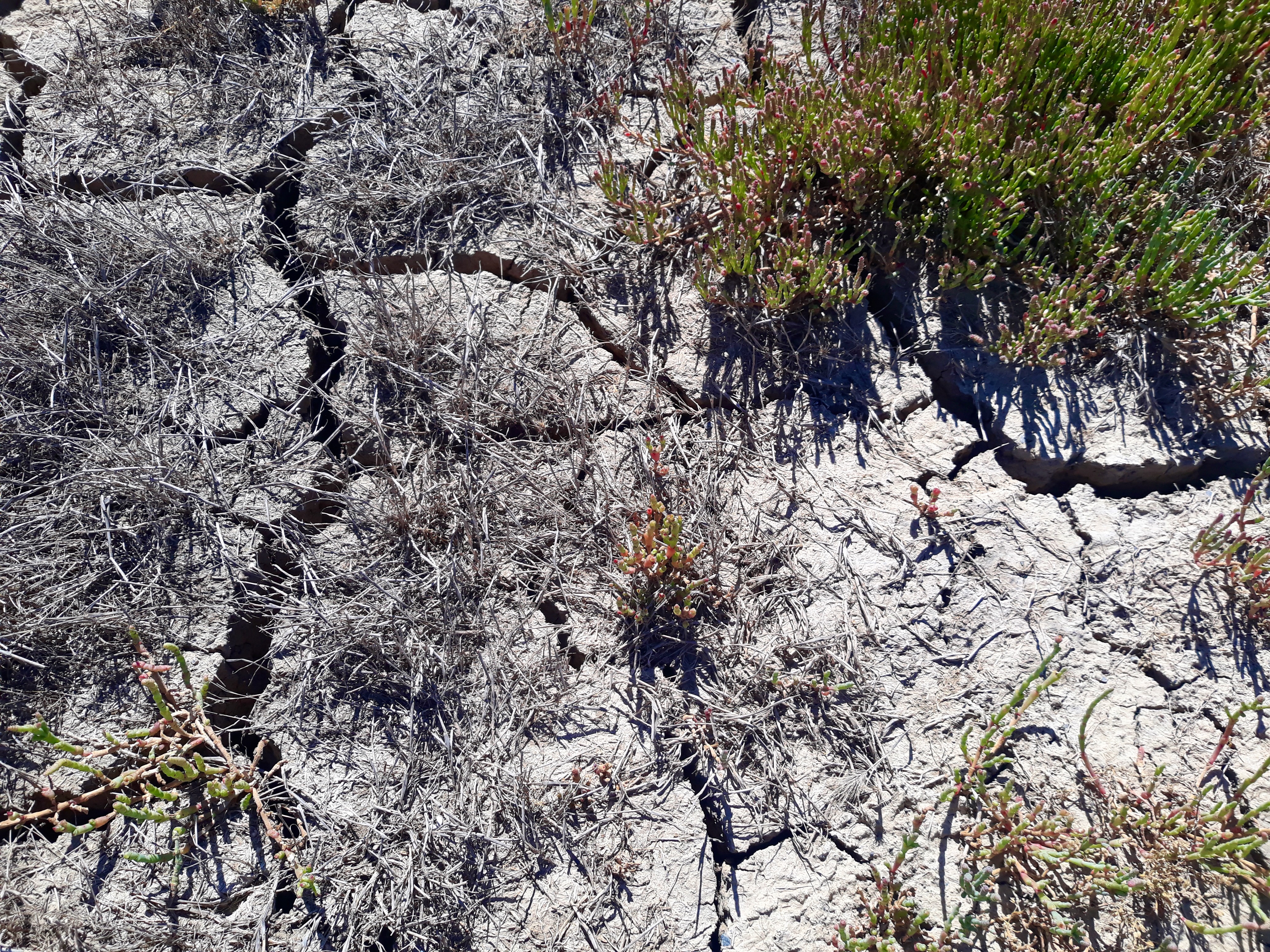
Cracked mud, March 2024.

So I look down the tunnel of my fifties and I see what every other fifty-year-old before me has seen, no doubt. And I do not feel, no matter what decision I make, as though I am growing bigger or wiser or sadder or in any way newer. I am growing older, definitely. There is that.

But then there are books like The Wren, The Wren. Because I lied a little when I said that all the coping mechanisms I taught myself as a younger woman no longer work for me. One of them still does. I read. I read. I read.

Lately I’ve been reading …

Only connect: Talking honestly

Other people’s words about … connection

I was never sure how honest I was supposed to be with friends. I didn’t think honesty was romantically or sexually loaded, but I felt sometimes that my understanding of friendship was distorted. I was always trying to determine, with everyone, whether I was on the right side of an invisible line. If asked, I’d always argue that the problem was with normative approaches to intimacy, though I’d never been asked. It had worked for Grace Hartigan and Frank O’Hara, I thought, and then I remembered that it hadn’t. I felt, talking to Cara, that perhaps I was veering into something too unstudied, but I wasn’t sure that could stop me today. I wanted comfort; I wanted to feel close to somebody.
‘I suppose I’m lonely,’ I said.

from ‘The Modern
by Anna Kate Blair

When it comes to friendships and intimacy, I am someone, like Blair’s narrator, Sophia, in the passage above, who is always struggling to interpret whether I am on the right side of an invisible line. I am frequently aware of my tendency to dive deep into conversations at an emotional level. At the same time I’m aware that most people aren’t comfortable with that depth, or with the emotional intensity that comes with it. In conversation I often try to pull back because of this, to reign myself in, although mostly I fail. It’s a dance I do, back and forth across that invisible line, over and over.

I am not sure whether people, when they’re talking to me, notice this or not. Maybe this is just part of my intensity, my awareness of it. But I like Sophia’s use of the word honest in this context. It is a loaded term, to my way of thinking. Not everyone fronts up to conversations wanting intimacy or intensity. Not everyone wants to engage in emotional honesty.

There’s that dance again. I don’t think I’ll ever figure it out.

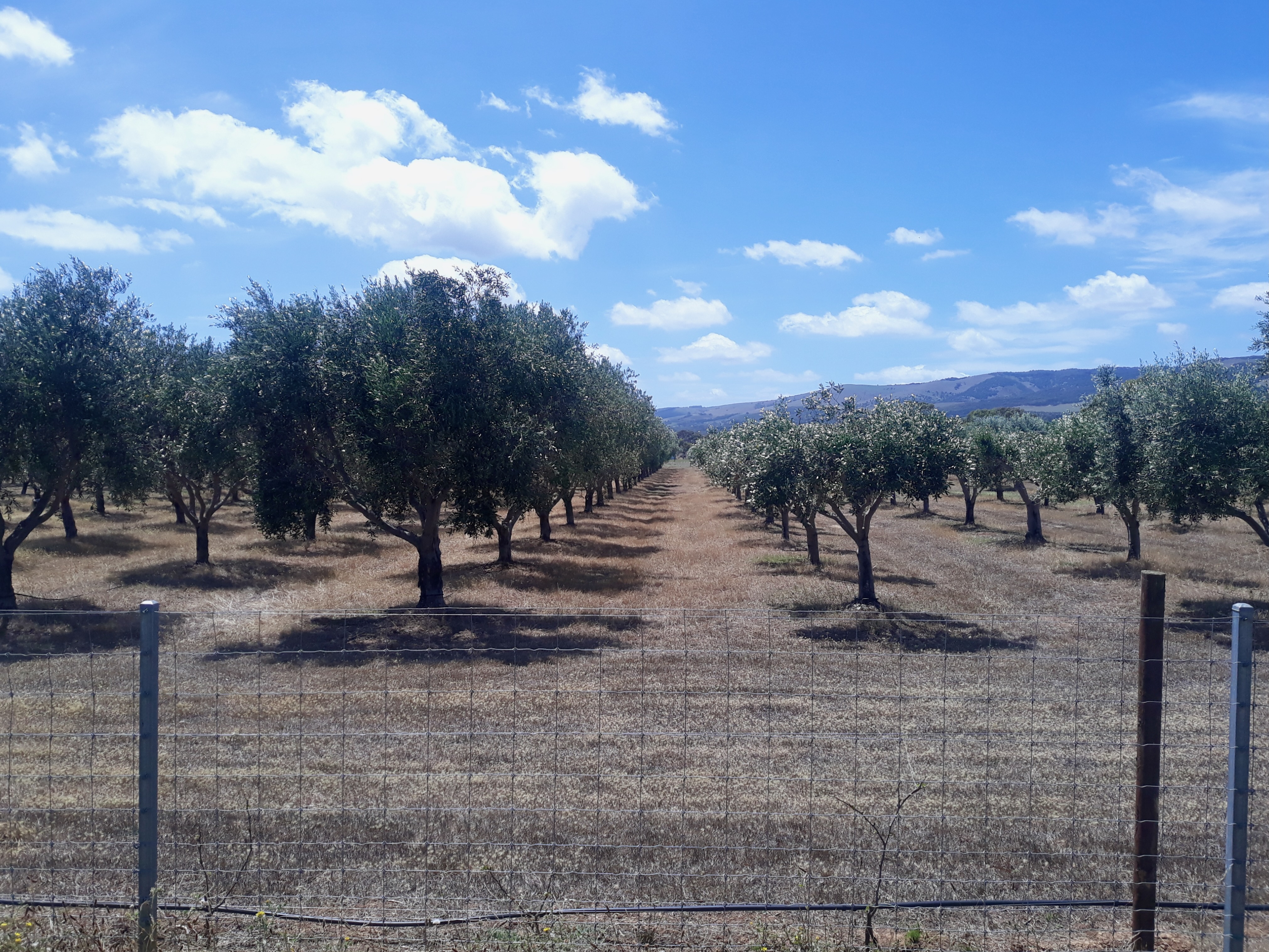
Olive groves, Aldinga, January 2024.

On another note altogether, I’ve been immersing myself in books set in Cairo recently, partly because I lived there briefly when I was twenty-two and partly because I’d like to write a story set there myself one day. Talk to anyone who’s spent any time in Cairo and soon enough they’ll tell you that it’s not like any other city, that when you leave Cairo, you carry with you a kind of sense-memory that never leaves you. Reading these books has reminded me of this. Here’s Noor Naga’s male narrator, an Egyptian boy from Shobrakheit, in her wonderful, extraordinary novel If An Egyptian Cannot Speak English:

From Damanhour, I took the train to Cairo and inside it the air was very brown, like closet air. I fell asleep and woke up with a man feeling my thigh through my torn pocket. People think anyone with a camera will have coins instead of skin inside his pocket. When I arrived in Ramses Station in Cairo, the air was people. Nowhere you looked wasn’t people. You could turn into an alley and find fifty Sudanese men, bluer than black, with cheeks like shoulder blades and ankles like knives, or else women as tall as I am, women so pale you could see rivered blood at their wrists and neck …

If you read one book on Cairo this year, make it Naga’s novel. It will leave you with as much of a sense-memory as Cairo itself, I swear.

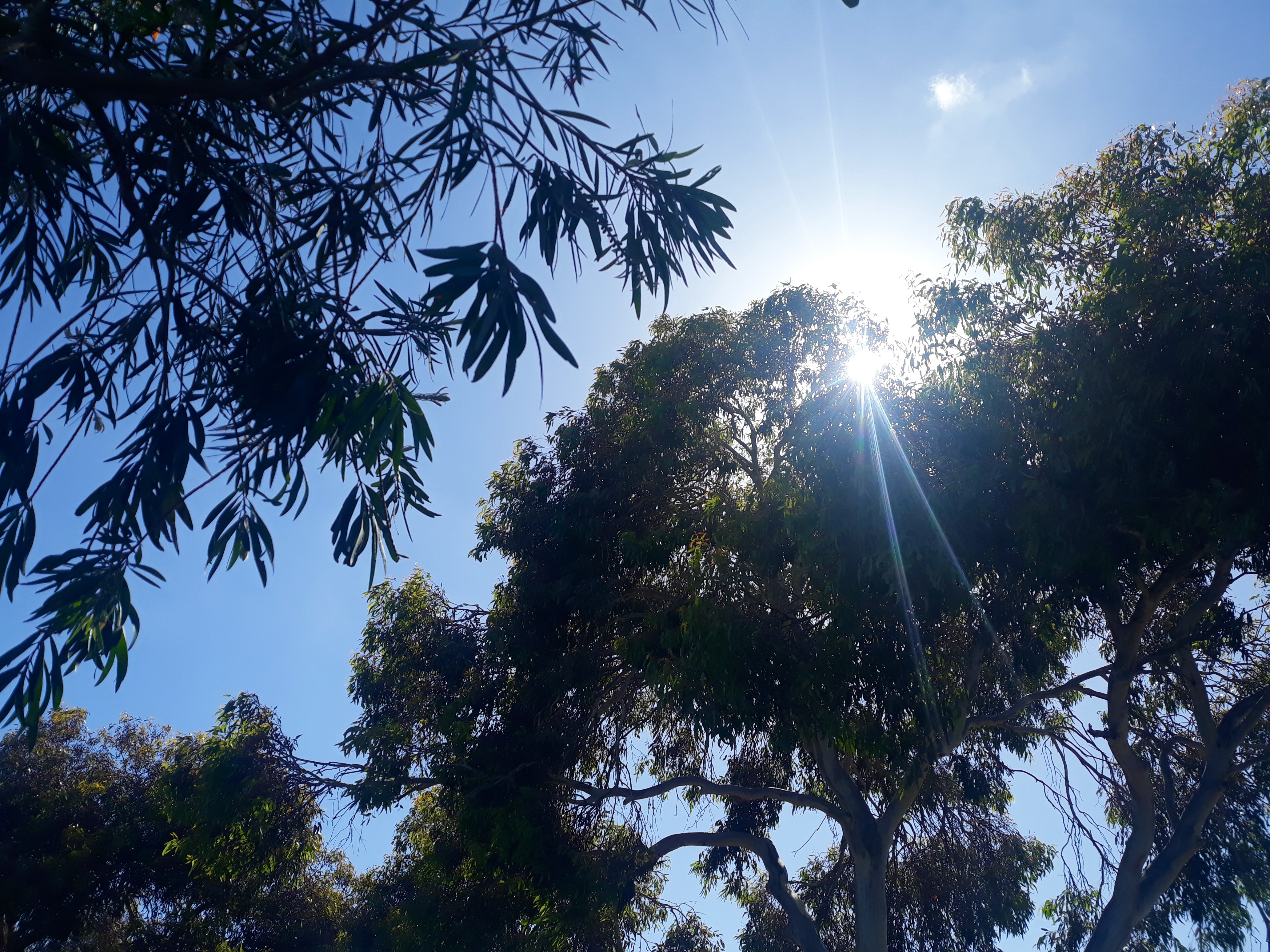
Sunlit tree, Taperoo, February 2024.

Lately I’ve been reading …

Inkling

Other people’s words about … self-perception

The evening was cold with a bolt of black cloud over the dome of the courts. Inside, a maitre d’ approached. He led me to a high marble table with several stools and a can of light on a chain.
Thankyou, I said. I’m waiting for two more.
They were already late. I wondered if the robust twists of bread stacked in a basket to my left were real or fake. I didn’t see anybody that I knew. The food was expensive but I would not be paying for it. At times like this I simply felt too large. I am not a large person but I felt too large, as if I’d bloated, as if I were rangier and wider and more ungainly than other people.

from ‘This Happy
by Niahm Campbell

I’ve experienced the feeling that Niamh Campbell’s narrator describes suddenly coming over her in the passage above — the feeling of largeness, of having an outsized body in comparison to other people’s bodies — so many times in my life that I’ve lost count. Till now, though, I’ve always assumed that it was one of those quirks that is unique to people who have lived with an eating disorder.

It’s certainly true that one of the motivations behind my anorexia was a longing to shrink my body. And I’m not alone in this; over the years I’ve met other people with anorexia who have expressed the same motivation. In fact, back when I was a teenager, in the early days of my treatment, the nurses frequently used to say to me and my fellow anorexic patients, ‘You deserve to take up space.’ It was a kind of motto they came out with when we were feeling low, when we said hateful things about ourselves; they would chant it at us — in an effort to distract us, or perhaps to dissuade us, or even, impossibly, to cure us.

You deserve to take up space.

Those words, that chant, never quite resonated with me. My sense of largeness didn’t feel spatial; it felt physical and embodied, the way one person might have a louder voice than another, or coarser hair. Still, even as the feeling came over me — even as at certain moments it took up all my awareness — I understood that it wasn’t an accurate one. At heart, I knew even then that my body wasn’t any larger than anyone else’s, and that it was my perceptions that were distorted rather than my body. It was just that I didn’t know how to adjust those perceptions.

In many ways, I think, I still don’t. Instead, I’ve learned to ignore my perceptions, to see them as a false signal blinking at me that I choose to ignore. Maybe that’s a rudimentary way of dealing with them, but it’s the most effective response I’ve come up with.

Branch across the path, December 2023.

Because today is the last day of the year, the last day of 2023, I’m going to move on now to an entirely different topic. I want to finish this post with a beautiful poem by Lisa Holstein called ‘Happy New Year’. The poem comes from her collection Dream Apartment; its words are poignant and filled with sadness but also beauty, and so I can’t think of any better ones with which to bring in the new year.

Is it selfish to wish for more than to survive?
I see you, bare arms gleaming in the sun-

struck snow, I see the browned roast
you brought to your wine-stained lips

the stack of books you read, and those boots
that last fall you loved yourself in.

I see you in them again on this roll call
morning stroll through what intimate data

strangers tell me about their lives.
Once upon a time I asked them to

or they asked me, who can recall,
I’m into it, I guess. I like to watch,

at least, I can’t seem to stop, but I can’t
bear to share, so I’ll tell you here:

the cat finally came home last night—
spooked by so many fireworks barking,

he hid somewhere unsearchable for a while
no matter how I called and called.

He chose me, I like to say since the day
I found him starving on the porch.

I know the night is full of unsteady boats
on cold seas and horrible cages

and people far more alone than me
I’m sorry for your loss, your cancer,

the accident you had no way to see coming
and the one you did have an inkling of

I’ve learned how important it is to say
because of how difficult it is to say

and how loudly loneliness fills the silence
although, like anything, it depends—

for instance, I still can’t unhitch my breath
from even the softest whisper of your name.

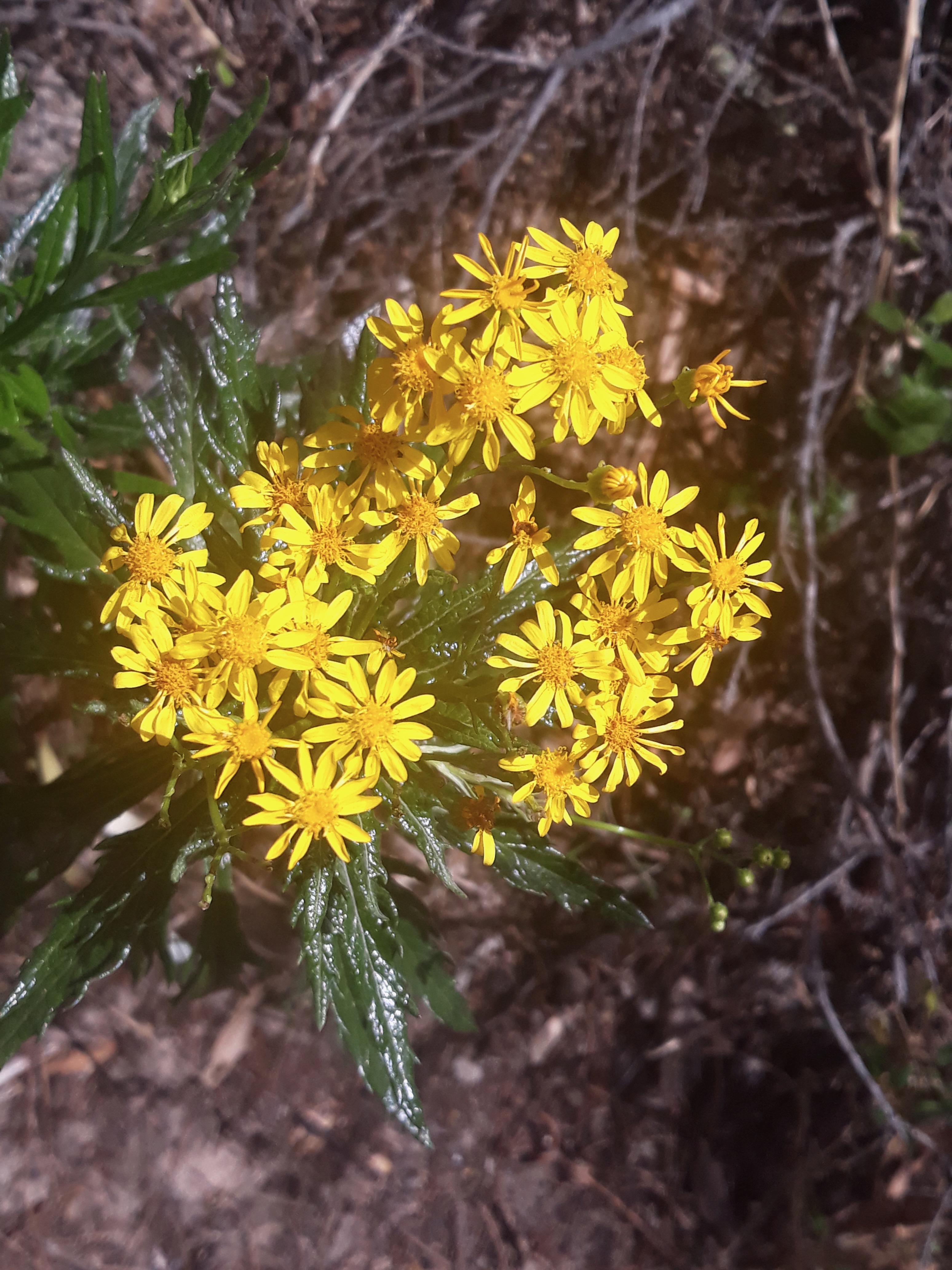
Late groundsel flower, December 2023.

Lately I’ve been reading …

All that food

Other people’s words about … not eating

Mae doesn’t look convinced, but she hands me another bowl, which I pass to TJ. He holds it in the space between us, locking eyes.
You didn’t take any, he says.
I took plenty, I say. I’m stuffed.
No. I watched you.
You must’ve blinked.
Then try some more.
I just told you–
Don’t be a dick, says TJ.
Boys, says Mae.
Her voice is terse enough to shut us up.
Mae holds our gaze until we’ve settled. Then she pours more wine into her coffee mug, twirling her food with a fork.
It’s been too long since we’ve been together, says Mae. Let’s make it a nice evening.
So TJ shoves the bowl of tomatoes my way. I scoop more onto my plate. Then I take bites from the spaghetti and the chicken, and it’s all delicious, and the three of us eat silently, until there’s something like a hum between us.
Is the bathroom still in the same place, I ask.
Mae points down the hallway. I don’t look at TJ when I stand. But once I’ve locked the door behind me, I turn on the faucet, and it’s maybe another five seconds before all that food leaves me.

from ‘Family Meal
by Bryan Washington

When I was a teenager receiving treatment for an eating disorder, people had certain fixed ideas about what kind of person was likely to experience anorexia. By ‘people’, I mean not just family and friends but doctors, psychiatrists, medical researchers. Anorexics, people thought then (because that was what we called people with anorexia in those years, anorexics, a label that many people would now object to), were generally white, middle-class, well-educated, high-achieving, likeable young women with a tendency towards perfectionism.

Perhaps, back then, this was true. Or perhaps, more likely, if you were anorexic but you happened to be male, poor, uneducated, older than twenty-five, queer, or a person of colour — or any combination of these things — then your anorexia went unrecognised. Undiagnosed. Untreated.

We know better than this now, I am thankful to say.

Fringe Lily, December 2023.

In the passage I’ve quoted above, Cam, one of the narrators of Bryan Washington’s second novel, Family Meal, is grieving the loss of his boyfriend, Kai, who died in unexpected, violent circumstances. Cam is Black and queer; he is also addicted to many things, including drugs, sex and, yes, starving himself. He is surrounded by friends who see what he is doing to himself and try to talk to him about it, try to show him that they see, and that they care, and that he doesn’t need to be alone. It takes him a long time to see this for himself, though.

Cam’s experience of struggling with food is different from mine, and that’s partly because of who each of us is — precisely because I did, after all, fit most of the anorexic stereotypes I’ve listed above — although it’s also partly because everyone’s struggle with food is, simply, different. But I am so glad, so glad, that contemporary literature that includes stories about anorexia and disordered eating has broadened to include other stories than ones like mine.

And it’s funny how, no matter what your background, no matter what your life experience, the feelings don’t change. I’m fucking suffocating from the weight of myself, Cam writes.

I remember feeling exactly the same.

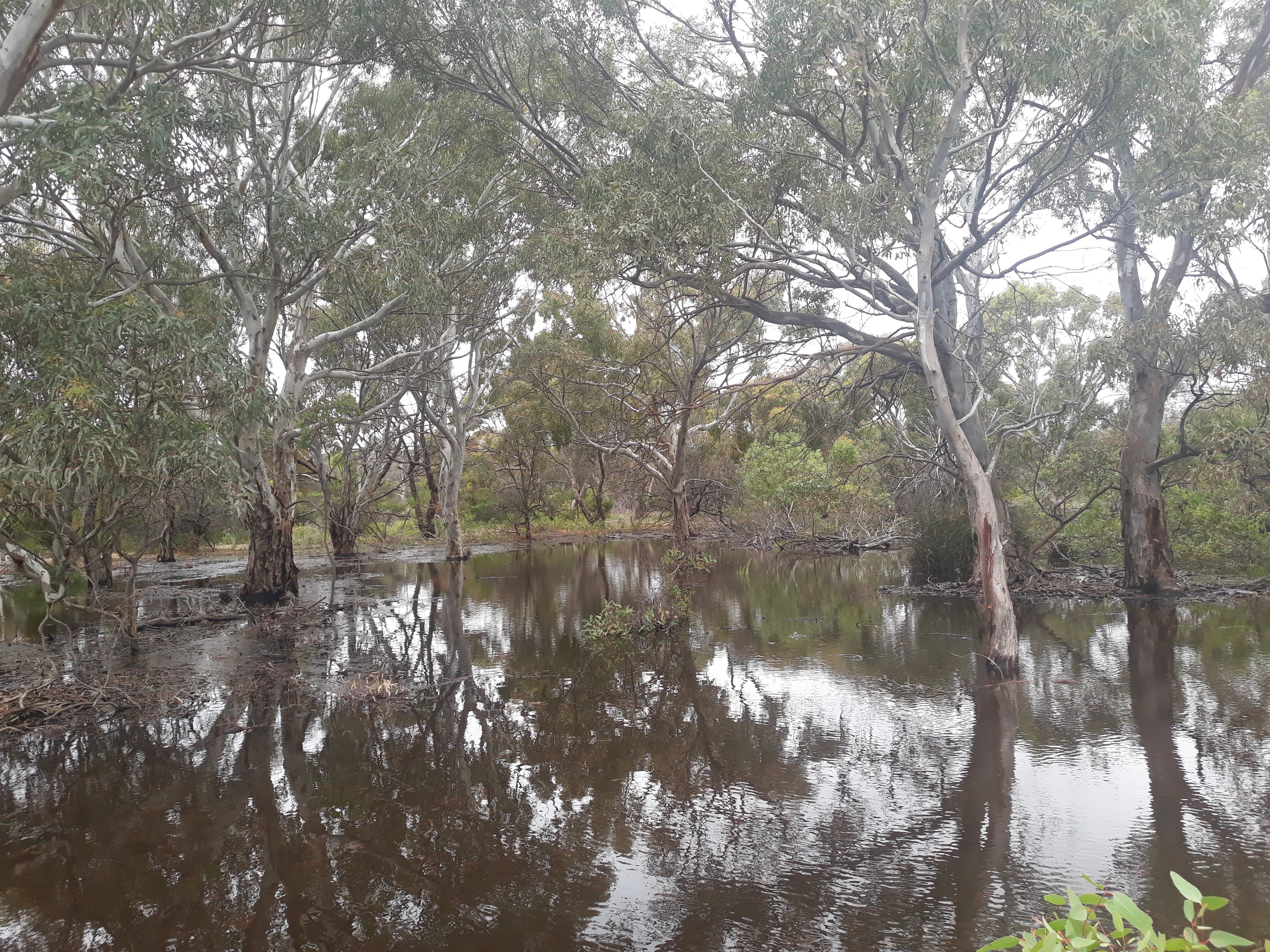
After the rain, Flooded scrub, November 2023.

Lately I’ve been reading …

Unspoken

Other people’s words about … desire

We stayed mostly silent, that morning, and my giddy feeling gave way to rational thought; my urban preoccupations returned. I was wondering why desire, if it were ordinary and human, always felt as if it had to stay hidden. I didn’t think that I could tell Robert of my feelings for Cara, but it seemed odd to leave it unspoken. It was as if the secrecy rendered the feelings taboo and made me wonder if they were dangerous when I knew they couldn’t be, that it was only that Robert would worry unnecessarily if he knew. It felt as if desire were only permissible in art, where it could be dramatised, made beautiful.

from ‘The Modern
by Anna Kate Blair

Sophia, the narrator of Anna Kate Blair’s wonderful novel The Modern is a thirty-year-old Australian woman living in New York on a fellowship with the Museum of Modern Art. She’s bisexual, though the term troubles her — not because she questions her attraction to men and women, but because the label itself bothers her. I didn’t want a term like besexual, she writes, that trailed a disclaimer, a need for clarification, behind it. But who was asking me to clarify? I rarely said it aloud. I didn’t want a term at all. I just wanted to exist in all my dimensions.

We talk so much these days about sexuality and gender, and that’s a good thing; where there was silence before, now there’s conversation. We talk about heterosexuality and heteronormativity and we write about their implications, and that’s a good thing, too. But I’m particularly fascinated by Blair’s thoughts, in the passage I’ve quoted at the start of this post, about desire. It’s true, I think, that desire retains its power most of all when it remains unspoken.

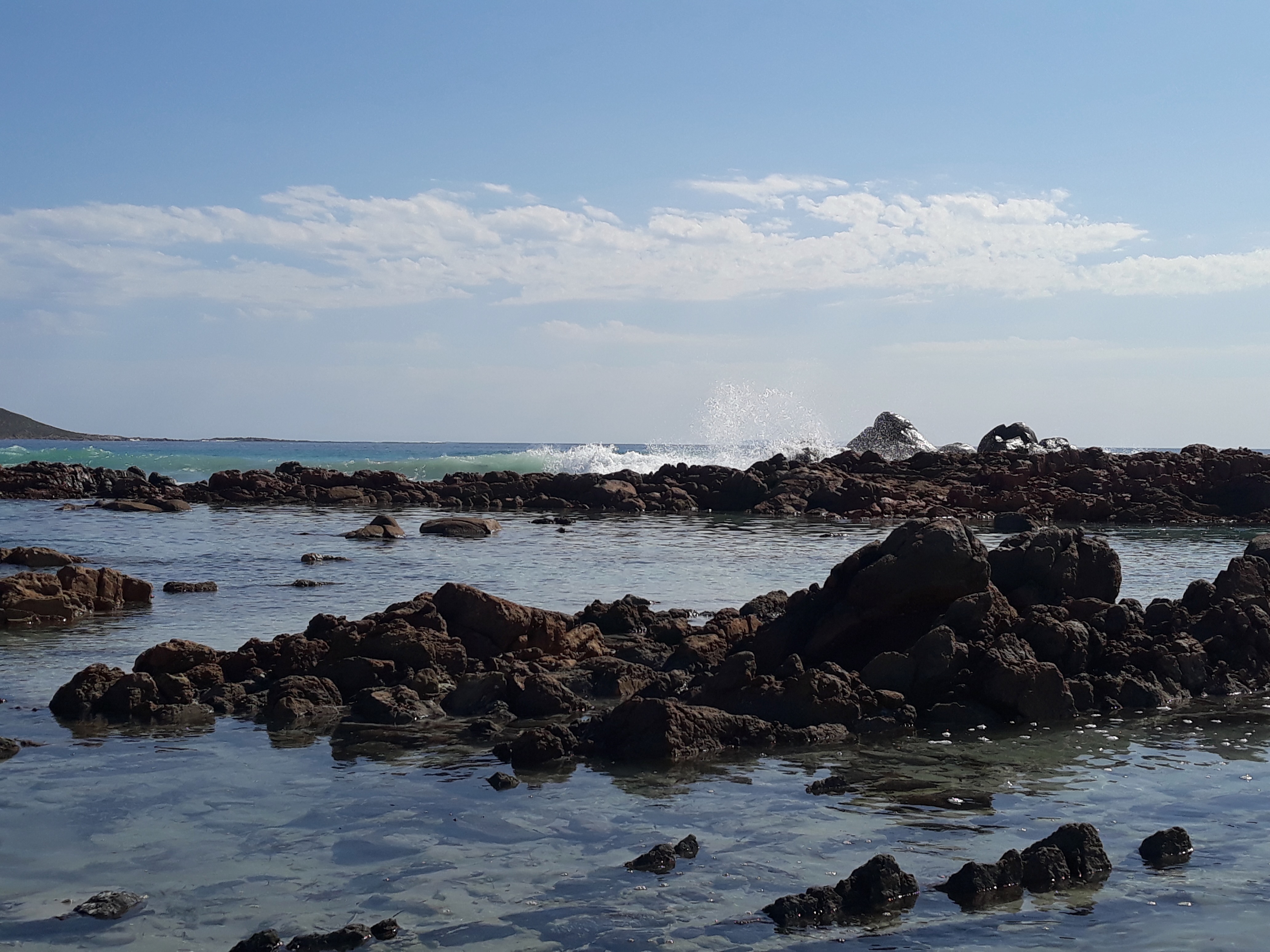
Daly Head, Yorke Peninsula, October 2023.

I’ve explored desire a little in two of my own books, my young adult novel Beyond Evie and most recently, though only in passing, in my novella Ravenous Girls. Like Sophia, labels trouble me. But I can’t help thinking that in part I wrote about desire in these books because, just as Sophia writes, that was the space where it felt most permissible for me to do so — because I could dramatise it, because I could (try to) make it beautiful.

Words, like stories, can be beautiful, can’t they? I hope so. That’s one of the reasons I write.

.

Daly Head, Yorke Peninsula, October 2023.

Moving on to on other reading-related matters, I’m taking a break today from my usual link to online essays that I’ve read recently because this month I’ve been focusing on reading novellas. Have you heard of Novellas in November? I’ve joined up, and I’m enjoying the chance to explore novellas, old and new, famous and not-so-famous. Feel free to join me over on Instagram for quotes from the novellas I’ve been enjoying, and for my thoughts about them.

Meanwhile, I’ll be back again with more of my usual posts soon.

Loss

Other people’s words about … doing what we love

It was a lie that Timo had not loved [playing] piano enough. He had loved it very much, but in a way that was difficult to describe. It was apophatic — he could only describe it through its negation. He only understood how much he loved the piano after he had given it up. Even that decision in hindsight seemed arbitrary, a whim. An act of petulance. But he had loved it, and he still did. Every day, he felt like a struck tuning fork, vibrating all the time. Except that it wasn’t pitch he was tuned to but something else, some horrible frequency cutting through the universe. Loss, he thought. It was loss.

from ‘The Late Americans
by Brandon Taylor

In the passage above, Taylor’s character Timo is a graduate student in Iowa who used to study music but then gave up. Sometimes, when he is on his own in the apartment he shares with his boyfriend, Fyodor, who works at a meat-packing plant, he sits listening to classical music recordings, losing himself in the music he so loves. But when Fyodor comes home, Timo switches the music off immediately, mid-piece, refusing to talk to Fyodor about this thing he so loves — refusing, also, to allow Fyodor to share in a part of him that in many ways still feels like the truest part of himself.

The Washpool, September 2023.

When I read the words I’ve quoted above, I thought about the times that I’ve given up writing over the years. Though I’m not beginning to claim that I am as talented a writer as Timo is a musician, nonetheless, writing for me has always been a channel of creativity, a tool that helps me make sense of and navigate the world. I don’t know why, honestly. I do know that I have a longing to make something beautiful (though this is another impulse I don’t really understand), and that writing is the only way I know how to (try to) do this. Maybe that’s why, every time I’ve ‘given up’ writing ‘for good’, I’ve returned to the practice later.

I’ve written before about how I’ve learned over the years to value my writing practice for the practice itself rather than for any measurable outcome. That’s partly what I’m saying again here, in response to the words I’ve quoted today. But it’s more than that, too. What Taylor expresses so beautifully is the same sense of loss I always feel when I stop writing. His image of a tuning fork vibrating to the wrong frequency describes this feeling beautifully. At the same time, I’d also describe the feeling another way, as a feeling of being muted. Silenced. When I don’t write, I feel as though I have lost my voice: I feel as though no-one hears me.

I understand, as a writer who is published very infrequently, that few people hear me, anyway. But writing is my way of speaking to the world, and not writing is the opposite of that. Not writing feels like grief.

The Washpool, September 2023.

Meanwhile, I’ll be back soon with another post about writing, and with a little piece of news, the news I’ve been hinting at for months now. Watch this space! ❤

Lately I’ve been reading …

This is me happy

Other people’s words about … happiness

Ivan closed his eyes. He tried to remember what it was like when [he and Goran] were good and together and all right. He tried to imagine what it was like the first time they met on the app and made plans to see each other outside the auditorium at night. They’d stood on the bridge and looked at the lights of the auditorium, gold and tiered like a delicate rock formation. Then they’d walked around the river path and talked all night about music, about ballet, about where they spent their afternoons, best place for coffee, how to dodge the undergrads.
That night had been so good, like something out of a dream. And they were so far from it now.
‘I can’t make you happy,’ Ivan said.
‘You do make me happy. This is me happy. I am happy.’
‘This can’t be happiness. If this is you happy, then I don’t think I understand what happiness is for.’
‘Sometimes happiness is just letting people feel how they fucking feel,’ Goran said.
He looked the furthest thing from happy. He looked pissed off. He looked annoyed. He looked like he was going to cry. His eyes welled. He bit at the inside of his jaw, then sat down sharply at the kitchen table, trying to catch his breath. Ivan sat down next to him, reached for his hand, and for the first time in a very long time, Goran let him.

from ‘The Late Americans
by Brandon Taylor

I’ve been fighting a battle with fleas for the last couple of weeks. This might seem like a random thing to write about after quoting Brandon Taylor’s words about happiness (and love … and life), but somehow it feels directly related.

Lizzie, my rescue cat, the cat who went from living in the garden and not letting me touch her to jumping up on my lap every night and curling up on top of me to go to sleep, started scratching ferociously a few weeks ago. Because I’ve never had a cat before; because I didn’t have any bites or itches myself (and still don’t); because, in all the years I had dogs,they never once got fleas; because, before I moved house a couple of years ago, Lizzie herself had never had fleas; because I thought (wrongly, as it turns out) that, since my house has bare wooden floorboards throughout instead of carpet, it was flea-proof — because of all these things, it took me a while to figure out that the cause of her scratching was fleas.

Semaphore Jetty, August 2023.

She’s far more domesticated than she was when she arrived in the garden of my old house three years ago, but still, a rescue cat is a rescue cat, and there are times when she likes to be touched and times when she doesn’t, times when you can pick her up and times when you can’t. So it took me several days to get her to take the medication, and several days more to get her to allow me to start combing her with a fine-toothed flea-comb. I flea-bombed the main room about two weeks ago, and since then, I’ve been vacuuming every day — every day, God, every day — and slowly, slowly I am getting on top of them.

What has this got to do with the passage I’ve quoted today from Taylor’s wonderful third book, The Late Americans? In part, it has to do with something I mentioned here a while back, some good news I had earlier this year. Astute readers might have guessed when I mentioned it that my news is writing-related, which it is, although I still can’t tell you the details yet because they’re still embargoed. It’s a small thing, a very small thing — a very, very small thing — and yet it’s made me feel part of the publishing world again in a way that I haven’t for over a decade. In this sense, though in a very small way, it’s something that I’ve dreamed of and longed for for a long time.

Spring flowers in the Scrub, September 2023.

And yet. Has my year been any happier because of this news? In a big-picture way, yes. But in a small-picture way, in my everyday life — no. (No, no, no.) Happiness still eludes me. I am not unique in this, I realise. Still, in these past few weeks, as I vacuumed the house and combed my cat and put on load after load of laundry, I found myself returning to Taylor’s words over and over. This is me happy. And: If this is [me] happy, then I don’t understand what happiness is for.

Why do we search for happiness in this way? Why do we expect it, even? I don’t know. I can’t tell you. And still Taylor’s words ring in my ears.

Lately I’ve been reading …

Unlearn

Other people’s words about … the way we feel

She did not adopt the persona of a lawyer, which was the only thing I’d learned to do. Instead, her own innate mannerisms, her seemingly authentic and unrehearsed responses, were more effective than any behaviour she might have acquired through practice and effort. She knew this, she used it and we won. I left the courtroom feeling slightly different about myself. I vowed to be less afraid to talk in my own voice, or to follow my own line of thought, though I had no clear sense of either of these things. I wanted to learn how to be myself again, having been carefully unlearning it ever since I was born.

from ‘Chrysalis
by Anna Metcalfe

It’s funny how you can be struck by a single passage in a book even when the book itself — its story, its characters, its voice, its narrative arc — leaves you cold. That’s how it is for me today, in quoting the passage above. My feelings about Anna Metcalfe’s novel Chrysalis as a whole are ambivalent, but this passage, particularly the last sentence, will never leave me. I wanted to learn how to be myself again, having been carefully unlearning it ever since I was born.

Groundsel flowers, Taperoo dunes, July 2023.

Another way to say what Metcalfe says is: All my life, I have felt as though there is something wrong with me. This is something I’ve written about in blog posts before, this feeling of wrongness, of inner wrongness, essential wrongness. I understand that it’s not unique to me — we probably all feel this way, to some degree. We live in a social world, after all. My life is jumbled up in yours, and yours in mine. Still, this feeling is one I’ve always experienced very strongly.

Something about Metcalfe’s way of putting it, though, particularly resonates with me. It’s the concept of learning and unlearning, I think. Can we unlearn this feeling? Maybe.

Lately I’ve been reading …

Immeasurable

Other people’s words about … practising art alone

But you have a little secret: while you are not making Art anymore you are at least drawing every day. To tell anyone about this would be admitting there is a hole in your life, and you’d rather not say that out loud, except in therapy. But there you are, once a day, drawing the same thing over and over: that goddamned Empire State Building [which you can see from the floor-to-ceiling window in your new apartment]. You get up every morning (or afternoon, on the weekends, depending on the hangover), have a cup of coffee, sit at the card table near the window, and draw it, usually in pencil. If you have time, you’ll ink it. Sometimes, if you are running late from work, you do it at night instead, and then you add colour to the sketches, to reflect the building’s ever-changing lights. Sometimes you draw just the building and sometimes you draw the buildings around it and sometimes you draw the sky and sometimes you draw the bridge in the foreground and sometimes you draw the East River and sometimes you draw the window frame around the whole scene. You have sketchbooks full of these drawings. You could draw the same thing forever, you realise. ‘No man ever steps in the same river twice, for it’s not the same river, and it’s not the same man’ is a thing you read once. The Empire State Building is your river. And you don’t have to leave your apartment to step in it. Art feels safe for you again, even though you know you are not getting any better at it, that the work you are making could be sold to tourists on a sidewalk outside of Central Park on a sunny Saturday and that’s about it. There’s no challenge to it, no message, just your view, on repeat. But this is all you can do, this all you have to offer, and it is just enough to make you feel special.

from ‘All Grown Up
by Jami Attenberg

I have conflicting responses to the passage above. In many ways, Attenberg’s narrator, Andrea, reminds me of myself, although her creative practice is art and mine is writing. I certainly know what it’s like to stop showing people the material you are creating, to keep your practice to yourself, to see it as your own little secret. And I know the feeling that comes with doing this, too, which Andrea articulates elsewhere in her narrative — that feeling that what you are doing, the material you are creating, the act of creating it, is barely scratching a feverish itch.

Something changed for me about a year ago, though, after which I began tentatively showing people something I’d written — a few people, a very few people. This gave me the courage to do more with that particular piece of writing, and as a result I’m not in the same place anymore as Andrea, although all I can say about that for now is that I do have a piece of writing coming out later this year — a small piece, but a piece nonetheless — and I will tell you more when I can.

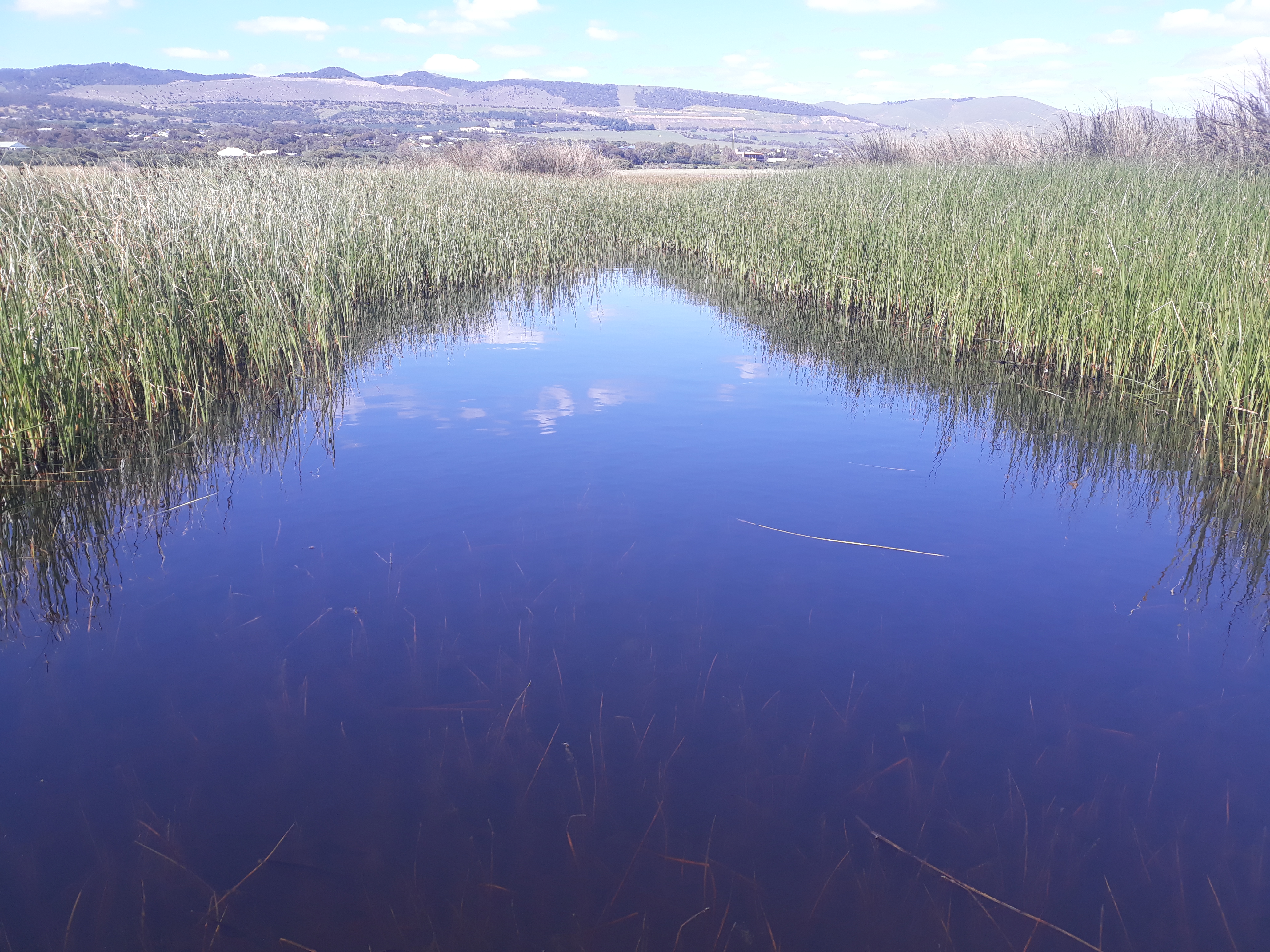
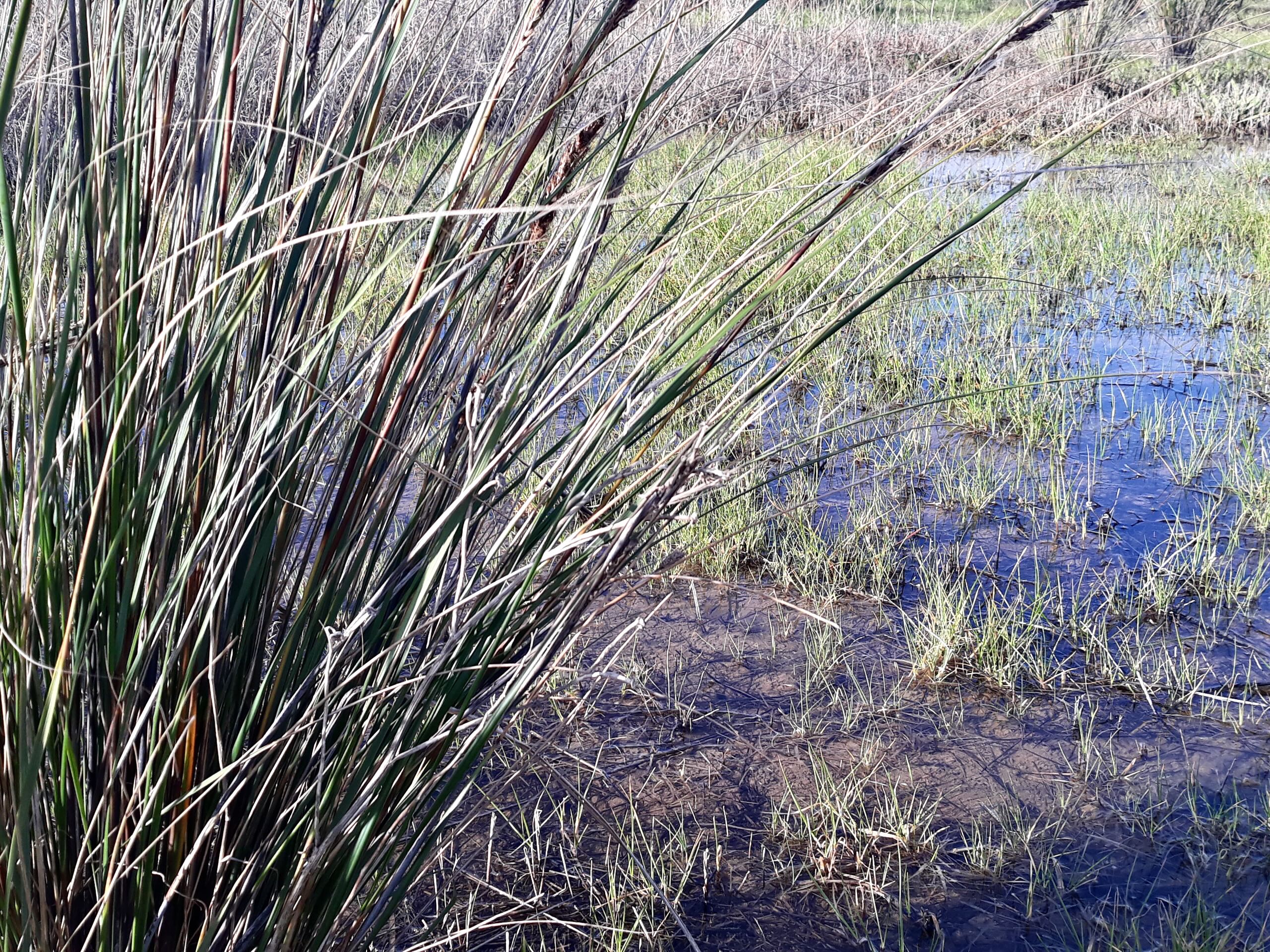
Reeds in the marsh, The Washpool, July 2023.

But even if things hadn’t changed for me, I suspect that I’d still finding myself wanting to argue with Andrea as much as I’d find myself wanting to agree with her. Because the thing that I learned during those years of writing alone, writing unseen, was that there is a value to creating something — art, literature, whatever — that has nothing to do with other people’s opinions, nothing to do with productivity or acclaim or results. What I learned (very slowly, very painfully) is that creating just your view, on repeat can in fact teach you something; it can take you somewhere new in your work. You may not be able to measure the work you create in private; you may not be able to quantify it. But when did art become something we need to measure and quantify, anyway? When did it become an outcome, a product?

I believe, although it’s taken me years to come to this understanding, that the practice of creating has its own value. The work you do as you create something, that feeling you get as you practise it of reaching out, of bringing something into the world, is an act of connection and hope. This is valuable. This is meaningful. And it can — it can — be enough.

Lately I’ve been reading …

It’s a long list today, as I try to catch up on some of my reading over the last few months. I hope you’ll enjoy one or two of the pieces I’ve listed here.

Grasp

Other people’s words about … reading

After most of my long days at work, I would arrive back at the flat, pour myself a glass of wine or vodka and read, mainly short stories and poetry. I wasn’t reading novels because I didn’t want that kind of continuity; I didn’t want to carry over any part of narrative from one day to the next. Sometimes I read poetry in languages I didn’t fully understand — with a sense of the meaning, but reaching for it, grasping after it. One of my other pleasures was smoking, but I didn’t dwell or savour; I narrowed it down to lighting up and the first few drags — after that I lost interest. I read like I smoked: fixating on my new favourite in its entirety to begin with and then honing in on the exact phrase or phrases that gave me the fix, then reading only for those, discarding the rest and when that poem had been emptied out, moving on to the next.

from ‘Signs of Life
by Anna Raverat

I’m not a smoker and I love reading novels far more than I do short stories or poetry, but still, I found myself smiling in recognition when I read the narrator’s description in the passage by Raverat above about her approach to reading. I experience myself, these days, as a greedy reader — greedy for beautiful words, phrases, images, moments, greedy for the fix they give me, while often the plot or theme of a novel remains distant or abstract to me.

Pathway, Sellicks Beach, July 2023.

Reading has been an important part of my life for as long as I can remember, though the reasons for its importance to me has varied over the years. These days, it feels like an escape for me from the world, or perhaps more accurately an escape into someone else’s world — that world they create with their words. And, like anyone addicted to their fix, I’m not about to give it up.

Little green bench (a place to read in when the warmer weather returns?)
Sellicks Beach, July 2023.

Lately I’ve been reading …

Today’s reading list is exclusively about animals and pets — for all the animal-lovers out there! xo