Creating ephemera

Other people’s words about … cooking

I’ve decided I need to make things with my hands, it’s my new thing. Everything else is just so intangible and bullshit. I know that really when you get down to it, cooking produces ephemera just like all the other crap we all do … but at least for a moment there’s a thing, you know?

From ‘The Innocents‘
By Francesca Segal

I often wonder why food writing has become so popular in the last few years. There are so very many food blogs and cookbooks and cooking magazines. Equally, there are so very many people who read them (including me). Why?

One of the reasons, I think, is that food photography is beautiful. Food photographs make use of beautiful props, gorgeous landscapes, natural light. They woo you. Though what they ostensibly promise you is a tasty meal, underneath they promise you something else entirely. If you make this recipe, they murmur to you, you, too, will have produced something beautiful. You, too, can lead a beautiful life.

(Instagram Syndrome, anyone?)

So Segal is right, in the passage I’ve quoted above: cooking produces ephemera, essentially. And yet — and yet — it doesn’t feel that way. When you look at a food photograph; when you tell yourself you’ll make it; when you go out and buy the ingredients and come home and spend a couple of hours cooking it; when you dish it up on the table and eat it with your loved ones — when you do all this, you feel like what you have in front of you is a thing, as Segal puts it: a thing that you made.

Even if, in the end, all you do is read the damn recipe and look at the damn photographs — still, that promise gusts through you. You might make this recipe. You might produce something beautiful. You might just make something.

I’ve spoken about my love of baking before. I’m sure I’m as sucked in by the ephemera industry as anyone else, but still, I keep going back for more. There’s always another cake to make, right? And the next one you make might even turn out to look as beautiful as it did in the photograph you spent so many hours drooling and dreaming over …

My own food photographs, as the pictures in this post amply illustrate, lack all the qualities that good food photographs require. Still, in case you should want to join the ephemera celebration, here’s a list of some of my (current) favourite food blogs:

delightful crumb
(for thoughtful words and beautiful recipes from Stacy in California)
oh, ladycakes
(for meticulously photographed vegan baking from Ashlae in Denver, Colorado)
ruby & cake
(for food with a lovely and quirky slant from Ruby in the Blue Mountains, Australia)
what should I eat for breakfast today
(for simple breakfast recipes from the wonderful, drily humorous Marta)
three little halves
(for gorgeous photos and illustrations from Aleksandra in New York)
Brooklyn supper
(from Elizabeth and Brian in New York)
eat in my kitchen
(for simple, stylish recipes from Mieke in Berlin)
the alimental sage
(for sporadic but lovely recipes from Camilla in Melbourne, Australia)
dagforever
(for tasty recipes and hilarious commentary
from my French, bench-loving friend Anne in Perth)

Happy cooking (and dreaming), everyone! Rebecca xo

A certain light

Other people’s words about … vanity (etc.)

Matt’s mother had the bluest of eyes and still wore her hair long, adding henna to soften the appearance of white strands in the black. One of her friends trimmed it for her. ‘Now that you’re forty, maybe you should think of cutting it short.’

His mother looked stricken. ‘I will one day. But not yet. Not yet.’

Her hair was her only vanity. She wore no make-up, and dressed always in shorts or jeans and men’s shirts she bought at op-shops. Even at work she got away with a tidy variation of her uniform, as she called it.

She said that lipstick rotted your brain.

from ‘Mahalia‘
by Joanne Horniman

Like Matt’s mother in the passage above, I don’t wear any kind of make-up, a habit that stems partly from choice and principle, and partly — honestly? — from laziness and ineptitude. (Which came first — not knowing how to wear make-up, or not wanting to be bothered with it? I can’t say for sure.) I don’t colour or style my hair, either, though I did recently re-introduce myself to a hairdryer after decades of simply washing my hair and letting it dry naturally (or just tying it up, still wet, in a ponytail or a straggly bun in an effort to forget about it).

‘I think you are a rebel, Rebecca,’ an Italian hairdresser said to me wryly, years ago, when I insisted he just wash my hair and trim it and — shock, horror — just leave it at that.

And I thought — I truly thought, with the arrogance of youth — that he meant it as a compliment, though now I’m not so sure.

You used to tell yourself that your hair, with its grey, sometimes made you look blond in certain light or from a distance, but now it really looks as grey as a sad cloudy day, as bleak as crows calling in a fallow field on a sad cloudy day, as miserable as cold rain beginning to fall on that sad cloudy day in that fallow field with the crows wheeling overhead, calling their faraway call that reaches into your heart and splays it open.

from ‘This is the Water‘
by Yannick Murphy

There is a joy in Horniman’s mother, a joy in the way she views her own appearance, that is entirely absent in the middle-aged narrator in Murphy’s novel: that woman with the fallow, splayed-open heart. Still, depending on my mood, I can feel affinity with either of them at any particular given time. And I wonder, how can that be, when the two women seem so far apart?

The truth is, like Horniman and Murphy, I’m not really talking about vanity here anymore. There’s a fine line between being proud of yourself just the way you are, ‘naturally’, and being filled with futile despair about the havoc that the ageing process and life in general have begun to wreak on you, inside and out. I find myself treading back and forth over that line all the time. Is that a part of ageing? Or of being a woman? Or of something else entirely? I don’t know.

What I do know is this: sometimes the sky is sad and bleak and cloudy, as Murphy describes it, and sometimes it is clear, but it is always wide and high and open. And what keeps it that way is the light that shines behind and through …

A beautiful thing

Other people’s words about … appetite

To say that I ‘lost’ my appetite during those years would be a joke. On the contrary, I ate, slept, and breathed appetite. I thought about food constantly, pored over food magazines and restaurant reviews like a teenage boy with a pile of porn, copied down recipes on index cards: breads, cakes, chocolate desserts, pies with the richest fillings, things I longed for and wouldn’t let myself have. In truth, I had appetites the size of Mack trucks — driving and insistent longings for food and connection and bodily pleasure — but I found their very power too daunting and fearsome to contend with, and so I split the world into the most rigid place of black and white, yes and no.

from ‘Appetites‘
by Caroline Knapp

Appetite is a strange, fickle creature. I remember feeling, years ago, when I first read Caroline Knapp’s words in the passage I’ve quoted today, an overwhelming sense of recognition and kinship. I have always had a strong, keen appetite, and back then, when I read Knapp’s book, I felt ashamed of this fact; I fought my driving and insistent longings for food and connection and bodily pleasure.

I don’t feel that way now; my life is on a different keel. In fact, the periodic bouts of nausea I experience lead me to feel the very opposite. During these bouts of sickness, I would give anything — anything at all — to feel hungry.

Part of what I miss when my appetite is gone is the sense of anticipation that I, like all of us, experience with regards to food: the sense of looking forward to something I know will be pleasurable — whether we’re talking solitary pleasures here (sitting on the porch in the sunshine with a plate of cake on my knee and a pot of tea at my feet) or shared pleasures (a meal with family or friends). Anticipation, I realise now, is a pleasure in and of itself. Strip away anticipation and you strip away, with it, a great source of pleasure from your life.

Still, what I have learned is that there are other pleasures to anticipate, apart from food; other things to look forward to; other things, in a way, to hunger for, and then — finally — to savour. These days, the moment I start to feel a little better after a bout of sickness, the moment the nausea begins to fade, I make a big effort to stop languishing inside my house. I take a deep breath and then start seeking out, immediately, the things I know will bring me pleasure.

A while back, I quoted some words from Sarah Wilson about managing anxiety by (to paraphrase) simply doing it, leaving it, and moving on. Wilson’s words, I see, apply here, too. Anxiety, after all, is only one source of anguish: sickness is another. By not dwelling on our anguish, by actively making ourselves move on from it, we allow a sense of anticipation and pleasure to return to our lives.

We allow our appetite for life to flourish once again.

If I could go back in time and give my younger self advice now, I would counsel her to cherish her appetite rather than to be daunted by it (Knapp’s word). I would tell her that hunger and appetite are vital to life. I would tell her that hunger, like appetite, is a beautiful thing. And I would tell her to look up, out and around at the world. To savour the things she sees and experiences. To savour all the pleasures life has to offer.

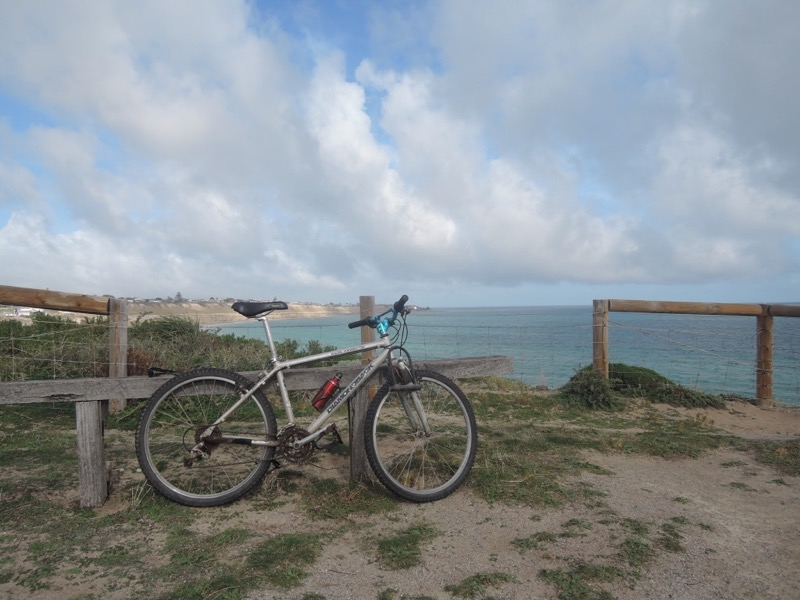
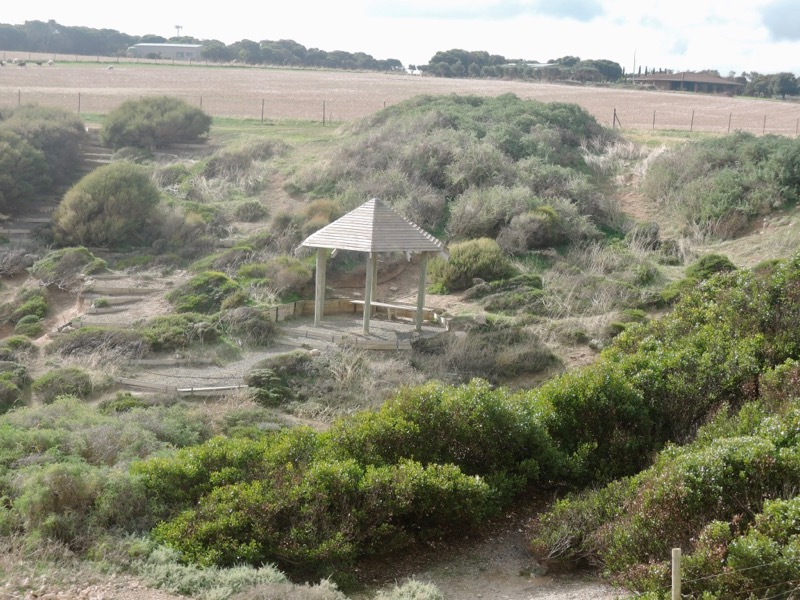
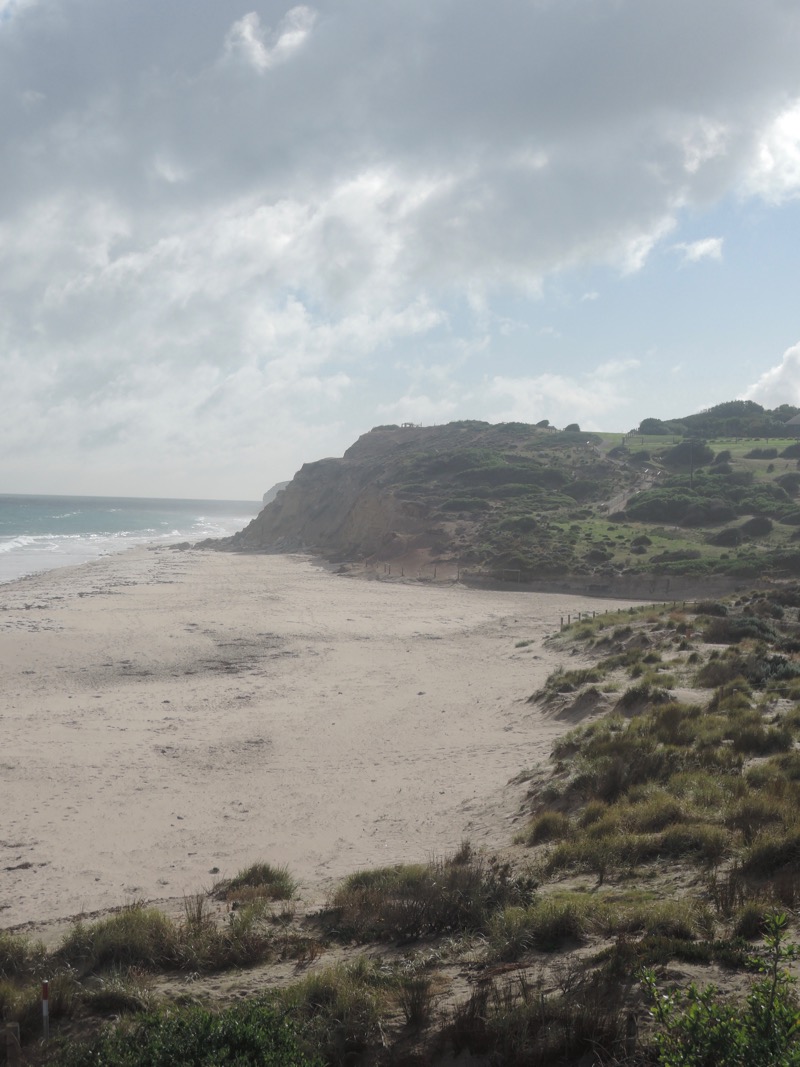
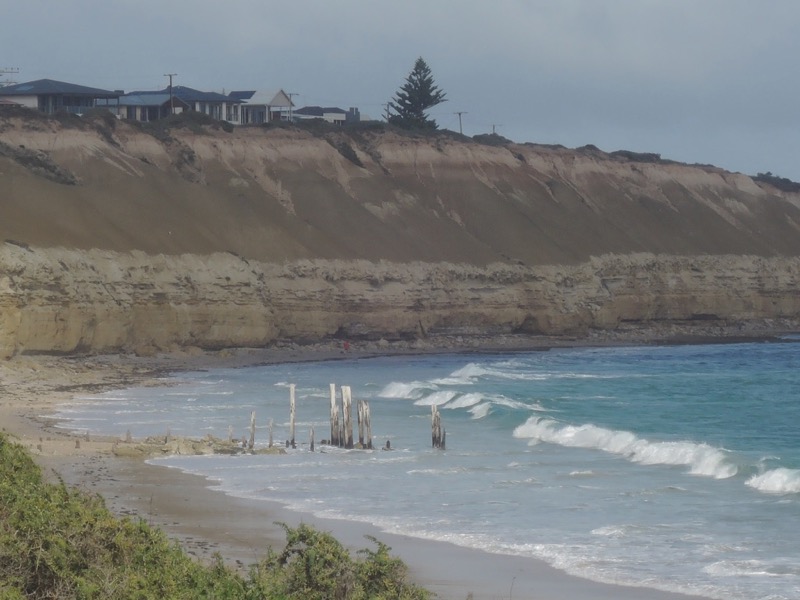
I took the photos you see in today’s post on a recent trip to the Aldinga Beach/Port Willunga area. I had not been feeling particularly well in the days prior to this; I had slept poorly as a result; and though I’d planned a bike ride, I cycled slowly, feeling tired and not terribly fit.

Still, it was good to be out there. I had looked forward to that ride, and I enjoyed it. It felt good to be alive.

But no-one was awake

Other people’s words about … the sound of the sea

Sometime after midnight the rain and the wind stopped. The room filled with the sound and smell of the ocean, both amplified somehow, as if it were about to pour through the windows, full of storm debris — ground up shells, rotting wood, seaweed, the husks of marine animals, endless other fragments suspended in the salt water, all of it caught in the roar of the waves. But by then there was no one awake to hear.

from ‘The Restorer‘
by Michael Sala

Having lived in various houses by the sea ever since my early twenties, I’ve noticed how the smell that drifts towards my house from the beach differs not just from day to day, but from house to house. Where I live now, my house is pretty much at sea level, and though it stands several streets back from the beach, on days when the wind is westerly, blowing straight off the ocean, the air that drifts into my yard is rank with the smell of salt and damp sand and rotting seaweed.

The sea is shallow here, too; you can wade out for quite some distance from the shore, heading towards the horizon, without the water rising much above waist level. You can see this, I hope, in the photos illustrating this post, all of which I took a few weeks ago on one of my early-autumn strolls along the beach.

But it’s the sound of the sea I’m thinking of right now, rather than the scents or the sights. As I write, it’s three o’clock in the morning and — unlike in Michael Sala’s description, quoted above — I am awake to hear the roar of the waves.

I’ve always been a light sleeper. Sometimes the sounds of the house wake me in the middle of the night — the rattle of my window, the sway of an open door. Sometimes it’s my dog who wakes me, sleeping on his blanket in the laundry, sighing and licking his chops, letting out a little snore.

I don’t always get back to sleep easily once I’ve woken. On nights like this, it’s the sound of the sea through the window that comforts me in my sleeplessness, connecting me to something outside myself, outside my house, outside the long, dark, lonely night.

In the morning, the sea will sound different — more distant, somehow, less intimate. But we’re not there yet.

Not yet.

What, then, is this?

Other people’s words about … therapy

Sometimes I wonder why I come here [to see my psychoanalyst] when the coming is so iterative, so forced. Having to come here sometimes feels like the biggest problem I have. I feel like a lonely man visiting a brothel, the money changing hands, paying for understanding as some people pay for love. And just as that is not love, so this cannot be understanding. What, then, is it?

from ‘Aftermath‘
by Rachel Cusk

As I’ve mentioned here before, I spent several years in and out of therapy, being treated for anorexia and its aftermath. I will be forever grateful to the therapists I saw during those years. They treated me with respect, patience, warmth and compassion. And they listened. Oh, they listened.

But I stayed in therapy too long, I think. I believed at the time that I was seeking a cure for my constant sense of malaise. That cure seemed terribly elusive. Now I think it was elusive because, subconsciously, I knew there wasn’t one. What I was really reaching out for was understanding, and that is not something I found in therapy sessions.

Therapy is a strange process. It is, as Rachel Cusk says in the passage above, a transaction of sorts. When that transaction starts to make you feel worse rather than better, when you feel lonelier leaving the therapist’s office than you did on arriving, it’s time to stop. It really is as simple as that, though it took me some time to figure this out.

Post-therapy, am I still seeking understanding? Yes, of course — just like everyone else. Have I found it? Not really. Perhaps no-one ever does. What I have found, though, is solace. I find solace in pots of tea, and walks along the beach, and wanders through the bush. I find it in cakes I bake, and books I’m reading, and holidays I plan to go on. I find it in birdsong, and in leisurely bike rides, and in the company of friends and family and pets.

And I find solace in other people’s stories.

Tell me, then, where do you find solace?

Meadowlands

Other people’s words on … wandering

Musing takes place in a kind of meadowlands of the imagination, a part of the imagination that has not yet been plowed, developed, or put to any immediately practical use. Environmentalists are always arguing that those butterflies, those grasslands, those watershed woodlands, have an utterly necessary function in the grand scheme of things, even if they don’t produce a market crop. The same is true of the meadowlands of imagination; time spent there is not work time, yet without that time the mind becomes sterile, dull, domesticated. The fight for free space — for wilderness and public space — must be accompanied by a fight for free time to spend wandering in that space. Otherwise the individual imagination will be bulldozed over for the chain-store outlets of consumer appetite, true-crime titillations, and celebrity crises.

from ‘Wanderlust‘
by Rebecca Solnit

Most of you would know by now that one of the greatest pleasures in my life is wandering: along the beach, through the bush. We read a great deal these days about the value of high-intensity exercise (the dreaded HIIT), and though I understand the principle — short bursts of intense exercise, in order to get your heart going — I find the practice intimidating and somewhat soulless. I’m not interested in exercising purely to become ‘fit’, or to ‘get healthy’, or to try to do something epic.

What I’m interested in is wellbeing — a concept that includes mental, emotional and spiritual aspects as well as the more obvious physical ones.

That’s why I like to wander. Wandering, for me, can be a slow stroll through the bush, or it can be a steady march along the shore. Hopping on my bike and riding places — that’s a form of wandering, too. It’s about breathing in fresh air, moving through beautiful surroundings, looking around, and — yes — musing. As Solnit points out, it’s about being unfettered in time as well as space. Musing takes place in a kind of meadowlands of the imagination, she says.

Oh, yes.

So today’s round-up of photos comes from another one of my recent wanders in the bush, back at the end of April. It was a dull, still day, and not many of the plants along the trail were in flower. The bush seemed stripped of bright colour: it was all earthy greens and sandy browns. The birdsong was muted, too — the whistlers don’t call much at this time of year in South Australia; the shrike thrush songs are shorter and softer than in the warmer months. A crow croaked and muttered in the distance, and I heard snatches of broken magpie song.

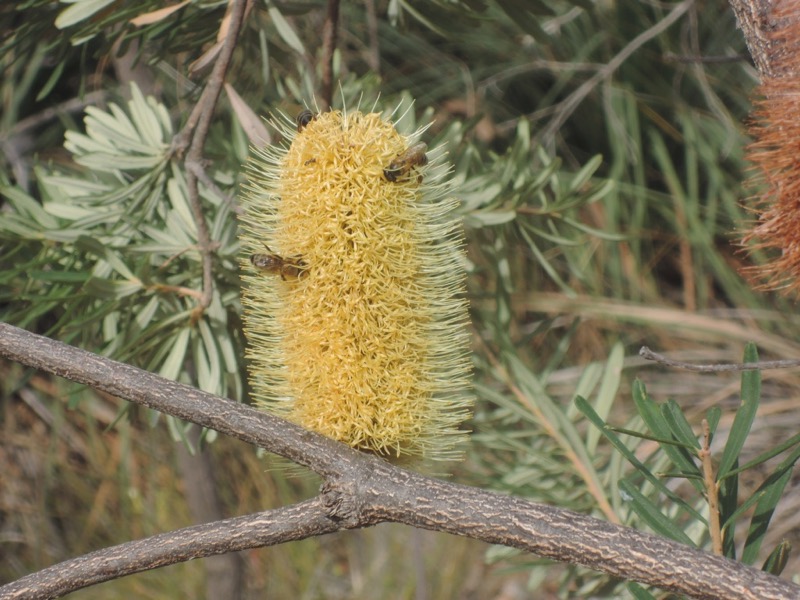
But then I noticed the banksia trees, which were all in flower. I hadn’t seen them at first because I’d stepped in from a louder, brighter world beyond the trail, a world of fences and bitumen streets and painted houses. Banksia leaves are a dark, khaki green, and the flowers blend in with the surrounding vegetation, varying in colour from pale yellow, through light green, to drab brown. Their beauty is as muted as the birdsong I described above, and in order not to miss it — in order to appreciate it — you have to be willing to slow down. To stop. To muse.

And that is what I did.

A prayer

Other people’s words about … the view

At the back of the hotel was a garden. Along its edge ran an earthen pathway pillared by palms. it ended in a low iron gate. They had not noticed the gate before, but now they saw it opened directly onto the beach. Stepping through the gate, they were confronted by the white and blue of ocean and beach in limpid morning light. Bare-chested fishermen were pushing wooden boats into the surf, chanting prayers together for luck. Women in fluorescent knee-high saris walked past in pairs and threes, with fish-baskets on their heads.

From ‘Sleeping on Jupiter‘
by Anurahda Roy

First, an update: I didn’t go to Yorke Peninsula during my fortnight of annual leave as I’d planned, after all. For a variety of reasons, it was impossible to get there. Instead, I spent some time holidaying along the coast down south. So the view from the steps down to the beach was different from the one I’d anticipated, though it was still a view to revel in.

A view to revel in

I complained recently about my dread of autumn and winter, those months of the year I always think of as the grey months. But my complaints this year were premature. Sometimes in South Australia, in the early weeks of autumn, the wind dies off, giving way to still, sunny days; endless blue skies; cold, clear nights. That’s how it’s been here for the last four weeks. I could not have picked better weather for a holiday by the sea, despite my last-minute change in location.

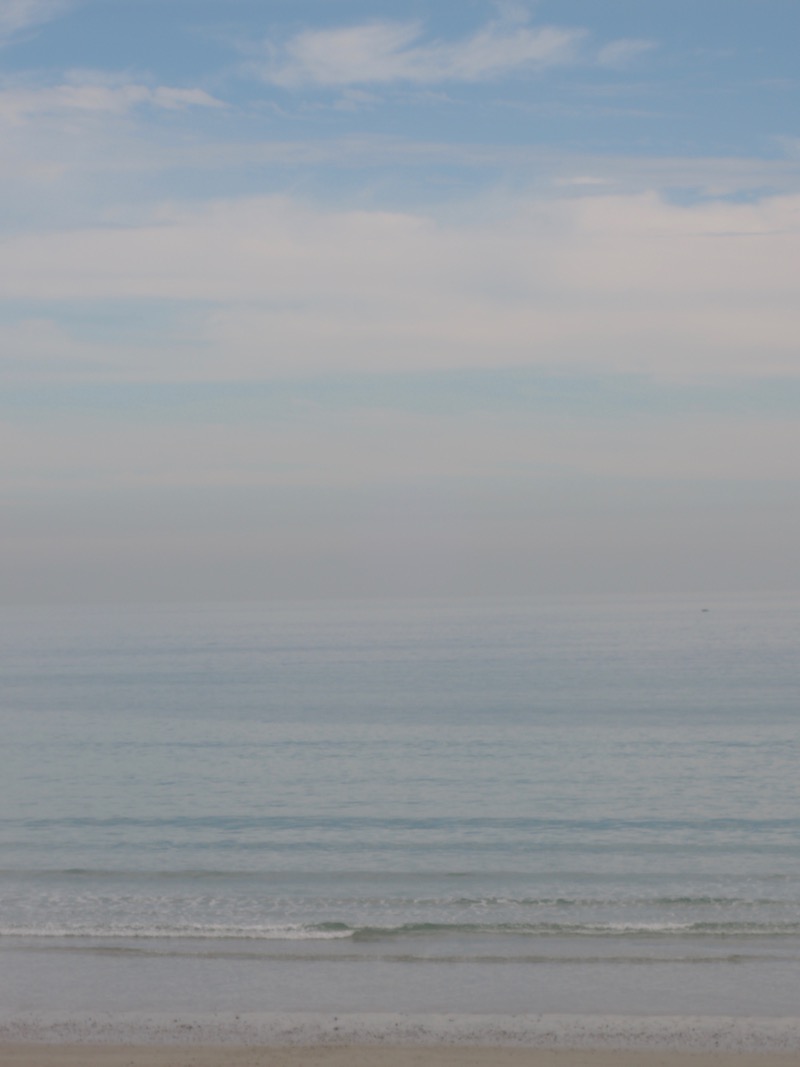
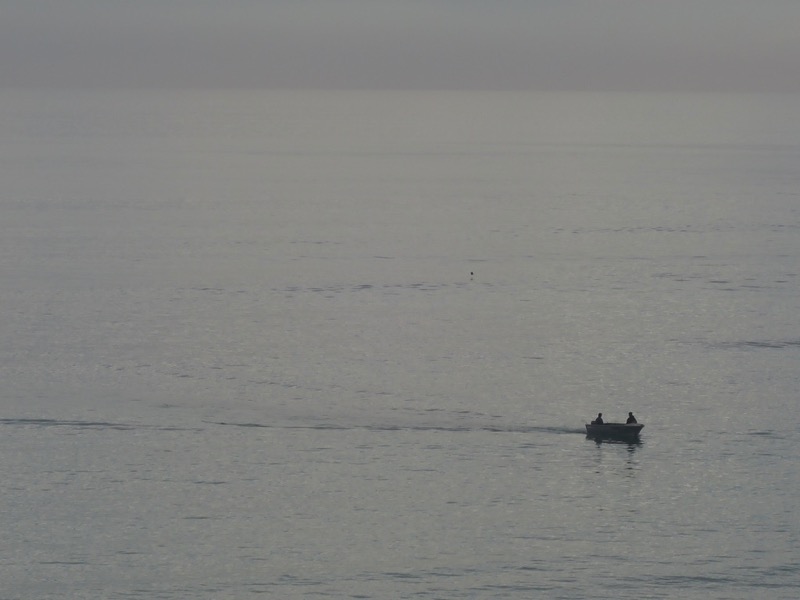
One afternoon I took a walk heading south along Aldinga Beach, beyond the spot where cars are permitted to drive onto the beach to launch fishing boats. It was one of those days where the horizon — that mysterious line between the sky and the sea — seems almost invisible. A boat glided over the surface, somehow suspended between the two, and the headland in the distance was shrouded in a mist of sea spray. The sea changed colour as I walked, from opaque blue, to glassy blue, and then to silver.

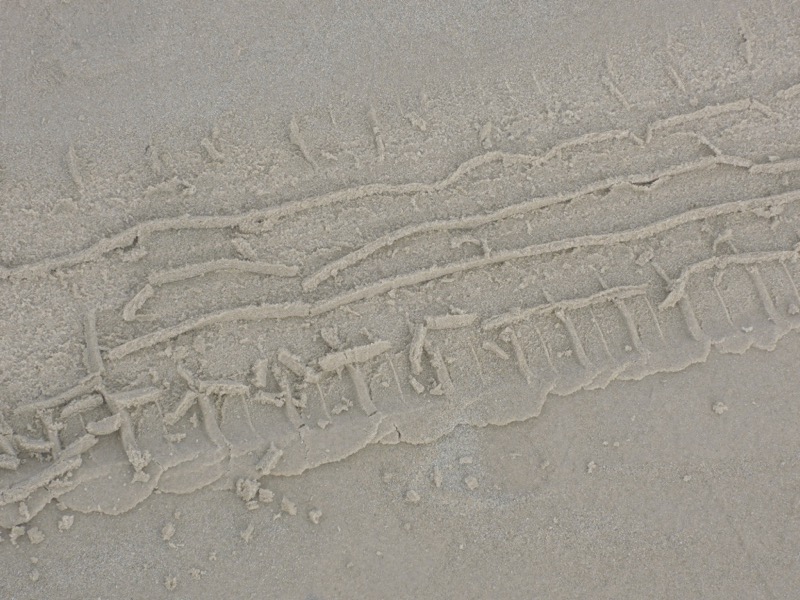
Tyre tracks in the sand
Invisible horizon
Gliding boat
Sea spray shrouding the headland
Opaque blue
Glassy blue
Silver and shining

As I walked, I thought about the words I’ve quoted right at the top of this post. I write about the beach here on my blog as a place, always, of beauty and wonder: a place where I swim and stroll, wander and wonder. But that’s a very Western, privileged, twenty-first-century way of viewing it, isn’t it? The beach in the world Anurahda Roy describes — modern-day India — is another place entirely; and her sea is a different entity. In her world, the sea provides the means for people to strive to make a living, and the making of that living obscures the beautiful view.

I am lucky enough, mostly, not to feel the need to chant a morning prayer for luck, as the fishermen in Roy’s passage do. But if I were the praying type, I would utter a prayer of thanks for the view of the beach I had that day, and for every moment I got to spend by it.

The big ‘I’

Other people’s words about … the view

Sit. Quietly. Turn your awareness to your heart space.

Now imagine you’re sitting on a small wooden bench with yourself. Imagine you’re doing so in that space in the centre of your chest. There you are, sitting to your right, the little nattering humanoid that you are, berating yourself for eating too much at lunch and debating whether to hang the washing out or not. This little nattering self is your little ‘i’. You (the big ‘I’) can watch it all. Yep, there you are, sitting quietly, looking out at a view, over treetops down to an ocean. On your little bench. Together. You’re just hanging, nowhere to go, nothing to do. The two of you …

From ‘First, We Make the Beast Beautiful‘
by Sarah wilson

It was my friend and fellow blogger, Anne, who first alerted me to the appeal of benches — I mean, real benches, in real life. In her ‘Bench Series‘, she posts photos of benches that she’s snapped from all over the world. I’d never really looked at benches before, except as convenient things to sit on while I rested and took a moment to enjoy the view before me. Now I find myself noticing them (and photographing them) all the time.

The kind of bench Sarah Wilson describes in the passage I’ve quoted above, though, is a metaphorical bench, one that you can only find within yourself. It’s a place where you can sit while you encounter, and learn to accommodate, your two selves: the busy, superficial, language-oriented self that churns out thoughts night and day, and the deeper, quieter, wordless self that lies beneath all the nagging chatter.

The idea of the two selves isn’t unique to Wilson. It’s an idea common to many systems of thought, one we’ve all become more familiar with since the recent popularisation of mindfulness-based practices and therapies. But I particularly like the way she uses the image of sitting on a bench to explain it. It’s a simple, vivid, accessible reminder of how easy it is to get caught up in (and believe) your own thoughts.

A thought, after all, is only that: a thought. It may be true; it may not. Thoughts and the truth exist independently of each other. When I first came across this idea (here), it seemed both counterintuitive and revolutionary to me. I’m still grappling with it.

Wilson again:

And then it might occur to you that your little mate ‘i’ is just that — a little mate sitting next to you. And that this Big ‘I’ is who you really are. It feels deep and close and yet so vast.

Okay, I’ll admit I winced, at first, when I read these words. First, I’m not sure that the quieter self (the one Wilson calls the Big ‘I’) is deep or close or vast — or, indeed, in any way somehow ‘better’ than any other part of our self. I think that it just is.

Second, I was troubled by her use of the phrase little mate both to describe the thinking self, and to distinguish that self from the non-thinking self. I found the phrase overly colloquial, like some kind of condescending attempt to make a difficult concept more user-friendly to her less educated readers. But I have slowly come to feel the opposite way about her wording. The word mate implies friendship: it implies love, acceptance, forgiveness. Also fun. That’s helpful, I think. Why vilify a part of yourself, when you can instead smile and make friends with it?

Wilson uses meditation to find her bench. As you know, I don’t. But I don’t think that matters. What matters is that you know the bench exists — and that you know how to find it, however you get there.

And whether or not your prefer your benches real or whether you prefer them metaphorical, I wish you many sun-dappled, peaceful benches of your own in your life, wherever you happen to be.