Like breath

Other people’s words about … places that reside within our hearts

During our visit to the jungle, while we slept on the verandah at 3 AM, night would be suddenly alive with disturbed peacocks. A casual movement from one of them roosting in the trees would waken them all and, so fussing, sounding like branches full of cats, they would weep weep loud into the night.

One evening I kept the tape recorder beside my bed and wakened by them once more out of a deep sleep automatically pressed the machine on to record them. Now, and here, Canadian February, I write this in the kitchen and play that section of cassette to hear not just peacocks but all the noises of the night behind them — inaudible then because they were always there like breath. In this silent room (with its own unheard hum of fridge fluorescent light) there are these frogs as loud as river, grunting, the whistle of other birds brash and sleepy, but in that night so modest behind the peacocks they were unfocused by the brain — nothing more than darkness, all those sweet loud younger brothers of the night.

from ‘Running in the Family
by Michael Ondaatje

I have just spent a week away in Deep Creek, having been chosen as this year’s lucky winner of the Deep Creek Residency for writers. I spent that week away writing, reading, bushwalking, running, writing again, then writing some more. It was a joyous time, the rarest privilege, to be given time away simply to write.

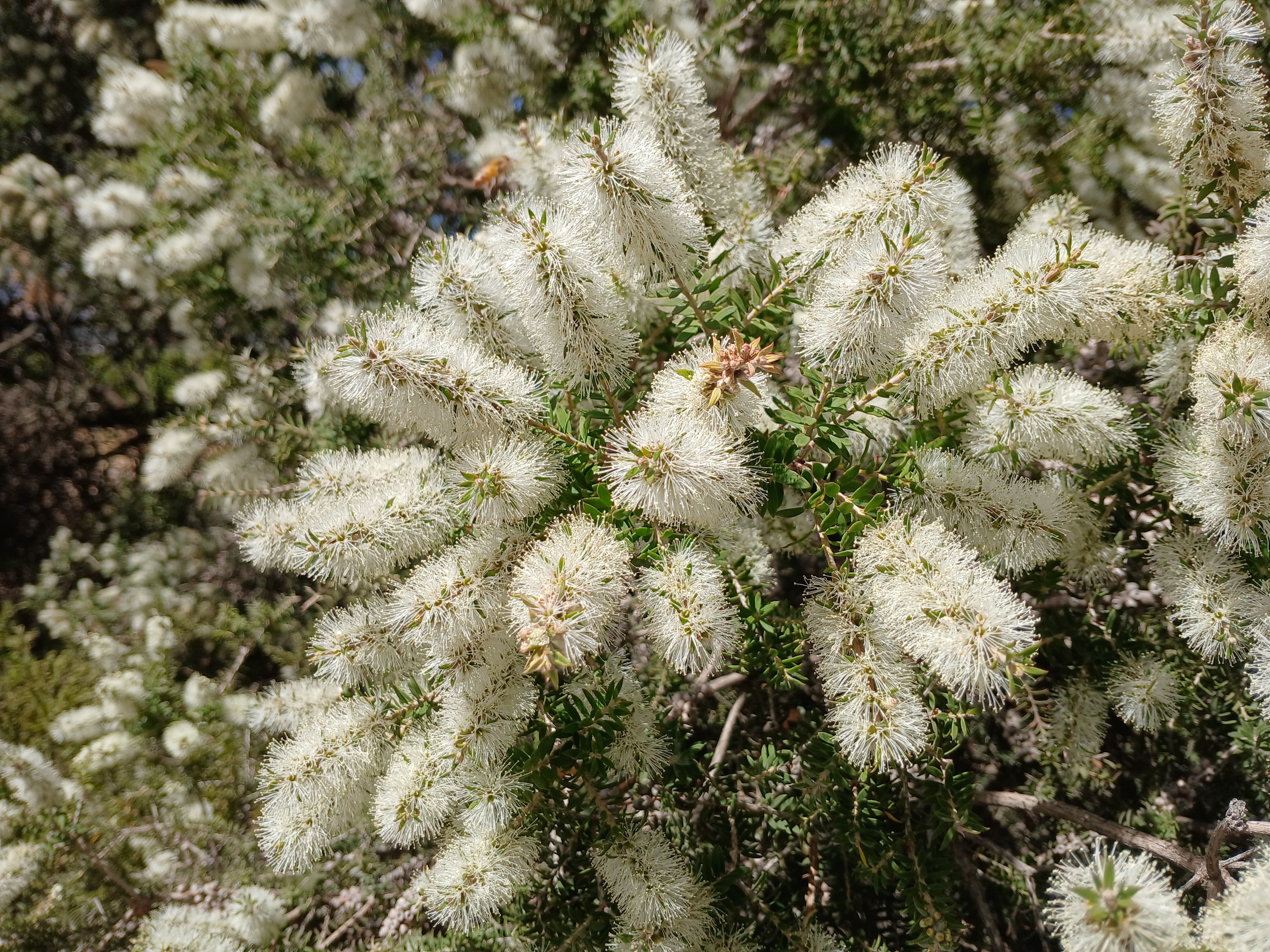
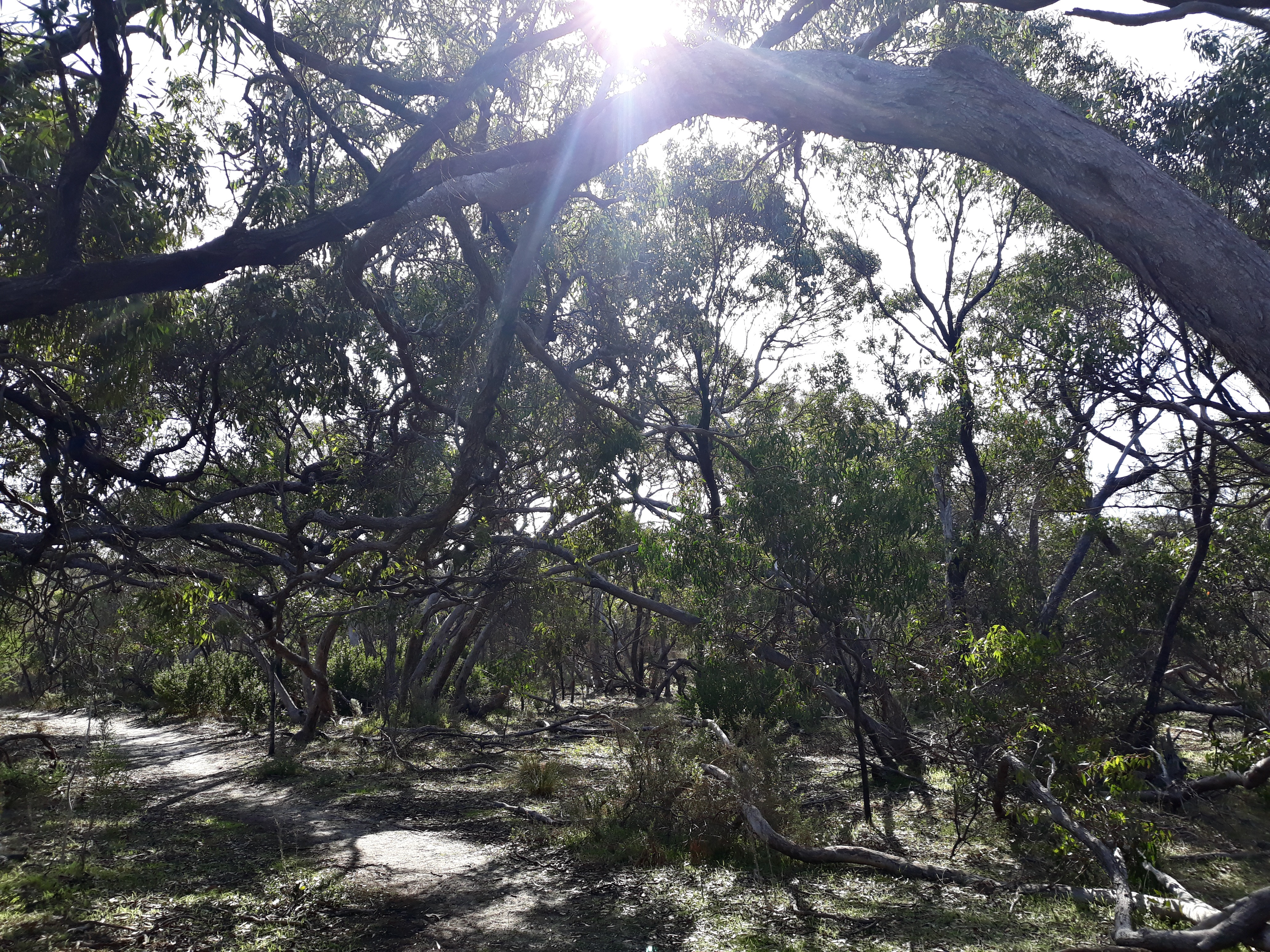
Daytime, Deep Creek, October 2024.

In our lives, I think that there are some places, connected to some times, that are somehow magic, that come to us through luck or stealth or a great deal of planning and then reside with us forever. These places become a part of the fabric of who we are, though we may not always understand why, and what we feel, when we think of them or remember them or revisit them, is a sense of awe — a sense of connection to something deeper than we can articulate.

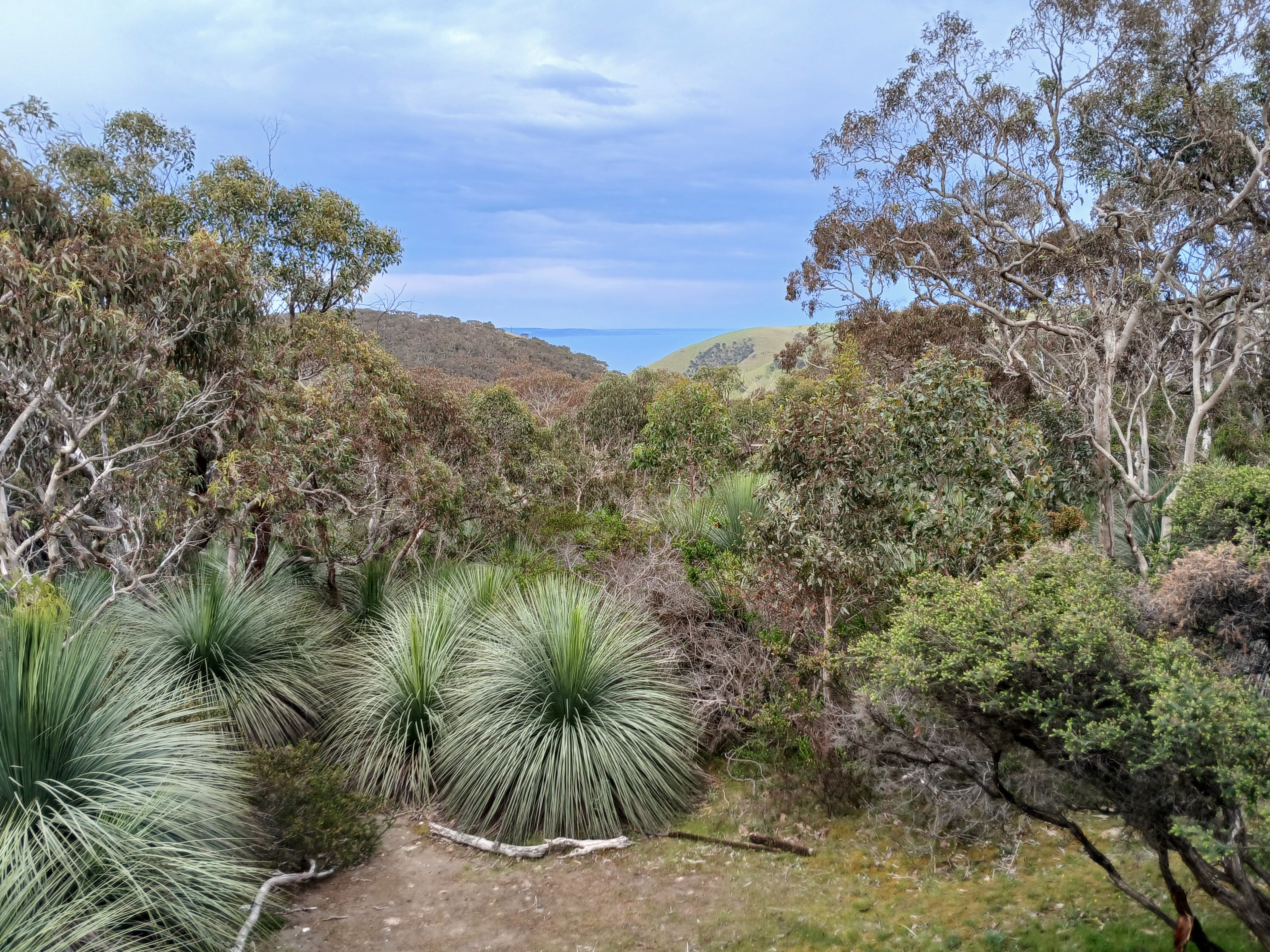
Gully of grass trees, Deep Creek, October 2024.

Deep Creek, place of grass trees and rolling hills and shrike thrushes calling in the trees, place of kangaroos and echidnas and sheep and shingleback lizards, place of tawny frogmouths and fogs and sunshine and rain and big, big skies — Deep Creek is, anyway, one of those places for me, a place close to my heart. I have left Deep Creek now, and the hopes and dreams I went there with — that I would write copiously and productively, that the story I’m writing is worth telling, that the manuscript I’m working on might one day get published — may or may not come true, but Deep Creek is still with me and always will be. I don’t know how else to put it.

Resting place, Deep Creek, October 2024.

And this is what I love about the passage I’ve quoted above by Michael Ondaatje, the way he captures the mystery of a place, its essence; the way it has become a part of him. I have never been to the jungle that he writes of, never heard peacocks who weep weep loud into the night. But in Deep Creek I have felt what Ondaatje describes. In Deep Creek I have felt that I have found a place that will, like breath, always be with me.

First light, Deep Creek, October 2024.

Lately I’ve been reading …

Unspoken

Other people’s words about … desire

We stayed mostly silent, that morning, and my giddy feeling gave way to rational thought; my urban preoccupations returned. I was wondering why desire, if it were ordinary and human, always felt as if it had to stay hidden. I didn’t think that I could tell Robert of my feelings for Cara, but it seemed odd to leave it unspoken. It was as if the secrecy rendered the feelings taboo and made me wonder if they were dangerous when I knew they couldn’t be, that it was only that Robert would worry unnecessarily if he knew. It felt as if desire were only permissible in art, where it could be dramatised, made beautiful.

from ‘The Modern
by Anna Kate Blair

Sophia, the narrator of Anna Kate Blair’s wonderful novel The Modern is a thirty-year-old Australian woman living in New York on a fellowship with the Museum of Modern Art. She’s bisexual, though the term troubles her — not because she questions her attraction to men and women, but because the label itself bothers her. I didn’t want a term like besexual, she writes, that trailed a disclaimer, a need for clarification, behind it. But who was asking me to clarify? I rarely said it aloud. I didn’t want a term at all. I just wanted to exist in all my dimensions.

We talk so much these days about sexuality and gender, and that’s a good thing; where there was silence before, now there’s conversation. We talk about heterosexuality and heteronormativity and we write about their implications, and that’s a good thing, too. But I’m particularly fascinated by Blair’s thoughts, in the passage I’ve quoted at the start of this post, about desire. It’s true, I think, that desire retains its power most of all when it remains unspoken.

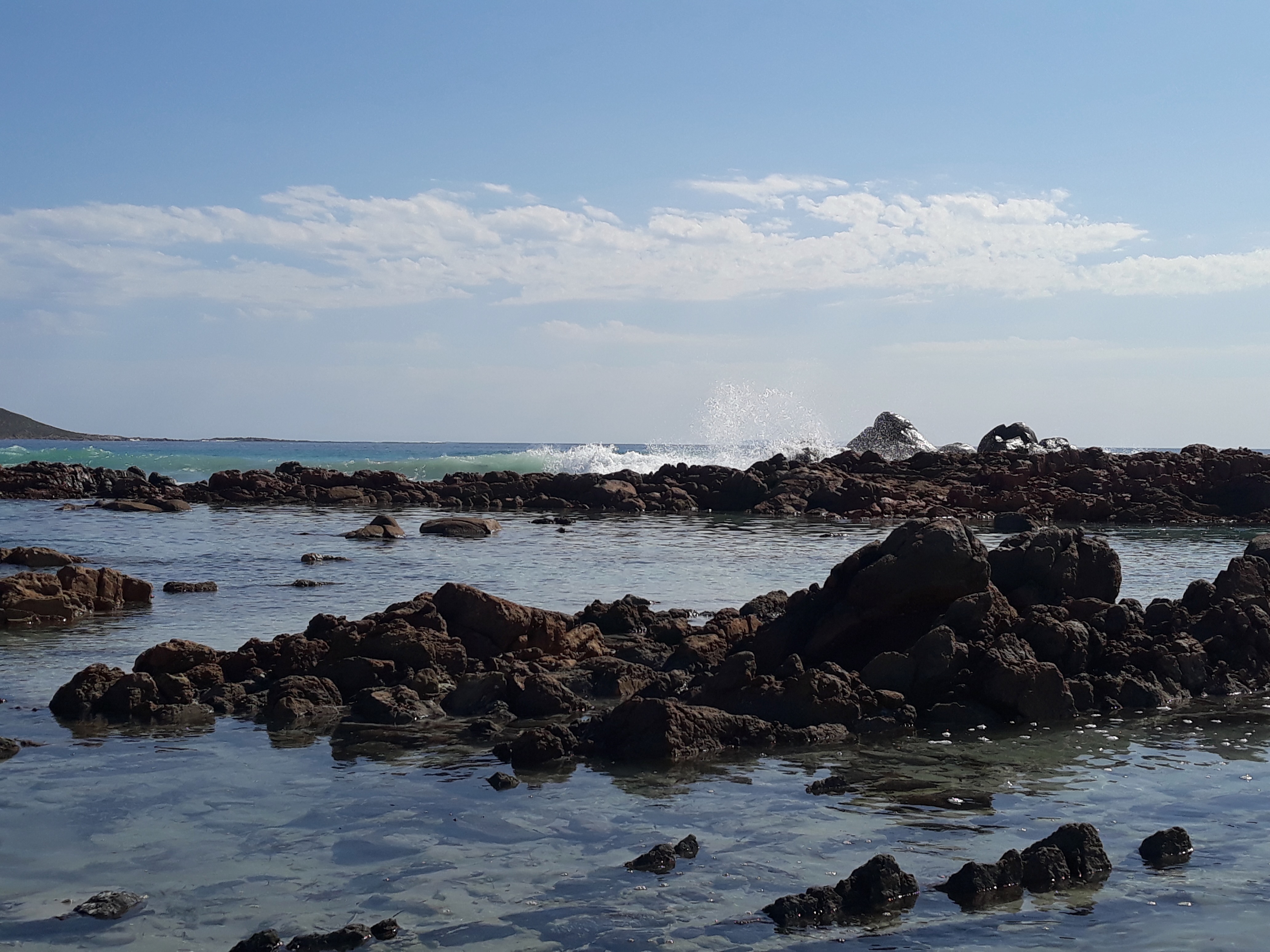
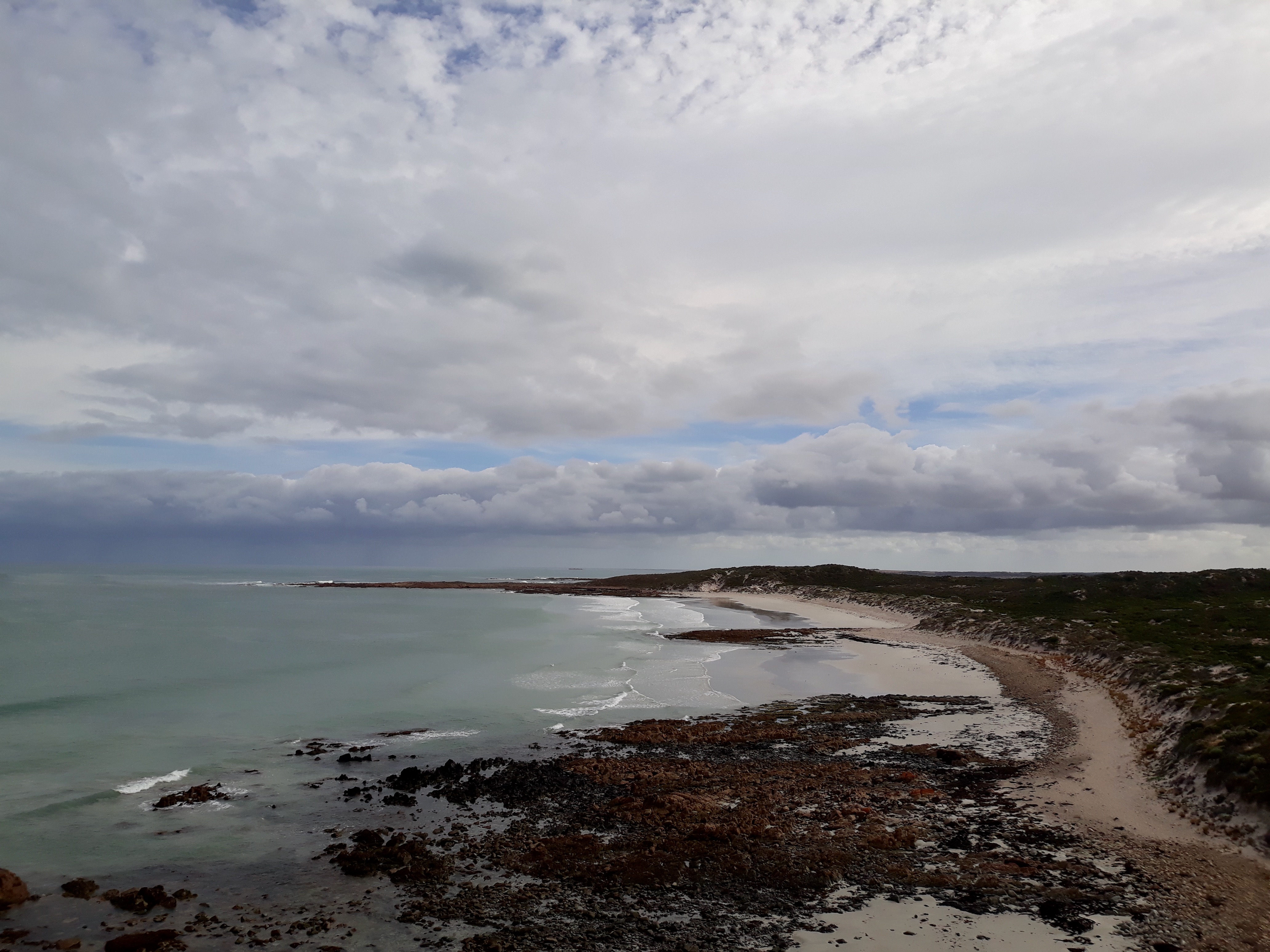
Daly Head, Yorke Peninsula, October 2023.

I’ve explored desire a little in two of my own books, my young adult novel Beyond Evie and most recently, though only in passing, in my novella Ravenous Girls. Like Sophia, labels trouble me. But I can’t help thinking that in part I wrote about desire in these books because, just as Sophia writes, that was the space where it felt most permissible for me to do so — because I could dramatise it, because I could (try to) make it beautiful.

Words, like stories, can be beautiful, can’t they? I hope so. That’s one of the reasons I write.

.

Daly Head, Yorke Peninsula, October 2023.

Moving on to on other reading-related matters, I’m taking a break today from my usual link to online essays that I’ve read recently because this month I’ve been focusing on reading novellas. Have you heard of Novellas in November? I’ve joined up, and I’m enjoying the chance to explore novellas, old and new, famous and not-so-famous. Feel free to join me over on Instagram for quotes from the novellas I’ve been enjoying, and for my thoughts about them.

Meanwhile, I’ll be back again with more of my usual posts soon.

Only connect: seeing someone

Other people’s words about … connection

‘So how is it [in prison]?’ I said [to Bunny]. ‘You look good.’
She did not look good. Her skin looked dull and she had a handful of tiny pimples on the left side of her face. Her hair was greasy at the roots. ‘It’s fine,’ she said. ‘I mean, I get by.’ She laughed.
‘Do you have any friends?’ I asked.
‘A couple,’ she said, licking up a palmful of M&Ms.
‘It’s just so good to see your face,’ I said, which was a lie. It was weird and sad to see her face. She didn’t look the same. But then she met my eyes fully for the first time, and the eye contact was so intense I felt I was falling, that if I didn’t concentrate I would lose consciousness. There was just her whole soul, right there. Looking at me. It was Bunny.

from ‘The Knockout Queen
by Rufi Thorpe

You know those moments when someone says something to you, or when you look at someone, and you feel a deep, true connection with them? That’s the kind of moment, I think, that Rufi Thorpe captures so movingly in the passage I’ve quoted today.

It’s hard to be frank in this way with another person, and it’s rarely sustainable, and so the intensity of the moment fades in the same way a bruise fades. That doesn’t mean you didn’t see each other.

It doesn’t mean you haven’t been seen.

Sunset, Deep Creek, August 2023.

Lately I’ve been reading …

Only [dis]connect

Other people’s words about … beauty

I wondered if a more complex language like [my mother’s native language] Korean had a singular word to describe the feeling of getting off a long shift of a physically demanding job and finding that, for at least half an hour after, everything, every last thing, was too beautiful to bear.

Jenny asked the question so simply — ‘Okay, what do you want to talk about?’ — and I nearly reached across the table and grabbed her hands back, whispered thanks against each of her knuckles. I was about to ask her opinion on lakes and oceans — which did she prefer, contained and musty, or vast and salty? — when she suddenly sat up straight, eyes wide. ‘So — what did you think of that meeting today? Hold nothing back.’

‘Oh,’ I said. ‘I don’t know, it was fine.’

from Pizza Girl
by Jean Kyoung Frazier

I thought of Sally Rooney’s novel Beautiful World, Where Are You? when I read the passage above. In Beautiful World, Rooney’s characters variously mourn the loss of the sense they used to have that they were moving through a beautiful world, or they lament the ugliness of the everyday world, or they remark upon what Rooney calls a hidden reality: the presence at all times, in all places, of a beautiful world.

Sunset, early July 2022.

I think this is what Kyuoung Frazier’s narrator is getting at. She wants to tell Jenny about the beautiful world she sees all around her — but Jenny, like everyone else in the narrator’s life, either doesn’t want to hear what she has to say or doesn’t know how to hear it.

Some years ago when I was going through a difficult patch, a friend of mine offered to exchange a daily photograph with me via text message. ‘We’ll just send each other a picture of something we see,’ she said. ‘Something we like. Something that makes us smile. We’ll share our pictures, and it’ll be a way to reach out. To say hello.’

Dune flowers, early July 2022.

We ended up exchanging daily photographs for over a year, and it was a way to say hello, but it was also so much more. What I loved most about our exchange, beyond the sense of connection it gave me with another human being, was the knowledge that we were each finding something beautiful in our day and then sharing it with someone else. Passing the beauty on.

Maybe we should all share more beauty. Maybe it doesn’t matter if beauty is fleeting and makes us feel fragile. Maybe that’s exactly why we should keep on sharing it.

Before sunset, early July 2022.

Lately I’ve been reading …

How to go on

Other people’s words about … hard work

He worked construction down on the river, where they were putting up a new footbridge. His own job involved the careful freighting of materials onto the platform where the crane rested on the water. There were times when he thought he’d get sick from the motion of the barge, the constant shifting underfoot. There were times when his hands hurt from lifting and pushing and turning, tightening the straps until they wouldn’t give, tightening them until it seemed impossible that anyone would ever be able to set them loose again. Days when his back ached and his stomach hurt and his hair was peppered with grit, when his eyes burned, and his nose burned from the stench of oil and of the river, which was dying a slow, choked death via a series of minor diversions. But then, on bright winter days, he’d look up and see the geese tracking across the sky, moving up there free as air, and he’d think that there was something beautiful left in the world. And he could go on like that, as long as there was something beautiful left in the world.

From ‘Filthy Animals

by Brandon Taylor

I work in a call centre, an office job, unlike Brandon Taylor’s character Hartjes in the passage above. It’s not a physically demanding job. Even so, there are days when my head aches from breathing in stale, recycled office air, when my hips ache from sitting too long, when my voice croaks from talking for hours on the phone, when my stomach hurts from choking down my emotion after a difficult phone call. In the end, just like Hartjes, I feel my job in my body.


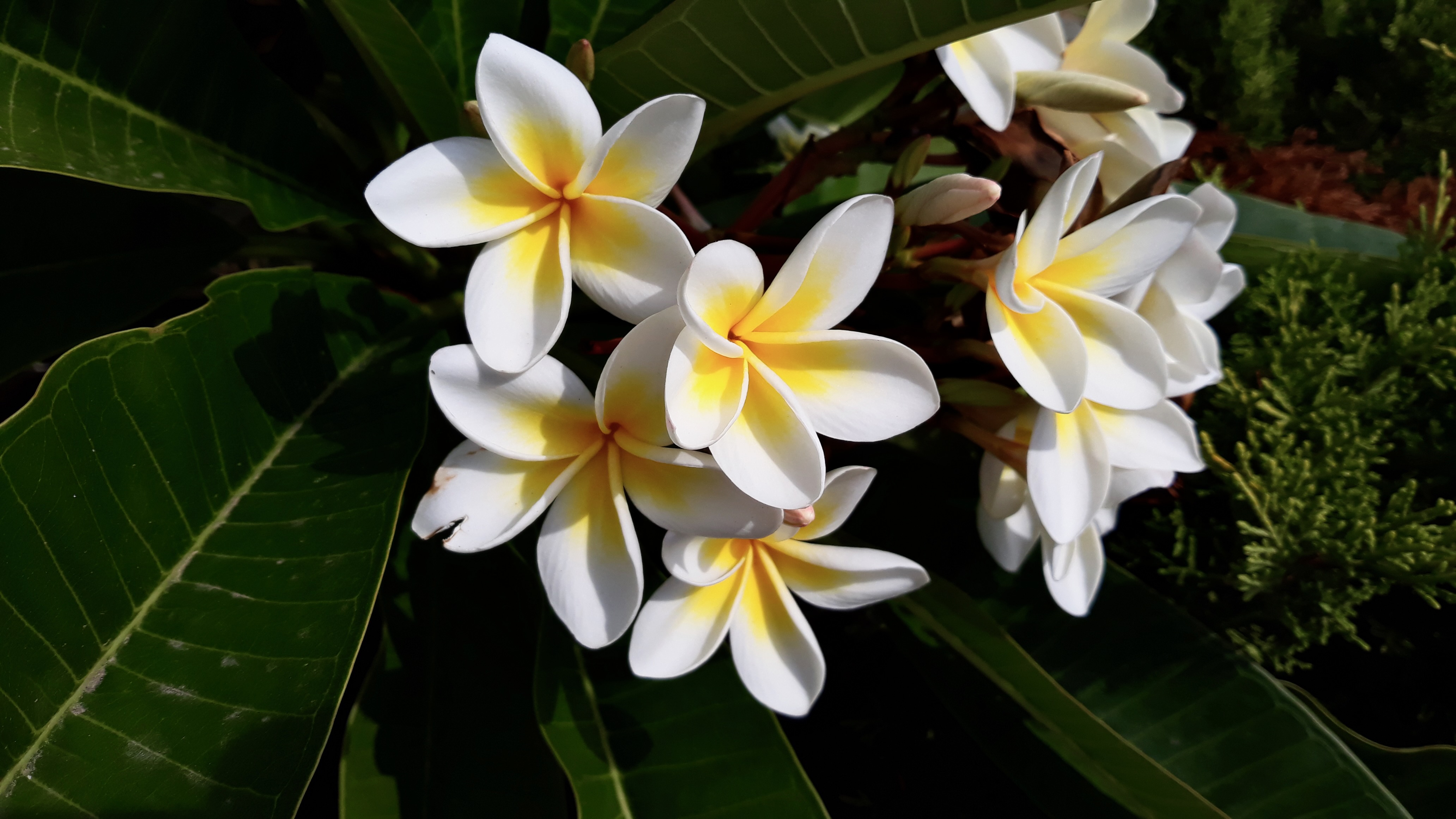
Neighbourhood frangipani tree, Taperoo, April 2022.


What grabs me most in the passage above is the river, in all its symbolism, dying its slow, choked death. Like Hartjes, I find myself looking up from my day, seeking the sky, seeking the air, seeking a glimpse of beauty and wonder.

That brief hint of beauty. That brief reminder of how to carry on.

Lately I’ve been reading …

Only connect: The secrets of the universe

Other people’s words about connection

I placed my hand on the back of his neck. I pulled him toward me. And kissed him. I kissed him. And I kissed him. And I kissed him. And I kissed him. And he kept kissing me back.
We laughed and we talked and looked up at the stars.
‘I wished it was raining,’ he said.
‘I don’t need the rain, ‘I said. ‘I need you.’
He traced his name on my back. I traced my name on his.
All this time.

From ‘Aristotle and Dante Discover the Secrets of the Universe’
by Benjamin Alire Sáenz

I am a sucker for a love story that moves me. The older I get, the more what I mean when I talk about ‘a love story that moves me’ is ‘a love story that makes me weep’.

It’s taken me years to work out why this is. It is not because I am not loved. It is not because I do not love in return. It is because the love stories that make me weep are about a moment — or moments — of connection.


Big sky.

Oh, connection. I had planned in this post to theorise about why I — like so many other people, I suspect — feel so disconnected right now from other people and from the natural world around me. I’d planned to talk about the coronavirus pandemic. About the climate change crisis. About violence and discrimination against people who are not white or male or middle-class or heterosexual or young. And about what it feels like, as a non-married, non-childbearing, non-career-driven woman to turn fifty-one in this year, 2021.

But in the end I decided against writing about those things — partly because I’ve talked about them in previous posts over the years, and partly because most of these things are common topics of conversation right now, and I don’t think I have any new ideas to contribute.


Meeting place.

What I have decided to do instead is to start a new occasional series on this blog called — in the spirit of EM Forster, whose words in 1910 in Howard’s End seem more prescient than ever — Only connect!. In this series, I will be quoting passages that are in one way or another about those moments of connection that move me so deeply. Mostly, I suspect, that means the quotes in this series, like the passage I’ve quoted above from Benjamin Alire Sáenz’s beautiful novel for young adults about two Mexican-American boys who fall in love with each other in the 1980s, will be about love and intimacy. But there are other forms of connection that move me, too, and I will quote passages about them here, too.

Years ago, when I first wrote the blurb on my About the Words page of this blog, this is what I wrote: [This blog is] about my love for words, particularly other people’s words, and how they speak to me. Words can make us laugh, cry, think, hope, dream, rage —- but they have no meaning unless they are shared. I see now that what I was saying when I wrote that blurb was that words are a form of connection. And so I hope, in bringing this new series of posts to you that you, too, feel a moment of connection — with the words I’ve quoted, with the writer who wrote them, with me, too, perhaps.


A pot of tea and a book.

PS The photographs that dot this post come from a recent trip I took to Yorke Peninsula, where I spent the week reading, walking, eating, sleeping. I had no access to mobile phone coverage, or to emails, or to the internet. Strangely, it did not feel as though I was disconnected at all. Rather, it felt as though I was reconnecting — with the world around me, and with the natural rhythms of life. And that, perhaps, is the truest kind of connection of all.

Lately I’ve been reading …

Thankful

Other people’s words about … love

And the way I felt, seeing him for the first time in four years, was the way I felt every time I saw him in public all the years we were together. If I arrived somewhere and saw him already waiting for me, or walking in my direction, if he was talking to someone on the other side of a room — it wasn’t a thrill, a rush of affection, or pleasure. Then, in the church, I didn’t know what it was and spent all of the service trying to diagnose it. At the end of the service, Patrick smiled at me once more as I moved back … and I felt it again, so much from my core that it was difficult to keep going, to follow Ingrid and Hamish out, Patrick further and further behind me …

Thank God is how I felt when I saw Patrick that day. Not a thrill or affection or pleasure. Visceral relief.

From ‘Sorrow and Bliss’
by Meg Mason

I’ve read many eloquent and moving (and arousing, even) descriptions of romantic love in fiction over the years, but I think Meg Mason’s words in the passage I’ve quoted above are some of the best. It takes a certain kind of grim, black humour to describe the other part of loving someone, that part which is more a kind of fatalistic recognition of how much two people can become physically a part of each other, how much they can need and love each other, and yet how little it seems to have with that word we so often overuse — ‘love’.

Sorrow and bliss, indeed.

Study in blue.

I’m writing today in the last week of January 2021, a month in which 100 million cases of coronavirus have been recorded in the last year or so, along with about 2 million deaths, since the first case was reported to the World Health Organization in Wuhan around the same time last year. In Australia, the virus has so far remained relatively under control — possibly due to sheer luck of timing and distance, I think, rather than to any kind of incredible management as far as leadership goes — and so we remain, for now at least, protected. Instead, Australians watch the tragedy unfolding from afar, and we mourn and hold our breaths at the same time, hoping the same thing won’t come to us.

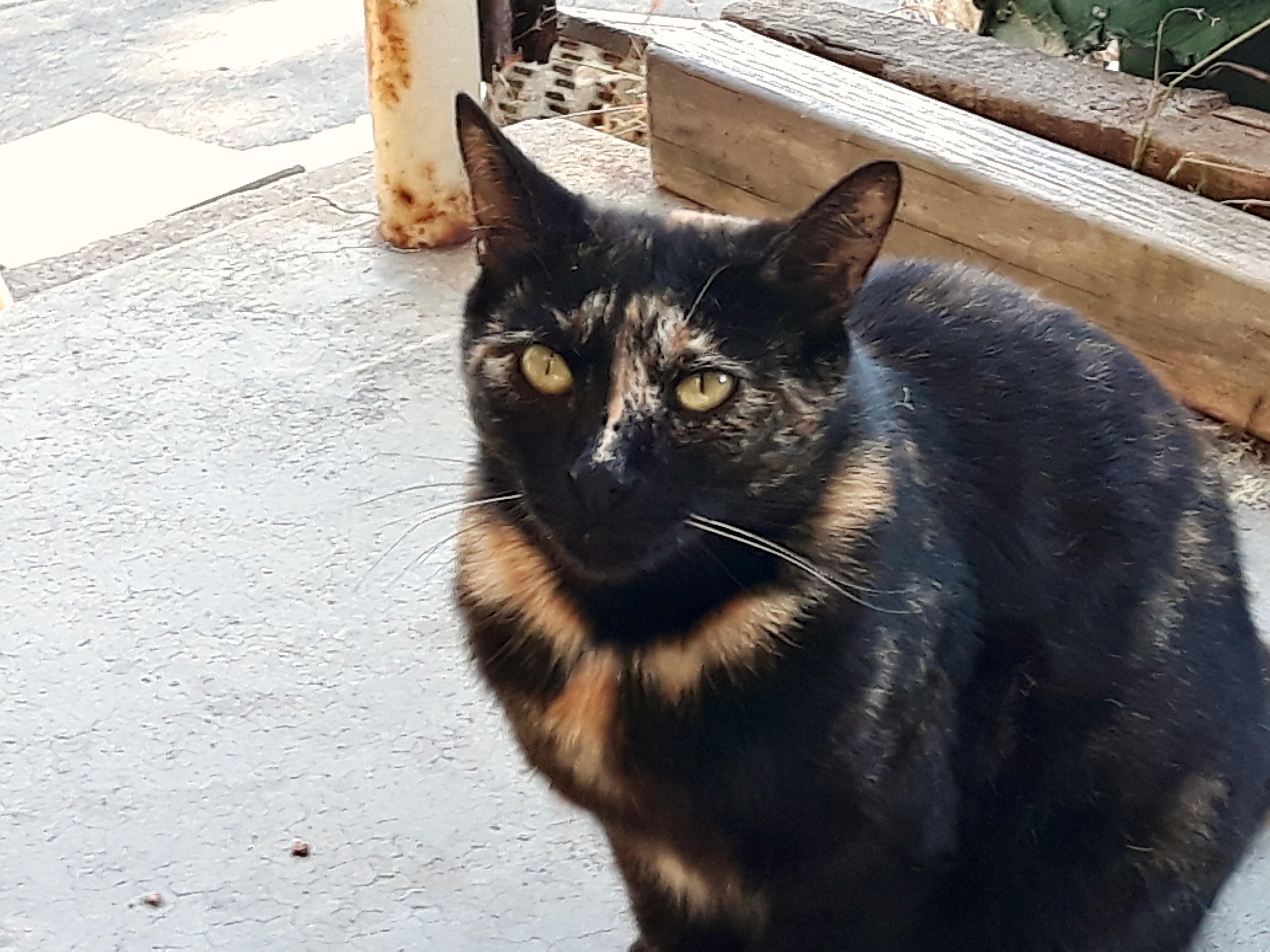
Lizzie the garden cat, inching closer.

To me, this time, early 2021, feels like a time for a collective holding of the breath, across the globe. Who knows what 2021 holds? There is plenty of news bringing whiffs of hope — a vaccine, a new president in the US, a growing political will to respond to global warming and climate change. But it’s too early to know, yet, whether these whiffs of hope will be realised, or whether this time is just a lull in a gathering storm.

I hope, I hope, I hope.

And meanwhile, on a personal scale, I am grateful for the small but beautiful things in the world around me and in my life, a small sample of which I’ve captured in the photographs accompanying this post. It’s trite, perhaps, to fall back on the quotidian details, on appreciating and acknowledging the humdrum rhythms of everyday, but that doesn’t make the process any less meaningful or important.

And meanwhile there are wonderful books to read, like Meg Mason’s. I hope you, like Mason’s Martha, have found your own Thank God.

Tree hug.

Lately I’ve been reading …

Unlovely

Other people’s words about … the view from the kitchen window

The kitchen window [of the railroad flat] looked into the gray courtyard where, on better days, there would be lines of clothes baking in the sun, although the floor of the deep courtyard, even in the prettiest weather, was a junkyard and a jungle. There were rats and bedsprings and broken crates. A tangle of city-bred vegetation: a sickly tree, black vines, a long-abandoned attempt at a garden.

From ‘The Ninth Hour’
by Alice McDermott

The world can seem very unlovely sometimes, can’t it? Sometimes the unloveliness is of the kind described in the passage above, which comes from poverty and dereliction and is visible from your kitchen window. And sometimes it comes from a more spiritual kind of unloveliness: a human lack of grace.

Shafts of sunlight

There are times when I fret and rail at the unloveliness, times when it is all I can see. And there are other times — for the space of a breath, or a second, or a minute, or an hour — when I am overwhelmed by the loveliness that surrounds me, both within people and without.

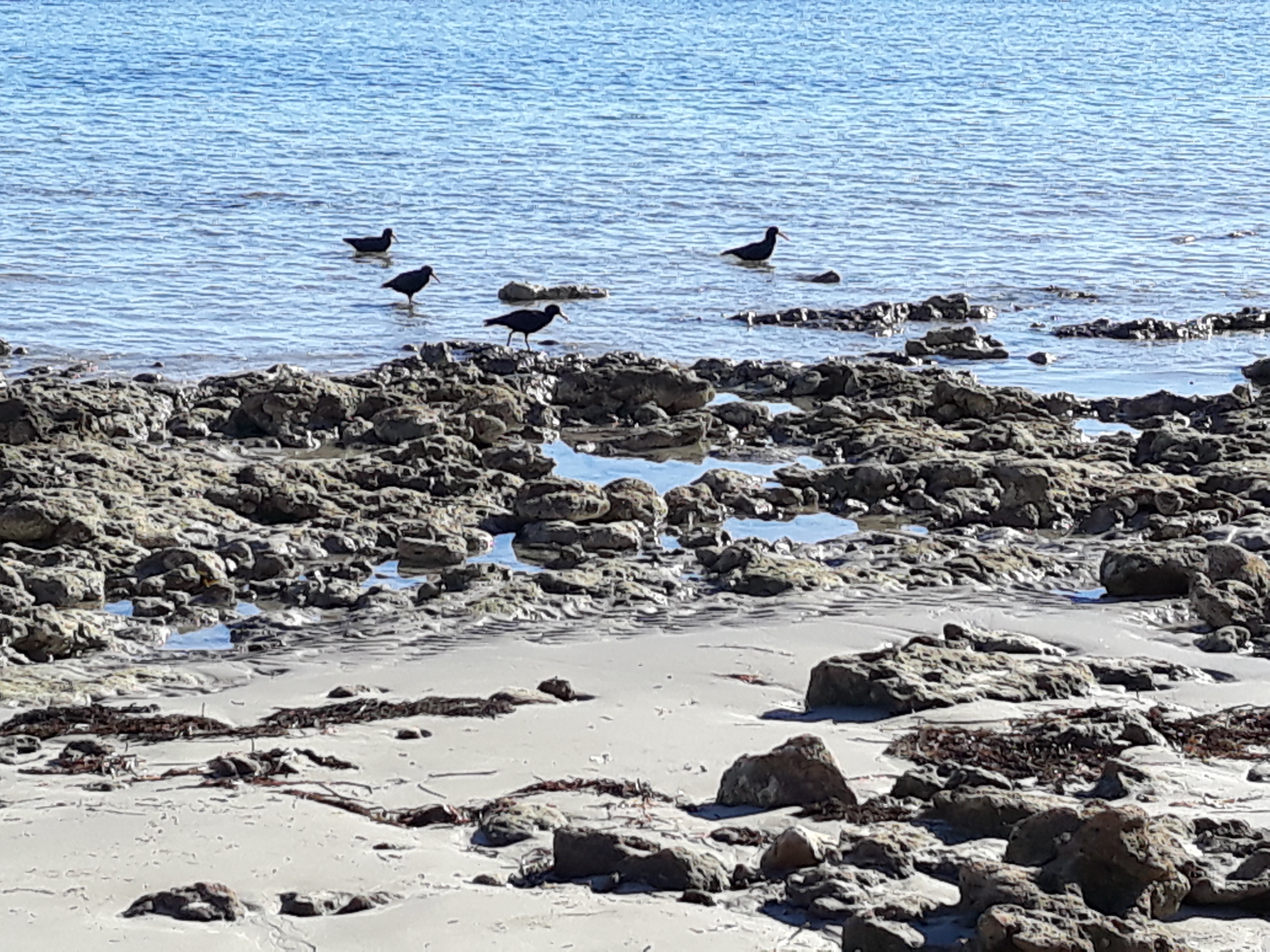
Oystercatchers on the reef

I had a week of annual leave from work last week, which I spent by the beach. The weather was dank and damp and (yes) somewhat unlovely, and, at least partly in response, my mood veered up and down erratically.

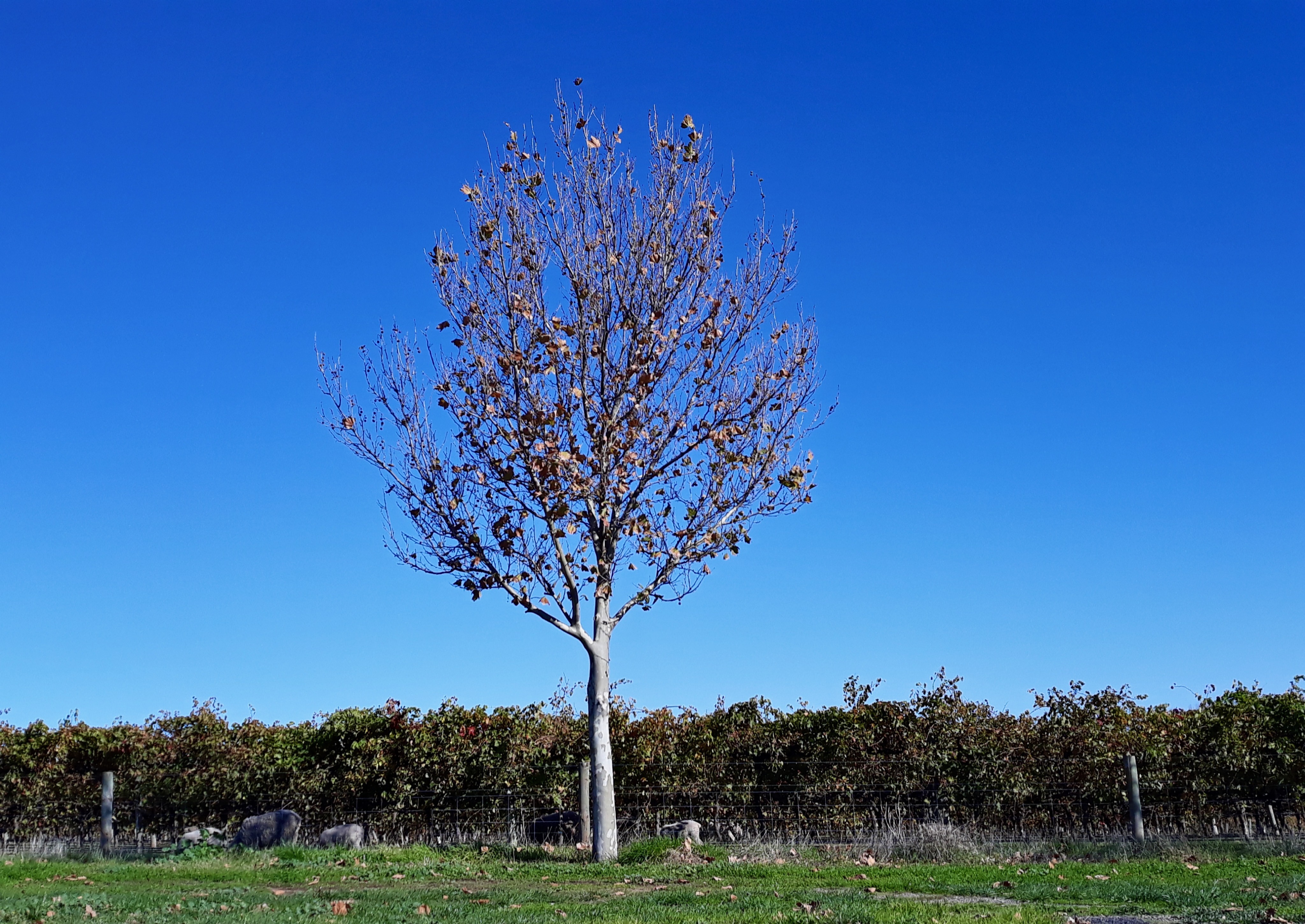
Autumn in the vineyards

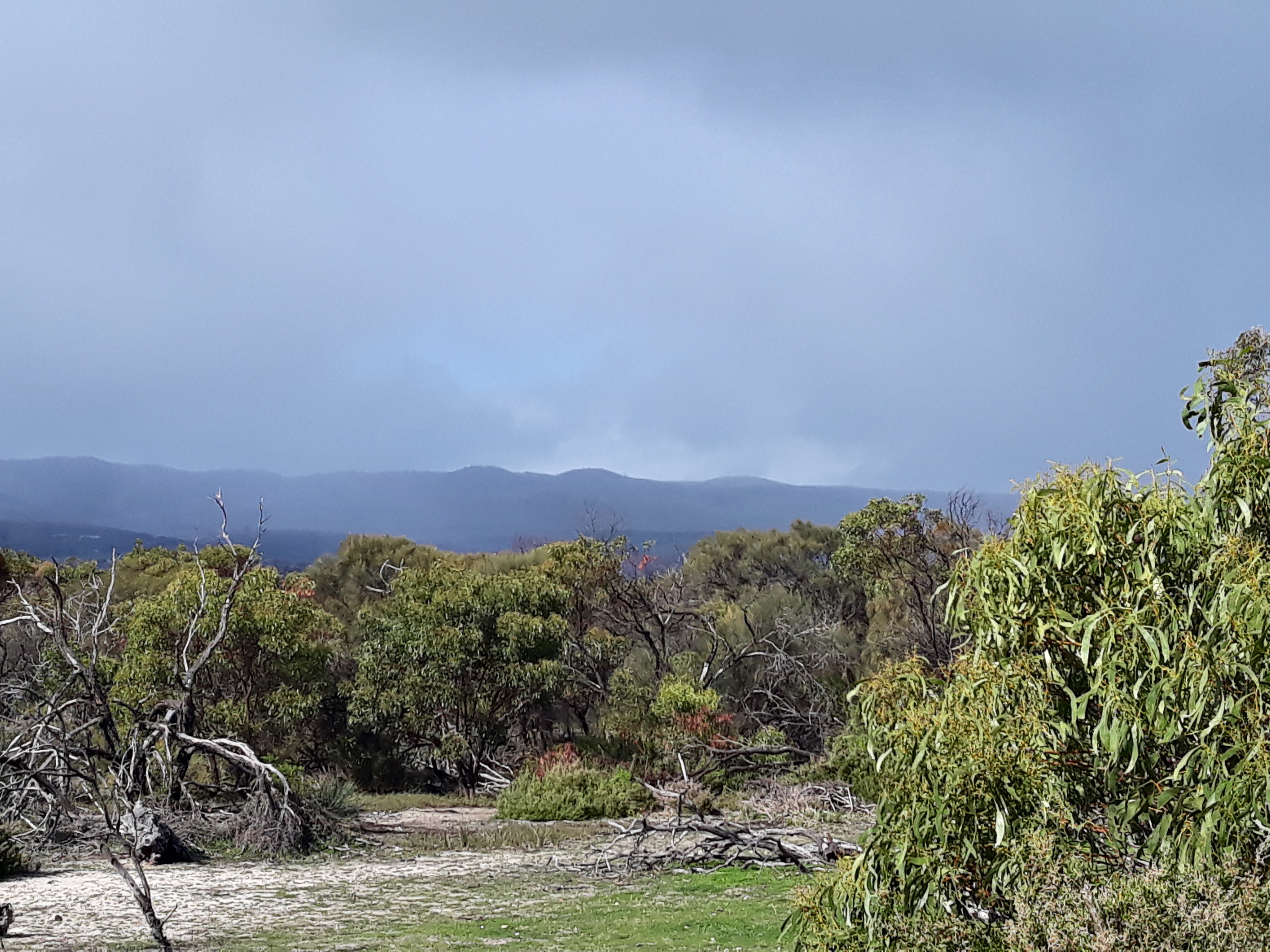
But then, over the week, because I’m on a pause in my running at the moment, I found myself seeking out my bike again, taking myself for long, hypnotic rides along the coast, through hills and paddocks and vineyards. And all around me, amidst the dampness and dankness, there were moments of loveliness, some of which you can see pictured in today’s post.

Rainclouds over the hills

Sometimes, I think, you just have to take moments of loveliness like this and carry them with you, through the unloveliness. Sometimes it’s all you can do.

Lately I’ve been reading …

The life ahead of you

Other people’s words about … distance

They raised their glasses. The room smelt of wine and bread and gravy, and the light was rich and dim.

Geraint didn’t answer.

‘I thought a change of scene … ‘ said Basil. ‘A long voyage on an ocean liner [to India]. Full of hopeful beautiful women,’ he added, daring.

Geraint read Kipling. He thought of the mystery of India, the jungle, the light, the colours, the creatures. The complexities of the silver dealings. The distance. He was, he saw, in need of distance. And his imagination touched on the beautiful young women sailing across dark starlit oceans in search of husbands. A journey like that made you free, made you a different man.

From ‘The Children’s Book’
by AS Byatt

Just a few weeks ago, before the onset of the COVID-19 pandemic, the world we’re living in now would have seemed like something straight out of the pages of a science fiction novel. But then life changed — abruptly, shockingly — and here we are now, living out our strange, new lives. Trying to make sense of our days.

Having no words, myself, for any of this, I have spent my Easter seeking solace in other people’s words. There is no better novel I can think of that describes the kind of vast, sudden change we are experiencing right now than The Children’s Book. In it, AS Byatt chronicles the lives of the members of a family living in Edwardian England as they move, unknowingly, towards 1914 and the outbreak of the First World War … and the end of the world as they knew it.

‘I should like that, sir,’ [Geraint] said. ‘You have been very kind to me.’

Basil said, ‘It was a fortunate day for me when you came into the Bank. You are too young to be fixed by one setback. You have all your life in front of you. The world in front of you.’

Geraint set his [broken heart] against the pull of the oceans and the strange continent. He could feel his own energy stirring.

‘I know,’ he said. ‘You are right. Thank you.’

To say anything more about how Geraint’s life changes shortly after this conversation, or about how wrong Basil’s pronouncements turn out to be, would be to give away the whole, shocking point of this novel. All I will say is this: sometimes we are wrong about the world we live in, and about the lives that we believe lie ahead of us.

Sometimes, as Byatt describes, we are terribly, terribly wrong.

*

At the end of this post, I’ve listed a few of the pieces I’ve read online recently, during this strange, uneasy Easter weekend. I’ve listed them here in case you, like me, find yourself speechless right now: in case you, like me, find yourself seeking solace in other people’s words.

But there’s one other thing I want to leave you with today. This morning, I wandered into my garden — my small, messy, rambling suburban garden, which is more of a yard with some trees I planted in it, really, than a garden — and glanced up through the leaves at the sky. And there, above me, was the sun shining through, distant but warm.

I captured that moment in the photo that accompanies this post. It shows another kind of distance from the one Geraint believes he is entitled to reach out towards. It shows, I want to say, another kind of solace.

The light shining through

Lately I’ve been reading …

That place

Other people’s words about … slowing down

He opened the window and let in the ocean, gulped in that grey air as though oxygen was enough to save him from the people in the house, watched the waves, noted the dark rip forming at the southern end of the beach. He ignored the sound of Charlie’s voice in the lounge, hilarious, oblivious, the sounds of the girl in the bathroom behind him, scrubbing insistently; called to mind the tentacles of the cloud from earlier, saw the colours he’d mix [if he were to paint it], the strokes, the shapes. After a few moments, his breathing slowed and he began to enter the place where no one else could come.

From‘Bluebottle‘
By Belinda Castles

It’s hard to know what to say, let alone what to write about, in times like this. Surely I am not alone in beginning to think of 2020 as the year of disasters — first, here in Australia, the bushfires; then, globally, the COVID-19 pandemic.

Low ebb

About the coronavirus, I have nothing useful to say. It is only just beginning to hit here in Australia, and — despite the chance that Australians had, over the last few weeks, to learn from people’s experiences of it in the northern hemisphere — it appears that we have done very little to protect ourselves. Though we are not yet in lockdown, I suspect we will be soon.

Birds of a feather

Before the coronavirus situation began to escalate here, I was lucky enough to have the chance to slip away for a few days to Kangaroo Island. The photos in this post are from those few days.

Half of the island — yes, half — was destroyed by the bushfires earlier this year. Even without the pandemic, it is a time of great sadness on the Island.

Exposed

But I have nothing to say about that sadness, either. Instead, my photographs here celebrate, I hope, the beauty of the unburned half of the Island. In times of sadness, we have to find things to celebrate, yes?

Enter that place

Also, to borrow Belinda Castles’s words from the quote above and to use them in a different context, we have to slow down, despite our panic; we have to breathe in fresh air. We have to turn inward, finding and enter[ing] that place where no one else [can] come.

In the end, we have to find a way, within ourselves, to survive.