When the water runs dry

Other people’s words about … drought

Many years ago, when I was in my twenties and travelling overseas, my American boyfriend took me back home to meet his family and friends in Michigan. We had been living for the previous few months in Cairo, that famous desert city, and to begin with we had, like all Westerners, drunk bottled water, fearing that the local water might make us sick. But we didn’t have much money and we had read that the municipal water in Cairo was safe to drink, even for Westerners, and so after a few weeks we had transitioned to drinking tap water. Neither of us had become sick as a result, but the Cairo water was so heavily chlorinated (presumably to make it safe to drink) that even I, hailing from Adelaide, found it hard to stomach.

In my home town, the tap water was similarly heavily chlorinated — so heavily, in fact, that it was said that aeroplanes, landing in Adelaide to refuel, didn’t refill with local water. How apocryphal this story is, I am not sure, but in any case, back in Cairo my boyfriend and I had taken to adding Tang to our water to take the taste of chlorine away. When I think of Cairo now, I still think of the taste of the water we drank in our last few weeks there, tangy with artificial orange flavour. How it sat in your belly afterwards like a stone. It was in Cairo, not Adelaide, that I came to understand the meaning of the term hard water.

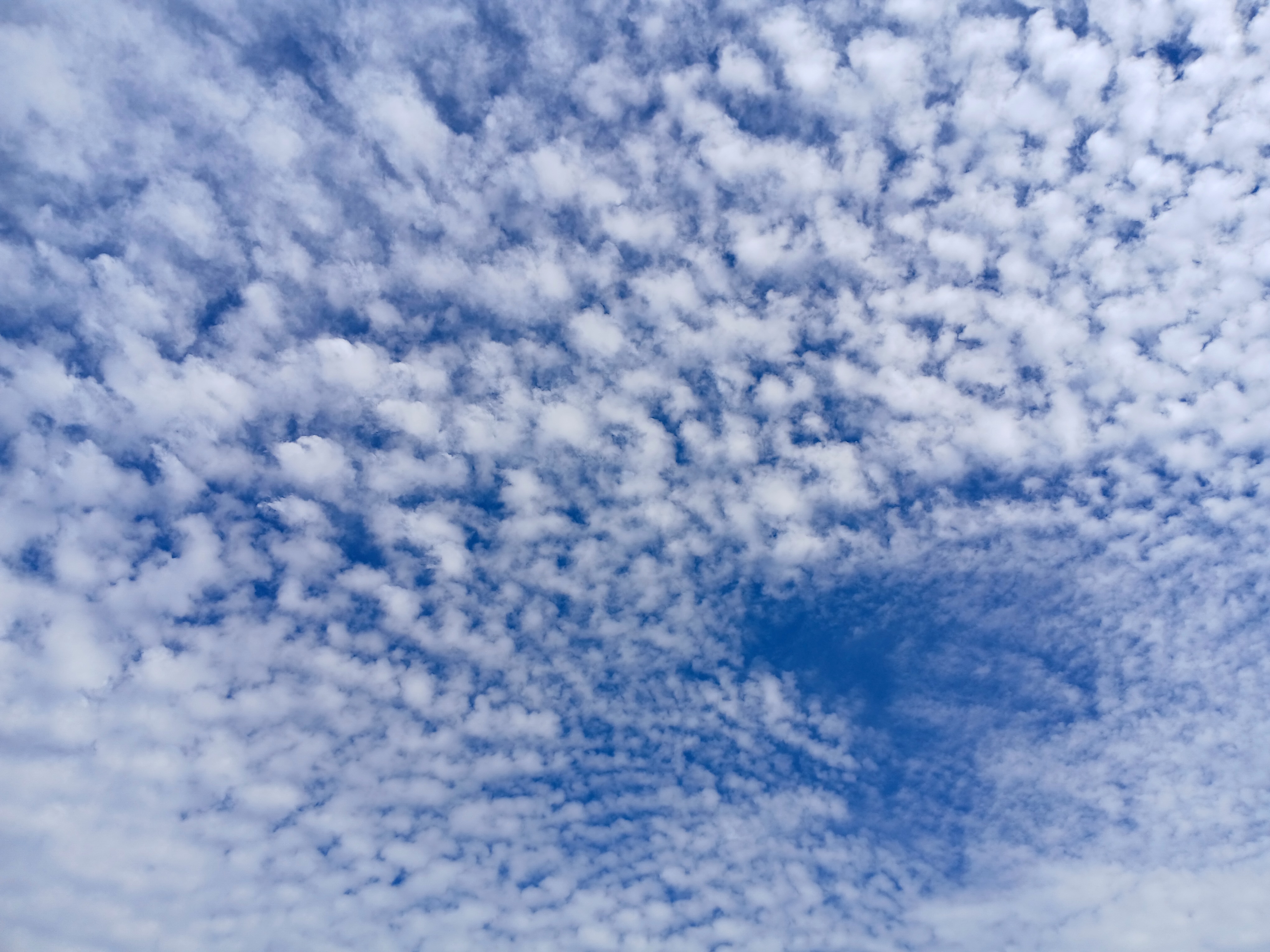
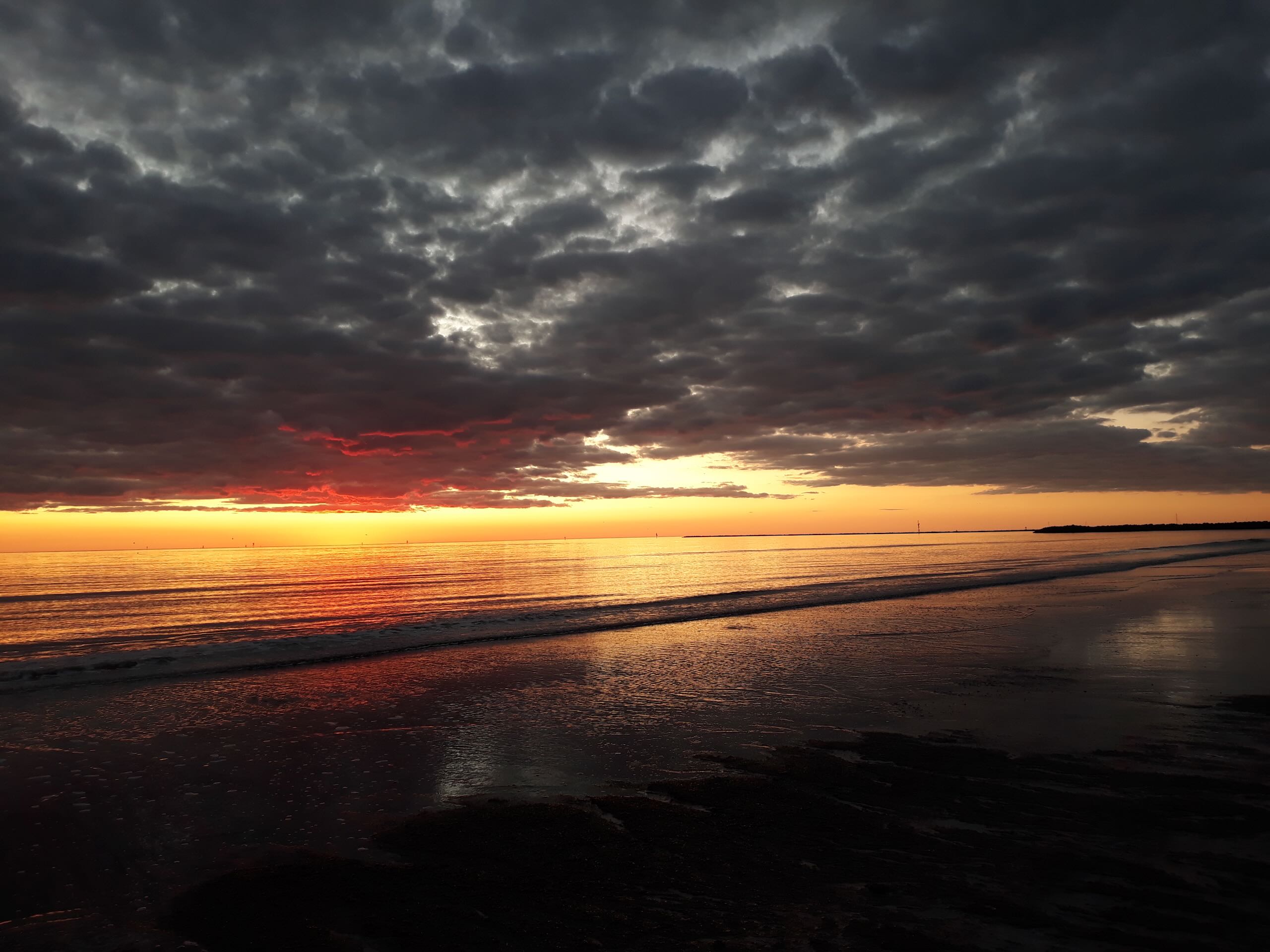
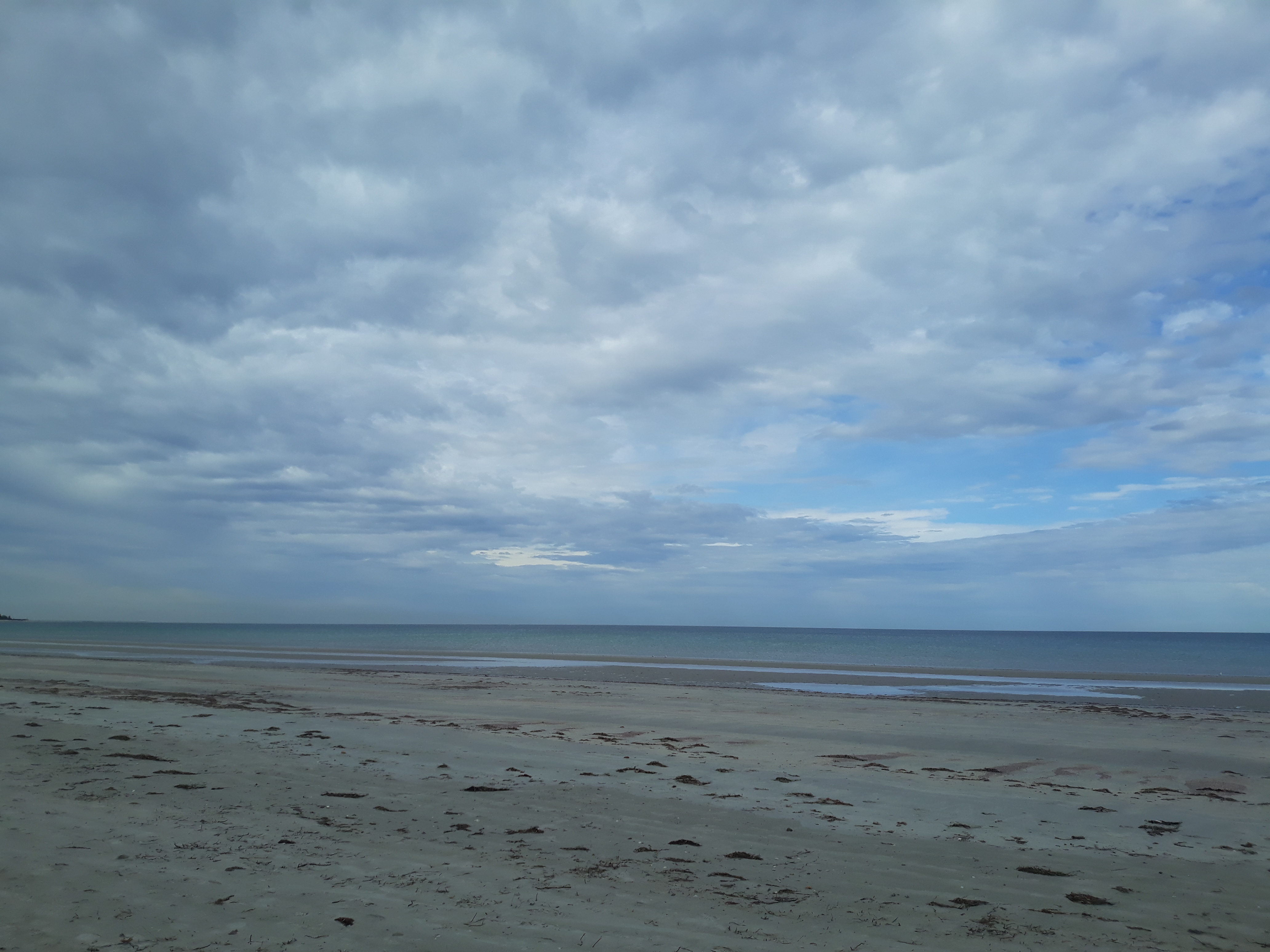
Clouds but no rain, Aldinga Beach, May 2025.

The narrator in Madeleine Watt’s quietly devastating novel Elegy, Southwest, Eloise, is a young Australian woman, twenty-nine years old in the present day, which makes her, I guess, a Millennial. And yet when I read the passage I’ve quoted above I thought of myself, most decidedly a Gen X-er, and my own reactions to water scarcity when I was travelling in the nineties. In Michigan, when my boyfriend left the tap running as he brushed his teeth, when his mother washed the dishes under a running tap, I struggled to swallow back my protests.

‘We’re surrounded by the Great Lakes,’ my boyfriend said, teasing me. ‘We’re hardly experiencing water scarcity.’

But my response to the sight of running water was instinctive, fundamental. Water was a precious resource. You didn’t waste it. You just didn’t.

This year in South Australia we’re experiencing record low rainfall. After the driest summer in thirty-three years, we’ve moved into an equally dry autumn, and we’ve been saved from water restrictions only through the existence of the desalination plant that opened in 2012 in response to the Millennium Drought. Meanwhile, the native local flora and fauna are visibly, heart-breakingly struggling to stay alive. Those beautiful wide blue skies of South Australia? I’ve come almost to dread them.

Like Eloise, I grew up watching Hollywood movies where teenagers hung out in malls with fountains in them. Like Eloise, I don’t remember seeing a fountain in our local malls (though in the much-loved TV comedy from the noughties Kath and Kim, the local shopping mall is aptly — prophetically? — named Fountain Lakes). And like Eloise, all these years later, in these years of drought after drought, I, too, want to ask: Who is in charge? Why isn’t somebody doing something?

Lately I’ve been reading …

Like breath

Other people’s words about … places that reside within our hearts

During our visit to the jungle, while we slept on the verandah at 3 AM, night would be suddenly alive with disturbed peacocks. A casual movement from one of them roosting in the trees would waken them all and, so fussing, sounding like branches full of cats, they would weep weep loud into the night.

One evening I kept the tape recorder beside my bed and wakened by them once more out of a deep sleep automatically pressed the machine on to record them. Now, and here, Canadian February, I write this in the kitchen and play that section of cassette to hear not just peacocks but all the noises of the night behind them — inaudible then because they were always there like breath. In this silent room (with its own unheard hum of fridge fluorescent light) there are these frogs as loud as river, grunting, the whistle of other birds brash and sleepy, but in that night so modest behind the peacocks they were unfocused by the brain — nothing more than darkness, all those sweet loud younger brothers of the night.

from ‘Running in the Family
by Michael Ondaatje

I have just spent a week away in Deep Creek, having been chosen as this year’s lucky winner of the Deep Creek Residency for writers. I spent that week away writing, reading, bushwalking, running, writing again, then writing some more. It was a joyous time, the rarest privilege, to be given time away simply to write.

Daytime, Deep Creek, October 2024.

In our lives, I think that there are some places, connected to some times, that are somehow magic, that come to us through luck or stealth or a great deal of planning and then reside with us forever. These places become a part of the fabric of who we are, though we may not always understand why, and what we feel, when we think of them or remember them or revisit them, is a sense of awe — a sense of connection to something deeper than we can articulate.

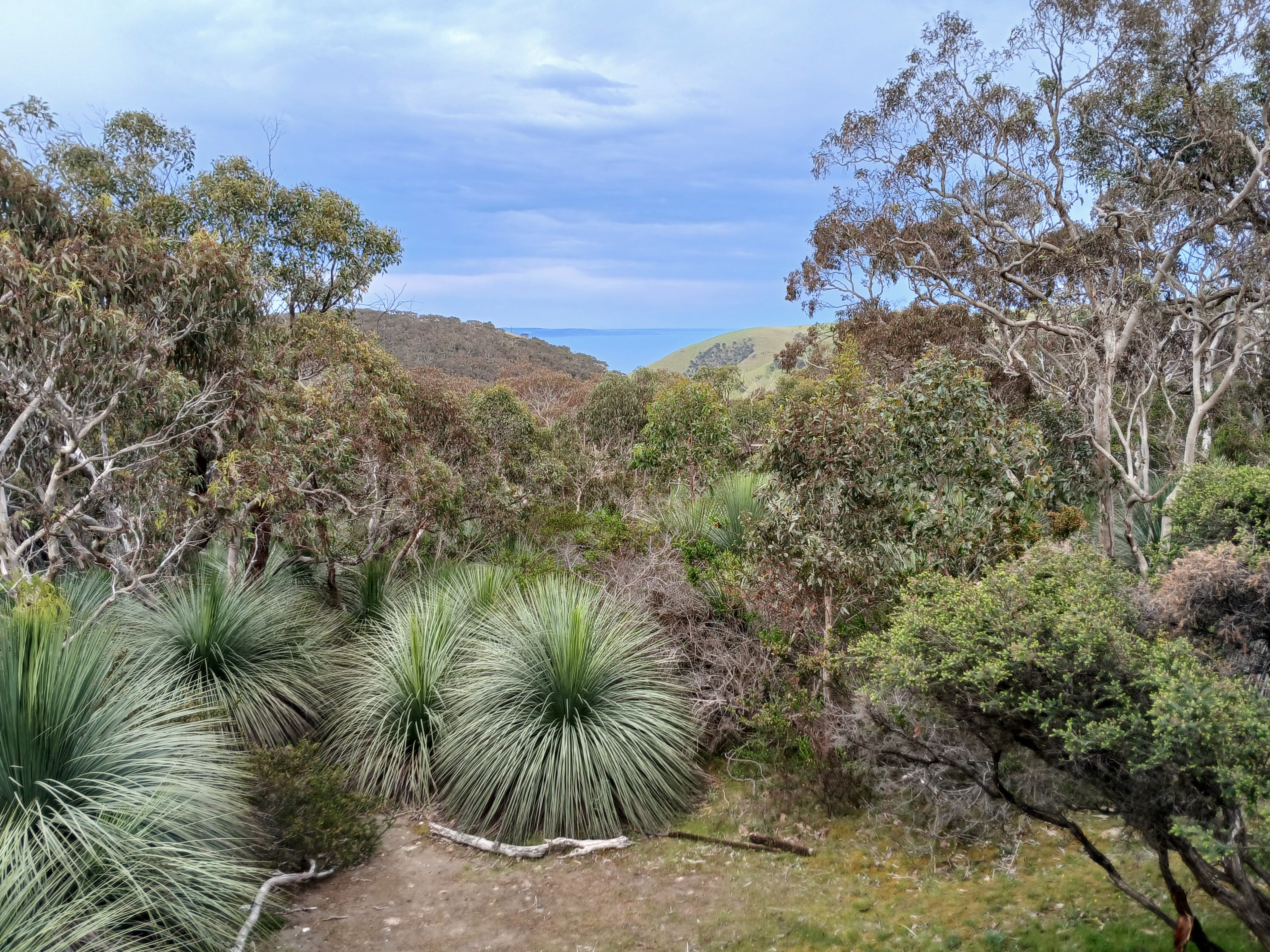
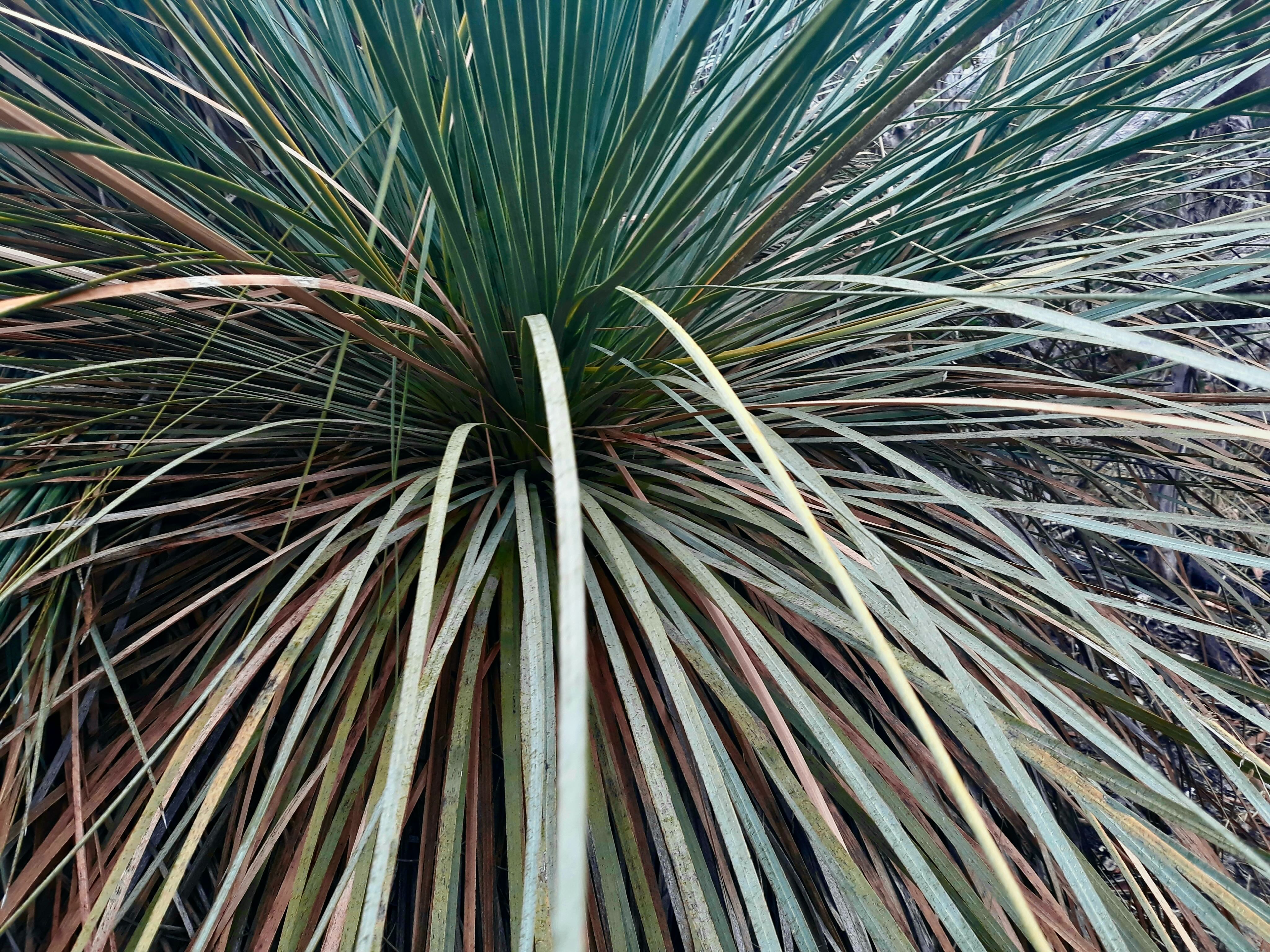
Gully of grass trees, Deep Creek, October 2024.

Deep Creek, place of grass trees and rolling hills and shrike thrushes calling in the trees, place of kangaroos and echidnas and sheep and shingleback lizards, place of tawny frogmouths and fogs and sunshine and rain and big, big skies — Deep Creek is, anyway, one of those places for me, a place close to my heart. I have left Deep Creek now, and the hopes and dreams I went there with — that I would write copiously and productively, that the story I’m writing is worth telling, that the manuscript I’m working on might one day get published — may or may not come true, but Deep Creek is still with me and always will be. I don’t know how else to put it.

Resting place, Deep Creek, October 2024.

And this is what I love about the passage I’ve quoted above by Michael Ondaatje, the way he captures the mystery of a place, its essence; the way it has become a part of him. I have never been to the jungle that he writes of, never heard peacocks who weep weep loud into the night. But in Deep Creek I have felt what Ondaatje describes. In Deep Creek I have felt that I have found a place that will, like breath, always be with me.

First light, Deep Creek, October 2024.

Lately I’ve been reading …

Unrequited

Other people’s words about … a woman’s desire

The meat was ready, steaming, when I lifted the lid of the pot. As I sliced it up I pictured meeting the ambassador in the hotel room. First, he will open the door and clasp me in his arms, I decided, putting a plate in front of my husband. He will kiss the hollow of my throat very softly, and then he will gaze upon me, I decided, like he did today, but with much more tenderness. I cut my potatoes up into tiny pieces. My husband chewed and chewed, with the mouth that never kissed me. He will lay me down on the soft white bed and undo the buttons slowly, I decided. He will kiss my eyelids. I will place my hands on his smooth back, I decided as I chewed. I will clutch him to me but not too hard, not like a drowning person. The light will be dim. The bedding will be spotless. He will tell me that he has seen what nobody else has ever noticed. He will say, ‘It’s you I’ve wanted all along, Elodie. I see you, Elodie. You. You.’

from ‘Cursed Bread
by Sophie Mackintosh

I came back to Elodie’s story again today, having quoted from it once before. Elodie’s story continues to compel me — her longing for her husband to desire her, to see her, oh, to want her. Though Elodie is young and has her life ahead of her, I wonder whether the feelings and desires she expresses in her narrative, those feelings and desires that in her tiny village community are so forbidden, are a little like those an older woman might feel, a woman my age, on realising that the desires she once thought might be realised are now out of reach.

I wonder.

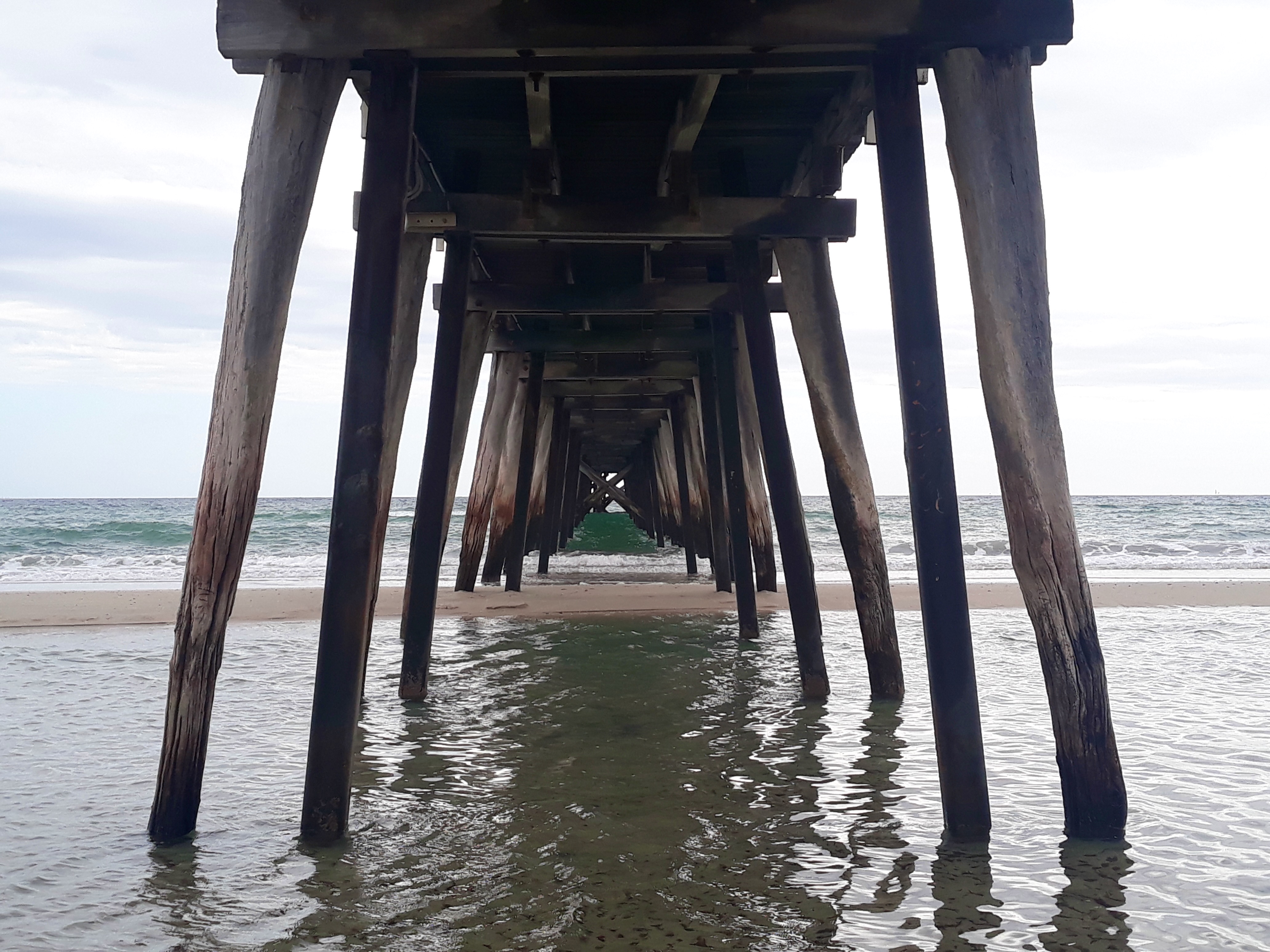
Largs Bay Jetty, May 2024.

I’ve spent the last few weeks quietly. Post-Covid, I still feel tired. It’s a funny kind of tiredness, not so much a feeling of lethargy as a feeling of being tissue-thin, emotionally and physically. I don’t know how else to describe it. Still, I’ve been walking and reading and even writing (a little), and I had a quiet moment of celebration a couple of weeks ago when I saw ten hooded plovers at Aldinga Beach.

Yes, ten. I have never seen so many before, and I walked home feeling quietly jubilant.

Bracken fern, May 2024.

Lately I’ve been reading …

All that food

Other people’s words about … not eating

Mae doesn’t look convinced, but she hands me another bowl, which I pass to TJ. He holds it in the space between us, locking eyes.
You didn’t take any, he says.
I took plenty, I say. I’m stuffed.
No. I watched you.
You must’ve blinked.
Then try some more.
I just told you–
Don’t be a dick, says TJ.
Boys, says Mae.
Her voice is terse enough to shut us up.
Mae holds our gaze until we’ve settled. Then she pours more wine into her coffee mug, twirling her food with a fork.
It’s been too long since we’ve been together, says Mae. Let’s make it a nice evening.
So TJ shoves the bowl of tomatoes my way. I scoop more onto my plate. Then I take bites from the spaghetti and the chicken, and it’s all delicious, and the three of us eat silently, until there’s something like a hum between us.
Is the bathroom still in the same place, I ask.
Mae points down the hallway. I don’t look at TJ when I stand. But once I’ve locked the door behind me, I turn on the faucet, and it’s maybe another five seconds before all that food leaves me.

from ‘Family Meal
by Bryan Washington

When I was a teenager receiving treatment for an eating disorder, people had certain fixed ideas about what kind of person was likely to experience anorexia. By ‘people’, I mean not just family and friends but doctors, psychiatrists, medical researchers. Anorexics, people thought then (because that was what we called people with anorexia in those years, anorexics, a label that many people would now object to), were generally white, middle-class, well-educated, high-achieving, likeable young women with a tendency towards perfectionism.

Perhaps, back then, this was true. Or perhaps, more likely, if you were anorexic but you happened to be male, poor, uneducated, older than twenty-five, queer, or a person of colour — or any combination of these things — then your anorexia went unrecognised. Undiagnosed. Untreated.

We know better than this now, I am thankful to say.

Fringe Lily, December 2023.

In the passage I’ve quoted above, Cam, one of the narrators of Bryan Washington’s second novel, Family Meal, is grieving the loss of his boyfriend, Kai, who died in unexpected, violent circumstances. Cam is Black and queer; he is also addicted to many things, including drugs, sex and, yes, starving himself. He is surrounded by friends who see what he is doing to himself and try to talk to him about it, try to show him that they see, and that they care, and that he doesn’t need to be alone. It takes him a long time to see this for himself, though.

Cam’s experience of struggling with food is different from mine, and that’s partly because of who each of us is — precisely because I did, after all, fit most of the anorexic stereotypes I’ve listed above — although it’s also partly because everyone’s struggle with food is, simply, different. But I am so glad, so glad, that contemporary literature that includes stories about anorexia and disordered eating has broadened to include other stories than ones like mine.

And it’s funny how, no matter what your background, no matter what your life experience, the feelings don’t change. I’m fucking suffocating from the weight of myself, Cam writes.

I remember feeling exactly the same.

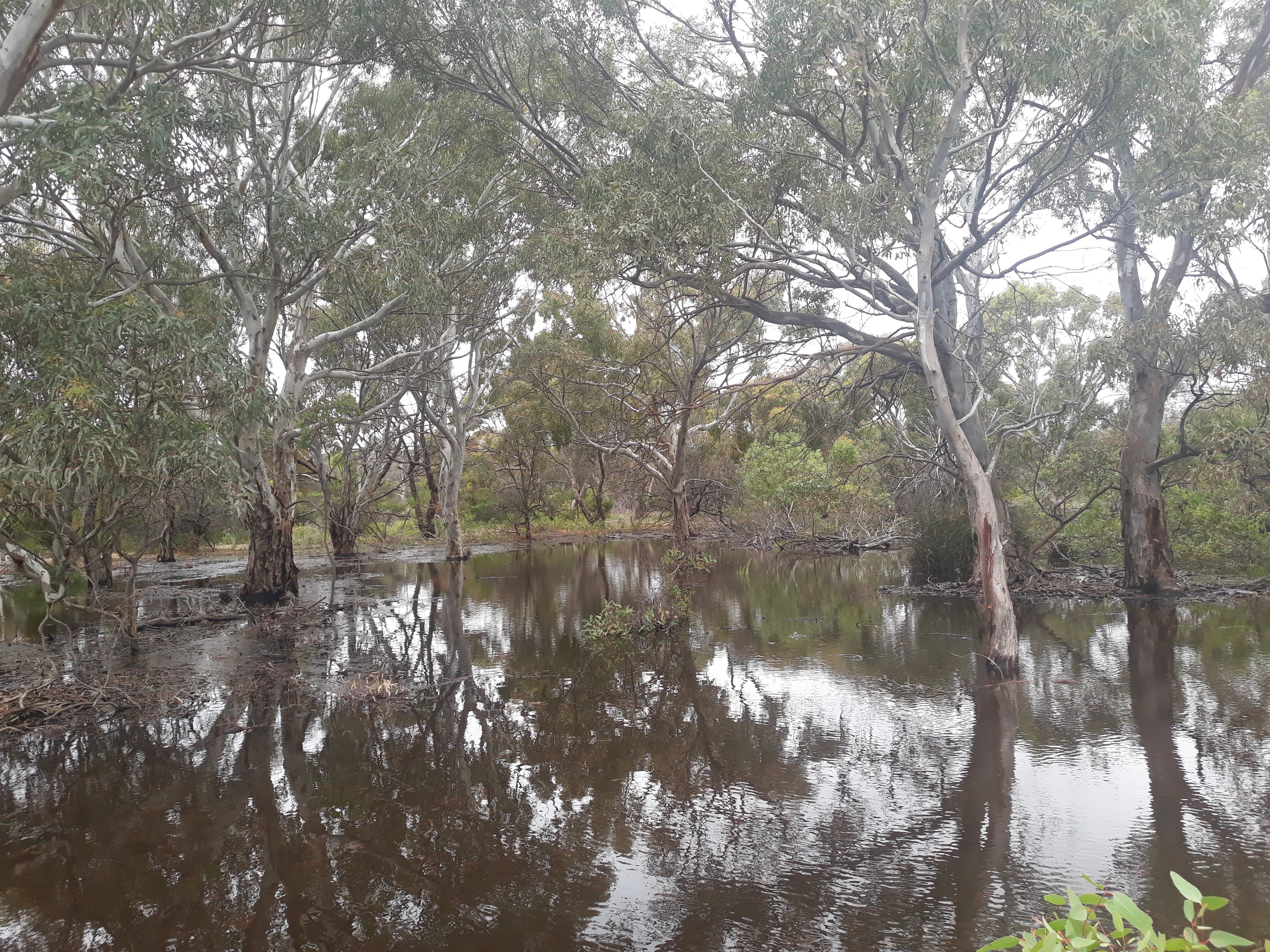
After the rain, Flooded scrub, November 2023.

Lately I’ve been reading …

Roar

Other people’s words about … country and city life

Ramesh was used to the sounds of the suburbs. He never noticed barking dogs or level crossings. On the train to work every morning he turned up the volume of his audiobook so it was louder than other passengers’ mobile phone conversations. But [tonight he was in] the country [and it] roared. He could hear the air move in the trees. He had grown up in Croydon, moved to Glasgow at seventeen, back to London at twenty-three, then Sydney at thirty-six. As a child he’d stood outside his parents’ bedroom listening to his father’s whistling snore. He liked living in places where he could hear others alive. He reached for his phone where it sat charging. For an instant he saw his hands illuminated in the bluish light of its screen. He set his rain sound app to the setting called ‘Harbour Storm’.

‘What are you doing?’ Henry croaked. His face was pressed to the pillow. ‘You don’t need that tonight.’ 

Ramesh opened his mouth to argue, then he heard the rain outside, like gunfire on the corrugated iron roof.

from ‘Pulse Points
by Jennifer Down

I love this passage, not because I’m in accordance with Ramesh, but for the opposite reason. I love the ‘roar’ of the country. I spend most of my time living in a house in the suburbs. It’s close to the beach, which I love, but it’s even closer to the railway line, a line that trains zip up and down every half an hour from five in the morning until midnight.

Sunset, early August 2022.

I don’t mind the sound of trains, actually — as suburban sounds go, I find it vaguely comforting — but when I leave my house to stay outside the city, to visit Aldinga Scrub or to camp in Yorke Peninsula, I feel a knot inside my chest of which I wasn’t even aware releasing itself.

Sounds I love when I am away from the city: the dull roar of the ocean at the end of the road (yes, another roar). The whistle of a hot wind through the trees. A frogmouth letting out its low, persistent, booming call at dusk. A shrike thrush singing. A magpie warbling. Frogs croaking. Insects clicking in the grass. And, yes, like Ramesh, the rain drumming on the roof.

Still, the photo accompanying my post today, like so many of my photos on this blog these days, comes from the suburban beach at the end of the street I live on. The sand is being eroded away and there are car parks dotted along the coast line and on most weekends a food truck selling hot donuts sets up shop during daylight hours.

But it’s still the beach. It’s still wide and beautiful and open and … The sea still roars.

Lately I’ve been reading …

It’s a lengthy list today, because I’ve been reading far more than I’ve been posting. But I hope you find something interesting below.

Revelation

Other people’s words about … secrets

‘Philip,’ [his mother Rose] said. ‘There are things I could tell you.’
‘Tell them,’ Philip said.
‘No.’
‘Why not? I’m prepared.’
She turned, looked at [Philip’s father Owen] slumped on the sofa. ‘Because I don’t believe that just because something’s a secret it therefore by definition has to be revealed,’ Rose said. ‘Keeping certain secrets secret is important to — the general balance of life, the common utility.’

From ‘The Lost Language of Cranes

by David Leavitt

I have always been fascinated by people like Philip’s mother Rose in the passage above: people who keep their own counsel. I have a tendency to do the opposite — to over-share, to talk to people for advice, to feel guilty if the life I lead isn’t entirely transparent. I’m not sure why. I may just be wired that way, but I suspect that years of therapy during adolescence and early adulthood ingrained this way of being in me. When you are used to talking things through with someone on a weekly basis, it can feel odd — unsafe, even — once you stop.

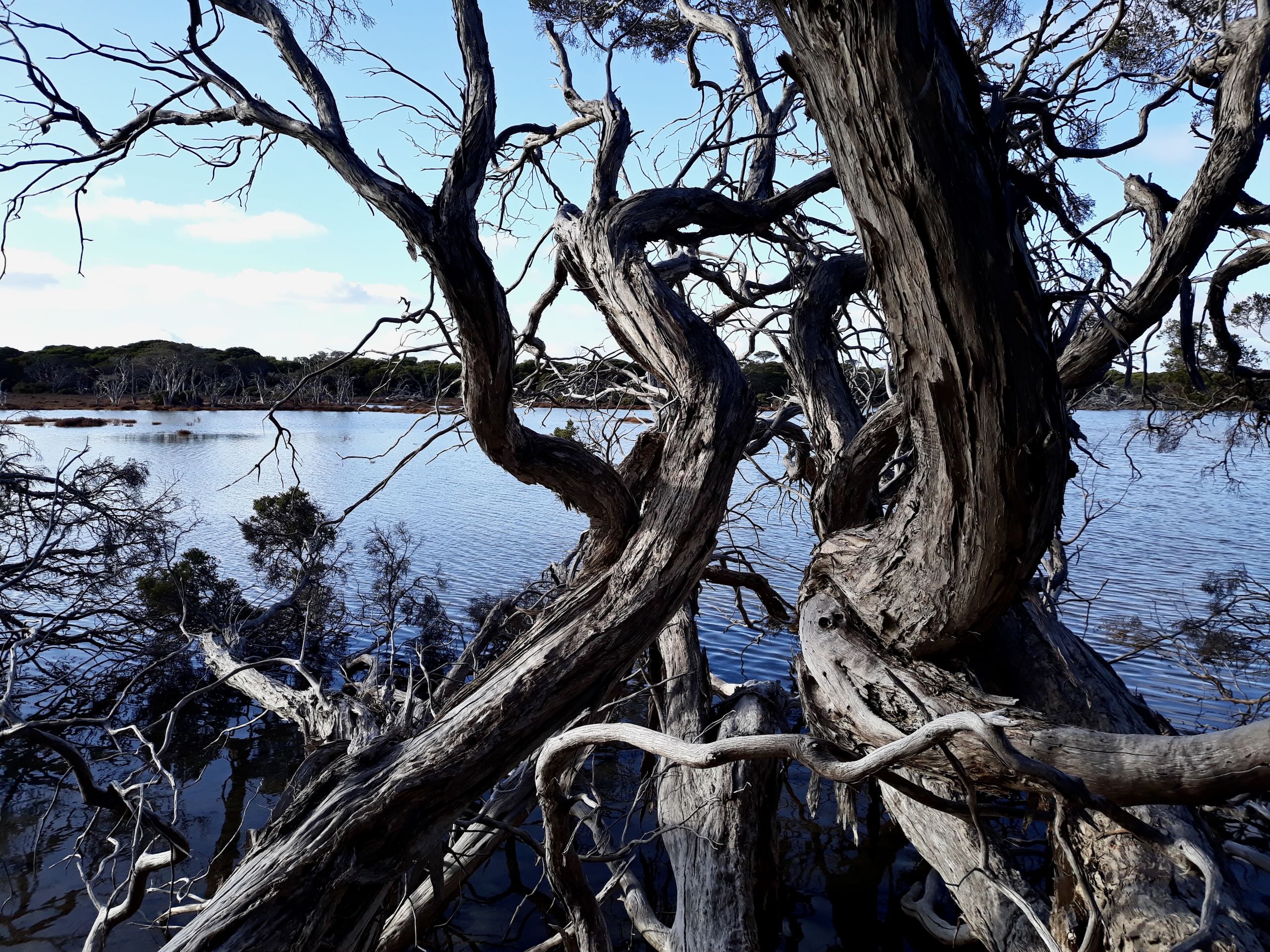
Gnarled trunk, early July 2022.

I like Rose’s matter-of-fact statement that secrets don’t have to be revealed. Sometimes, when I am uncertain about a course of action or a decision I have to make, I think of the oath that I’m told doctors must take: ‘First, do no harm.’ I find this oath, applied to life in general, one of the most useful creeds I know.

And so I find myself thinking that Rose may be right. If keeping a secret doesn’t harm anyone, then why feel compelled to reveal it? Why not learn to live in silence with one’s own truths?

Waterways, early July 2022.

Lately I’ve been reading …

Only connect: Reunion

Other people’s words about connection

Maude cranes around to look and Cormac looks too, close enough to see them, all quite young and glacially made up with one man of height and handsomeness towering over the rest and another, a man to the tall one’s left, cocking his head and nodding in Cormac’s direction meaningfully.
It is Senan. Cormac waves …
He hasn’t seen Senan in person for months and yet his vision still telescopes in, urgent and unreconstructed, so that Cormac sees and knows again he loves him with a scratchy passion that returns as reliably as a rash. It is not a nostalgic feeling and casts no shadow, existing always in a self-sustaining now.
How acute it is: immediate deja vu.

From ‘We Were Young

by Niamh Campbell

I love this passage from Niahm Campbell about a man reuniting with someone he loves after the two of them have spent some time apart. Cormack, the character in Campbell’s novel, seems unable to commit to one person, whether man or woman; he moves from one relationship or liaison to another. But as a backdrop to all his attempts to remain unfettered there is his love for Senan, a man who is smart enough, perhaps, to keep himself unavailable and therefore always desirable and lovable.


Sunlight and trees, April 2022.


Who hasn’t at some time in their life loved someone who was unavailable? Or, moving beyond relationships and intimacy, who hasn’t wanted something that was eternally just out of reach?


Grasstree, May 2022.

Lately I’ve been reading …

Wordless

Other people’s words about … the things we say

All that talking, years of reading: There was a time I thought that all language might contain something of value, but most of life is flat and boring and the things we say are too. Or maybe it’s that most of life is so much stranger than language is able to make room for, so we say the same dead things and hope maybe the who and how of what is said can make it into what we mean.

From ‘Want

by Lynn Steger Strong

I’ve been posting less and frequently on my blog over the last few months, I know. And it’s not, as you might think, because I have become more active on other (more instant) social media, though I can see the appeal of posting photographs (excluding selfies) on Instagram. 


Spring flowers, Aldinga Scrub, 2021.

In fact my quietness on this blog is more to do with the fact that most of life is so much stranger than language is able to make room for, as Lynn Steger Strong puts it so wonderfully in the passage I’ve quoted above. The Covid-19 pandemic, now entering its third year globally, has left me feeling, in the truest part of me, wordless. I am surviving, for which I am grateful. I am getting on with my life. But I don’t know how to put that into words very well, or at least not in the form of a blog post. I enjoy blogging, and I like my space in the blogosphere, so I hope that this phase will pass. But in the meantime … here I am, not finding the language I need to say what I want to say.


Pathway, Aldinga Scrub, 2022.

Another reason for my quietness on this blog is that I’ve been doing a different kind of writing in my spare time recently, which is to say I’ve started writing fiction again. As I mentioned in my previous post, last year I submitted the manuscript of a middle-grade novel to my agent, who is currently trying to find a publisher for it. (No luck yet.) And now, somehow, I find myself writing a novel for adults. I don’t know whether any of the fiction I’ve written since the beginning of the pandemic will ultimately be publishable, but somehow, entirely unexpectedly, it seems that I’ve found the courage to try again, and because of that very unexpectedness, I’m allowing myself to honour my courage for now and see what happens.

Life continues, albeit quietly and unexpectedly, I suppose is what I’m saying. Sometimes I have the words for it and can compose a blog post about it and sometimes I don’t. But I will keep trying. That’s a promise.


Wordless, 2022.

Lately I’ve been reading …


Still here

Other people’s words about … the safety of books

I walk from the museum to the train and take it downtown where I get off and go to a coffee shop I used to go to before I worked full time. I was in grad school for six years — English literature, mid- to late-twentieth century, British and American, forgotten or actively discarded female writers: Penelope Fitzgerald, Anita Brookner, Jean Rhys, Nella Larsen, Lucia Berlin. There was a time when I thought giving books to other people — showing them their richness, their quiet, secret, temporary safety — could be a useful way to spend one’s life. I spent another five years as a part-time adjunct, waitress, admin assistant. Once, for six months, I wrote quizzes to accompany the bad books put out by an education corporation, but I was fired because I couldn’t keep my sentences short enough.

From ‘Want

by Lynn Steger Strong

It’s been a while since I posted here, for which I apologise. In the last few months I’ve moved house, lost my car in a car crash and sprained my ankle. In addition (and somewhat unexpectedly), the house I bought and moved into had no running water beyond a garden tap, and the sale of the house I moved out of fell through three days before settlement.


In the garden (1).

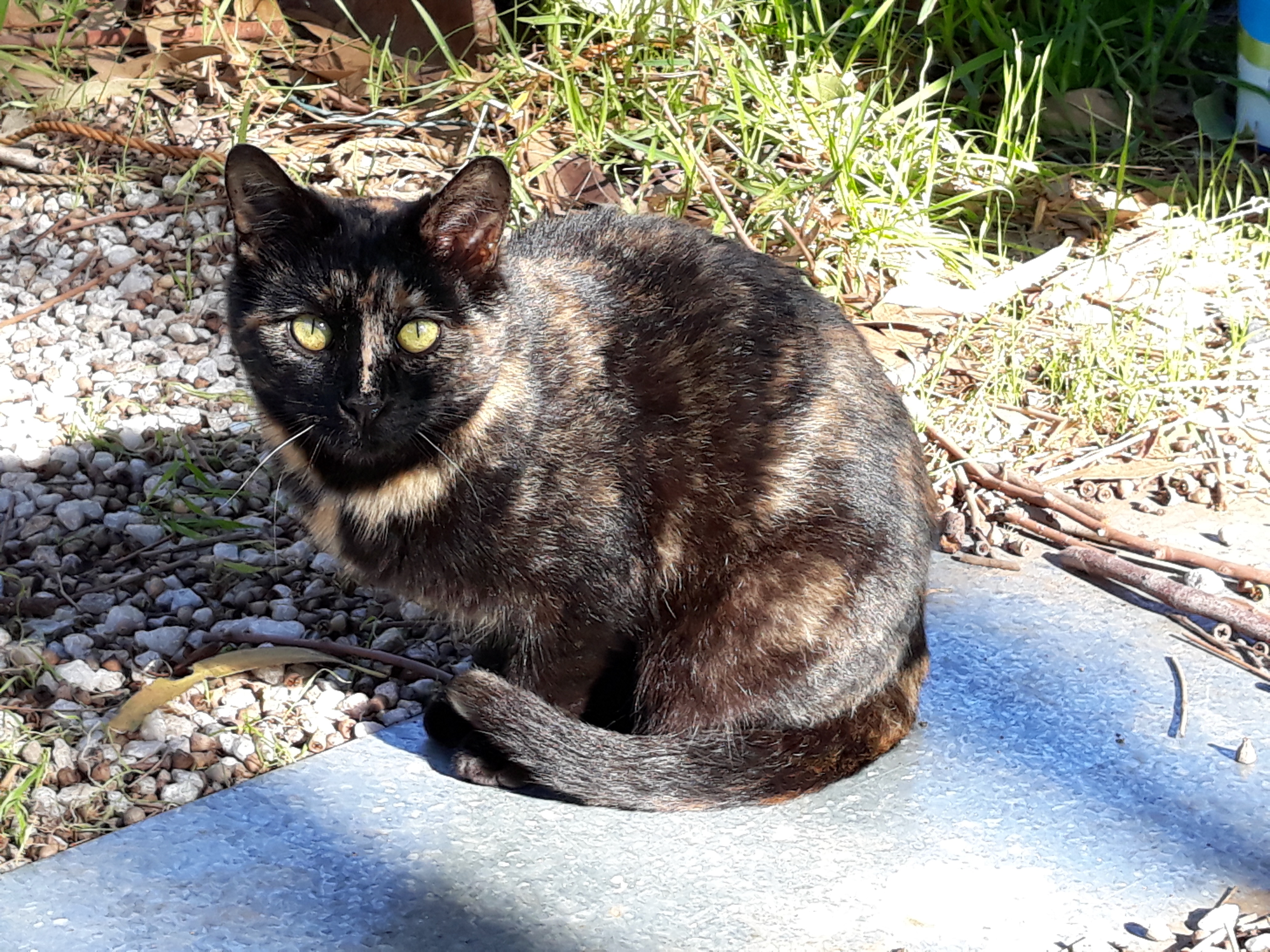
But I’m still here in the new house, still alive, still breathing. And Lizzie, the little cat who appeared in my garden at the old house two years ago, is with me, too. Though she still won’t allow human touch, she has managed the move quite splendidly so far. On the advice of the cat rescue organisation who helped me trap her and move her into the new house, I’m keeping her indoors for several weeks before attempting to allow her back outside. I hope that when I do open the door for her into the garden she’ll choose to stay with me.

I hope, I hope, I hope.


In the garden (2).

When I moved into my old house, there were no trees and the garden was a bare patch of ground covered with a pervasive weed called caltrop (three-corner jacks). I pulled out all the caltrop and then planted trees and watched them grow. When Lizzie arrived years later, she sat beneath the trees or wandered down the path beneath them from one end of the garden to the other. In the end, though I often think of myself as an indoor person, as someone who lives more richly in my inner world than the outer world, I found it far harder to leave those trees, that garden, than I did to leave the house itself.

My new house is bigger than the last one, and still within walking distance of the beach, but once again there are no trees. So I’m back to planting trees again, back to watching them grow.


Still within walking distance.

In the midst of it all, as the pandemic continues, as South Australia finally opens its borders to the rest of the world, I’ve also submitted a manuscript to my literary agent and written the first draft of another one. The manuscript I submitted to my agent is doing the rounds and has so far been rejected by six publishers, and I don’t know if it will ever be published. And the other manuscript, the first draft of which I’ve just completed — well, it’s still very much a first draft. It has a long, long way to go, many more drafts, before it will tell the story I want it to tell.

But both as a reader and as a writer, I still believe, like Lynn Steger Strong’s narrator in the passage I’ve quoted above, that giving books to other people — showing them their richness, their quiet, secret, temporary safety — [can] be a useful way to spend one’s life. After all this time, all these years, reading and writing still enrich my days and fill my life with purpose.

I’m still here. I hope you are, too.

Stumble

Other people’s words about … being an adult

I’ve joked all my life about my complete incapacity with money. Nothing has made me more anxious than dealing with finances. Trying to do my accounts caused a fog in my brain, a feeling near panic. I sensed, with the same primitive instincts that locate danger, that money is something that invalidates me, that cancels me out. I was afraid of it, afraid of its mysterious mechanisms. I loathed it, and yet it ruled my life …

Before I was in my fifties, I had no idea, until an accountant added it up, how much I earned in a year. I couldn’t read my financial records and I didn’t possess the smallest notion of what to do if I did. To me, all these things were as punitive and arbitrary as the love of God, which passeth all understanding.

From ‘Monsters: A Reckoning

by Alison Croggon

For the last few years I have lived with a similar sense of incapacity at the edges of my awareness to the one that Alison Croggon describes in the passage above. My incapacity is partly, like Croggon’s, about financial matters: though I finally learned to manage to file my tax return in my early thirties, for example, I have yet to come to terms with superannuation and all its requirements. (I make flippant jokes to friends about how I plan to live in a tent after retirement. And then I say: ‘Besides, what’s retirement, anyway? I’ll have to keep working to pay my bills till the day I die.’)

But that fog in my brain that Croggon describes descends on me in other areas, too. I have been aware since my late twenties that I had lost, or couldn’t locate, several crucial documents of identity — my birth certificate, my Australian citizenship certificate. I stumbled along without these documents, managing to get by using my passport instead, until, around the time I began to avoid getting in planes, I let my passport lapse, too, until it no longer qualified as a document that could establish my identity.

And still, even then, I put off applying for a replacement birth certificate or citizenship certificate. I was terrified that I would find once I started the application process that I wouldn’t qualify for those documents anymore. I was terrified I would no longer be able to prove that I am who I am. (Whoever that is.) I was terrified, in other words, that the application process would, as Croggon puts it, cancel me out.


Fog at Deep Creek.

I have lived my life like this for years. Decades, even. But in the space of the last three weeks — and I apologise for the clumsiness of the segue here, but it is all I can muster — in addition to re-establishing my identity and regaining my papers, I have bought a house and I have sold a house. Somewhere in those last three weeks I have also walked through a doorway out into the sunshine — a real, physical doorway, I mean, not a metaphorical one — and rolled my ankle, possibly tearing a ligament (still trying to figure that out). As a result of this I find myself now, quite literally, limping and stumbling through my days.


After the fog cleared.

I apologised earlier for the clumsiness of my segue, but the clumsiness I was referring to, though not intentional, was hardly coincidental. Though it shames me to say this, I find it impossible to talk with any grace or even with any sense of safe passage about the things I have been doing recently: proving my identity, applying for home loans, buying and selling and moving house. They are things that most people have to do at some point in their lives in our society, I know, but going through them makes me feel sick enough, my stomach churning, my head spinning. Talking about it, writing about it, processing it is too much. That fog in the brain again.

It takes a certain level of privilege to be in the position I am in, to have got through my life the way I have till now: no questions to answer, no endless need to prove who I am. The colour of my skin, the family I am part of, the certainty that I am lucky enough to feel about my gender and sexuality, the generation I was born into — all of these things have allowed me, and will continue to allow me, to choose to make myself powerless in the ways I have chosen to till now.


Deep Creek reflections.

And yet. That doesn’t mean the terror isn’t real. It doesn’t mean the choices I’ve made haven’t felt instinctive, primitive, inevitable; it doesn’t mean they haven’t felt like choices at all. It doesn’t mean I won’t keep limping through the days, wondering when I will be able to walk — or maybe, one day, even run? — again.

Lately I’ve been reading …

  • Through the Window: Rather than a number of articles, today I’m sending you this link instead, the Griffith Review‘s wonderful series of essays about the experience of living through the coronavirus pandemic. If you are interested in any kind of coronavirus chronicles, I can highly recommend any of the essays on this list.