The air that you breathe

Other people’s words about … air quality

It was terribly hot that summer. Mr Robertson left town, and for a long while the river seemed dead. Just a dead brown snake of a thing lying flat through the centre of town, dirty yellow foam collecting at its edge. Strangers driving by on the turnpike rolled up their windows at the gagging, sulphurous smell and wondered how anyone could live with that stench coming from the river and the mill. But the people who lived in Shirley Falls were used to it, and even in the awful heat it was only noticeable when you first woke up; no, they didn’t particularly mind the smell.

from ‘Amy & Isabelle
by Elizabeth Strout

Recently, after several members of staff in one of my workplaces became sick over the course of consecutive shifts, the part of the building in which we work was shut down, due to what has been deemed an ongoing air quality issue.

That particular office is on the upper floor of a fully air-conditioned building: one of those buildings where you can’t open a window even if you want to. I have always struggled with this: I believe, right down to my core, that breathing temperature-controlled, recycled air will never, ever be equal to breathing air that drifts in through an open window. I continue to believe this even though the air outside the windows in that building is itself compromised by petrol, diesel and exhaust fumes from the nearby main road.

To me, the most pernicious aspect of all of this is the habituation. Like the residents of Shirley Falls in the quote above, when my colleagues and I first walk into work at the beginning of a shift, we notice things in the air that we stop noticing after we’ve been at work for a while. Like them, we don’t particularly mind the smell of our workplace. Or not consciously, anyway.

I balance this with escaping on my days off. I took the photos that accompany today’s post (of vanilla lilies, grass trees, acacias and boobiallas all newly in bloom) on a walk I took recently through the bush, another of my wanders out and about.

When I am walking outdoors, at least, the air I breathe always seems sweet.

Snatched phrases on … the sea

‘The sea pronounces something,
over and over, in a hoarse whisper;
I cannot quite make it out. But God knows I have tried.’

From ‘Teaching a Stone to Talk’
by Annie Dillard

Sometimes when I’m walking on the beach I close my eyes and listen to the sea as I keep walking. It’s a way of shutting out the beauty of the visual world, in order to concentrate on the other kinds of beauty accessible to me at that moment, in that particular space.

The sea murmurs.
It sighs.
It whispers.
It roars.

Like Dillard, I can’t make out the language of the sea  …

… although unlike her I’m not sure that I want to try.

I’m happy just to keep listening.

Snatched phrases on … pretty days

‘The grass had been cut and gave off a warm, allergenic smell.
The sky was soft like cloth
and birds ran over it in long threads.’

from ‘Conversations with friends’
by Sally Rooney

The image in today’s post doesn’t quite match the words, I’m afraid:

Still, it’s a pretty image, and perhaps it captures a little of the essence of Rooney’s soft spring day …

The poetry lover

Other people’s words about … poetry

It rained all day before we went for dinner at Melissa’s. I sat in bed in the morning writing poetry, hitting the return key whenever I wanted.

from ‘Conversations with Friends
by Sally Rooney

I had to smile when I read these words. In the last years of his career, my father, who was a professor of English literature, taught an undergraduate course on poetry. Ever a traditionalist, he taught his students to appreciate the form of the poems they read as well as the words themselves.

Though I’ve never studied English literature at university level, through some mysterious form of osmosis I absorbed some of what my father was teaching his students. Through this process, I now have a passing acquaintance with terms like blank verse and iambic pentameter, and with poetry forms such as sonnets and villanelles. And I’m with my father on this: discipline is a vital ingredient in poetry writing. Where there is no recognisable form or structure to a piece of writing, there is no poem: there are just words on a page, with a few strikes of the return key employed for good measure.

Funnily enough, when I happened to mention to my father that I was writing this post, he alerted me to this piece by David Campbell in The Australian, which my mother had first pointed out to him. In it, Campbell bewails the lack of rhyme, metre and set forms in current Australian poetry. Perhaps these things will become fashionable again one day. We can only hope.

Meanwhile, do you have a favourite poem? What is it? Here are the links to some of mine (including one by David Campbell), each of which transcends the strict form in which they are written in order to produce something more than its parts:

Tea, by Jehanne Dubrow (a sonnet, and the excuse for my tea-themed photo today)
Do Not Go Gentle into that Good Night, by Dylan Thomas (a villanelle)
On the Birth of a Son, by David Campbell (a sonnet)
The Watch, by Frances Darwin Conford (a strict rhyming system of which Campbell would most surely approve)

Yellow

Other people’s words about … spring


After Matthew left I lost the knack of sleeping. Brighton seemed unsettled and at night it was very bright … At periodic intervals throughout the day I felt that I was drowning, and it was all I could do not to fling myself to the ground and wail like a child. These feelings of panic, which in more sober moments I knew were temporary and would soon pass, were somehow intensified by the loveliness of that April. The trees were flaring into life: first the chestnut with its upraised candles and then the elm and beech. Amid this wash of green the cherry began to flower and within days the streets were filled with a flush of blossom that clogged the drains and papered the windscreens of parked cars.

from ‘To the River
by Olivia Laing


I continue to be fascinated with the notion of seasons, and how the idea of a season is as much a cultural and traditional one as it is a quantifiable or temporal one. Here in my part of South Australia, if you were to measure the year out using temperature and climate as your basic season markers, you might say that we begin the year in January and February with dry, glaring, windy heat. In March and April the weather is often warm and dry but the wind drops off; in May and June the days grow cold, though they remain frequently sunny and still. Somewhere around July and August, the serious clouds and rain begin; in September and October there may be both storms and patchy sun; in November and December the weather is dry and warm but variable.

That, at least, would be one way to mark out the seasons where I live.

But temperature and weather are only half the picture. Plant life and animal life have their own seasons, too. In the northern hemisphere, spring is often celebrated as a season of growth and birth, much as Laing describes it so vividly in the passage above, but here in South Australia, that season of growth is far more staggered and gradual. In late July, when the temperatures are still winter-cold, the native plants begin to flower, and the birds begin to build their nests. By November, that cycle of birth and growth has already begun to slow and drop off.

And then there are the different seasonal colours. Myself, I tend to think of July and August, in my own world, as the yellow months. So many of the native plants that flower at this time of the year have yellow blossoms: acacias, guinea flowers, groundsel flowers, punty bushes, bush peas, goodenias.

Many of the plants I’ve just named were in flower on one of my latest bushwalks, as you can see in the pictures accompanying this post. Everywhere I looked, from the tops of the trees right down to the ground, there were sprinklings of yellow.

So it was a yellow walk through a yellow world. Perhaps we should call this time of year the yellow season?

Out and about: after the rain

‘When you’re walking the view shifts and changes.
Walking’s a form of hope.’

from ‘The World Without Us
by Mireille Juchau


This year, July was exceptionally dry in South Australia. Then August blew in and it has been bitterly cold, windy and rainy ever since.

There is a manic wind whipping through the treetops today … the sort of wind that’s somewhat unsettling and leaves me feeling a bit scratchy, Belinda Jeffery writes in her August 5 entry in her wonderful cookbook-cum-nature diary The Country Coobook. And I know what she means. In the middle week of August, I spent a week on holiday near the coast down south, and much of the time the squalls of rain were so frequent and unpredictable, there wasn’t much of a chance for me to get out.

Rain in the vineyards

Still, one morning mid-week the sun shone between showers and I risked a walk. I headed down a path that skirted wetlands and vineyards (on one side) and bush (on the other side) and then turned south to follow the path back into the bush.

Flooded bush

The low-lying parts of the land along the trail had flooded. Beyond the reeds that bordered the flooded land, I saw trees with their trunks submerged, and waterbirds diving and swooping from branch to branch.

Submerged trunks

There was even a family of ducks.

If I crouched down to peek through the reeds, I could just see the green grassy banks rising above the flooded land, further within, beyond the path.

Is the grass always greener on the other side?

Once I’d walked far enough south, I turned west, deep into the bush, where there were no more floods, and where yellow blossom dotted the landscape (more about which in an upcoming post). But even as I walked, the sky darkened and the temperature dropped.

I made it home just before the next burst of rain …

Snatched phrases on … the sea

‘They’d ended up sitting on the beach,
the sea a great black heaving beast,
sighing and rolling under the white light of the moon.’

From ‘Between a Wolf and a Dog
by Georgia Blain

I don’t have any photographs to accompany this post because I still haven’t yet managed to get the hang of the craft of night-time photography. But isn’t that a wonderful image of the sea at night? — that great black heaving beast, sighing and rolling. It makes me want to go for a night-time walk on the beach right now …

Out and about: a new series

‘When you’re walking the view shifts and changes.
Walking’s a form of hope.’

from ‘The World Without Us
by Mireille Juchau


As I’ve mentioned before, I have two part-time jobs, which I move between each week. One of my jobs involves editing manuscripts for an academic press, while the other involves call centre work.

The job at the call centre doesn’t involve sales work; I work for a not-for-profit community health organisation. My calls are mostly from clients wondering what time their nurse is coming or needing an unscheduled visit from a nurse due to an unexpected health crisis, or from members of the public wanting to find out how to go about becoming a client. Around me, as I take call after call, my colleagues do the same. We work in a bubble of chatter and noise: phones ringing; people laughing or raising their voices for a client who’s hard of hearing; people taking complaints; the lunch lady ringing her bell as she pushes her trolley between desks to sell food to anyone who didn’t bring their own lunch with them.

During each shift, I am allotted a thirty-minute lunch break at a stipulated time (which varies depending on what time my shift starts). There is a lunch room at the end of the corridor, with a toaster and a microwave and a dishwasher, but I rarely eat my lunch there. Though I’m proud to work for the organisation — though I enjoy the work and value what we all do there — I think of those thirty minutes as my chance to escape.

And so I wander outside the office with my lunch. Our office is on the fringes of the city, and just down the road from our building is a stretch of park land that runs between the main road and the railway track. I walk there each day, and despite the hum of traffic and the rattle of trains passing, it’s a peaceful time. Swallows dive in front of me; parrots chirp; magpies sing; mynah birds chortle.

You can’t go far in thirty minutes, and I walk briskly along the path on a designated route. Still, despite my hurry, there are moments enough in which I have the chance to notice the passing of the seasons. In the cold months of the year, the grass is long and wet and the trees sway in wild, wet winds, their branches silhouetted against the grey sky. In the hot months, the grass dies off and the sun beats down between the branches, and the birds murmur amongst themselves.

Today’s pictures come from one of those lunch breaks a couple of weeks ago: late July, early August. Officially, these months are still classified as winter, at least according to the Western calendar. I’ve heard, though, that Indigenous Australians traditionally mark the time differently, recognising more than four seasons each year — and on this walk I saw why. Despite the cold, blustery wind, and the wet grass, and the leaden clouds above me threatening squalls of rain, the native bushes along the path had begun to flower. Acacia trees were heavy with musty yellow blossom (as pictured in the top photo), and I came upon a couple of hardenbergia vines in full bloom, their vines resplendent with purple flowers (as pictured in the remaining photos).

Perhaps you recognise the words I’ve quoted at the top of this passage: I’ve quoted them before. I think the words bear repeating, here and elsewhere, which is why this is the first post in a new series on my blog — a series I’m entitling ‘Out and About’. In these posts, you’ll find pictures and thoughts that I’ve collected together after one of my frequent wanders. It’s not a new topic for my blog, really — just a new way of gathering these kinds of post together: a recognition of how much this part of my life means to me.

Walking is a form of hope. It’s also a form of joy. That’s how those lunchtime walks seem to me.

On turning forty-seven

Other people’s words about … living small

He wasn’t a big man anymore. He wouldn’t be famous, like he’d dreamed as a kid, teaching himself to sign his name in all curved letters so he would be prepared to autograph a football. He would live a small life, and instead of depressing him, the thought became comforting. For the first time, he no longer felt trapped. Instead, he felt safe.

from ‘The Mothers
by Brit Bennett

Each year, as the number of years I’ve lived on this planet grows, I feel my own life shrink in the scheme of things. And to my own surprise, I have come to find this process, in the words of the protagonist in the passage I’ve quoted above, comforting and safe rather than depressing.

Call it ageing …

Small …

… or perspective …

Smaller …

… or necessity.

Smaller still …

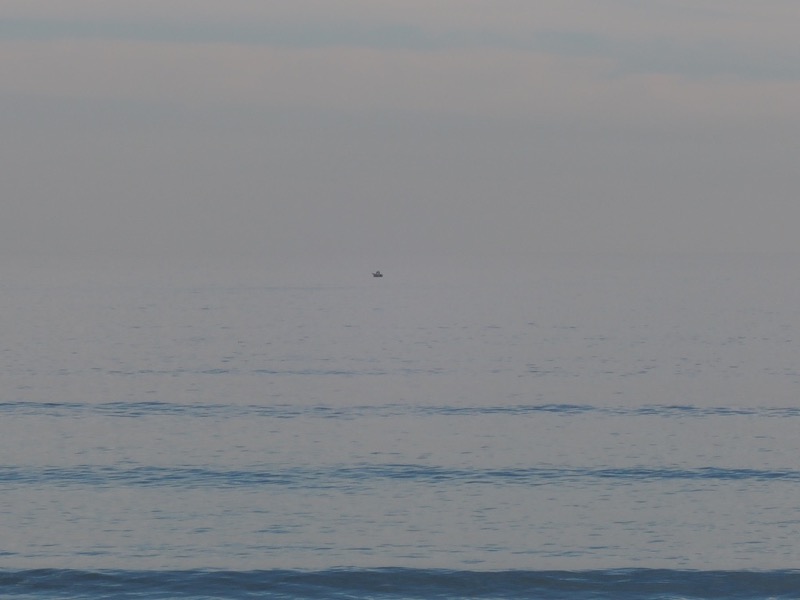
Whatever it is — this passage to smallness, this losing yourself within the bigness of the world — can feel downright joyful, you know?

Note:
I’m not the only blogger who likes to reflect on their birthdays. I loved this post from Nicole from Eat this Poem , who reads Elizabeth Bishop’s poem ‘The Bight’ each year on her birthday. I had not come across this poem before and am so grateful Nicole has drawn my attention to it. It’s a beautiful poem, definitely worth reading each year (if not more often)!