Small

Other people’s words about … the passage of time

‘ … We can be like sisters,’ she says. And then she freezes.

I smooth my hair behind my ear. I look at the snow.

‘I didn’t … ‘ She leans forward, cradles her head in her hands.

And I think of how time passes so differently for different people. Mabel and Jacob, their months in Los Angeles, months full of doing and seeing and going. Road trips, the ocean. So much living crammed into every day. And then me in my room. Watering my plant. Making ramen. Cleaning my yellow bowls night after night after night.

‘It’s okay,’ I say. But it isn’t.

from ‘We are Not Alone
by Nina La Cour

Some people in the Western world — most people, perhaps, if you take at face value the world we see portrayed on social media, and on TV, and in the ads — live big, busy, crammed lives, like Mabel and Jacob in the passage above. They go overseas on holiday. Borrow money to buy houses and cars. Renovate and redecorate. Eat out at restaurants. Drink lattes with their friends. Bungee jump. Skydive. Buy new clothes each season, colour their hair so it doesn’t go grey, replace their smartphones with the latest model. The words vibrant and noisy come to mind. They are not the same things, and yet it can be hard to tell the difference, sometimes.

Me, I live a quiet life. A small life.

Partly, this is of my choosing, and partly it isn’t. Partly, it’s because a small life, a simple life, has always appealed to me; partly, it’s because that small life found its way to me a long while ago, and foisted itself upon me. And partly, too, the simple truth is that it’s difficult, when you’ve started down a small, narrow track, to turn around and retrace your steps. To find yourself out in the open. To start again.

Most of the time, I’m okay with this. But sometimes, like Marin, the eighteen-year-old narrator in the passage above, there are moments when it isn’t okay, after all.

Those moments pass. They do. But I think they’re worth acknowledging, every now and then.

Correa flower in blossom in Aldinga Scrub
May 2018
Small but beautiful, after all.

Out and about: autumn

‘When you’re walking the view shifts and changes.
Walking’s a form of hope.’

from ‘The World Without Us
by Mireille Juchau


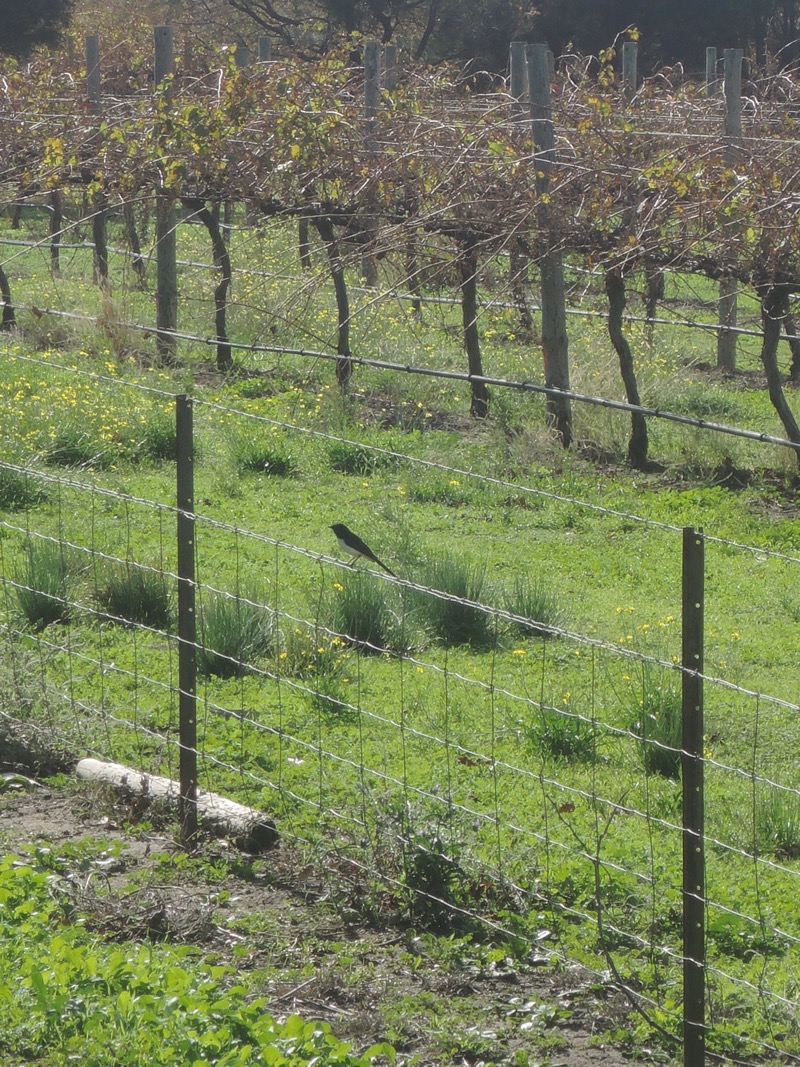
Autumn arrived in the vineyards in mid-May. One weekend in the last week of May or so, I spent some time walking near the Aldinga Scrub, on a track that skirts the wetlands, the Scrub, the vineyards and the farms.

It was one of those autumn days when the sky changes every moment that you look up at it, and with it the light. One moment the sky was blue and the grass shone bright and green; the next, the sun disappeared behind clouds, and the sky darkened, and the grass turned a pale, sombre green.

As I took the photos you see in this post, I became aware of stinging sensations at my ankles and wrists. There had been had rain overnight, and the ground was damp, though the temperature was mild. Mosquitoes were everywhere, biting, biting. I kept stopping to scratch: my ankles, my wrists, my hands. Still, it was peaceful and green.

Can you see the willy wagtail perched on the wire fencing in the photograph above? It darted about as I wandered the track, zigzagging and dipping and feinting, the way willy wagtails do. There were fairy wrens on the path, too, but I didn’t manage to capture them.

Next time, maybe … ?

What I see now

Other people’s words about … tears

I can’t help it, the valve between my thoughts and tears is so worn down that I don’t think I have any control over them anymore. Fat tears drop onto my cheeks. I feel them before I even know what’s happening and I just let them fall. I pull my hand [away from Gideon’s, and he] rolls over to face me.

from ‘Beautiful Mess
by Claire Christian

When I first started reading young adult novels I was already in my mid-twenties, several years older than their teenage target audience. That was partly because when I myself was a teenager, young adult novels had only just begun to become a ‘thing’, especially Australian young adult novels. And it was partly because something drew me to those novels in my mid-twenties, despite my age: something about their coming-of-age themes — and then, too, something about the way they handled those coming-of-age themes. Most of all, I liked the raw, direct voice in which many of their narratives were written, a voice that was both bleak and hopeful.

After I’d written my own two young adult novels, my love for the genre started to fade. This was partly, in turn, because I had in the meantime grown older again: my life now had nothing in common with either the novels’ protagonists or the novels’ intended readers. But it was also partly because it seemed to me that there were, suddenly, too many young adult novels being published every year. That raw, direct, bleak/hopeful voice seemed to me suddenly overused. Over-familiar. Hackneyed, even.

I don’t know what made me pick up Claire Christian’s young adult novel Beautiful Mess the other day. At any rate, it is the first young adult novel I have read in a long, long time, and the reading of it felt like one, long, jagged, indrawn breath that I couldn’t release until I had got to the end. There it was again, that raw, direct, bleak/hopeful voice — familiar, yes, but not overused this time. Not hackneyed. It was a poignant voice. Intimate.

The view ahead: not a bleak prospect

That’s what I love most about good novels, whatever genre they happen to fall into. Their protagonists, and the writer behind them, reach out and speak to you: they say things you know you’ll never forget, things you yourself have been wanting to say, but haven’t figured out how to. I see now that this is something I haven’t managed to do in my own writing for quite some time, though I didn’t realise it until I stopped. Perhaps that’s why I stopped: though the decision felt instinctual and unplanned, perhaps my instinctual knowledge simply kicked in before my conscious knowledge did.

In the meantime, even though I’m not writing fiction, I know I’ll find more good books to read (whatever their genre), and more narrative voices to hear, and more tears to shed. There’s nothing bleak about that prospect: in fact, the view ahead of me seems filled with hope.

The end of the story

Other people’s words about … writing

April has never really known loneliness until now; she has had all tastes of its dregs, like cold milky coffee curdled at the bottom of the cup, but she has always had faith in the fact that it would pass. Now, she is not so sure. And this loneliness is entangled with her failure as a musician, another certainty in her life that seems to have gone.

Most days, she tries to write.

She sits by the window with her guitar and picks idly at notes, strumming chords underneath, humming to herself as she does so. But nothing ever sticks, and she feels as if she is just pretending, playing alone outside a room she can no longer enter.

from ‘Between a Wolf and a Dog
by Georgia Blain

I did something I had never expected to do this week: I stopped working on the book I’ve been writing, on and off, ever since my last novel was published in 2010. Actually, I stopped writing fiction altogether, at least for now.

The novel I’ve been writing all these years has gone through many, many permutations: I’ve written it as a ghost story for young adults; as a reworked ghost story for middle-grade readers; as a love story for ‘new’ adults’; as a coming-of-age story for women my own age. I’ve written it in the first person and in the third person, and in past tense and in present tense. I’ve written it using pen and paper, and Microsoft Word, and Scrivener.

I’ve written it. And written it. And written it.

All the time I’ve been writing this novel, I’ve been telling myself that the doubt I feel in myself, and in my ability to write a third novel — this third novel, anyway — would pass. But it hasn’t. Sometimes it’s quietened down for a period, but then it’s flared up again. And over the years, like April, the sense of inner loneliness I carry with me — which is in part an aspect of being me, Rebecca Burton, and in part an aspect of being me, a human being — has slowly become ensnared with the doubt I feel about my writing. [N]othing ever sticks, and she feels as if she is just pretending, playing alone outside a room she can no longer enter. Yup. Yup. Yup.

Ever since I wrote my first novel and it was accepted for publication, I’ve believed, with all of my heart, that writing books was something I would do for the rest of my life, because that’s what writers do, right? It’s what they want to do. It’s their privilege, and their gift. Or so the story goes.

But I just don’t think I believe that particular story anymore. That’s what I finally realised this week, after all this time. I don’t think — as April thinks, in this passage which I have loved so much for so long — that I am a failure as a writer, or as a person, if I stop writing, for a while, or forever. I think the world is bigger than that.

I don’t know what the future holds for me if I’m not a writer anymore — for now, or for a while, or forever. But you know what? Unlike April, I want to find out.

It’s a big, big world.

Chasing clouds

‘It took me years to see that path and to find my pace.
When I finally got moving, I hoped I might be able to run forever.’

From ‘The Long Run’
by Catriona Menzies-Pike

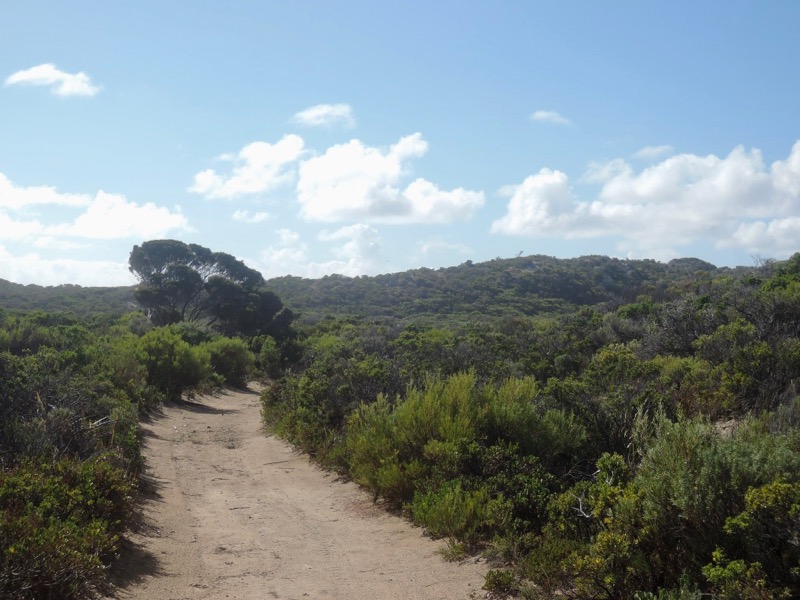
I recently spent a week holidaying in one of my favourite spots, near a clifftop in the Yorke Peninsula region. It was mid-Autumn, and the weather, like the view, changed every day, sometimes every minute.

During one of the sunnier hours, I went for a run in the bushland that lies behind the dunes and cliffs. I took off my running shoes and ran barefoot along the winding sandy track that rises and dips through the scrubland. Despite the lack of rain in the previous months, the bushland here seemed to me quite lush (at least by South Australian standards).

I finished my run at the base of the highest dune, and then I trundled up to the top of the dune to look down on the beach and shoreline below.

It was a moment of silver seas and blue skies — a moment worth celebrating.

Chasing clouds

‘Some athletes love to talk about what a simple sport running is.
They say that all you need is a pair of sneakers.
That’s not true.
What you need is some freedom of movement
and the ability to see a clear path ahead of you.
It took me years to see that path and to find my pace.
When I finally got moving, I hoped I might be able to run forever.’

From ‘The Long Run’
by Catriona Menzies-Pike

Around about a year ago, I wrote a post on this blog in response to lawyer-turned-long-distance-runner Robyn Arzón’s book Shut Up and Run. In that post, I wrote, in angry contradiction to Arzón, about the virtues of taking things slowly, of living humbly, of letting things unfold gently, whether or not your life is unfolding as you wish it would, or as you think it should. (You can read the post — which, by the way, I still stand by — in its entirety here.)

Here’s the thing about running, though, as an activity, as a practice: it lends itself to metaphors. That’s why so many runners, like Arzón and Menzies-Pike, write about it. Speed, distance, endurance, cadence, rhythm, pace — all of those things can be metaphors for something else: for life. It took me years to see that path and to find my pace, Menzies-Pike writes, of her running. And: When I finally got moving, I hoped I might be able to run forever.

Don’t tell me she’s not talking in metaphors.

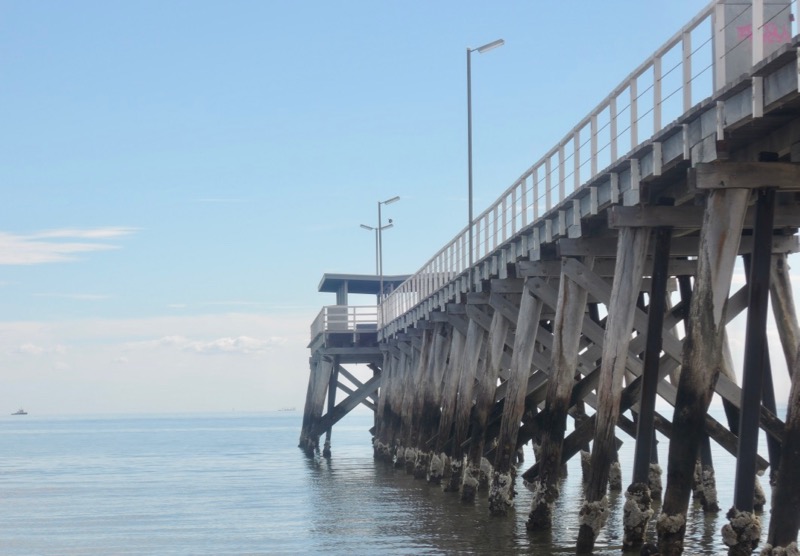
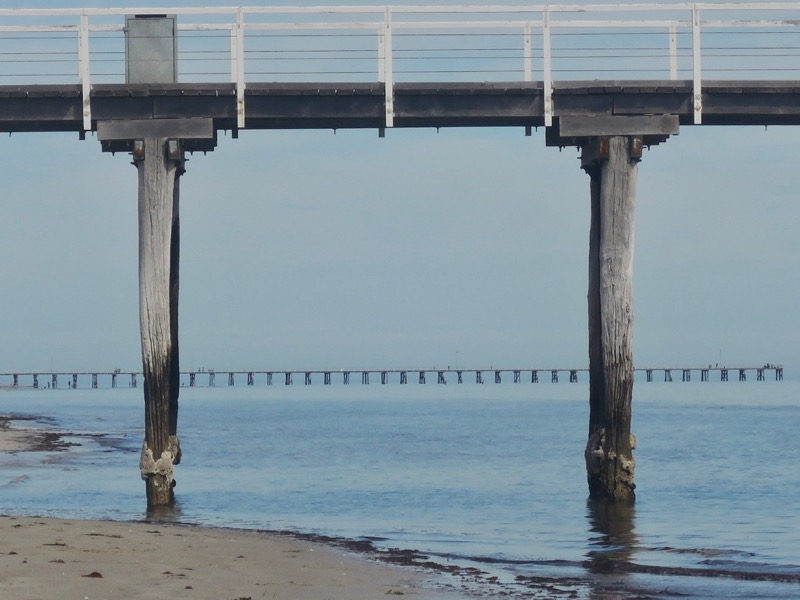
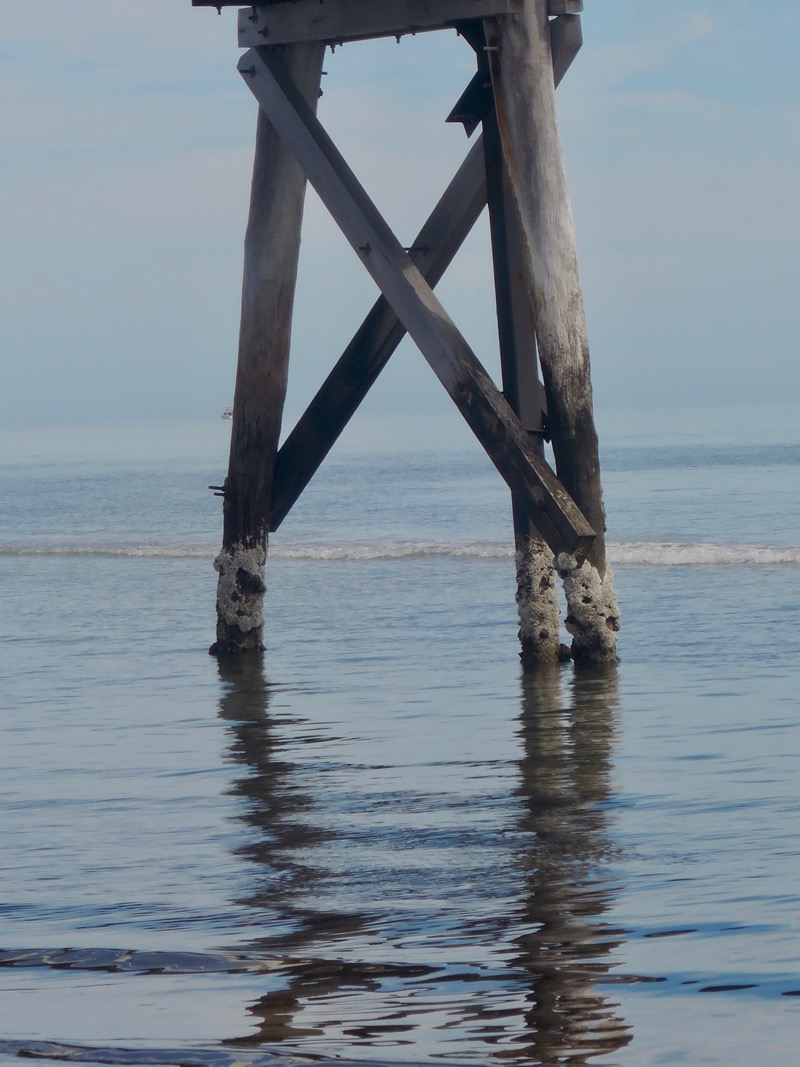
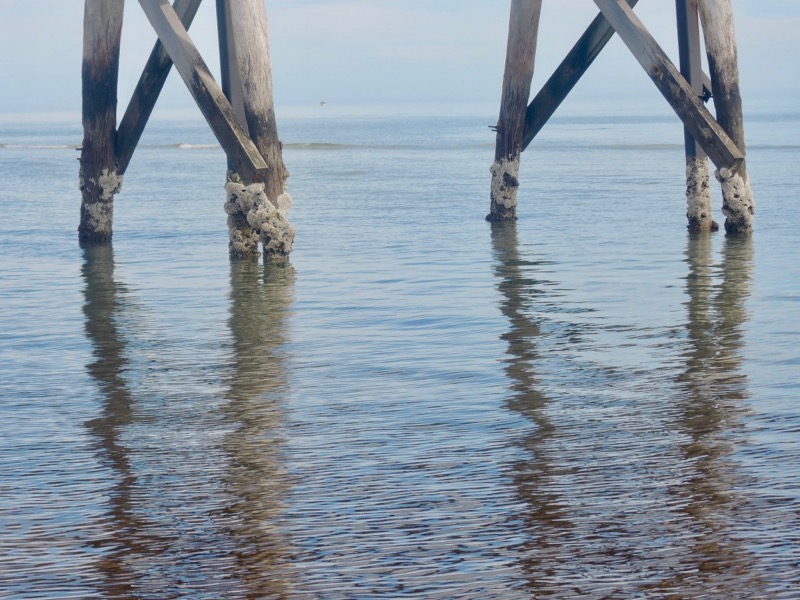
As for me, I stopped mid-run — on a gorgeous, warm, still day last week; a day when all of coastal Adelaide seemed to be bathed in soft sunshine — to take the photos you see in today’s post. Afterwards, I put my camera away and lingered at the shore a while, before wandering back from the beach to the foreshore path and setting off again, back home.

Days like that — days of running beneath a soft blue sky, beside a silken blue sea — are days, simply, to be grateful for, days that feel as though they are unfolding as they should, or at least as you wish they would.

And so this post is the first in a new series on my blog entitled Chasing clouds. It is a companion series to my Out and about series, in essence. The theme in that series is walking; the theme in this one is running. Running, for me — like walking — is about wandering, about wondering. It is about chasing clouds.

Of course I’m using metaphors. Running, for me, is about hope.

Miracle

Other people’s words about … running

Soon, he is at the base of the mountains, his heart rate is at least 140, and the peaks tower over him like wild, hungry beasts. It is this moment in which Russ understands himself best. In which he could easily say, my name is Russ Fletcher, I am a man living a certain sort of life, and I am happy.This gasping moment is free of obligation, of expectation and that bruised yellow past. It is only Russ and his beating man’s heart, Russ and the cloud of his breath as it unfurls white in the cold morning, Russ and the burn, burn of his legs. The needle-prick attention of his mind, as it focuses on blazing extremities. Running, Russ is okay. Running, he moves forward.

From ‘Girl in Snow
by Danya Kukafka

I have a chequered history with running, but recently, I’ve taken up the habit on my own terms. Here’s how it goes: every day, either before or after work, I make the effort to stroll down the road to the beach, and then, once I’m on the sand, a few metres from the shore, I break into a run for a few minutes. Often, honestly, I run for only five minutes or so before slowing down, turning around and heading back home. I guess it’s as much about getting fresh air into my lungs, moving my limbs a little before or after sitting at a desk all day, feeling sand crumble beneath the soles of my feet, as it is about anything you might want to call ‘fitness’ or ‘athleticism’.

Occasionally, though — once or twice a week, if I’m lucky — I run for a longer time, for twenty minutes or so, taking my camera with me (so that I can stop along the way to take photos like the ones in this post). No matter how slowly I run, or how heavy my legs seem to become, or how tired I was beforehand, or even, some days, how sub-par I felt before I set off, there is always a moment on these runs when I feel, like Russ in the passage above, that I understand [my]self best, a moment when I feel free of obligation, of expectation, of that bruised yellow past.

A couple of years ago, when I first took up running again after a lapse of twenty years, I hoped to run for much longer times, to run much further distances. That seemed to be what every other runner did, after all. And that’s what I wanted to be: a runner.

But running is like everything else in life: what works for other people isn’t necessarily what works for me. And over the last two or three years, I’ve learned — at first to my bitter (childish?) disappointment, and then, slowly, to my joy — that I can find a way to run on my own terms and still find pleasure in it. Still find release. Still find hope. And reason. And courage. And peace. And, like Russ, who runs when he’s both joyous (as in the first quote) and terribly sad (as in the next quote), freedom.

Russ runs. He takes off down the sterile … streets … All he can do now is push — move his body, sweat it out, keep inching forward. For now, he focuses on his own limbs and the miracle ways in which they serve him. The freedom of the open Colorado sky.

I thought at first, when I couldn’t run the distances I wanted to run, the distances I thought I should run, the way everyone else seemed to, that I was giving up. It took me a while to understand that finding a way to run that worked for me wasn’t so much about giving up as it was about learning to surrender.

Surrendering is not the same as giving up. I didn’t understand this before. I am glad that I am beginning to now.

Out and about: dragons & damsels

‘When you’re walking the view shifts and changes.
Walking’s a form of hope.’

from ‘The World Without Us
by Mireille Juchau


I wasn’t expecting anything special on my most recent walk in the Scrub. It was mid-February, a warm Sunday at the end of a warm week, after a very warm January. I figured everything in the Scrub — bushes, birds, animals — would be going through what I always think of as mid-summer somnolence.

But things in the Scrub were thriving. Passing sea box bushes resplendent with red berries (above) and sheoak trees whose branches were clustered with woody fruit (below), I walked south, towards the little lagoon just behind the boundary fence that runs along Acacia Terrace.

Damselflies skimmed the (somewhat scummy) surface of the water, and a pair of ducks paddled amongst the reeds in the lagoon. As I followed the curve of the bank around to the other side of the pond, I saw a family of kangaroos lazing in the shade of the nearby bushes, one of them poised upright, ears pricked, standing sentry.

There was a bush in flower that I’d never seen before, too — I think it was a hakea, though I’m not entirely sure. Its white flowers reflected the bright summer sun so that the petals seemed to glow.

And just outside the Scrub, perched on an upright stump by the side of the road, a little dragon caught my eye.

He (or she, I’m not sure) was very still, so still that I thought at first he was an oddly shaped twig sticking out at the top of the stump. We regarded each other silently for quite some time — I, fascinated, he, less so — before I turned to go.

I swear I could feel that dragon’s eyes on me all the way home …

Another world

Other people’s words about … Cairo

Sunlight was streaming through the shutters. I peered down into the street where a cat was sunbathing on a parked car. Friday morning was always the most peaceful time of the week in Istanbul Street. The doorman’s wife sat on the kerb watching her ragged child play in the clouds of pollen and dust. [My weekend away from Cairo] seemed a world away, a movie I watched last year. Cairo is so encompassing that when you are there all other realities seem to fade away. I thought of Hatton Garden and it seemed surreal that at that very moment crowds of London commuters were heading to work in the rain. It felt impossible that the two places could exist at the same time.

From ‘Playing Cards in Cairo: Mint Tea, Tarneeb and Tales of the City
by Hugh Miles

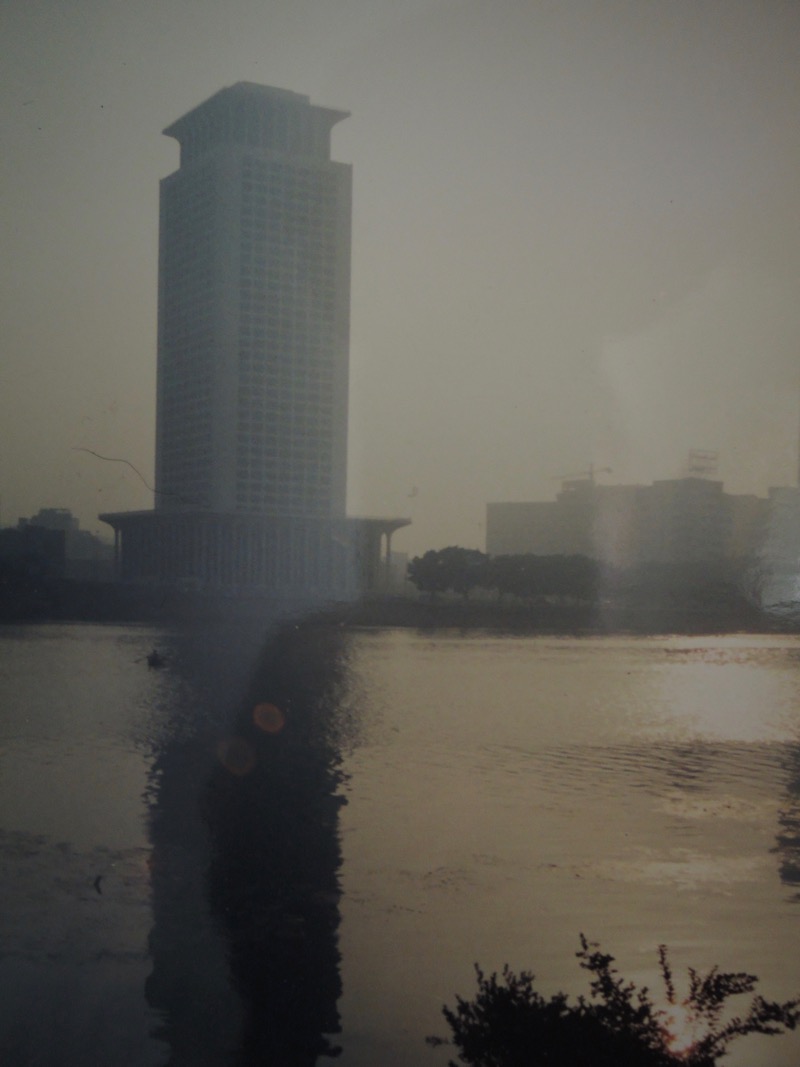
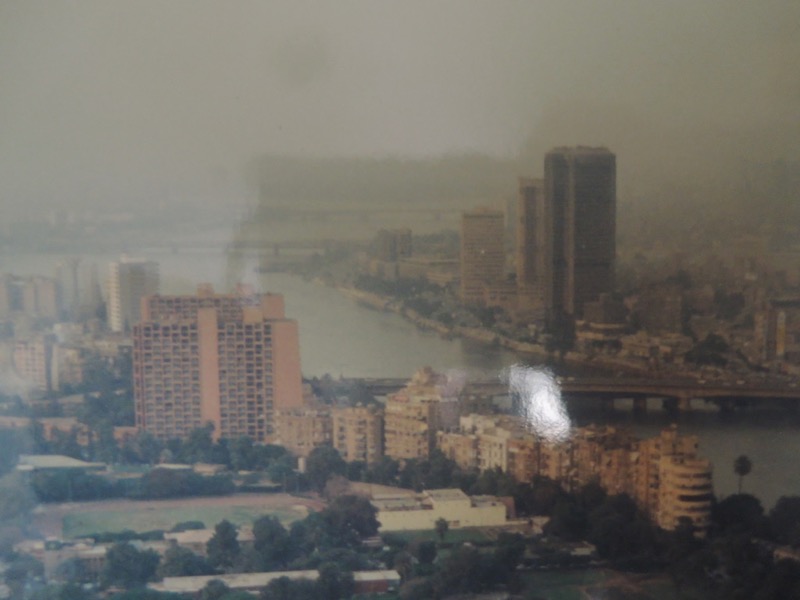
Many years ago, in another life, I spent about six months living in Cairo. I had happened there by chance, at the suggestion of my boyfriend at the time, who spoke a smattering of Arabic. We lived in the centre of the city, away from the ex-pat community, in a dusty fourth-floor apartment with faded red velvet sofas that gave off great puffs of dust whenever one of us sat down on them. At night, when we switched on the lights in the darkened bedroom, there was the sound of a thousand cockroaches scuttling out of view. The view from the rickety balcony was of life on the street below: the storekeeper of the small general store where we bought bottled water, washing down his front doorstep with water and a broom; the ta’ameya man at his food stand, stirring his big metal spoon through a great dented tin bowl of smoking hot oil.

I left Cairo as I came to it — by chance, at someone else’s bidding. I knew even then that I would never go back. For those few months in Cairo, I had not lived as a tourist, as most Westerner visitors do. Not exactly. Not quite. Cairo was in me, and on me, in a very physical, a very literal, sense: its grime lay in thick strips of black beneath my fingernails; its dust coated my skin. The city had, for those few months, as Hugh Miles so succinctly puts it, encompassed me.

And so I left, and I did not go back.

I found some old photos from that time recently, ones I took with an old camera, in those pre-digital years. I don’t have a scanner and so in order to reproduce them here, I actually used my camera to rephotograph those photographs. This accounts for their odd, slightly removed, unreal aspect — for, as well as Cairo in these pictures, you can see the glare from my window right here in Australia, the bend in the photographic paper.

I was going to apologise for this, originally. And then it occurred to me that in fact, this aspect of distance and remove is exactly right. In this context, it is right.

And so, no apologies today — just a glimpse into another world, a very long way away from here and from now.

Out and about: at lunch

‘When you’re walking the view shifts and changes.
Walking’s a form of hope.’

from ‘The World Without Us
by Mireille Juchau


I haven’t done an out and about post for a while, so I thought it was time. I recently quit my job at the call centre in order to concentrate on my work as an editor, where my workplace is in the city centre …

… which means that my lunch-break strolls haven’t stopped, but they have certainly changed.

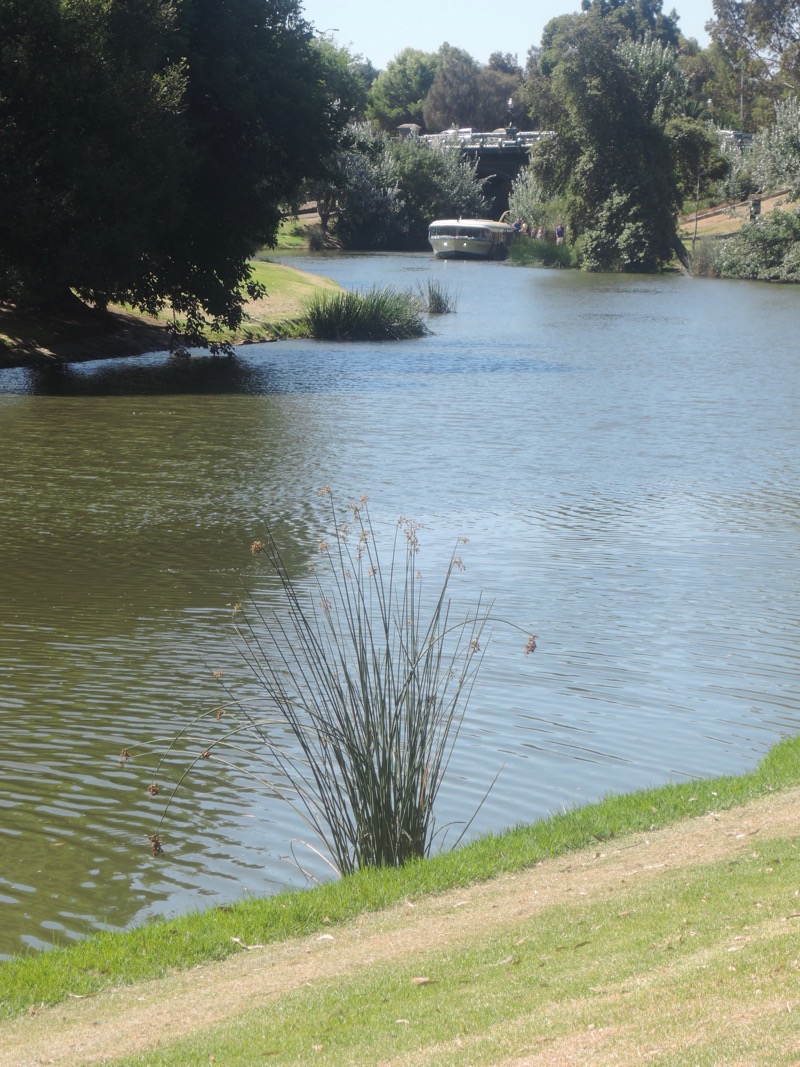
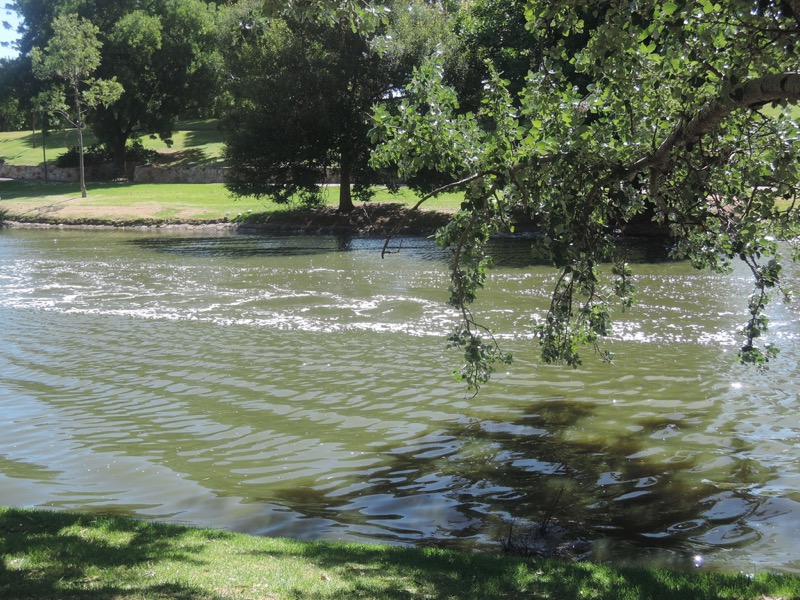
It’s easy to be tempted by shops when you work in town (books! clothes! books!), but the other day, on a late lunch break, I headed north towards the river as I left my office, rather than south towards the shops.

Five minutes north of my office is the River Torrens — the perfect place for a lunchtime stroll.
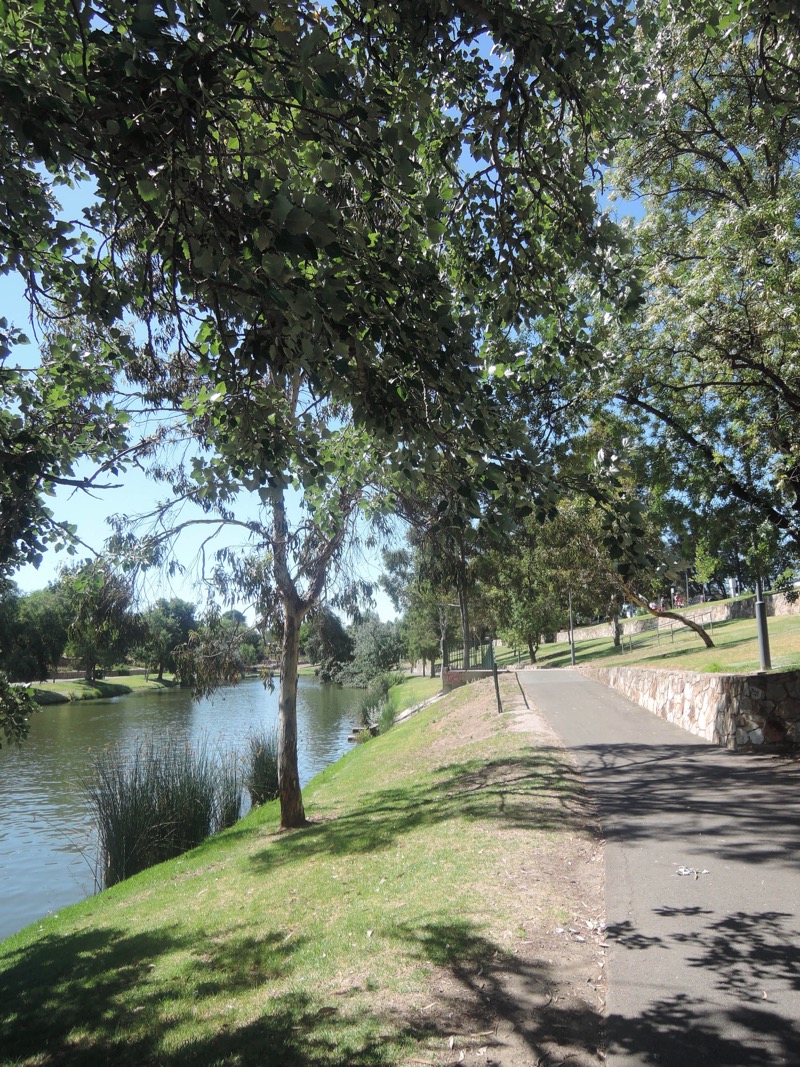
This particular day was one of those lovely January days, as I hope my photos on this post demonstrate: warm and sunny, with soft blue skies and a gentle breeze ruffling the water …

… There were ducks and moorhens paddling about, and the grass, which had been recently mown, smelt dry but sweet.

January is one of my favourite months of the year, as far as the seasons go. It’s usually sunny, and though the days are mostly warm, the temperatures rarely rise to stifling. It’s the ideal month for strolling, walking and wandering.

I plan to come back to the river in my lunch break again soon …