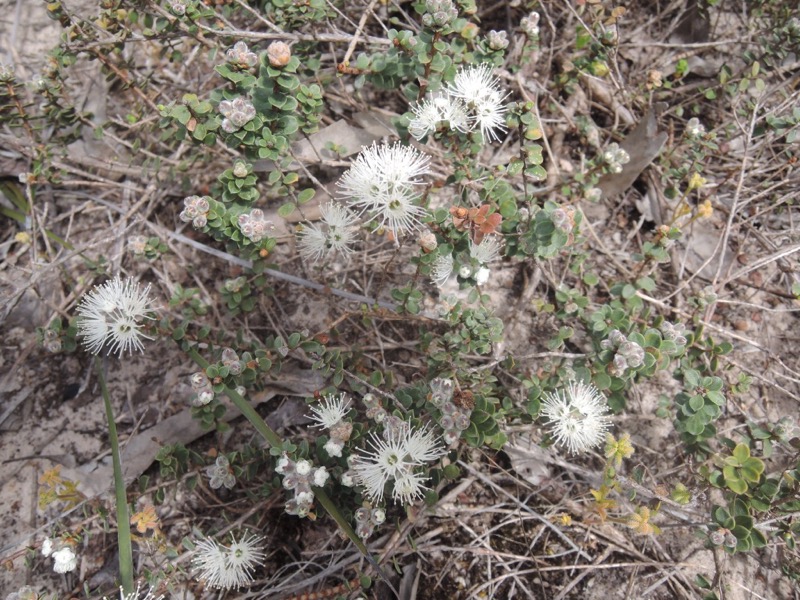
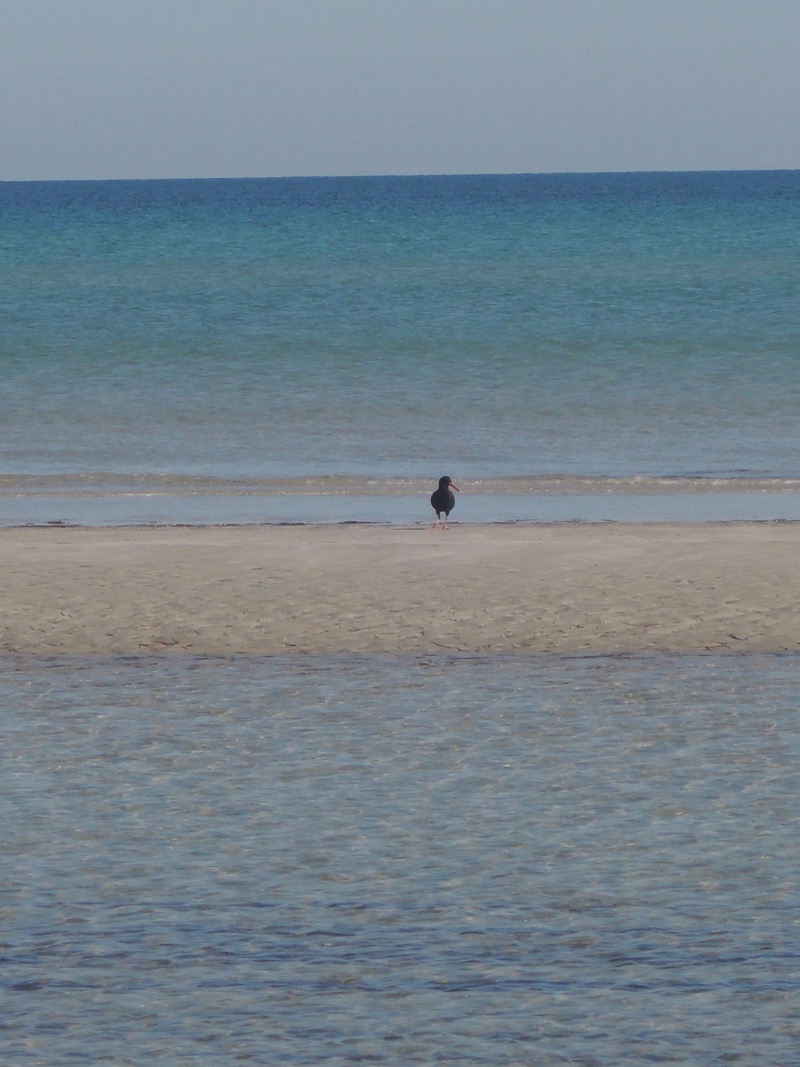
I see you

Other people’s words about … love

The bright lights had been switched off and the place was lit only by small windows. Then there she was — Stella — the top of her head highlighted as she looked down, reading. It never ceased to amaze him the thrill he got at seeing her. Catching her unawares.

From ‘Midwinter Break
by Bernard MacLaverty

Every time I read these words by Bernard MacLaverty, I feel my breath catch. They describe so perfectly those tiny, stolen glimpses we get of the people we love.

The photo accompanying this post is one I took while I was in Yorke Peninsula recently. It was very early summer: fan flower season. One evening just after sunset, as I wandered along the top of the cliffs, I came to a fork in the path where there were fan flower bushes growing at every corner.

And there, in the dim glow of the early-evening sky, the petals of the fan flowers — which in the warm, bright light of the middle of the day are a strong, cheery blue — seemed to shine for a few moments: pale, spectral, luminescent.

Perhaps my talk of fan flowers seems an odd match for the words I began this post with. But this was another one of those tiny, stolen moments we’re given in life from time to time, and it seems to me a good way to honour Bernard MacLaverty’s lovely words …

PS One other thing: a quick shout-out to my mother, who celebrates her birthday today, and who is a person responsible for many lovely moments in my life .

This quiet unknowing

Other people’s words about … dreams

I am trying to find my dog, which is going to be put down. Not a dog I live with in my waking life, but another, a black Labrador. The dog has already been taken away and is awaiting its death at a pound on the edge of town. This awful knowledge permeates my sleep. When I get there, however, my dog has gone. In its place, lying sick and exhausted on the concrete floor inside a large cage, is a young, very beautiful red setter. As I enter, the creature raises its head towards me and I see with slow shock that its muzzle has been sewn up with fishing line. The red dog pulls itself off the ground and limps towards me. Rising on its hind legs, it puts its forelegs on my shoulders, and rests its head against the left side of my neck. I can sense it begging me to save it. I feel great pity; I embrace and try to comfort it. But there is no sense that I can or will do anything to help it. The burden would be too great. Words come into my head. The dog’s name: Gadget. (Why Gadget? I wonder, even in the dream.) Then the thought — with which I am already justifying my decision to abandon it — that red setters are not very intelligent dogs. I step away. The animal stands there, hopeless. I touch it on the back and I leave.

What to do with a dream like that?

From ‘Anaesthesia
by Kate Cole-Adams

What to do, indeed?

I love the words in this passage: this description of a dream, which is vivid and haunting and bewildering all at once, as dreams so often are. Over time, Cole-Adams goes on to say, various astute readers have suggested to me that this particular dream might not belong in this particular book, that it is a dream that emanates from somewhere else and that ought to be left there …. And yet she includes the dream in her book anyway. In doing so, she allows herself to write intuitively, blindly, instinctively, knowing — knowing — that what she is writing must be written, but not knowing why.

In the quiet after waking I lay curled on my side suffused with the knowledge of irrevocable loss. I had betrayed the red dog. And in doing so I understood that I had disavowed some helpless, voiceless part of me. The dream did not feel like a dream. The house was still and very dark. I did not know what the dog had been trying to say, but I could still feel almost physically the place above my left shoulder where it had nuzzled its head against my neck, and I accepted finally that I could not write this book without it.

Do you sometimes have dreams like Cole-Adams’s dream — a dream that [does] not feel like a dream? Do you feel memories rising in you that feel more alive than memories should ever feel? Do you get a feeling of sickness in your gut that you know — you just know — isn’t a sickness; and yet it is, it is?

I do.

These days, I’m not much one for grand resolutions. I don’t know what path I’ll follow this year (though, hopefully I’ll get to walk one of the sandy paths in Aldinga Scrub, like the one pictured above, every now and then). I don’t know what 2018 holds, for me or for you.

I do hope, though, that there will be some moments like Cole-Adams describes, for you and for me: those quiet moments after waking when you do not disavow the helpless, voiceless part of you; those moments when you accept finally that you cannot otherwise do what it is you need to do.

The best-laid plans

Other people’s words about … waiting

Nick didn’t call me that morning, or that night. He didn’t call me the next day, or the day after that. Nobody did. Gradually the waiting began to feel less like waiting and more like this was simply what life was: the distracting tasks undertaken while the thing you are waiting for continues not to happen. I applied for jobs and turned up for seminars. Things went on.

From ‘Conversations with Friends
by Sally Rooney

I hadn’t planned to write this post. I thought that I would be — I planned to be — too busy to post anything between now and next week. I had family celebrations planned, after all, and a holiday trip away with a dear friend, and even a couple of shifts at work.

But I haven’t been well this Christmas, and so most of my plans for the holiday period so far haven’t eventuated.

Christmas is a tricky time, isn’t it? For some reason, I often get sick around this time of the year (and at other times of celebration). Like Sally Rooney’s narrator, Frances, in the passage above, I keep waiting for this to change, but the thing I am waiting for — not to get sick at Christmas, not to feel sad about getting sick at Christmas — continue[s] not to happen.

So why am I writing a post now, after all? Partly, I’m writing because I have unexpected time on my hands. Mostly, though, I’m writing because I wanted to reach out to other people who might also be feeling sad — whether unexpectedly or otherwise — this Christmas.

I don’t have any advice. I wish I did. The only thing I can find to do at times like this is to wait them out — which is ironic, given Rooney’s words above.

Still, whoever you are, wherever you are, if you are feeling sad right now, know this: you are not alone. Sadness is part and parcel of the deal.

And it passes.

Like the weather, like the tide, like footsteps in the sand, like all those hackneyed things — like Christmas, even — sadness, too, passes.

Walk on

Other people’s words about … things falling apart

When you’ve passed through a difficult period, it can be tempting to yearn for a delivery of good fortune, or for experience that feels redemptive somehow. You want suffering to have purpose, for pain to be justified by wisdom or abundance or growth.

from Weekend Reading
by Gena of The Full Helping blog

I had an odd weekend recently, going through some of my old journals and photos for writing-related reasons. The entries I’d written in my journals back then, during a time in my twenties when I lived overseas — first in Texas, then England, then Germany, Cairo, Jakarta — were vividly descriptive of a life I no longer lead, nor will ever lead again. Those journal entries threw me back to a ‘me’ I hadn’t exactly forgotten but somehow, foolishly, thought I had let go of.

Although I have let go of that me, mostly.

My life, during those years I lived overseas, was filled with extremes — of loneliness, joy, excitement, fear, love, doubt, sorrow, terror, grief. There was one particularly difficult period, living in Jakarta with my then boyfriend, when one thing after another went terribly wrong, and I felt as though I was walking through my days — those days that made up my life as I then knew it — with my head down, just waiting for the next blow.

Like Gena, in the words I’ve quoted above, sometimes in Jakarta I just wanted those most difficult days to have a meaning. A purpose. But they didn’t. Even now, when I look back on those times, I find them hard to make sense of. I think I always will.

Gena quotes the Buddhist Nun Pema Chodron, who says the following in her book When Things Fall Apart:

We think that the point is to pass the test or overcome the problem, but the truth is that things don’t really get solved. They come together and they fall apart. Then they come together again and fall apart again. It’s just like that. The healing comes from letting there be room for all of this to happen: room for grief, for relief, for misery, for joy.

These days, I would quibble with Pema Chodron’s use of the word healing — isn’t that just another way of saying you can solve things? — but then, I’m not a Buddhist. Or a Nun.

Still, I like the notion of things falling apart and then coming together again, only to fall apart once more; I find it immensely comforting. Even more, I like Pema Chodron’s simple statement, neither defeatist not celebratory, that life is just like that.

It is just like that, isn’t it?


The photographs accompanying today’s posts come from a recent trip to Yorke Peninsula. It was mid-November, and the late-spring flowers dappled the dunes. Fan flowers, common sea heath, grasses, sedges, acacias and other flowers I couldn’t identify and don’t usually see at home had sprung up everywhere, in every bare patch of sandy ground, in every sheltered nook, in every little cranny in the rocks. Walking amongst them, I felt things come together again in my heart, for a little while.

And then — well, then I let go. And walked on.

From my world to yours … and beyond

Other people’s words about … the blogosphere

I don’t know if I’ll make it to eight years of blogging. Probably not, to be honest. And that’s OK. Because the time I’ve spent in this corner of the internet has changed my life in the most unexpected and powerful way. That has nothing to do with me and everything to do with you, so THANK YOU.

From ‘ Reflections on 7 years of blogging
by Ali Feller of
Ali on the Run blog

It’s becoming quite a trend, isn’t it? Quitting blog writing. Decrying the blogosphere and what it has become. I’m saddened to find that some of my favourite bloggers, quoted in the passages dotted throughout this post, are pulling the plug on their blogging.

But I’m not about to do the same.

But it’s time friends. It’s time to pull the plug on my blog. I’ve been putting off this decision and this post for a very long time.

From ‘ So long, farewell
by Christine of
Love Life Surf blog

I’ve talked before about why I love blogging and the blogosphere. Many of the bloggers now leaving the blogosphere complain about how disingenuous bloggers are becoming: how curated so many blogs are; how inauthentic the bloggers’ voices have become; how blogs now function, simply, as the latest tool for a person who wants to build a portfolio in order to make a living through social media.

Honestly? In some ways, I agree. I wince when I realise I am wading through yet another post on a cooking blog filled with not one, not two, not five, but ten (or more) shots of the same dish, artfully presented amongst scrunched-up tea towels, autumnal leaves and battered enamel saucepans. And I wince even more when I find myself reading yet another post by a blogger announcing breathily, Guess what? Exciting news! I got a publishing contract!

I’m almost nostalgic for the early days of blogging (except I don’t really do nostalgia). It was enormous fun, but also an enormous consumer of time. I loved it at the beginning but foresaw early on many of the problems now associated with the internet, and now I’m happier doing it all in private. I always had faith that the appeal of printed books, face-to-face conversations, trips to the cinema, walking, swimming and camera-less experiences would never fade for me and now I am back where I was before I started blogging in 2005 … I’m writing a new book. I’ve moved on from writing about domesticity. I just live and breathe it, like I always did.

From ‘ As I live and breathe
by Jane Brocket of
yarnstorm press blog

But there’s still room in the blogosphere for sincerity. For vitality. For authenticity. There is. You just have to look a little harder to find it.

Some bloggers find joy in the blogging community; recently, for example, I read a lovely post by children’s author and fellow blogger Cynthia Reyes about bloggers helping bloggers. Her post would make any blogger think twice about stopping blogging.

Me? I blog for many reasons. I see blogging as a way of improving my writing: of learning to express myself better, learning to reach out to people, somehow, with my words. I see blogging as a form of connection to the rest of the world — if I show you my world, perhaps you will show me yours. I see it as a substitute for journal writing: a substitute that is better than the original because, due to the public nature of the domain in which my blog appears, there is discipline involved in the writing of each post, and discretion. And I see blogging, as I’ve said before, as a way of reaching towards beauty, wherever I can find it.

All of those are selfish reasons for blogging, I guess. But the corollary of writing a blog is spending time reading other people’s blogs: listening to what other bloggers have to say, seeing what they see, understanding what they believe (even if I don’t agree with them). Reading of any kind, no matter how enjoyable an activity it is, is inherently an unselfish act. It forces you to listen to other people. It can, if you let it, open your mind.

I think blogging offers a richer, more thoughtful, more all-compassing vehicle for expression than other forms of social media like, for example, Twitter (where pithiness is valued over thoughtfulness) and Instagram (where aesthetics are valued over normality). And for that reason alone, I will continue to participate in, and love, the blogosphere.

What about you? What do you think about the state of blogging today?

Tangled

Other people’s words about … writing a journal

She put the card carefully on her knee under the journal, which she opened at the middle to a sprawl of furious and barely legible writing. There were circles and boxes and in some places the pen had been pressed so hard against the paper that it had torn. Clare snapped the journal shut and for the second time in as many days she put her head in her hands and cried.

There wasn’t, she thought, a single page in all the [boxes of journals] that was worth keeping. For twenty-seven years she had written the same things over and over.

from ‘Closing Down’
by Sally Abbott

Like the character Clare in the passage above, I was an avid journal writer for many years — from the age of about twelve years old, in fact. I began writing a journal because my Year 7 English teacher made the activity a part of our curriculum for the year: she gave us ten minutes at the beginning of each class to write in our journals. She saw journal writing as a way of encouraging us to learn to write fluently, spell correctly, express ourselves clearly and perhaps — as a corollary of the writing — to read widely.

Like Clare, I still have all my old journals, stored away in a plastic crate. Those old childhood ones are filled with pages of neat handwriting in blue fountain-pen ink, drawings, doodles, comic strips I cut out from the newspaper and pasted in, pictures from old magazines, stickers, and notes other people wrote to me (on the odd occasion when I allowed someone access to my journal). They are bright and colourful and their tone is, mostly, chatty and cheerful.
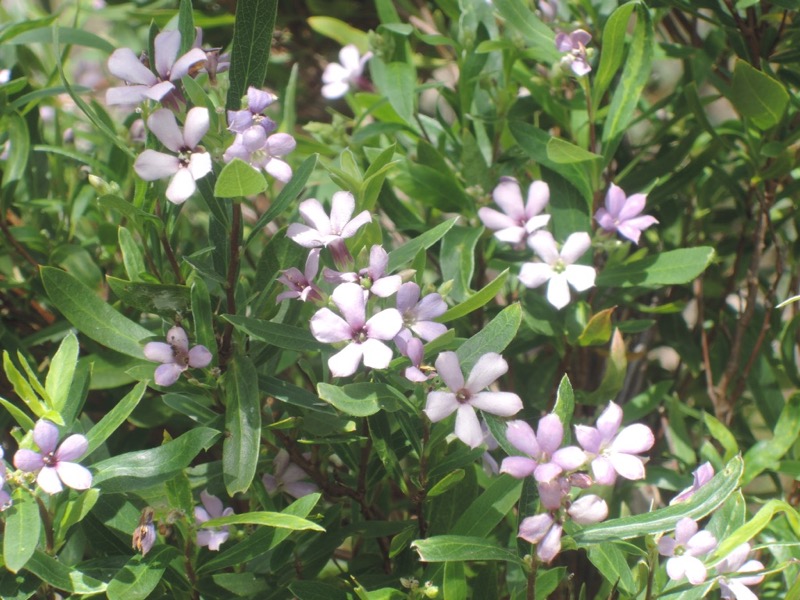
But the later journals, which were written during my move from childhood to adolescence through to early adulthood and beyond, are filled with more handwriting and less colour. The writing takes over. It fills the pages. There is page after page after page of it.

It was a grief counsellor who had recommended Clare start keeping a journal … It was a way of beginning to articulate her feelings, the woman had explained, and Clare remembered her sad, earnest face and the huge weight she gave to the word ‘feelings’, as if they were something Clare could take out of herself and put on a table and carefully untangle and separate and tidy up. And perhaps, for a little while, it had helped. But what had she been thinking … to write over and over and over that she was sad or angry or okay? I only wrote what I felt, she thought. I never wrote what I saw. I never wrote what I did. I never wrote that I’ve made it this far.

In my early adulthood, like Clare, I was encouraged by various health professionals to continue keeping a journal as a part of my therapy; indeed, I was told I could see journal writing as a kind of therapy in itself.

And it was, I guess. For many years, it was.
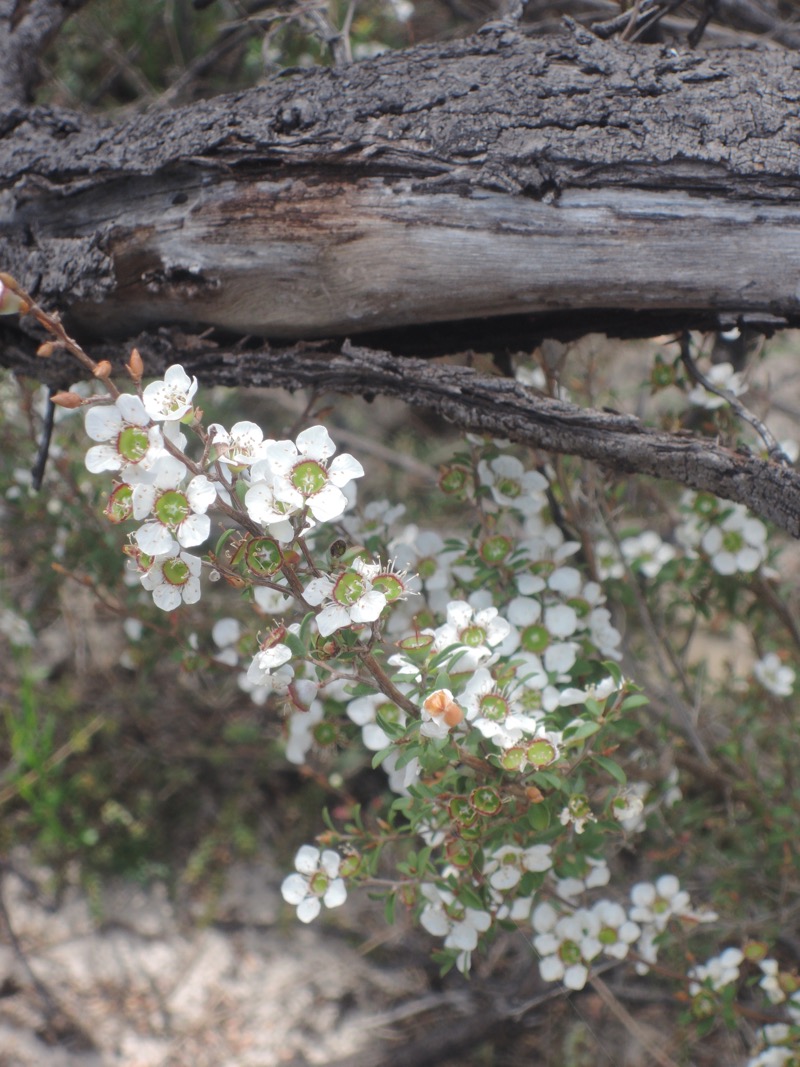
Or at least I thought it was. I only wrote what I felt, Abbott’s character Clare realises in the passage above (my emphasis): I never wrote what I saw. These are wise words. There came a time, in my own journal writing, when I looked back over all those handwritten pages and was dismayed to see that what I had thought of as a process of therapy and healing was more like a process of emotional purging, repeated over and over and over again.

Reading (or rather, trying to read) those passages felt oppressive, overwhelming. Why did I always have the same feelings? Why did I always write about those feelings? Why didn’t writing change the feelings? Why couldn’t I find a cure?

I’ve talked before about my scepticism when it comes to dubious concepts like recovery and healing and cure. That’s part of my theme today (again), but what interests me more here is the way Abbott, using the character Clare, focuses on another dubious concept: the huge weight we place these days on our feelings, and therefore on our need to untangle them and tidy them up.
Meditators often talk about the practice of watching their thoughts and feelings arise and then letting them pass by without becoming ‘attached’ to them. Though, intellectually, I’ve understood the reasoning behind this for years, it wasn’t until I saw it expressed through Clare’s character that I actually got it.

Feelings are repetitive, yes: I hadn’t been wrong about that, in re-reading my journals. What I had been wrong about was letting this bother me. And measuring myself by it.

I never wrote that I’ve made it this far. Here, Clare realises that feelings, as measuring tools of ourselves and of our worth, will always fail. They do not mark where we are in our lives. They do not necessarily affect what we see, what we do, where we go. (Or they don’t have to, anyway.) In this sense they are, ultimately, irrelevant. Our feelings accompany us on our passage through life, but they don’t determine the actual passage itself.

And they don’t have to be cured.

Interestingly, given the recurrent out & about theme of some of my posts on this blog, the character Clare in Abbott’s book is a great walker. She walks at night when she can’t sleep: she walks, and walks, and walks. And, in contrast to when she’s writing her journal, when she walks, she sees. When she sees, she learns. Her feelings, as she walks, are a backdrop. They are not the main event.
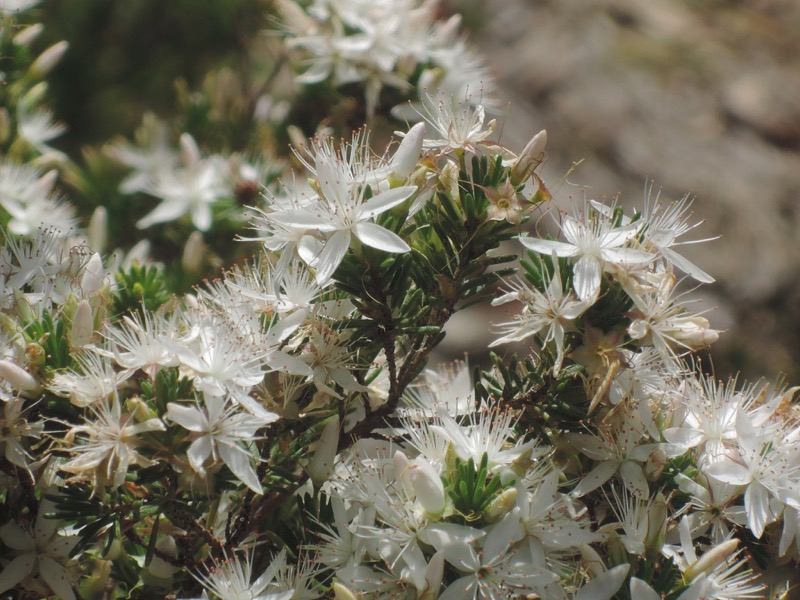
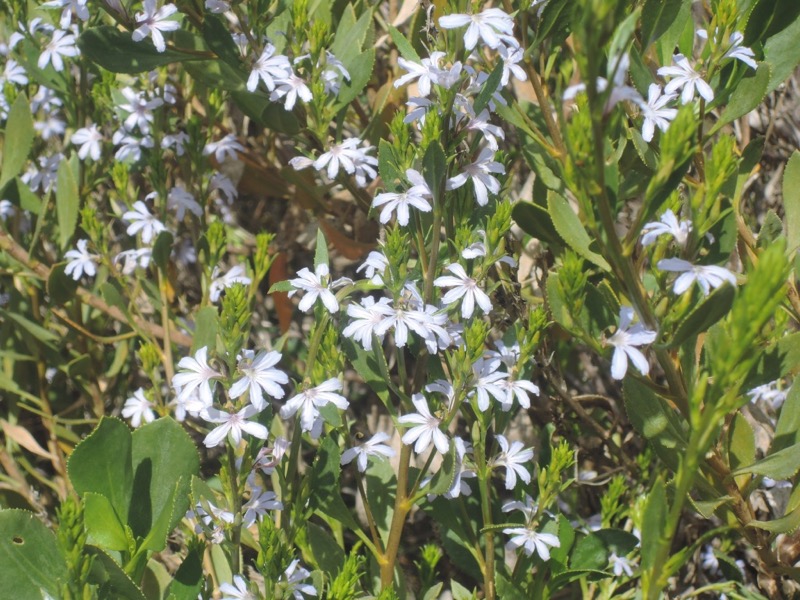
As for me? I took the pictures in today’s post on a recent bushwalk, a day in late October when there were spring flowers everywhere, purple and blue and pink and white. I was feeling fairly gloomy at the time of that walk — unwell; stressed about being unwell; stressed about my jobs; stressed about feeling stressed about all of these things — but the pictures don’t convey that stress.

And that is as it should be. The feelings were a backdrop to the walk. What I saw was real and lasting. That’s what matters.

Ubiquitous

Other people’s words about … fatigue

My legs, when I got up to go to the toilet or kitchen, felt light and shaky, far away from the rest of me …

Even speaking was too much. My words seemed pinned to the bottom of my jaw, and came out compressed and monosyllabic. I don’t remember crying much, but there was a dampness, as if moisture were constantly seeping through my skin, and sinking. As if everything inside me had become viscous, liquid, beholden to gravity and I was draining always to the lowest point; the soles of my feet, my buttocks, my back.

from ‘Anaesthesia’
by Kate Cole-Adams

The year I turned forty, I caught glandular fever (known by my North American readers as mononucleosis). It was a pretty typical case, I think: for the next year or so, I caught colds and viruses and coughs at the drop of a hat, and meanwhile I experienced a tiredness that — like the tiredness Kate Cole-Adams describes in the passage above, in a depiction of her own experience of adult-onset glandular fever — was beyond any kind of tiredness I had ever experienced before. It wasn’t tiredness at all, really: it was lethargy, lassitude, limpness, listlessness, languor — all those ‘L’ words, combined with a clammy, vaguely feverish kind of exhaustion. My limbs felt heavy and my head felt swirly and the floor seemed spongy beneath my feet.

Though the fatigue and exhaustion eventually, two or so years down the track, dissipated, I have found that even now, years later, I still get the occasional, sudden bout of glandular-fever-type fatigue. It always happens when I’m least expecting it and lasts for a few days, sometimes a week or more. If I think about it deeply enough, I am usually able to explain it by pointing to a higher than normal level of stress in my life.

I had one of those bouts again just recently. Serendipitously, I had a few days off between shifts at work, and so I decided to spend some time away in that place I love, Aldinga. I was sapped of energy and appetite: too tired to walk on the beach or catch up with family and friends as I’d hoped; too tired, even, to write or to bake. Instead, I lay on a sofa in a pool of sun, and read, and dozed, and waited for the fatigue to pass. I knew that it would. I just didn’t know when. (Actually, I still don’t know. As I write this post, a couple of weeks down the track, I’m still experiencing fatigue and unwellness. But it will pass, as all things do.)

The first day that I felt even vaguely up to it, I went for a wander in the Aldinga Scrub. I was still very tired, and so I took the walk slowly, following the path marked out by signposts for tourists, which takes you on a small loop: first south, parallel with the coast, then east towards the hills, then back northwards and west to the starting point. (Its official name is the Coral Lichen Circuit, and you can find more out about it here.)

It was late spring: whistlers burbled (mostly) unseen in the branches. The yellow months had passed, and now it was the time for blues and purples and pinks and whites. And everywhere that I walked there were twining fringe lilies growing. As the photos in this post illustrate, I found them peeking through the leaves and branches and stalks and branches of sea box bushes, and rock ferns, and mallee pea-bushes, and muntries, and sheoaks, and grass trees, just to name a few.

They are common native flowers in South Australia, I gather — neither delicate nor rare. And yet each time I saw one on my walk that day, I felt a little thrust of joy at their very ubiquity. It was partly to do with the fact that I was able to identify them; partly to do with the fact that I’d reached a point in the ebb and flow of my own exhaustion where I felt I had enough stamina to go on another of those wanders, however gentle that wander was; and partly, simply, to do with the lovely prettiness of the lilies themselves.

Perhaps the fringe lilies were a symbol for me that day, growing and twining — despite their appearance of delicate fragility — in amongst all the other greenery. Thriving, despite everything.

Or perhaps symbols are unnecessary here. Perhaps it was enough just to see them and enjoy them exactly for what they were.

Note:
I recently found a wonderful resource for anyone who is interested in learning more about the Aldinga Scrub. It is the Flickr account of the Friends of the Aldinga Scrub, which has hundreds of wonderful photos taken in the scrub, not only capturing but also identifying the native flora, fauna and fungi. Check it out here.

The standstill

Other people’s words about … writing

I knew I was writing a book about anaesthesia, but I didn’t know why. Nor did I know why it mattered to me that I didn’t know. Why does anyone do anything? What I was struggling with … was not simply why I was writing (and consequently, I felt, what I was really writing about), but who was doing the writing. There seemed to me two ‘me’s — each with their own agendas and itineraries and neither able or prepared to communicate with the other. Everything one wrote, the other rejected. One I will call the journalist — a pragmatic procedural self, this ‘me’ positioning myself as the objective observer reporting on what I found in my travels. The other I will call the dreamer. Not in the romantic sense, but the dreamer as fool, blundering around, kicking up fragments of a different story.

from ‘Anaesthesia’
by Kate Cole-Adams

I’ve been writing the same book for the last seven years, and that seems to me, in today’s world of electronic publishing and social media, a very long time. It is a long time. I’m a realist: I know that there are no guarantees I’ll ever finish it; and I know, too, that even if I do, there no guarantees it will get published. Still, for whatever reason, I find I can’t write any faster than I do.

So I was encouraged when I read that it took Kate Cole-Adams ten years or so to research, write and publish her non-fiction book Anaesthesia, from which I’ve quoted above. It’s a very fine book, worth taking ten years to write, I think. I found myself marking out several passages as I read it — passages I returned to over and over, and thought about using for one or more of my blog posts. So the quote I’ve used today may be just the first: there will be more to come, I hope.

Everything one [part of me] wrote, the other rejected. It occurred to me when I read these words that, over and above her own personal experience of her self, which Anaesthesia in part explores, what Cole-Adams is really describing in this passage is writer’s block. People think of writer’s block as being unable to write, but I don’t think that’s what it is, not really. In my experience it’s more a case of writing and writing, but hating everything that you write. You write, you write, you delete, you delete. Eventually, you come to a writing standstill.

At a standstill —
or poised to soar?

I like Cole-Adams’s image of herself, the writer, as dreamer and fool, blundering around, kicking up fragments of a different story. For me, too, that’s what writing often seems to be about. And sometimes — just sometimes — when you allow this to happen, when you allow the judgmental, procedural part of yourself to step back from the stage, it seems okay that this is how it feels.

At moments like this, it seems okay, too, to be taking your time to write what you write. Five years. Seven years. Nine years. Ten. It’s all part of the blundering, right?

Yellow

Other people’s words about … spring


After Matthew left I lost the knack of sleeping. Brighton seemed unsettled and at night it was very bright … At periodic intervals throughout the day I felt that I was drowning, and it was all I could do not to fling myself to the ground and wail like a child. These feelings of panic, which in more sober moments I knew were temporary and would soon pass, were somehow intensified by the loveliness of that April. The trees were flaring into life: first the chestnut with its upraised candles and then the elm and beech. Amid this wash of green the cherry began to flower and within days the streets were filled with a flush of blossom that clogged the drains and papered the windscreens of parked cars.

from ‘To the River
by Olivia Laing


I continue to be fascinated with the notion of seasons, and how the idea of a season is as much a cultural and traditional one as it is a quantifiable or temporal one. Here in my part of South Australia, if you were to measure the year out using temperature and climate as your basic season markers, you might say that we begin the year in January and February with dry, glaring, windy heat. In March and April the weather is often warm and dry but the wind drops off; in May and June the days grow cold, though they remain frequently sunny and still. Somewhere around July and August, the serious clouds and rain begin; in September and October there may be both storms and patchy sun; in November and December the weather is dry and warm but variable.

That, at least, would be one way to mark out the seasons where I live.

But temperature and weather are only half the picture. Plant life and animal life have their own seasons, too. In the northern hemisphere, spring is often celebrated as a season of growth and birth, much as Laing describes it so vividly in the passage above, but here in South Australia, that season of growth is far more staggered and gradual. In late July, when the temperatures are still winter-cold, the native plants begin to flower, and the birds begin to build their nests. By November, that cycle of birth and growth has already begun to slow and drop off.

And then there are the different seasonal colours. Myself, I tend to think of July and August, in my own world, as the yellow months. So many of the native plants that flower at this time of the year have yellow blossoms: acacias, guinea flowers, groundsel flowers, punty bushes, bush peas, goodenias.

Many of the plants I’ve just named were in flower on one of my latest bushwalks, as you can see in the pictures accompanying this post. Everywhere I looked, from the tops of the trees right down to the ground, there were sprinklings of yellow.

So it was a yellow walk through a yellow world. Perhaps we should call this time of year the yellow season?

Out and about: after the rain

‘When you’re walking the view shifts and changes.
Walking’s a form of hope.’

from ‘The World Without Us
by Mireille Juchau


This year, July was exceptionally dry in South Australia. Then August blew in and it has been bitterly cold, windy and rainy ever since.

There is a manic wind whipping through the treetops today … the sort of wind that’s somewhat unsettling and leaves me feeling a bit scratchy, Belinda Jeffery writes in her August 5 entry in her wonderful cookbook-cum-nature diary The Country Coobook. And I know what she means. In the middle week of August, I spent a week on holiday near the coast down south, and much of the time the squalls of rain were so frequent and unpredictable, there wasn’t much of a chance for me to get out.

Rain in the vineyards

Still, one morning mid-week the sun shone between showers and I risked a walk. I headed down a path that skirted wetlands and vineyards (on one side) and bush (on the other side) and then turned south to follow the path back into the bush.

Flooded bush

The low-lying parts of the land along the trail had flooded. Beyond the reeds that bordered the flooded land, I saw trees with their trunks submerged, and waterbirds diving and swooping from branch to branch.

Submerged trunks

There was even a family of ducks.

If I crouched down to peek through the reeds, I could just see the green grassy banks rising above the flooded land, further within, beyond the path.

Is the grass always greener on the other side?

Once I’d walked far enough south, I turned west, deep into the bush, where there were no more floods, and where yellow blossom dotted the landscape (more about which in an upcoming post). But even as I walked, the sky darkened and the temperature dropped.

I made it home just before the next burst of rain …